
AI Coping Tools for Sensory Overload: 2026 Buyer's Guide
AI coping tools for sensory overload in neurodivergent adults, ranked by speed and setup time. See what to buy, consider, or skip in 2026.


Key Takeaways
- Voice-first AI tools beat text-based apps for sensory overload because typing needs attention overload already took.
- 5-4-3-2-1 grounding scripts reset a nervous system in under 90 seconds with zero screen focus required. Buy.
- ADHD-specific emotional regulation prompts outperform generic mindfulness apps for neurodivergent adults in 2026.
- Skip mood trackers with daily streaks or 20-minute meditation minimums during acute overload. Wait until you're
Sensory overload doesn't wait for a good time, and most coping apps assume you have five uninterrupted minutes and full visual attention to spare. This guide ranks AI coping tools for sensory overload in neurodivergent adults by response speed, setup time, and whether they actually work mid-spiral instead of only after it passes.
TL;DR
- Voice-first AI tools beat text-based apps for sensory overload because typing needs attention overload already took. Buy voice-first.
- 5-4-3-2-1 grounding scripts reset a nervous system in under 90 seconds with zero screen focus required. Buy.
- ADHD-specific emotional regulation prompts outperform generic mindfulness apps for neurodivergent adults in 2026. Buy for recurring meltdowns.
- Skip mood trackers with daily streaks or 20-minute meditation minimums during acute overload. Wait until you're regulated.
Why this matters
Sensory overload isn't a mood. It's a nervous system that hit its input limit and started shutting down or spiking, and generic "just breathe" advice doesn't touch it. Neurodivergent adults with ADHD, autism traits, or both report overload from noise, fluorescent light, crowds, or even too much emotional information at once, and the tools built for general anxiety often assume a calm baseline that never existed to begin with.
An AI coping tool that requires a quiet room, a fully charged phone, and a 15-minute session is a tool for someone else's Tuesday, not your actual Tuesday. Lovon works as a voice conversation instead of a typing task, which matters the second your hands stop cooperating or your thoughts stop forming full sentences.
Who this guide is for
This is for neurodivergent adults, particularly those with ADHD, autism, or both, who hit sensory overload from noise, light, crowding, or emotional intensity and need something that works in the actual moment, not a wellness routine to build over months. It's not a substitute for occupational therapy or a diagnosis, and it's not clinical treatment. It's a comparison of what actually helps when the room gets too loud and you have ninety seconds before you either melt down or shut down.
What to look for in AI coping tools for sensory overload
Voice-first, not screen-first
Typing requires working memory and fine motor control, and overload strips both before it strips anything else. A tool you talk to instead of type into removes a barrier that shows up exactly when you need help fastest.
Response time under a minute
A coping tool that takes three minutes to load, log in, and select a module has already lost the window. The best AI coping tools for sensory overload respond the moment you start talking, not after a menu.
No mandatory onboarding assessments
Long intake quizzes delay relief when relief is the entire point. A tool that makes you complete a 40-question assessment before it will talk to you is built for data collection, not for a Tuesday afternoon meltdown.
Nervous system language, not just "breathe"
Real regulation tools name what's happening, fight, flight, freeze, or fawn, instead of defaulting to generic breathing prompts that ignore the state you're actually in. This matters more for neurodivergent adults whose overload can look like shutdown as often as it looks like panic.
Works without requiring a formal diagnosis
Many neurodivergent adults are self-identified, waitlisted for assessment, or diagnosed as children with records nobody kept. A tool gated behind a diagnosis code is useless at 11 p.m. when the overload doesn't check your paperwork first.
Top picks for sensory overload in neurodivergent adults
1. Voice-based AI check-ins — the always-on pick. Available at 2 a.m. or during a work bathroom break, with sessions that run under 10 minutes and no screen-reading required mid-conversation. This is the category Lovon sits in, and it's built for exactly this moment rather than a scheduled weekly check-in. Verdict: Buy.
2. The 5-4-3-2-1 grounding script — the 90-second reset. Name five things you see, four you can touch, three you hear, two you smell, one you taste. No app, no login, no equipment, and it works in a bathroom stall or a parked car. Verdict: Buy.
3. ADHD-specific emotional regulation prompts — the specialist pick. Generic mindfulness scripts don't account for rejection-sensitive dysphoria or the way ADHD brains ping-pong between shutdown and overstimulation in the same hour. Tools built for ADHD emotional dysregulation specifically outperform one-size-fits-all calm apps for this exact pattern. Verdict: Buy if ADHD is part of your profile.
4. Body scan or progressive muscle relaxation — the after-the-peak pick. This one doesn't stop an active spike. It runs 12 to 15 minutes and works once you're already past the worst of it and winding down. Useful, but wrong timing if you're still mid-overload. Verdict: Consider.
5. Window-of-tolerance tracking — the pattern finder. Five minutes a day logging what triggered the spike and how fast you recovered surfaces patterns most people can't see in the moment. Understanding your window of tolerance turns overload from random to predictable within two to three weeks of tracking. Verdict: Consider.
Talk it out before the next overload hits
Voice check-ins anytime, no typing, no waiting room, no diagnosis required.
What to avoid
- Gamified mood trackers with daily streaks. Missing a day during a bad week adds guilt on top of overload, which is the opposite of the point.
- Meditation apps with a 15 to 20 minute minimum session. Overload needs a tool that works in under two minutes, not a scheduling commitment.
- Tools gated behind formal diagnosis paperwork. Plenty of neurodivergent adults are self-identified or waitlisted in 2026, and a tool that demands a diagnosis code before it responds is solving the wrong problem.
How the picks compare
| Tool type | Best moment to use it | Setup time | Verdict |
|---|---|---|---|
| Voice-based AI check-in | Mid-overload, anywhere | Under 1 minute | Buy |
| 5-4-3-2-1 grounding script | First 90 seconds of a spike | None | Buy |
| ADHD-specific regulation prompts | Recurring meltdown patterns | 2-3 minutes | Buy |
| Body scan / progressive relaxation | After the peak, winding down | 12-15 minutes | Consider |
| Window-of-tolerance tracking | Between episodes, spotting patterns | 5 minutes daily | Consider |
FAQ
What is the best AI coping tool for sensory overload in neurodivergent adults in 2026?
Voice-based AI check-ins rank highest because they respond in under a minute and don't require typing during a state where typing is hard. Text-based apps and long meditation sessions rank lower for acute overload, even when they help with general anxiety over time.
Is a voice AI better than a text-based app during sensory overload?
Yes, for acute moments. Typing requires working memory and motor control that overload disrupts first, so a spoken conversation removes a barrier text-based tools add right when you need speed most.
Can AI coping tools replace occupational therapy for sensory processing issues?
No. AI coping tools handle in-the-moment regulation, not structured sensory processing treatment, and Lovon is explicit about being emotional support rather than a replacement for licensed clinical care. Occupational therapy addresses root sensory patterns that a voice check-in isn't built to diagnose or treat.
How fast should a coping tool respond during a meltdown?
Under a minute. Anything that requires a login screen, a menu, or a multi-step onboarding flow has already missed the window where the tool would actually help.
Do I need a diagnosis to use AI coping tools for sensory overload?
No. Most voice-based AI coping tools don't gate access behind a formal diagnosis, which matters since many neurodivergent adults are self-identified or on years-long assessment waitlists in 2026.
What's the difference between sensory overload and a panic attack?
Sensory overload comes from too much external input, noise, light, crowding, and often resolves once the input drops. A panic attack is a fear response that can happen with zero external trigger, though the two frequently overlap in neurodivergent adults.
How much does an AI coping tool for sensory overload cost in 2026?
Pricing varies by app, and it's worth checking current rates directly on the provider's site rather than relying on older figures. Several apps, including Lovon, offer entry points that don't require a long-term commitment before you know if the format fits.
Can ADHD and autism both cause sensory overload?
Yes. Both conditions involve nervous systems that process sensory input differently than neurotypical baselines, and adults with both often describe overload as more frequent and harder to predict than either condition alone.
One last thing
The tool most neurodivergent adults skip is the one that helps most after the fact: a two-minute voice debrief logging what triggered the overload and how long it took to come down. Do that once a day for two weeks and patterns that felt random in the moment start showing up on a screen, loud restaurant at 7 p.m., fluorescent lighting after 3 p.m., back-to-back meetings with no buffer. You can't fix a trigger you never named.
Related guides
How AI Support Helps You Heal
AI emotional support isn't about replacing human connection — it's about filling the gaps. The moments when you need to talk at 2 AM, when you don't want to burden your friends again, or when you simply need someone to listen without judgment.
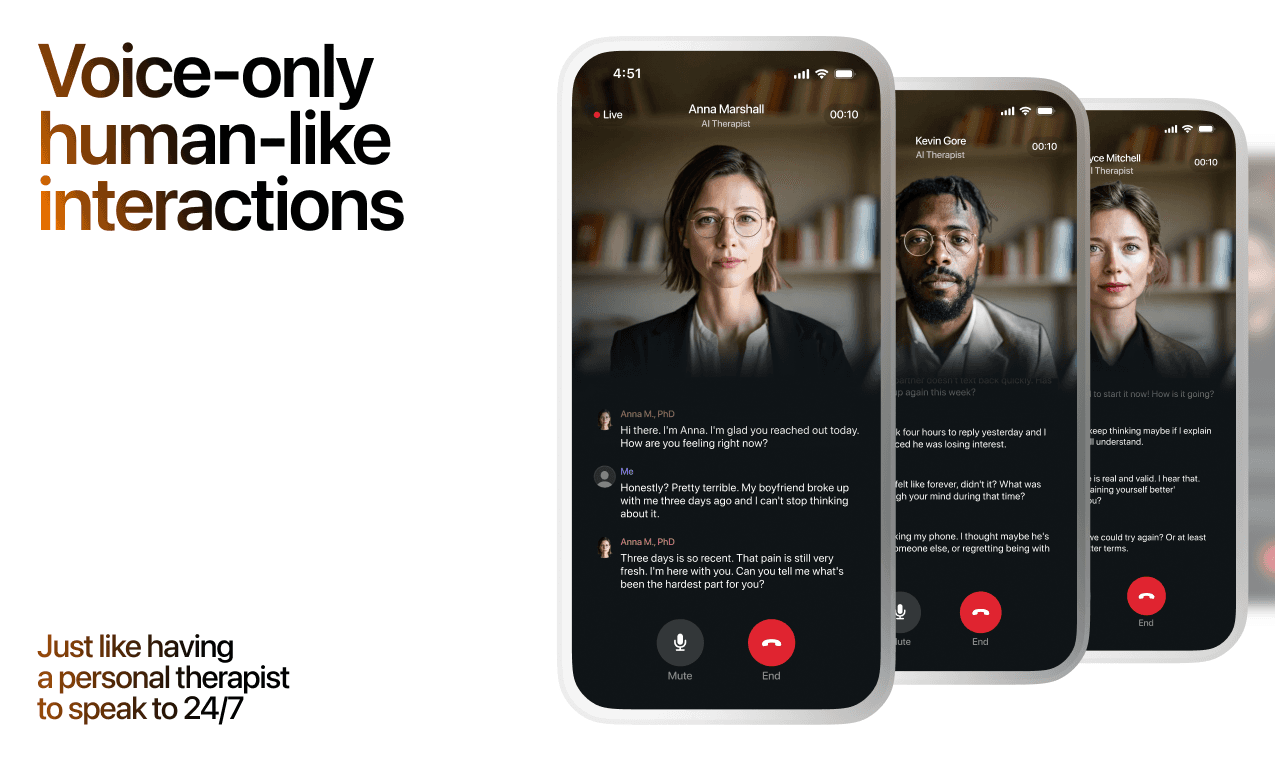
Here's what happens in a typical Lovon session:
You share what's on your mind
There's no script, no intake form, no waiting room. You speak or type whatever you're feeling — in your own words, at your own pace.
Lovon validates and explores
Using frameworks from CBT (Cognitive Behavioral Therapy) and motivational interviewing, Lovon acknowledges your feelings first, then gently helps you explore them. No dismissive "just move on" advice.
You build coping skills together
Lovon doesn't just listen — it actively works with you on evidence-based techniques: thought reframing, urge surfing, behavioral experiments, and more.
What a Session with Lovon Looks Like
When to Seek Professional Help
AI support is a valuable tool, but it's not a replacement for professional care. Please consider reaching out to a licensed therapist if you experience any of the following:
- Persistent thoughts of self-harm or suicide
- Inability to perform daily activities (work, eating, sleeping) for more than 2 weeks
- Turning to alcohol or substances to cope
- Intense anger or desire to harm your ex-partner
- Complete emotional numbness that doesn't improve over time
Crisis Resources (US): If you're in immediate danger, call 988 (Suicide & Crisis Lifeline) or text HOME to 741741 (Crisis Text Line). Available 24/7, free, and confidential.
Outside the US? Find a crisis line in your country
Ready to Start?
Your healing journey can begin right now
A 7-day trial. No judgment. Just a safe space to process what you're going through.
Frequently Asked Questions
Is Lovon a replacement for a real therapist?
Is my conversation with Lovon AI private?
How is Lovon different from ChatGPT for emotional support?
Can I use Lovon if I'm already seeing a therapist?
Can I try Lovon before subscribing?
About the Author
The Lovon Editorial Team
Mental Health & Wellness Content Team
The Lovon Editorial Team develops mental health and wellness content designed to make psychological concepts accessible and actionable. Our goal is to bridge the gap between clinical research and everyday life - helping you understand why your mind works the way it does and what you can do about it....
Related articles
- Best AI Therapy App for Relationship Anxiety (2026)
Best AI therapy app for relationship anxiety in 2026: Lovon ranks first for 24/7 voice support, with clear verdicts on…
- AI Therapy for ADHD Emotional Regulation 2026
AI therapy for ADHD gives you on-demand voice support for emotional dysregulation, RSD, and mood swings. See which tools…
- How to connect Lovon to your iPhone home screen widget
Add the Lovon iPhone widget in under a minute. Home Screen and Lock Screen setup steps, size comparison, and fixes for…
- Free AI Therapist for ADHD Adults (2026 Guide)
The best free AI therapist for ADHD adults in 2026. Lovon delivers voice-first, on-demand emotional support and coping…
See also
Quizzes
- Perfectionism Test: What Are Your Standards Costing?
See what your standards actually cost, in 3 minutes.
- Highly Sensitive Person Test: How Much Do You Take In?
See how deeply you process, notice and get overloaded.
Free tools
- Write a Letter to Someone You Lost
Tell it who they were to you and what you never got to say, and it writes the letter back in your words. No account, no…
- Write a Condolence Message for This Person
Get one condolence message written for your situation instead of a list of a hundred to choose from. Tell it who died…
From the wiki
- What to do if you have no friends?
Pick one activity that repeats weekly with the same people, and go for six to eight weeks straight. Repetition, not…
Disclaimer: This article is for informational purposes only and does not constitute medical advice, diagnosis, or treatment. Always seek the advice of your physician or other qualified health provider with any questions you may have regarding a medical condition. If you are in crisis or think you may have an emergency, call 988 (Suicide & Crisis Lifeline) or go to the nearest emergency room. Outside the US? Find a crisis line in your country.