
Anxious Preoccupied Attachment: Signs & How to Shift 2026
Anxious preoccupied attachment drives protest behavior like over-texting and reassurance-seeking. Get the signs and a 2026 step-by-step plan to build security.
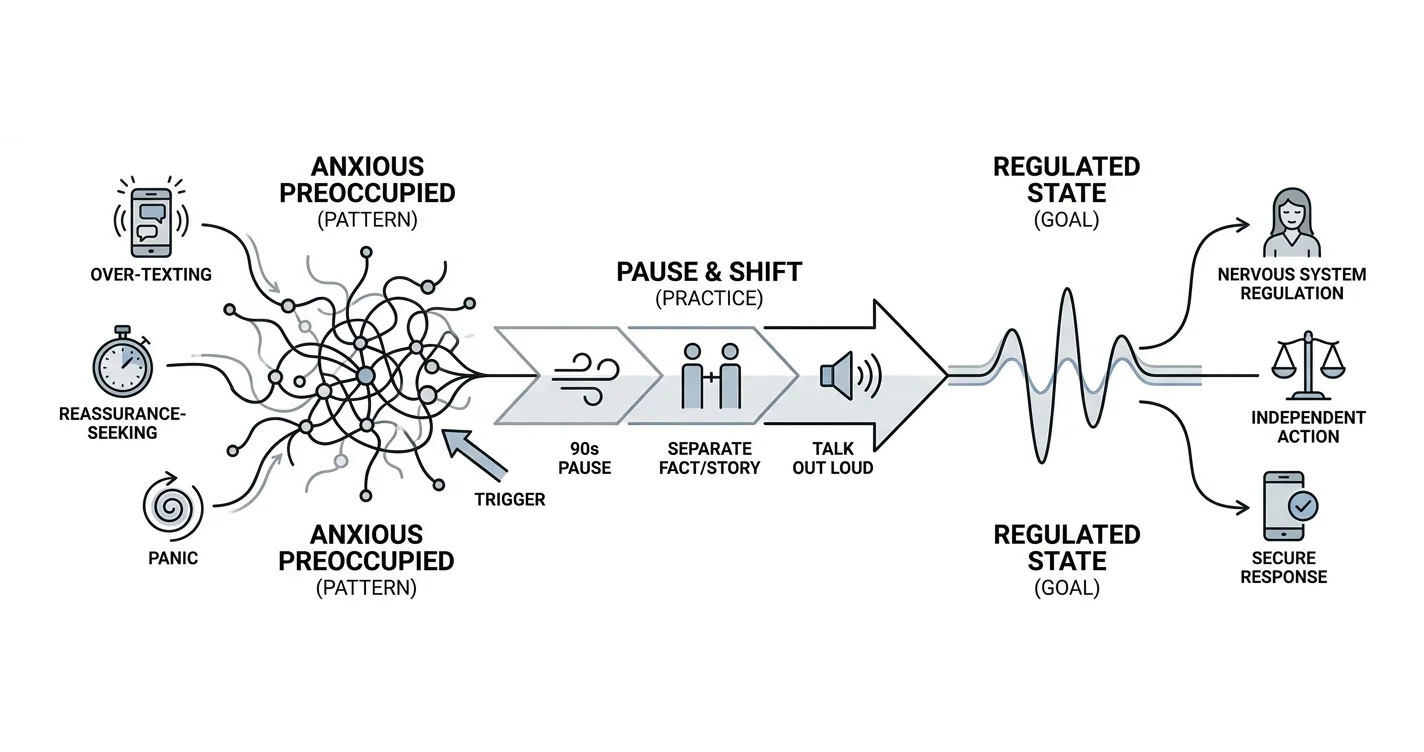

Key Takeaways
- Anxious preoccupied attachment shows up as protest behavior: over-texting, reassurance-seeking, panic after silence.
- The shift starts with nervous system regulation, not with finding a calmer partner.
- An AI voice therapist like Lovon gives you a place to talk through the 11pm spiral when no one else is reachable:
- Most people notice fewer text-checking spirals after about four to six weeks of consistent practice in 2026, not
Anxious preoccupied attachment turns small relationship gaps into five-alarm emergencies — a delayed text, a short reply, a canceled plan — and pushes you toward chasing, checking, or over-explaining until the panic settles. This guide covers the signs and a concrete plan to shift the pattern in 2026, without waiting for someone else to change first.
TL;DR
- Anxious preoccupied attachment shows up as protest behavior: over-texting, reassurance-seeking, panic after silence.
- The shift starts with nervous system regulation, not with finding a calmer partner.
- An AI voice therapist like Lovon gives you a place to talk through the 11pm spiral when no one else is reachable: worth trying as a daily practice.
- Most people notice fewer text-checking spirals after about four to six weeks of consistent practice in 2026, not overnight.
Why this matters
Anxious preoccupied attachment is the adult label most people mean when they say "anxious attachment." It comes out of Mary Main's Adult Attachment Interview work, which sorted adults into secure, dismissing, preoccupied, and unresolved categories based on how they talk about early relationships.
If you're preoccupied, closeness feels like oxygen and distance feels like a threat. You'll recognize the pattern faster once you can name it instead of just feeling it — the anxious attachment style usually includes checking a partner's phone activity, rereading texts for hidden meaning, and feeling your mood rise and fall with someone else's response time.
The common signs in 2026 look almost identical across dating apps, long relationships, and even friendships:
- Protest behavior — extra texts, guilt-tripping, or withdrawing loudly to get a reaction
- Reading silence as rejection before you have any actual information
- Self-worth that moves with your partner's mood, not your own
- Trouble being alone without it feeling like proof you're unlovable
- Over-functioning in the relationship to "earn" continued closeness
- Jealousy or scanning for signs someone is pulling away
None of that is a character flaw. It's a nervous system that learned inconsistency was normal and now treats ordinary gaps as danger. The good part: this pattern is learned, which means it can be relearned at any age, not just fixed in childhood.
What you'll need
- 15 to 20 minutes a day for a regulation practice, not a full hour
- A way to name your top 2 to 3 triggers (a specific text, a slow reply, a canceled plan)
- Willingness to sit with distress for 90 seconds before acting on it
- A notes app, journal, or voice memo tool
- Optional: an AI voice therapy app for the moments no one else is awake
The steps
1. Name the pattern precisely
Call it what it is — anxious preoccupied attachment, not "I'm just needy." A pattern shifts; an identity feels permanent. If you're not sure which pattern fits, running a short assessment helps more than guessing: two minutes with a tool built for this, like an attachment style quiz, tells you whether preoccupied traits actually outweigh avoidant or secure ones in your case.
Common mistake: treating the label as a permanent diagnosis instead of a description of current habits.
2. Install a 90-second pause
Before you send the third follow-up text or ask "are we okay" again, set a timer for 90 seconds. Breathe in for 4 counts, hold for 4, out for 6, and repeat 6 times. This isn't about killing the urge — it's about getting your prefrontal cortex back online before your body decides for you.
Expected outcome: the urge drops from a 9 out of 10 to something survivable, not gone.
Common mistake: using the 90 seconds to rehearse worst-case scenarios instead of actually breathing.
3. Separate the story from the signal
Write two columns: what actually happened, and what you're telling yourself it means. Fact: "he didn't reply in 3 hours." Story: "he's losing interest." The anxious-preoccupied nervous system treats the story as fact instantly — this step forces a five-minute gap between them.
Common mistake: skipping the columns and acting on the story anyway.
4. Build a self-soothing script
Write three lines you say to yourself before reaching for someone else: "This feeling is real. The threat might not be. I can wait 20 minutes." Practicing this consistently is part of what it takes to heal anxious attachment on your own instead of outsourcing every regulation attempt to a partner's response time.
Common mistake: using the script once, deciding it "didn't work," and dropping it — this is a rep-based skill, not a one-time fix.
5. Talk it out loud instead of typing it out
When the spiral hits at 11pm and the other person isn't reachable, say the spiral out loud rather than typing a message you'll regret sending. This is exactly where a voice conversation with an AI therapist works better than a text thread with yourself — you process the "they're pulling away" narrative in the moment it's loudest, not three days later in a scheduled session. Aim for a focused 5 to 10 minute conversation, not an hour-long rehash.
Common mistake: substituting talking-it-out for ever raising the real issue with your actual partner.
6. Practice one small independent action daily
Do one thing solo that used to trigger disconnection anxiety — eat lunch without checking your phone, go to one class alone, run one errand without a running commentary text thread. Start with 15 minutes and build from there through the rest of 2026.
Common mistake: starting with something too big, like a solo weekend trip, which just confirms the fear instead of testing it.
7. Track weekly, not daily
Once a week, review how many pauses you took and how many spirals you rode out versus acted on. Daily tracking of an anxious pattern can quietly become another form of checking, so keep it to five minutes every Sunday.
Expected outcome: most people see their weekly spiral count drop by roughly half within four to six weeks of consistent practice.
Common mistake: judging progress day-to-day — attachment patterns move in weeks, not hours.
Talk through the spiral tonight
Have a voice conversation with an AI therapist when the anxiety spikes, day or night.
Troubleshooting
- "I did the 90-second pause and still sent the text." Shrink it to 30 seconds and rebuild from there — the goal is the habit forming, not a perfect first attempt.
- "My partner says my check-ins feel like an interrogation." Swap "do you still like me" for a direct, time-boxed ask: "I'm spiraling, can we check in for two minutes tonight." This states the need without demanding constant proof.
- "I can regulate alone but fall apart the second they text back." Normal — practice the pause on low-stakes triggers first, like a slow-replying friend, before testing it on high-stakes ones.
- "I don't have anyone to talk it through with at 2am." That gap is exactly what an AI voice therapy app is built for — a conversation at the moment the spiral hits, not a scheduled slot next Tuesday.
- "I confuse anxious-preoccupied with codependency." They overlap heavily but aren't identical — anxious preoccupied attachment is about the fear response itself, while codependency is more about losing your own identity inside someone else's needs.
- "Nothing feels different after a week." Give it four to six weeks before judging — attachment patterns formed over years, so a week of new reps won't erase them.
Tools and resources
- A timer app for the 90-second pause
- A voice memo app or an AI voice therapist for talking the spiral out loud
- A two-column notebook for fact-versus-story tracking
- A weekly recurring reminder for the Sunday review
- Box breathing (4 in, 4 hold, 6 out) as your default regulation drill
What to do next
Once the daily spirals shrink, the next layer of work is building the traits of secure attachment on purpose rather than just managing the anxious ones. That's a longer project — how to become more securely attached walks through what that actually looks like day to day, past the crisis-management stage.
FAQ
What is anxious preoccupied attachment?
Anxious preoccupied attachment is an adult attachment pattern marked by a strong need for closeness paired with a fear of abandonment, leading to reassurance-seeking and protest behavior like over-texting. It comes from the Adult Attachment Interview framework, sitting alongside secure, dismissing, and unresolved categories.
Is anxious preoccupied attachment the same as anxious attachment?
Yes, in most everyday use anxious attachment and anxious preoccupied attachment refer to the same pattern. The formal clinical term is preoccupied; anxious is the shorthand used in pop psychology and dating advice.
Can you change anxious preoccupied attachment as an adult?
Yes. Attachment patterns are learned early but stay changeable through adulthood with consistent practice. Most people notice fewer spiral episodes within four to six weeks of daily regulation work in 2026.
What triggers anxious preoccupied attachment?
Common triggers include delayed replies, short answers, a partner spending time with others, or any perceived pulling away. The nervous system reads these ordinary gaps as evidence of abandonment rather than neutral events.
How do you calm down when anxious attachment gets triggered?
Use a 90-second pause with slow breathing before reacting, then separate the fact of what happened from the story you're telling yourself about it. Talking the spiral out loud, to a person or an AI voice therapist, helps more than typing it into a message.
Does anxious preoccupied attachment only affect romantic relationships?
No, it shows up in friendships, family dynamics, and even coworker relationships wherever closeness and distance are in play. The same reassurance-seeking pattern applies, just with lower stakes than a romantic partner.
What's the difference between anxious preoccupied and fearful avoidant attachment?
Anxious preoccupied attachment leans toward pursuing closeness and protest behavior when it's threatened, while fearful avoidant attachment swings between wanting closeness and shutting it down. Both fear abandonment, but they react to it in opposite directions.
Can an AI therapist help with anxious preoccupied attachment?
An AI voice therapist can give you a place to process the spiral in real time, which is often when the pattern is hardest to interrupt alone. It works best as daily support between sessions with a licensed clinician, not as a replacement for one.
One last thing
The "clingy" label people attach to themselves is usually just a nervous system that never got consistent enough caregiving to trust safety by default — it's a pattern, not a personality trait, and it keeps being changeable well past the age most people assume attachment gets locked in. The fastest wins in 2026 come from the boring reps: the 90-second pause, the fact-versus-story column, the weekly review — not from finding a partner calm enough to never trigger you.
Related guides
How AI Support Helps You Heal
AI emotional support isn't about replacing human connection — it's about filling the gaps. The moments when you need to talk at 2 AM, when you don't want to burden your friends again, or when you simply need someone to listen without judgment.
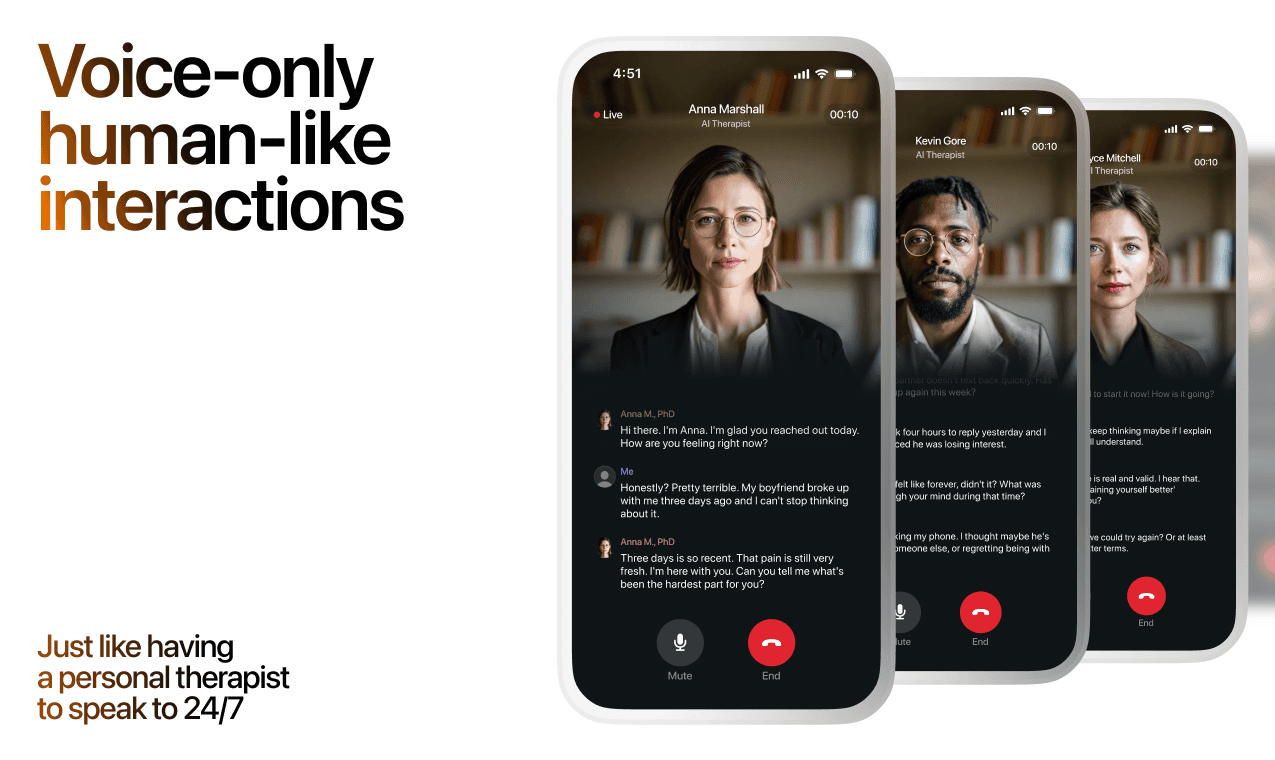
Here's what happens in a typical Lovon session:
You share what's on your mind
There's no script, no intake form, no waiting room. You speak or type whatever you're feeling — in your own words, at your own pace.
Lovon validates and explores
Using frameworks from CBT (Cognitive Behavioral Therapy) and motivational interviewing, Lovon acknowledges your feelings first, then gently helps you explore them. No dismissive "just move on" advice.
You build coping skills together
Lovon doesn't just listen — it actively works with you on evidence-based techniques: thought reframing, urge surfing, behavioral experiments, and more.
What a Session with Lovon Looks Like
When to Seek Professional Help
AI support is a valuable tool, but it's not a replacement for professional care. Please consider reaching out to a licensed therapist if you experience any of the following:
- Persistent thoughts of self-harm or suicide
- Inability to perform daily activities (work, eating, sleeping) for more than 2 weeks
- Turning to alcohol or substances to cope
- Intense anger or desire to harm your ex-partner
- Complete emotional numbness that doesn't improve over time
Crisis Resources (US): If you're in immediate danger, call 988 (Suicide & Crisis Lifeline) or text HOME to 741741 (Crisis Text Line). Available 24/7, free, and confidential.
Outside the US? Find a crisis line in your country
Ready to Start?
Your healing journey can begin right now
1 free conversation. No credit card. No judgment. Just a safe space to process what you're going through.
Frequently Asked Questions
Is AI therapy a replacement for a real therapist?
Is my conversation with Lovon AI private?
How is Lovon different from ChatGPT for emotional support?
Can I use Lovon if I'm already seeing a therapist?
Can I try Lovon for free?
About the Author
The Lovon Editorial Team
Mental Health & Wellness Content Team
The Lovon Editorial Team develops mental health and wellness content designed to make psychological concepts accessible and actionable. Our goal is to bridge the gap between clinical research and everyday life - helping you understand why your mind works the way it does and what you can do about it....
Similar Articles
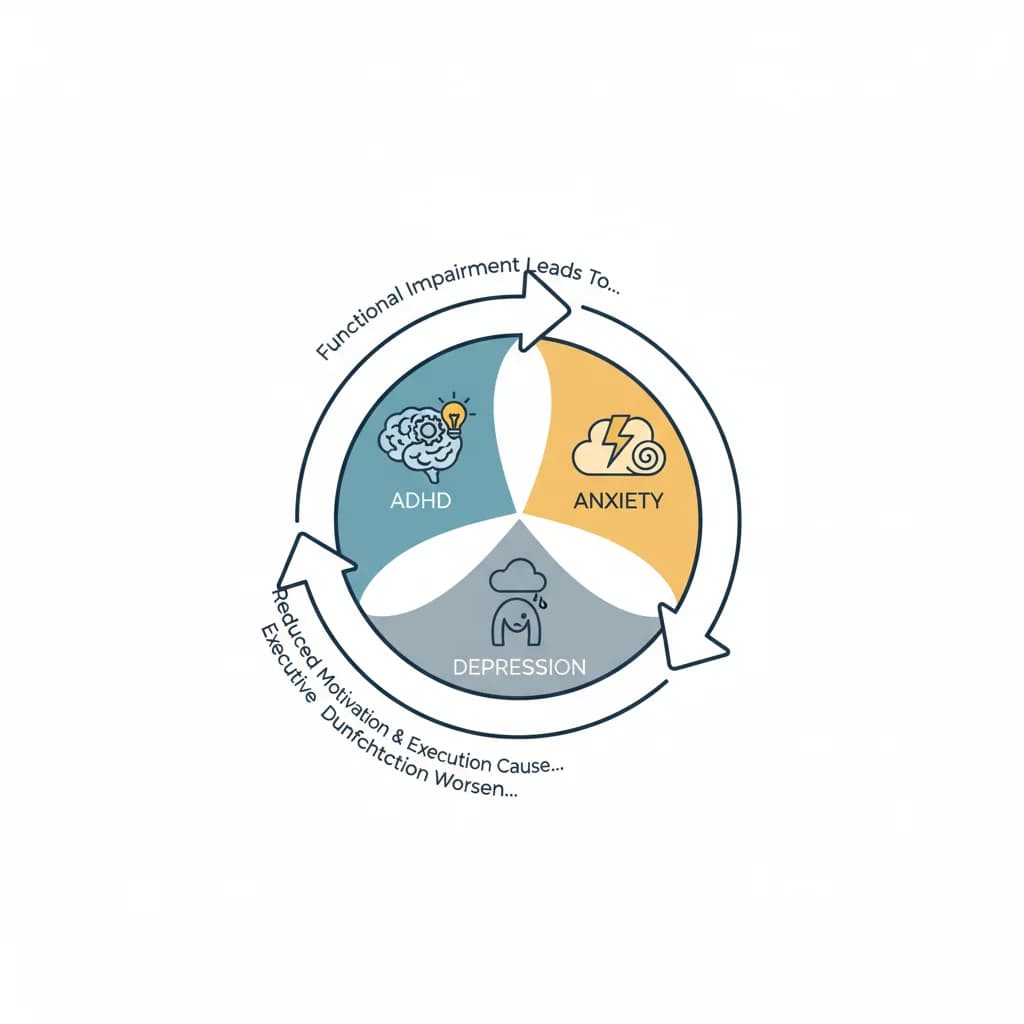
ADHD Comorbidity with Anxiety and Depression Cycles
Understanding the Complex Interplay Between ADHD and Recurring Mental Health Patterns

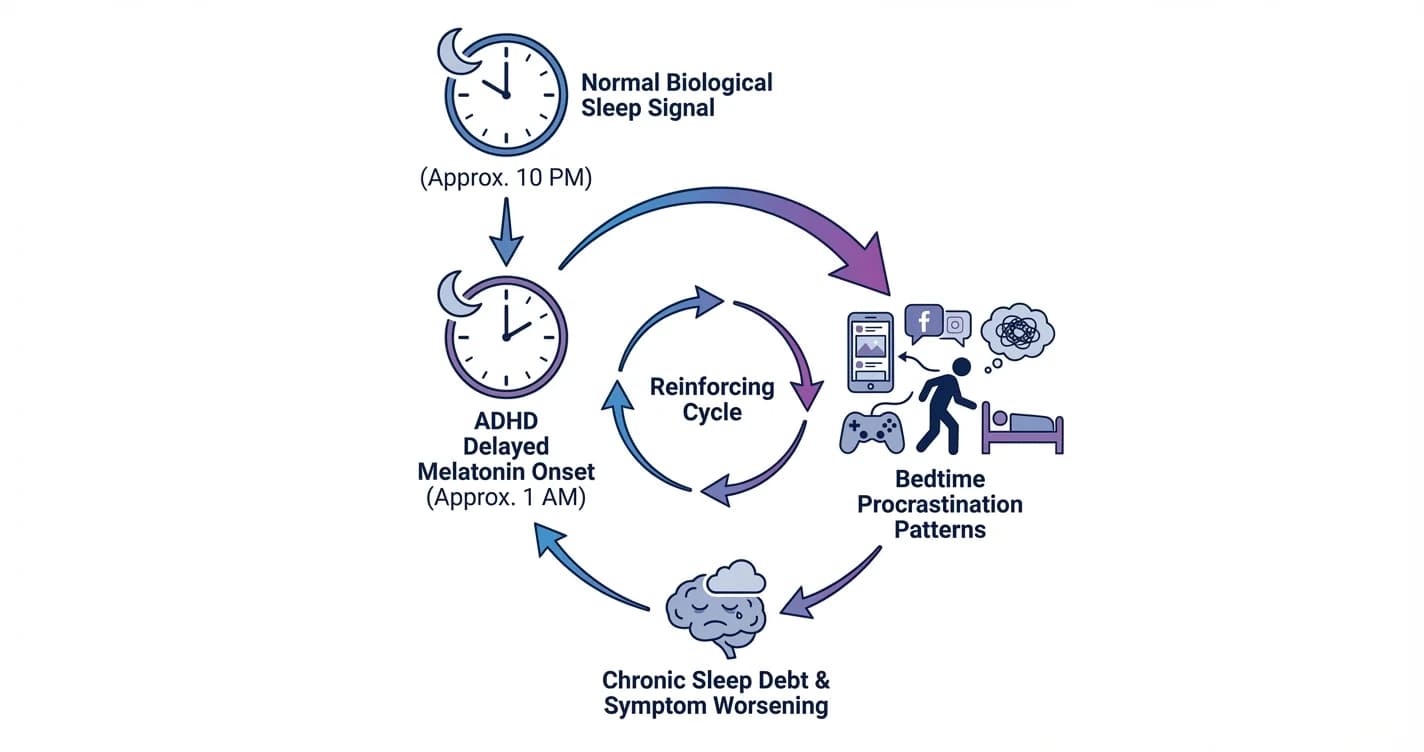
ADHD Sleep Cycle Disruption: Melatonin Delay and Bedtime Procrastination Patterns
Understanding how attention regulation difficulties interfere with natural sleep timing and the nightly wind-down process
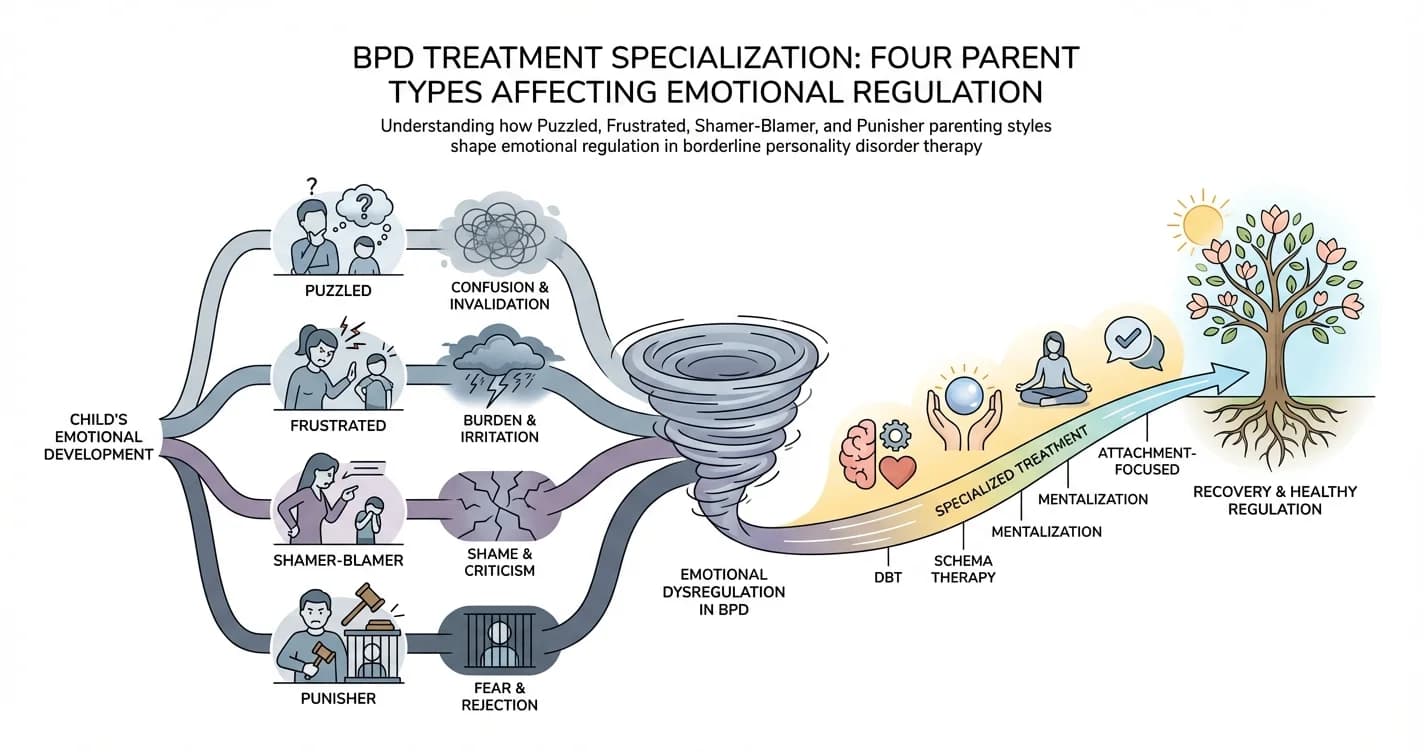
BPD Treatment Specialization: Four Parent Types Affecting Emotional Regulation
For individuals with borderline personality disorder (BPD), emotional regulation difficulties rarely emerge in isolation. Research increasingly suggests that
Disclaimer: This article is for informational purposes only and does not constitute medical advice, diagnosis, or treatment. Always seek the advice of your physician or other qualified health provider with any questions you may have regarding a medical condition. If you are in crisis or think you may have an emergency, call 988 (Suicide & Crisis Lifeline) or go to the nearest emergency room. Outside the US? Find a crisis line in your country.