
Break the Anxious Attachment Cycle: 2026 Step-by-Step Guide
Break the anxious attachment cycle in 2026 with 7 concrete steps, troubleshooting fixes, and tools for the moments therapy can't reach.

Key Takeaways
- Breaking the anxious attachment cycle starts with catching the trigger-to-reaction gap, not just naming the feeling.
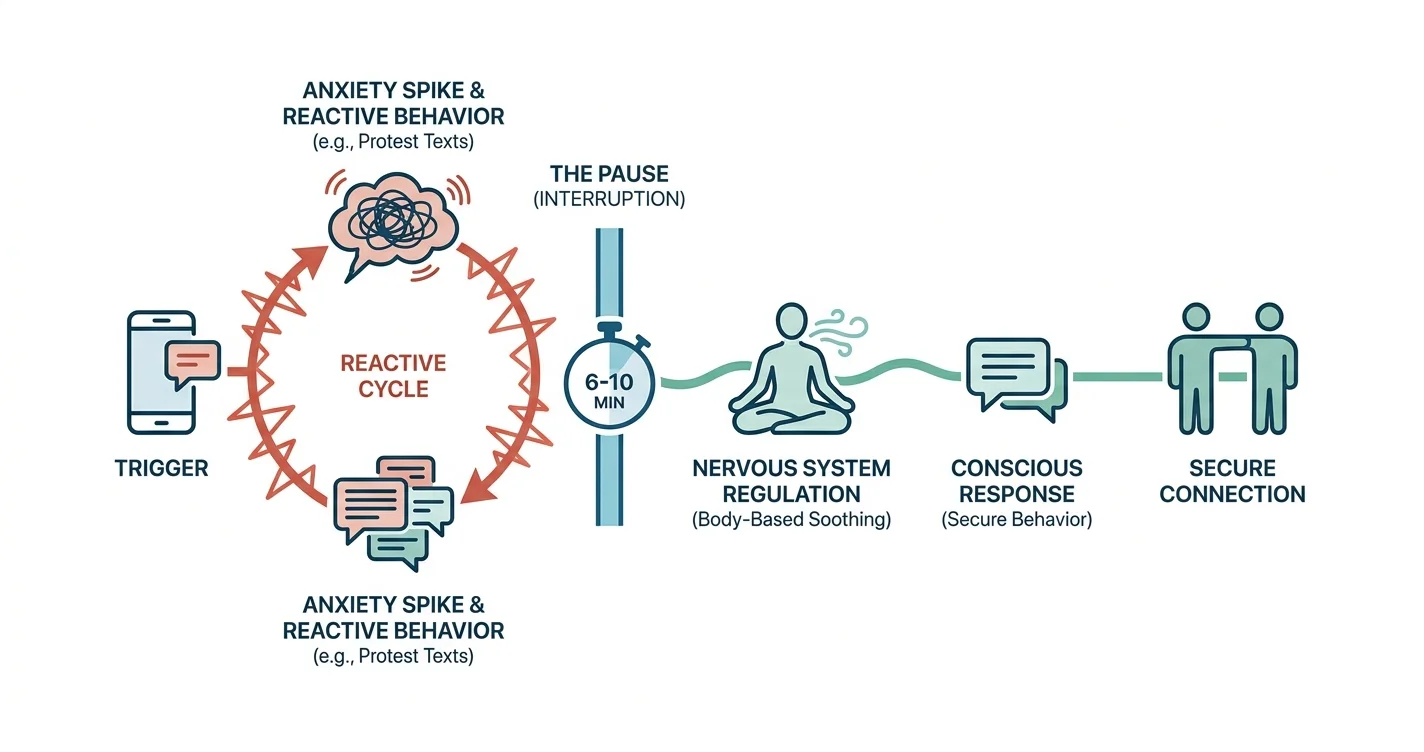
- Protest behaviors like repeat texts and over-apologizing fire within minutes; a 10-minute pause interrupts them.
- The pursuer-withdrawer pattern locks in when anxious attachment meets an avoidant partner; slowing your response
- Nervous system regulation work outperforms insight alone for anxious attachment; the body needs calming before the
- Consistent daily practice over 8 to 12 weeks shifts anxious attachment toward more secure behavior.
Anxious attachment doesn't fade because you finally understand it. It fades when you catch the gap between the trigger and the reaction and interrupt it enough times that a new pattern takes over. Here's how to start doing that this week, in 2026.
TL;DR
- Breaking the anxious attachment cycle starts with catching the trigger-to-reaction gap, not just naming the feeling.
- Protest behaviors like repeat texts and over-apologizing fire within minutes; a 10-minute pause interrupts them.
- The pursuer-withdrawer pattern locks in when anxious attachment meets an avoidant partner; slowing your response breaks both sides.
- Nervous system regulation work outperforms insight alone for anxious attachment; the body needs calming before the mind does.
- Consistent daily practice over 8 to 12 weeks shifts anxious attachment toward more secure behavior.
Why this matters
Anxious attachment isn't a personality flaw. It's a nervous system that learned, early and often, that connection was unreliable, so it stays on alert for signs of loss. That alert system doesn't turn off with insight alone. You can read every article about anxious attachment signs and coping strategies and still send the third follow-up text at 11pm.
The cycle repeats because the behavior gets reinforced fast: you reach out, you get a reply, the anxiety drops for an hour, and the brain files that as proof the strategy works. Breaking it in 2026 means changing what happens in the gap between the trigger and the reach-out, not waiting to feel calm before you act differently.
What you'll need
- A notes app or small notebook you can access fast, mid-panic
- 10 uninterrupted minutes at least once a day for the pause practice below
- One trusted person or tool you can talk to when the urge to check in spikes
- Honesty about your last three triggers, written down before you start
- Patience for a slower timeline than you want — this is weeks, not days
The steps
1. Name the pattern, not the feeling
Anxiety alone doesn't tell you much. "I feel anxious" keeps you stuck in the sensation. "I feel anxious because he didn't text back in two hours and I'm assuming he's losing interest" gives you something to work with. Write the specific story your brain is telling you every time the spiral starts.
This matters because anxious attachment runs on interpretation, not fact. A slow reply becomes evidence of rejection in about ninety seconds if you don't catch it. Understanding what an anxious attachment trigger actually is and how to defuse it turns a vague dread into a specific, checkable thought. Expect this step to take a week of daily logging before patterns get obvious. Common mistake: journaling the feeling only and skipping the story behind it — the story is where the leverage is.
2. Track the six-minute gap
Measure the time between the trigger and the urge to act on it. For most people with anxious attachment, the urge peaks around six minutes after the trigger and starts dropping by minute fifteen if nothing is done.
Set a timer the next time you feel the pull to text, call, or check a partner's activity status. Don't act — just watch the clock. This single habit shows you, with your own data, that the urge is time-limited and not a fire alarm. The mistake here is treating the urge as information about the relationship instead of information about your nervous system in that moment.
3. Build a hard pause before you respond
Once you know the urge peaks and fades, build a non-negotiable pause: 10 minutes minimum before you send anything reactive. Set it as a literal rule, not a suggestion.
During the 10 minutes, do something physical — a short walk, a glass of water, five slow exhales longer than your inhales. This isn't about distraction; it's about giving your body time to downshift out of alarm mode before your fingers touch the keyboard. Expect the first few pauses to feel unbearable. That discomfort is the cycle breaking, not a sign you're doing it wrong. Skipping the pause the first time it's hard is the most common relapse.
4. Write the message you won't send yet
After the pause, write out exactly what you want to say. Then read it back and ask one question: is this asking for reassurance, or is this trying to control someone else's behavior?
Most anxious-attachment texts do both at once — "just wondering if everything's okay :)" is often a reassurance request wearing a casual outfit. If your relationship shows the pursuer-withdrawer pattern, this is the exact moment the cycle either repeats or breaks: you pursuing harder pushes an avoidant partner further away, which spikes your anxiety more, which makes you pursue harder. Rewrite the message so it states a need without demanding an immediate response. Expect this to feel less satisfying in the moment and more effective within a week.
5. Regulate the body before the mind
Anxious attachment lives in the body as much as the thoughts — tight chest, shallow breathing, a racing pulse. Trying to think your way calm while your body is still in alarm mode rarely works.
Use a body-based tool during the spike itself: slow breathing at roughly four seconds in, six seconds out, for two minutes, or pressing your feet flat on the floor and naming five things you can see. This is nervous system work, not distraction, and it's often the missing piece people skip because it feels too simple to matter. Expect a measurable drop in physical intensity within 3 to 5 minutes of consistent practice.
6. Practice self-soothing that doesn't need a reply
The core anxious-attachment habit is outsourcing calm to another person's response. The fix is building three or four self-soothing moves that work without anyone else's participation — no text required, no answer needed.
That might be talking it out loud to yourself, writing the panicked version of the thought and then the calmer rebuttal next to it, or having a structured conversation with a tool built for exactly this moment. Lovon lets you talk through the spike out loud, in real time, when there's no one else to call and the urge to check a partner's phone is climbing — it's not a replacement for a therapist, but it's built with input from PhD psychologists to walk you through the moment rather than leaving you alone with it. Expect to lean on this heavily in month one and less by month three, as you build your own internal version.
7. Rebuild secure behavior one interaction at a time
Security isn't a mood you arrive at — it's a set of repeated behaviors: stating a need directly, tolerating a delayed response, trusting a relationship can survive a few hours of silence. Pick one secure behavior to practice per week rather than trying to overhaul everything at once.
Week one might be "wait one hour before following up on an unanswered text." Week four might be "state a boundary without over-explaining it." Track wins in the same notebook from step one. The common mistake is expecting a straight line — most people relapse into old patterns during high-stress weeks, and that's a normal part of the timeline, not proof the work isn't working.
Troubleshooting
My partner is avoidant, and pausing makes them disappear more. A pause changes your behavior, not theirs. If distance increases regardless of what you do, that's information about the relationship's dynamic, not proof your pause failed.
I still panic-text after three months of practice. Progress in anxious attachment work is measured in frequency and intensity dropping, not disappearing. Three months in, a drop from daily to twice-weekly is real movement.
I feel worse in the moment when I don't check in. That discomfort is the extinction burst — the urge spikes right before it starts fading for good. It passes faster each time you don't act on it.
My triggers hit at 2am with no one to call. Build a self-soothing script you can run alone before you need it, not during the spike. Practicing box breathing or a grounding sequence in a calm moment makes it usable in a panicked one.
I slip back into old patterns after a fight. Conflict spikes cortisol and shrinks your capacity for new behavior temporarily. Treat a slip as data, not failure, and go back to step two the next day.
Tools and resources
- A trigger log — paper or notes app, updated same-day
- A breathing or grounding script you've rehearsed before you need it
- A guide on nervous system dysregulation signs and how to reset it, useful for understanding why the body reacts before the mind catches up
- A support option for the 2am moments when no one else is awake
- A licensed therapist for ongoing work — this guide covers self-directed steps, not clinical treatment
Talk through the spike right now
Voice-based support for the moment the urge to check in hits.
What to do next
Once the reactive behaviors calm down, shift the focus from managing anxiety to building the traits of secure attachment directly — stating needs plainly, tolerating distance without spiraling, trusting repair is possible after conflict. That's a longer project than breaking the cycle, and it runs on the same daily practice, just aimed forward instead of backward.
FAQ
How long does it take to break the anxious attachment cycle?
Most people see a measurable drop in reactive behaviors within 8 to 12 weeks of consistent practice in 2026. Full shifts toward secure attachment patterns often take 6 months or longer, especially inside an existing relationship.
Can you break anxious attachment without a therapist?
Self-directed work — tracking triggers, building a pause, practicing self-soothing — moves the needle on its own. A licensed therapist speeds the process and helps with patterns rooted in early experiences that are harder to see alone.
What triggers an anxious attachment response?
Common triggers include delayed replies, perceived distance, unresolved conflict, and any signal that reads as potential rejection. The trigger itself is often smaller than the reaction it produces.
Is anxious attachment the same as being needy?
No. Anxious attachment is a nervous system pattern formed by early relational experience, not a character trait. The behaviors can look like neediness, but the root is a fear response, not a preference.
Does anxious attachment get worse with an avoidant partner?
Yes, the pursuer-withdrawer dynamic tends to amplify both attachment styles — anxious behaviors increase pursuit, which increases avoidant withdrawal, which increases anxious pursuit further. Breaking it usually requires both partners to change their half of the pattern.
What does secure attachment look like day to day?
Secure attachment looks like stating a need directly, tolerating a few hours of silence without spiraling, and trusting a relationship can survive normal conflict. It's built through repeated small behaviors, not a single mindset shift.
Can anxious attachment come back after you've healed it?
Yes, high-stress periods or a new relationship can reactivate old patterns temporarily. That's a normal relapse, not proof the earlier work failed.
One last thing
The urge to check in almost always peaks before it fades — most people quit the pause right at the worst minute, seconds before the intensity would have dropped on its own. The 2026 version of this work isn't willpower; it's timing the wait long enough to let your own nervous system prove the alarm was wrong.
Related guides
How AI Support Helps You Heal
AI emotional support isn't about replacing human connection — it's about filling the gaps. The moments when you need to talk at 2 AM, when you don't want to burden your friends again, or when you simply need someone to listen without judgment.
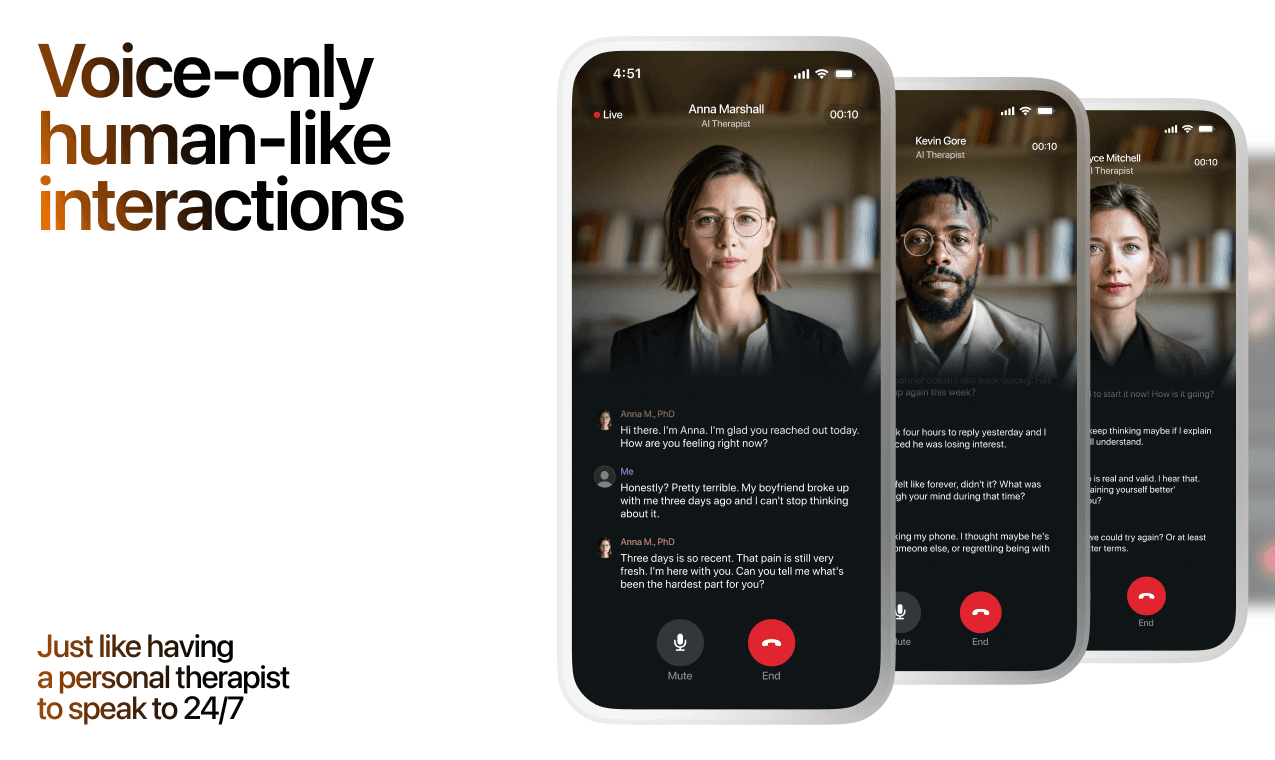
Here's what happens in a typical Lovon session:
You share what's on your mind
There's no script, no intake form, no waiting room. You speak or type whatever you're feeling — in your own words, at your own pace.
Lovon validates and explores
Using frameworks from CBT (Cognitive Behavioral Therapy) and motivational interviewing, Lovon acknowledges your feelings first, then gently helps you explore them. No dismissive "just move on" advice.
You build coping skills together
Lovon doesn't just listen — it actively works with you on evidence-based techniques: thought reframing, urge surfing, behavioral experiments, and more.
What a Session with Lovon Looks Like
When to Seek Professional Help
AI support is a valuable tool, but it's not a replacement for professional care. Please consider reaching out to a licensed therapist if you experience any of the following:
- Persistent thoughts of self-harm or suicide
- Inability to perform daily activities (work, eating, sleeping) for more than 2 weeks
- Turning to alcohol or substances to cope
- Intense anger or desire to harm your ex-partner
- Complete emotional numbness that doesn't improve over time
Crisis Resources (US): If you're in immediate danger, call 988 (Suicide & Crisis Lifeline) or text HOME to 741741 (Crisis Text Line). Available 24/7, free, and confidential.
Outside the US? Find a crisis line in your country
Ready to Start?
Your healing journey can begin right now
1 free conversation. No credit card. No judgment. Just a safe space to process what you're going through.
Frequently Asked Questions
Is AI therapy a replacement for a real therapist?
Is my conversation with Lovon AI private?
How is Lovon different from ChatGPT for emotional support?
Can I use Lovon if I'm already seeing a therapist?
Can I try Lovon for free?
About the Author

The Lovon Editorial Team
Mental Health & Wellness Content Team
The Lovon Editorial Team develops mental health and wellness content designed to make psychological concepts accessible and actionable. Our goal is to bridge the gap between clinical research and everyday life - helping you understand why your mind works the way it does and what you can do about it....
Similar Articles
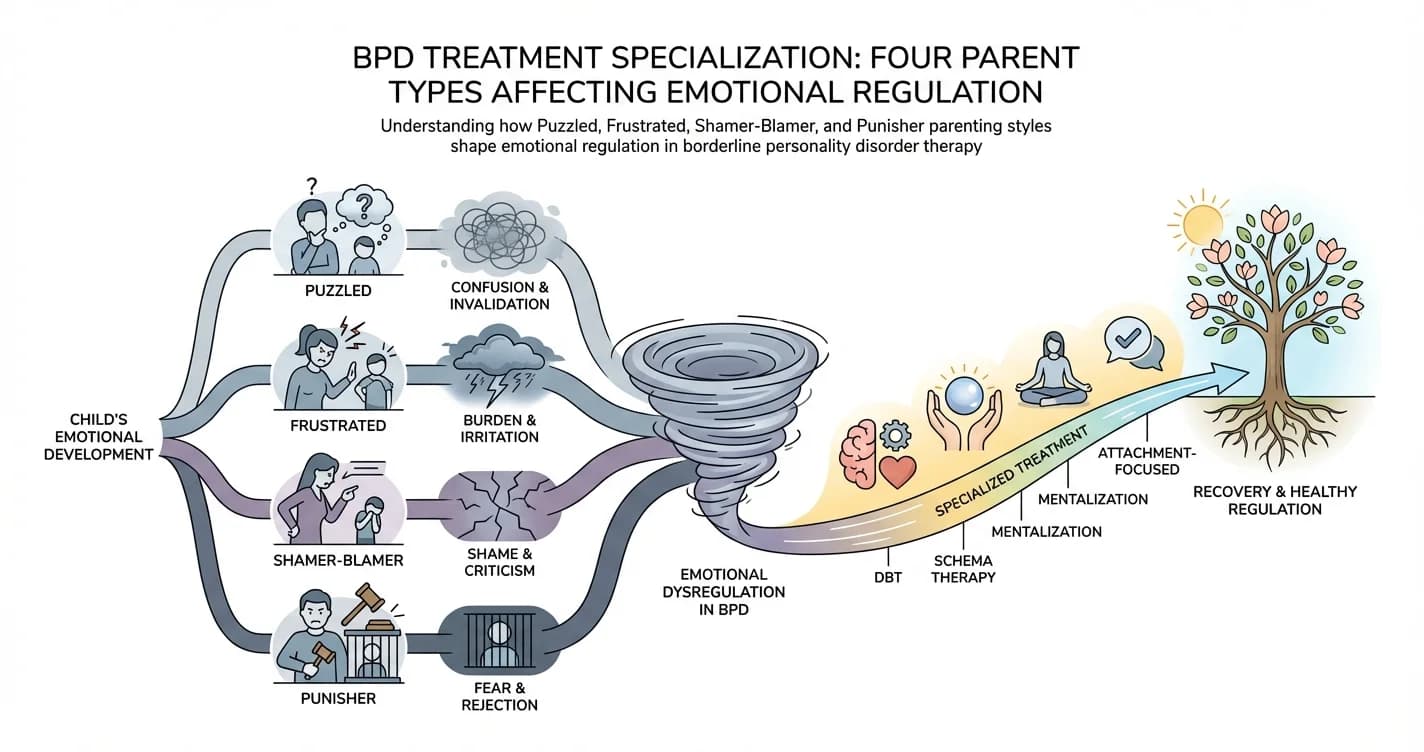
BPD Treatment Specialization: Four Parent Types Affecting Emotional Regulation
For individuals with borderline personality disorder (BPD), emotional regulation difficulties rarely emerge in isolation. Research increasingly suggests that

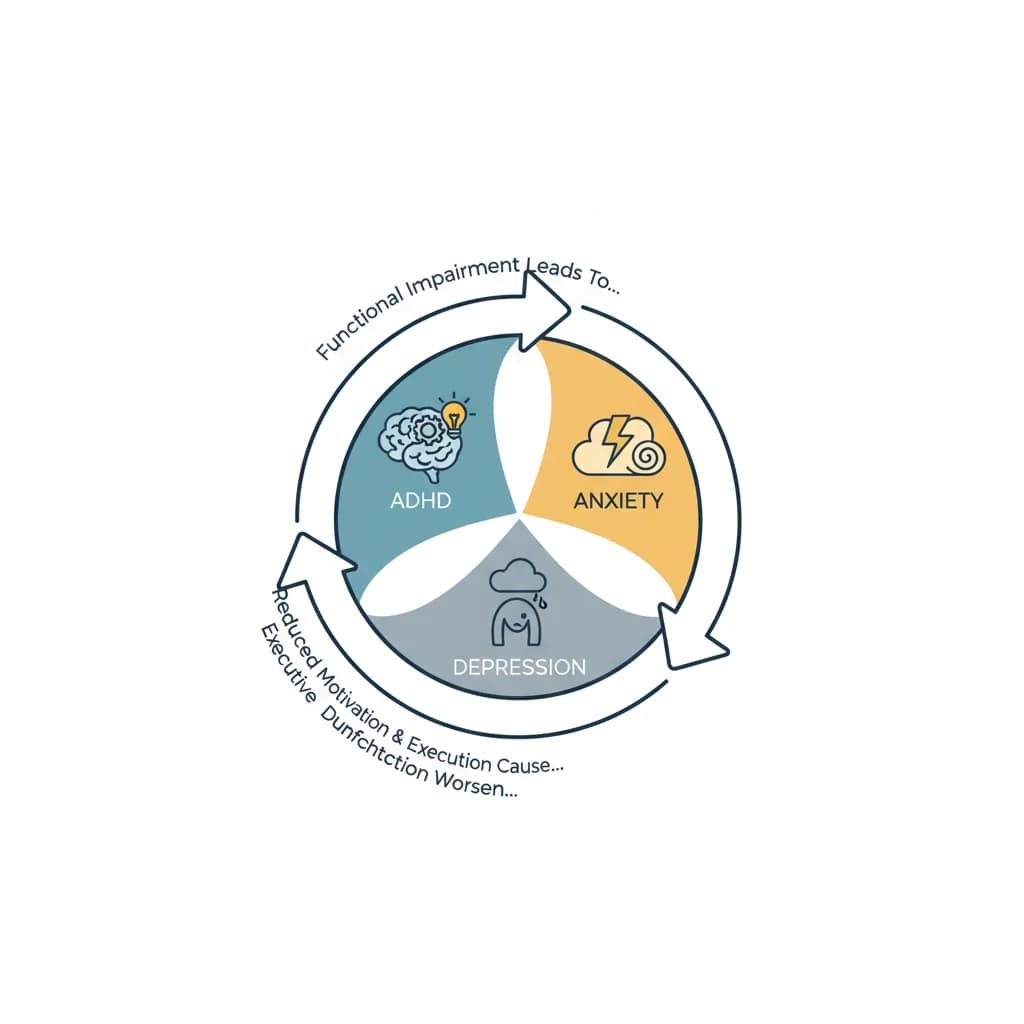
ADHD Comorbidity with Anxiety and Depression Cycles
Understanding the Complex Interplay Between ADHD and Recurring Mental Health Patterns
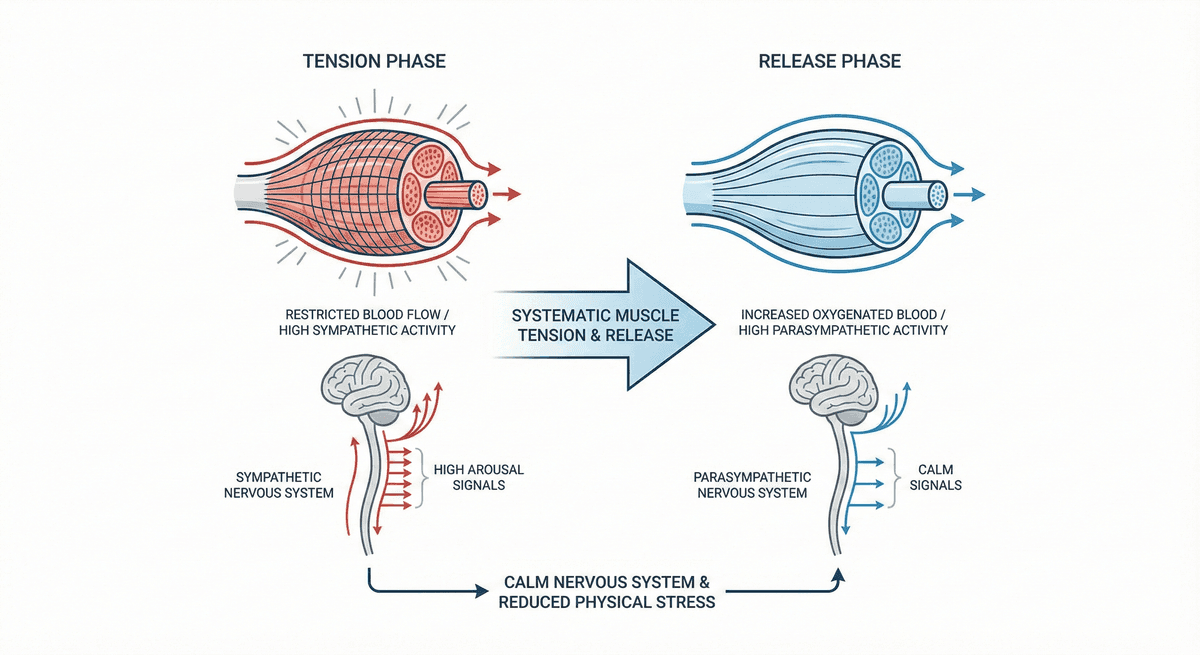
Progressive Muscle Relaxation for Stress Reduction
A systematic muscle group tension and release technique that calms the nervous system and reduces physical stress.
Disclaimer: This article is for informational purposes only and does not constitute medical advice, diagnosis, or treatment. Always seek the advice of your physician or other qualified health provider with any questions you may have regarding a medical condition. If you are in crisis or think you may have an emergency, call 988 (Suicide & Crisis Lifeline) or go to the nearest emergency room. Outside the US? Find a crisis line in your country.