
Emotional Dependence in Relationships: 6 Signs (2026)
Emotional dependence in relationships shows up in 6 specific patterns. Check the signs, avoid the common mistakes, and get a real next step for 2026.

Key Takeaways
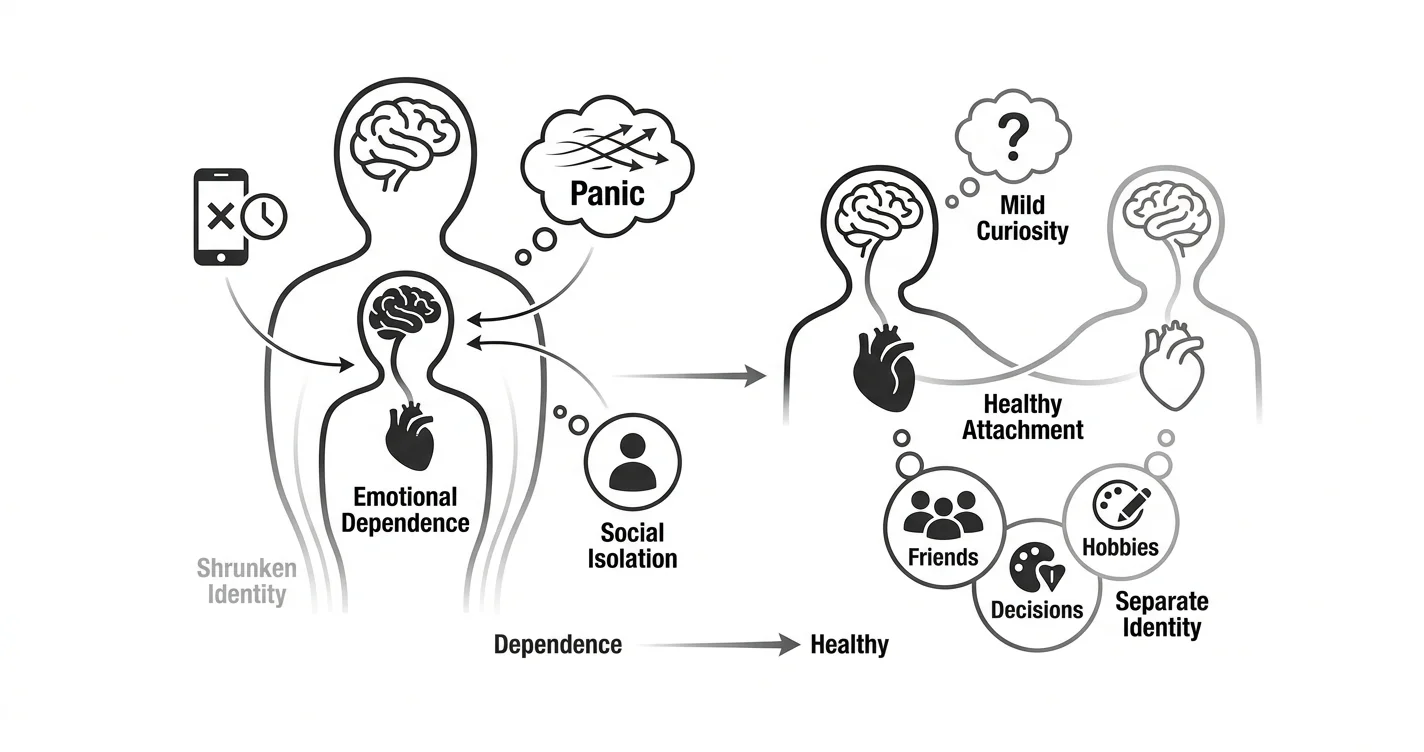
- Emotional dependence in relationships shows up as identity shrinkage first, not just closeness or clinginess.
- Panic when a partner is unreachable for a few hours points to dependence, not a healthy attachment style.
- Codependency and emotional dependence overlap but are not identical — the fix starts with naming your own needs
- A short daily voice check-in, like an AI therapist session, helps you track the pattern between real sessions.
Emotional dependence in relationships doesn't always look like weakness — sometimes it looks like devotion. The line between the two gets clear once you check a few specific patterns: how you react to distance, whose mood runs the day, and whether your own interests have quietly disappeared. This guide gives you six checks to run this week, in 2026, with a plan for what to do once you see the pattern.
TL;DR
- Emotional dependence in relationships shows up as identity shrinkage first, not just closeness or clinginess.
- Panic when a partner is unreachable for a few hours points to dependence, not a healthy attachment style.
- Codependency and emotional dependence overlap but are not identical — the fix starts with naming your own needs separately.
- A short daily voice check-in, like an AI therapist session, helps you track the pattern between real sessions.
Why this matters
Emotional dependence in relationships gets mistaken for romance constantly, because early love genuinely does feel consuming. The difference is duration and cost. Healthy attachment settles after the first few months; dependence keeps escalating, and it starts costing you friendships, hobbies, and decision-making power.
The distinction matters because the fix is different depending on which one you're dealing with. If it's codependency vs love confusion, the work is mostly about rebuilding a separate identity. If it's a temporary anxious spike after a rough patch, the work is smaller and shorter. Naming it correctly in 2026, before it hardens into a years-long pattern, saves you a lot of time.
What you'll need
- 15 minutes alone, without your partner nearby
- A notes app or journal — this works better written than thought
- Honesty about the last two or three conflicts you had, including what you did to avoid them
- Willingness to notice patterns without immediately defending yourself
- Optional: a private space to talk it through out loud, whether that's a trusted friend, a therapist, or a voice session with an AI companion like Lovon
The checks
1. Notice your reaction to absence
This is the fastest tell. Emotional dependence in relationships often reveals itself in the first hour someone goes quiet.
Pay attention to what happens when your partner doesn't text back within a normal window — two hours, an evening, a weekend trip with spotty signal. Healthy attachment produces mild curiosity. Dependence produces a spike: racing thoughts, checking your phone every few minutes, rehearsing worst-case scenarios.
Write down your actual physical reaction the next time it happens — tight chest, stomach drop, restlessness. If the reaction outlasts 20 minutes and you can't self-soothe without contacting them, that's a dependence marker, not a preference. The common mistake here is blaming the silence itself instead of noticing your own nervous system's overreaction to it.
2. Map whose mood sets the weather
Track your mood across three days against your partner's mood. If their bad day reliably becomes your bad day — same irritability, same withdrawal, same tension — you've outsourced your emotional state to them.
This matters because a healthy relationship lets two people have separate weather systems that occasionally overlap. In dependence, there's only one system, and it's theirs. Verdict: if you can't name your own mood without first checking theirs, that's dependence, not empathy.
The mistake people make is calling this being attuned or caring deeply. Attunement means noticing their mood. Dependence means adopting it as your own.
3. Check your circle for shrinkage
List the friends you saw regularly two years ago. Then list who's still in rotation now. A drop of one or two names is normal life. A drop to nearly zero, replaced entirely by time with one person, points to enmeshment in relationships rather than simple closeness.
Same goes for hobbies. If you used to run, paint, or play in a band, and none of that exists anymore because your free time belongs to one person by default, that's identity narrowing — one of the clearest signs of emotional dependence in relationships. The expected outcome of this check is uncomfortable: most dependent partners are surprised by how short their still-mine list has become.
4. Audit your decision-making
Go through the last five decisions you made — what to eat, where to go, whether to take a work opportunity, what to wear to an event. Count how many you made without running them by your partner first.
A healthy pattern has you consulting them on genuinely shared decisions — finances, big moves — while keeping smaller ones your own. If you're seeking approval on things that used to be automatic, that's dependence eroding your decision-making confidence, not thoughtfulness. Common mistake: mistaking constant check-ins for respect. Respect doesn't require permission for what to order at dinner.
5. Name the fear underneath the commitment
Ask yourself directly: if this relationship ended tomorrow, what's the first fear that surfaces? Being alone. Starting over. Never finding someone else. Losing the routine.
Now ask a second question: is any of that fear about missing them specifically, or about missing the structure they provide? Emotional dependence in relationships usually reveals itself in this gap — the fear is about the absence of a role, not the absence of a specific person. That's a hard thing to sit with, and it's the most honest check on this list.
6. Watch how you handle disagreement
Think back to your last three disagreements. Did you say what you actually thought, or did you soften, cave, or drop the topic to avoid tension?
If you consistently choose peace over honesty because conflict feels unbearable rather than just unpleasant, that's dependence protecting the relationship at your own expense. Healthy partners disagree and stay connected. Dependent partners avoid disagreement because the relationship feels too fragile to survive it.
Talk it through before you decide anything
Voice sessions with an AI companion, private and available anytime.
Troubleshooting
I recognize three or four of these but still don't know if it's dependence or just love. Run the absence test again next week under calmer conditions. Dependence patterns repeat consistently; a one-off rough week doesn't.
My partner calls me needy but I don't feel dependent. Outside labels aren't diagnostic. Trust your own checklist results over what they say about you, especially if they benefit from you staying uncertain.
I see the pattern but leaving feels impossible. That's expected — dependence is designed to make separation feel unsurvivable. Start with smaller separations first: a solo weekend, a night with friends, before deciding anything bigger.
I think I'm the dependent one, not them. That's more common than people admit. The checks above work the same either direction — apply them to yourself specifically, not to the relationship in general.
I don't have anyone to talk this through with. Writing it out, as suggested in the prerequisites, works alone. A short voice conversation with an AI therapist app also gives you a place to say it out loud without judgment before deciding your next move.
Tools and resources
- A private notes app for the mood-tracking exercise in check two
- The attachment style quiz if you want to see how your attachment pattern connects to the dependence checks above
- A trusted friend willing to hear your honest answers without picking sides
- A licensed therapist if the pattern involves fear of harm, not just fear of loneliness — Lovon is built for everyday emotional support and explicitly isn't a replacement for that level of care
What to do next
Once you've confirmed the pattern, the actual work starts. Read through practical steps to stop being codependent for the follow-up moves — rebuilding a separate identity, setting boundaries without triggering a fight, and figuring out which parts of the relationship are worth keeping versus which parts were never yours to begin with.
FAQ
What is the difference between emotional dependence and love?
Love allows two separate identities to stay intact; emotional dependence in relationships absorbs one identity into the other. The test is whether your mood, decisions, and social circle still exist independently in 2026, or whether they've all merged into one person's orbit.
Is emotional dependence the same as codependency?
They overlap but aren't identical. Codependency usually involves caretaking and fixing the other person's problems, while emotional dependence is more about relying on someone else to regulate your own mood and decisions.
How long does it take to notice you're emotionally dependent on someone?
Most people notice within a few weeks of running the checks above, though the pattern itself often took months or years to form. The absence test and the mood-mapping check tend to surface the clearest evidence fastest.
Can you be emotionally dependent and still have a healthy relationship?
Not at the same time. Dependence and health aren't opposite ends of a spectrum you balance — dependence actively erodes the qualities that make a relationship healthy, like independent decision-making and separate friendships.
Does emotional dependence get worse over time if untreated?
Yes, generally. The pattern tends to escalate because each avoided conflict and each outsourced decision reinforces the habit, making the next one easier to skip in the same direction.
Is it normal to feel anxious when a partner doesn't respond quickly?
Mild curiosity is normal. A physical panic response lasting more than 20 minutes, with racing thoughts and repeated phone-checking, points toward dependence rather than a normal reaction to silence.
Can an AI app help identify emotional dependence?
An AI voice therapy app can give you a private space to talk through the patterns you're noticing and can walk you through some of the reflection exercises, but it can't diagnose a clinical condition and isn't a substitute for a licensed therapist.
What's the first step to fix emotional dependence in a relationship?
Rebuild one piece of independent identity first — a friendship, a hobby, or a decision you make alone without checking in. Small, consistent independence is more effective early on than one big confrontation.
One last thing
The check most people skip is the decision-making audit, and it's usually the most revealing one. People will readily admit to missing friends but resist admitting they haven't picked their own dinner order in months. That resistance is worth noticing on its own — it's often the clearest sign that emotional dependence in relationships has quietly taken over more ground than anyone wants to admit in 2026.
Related guides
How AI Support Helps You Heal
AI emotional support isn't about replacing human connection — it's about filling the gaps. The moments when you need to talk at 2 AM, when you don't want to burden your friends again, or when you simply need someone to listen without judgment.
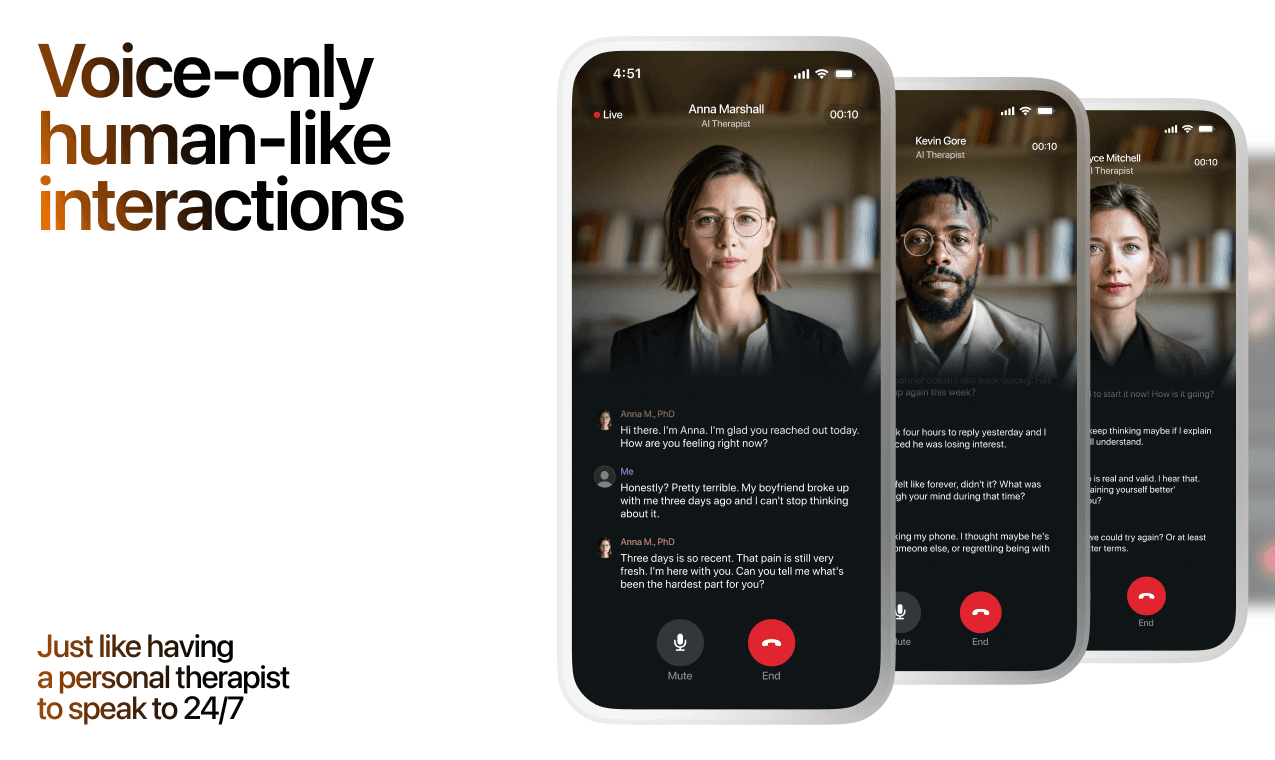
Here's what happens in a typical Lovon session:
You share what's on your mind
There's no script, no intake form, no waiting room. You speak or type whatever you're feeling — in your own words, at your own pace.
Lovon validates and explores
Using frameworks from CBT (Cognitive Behavioral Therapy) and motivational interviewing, Lovon acknowledges your feelings first, then gently helps you explore them. No dismissive "just move on" advice.
You build coping skills together
Lovon doesn't just listen — it actively works with you on evidence-based techniques: thought reframing, urge surfing, behavioral experiments, and more.
What a Session with Lovon Looks Like
When to Seek Professional Help
AI support is a valuable tool, but it's not a replacement for professional care. Please consider reaching out to a licensed therapist if you experience any of the following:
- Persistent thoughts of self-harm or suicide
- Inability to perform daily activities (work, eating, sleeping) for more than 2 weeks
- Turning to alcohol or substances to cope
- Intense anger or desire to harm your ex-partner
- Complete emotional numbness that doesn't improve over time
Crisis Resources (US): If you're in immediate danger, call 988 (Suicide & Crisis Lifeline) or text HOME to 741741 (Crisis Text Line). Available 24/7, free, and confidential.
Outside the US? Find a crisis line in your country
Ready to Start?
Your healing journey can begin right now
1 free conversation. No credit card. No judgment. Just a safe space to process what you're going through.
Frequently Asked Questions
Is AI therapy a replacement for a real therapist?
Is my conversation with Lovon AI private?
How is Lovon different from ChatGPT for emotional support?
Can I use Lovon if I'm already seeing a therapist?
Can I try Lovon for free?
About the Author
The Lovon Editorial Team
Mental Health & Wellness Content Team
The Lovon Editorial Team develops mental health and wellness content designed to make psychological concepts accessible and actionable. Our goal is to bridge the gap between clinical research and everyday life - helping you understand why your mind works the way it does and what you can do about it....
Similar Articles
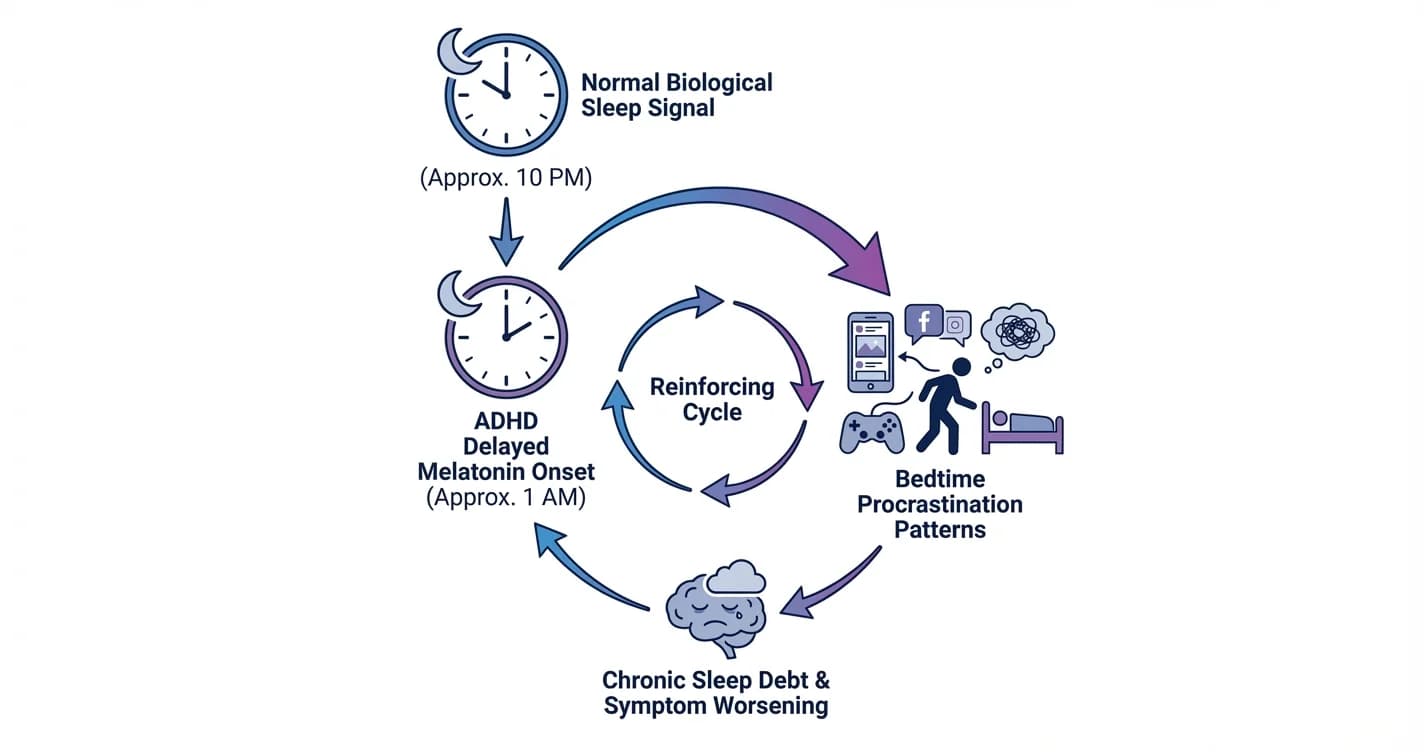
ADHD Sleep Cycle Disruption: Melatonin Delay and Bedtime Procrastination Patterns
Understanding how attention regulation difficulties interfere with natural sleep timing and the nightly wind-down process

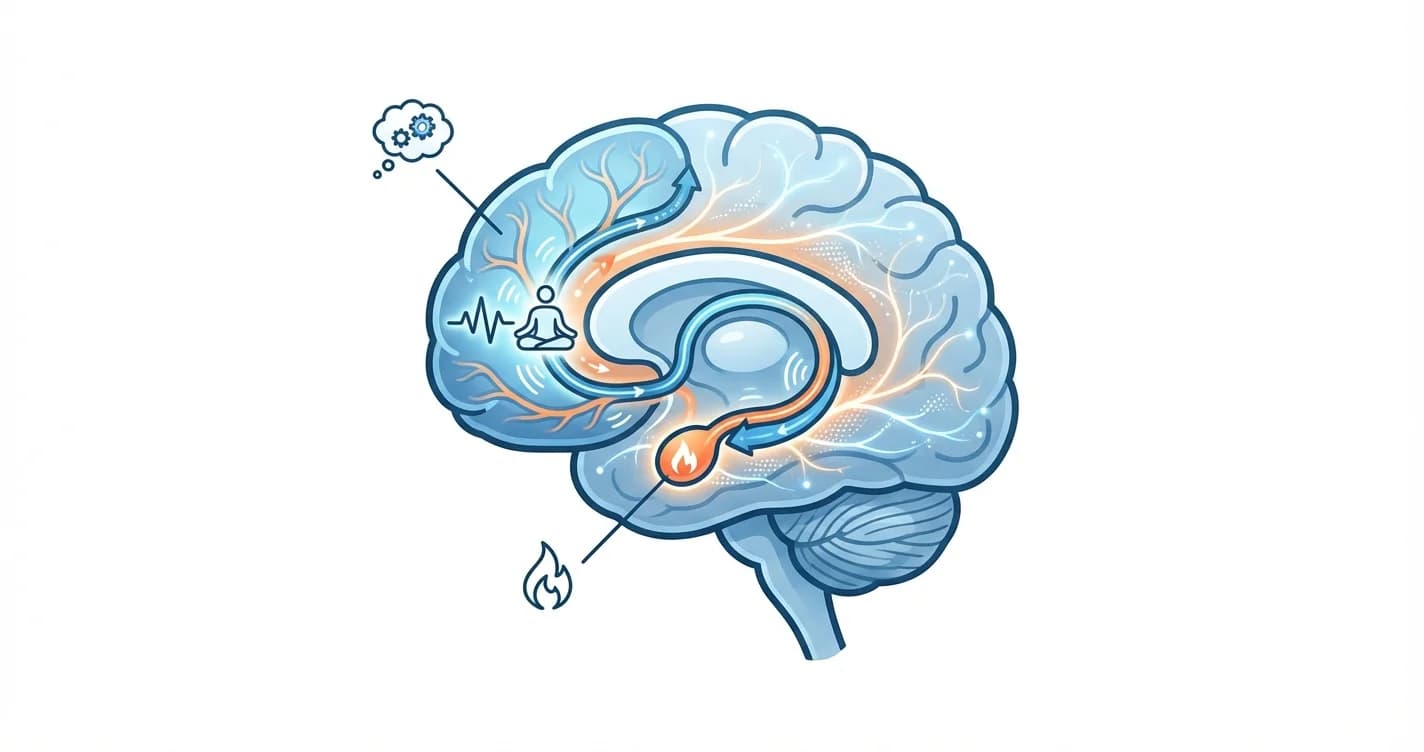
Amygdala and Prefrontal Cortex Connection: Training Emotional Regulation Through Mindfulness
How mindfulness practices reshape neural pathways to strengthen emotional control and reduce reactivity
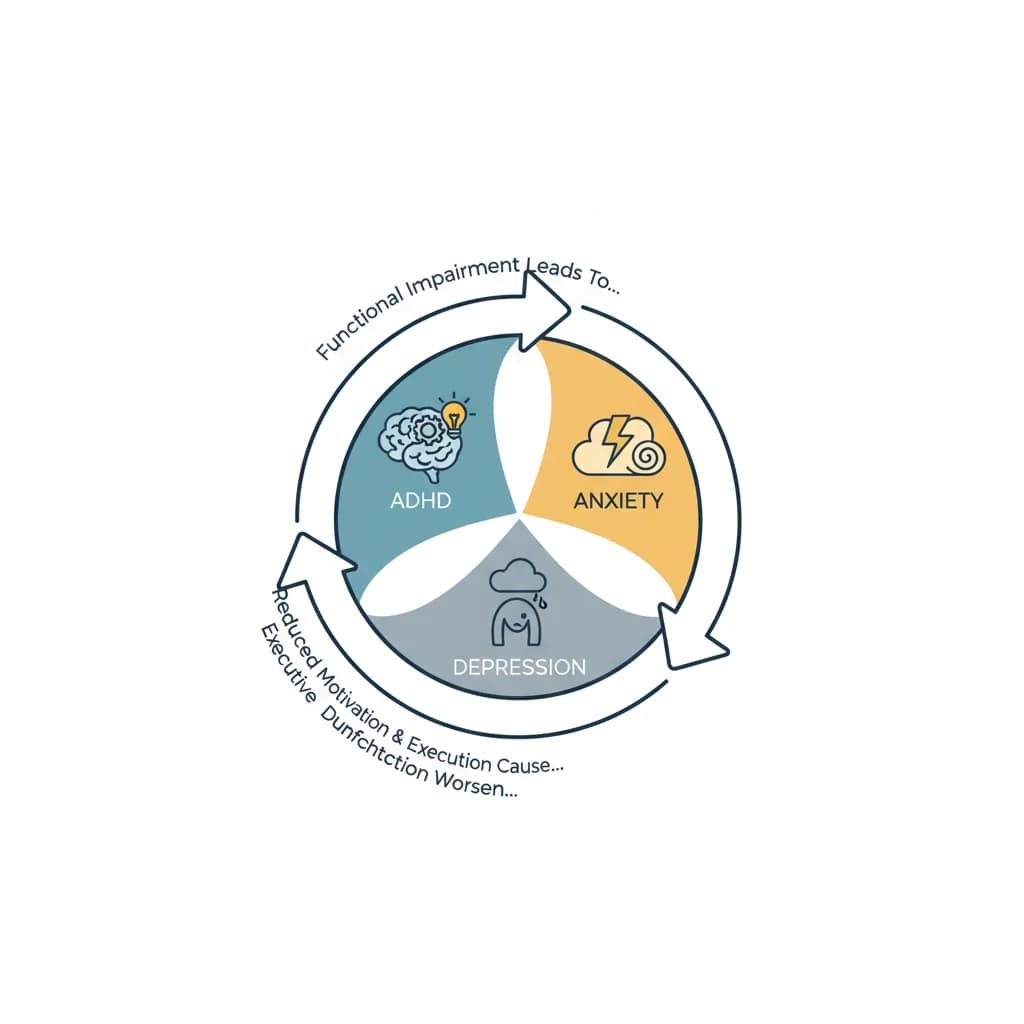
ADHD Comorbidity with Anxiety and Depression Cycles
Understanding the Complex Interplay Between ADHD and Recurring Mental Health Patterns
Disclaimer: This article is for informational purposes only and does not constitute medical advice, diagnosis, or treatment. Always seek the advice of your physician or other qualified health provider with any questions you may have regarding a medical condition. If you are in crisis or think you may have an emergency, call 988 (Suicide & Crisis Lifeline) or go to the nearest emergency room. Outside the US? Find a crisis line in your country.