
Can anxiety cause nausea and stomach problems?
Can anxiety cause nausea? Yes. Learn how stress affects your stomach, what helps with mild symptoms, and which warning signs need medical attention.

Key Takeaways
- Can anxiety cause nausea? Yes. Stress affects digestion through the brain–gut connection, but symptoms alone cannot confirm the cause.
- Severe abdominal pain, blood in vomit, black stools, or dehydration need prompt medical attention.
- Gentle breathing and small sips of fluid are reasonable first steps for mild nausea without warning signs.
- Lovon offers anxiety support through voice conversations, not medical diagnosis or treatment for stomach problems.
Yes, anxiety can cause nausea, stomach cramps, bloating, diarrhea, constipation, and changes in appetite through the connection between your brain and digestive system. But anxiety is not the only possible cause, and feeling anxious does not rule out a medical problem. This 2026 guide explains what helps with mild symptoms and when to get medical care.
TL;DR
- Can anxiety cause nausea? Yes. Stress affects digestion through the brain–gut connection, but symptoms alone cannot confirm the cause.
- Severe abdominal pain, blood in vomit, black stools, or dehydration need prompt medical attention.
- Gentle breathing and small sips of fluid are reasonable first steps for mild nausea without warning signs.
- Lovon offers anxiety support through voice conversations, not medical diagnosis or treatment for stomach problems.
Can anxiety cause nausea and stomach problems?
Anxiety can affect both how your digestive system moves and how strongly you feel sensations from your gut. That can leave you queasy before a presentation, urgently looking for a bathroom during conflict, or feeling too unsettled to eat.
The brain and gut communicate through nerves, hormones, and other signals. Stress changes that communication. The National Institute of Diabetes and Digestive and Kidney Diseases describes irritable bowel syndrome, or IBS, as a disorder of gut–brain interaction; that connection helps explain why emotional stress and digestive symptoms can influence each other.
| Symptom | How anxiety can contribute | What the symptom cannot tell you |
|---|---|---|
| Nausea | Stress changes digestive activity and your perception of gut sensations | Whether anxiety is the only cause |
| Cramps or abdominal discomfort | Stress affects gut movement and sensitivity | Whether pain needs a medical examination |
| Diarrhea or urgency | Stress can change bowel activity | Whether an infection or another condition is present |
| Constipation or bloating | Changes in bowel activity can affect comfort and regularity | Whether you have IBS or another digestive condition |
| Reduced appetite | Feeling tense or nauseated can make eating difficult | Whether ongoing appetite changes are safe to ignore |
For more context, read about whether chronic stress can cause physical illness. A physical stress response is real, even when a test does not identify a structural digestive problem.
Why this matters
Calling nausea “just anxiety” creates two problems: it dismisses real discomfort and risks overlooking another cause. The opposite reaction—treating every stomach sensation as proof of danger—can also increase distress.
The useful approach is to check for warning signs, care for mild symptoms, and arrange an assessment when symptoms persist or recur. You do not have to choose between taking your stomach seriously and addressing anxiety.
For your 2026 care plan, keep both goals in view. Emotional support belongs alongside appropriate medical care, not in place of it.
What does anxiety-related nausea feel like?
Anxiety-related nausea can feel like queasiness, a churning stomach, butterflies, or the sense that you might vomit. You might also notice sweating, trembling, a racing heart, or tension around the same time.
Timing provides clues, not a diagnosis. Symptoms that repeatedly appear before stressful events suggest a possible connection, but a familiar pattern still deserves attention if it changes.
Notice whether discomfort eases after the stressful situation ends. Also notice whether nausea happens when you feel calm, wakes you from sleep, or affects your ability to eat and drink. Those details help a clinician assess the full picture.
Can anxiety make you vomit?
Yes, anxiety can be associated with vomiting, but vomiting should not automatically be attributed to anxiety. Infections, medication effects, migraine, pregnancy, and digestive conditions are among the other possible explanations.
Repeated vomiting, trouble keeping fluids down, or signs of dehydration require medical advice. Do not wait for a calming exercise to work when you are becoming physically unwell.
Why anxiety-related stomach symptoms vary
There is no single stomach response to anxiety. Some people feel nauseated, while others mainly notice bowel changes or a loss of appetite.
Several factors help explain the differences:
- Your stress response: Anxiety affects the nervous system, which helps regulate digestion and bodily arousal.
- Gut sensitivity: Some people experience digestive sensations more intensely, including people with disorders of gut–brain interaction.
- Existing digestive conditions: Anxiety can worsen symptoms of an existing condition without being its sole cause.
- Eating and drinking patterns: Missed meals, dehydration, and foods or drinks that trigger your usual symptoms can complicate nausea.
- Medicines and substances: Some medicines cause nausea, and caffeine can increase anxiety symptoms in susceptible people.
- Fear of the sensation: Worrying about vomiting or urgently needing a bathroom can add distress to the original discomfort.
These factors can overlap. A medical review can address digestive symptoms while mental health support addresses the worry and avoidance surrounding them.
What can you do when anxiety makes you nauseated?
For mild nausea without warning signs, start with gentle steps rather than forcing yourself to feel calm. The aim is to support your body and reduce distress, not to prove that anxiety caused the symptom.
Start with a safety check
Ask whether the nausea is familiar and mild or new, severe, or different from your usual pattern. Check for significant pain, bleeding, fainting, or difficulty keeping fluids down before treating it as an anxiety episode.
If you are unsure, contact a healthcare professional. A history of anxiety does not make new symptoms automatically harmless.
Let your breathing become gentle
Sit somewhere comfortable and let your shoulders loosen. Breathe at an easy pace without taking repeated large breaths or holding your breath.
Overbreathing can add dizziness and tingling to an already uncomfortable moment. If concentrating on breathing makes you more anxious, shift your attention to your surroundings instead.
Use your senses to reconnect with the room
Try the familiar grounding sequence: notice 5 things you see, 4 things you feel, 3 things you hear, 2 things you smell, and 1 thing you taste. Skip any part that feels unpleasant or inaccessible.
This exercise redirects attention; it does not diagnose nausea or guarantee relief. You can use a simpler version by describing the color, texture, and shape of one nearby object.
Support hydration and eating
Take small sips of fluid rather than drinking a large amount at once. If you feel able to eat, choose a small amount of food you usually tolerate.
Do not force a large meal, but avoid making prolonged food restriction your coping strategy. Get medical advice if nausea repeatedly interferes with eating or drinking.
Choose the next useful action
Once you have checked for warning signs, decide what you need next: a quieter space, a manageable task, emotional support, or medical advice. Repeatedly checking your stomach for improvement can keep your attention fixed on the discomfort.
A useful coping plan in 2026 should remain simple enough to use while you feel unsettled. You do not need to complete every exercise before asking for help.
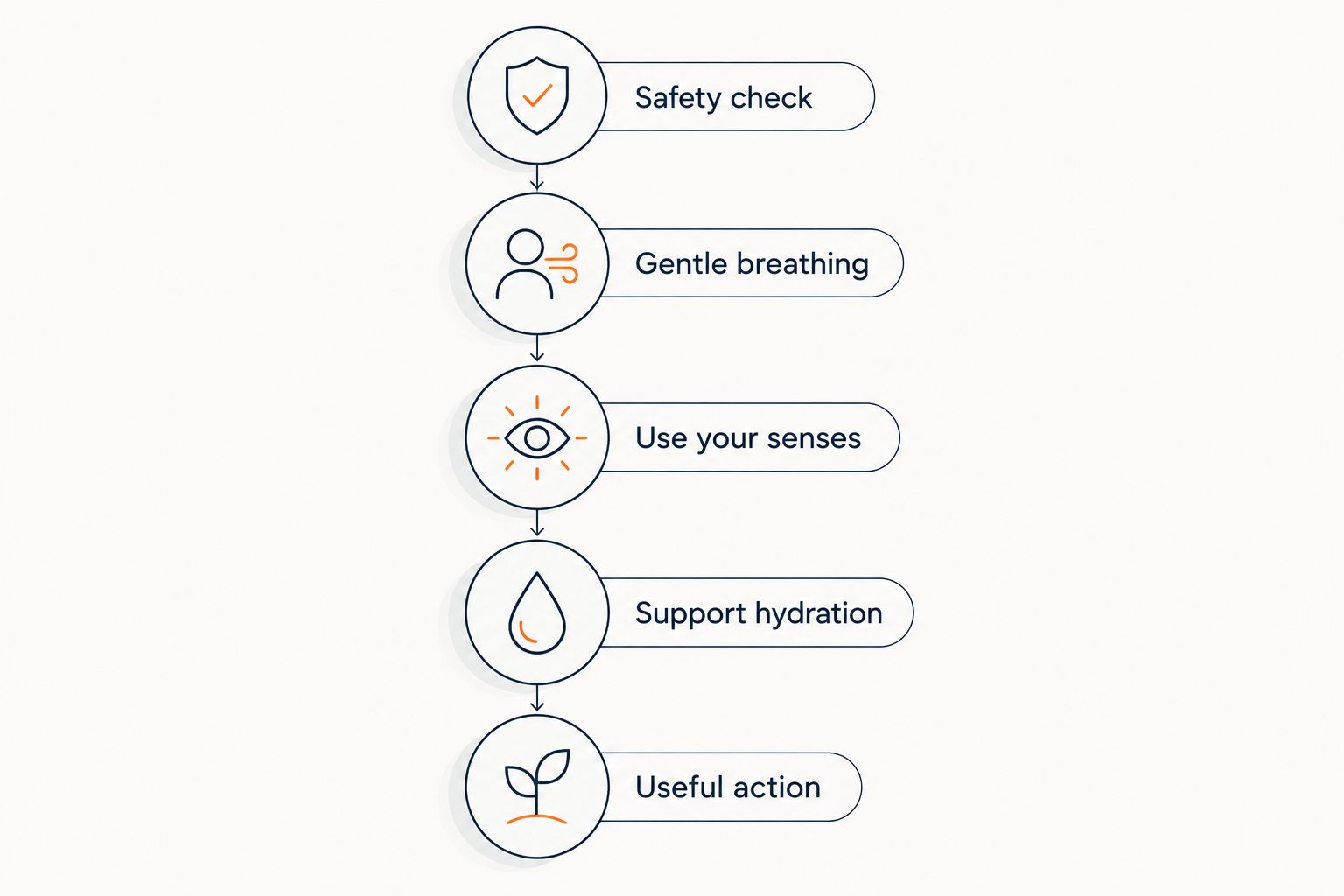 Steps for responding to mild nausea, from a safety check to choosing a useful action
Check for warning signs before using anxiety coping tools.
How can you tell whether nausea is anxiety or something else?
You cannot reliably identify the cause of nausea from the sensation alone. Anxiety, reflux, infections, medication effects, and other conditions can produce overlapping symptoms.
Instead of trying to settle the question through symptom searches, record a short description for your appointment. Include when symptoms started, whether you vomited, any bowel changes, what you ate, medicines or supplements you take, and what was happening emotionally.
Mention possible pregnancy when relevant. Tell the clinician about unintentional weight loss, symptoms that interrupt sleep, and any effect on your usual activities.
Improvement during relaxation is useful information, but it is not proof that no medical problem exists. Likewise, nausea during a calm moment does not rule out anxiety as one contributing factor.
Can anxiety cause nausea every day?
Yes, ongoing anxiety can contribute to frequent nausea, but daily nausea needs assessment rather than repeated self-diagnosis. A clinician can consider digestive conditions, medication effects, and other causes alongside anxiety.
If eating becomes difficult or you begin avoiding work, school, travel, or social contact, mention that too. The impact on your life matters even when symptoms are not severe.
Does calming down prove the nausea was caused by anxiety?
No, feeling better after calming down does not confirm the cause. Symptoms can fluctuate for several reasons, and anxiety can coexist with a digestive condition.
Use relief as an opportunity to continue your day safely, not as a diagnostic test. Keep any planned assessment if symptoms are recurring or changing.
When should you get medical help?
Seek urgent medical attention for severe or worsening abdominal pain, blood in vomit, vomit that looks like coffee grounds, or black, tarry stools. Significant dehydration, fainting, or confusion also needs prompt assessment.
Call 911 for a suspected medical emergency, including nausea with chest pain, severe trouble breathing, or collapse. Do not assume these symptoms are a panic attack because you have experienced anxiety before.
Contact a healthcare professional when you repeatedly vomit, cannot keep fluids down, or notice very little urine and marked dizziness. Arrange an appointment for persistent or recurring nausea, unexplained weight loss, difficulty swallowing, or changes that interfere with normal eating.
The safety rule for 2026 is straightforward: new or worsening symptoms deserve a fresh assessment. An earlier anxiety diagnosis does not explain every later symptom.
Which kind of support fits your situation?
Different kinds of support address different needs. Choose medical care for unexplained physical symptoms and mental health care for anxiety that repeatedly disrupts your life.
| Support | Best for | Benefit | Limit |
|---|---|---|---|
| Medical assessment | New, persistent, changing, or concerning stomach symptoms | Evaluating physical causes and discussing treatment | Does not replace ongoing anxiety care when that is also needed |
| Licensed mental health care | Recurring anxiety, panic, avoidance, or fear of vomiting | Structured assessment and treatment for anxiety | Does not replace evaluation of unexplained digestive symptoms |
| Lovon anxiety support | Everyday emotional support and self-reflection through voice conversations | On-demand conversation and coping tools | Not a licensed clinician; cannot diagnose nausea or provide emergency care |
| Self-guided coping | Mild, familiar symptoms without warning signs | A practical way to respond in the moment | Cannot establish the cause or replace needed care |
Lovon is best for everyday anxiety support through voice conversations, not diagnosing stomach symptoms. Use Lovon to talk through worries or practice coping tools while keeping medical decisions with a qualified healthcare professional.
When choosing anxiety support in 2026, ask what the service can do and where its limits begin. A helpful conversation is not the same as a medical examination or licensed treatment.
FAQ
Can anxiety cause nausea even if I don't feel worried?
Yes, anxiety-related physical symptoms can appear before you consciously notice worry. Nausea without obvious worry still has other possible causes, so recurring or unexplained symptoms deserve medical assessment.
Can anxiety cause diarrhea and stomach cramps?
Yes, anxiety can contribute to diarrhea and stomach cramps by affecting gut movement and sensitivity. Persistent symptoms, bleeding, severe pain, or dehydration need medical attention rather than an assumption that stress is responsible.
How long does anxiety nausea last?
Anxiety-related nausea has no single reliable duration. Seek medical advice when nausea persists, repeatedly returns, affects eating or drinking, or comes with warning signs.
What should I eat when anxiety makes me nauseated?
Choose small amounts of foods you usually tolerate, and take small sips of fluid. Do not force a large meal; get medical advice if you cannot keep fluids down or repeatedly struggle to eat.
Can anxiety nausea turn into vomiting?
Yes, anxiety can be associated with vomiting, but vomiting also has many other causes. Repeated vomiting, dehydration, blood in vomit, or significant pain requires medical attention.
Should I take medicine for anxiety-related nausea?
Ask a clinician or pharmacist before choosing medicine for recurring nausea. The right approach depends on the cause, your other medicines, and your health history; do not stop prescribed treatment on your own.
Can an anxiety app tell me why my stomach hurts?
No, an anxiety app cannot establish the cause of stomach pain or rule out a medical problem. Use emotional support tools for coping, and seek medical assessment for unexplained, persistent, or concerning symptoms.
One last thing
You do not need to eliminate every stomach sensation before taking a useful next step. After checking for warning signs, focus on drinking, eating as tolerated, and choosing appropriate support rather than repeatedly testing whether the nausea has disappeared.
Your discomfort is real, and the cause deserves care rather than guesswork. Treat the physical symptoms and the anxiety as connected possibilities—not competing explanations.
Related guides
How AI Support Helps You Heal
AI emotional support isn't about replacing human connection — it's about filling the gaps. The moments when you need to talk at 2 AM, when you don't want to burden your friends again, or when you simply need someone to listen without judgment.
Here's what happens in a typical Lovon session:
You share what's on your mind
There's no script, no intake form, no waiting room. You speak or type whatever you're feeling — in your own words, at your own pace.
Lovon validates and explores
Using frameworks from CBT (Cognitive Behavioral Therapy) and motivational interviewing, Lovon acknowledges your feelings first, then gently helps you explore them. No dismissive "just move on" advice.
You build coping skills together
Lovon doesn't just listen — it actively works with you on evidence-based techniques: thought reframing, urge surfing, behavioral experiments, and more.
What a Session with Lovon Looks Like
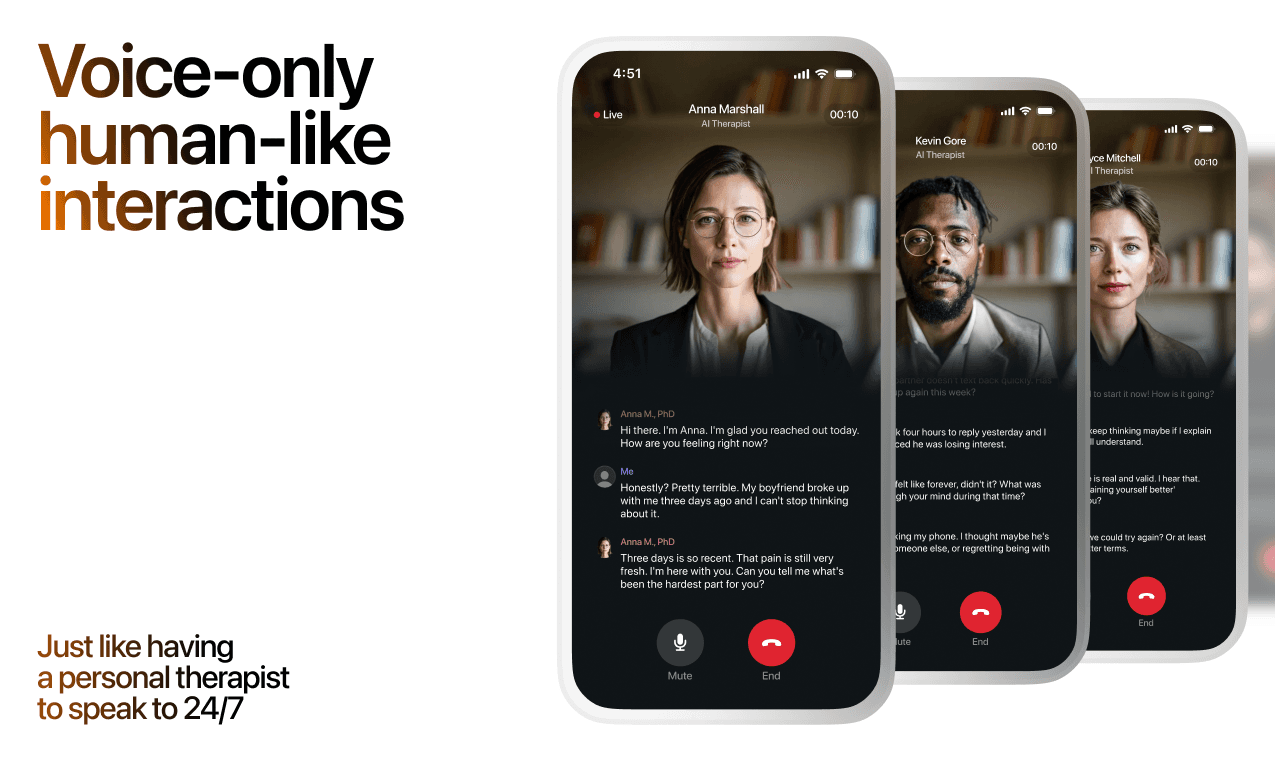
Lovon is AI support, not a replacement for professional care. If things have been hard to get through for weeks, or you are thinking about harming yourself, talk to a doctor or a licensed therapist.
Ready to Start?
Your healing journey can begin right now
A 3-day trial. No judgment. Just a safe space to process what you're going through.
Frequently Asked Questions
Is Lovon a replacement for a real therapist?
Is my conversation with Lovon AI private?
How is Lovon different from ChatGPT for emotional support?
Can I use Lovon if I'm already seeing a therapist?
Can I try Lovon before subscribing?
About the Author

The Lovon Editorial Team
Mental Health & Wellness Content Team
The Lovon Editorial Team develops mental health and wellness content designed to make psychological concepts accessible and actionable. Our goal is to bridge the gap between clinical research and everyday life - helping you understand why your mind works the way it does and what you can do about it....
Related articles
- Can lack of sleep make anxiety worse?
Can lack of sleep make anxiety worse? Yes. Learn how sleep and worry feed each other, what helps tonight, and when to…
- Why Chest Feels Tight When Anxious (2026 Fix)
Chest tight when anxious? Tensed muscles and shallow breathing are the cause in 2026 guidance. Get the 7-step fix and…
- Polyvagal Theory Applications for Stress Response
Your heart races before a difficult conversation. Your stomach tightens during conflict. You feel exhausted after a…
- How to Start AI Therapy for the First Time (2026)
How to start with AI mental health support in 2026, in under 10 minutes. Lovon's voice app offers on-demand…
See also
Quizzes
- Rejection Sensitivity Test: Free 12-Question Check
See how strongly you expect and read rejection.
- Relationship Schema Test: Are Your Feelings Welcome?
See which belief edits what you share, in 3 minutes.
Free tools
- Box Breathing
Four equal sides: in for four, hold for four, out for four, hold for four. Follow the circle for one, three or five…
- Sleep Meditation for Anxiety
For lying in bed with a mind that will not stop. About twelve minutes of slower breathing, a place to put the worries…
From the wiki
- Why do I keep dreaming about my ex?
Recurring dreams about an ex usually mean your brain is still consolidating a relationship that took up years of memory…
Disclaimer: This article is for informational purposes only and does not constitute medical advice, diagnosis, or treatment. Always seek the advice of your physician or other qualified health provider with any questions you may have regarding a medical condition. If you are in crisis or think you may have an emergency, call 988 (Suicide & Crisis Lifeline) or go to the nearest emergency room. Outside the US? Find a crisis line in your country.