
Can anxiety medication stop working over time?
Can anxiety medication stop working? Yes. Learn why symptoms return, how medication types differ, and what to ask your prescriber before making changes.

Key Takeaways
- Can anxiety medication stop working? Yes, but returning anxiety does not prove medication tolerance.
- Benzodiazepines and daily antidepressants have different tolerance, withdrawal, and long-term treatment considerations.
- Ask your prescriber to review missed doses, new medicines, sleep, stress, and changing symptoms.
- Lovon offers anxiety coping support between appointments, not medication management or licensed clinical care.
Yes, anxiety medication can become less effective over time, but returning symptoms do not automatically mean you have developed tolerance. Missed doses, new stress, medication interactions, and changes in your health can also explain why treatment feels different. The safe next step in 2026 is a review with your prescriber—not increasing, switching, or stopping medication yourself.
TL;DR
- Can anxiety medication stop working? Yes, but returning anxiety does not prove medication tolerance.
- Benzodiazepines and daily antidepressants have different tolerance, withdrawal, and long-term treatment considerations.
- Ask your prescriber to review missed doses, new medicines, sleep, stress, and changing symptoms.
- Lovon offers anxiety coping support between appointments, not medication management or licensed clinical care.
Can anxiety medication stop working over time?
Anxiety medication can lose some of its benefit, but the reason matters more than the label. Your prescriber needs to distinguish reduced response from a return of anxiety, withdrawal symptoms, side effects, or another health problem.
If you previously felt well, anxiety returning after years of feeling fine does not erase that progress. It means your current symptoms deserve attention.
Different medication groups require different questions. This comparison explains their usual roles and limitations; it is not a guide to choosing a prescription.
| Medication group | Usual role | Benefit | Limitation when symptoms return |
|---|---|---|---|
| SSRIs and SNRIs | Ongoing treatment for anxiety disorders | Can reduce persistent anxiety | Benefit is not immediate; missed doses and discontinuation symptoms can complicate the picture |
| Benzodiazepines | Short-term or selected use under medical supervision | Can relieve anxiety quickly | Tolerance, physical dependence, sedation, and withdrawal require particular caution |
| Buspirone | Ongoing treatment, particularly for generalized anxiety | An option distinct from benzodiazepines | Not an immediate rescue medicine; consistent use matters |
| Beta blockers | Selected physical symptoms, such as trembling or a racing heart | Can reduce some bodily signs of anxiety | Do not address every part of an anxiety disorder and are unsuitable for some people |
A medicine that helps one symptom is not necessarily failing because another symptom remains. Tell your prescriber whether the change involves worry, panic, sleep, physical tension, or your ability to function.
Why this matters
When anxiety returns, it is easy to assume you need a stronger dose. More medication is not automatically the right answer. A dose change will not resolve every cause of worsening symptoms, and it can introduce additional side effects.
For your 2026 treatment review, focus on what changed rather than trying to prove that the medicine has failed. A clear timeline gives your clinician something specific to assess.
You do not need to wait until you feel overwhelmed to ask for help. Anxiety that disrupts work, relationships, sleep, or everyday tasks is enough reason to contact your treatment team.
SSRIs and SNRIs: returning symptoms need a broader review
SSRIs and SNRIs are antidepressants also used to treat anxiety disorders. Some people experience reduced benefit after an earlier response. However, symptoms alone cannot establish that your body has become tolerant to the medicine.
Your prescriber will consider whether the original response was complete, whether doses have been consistent, and whether circumstances have changed. New depression, disrupted sleep, or increased stress can affect how well your overall treatment plan is meeting your needs.
Missing doses or stopping certain antidepressants can cause discontinuation symptoms, including dizziness, nausea, sleep changes, and anxiety. These symptoms can resemble a return of the condition being treated.
Do not stop an antidepressant to test whether it still works. Ask your pharmacist or prescriber what to do about missed doses, and follow instructions for your specific medicine rather than doubling up yourself.
Benzodiazepines: tolerance and dependence need particular care
Benzodiazepines can relieve anxiety quickly, but repeated use can lead to tolerance to some effects. Physical dependence can also develop with prescribed use. Dependence is not the same as addiction, although both require careful clinical attention.
Rebound anxiety means anxiety returns more intensely as a medicine wears off or after it is reduced. That experience can feel like the original problem getting worse, even when medication withdrawal is part of the explanation.
Do not abruptly stop a regularly used benzodiazepine. Withdrawal can be dangerous and can include seizures. A clinician must individualize any reduction plan; someone else's taper schedule is not a safe substitute.
The FDA's boxed-warning guidance for benzodiazepines addresses abuse, misuse, addiction, physical dependence, and withdrawal. Those safety distinctions remain central to this 2026 overview. Tell your prescriber if you are taking extra doses or running out early, without treating that conversation as a confession or a personal failure.
Why anxiety medication seems to work differently
Several changes can make a previously helpful prescription feel less effective. These are questions for a clinical review, not conclusions to draw on your own.
- Dose consistency: Missed doses, refill gaps, or changes in timing can affect treatment and trigger withdrawal symptoms with some medicines.
- Stress and sleep: Bereavement, conflict, heavier responsibilities, and poor sleep can increase symptoms despite ongoing treatment.
- Other substances: Caffeine, alcohol, cannabis, supplements, and other medicines can affect anxiety, sedation, or medication safety.
- Physical health: Thyroid problems and other medical conditions can produce symptoms that overlap with anxiety.
- A changing symptom pattern: Depression, trauma-related symptoms, or another condition can require a different treatment approach.
- Reduced medication response: A genuine loss of benefit is possible, but it needs assessment alongside these other explanations.
Bring up changes even when they seem unrelated. A new supplement or an altered work schedule belongs in the conversation just as much as a new prescription does.
What should I do if my anxiety medication feels less effective?
Contact your prescriber and describe the change before adjusting your medication. If you cannot reach the prescriber, a pharmacist can answer medication-specific questions about missed doses and interactions, while you arrange clinical follow-up.
Use this sequence to prepare for a 2026 medication review:
- Check instructions. Confirm the medicine name, prescribed dose, timing, and whether it is intended for regular or as-needed use. Do not change the instructions yourself.
- Record changes. Note when symptoms returned, what they feel like, and whether anything changed around the same time.
- List substances. Include prescriptions, nonprescription medicines, supplements, caffeine, alcohol, and cannabis. Be direct about actual use.
- Contact care. Explain how symptoms affect sleep, work, eating, relationships, or safety. Ask how soon you should be assessed.
The purpose is not to arrive with a diagnosis. It is to make the appointment more useful and reduce the chance that an important detail gets lost.
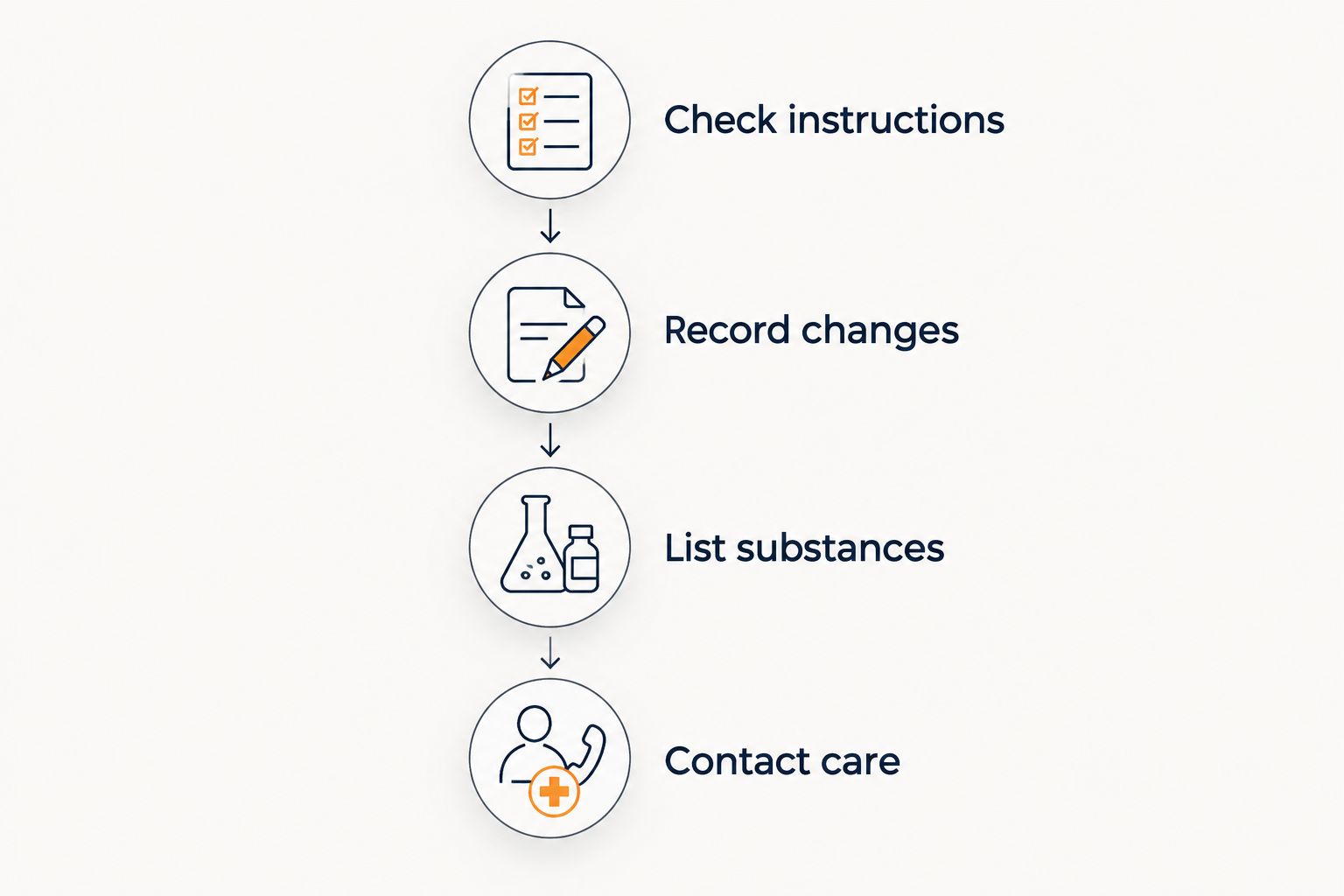 Four steps for preparing to discuss reduced medication benefit with a prescriber
Prepare the details before changing the treatment plan.
What should I write down before my appointment?
An optional log for 7 days can help organize your observations, but do not delay contacting your clinician to complete it. Spend 1 minute on a daily entry rather than checking symptoms constantly.
Record your main symptom, medication timing, sleep, and anything unusual that day. If a rating helps, use a 0–10 scale consistently; it is a personal tracking tool, not a diagnosis or a rule for changing doses.
Describe function as well as feelings. Being able to attend work but struggling to enter a grocery store tells your clinician more than simply saying that anxiety is worse.
Does losing benefit mean I need a higher dose?
No. Reduced benefit does not automatically mean you need a higher dose. Your prescriber might review consistency, interactions, side effects, the diagnosis, psychotherapy, or the medicine itself before deciding what to change.
A higher dose can increase side effects without addressing the actual cause of returning symptoms. Tell your clinician what you want treatment to help you do, not just which symptoms you want removed.
Useful questions include:
- Does this pattern sound like returning anxiety, withdrawal, or a side effect?
- Are any of my medicines or supplements interacting?
- Would psychotherapy address symptoms the medication is not covering?
- What changes require an earlier call, and when should we follow up?
What if anxiety overlaps with ADHD or another condition?
Anxiety and ADHD can coexist, and difficulty concentrating does not establish which condition is responsible. Poor sleep, persistent worry, depression, and medication effects can also interfere with attention.
An assessment for treating anxiety and ADHD needs to consider both symptom patterns and medication safety, rather than assuming that more anxiety medication will resolve every concentration problem. Bring examples of when attention problems occur and whether they existed before the anxiety worsened.
Do not use a checklist or an app to decide that your diagnosis is wrong. Ask your clinician whether your current symptoms warrant a broader evaluation, particularly if they differ from the symptoms that originally improved.
What can help while I wait for a medication review?
Keep following your prescription unless a clinician gives different instructions. If you suspect a serious reaction, seek urgent medical advice rather than waiting for a routine appointment.
Between appointments, choose manageable support: a regular sleep schedule, gentle movement if appropriate, and a conversation with someone you trust. Grounding or comfortable, unforced breathing can help you respond to distress without turning the moment into a medication experiment.
Lovon is best suited to people seeking voice-based anxiety coping support between clinical appointments. Lovon offers emotional support, coping tools, and self-reflection through voice conversations. It is not a licensed clinician and cannot prescribe, adjust medication, or replace an assessment.
The benefit of Lovon anxiety support is a place to talk through what you are feeling; the limit is that a conversation cannot determine whether your prescription has stopped working. Keep medication decisions with your prescriber, and use coping support as an addition—not a replacement.
When should I get urgent help?
Do not assume that every new or severe symptom is anxiety. New severe chest pain, serious trouble breathing, fainting, seizures, or a suspected overdose require urgent medical attention. In the United States, call 911 for an immediate medical emergency.
Seek prompt medical assessment for marked agitation, fever with confusion or muscle stiffness, or unusually elevated energy with very little need for sleep, especially after a medication change. These symptoms need clinical evaluation rather than an online explanation.
If you are thinking about suicide or self-harm, call or text 988 in the United States. If you have taken steps to harm yourself or cannot stay safe, call 911 or go to an emergency department. These crisis routes apply in 2026; an emotional-support app is not emergency care.
FAQ
Can anxiety medication stop working after years?
Yes, anxiety medication can become less effective after years, but returning symptoms do not establish medication tolerance. Your prescriber should also review missed doses, stress, sleep, interactions, and changes in your health.
How do I know whether my anxiety medication has stopped working?
A sustained return of symptoms or worsening daily function is a reason to request a review, not proof that the medicine has stopped working. Describe what changed, when it changed, and whether doses or other medicines changed too.
Can I become tolerant to antidepressants used for anxiety?
Reduced benefit can occur with antidepressants, but your symptoms cannot confirm tolerance on their own. A clinician needs to assess other explanations, including discontinuation symptoms, increased stress, and another condition.
Should I stop taking anxiety medication if it does not help anymore?
Do not stop anxiety medication on your own because it seems less helpful. Abruptly stopping certain medicines can cause withdrawal, and benzodiazepine withdrawal can be dangerous.
Can missing doses make it seem like my medication stopped working?
Yes, missed doses can affect treatment and cause withdrawal symptoms with some medicines. Ask your pharmacist or prescriber for instructions specific to your prescription instead of taking extra doses yourself.
Will switching anxiety medication definitely help?
Switching medication does not guarantee improvement. Your prescriber should first review the symptom pattern, treatment history, side effects, interactions, and whether another approach is needed.
Can therapy help if medication is not enough?
Yes, evidence-based psychotherapy such as cognitive behavioral therapy can help treat anxiety when medication alone does not meet your needs. A licensed clinician can assess the appropriate approach; emotional-support apps do not replace that care.
One last thing
Feeling anxious again does not mean you are back at the beginning. Compare your daily life with how it was before treatment, not only with your calmest day. Bring both the remaining benefits and the new difficulties to your prescriber; that fuller picture helps guide the next decision.
Related guides
How AI Support Helps You Heal
AI emotional support isn't about replacing human connection — it's about filling the gaps. The moments when you need to talk at 2 AM, when you don't want to burden your friends again, or when you simply need someone to listen without judgment.
Here's what happens in a typical Lovon session:
You share what's on your mind
There's no script, no intake form, no waiting room. You speak or type whatever you're feeling — in your own words, at your own pace.
Lovon validates and explores
Using frameworks from CBT (Cognitive Behavioral Therapy) and motivational interviewing, Lovon acknowledges your feelings first, then gently helps you explore them. No dismissive "just move on" advice.
You build coping skills together
Lovon doesn't just listen — it actively works with you on evidence-based techniques: thought reframing, urge surfing, behavioral experiments, and more.
What a Session with Lovon Looks Like
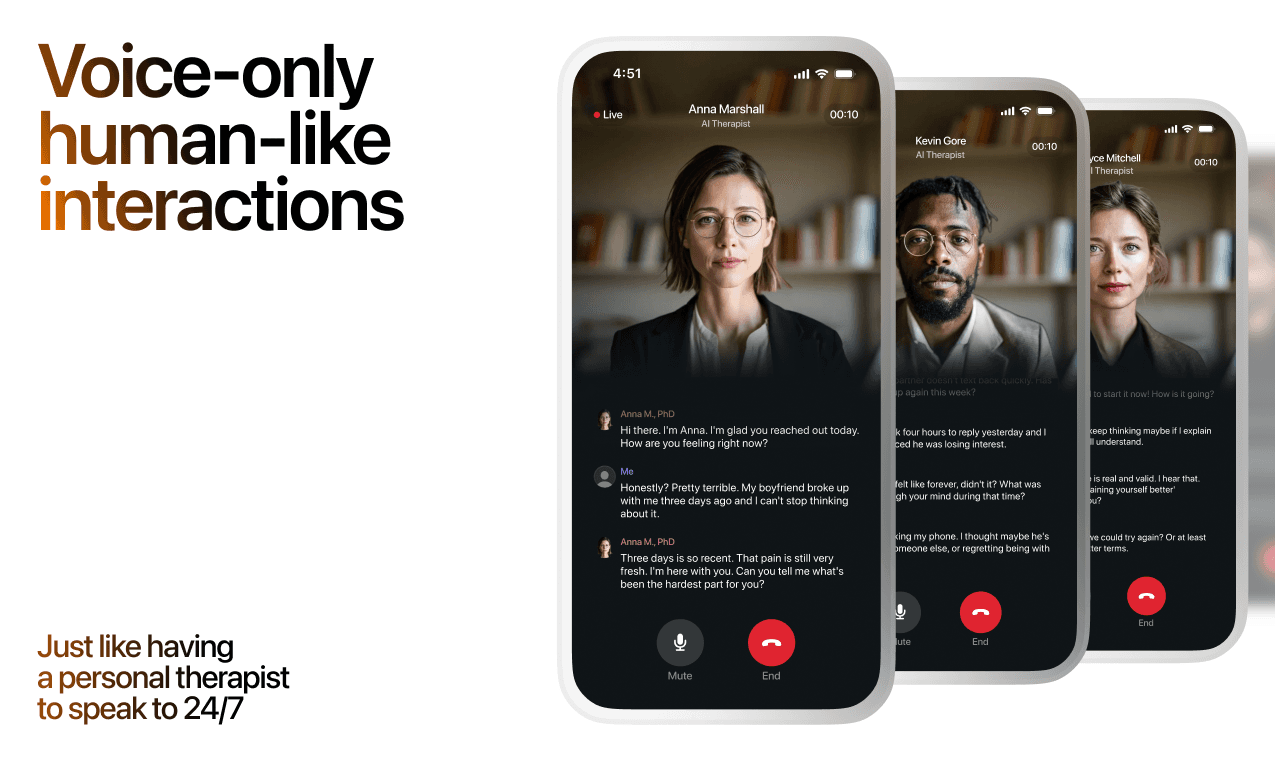
Lovon is AI support, not a replacement for professional care. If things have been hard to get through for weeks, or you are thinking about harming yourself, talk to a doctor or a licensed therapist.
Ready to Start?
Your healing journey can begin right now
A 3-day trial. No judgment. Just a safe space to process what you're going through.
Frequently Asked Questions
Is Lovon a replacement for a real therapist?
Is my conversation with Lovon AI private?
How is Lovon different from ChatGPT for emotional support?
Can I use Lovon if I'm already seeing a therapist?
Can I try Lovon before subscribing?
About the Author
The Lovon Editorial Team
Mental Health & Wellness Content Team
The Lovon Editorial Team develops mental health and wellness content designed to make psychological concepts accessible and actionable. Our goal is to bridge the gap between clinical research and everyday life - helping you understand why your mind works the way it does and what you can do about it....
Related articles
- Mindfulness for Anxiety: Techniques That Work in 2026
The best mindfulness techniques for anxiety in 2026 — body scan, 4-6 breathing, and 5-4-3-2-1 grounding — with…
- Window of Tolerance: What It Is & How to Widen It (2026)
Window of tolerance explained: what pushes you out of it and 6 steps to widen it in 2026. Verdict, troubleshooting, and…
- How long does burnout recovery usually take?
How long does burnout recovery take? There is no fixed deadline. Learn what progress looks like, which demands to…
- Can adult ADHD be misdiagnosed as anxiety?
Adult ADHD misdiagnosed as anxiety is possible. Learn which symptoms overlap, what an assessment checks, and how to ask…
See also
Quizzes
- Coping Style Test: How Do You Actually Handle Stress?
See how you really cope under stress, in 3 minutes.
- Distress Tolerance Test: How Long Can You Sit With It?
See which kind of discomfort makes you need out first.
Free tools
- Sleep Meditation for Anxiety
For lying in bed with a mind that will not stop. About twelve minutes of slower breathing, a place to put the worries…
- 5-4-3-2-1 Grounding Exercise
A guided run through the 5-4-3-2-1 technique, with paced breathing first if you need it. No sign-up, nothing stored…
From the wiki
- What to do if you have no friends?
Pick one activity that repeats weekly with the same people, and go for six to eight weeks straight. Repetition, not…
Disclaimer: This article is for informational purposes only and does not constitute medical advice, diagnosis, or treatment. Always seek the advice of your physician or other qualified health provider with any questions you may have regarding a medical condition. If you are in crisis or think you may have an emergency, call 988 (Suicide & Crisis Lifeline) or go to the nearest emergency room. Outside the US? Find a crisis line in your country.