
Can anxiety come back after years of being fine?
Can anxiety come back after years of being fine? Yes. Learn what a return of symptoms means, what to do now, and when to seek professional support.

Key Takeaways
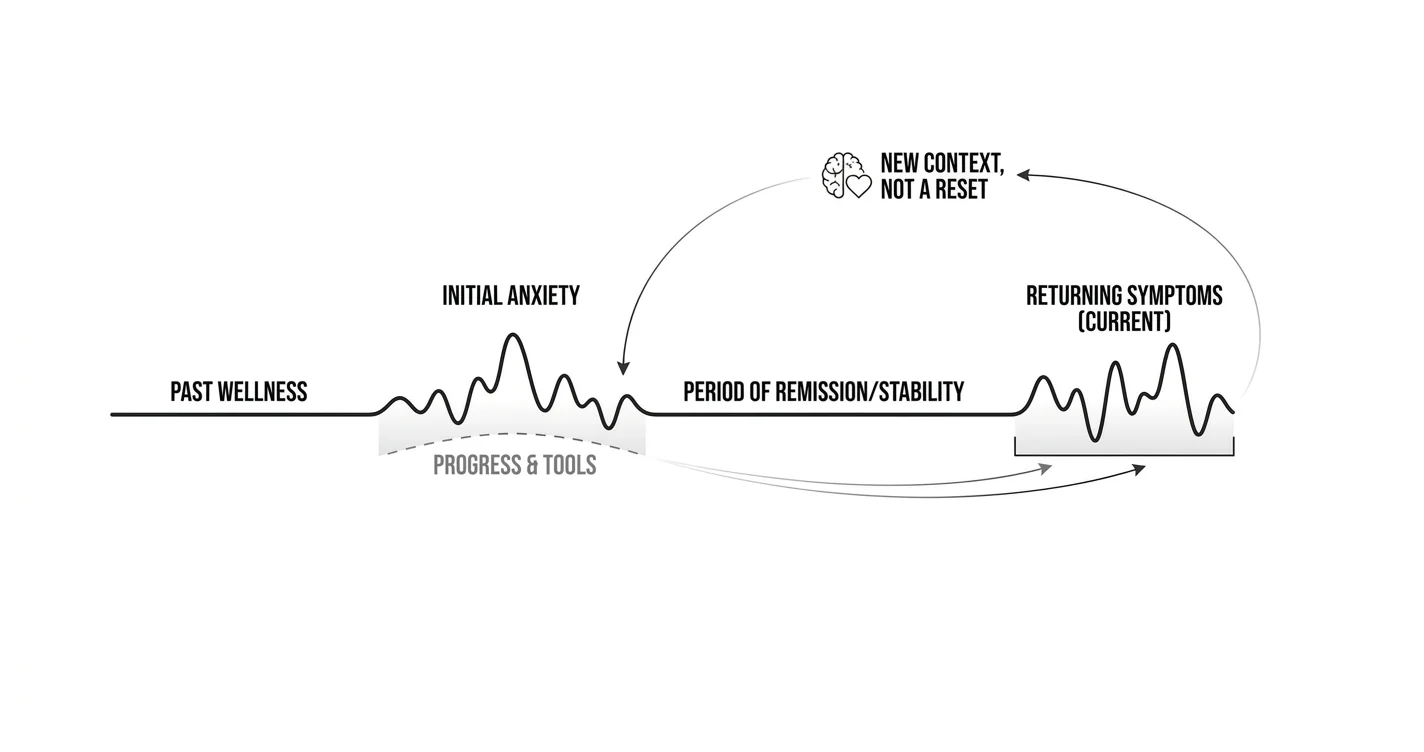
- Yes, anxiety can come back after years of being fine; a return of symptoms does not erase earlier progress.
- Notice when anxiety appears, what it feels like, and whether it changes your sleep, work, or relationships.
- Lovon is best for voice-based emotional support between moments of care, not for diagnosis or crisis help.
- Seek a clinical assessment if anxiety keeps returning, grows harder to manage, or comes with new physical symptoms.
Yes, anxiety can come back after years of feeling fine. A return of symptoms does not erase the progress you made, and it does not tell you on its own why you feel anxious now. Pay attention to what has changed, use the coping tools that help, and speak with a health professional if symptoms persist, worsen, or disrupt daily life.
TL;DR
- Yes, anxiety can come back after years of being fine; a return of symptoms does not erase earlier progress.
- Notice when anxiety appears, what it feels like, and whether it changes your sleep, work, or relationships.
- Lovon is best for voice-based emotional support between moments of care, not for diagnosis or crisis help.
- Seek a clinical assessment if anxiety keeps returning, grows harder to manage, or comes with new physical symptoms.
Why this matters
When anxiety returns, it can feel as though you are back where you started. You are not. The useful question in 2026 is not why you failed to stay calm; it is what your symptoms are telling you about the support you need now.
A familiar feeling can have a different context this time. Stress, sleep changes, health concerns, or a difficult relationship can all be worth discussing with a professional. If you need something to try while you sort out your next step, coping tools for anxiety gives you a starting point. A coping exercise can help you through a moment without explaining the cause of recurring symptoms.
Can anxiety come back after years of being fine?
Yes. Anxiety symptoms can return after a long period of feeling well. You do not need to decide immediately whether this is a passing response to stress or the return of an anxiety condition. Start with what you can observe: when the feeling shows up, what happens in your body, what you avoid, and whether it is affecting your day.
| What you notice | What to do next | What this does not tell you |
|---|---|---|
| Anxiety around a clear stressful event | Make space for rest and use a coping tool that has helped before. | One stressful response does not establish a diagnosis. |
| Anxiety that keeps returning or changes your routine | Arrange a conversation with a licensed mental health professional. | You do not have to work out the cause alone first. |
| New, severe, or concerning physical symptoms | Seek medical advice so other causes can be assessed. | Do not assume every physical symptom is anxiety. |
| An immediate safety concern | Seek urgent help from local emergency services; in the U.S., call or text 988 for crisis support. | An app is not emergency care. |
The table is a guide to the next action, not a way to diagnose yourself. In 2026, the same practical distinction still matters: you can respond to a difficult moment at home, but recurring symptoms and new physical concerns deserve human assessment. If you are unsure which row fits, describe what is happening to a health professional rather than waiting for certainty.
What does a return of anxiety actually mean?
It means you are noticing anxiety again. It does not automatically mean your previous treatment stopped working, that you have lost your coping skills, or that you now have a particular disorder. Those are separate questions. A clinician can help you consider them in the context of your history and current symptoms.
Try to separate the feeling from the story you tell yourself about it. A racing mind before a difficult conversation is an observation. Telling yourself that all your progress has disappeared is an interpretation. Write down the observation first. That gives you something clearer to bring to a conversation with a therapist, doctor, or trusted person.
You can also look for changes in what anxiety makes you do. Are you putting off calls, avoiding places, repeatedly seeking reassurance, or losing sleep? Those details matter more than trying to give the feeling the perfect label. If anxiety is shrinking your routine, treat that as a reason to ask for help, even if you can still get through your day.
Why anxiety can feel different this time
There is no single explanation that applies to everyone. These factors are worth checking because they can change how anxiety feels or how you respond to it:
- Current stress: A work demand, caregiving responsibility, conflict, or loss can bring a sense of threat back into focus. Name the pressure rather than treating every anxious thought as a separate problem.
- Sleep changes: Notice whether anxiety and poor sleep are feeding into each other. Tell a health professional if sleep has become a persistent problem.
- Health changes: New physical symptoms, medicines, or other health concerns belong in a medical conversation. Do not decide on your own that a new symptom is only anxiety.
- Old coping habits: Avoidance or repeated reassurance can feel helpful in the moment while leaving the underlying fear untouched. Notice what you do after anxiety appears.
- Less support: You might have had more time, connection, or professional help when you last felt steady. Ask what support is available to you now.
This is a checklist for a conversation, not a list of proven causes in your case. You can have a stressful week and still need clinical care. You can also benefit from a coping exercise without treating every anxious day as a crisis.
What can you do when anxiety comes back?
Start small. The aim is to understand what is happening and get through the next moment, not to force the feeling away. Try these steps in order, then adjust them to what feels manageable.
- Notice the pattern. Write down what happened just before the anxiety, what you felt, and what you did next. Keep the description simple enough that you can read it later without reliving the whole moment.
- Settle your attention. Look around and name things you can see, hear, and feel. If a grounding exercise makes you feel worse, stop and choose another way to steady yourself.
- Check the basics. Ask whether you have eaten, rested, or had a chance to step away from the immediate pressure. These checks do not replace care; they help you respond to the moment you are in.
- Tell someone. Let a trusted person know what has returned. You do not need to present a diagnosis or explain it perfectly to ask for company.
- Choose a care step. If anxiety persists, worsens, or interferes with your life, contact a licensed mental health professional. Seek medical advice for new or concerning physical symptoms.
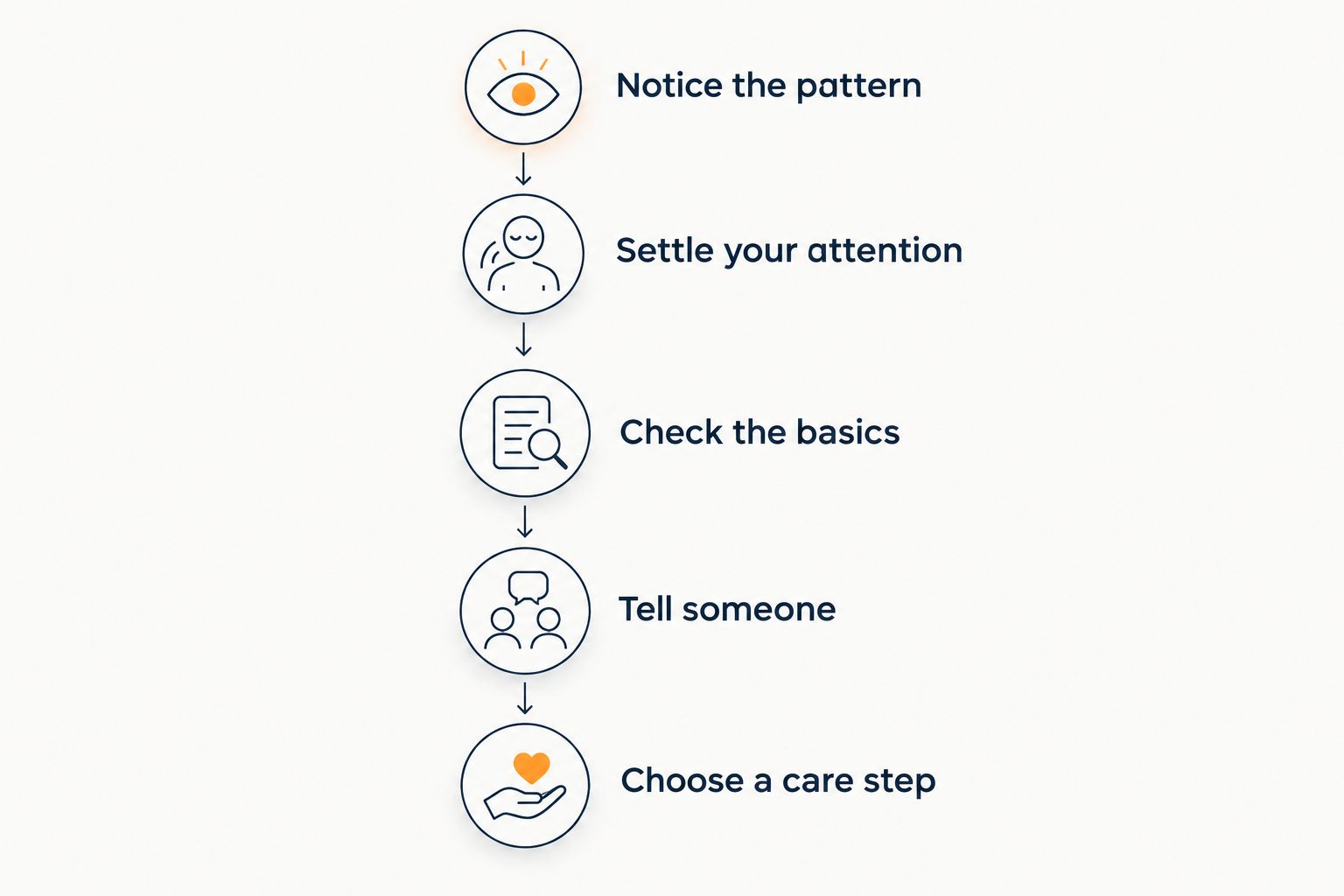 A sequence of steps for noticing returning anxiety and choosing support
You can take the next useful step without deciding what the anxiety means first.
In 2026, the first step can be as simple as noting when your anxiety shows up. If writing feels difficult, describe the pattern aloud to someone you trust. The point is to make it easier to notice changes and explain them if you seek care.
Choose a care step even if you are functioning. Getting through work or daily tasks does not mean the anxiety is easy to live with. If you find yourself organizing your day around avoiding the feeling, that is useful information to share with a professional.
Should you try self-help or talk to a professional?
You do not have to pick one forever. Self-help tools can support you in the moment; a licensed clinician can assess recurring symptoms and discuss care. Urgent services serve a different purpose when safety is at risk. In 2026, matching the kind of support to the situation matters more than finding one tool that does everything.
| Option | Best for | What it can help with | Limit |
|---|---|---|---|
| Self-guided coping exercises | Getting through a manageable anxious moment | Directing your attention and practicing a response | They cannot determine why symptoms have returned. |
| Licensed mental health professional | Anxiety that persists or disrupts daily life | Assessment and a care plan suited to your situation | You still need support between appointments. |
| Medical professional | New or concerning physical symptoms | Checking whether a health issue needs attention | A medical visit does not automatically address every emotional concern. |
| Crisis or emergency support | Immediate safety concerns | Responding to urgent risk | It is not a substitute for ongoing care after the immediate situation. |
Lovon is best for people who want voice-based emotional support and coping tools between moments of clinical care, not a diagnosis or emergency treatment. You can explore Lovon if talking through a stressful moment feels easier than typing it out. Its voice conversations offer space for self-reflection, but Lovon is not a licensed clinician and cannot replace an assessment. That limitation matters most when symptoms are new, worsening, or affecting your safety.
What if you were fine for years and feel embarrassed to ask for help?
You do not need to prove that your anxiety is severe enough to deserve a conversation. Tell a professional what has changed and what you have noticed. A plain account is enough: anxiety has returned, it is affecting a part of your life, and you want help understanding it.
If you received care before, you can share which approaches helped and which did not. If you have never spoken to a professional, you can begin with your primary care clinician or a licensed mental health professional. Either way, you are allowed to seek support before you feel overwhelmed.
It can help to prepare a short note before an appointment. Include when you first noticed the change, what happens during an anxious moment, how often it has been disrupting your routine, and any new physical symptoms. You do not need to make the note sound clinical. Its job is to help you say what is true when you are in the room.
Can returning anxiety go away again?
Yes, symptoms can improve again, but no one can promise how your experience will unfold without knowing your situation. You can work on the immediate feeling while also asking for help with a recurring pattern. Improvement does not require you to pretend the anxiety never came back.
A hard day after a calmer stretch is not proof that your next day will feel the same. Equally, a calm day does not mean you must ignore a pattern that keeps returning. In 2026, judge the pattern by its effect on your life, not by whether you can find a single explanation for it.
How do you know when to get extra help?
Ask for help when anxiety keeps returning, feels harder to manage, or interferes with sleep, work, relationships, or activities you care about. You can also ask sooner. A licensed professional can help assess what is happening; you do not need to wait until you are unable to function.
If you have a new or concerning physical symptom, seek medical advice rather than assuming anxiety is the cause. If you feel you might hurt yourself or cannot stay safe, seek immediate help. In the U.S., call or text 988 for crisis support, or contact local emergency services for an immediate emergency. Lovon voice support is not crisis care.
FAQ
Can anxiety come back after years of being fine?
Yes, anxiety can come back after years of feeling fine. Its return does not erase earlier progress; notice how it affects your life and seek professional help if it persists or worsens.
Does returning anxiety mean I have an anxiety disorder again?
No, returning symptoms alone do not establish a diagnosis. A licensed professional can assess the pattern, your history, and whether another concern needs attention.
Why did my anxiety return when nothing obvious changed?
Anxiety can feel difficult to explain even when no single trigger stands out. Note changes in sleep, stress, health, and daily habits, then discuss a persistent pattern with a professional.
Should I see a doctor if anxiety comes with physical symptoms?
Yes, seek medical advice for new or concerning physical symptoms rather than assuming anxiety explains them. A clinician can help assess what needs attention.
Can I use coping exercises when anxiety returns?
Yes, a coping exercise can help you respond to an anxious moment. It does not replace an assessment when symptoms persist, worsen, or disrupt daily life.
Is Lovon a replacement for a licensed therapist?
No, Lovon offers voice-based emotional support and coping tools, not licensed clinical care. See a licensed professional for assessment and treatment, and use urgent services for safety concerns.
What if I feel anxious again but can still function?
You can ask for help even if you are still managing daily tasks. Notice whether anxiety is changing your sleep, choices, or relationships, and share that pattern with a professional.
One last thing
The first sign that anxiety needs your attention is not always a strong feeling. Sometimes it is the quiet work of arranging your life so you do not have to feel anxious. If you notice yourself avoiding more and more, tell someone. You can ask for support while you are still getting through the day.
Related guides
How AI Support Helps You Heal
AI emotional support isn't about replacing human connection — it's about filling the gaps. The moments when you need to talk at 2 AM, when you don't want to burden your friends again, or when you simply need someone to listen without judgment.
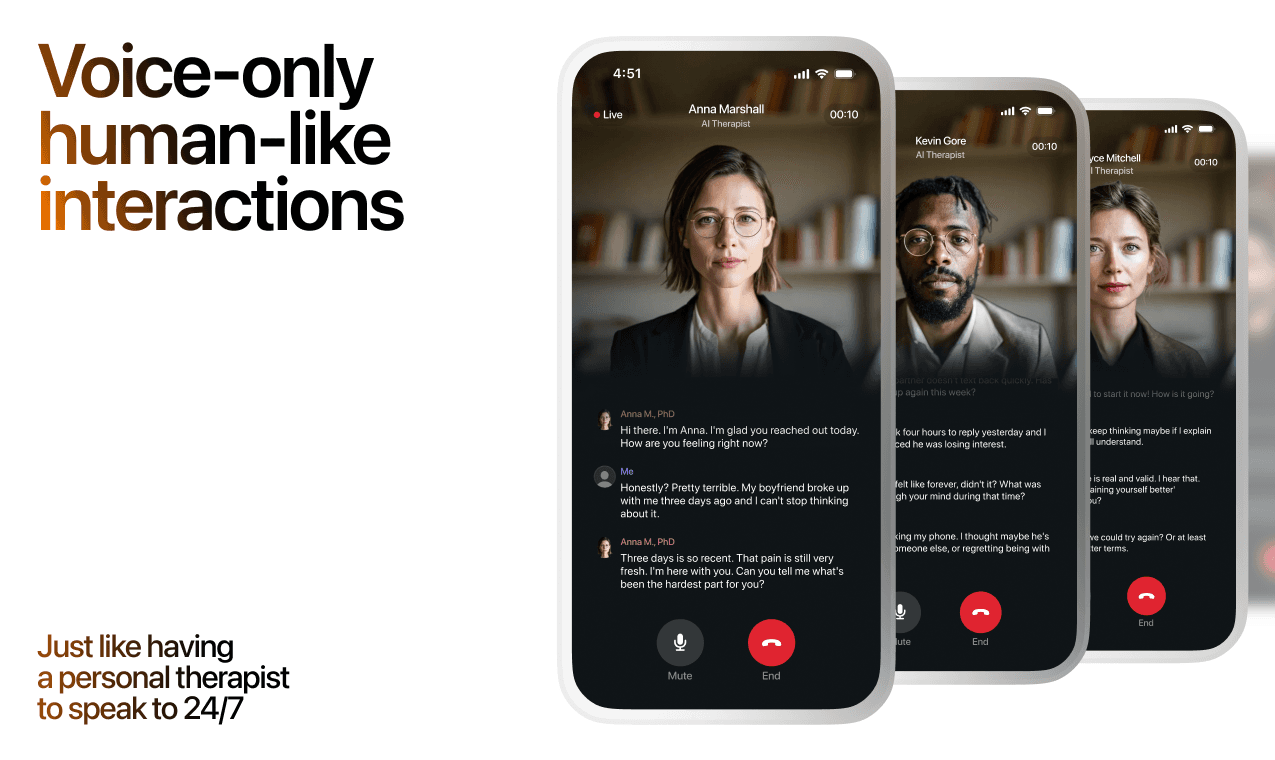
Here's what happens in a typical Lovon session:
You share what's on your mind
There's no script, no intake form, no waiting room. You speak or type whatever you're feeling — in your own words, at your own pace.
Lovon validates and explores
Using frameworks from CBT (Cognitive Behavioral Therapy) and motivational interviewing, Lovon acknowledges your feelings first, then gently helps you explore them. No dismissive "just move on" advice.
You build coping skills together
Lovon doesn't just listen — it actively works with you on evidence-based techniques: thought reframing, urge surfing, behavioral experiments, and more.
What a Session with Lovon Looks Like
When to Seek Professional Help
AI support is a valuable tool, but it's not a replacement for professional care. Please consider reaching out to a licensed therapist if you experience any of the following:
- Persistent thoughts of self-harm or suicide
- Inability to perform daily activities (work, eating, sleeping) for more than 2 weeks
- Turning to alcohol or substances to cope
- Intense anger or desire to harm your ex-partner
- Complete emotional numbness that doesn't improve over time
Crisis Resources (US): If you're in immediate danger, call 988 (Suicide & Crisis Lifeline) or text HOME to 741741 (Crisis Text Line). Available 24/7, free, and confidential.
Outside the US? Find a crisis line in your country
Ready to Start?
Your healing journey can begin right now
A 7-day trial. No judgment. Just a safe space to process what you're going through.
Frequently Asked Questions
Is Lovon a replacement for a real therapist?
Is my conversation with Lovon AI private?
How is Lovon different from ChatGPT for emotional support?
Can I use Lovon if I'm already seeing a therapist?
Can I try Lovon before subscribing?
About the Author
The Lovon Editorial Team
Mental Health & Wellness Content Team
The Lovon Editorial Team develops mental health and wellness content designed to make psychological concepts accessible and actionable. Our goal is to bridge the gap between clinical research and everyday life - helping you understand why your mind works the way it does and what you can do about it....
Related articles
- How long does an anxiety attack usually last?
How long does an anxiety attack last? There is no set time. Learn why the 5 to 20 minutes cited for most panic attacks…
- Is it normal to lose feelings in a long relationship?
Is it normal to lose feelings in a long relationship? Yes, feelings can change. Understand emotional distance, warning…
- Can an AI voice app actually calm you down?
Yes, AI voice apps calm acute anxiety spikes fast through paced voice conversation. See how it works, its limits, and…
- ADHD and Anxiety: How the Two Conditions Overlap (2026)
ADHD and anxiety share symptoms but have different causes. Learn how they feed each other and what daily strategies…
See also
Quizzes
- Highly Sensitive Person Test: How Much Do You Take In?
See how deeply you process, notice and get overloaded.
- Alexithymia Test: Can You Name What You Feel?
See where your feelings lose their names, in 3 minutes.
Free tools
- 5-4-3-2-1 Grounding Exercise
A guided run through the 5-4-3-2-1 technique, with paced breathing first if you need it. No sign-up, nothing stored…
- Vent to Someone
Say the whole thing. It does not have to be fair or organized, you will not have to manage how it lands, and no advice…
From the wiki
- What is inhibited grief?
Inhibited grief is grief that never gets out. The loss happened, you kept functioning, and the feeling stayed sealed…
Disclaimer: This article is for informational purposes only and does not constitute medical advice, diagnosis, or treatment. Always seek the advice of your physician or other qualified health provider with any questions you may have regarding a medical condition. If you are in crisis or think you may have an emergency, call 988 (Suicide & Crisis Lifeline) or go to the nearest emergency room. Outside the US? Find a crisis line in your country.