
How to Ask for Emotional Support Without Feeling Needy (2026)
How to ask for emotional support without feeling needy in 2026: name the need, bound the ask, pick the right person. Practical steps, no guesswork.

Key Takeaways
- Naming the specific need (not just 'I'm struggling') is the single biggest fix for feeling needy when you ask for
- Keep the ask under two sentences and offer a clear exit — people say yes faster to a bounded request.
- Practicing the ask out loud with a low-stakes source, like an AI therapist on Lovon, removes the fear before you use
- Skip vague openers like 'can we talk?' — they read as alarming, not needy, and that's often why people hesitate to
Asking for emotional support feels risky when you're used to handling everything alone — the fear isn't rejection, it's sounding like too much. This guide breaks the ask into steps that keep you in control of the conversation instead of bracing for a verdict.
TL;DR
- Naming the specific need (not just 'I'm struggling') is the single biggest fix for feeling needy when you ask for support.
- Keep the ask under two sentences and offer a clear exit — people say yes faster to a bounded request.
- Practicing the ask out loud with a low-stakes source, like an AI therapist on Lovon, removes the fear before you use it on someone who matters.
- Skip vague openers like 'can we talk?' — they read as alarming, not needy, and that's often why people hesitate to respond.
Why this matters
Most people don't struggle with the courage to ask — they struggle with the shame that shows up right after. That shame usually traces back to old patterns: being told you were "too much," being the one who always gave support and never asked for it, or growing up in a house where needs got minimized. If any of that sounds familiar, the people-pleasing patterns behind the hesitation are worth untangling separately.
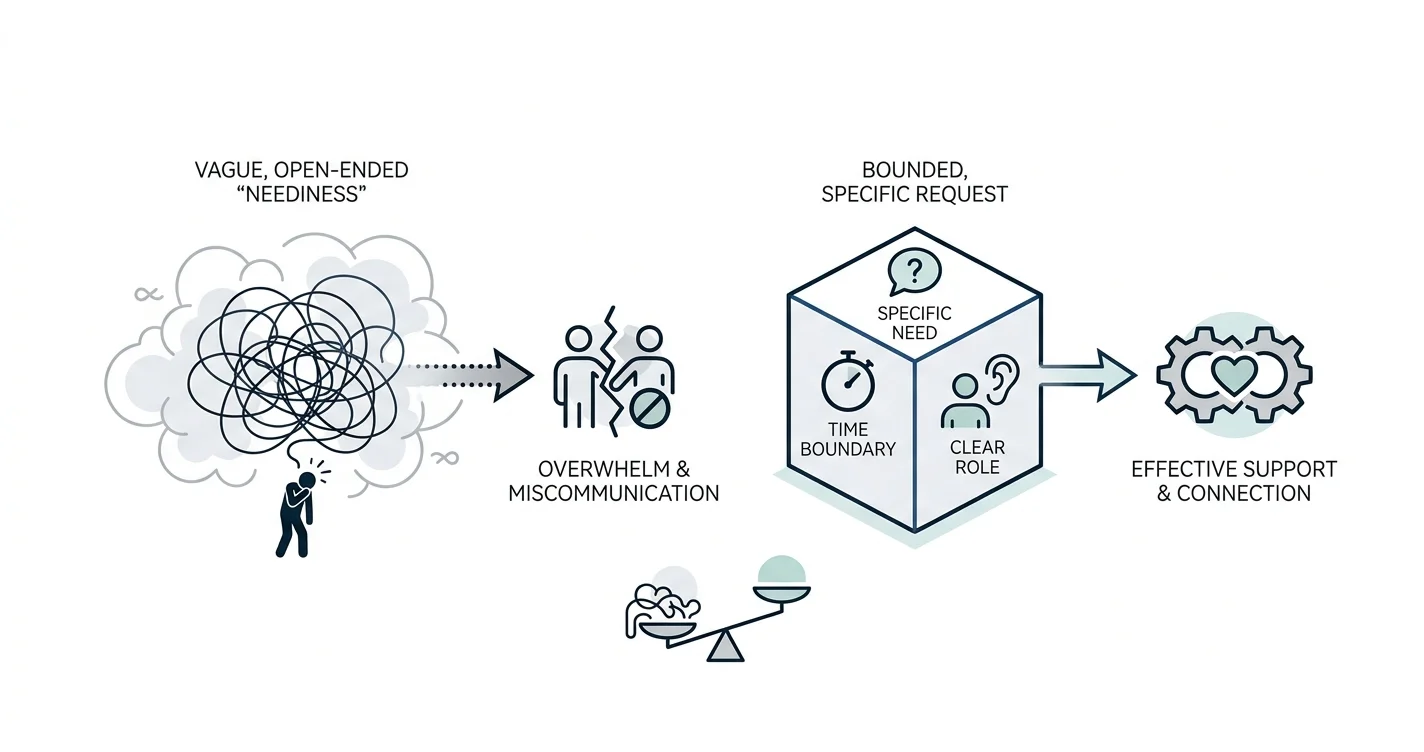
Here's the reframe that actually changes behavior in 2026: neediness isn't a personality trait, it's a communication style. A vague, open-ended ask ( "I don't know, I just feel off lately" ) reads as bottomless and makes people brace for a long conversation they didn't sign up for. A specific, bounded ask reads as considerate. Same need, completely different response from the other person.
What you'll need
- A specific need named in your own head before you speak it out loud (comfort, advice, distraction, or just company)
- One trusted person, picked deliberately, not the first available contact
- A time-boxed ask ("got 10 minutes?") rather than an open-ended one
- A private space, even if that's a parked car or a walk around the block
- A fallback option for when the person you ask isn't available — an AI voice conversation on Lovon works well here since it's there anytime, day or night
The steps
1. Name the actual need, not the general feeling
"I'm stressed" gives the other person nothing to act on. "I need to vent for five minutes and I don't need advice" gives them a job they can say yes to instantly. Write the need down in one sentence before you open the conversation. Expected outcome: the person responds faster because they know exactly what's being asked of them. Common mistake: leading with the emotion instead of the request, which forces the listener to guess what you want.
2. Pick the right person for this specific need
Not every person in your life is right for every kind of support — the friend who's great at practical advice might be the wrong person for pure comfort, and vice versa. Match the need to the person's actual strength, not just their availability. Expected outcome: fewer mismatched conversations that leave you feeling worse. Common mistake: defaulting to whoever answers the phone first instead of who's actually suited to the moment.
3. Use a bounded opener
Swap "can we talk?" for "I've had a rough day — got 10 minutes to hear me vent?" The second version tells the listener the scope, the time commitment, and the role you want them to play. Expected outcome: the person says yes more often because the ask feels containable. Common mistake: opening with "this might sound stupid but..." — it undercuts the ask before it starts and trains the listener to expect something small, which backfires if you actually need more.
4. State one boundary up front if you need it
If you don't want problem-solving, say so: "I just need you to listen, I'll figure out next steps on my own." This single sentence prevents the well-meaning but frustrating pivot to unsolicited advice. If boundary-setting itself feels uncomfortable, the framework in how to set relationship boundaries clearly breaks it into smaller, less confrontational language. Expected outcome: the conversation stays on track. Common mistake: staying quiet about the boundary and then feeling resentful when the person tries to fix instead of listen.
5. Close the loop, even briefly
After the conversation, a short "that helped, thank you" does more relationship work than people expect. It confirms the ask was reasonable and makes the next one easier to make. Expected outcome: the person feels good about showing up, which makes them more likely to be available next time. Common mistake: disappearing after getting what you needed, which quietly signals the interaction was transactional.
6. Practice the ask somewhere lower-stakes first
If the words get stuck in your throat even after planning them, say them out loud to something with zero social risk first. Talking through the exact phrasing with an AI therapist on Lovon before a real conversation takes the edge off — you hear yourself say the need out loud, adjust the wording, and walk into the real conversation already warmed up. Expected outcome: less freezing in the moment. Common mistake: skipping rehearsal because it feels silly — the awkwardness of practicing alone is nothing compared to the awkwardness of stumbling mid-ask with someone you care about.
Practice the ask before you make it
Talk it through with an AI voice therapist anytime, no appointment needed.
Troubleshooting
The person says yes but seems distracted or rushed. Reschedule instead of pushing through a half-present conversation — a bounded follow-up like "can we do this tomorrow when you're less slammed?" protects both of you.
You keep over-explaining before you even ask. This is a sign the shame is doing the talking, not the need. Cut the preamble and lead with the one-sentence ask from Step 1 — the context can come after, if at all.
You ask and immediately feel like you owe them something. That instinct is worth examining on its own; it often overlaps with anxious attachment patterns, where every ask feels like it needs repayment. Anxious attachment signs and coping strategies covers why that happens and what actually helps.
Nobody is available when you need to talk. This is the most common blocker in 2026, especially for people whose support network lives in a different time zone or works odd hours. Build a fallback into the plan before you need it, not during the crisis.
You ask once, get a lukewarm response, and stop asking entirely. One flat response doesn't mean the ask was wrong — it might mean that person, that day, wasn't the right match. Go back to Step 2 and try someone else instead of writing off asking altogether.
Tools and resources
- A specific-need script, written ahead of time, saved in your notes app
- A short list of 2-3 people matched to different kinds of support (venting vs. advice vs. distraction)
- On-demand emotional support when therapy isn't available for the gaps between real conversations
- A calm, private space set aside before the ask, not scrambled together mid-conversation
- Lovon for rehearsing the exact wording of a hard ask before you say it to someone who matters
What to do next
Once the ask itself stops feeling like the hard part, the next skill is knowing what realistic support actually looks like day to day — what to realistically expect from AI chat support covers where an always-available tool fits and where it doesn't replace a person or a clinician.
FAQ
How do I ask for emotional support without sounding needy?
Name the specific need in one sentence and put a time boundary on the ask, like 'got 10 minutes to vent?' Vague, open-ended requests read as bottomless; specific, bounded ones read as considerate.
Why do I feel guilty asking for support?
Guilt around asking usually comes from old patterns of being the one who always gives support, not receives it. It's a learned response, not a fact about how much you're allowed to need.
What do I say when someone asks 'what's wrong' and I don't want to talk yet?
Say exactly that: 'I'm not ready to talk about it yet, but I'll let you know when I am.' This keeps the door open without forcing a conversation before you're ready.
Is it better to text or call when asking for emotional support?
Text works for scheduling a bounded conversation; calling or talking in person works better for the actual support itself, since tone carries a lot of the reassurance.
What if I ask for support and get a lukewarm response?
A flat reaction from one person doesn't mean the ask was wrong — it often means that person wasn't the right match for that specific need. Match the need to the person and try again.
Can an AI therapist help me practice asking for support?
Yes, an AI voice therapist like the one on Lovon is a low-stakes place to say the ask out loud, adjust the wording, and reduce the freeze-up before a real conversation with someone you care about.
How do I ask for support in a relationship without starting a fight?
Lead with the need, not the complaint: 'I need reassurance right now' lands differently than 'you never notice when I'm struggling.' The first invites connection; the second invites defensiveness.
What's the difference between asking for support and venting without asking?
Venting without asking leaves the listener guessing what role you want them in. Naming the ask upfront — listen only, advice, or distraction — removes that guesswork entirely.
One last thing
The fastest way to stop feeling needy isn't asking less — it's asking more precisely. People rarely resent a clear, bounded request; they resent guessing what you actually wanted and getting it wrong. Say the specific need out loud once, even if it's just to yourself first, and the rest of the conversation gets noticeably easier.
Related guides
How AI Support Helps You Heal
AI emotional support isn't about replacing human connection — it's about filling the gaps. The moments when you need to talk at 2 AM, when you don't want to burden your friends again, or when you simply need someone to listen without judgment.
Here's what happens in a typical Lovon session:
You share what's on your mind
There's no script, no intake form, no waiting room. You speak or type whatever you're feeling — in your own words, at your own pace.
Lovon validates and explores
Using frameworks from CBT (Cognitive Behavioral Therapy) and motivational interviewing, Lovon acknowledges your feelings first, then gently helps you explore them. No dismissive "just move on" advice.
You build coping skills together
Lovon doesn't just listen — it actively works with you on evidence-based techniques: thought reframing, urge surfing, behavioral experiments, and more.
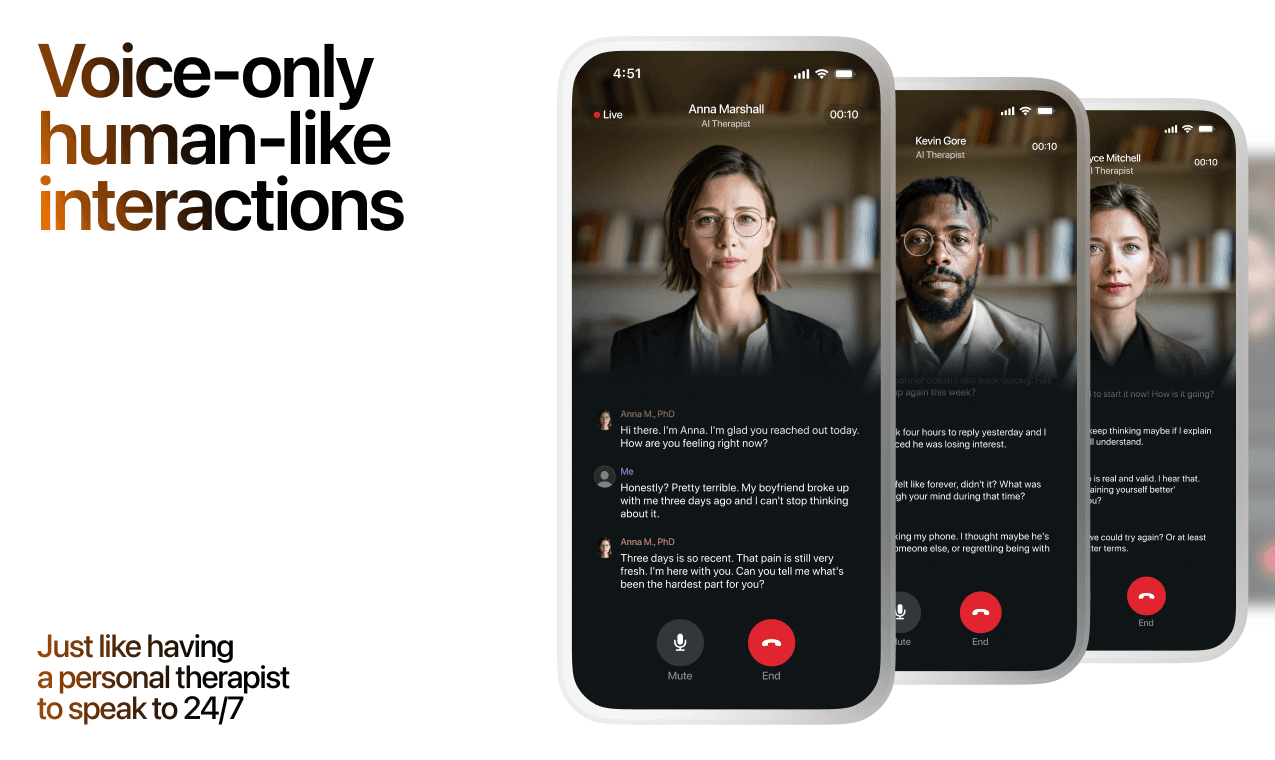
What a Session with Lovon Looks Like
When to Seek Professional Help
AI support is a valuable tool, but it's not a replacement for professional care. Please consider reaching out to a licensed therapist if you experience any of the following:
- Persistent thoughts of self-harm or suicide
- Inability to perform daily activities (work, eating, sleeping) for more than 2 weeks
- Turning to alcohol or substances to cope
- Intense anger or desire to harm your ex-partner
- Complete emotional numbness that doesn't improve over time
Crisis Resources (US): If you're in immediate danger, call 988 (Suicide & Crisis Lifeline) or text HOME to 741741 (Crisis Text Line). Available 24/7, free, and confidential.
Outside the US? Find a crisis line in your country
Ready to Start?
Your healing journey can begin right now
1 free conversation. No credit card. No judgment. Just a safe space to process what you're going through.
Frequently Asked Questions
Is AI therapy a replacement for a real therapist?
Is my conversation with Lovon AI private?
How is Lovon different from ChatGPT for emotional support?
Can I use Lovon if I'm already seeing a therapist?
Can I try Lovon for free?
About the Author

The Lovon Editorial Team
Mental Health & Wellness Content Team
The Lovon Editorial Team develops mental health and wellness content designed to make psychological concepts accessible and actionable. Our goal is to bridge the gap between clinical research and everyday life - helping you understand why your mind works the way it does and what you can do about it....
Similar Articles
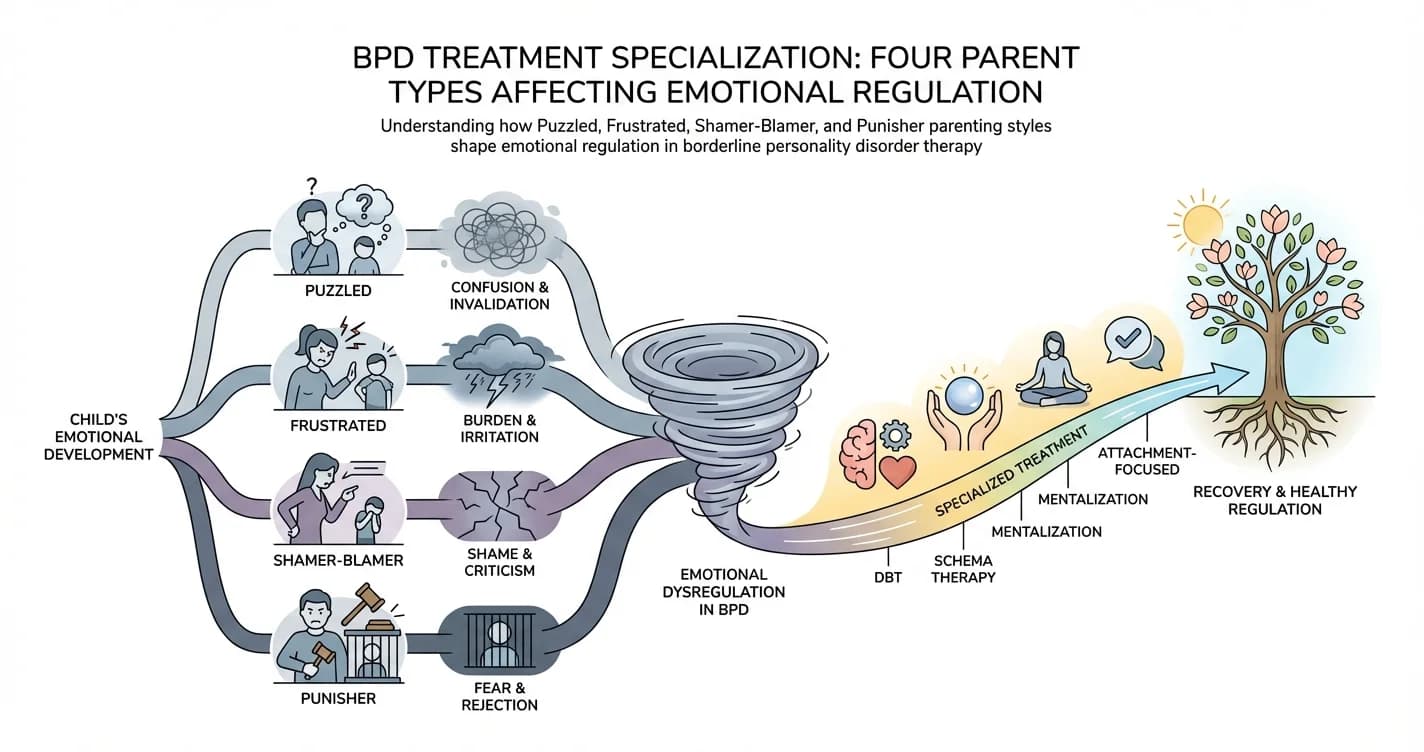
BPD Treatment Specialization: Four Parent Types Affecting Emotional Regulation
For individuals with borderline personality disorder (BPD), emotional regulation difficulties rarely emerge in isolation. Research increasingly suggests that

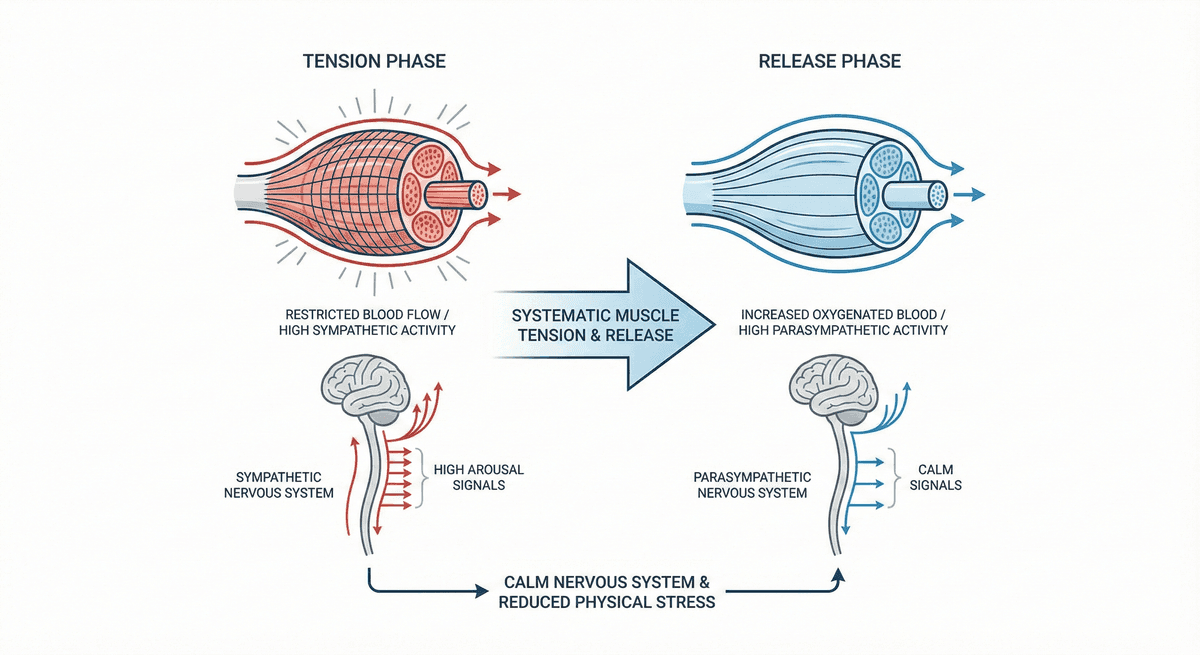
Progressive Muscle Relaxation for Stress Reduction
A systematic muscle group tension and release technique that calms the nervous system and reduces physical stress.
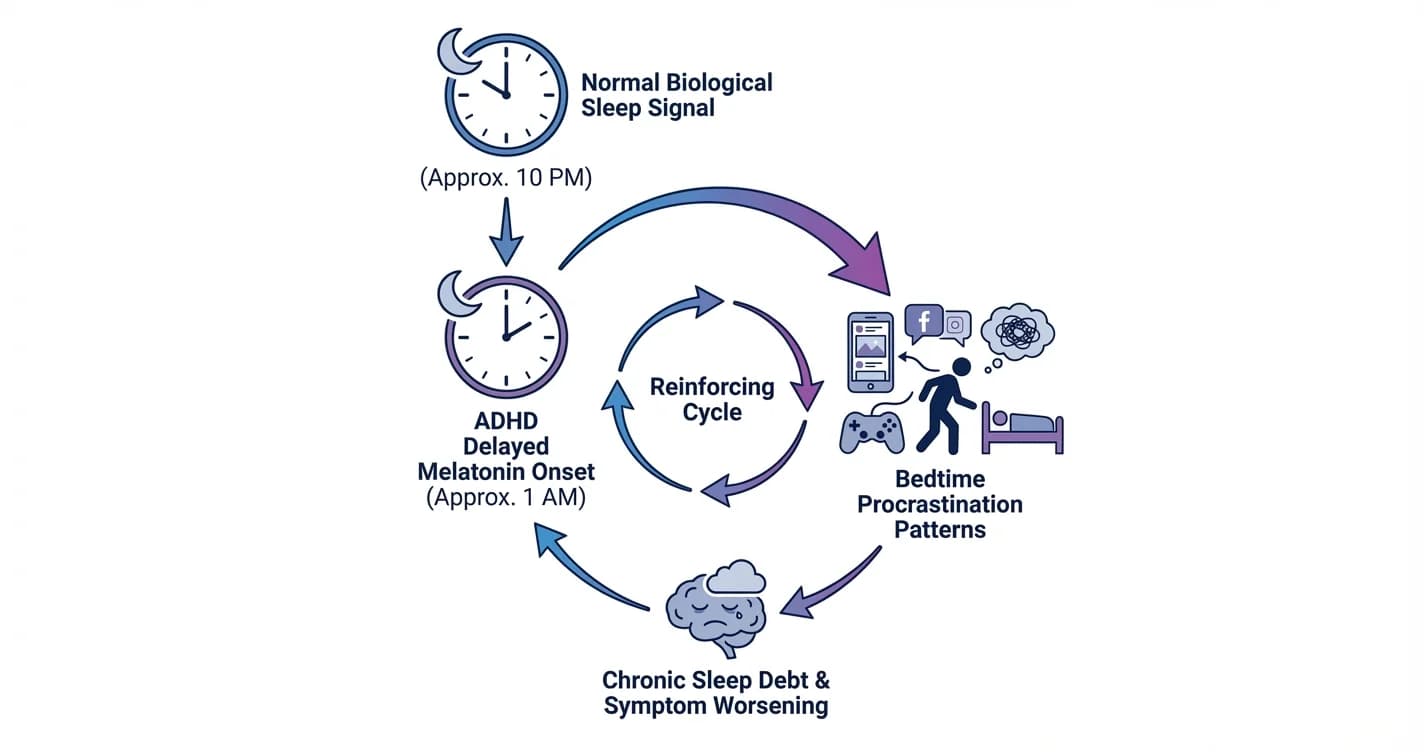
ADHD Sleep Cycle Disruption: Melatonin Delay and Bedtime Procrastination Patterns
Understanding how attention regulation difficulties interfere with natural sleep timing and the nightly wind-down process
Disclaimer: This article is for informational purposes only and does not constitute medical advice, diagnosis, or treatment. Always seek the advice of your physician or other qualified health provider with any questions you may have regarding a medical condition. If you are in crisis or think you may have an emergency, call 988 (Suicide & Crisis Lifeline) or go to the nearest emergency room. Outside the US? Find a crisis line in your country.