
How to Be Romantic: Small Ideas That Show You Pay Attention
How to be romantic without big spending: small daily ideas, romance in each love language, words that do not sound cheesy, and how to keep the spark alive.

Key Takeaways
- Romance is attention made visible: noticing what your partner cares about and acting on it in a small, specific way, without being asked.
- Small things done often beat rare grand gestures, and they are much easier to keep up in a busy week.
- Romance cannot cover for resentment. If you keep having the same fight, deal with that first, then add the sweet stuff.
To be romantic, pay close attention to your partner and act on what you notice: the snack they mentioned, the meeting they are dreading, the song they played twice. Romance is not about money or grand gestures. It is small, specific proof that you were listening, offered on ordinary days without being asked, in the way they most like to receive it.
- Keep a note of things they mention in passing, and use one this week.
- Tell them one specific thing you love about them, out loud, today.
- Put your phone away for the first ten minutes when you see each other.
- Respond to their small bids for attention instead of half-listening.
- Plan one date yourself, start to finish, including the boring logistics.
- Touch them affectionately when it is not leading anywhere.
- Try something new together once a month.
- Ask what feels romantic to them, and believe the answer.
What does being romantic actually mean?
Romance is attention made visible. A gesture feels romantic when it has three things: it is specific to this person, it is unprompted (nobody's birthday, no fight to make up for), and it took a little thought or effort. Money is optional. Specific is not.
| Generic | Specific |
|---|---|
| Roses on Valentine's Day | The grocery-store tulips she stopped to look at last week, on a random Wednesday |
| "You look nice." | "That green is really your color. I noticed the second you walked in." |
| A fancy dinner reservation | Making the dish from your first trip together at home, badly, with the same music on |
| "Love you" | "Good luck at 2. Nobody in that room has prepared more than you." |
Most romance happens in tiny moments. Your partner says "look at that dog," or sighs at their phone, or starts telling a story. Relationship researchers call these bids for attention, and you either turn toward them ("Wait, what happened?") or let them pass. In a study that watched newlywed couples over dinner, the small playful and enthusiastic moments of everyday life were linked to more humor and affection when the same couples later talked through a conflict.[1] The study was small and correlational, so it cannot prove cause, but it fits what most couples already sense: the small stuff is not small.
How to be romantic in small ways every day
You do not need a plan for the week. You need a few habits that fit into the life you already have.
In the morning
- Make their coffee the way they take it, before they ask.
- Leave a two-line note where they will find it: the bathroom mirror, their laptop, a jacket pocket.
- Send one text about their day, not yours: "Thinking about you before the 10 o'clock. You've got this."
During the day
- Send a photo of something that made you think of them, with the reason: "This dog has your exact energy."
- Remember the thing they were worried about and ask about it.
- Order lunch to their office on a brutal day, or drop off their favorite snack.
In the evening
- Greet them properly when they get home: stand up, hug them, ask one real question.
- Take one chore off their plate on a hard week, without announcing it.
- Put on the song from your first date while you cook, and see if they notice.
On weekends
- Plan a date yourself: pick the place, book it, sort the babysitter, handle the parking.
- Take a walk with phones left at home.
- Go back to a place that matters to you both, like where you met or had your first real conversation.
If you want words for a text but go blank, the love message writer builds one from what you actually love about them, so it sounds like you and not like a card.
What to say: romantic words that do not sound cheesy
Cheesy comes from borrowed lines. Romantic comes from specific ones. A simple formula works almost every time: what you noticed, then what it does to you.
- "I love watching you explain something you care about. You light up."
- "You were so patient with my mom today. It made me love you more."
- "I still get happy when I see your name on my phone."
- "I was proud to be with you tonight. The way you handled that guy was so calm."
- "I know this year has been a lot. I see how hard you're working, and I'm so glad it's you."
Say some of it in front of other people, too. Being praised to friends when you are standing right there is a different kind of romantic. If you would rather say it in writing, how to write a love letter walks you through one, and words of affirmation examples gives you more starting points.
How to show love in your partner's love language
The love languages idea sorts ways of showing love into five groups: words, quality time, touch, acts of service, and gifts. It is a good way to start a conversation, but be honest with yourself about what it is. A 2024 review found that the research does not strongly support the idea that each person has one main love language, or that couples are happier when they match. The authors suggest thinking of love more like a balanced diet, where everyone needs some of everything.[2] So use the five as a menu, lean toward what your partner lights up about, and do not skip the rest.
| Love language | Small romantic ideas |
|---|---|
| Words | A text that names one specific thing you admire; a note in their bag; a toast to them at dinner with friends |
| Quality time | A phone-free walk; a standing breakfast date; actually watching the show they love with them, with no scrolling |
| Touch | Holding hands in public; a long hug when they get home; a shoulder rub while they talk about their day |
| Acts of service | Filling their gas tank; handling the call they have been avoiding; making lunch for their long day |
| Gifts | The book they mentioned once; a small souvenir from your errand run; a printed photo of the two of you |
Not sure which one fits them, or you? Take the love language quiz together and compare answers. The conversation afterward is often more useful than the result.
How to be romantic if it does not come naturally
Some people are naturally showy with affection. Most are not, and that is fine. Romance is a skill you can learn, not a personality trait.
Start with what you are already good at. If you are a planner, plan. If you are handy, fix the drawer they have complained about for a month. If you cook, cook their comfort food on a bad day. If you are funny, bring back an old inside joke at the right moment. Romance in your own style feels honest, and it reads that way.
Use reminders without guilt. Putting "ask how her sister's surgery went" in your calendar does not make it less romantic. What your partner receives is that you remembered.
Borrow from your own history, not from movies. The diner from your first date, the song from the road trip, the nickname nobody else uses. These carry meaning a stranger's grand gesture never could.
Name the awkward part. "I'm not great at this, but I wanted to do something for you" is disarming and sweet. People are moved by effort far more than they judge delivery.
Flirt with your own partner. Couples who have been together for years often stop flirting with each other. A look across the room, a teasing text, or a compliment that is a little bit bold counts. How to flirt is written for dating, but most of it works on the person you already live with.
How to be a good boyfriend or girlfriend (the romantic side)
Being a good boyfriend and being a good girlfriend come down to the same things, and romance is only one of them. Here is the romantic side:
- Be reliable. Show up when you said, call when you said you would. Romance on top of flakiness feels hollow.
- Be curious. Ask about their day, their friends, their worries, and remember the answers.
- Make them feel chosen in public. Introduce them proudly. Reach for their hand. Take their side when someone is unkind to them.
- Plan things. Do not leave every date, trip, and dinner reservation to one person.
- Make them feel wanted. Tell them they are attractive, in specific words, long after the first months.
Do not assume he does not want flowers or a handwritten note, or that she wants expensive gifts. Those are stereotypes, not people. Ask: "What's something small that makes you feel really loved?" Then do that thing.
Romance is not the whole job, though. How to be a better partner covers the other half: what you stop doing under stress, which often matters more than anything you add.
How to keep the spark alive in a long-term relationship
Long relationships drift into routine. That is normal, not a warning sign. A few things reliably bring energy back.
Do new things together. In a series of studies, couples who did a short novel, slightly challenging activity together reported feeling better about their relationship afterward than couples who did something mundane, and in surveys, couples who shared more exciting activities reported less boredom and more satisfaction.[3] It does not have to be skydiving: a cooking class in a cuisine neither of you knows, a new hiking trail, an escape room, a trip to a town an hour away.
Say thank you for specific things. "Thank you for handling the car thing. I know how much you hate those calls." In a study that followed cohabiting couples day by day, feeling grateful for a partner's thoughtful act predicted feeling more connected and satisfied the next day, for both partners.[4]
Stay curious about each other. You have not finished learning who your partner is, even after ten years. Pick a few questions to ask your partner for your next dinner, or play the 36 questions to fall in love together on a quiet night.
Protect one evening a week. Same night, phones away, no talking about logistics for the first hour. It can be at home.
Watch them be good at something. Go to their game, their gig, their presentation. Seeing your partner competent and in their element is one of the simplest ways to feel attraction again.
If things have gone past routine into feeling like roommates, start with how to reconnect with your partner. And if you are worried the feelings themselves are fading, is it normal to lose feelings in a long relationship? helps you tell a quiet stretch from a real ending.
The most common mistake: using romance to cover a problem
The biggest romantic mistake is using gestures to fix something that is not about romance. Flowers instead of an apology. A surprise weekend after weeks of being checked out. A sweet text to end a fight nobody resolved. These usually land as pressure, not love, because the person receiving them now has to act happy about a problem that is still there.
If you keep having the same argument, or there is resentment under the surface, deal with that first. When you keep having the same fight has words for that conversation. Romance works best in a relationship where both people already feel safe.
A few other things to avoid:
- Romance for an audience. If the gesture is mostly for the photo, your partner can tell.
- Surprising someone who hates surprises. Romantic for you can be stressful for them.
- Doing what you would want. If you love big parties and they do not, a surprise party is a gift to yourself.
- Keeping score. "I planned the last three dates" turns romance into a ledger.
And if you are on the other side, wondering whether your partner still feels it, how to tell if someone loves you is about reading the signs that matter more than gestures.
Most people already know they want to be more romantic. What they lack is the first specific idea for their actual partner, with their actual schedule. Describe your partner to Lovon, an AI relationship coach you talk to by voice: what they love, what stresses them, what you have tried. Leave with one thing you can do this week.
How AI Support Helps You Heal
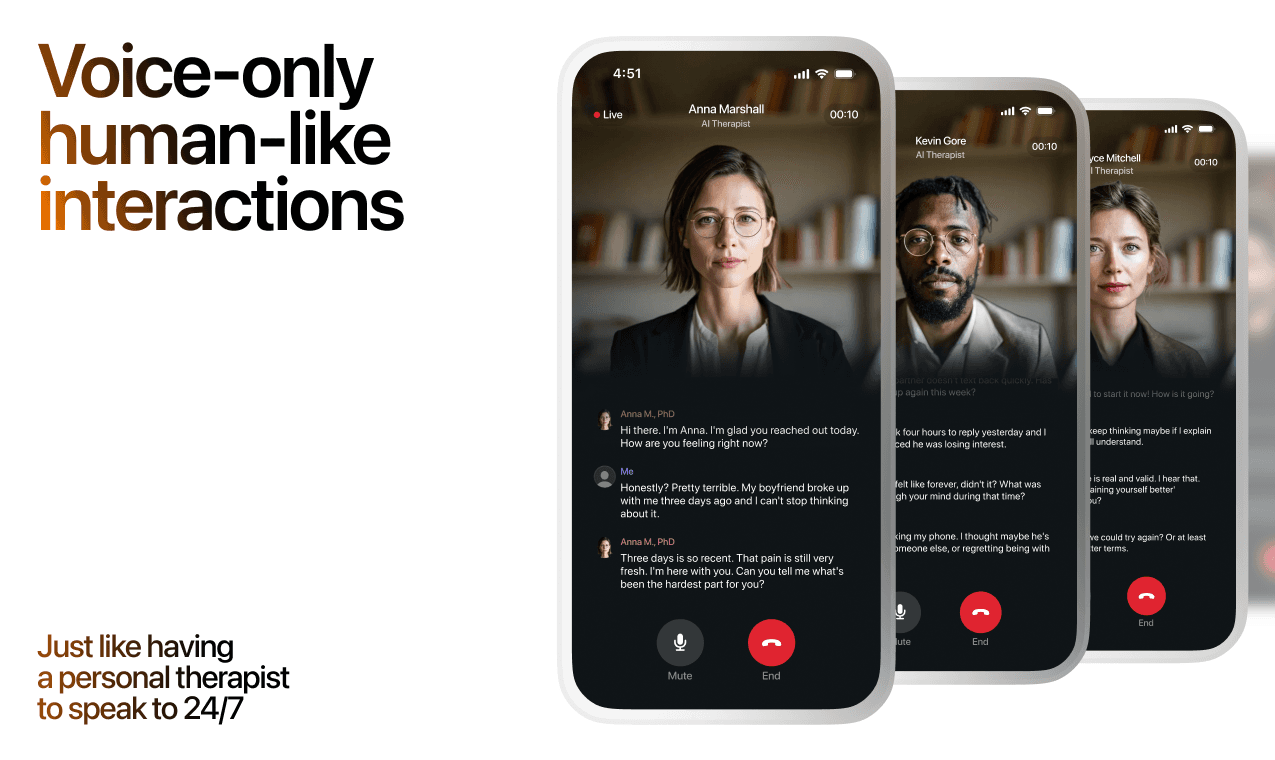
AI emotional support isn't about replacing human connection — it's about filling the gaps. The moments when you need to talk at 2 AM, when you don't want to burden your friends again, or when you simply need someone to listen without judgment.
Here's what happens in a typical Lovon session:
You share what's on your mind
There's no script, no intake form, no waiting room. You speak or type whatever you're feeling — in your own words, at your own pace.
Lovon validates and explores
Using frameworks from CBT (Cognitive Behavioral Therapy) and motivational interviewing, Lovon acknowledges your feelings first, then gently helps you explore them. No dismissive "just move on" advice.
You build coping skills together
Lovon doesn't just listen — it actively works with you on evidence-based techniques: thought reframing, urge surfing, behavioral experiments, and more.
What a Session with Lovon Looks Like
Lovon is AI support, not a replacement for professional care. If things have been hard to get through for weeks, or you are thinking about harming yourself, talk to a doctor or a licensed therapist.
Ready to Start?
Your healing journey can begin right now
A 3-day trial. No judgment. Just a safe space to process what you're going through.
Frequently Asked Questions
How can I be more romantic with my partner?
How can I be romantic without spending money?
How do I be a good boyfriend?
How do I be a good girlfriend?
How do you keep the spark alive in a long relationship?
What if my partner is not romantic?
Why does being romantic feel awkward or cheesy?
Do love languages really matter for romance?
Sources
About the Author
The Lovon Editorial Team
Mental Health & Wellness Content Team
The Lovon Editorial Team develops mental health and wellness content designed to make psychological concepts accessible and actionable. Our goal is to bridge the gap between clinical research and everyday life - helping you understand why your mind works the way it does and what you can do about it....
Related articles
- Is couples therapy worth it if one partner refuses?
Is couples therapy worth it if one partner refuses? Individual support can help you decide what to do, but it cannot…
- Pre-Wedding Cold Feet: How to Calm Them in 2026
Pre-wedding cold feet are normal for most couples, but real doubt doesn't fade with breathing tricks alone. What helps…
- Emotional Intimacy in Relationships: How to Build It (2026)
Emotional intimacy in relationships builds through daily habits, not one talk. Get the 6-step 2026 method plus fixes for…
- Are We Compatible Quiz: AI Guide for Couples 2026
Take the are we compatible quiz and get a 5-dimension AI profile covering values, attachment, and conflict style. Find…
See also
Quizzes
- Respect in Love Test: Do You Respect Them, and Yourself?
See the respect you give and keep in love, in 3 minutes.
- Am I in Love? 13-Question Gut Check
Know what you feel in 2 minutes.
Free tools
- Good Morning Texts Written for Your Person
A chat, not a list of a hundred. Tell it what their day holds and the tone you want, and get good morning texts for her…
- How to Tell Someone You Love Them
How to tell someone you love them is rarely about the words, which are short. It is about the moment and the answer…
From the wiki
- What is the bare minimum in a relationship?
The bare minimum is the smallest amount of effort a partner can give and still technically count as your partner…
Disclaimer: This article is for informational purposes only and does not constitute medical advice, diagnosis, or treatment. Always seek the advice of your physician or other qualified health provider with any questions you may have regarding a medical condition. If you are in crisis or think you may have an emergency, call 988 (Suicide & Crisis Lifeline) or go to the nearest emergency room. Outside the US? Find a crisis line in your country.