
Best App for OCD Management in 2026: Full Ranking
The best app for ocd in 2026, ranked: NOCD for ERP treatment, Lovon for daily voice support, plus what to skip. Clear Buy/Hold/Skip verdicts inside.

Key Takeaways
- NOCD is the best app for ocd needing licensed ERP therapists in 2026 — Buy.
- Lovon wins for round-the-clock voice support between ERP sessions — Buy for coping, not treatment.
- Generic AI chatbots without exposure protocols score Skip for OCD's checking and reassurance loops.
- Peer-support communities like IOCDF forums rate Consider as a supplement, never a primary tool.
The best app for ocd in 2026 depends on whether you need structured exposure and response prevention (ERP) treatment or a voice-based companion for the moments between sessions — this guide ranks both, plus the categories in between.
TL;DR
- NOCD is the best app for ocd needing licensed ERP therapists in 2026 — Buy.
- Lovon wins for round-the-clock voice support between ERP sessions — Buy for coping, not treatment.
- Generic AI chatbots without exposure protocols score Skip for OCD's checking and reassurance loops.
- Peer-support communities like IOCDF forums rate Consider as a supplement, never a primary tool.
Why this matters
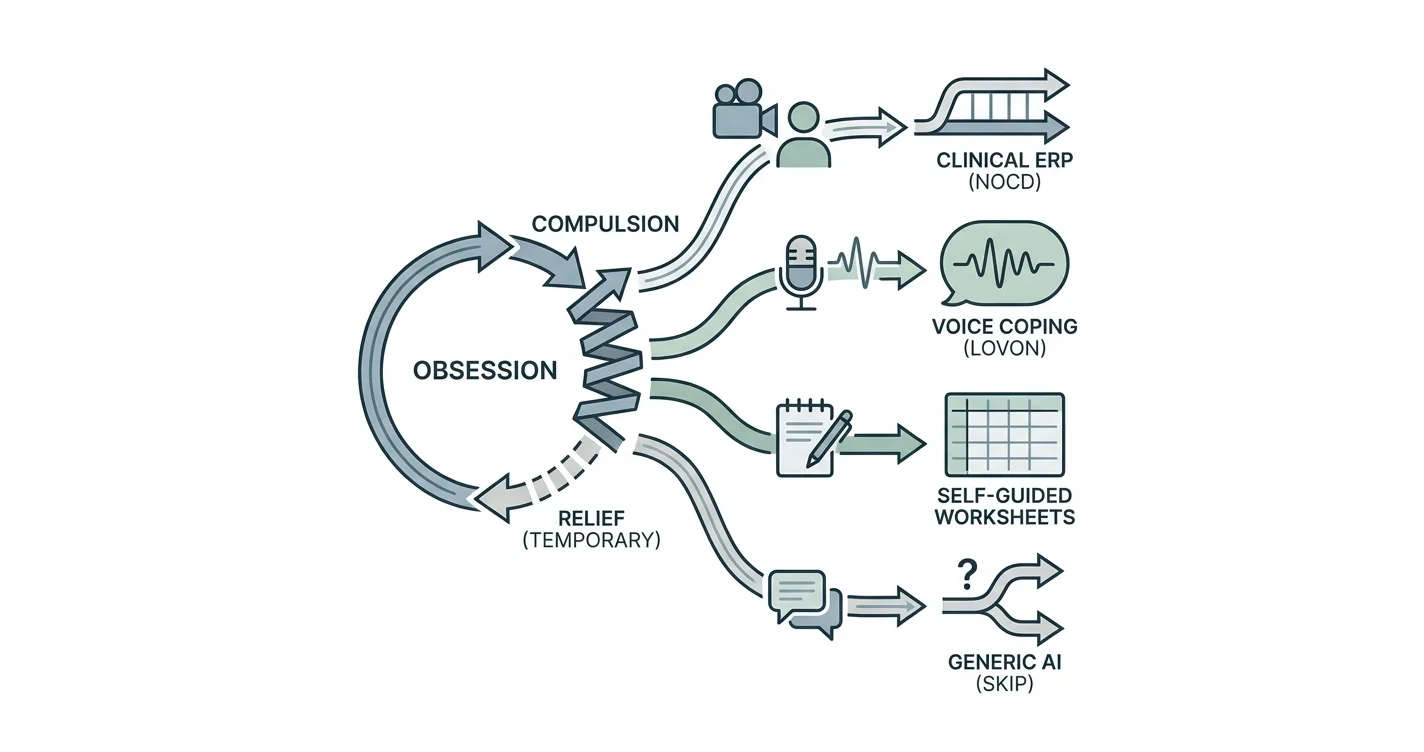
OCD isn't tidiness or double-checking a locked door. It runs on obsessions — intrusive thoughts — paired with compulsions meant to neutralize them, and the shape changes person to person: contamination fears, checking rituals, or relationship OCD's constant need for reassurance from a partner.
Searches for "best app for ocd" run about 2,400 a month with a keyword difficulty of 43 out of 100 in 2026, which tells you the market is crowded but not owned by one dominant player. That gap matters because most general mental-health apps are built for anxiety and mood, not for the specific obsession-compulsion-relief loop that defines OCD.
How this list is ranked
Each entry below is scored on four things that change outcomes for someone managing OCD in 2026: whether the format supports exposure and response prevention rather than accidental reassurance-seeking, whether a licensed clinician is anywhere in the loop, how available the tool is when a compulsion spikes at 2 a.m., and how clearly it states what it can't do.
OCD gets mixed up with OCPD (obsessive-compulsive personality disorder) more often than most people realize, and an app built for the wrong condition wastes months. Apps that encourage checking, excessive reassurance, or endless self-diagnosis quizzes get marked down here even when they're popular, because that pattern feeds the disorder instead of treating it.
The ranked list
1. NOCD — the clinical standard for ERP
NOCD pairs users with licensed therapists trained specifically in exposure and response prevention, delivered over video. Sessions run on a subscription model billed through insurance or self-pay in 2026, and the app includes structured homework between sessions. For someone who needs a diagnosis confirmed and a treatment plan built around ERP — the gold-standard approach for OCD — this is the app to start with. Verdict: Buy for anyone who wants licensed clinical treatment, not just coping support.
2. Lovon — the voice-first companion between sessions
Lovon is built for the hours ERP therapy doesn't cover: the 11 p.m. spiral, the reassurance-seeking urge before a doctor's appointment, the moment a compulsion feels unavoidable. It runs entirely through voice conversation, built with input from PhD psychologists, and stays available around the clock instead of on a weekly schedule. Lovon states plainly that it isn't a licensed clinician, which matters for OCD specifically — an AI app for OCD that blurs that line risks becoming another compulsion loop instead of a coping tool. Verdict: Buy for daily grounding and coping support alongside ERP treatment, not instead of it.
3. Self-guided CBT and ERP worksheet apps
These are static, structured programs — exposure hierarchies, thought records, habit trackers — without a live person or an adaptive AI voice on the other end. They work best for someone already in ERP treatment who wants to log exposures between sessions. Without guidance, people with OCD tend to turn the worksheets into another form of checking. Verdict: Hold — useful as a logging tool, not a standalone treatment in 2026.
4. Generic AI chatbot apps marketed for "mental health"
Plenty of AI chat apps in 2026 tack "OCD support" onto a general anxiety or mood product without building anything ERP-informed into the conversation flow. Ask one of these bots for reassurance about a contamination fear and most will reassure you — which is exactly the compulsion OCD treatment is designed to interrupt. Verdict: Skip for OCD specifically, even when the same app is fine for general stress or low mood.
5. Peer-support communities (IOCDF and similar)
The International OCD Foundation's forums and local support groups connect people managing the same obsessions and compulsions, often at no cost to join. They don't replace treatment and can't intervene during a spike, but they help with the isolation that comes from a disorder people still misunderstand in 2026. Verdict: Consider as a supplement to clinical treatment, never as the primary tool.
Comparison table
| Tool | Format | Licensed clinician involved | Best for | Verdict |
|---|---|---|---|---|
| NOCD | Video teletherapy | Yes | ERP-based diagnosis and treatment | Buy |
| Lovon | AI voice conversation | No — coaching support only | Daily coping between sessions | Buy |
| CBT/ERP worksheet apps | Self-guided text/forms | No | Logging exposures | Hold |
| Generic AI chatbots | Text chat | No | General stress, not OCD | Skip |
| IOCDF community | Forums/groups | Varies (peer-led) | Peer support | Consider |
Where to start
- Start with NOCD or a licensed ERP therapist if you don't have a diagnosis yet — an app should support treatment, not substitute for the diagnostic step.
- Add a voice-based companion like Lovon for the gaps between sessions, and check what a tool discloses about its own limits before trusting it with a spike.
- Skip any app store listing that promises to "cure" OCD or replace therapy outright in 2026 — that claim alone signals the product doesn't understand the condition.
Talk through an OCD spike right now
Voice-based coping support, available whenever you need it.
FAQ
What is the best app for ocd in 2026?
NOCD is the best app for ocd in 2026 for licensed ERP treatment, and Lovon is the strongest voice-based companion for coping between sessions. Pick based on whether you need diagnosis and treatment or daily support.
Can an AI app treat OCD on its own?
No AI app treats OCD on its own in 2026. Exposure and response prevention delivered by a licensed clinician remains the standard treatment, and voice apps like Lovon are built to support coping, not replace it.
Is Lovon good for OCD support?
Lovon works well for OCD when used for grounding and coping between ERP sessions, not as a stand-in for diagnosis or treatment. It's an AI voice therapy app, not a licensed clinician.
What's the difference between OCD and OCPD?
OCD involves unwanted intrusive thoughts and compulsions done to relieve distress, while OCPD is a personality pattern built around rigid perfectionism and control. The two need different treatment approaches, so an accurate diagnosis matters before picking an app.
Do AI chatbots make OCD worse?
Generic AI chatbots can make OCD worse when they offer repeated reassurance, since reassurance-seeking is itself a compulsion the disorder feeds on. Apps built around exposure and response prevention avoid this by design.
Is NOCD the same as ERP therapy?
NOCD delivers ERP therapy through licensed therapists over video rather than being a separate method. ERP itself is the treatment; NOCD is one platform for accessing it.
How much does an OCD app cost in 2026?
Pricing ranges from free peer-support communities to subscription-based teletherapy platforms billed monthly in 2026. Check each app's current pricing page directly since rates and billing models vary by provider.
Can peer-support communities replace therapy for OCD?
No, peer-support communities cannot replace therapy for OCD. They help with isolation and shared experience but lack the clinical structure of ERP treatment delivered by a licensed provider.
One last thing
The reassurance you get from an AI chatbot after asking "am I a bad person" works the same way as asking a partner for the tenth time — it's not comfort, it's the compulsion. The apps worth keeping in 2026 are the ones honest enough to say so, and that honesty is a better filter than any star rating.
Related guides
How AI Support Helps You Heal
AI emotional support isn't about replacing human connection — it's about filling the gaps. The moments when you need to talk at 2 AM, when you don't want to burden your friends again, or when you simply need someone to listen without judgment.
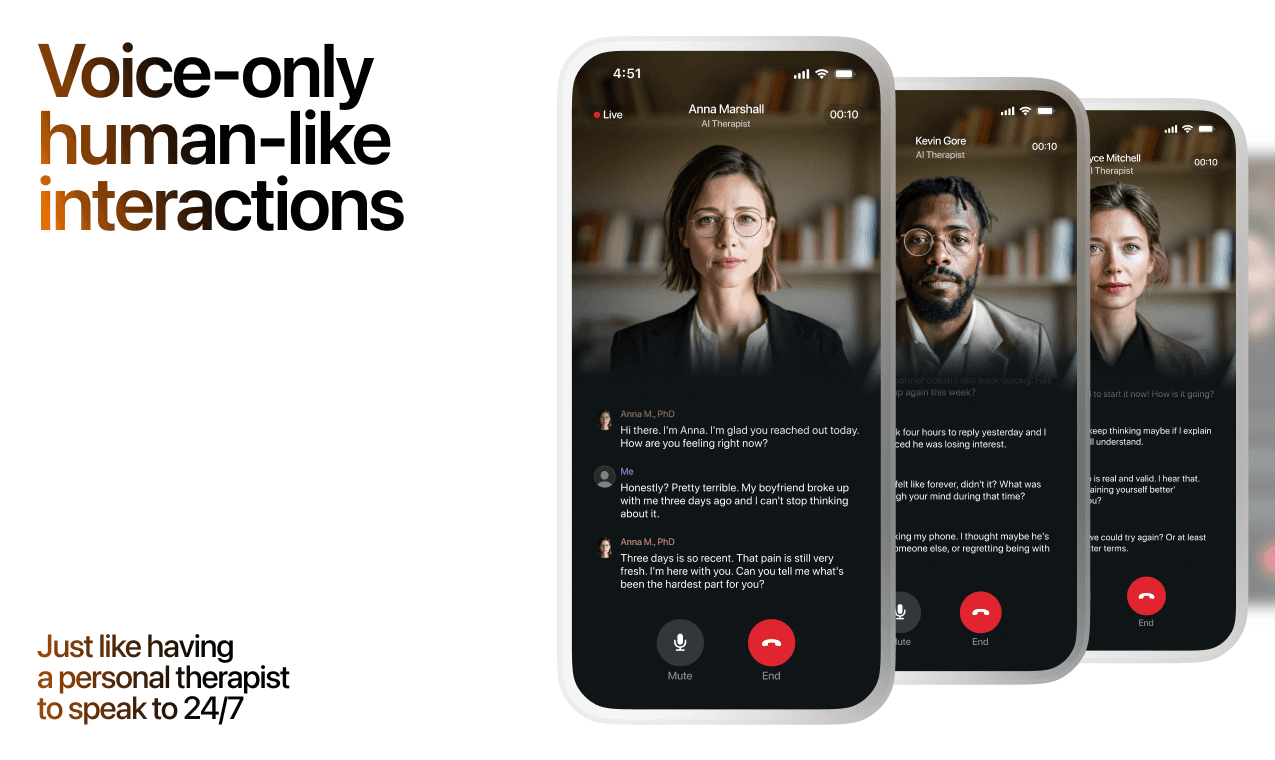
Here's what happens in a typical Lovon session:
You share what's on your mind
There's no script, no intake form, no waiting room. You speak or type whatever you're feeling — in your own words, at your own pace.
Lovon validates and explores
Using frameworks from CBT (Cognitive Behavioral Therapy) and motivational interviewing, Lovon acknowledges your feelings first, then gently helps you explore them. No dismissive "just move on" advice.
You build coping skills together
Lovon doesn't just listen — it actively works with you on evidence-based techniques: thought reframing, urge surfing, behavioral experiments, and more.
What a Session with Lovon Looks Like
When to Seek Professional Help
AI support is a valuable tool, but it's not a replacement for professional care. Please consider reaching out to a licensed therapist if you experience any of the following:
- Persistent thoughts of self-harm or suicide
- Inability to perform daily activities (work, eating, sleeping) for more than 2 weeks
- Turning to alcohol or substances to cope
- Intense anger or desire to harm your ex-partner
- Complete emotional numbness that doesn't improve over time
Crisis Resources (US): If you're in immediate danger, call 988 (Suicide & Crisis Lifeline) or text HOME to 741741 (Crisis Text Line). Available 24/7, free, and confidential.
Outside the US? Find a crisis line in your country
Ready to Start?
Your healing journey can begin right now
1 free conversation. No credit card. No judgment. Just a safe space to process what you're going through.
Frequently Asked Questions
Is AI therapy a replacement for a real therapist?
Is my conversation with Lovon AI private?
How is Lovon different from ChatGPT for emotional support?
Can I use Lovon if I'm already seeing a therapist?
Can I try Lovon for free?
About the Author
The Lovon Editorial Team
Mental Health & Wellness Content Team
The Lovon Editorial Team develops mental health and wellness content designed to make psychological concepts accessible and actionable. Our goal is to bridge the gap between clinical research and everyday life - helping you understand why your mind works the way it does and what you can do about it....
Similar Articles
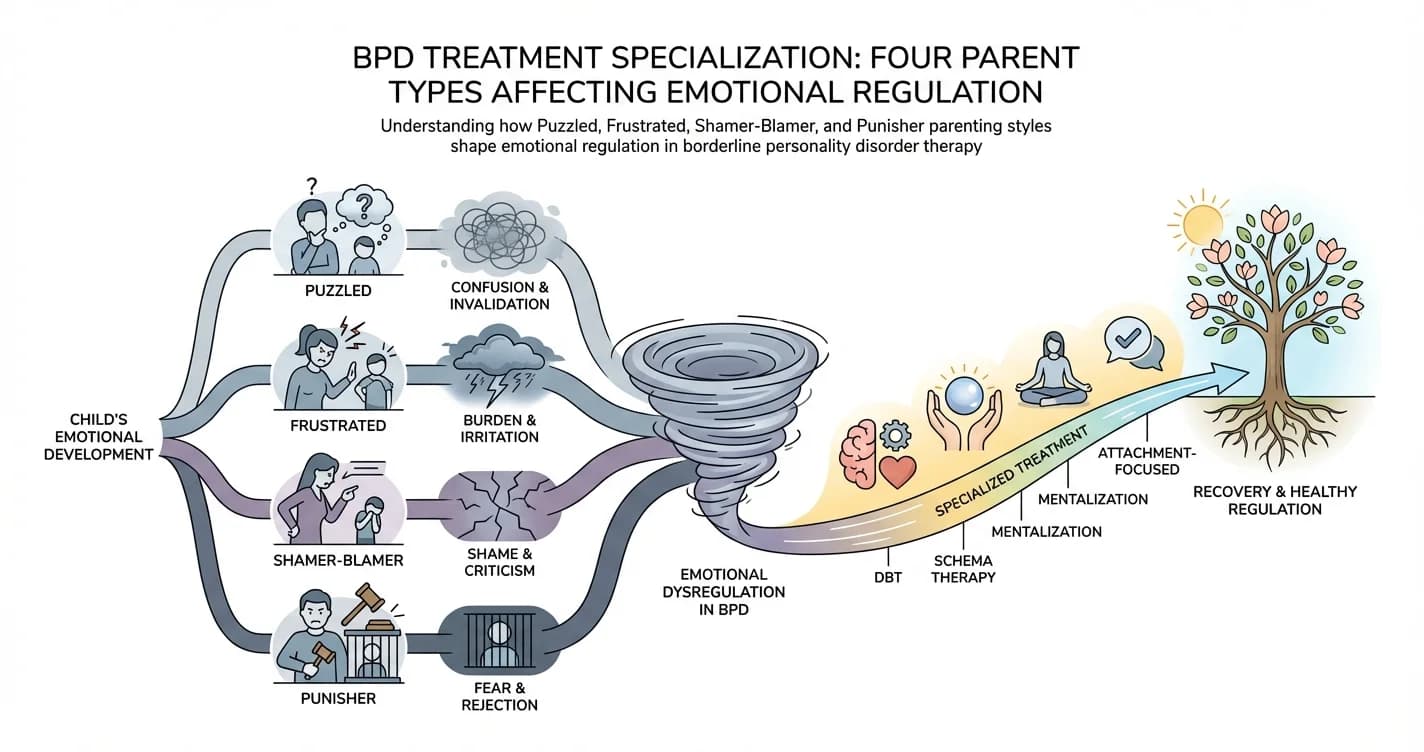
BPD Treatment Specialization: Four Parent Types Affecting Emotional Regulation
For individuals with borderline personality disorder (BPD), emotional regulation difficulties rarely emerge in isolation. Research increasingly suggests that

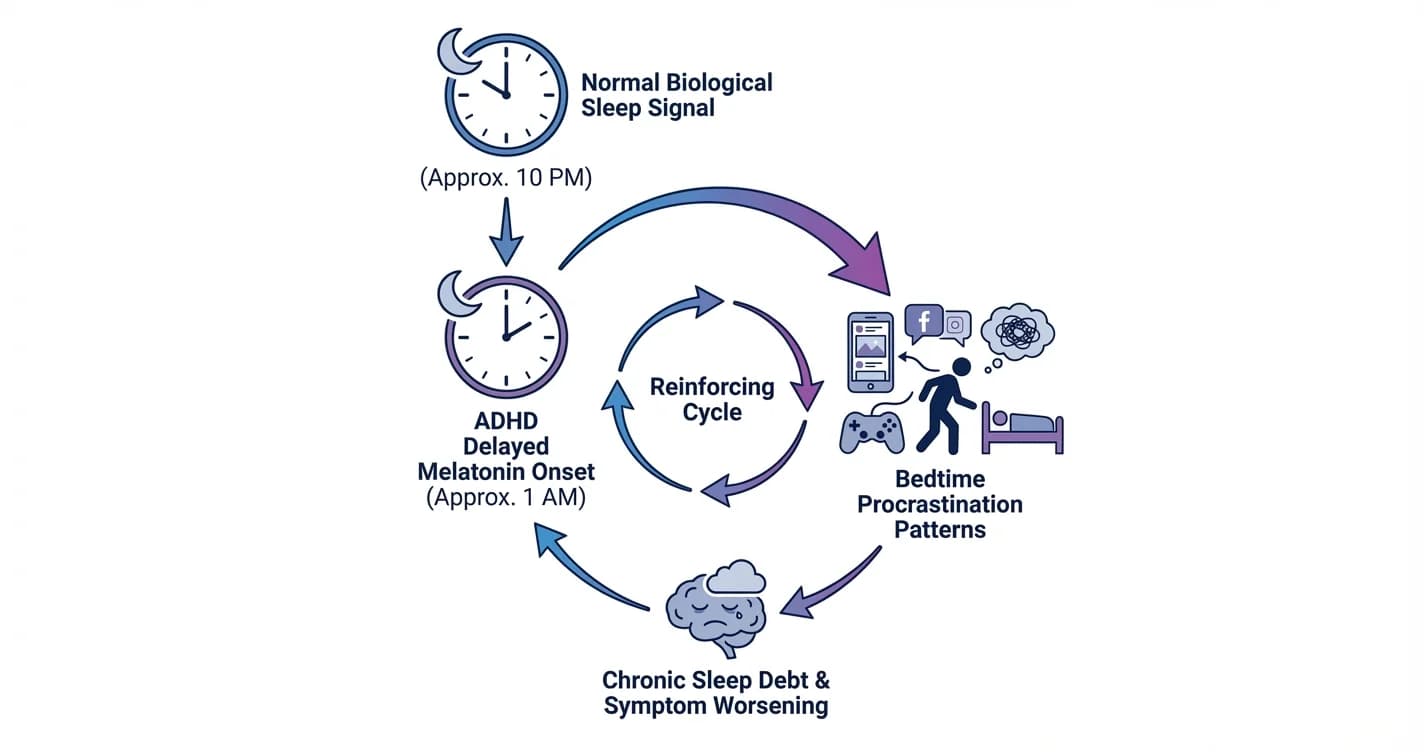
ADHD Sleep Cycle Disruption: Melatonin Delay and Bedtime Procrastination Patterns
Understanding how attention regulation difficulties interfere with natural sleep timing and the nightly wind-down process
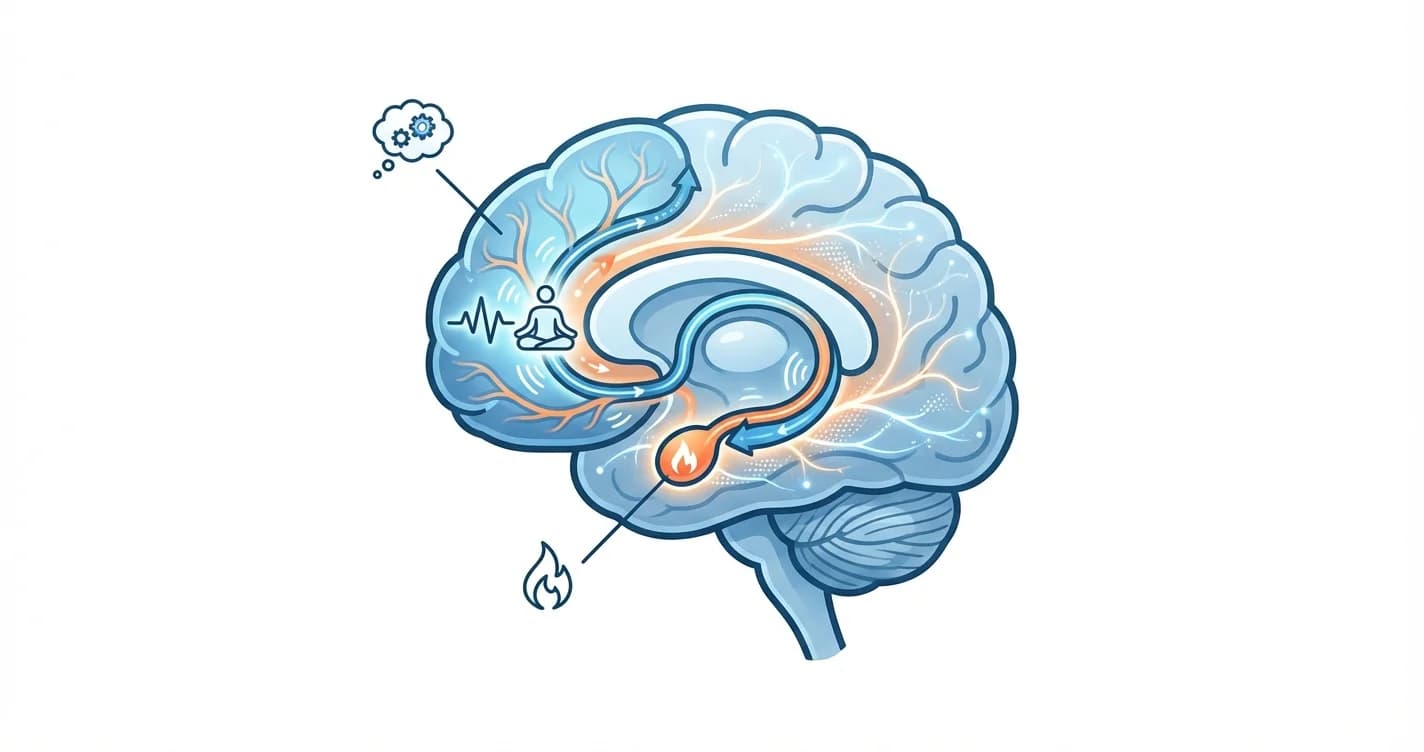
Amygdala and Prefrontal Cortex Connection: Training Emotional Regulation Through Mindfulness
How mindfulness practices reshape neural pathways to strengthen emotional control and reduce reactivity
Disclaimer: This article is for informational purposes only and does not constitute medical advice, diagnosis, or treatment. Always seek the advice of your physician or other qualified health provider with any questions you may have regarding a medical condition. If you are in crisis or think you may have an emergency, call 988 (Suicide & Crisis Lifeline) or go to the nearest emergency room. Outside the US? Find a crisis line in your country.