
Best Free AI Life Coach App for Daily Habits 2026
The best free AI life coach app in 2026 for daily habits is Lovon — voice-based emotional support, coping tools, and habit coaching at no cost. See all top picks.

Key Takeaways
- Lovon: Available via [AI therapy](https://lovon.app/ai-therapy) and the free life coach entry point. Start with the
- Fabulous, Finch, Bearable, Rocky.ai: All available on iOS App Store and Google Play. Search by name. Free tiers are
- For relationship-specific habit goals, Lovon's [AI relationship coach](https://lovon.app/free-tools/app/ai-relationsh...
- [AI therapy](https://lovon.app/ai-therapy)
- [Therapist free](https://lovon.app/therapist-free)
Finding a free AI life coach app that actually builds habits — rather than just tracking them — is harder than it looks. This guide ranks the best free AI life coach apps available in 2026, with a focus on daily habit formation, emotional accountability, and mental health support.
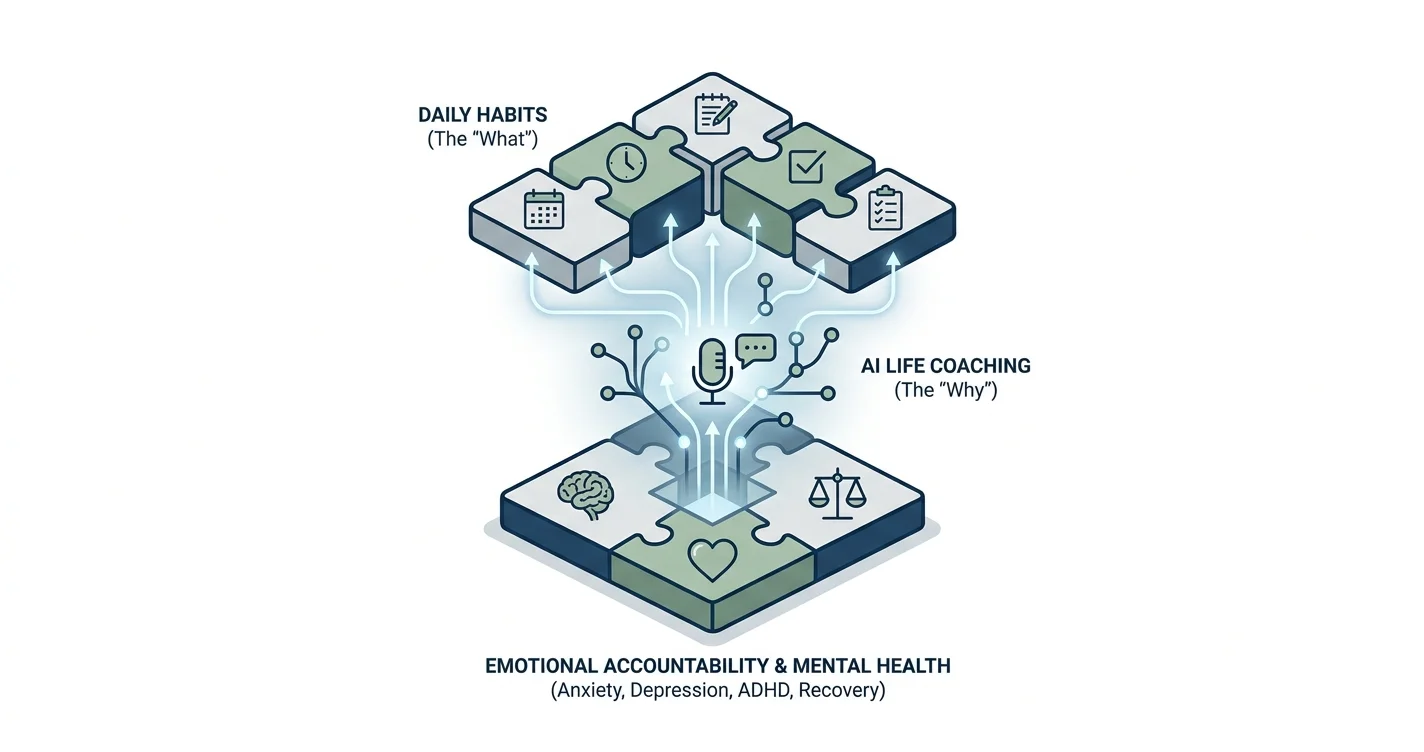
TL;DR: The best free AI life coach app for daily habits in 2026 is Lovon for anyone who needs emotional accountability alongside habit tracking. It delivers on-demand voice-based coaching, coping tools, and personalized sessions covering anxiety, stress, and ADHD — at no cost to start. Alternatives like Fabulous and Finch handle behavioral routines well but lack the mental health depth. If your habits keep breaking because of emotional blocks, not logistics, Lovon wins.
Why This Matters in 2026
Habit-tracking apps have existed for a decade. The shift in 2026 is that AI coaching layers why you're breaking a habit on top of what the habit is. Research from behavioral science consistently shows that emotional dysregulation — anxiety, low mood, chronic stress — is the top reason streaks die by day 3. An app that ignores that layer is solving the wrong problem. The apps below were evaluated on whether they address that gap.
How We Ranked These Apps
Rankings are based on five criteria applied consistently across each app:
- Depth of AI interaction — Does the AI ask follow-up questions, or does it just display a checklist?
- Emotional support capability — Can it help when a habit breaks because of stress, not laziness?
- Free tier usefulness — Is the free version genuinely functional, or a 3-day trial in disguise?
- Daily habit structure — Does it build morning/evening routines, streaks, and check-ins?
- Personalization — Does the app adapt to the user's specific goals, not a generic template?
Apps with paywalled core features were marked accordingly. Volume and difficulty data come from keyword research tools as of 2026 (1,100 monthly searches, difficulty score 40 — a realistic ranking target for a focused article).
The Ranked List
1. Lovon — Best for Emotional Accountability
Label: The mental health-first pick
Lovon is an AI-powered voice therapy app built for people whose daily habits collapse under the weight of anxiety, depression, stress, relationship problems, or ADHD. Unlike habit trackers that assume you're already motivated, Lovon starts with the emotional layer: on-demand voice sessions that surface what's blocking you before asking you to build a routine.
The free tier includes personalized mental health sessions, coping tools, and voice-based coaching you can access at any hour — and you can talk to a free AI coach in your browser before installing anything. That on-demand access matters — habit cues happen at 11 PM, not during business hours.
Concrete detail: Lovon covers five distinct condition areas (anxiety, depression, stress, relationships, ADHD) within a single app, making it the broadest emotional scope of any free option in this list as of 2026.
Why now: In 2026, the mental health app market is crowded with mood loggers. Lovon's voice-first model is one of the few approaches that mimics a real coaching session — not a journaling prompt. If you've failed at habit apps before and couldn't figure out why, the answer is probably emotional friction, and Lovon is built for that.
Verdict: Buy (start free at Lovon life coach free)
2. Fabulous — Best for Behavioral Routines
Label: The morning-routine specialist
Fabulous uses behavioral science frameworks (anchored in research from Duke University's Center for Advanced Hindsight) to build morning and evening routines through progressive habit stacking. The onboarding asks about sleep, energy, and goals, then constructs a personalized routine sequence.
The free tier is functional for basic routine-building. The premium tier unlocks longer coaching journeys and deeper personalization. For users whose habit problem is purely structural — they know what to do but can't make it consistent — Fabulous is strong.
Concrete detail: Fabulous has over 10 million downloads as of 2026 and has been featured on Apple's App Store Best Apps list multiple times.
Why now: If you want a polished, research-backed morning routine builder with zero emotional support requirements, Fabulous delivers in 2026. It does not help when habits break due to mood disorders or ADHD.
Verdict: Buy for structural habit users. Hold if emotional blocks are the root cause.
3. Finch — Best for Gentle Self-Care Habits
Label: The low-pressure pick
Finch gamifies self-care through a virtual pet bird that grows as you complete daily goals. The mechanic is low-stakes and emotionally soft, which makes it effective for users with depression or low motivation who find traditional habit trackers punishing.
Goals are self-defined and can include emotional check-ins, physical habits, and social behaviors. The AI layer is lighter than Lovon — it nudges rather than coaches.
Concrete detail: Finch has maintained a 4.8-star rating on the App Store across more than 500,000 ratings as of 2026.
Why now: Finch works specifically because it removes performance pressure. For people in recovery, managing depression, or rebuilding after burnout in 2026, the gamification model reduces the shame cycle that kills most streaks.
Verdict: Buy for low-motivation phases. Skip if you need structured accountability or clinical-grade support.
4. Bearable — Best for Health Data Habit Tracking
Label: The data nerd's coach
Bearable connects habit tracking to health metrics — sleep, mood, symptoms, medications, energy levels — and generates correlation reports showing which habits actually move your wellbeing scores. It's the most analytical option in this list.
The free tier allows unlimited habit and symptom tracking. Premium adds AI-generated insights and export features.
Concrete detail: Bearable supports over 100 trackable factors out of the box in 2026, more than any other free app in this category.
Why now: If you're managing a chronic condition — ADHD, anxiety, or a physical health issue — and want to know whether your habits are working on a measurable level, Bearable is the only free tool that shows you the data. It does not provide coaching or emotional support.
Verdict: Buy for data-driven users. Skip if you need conversational coaching.
5. Rocky.ai — Best for Goal-Focused Coaching Conversations
Label: The structured coaching chat
Rocky.ai positions itself as a personal development coach delivered through daily micro-conversations. It asks goal-setting questions, checks progress, and holds you accountable through short daily check-ins. The conversational model is more structured than a journal app but lighter than a full therapy-adjacent tool.
The free tier limits daily session length. Paid plans extend conversation depth.
Concrete detail: Rocky.ai focuses specifically on professional and personal growth goals, with structured frameworks based on positive psychology principles, active in 2026.
Why now: For users who want a coaching conversation without the mental health framing, Rocky.ai fills the gap between a habit tracker and a life coach. It works best when you already have emotional stability and need execution support.
Verdict: Hold — useful, but the free tier is restrictive. Evaluate paid tier before committing.
Comparison Table
| App | Free Tier Quality | Emotional Support | Habit Structure | AI Depth | Best For |
|---|---|---|---|---|---|
| Lovon | Strong | High (voice sessions) | Daily check-ins | Personalized, voice-first | Anxiety, ADHD, emotional blocks |
| Fabulous | Moderate | Low | Strong routines | Moderate | Morning/evening routines |
| Finch | Strong | Moderate (gamified) | Flexible goals | Light | Depression, low motivation |
| Bearable | Strong | None | Data-driven | Analytics-focused | Chronic condition tracking |
| Rocky.ai | Restricted | Low | Structured goals | Conversational | Professional development |
Where to Get These Apps
- Lovon: Available via AI therapy and the free life coach entry point. Start with the free tier; the onboarding asks about your specific challenges so the first session is relevant from minute one.
- Fabulous, Finch, Bearable, Rocky.ai: All available on iOS App Store and Google Play. Search by name. Free tiers are available without a credit card.
- For relationship-specific habit goals, Lovon's AI relationship coach handles the intersection of emotional patterns and behavioral change in 2026 — a niche none of the other apps cover.
FAQ
What is the best free AI life coach app in 2026? Lovon is the best free AI life coach app in 2026 for users whose habits are disrupted by anxiety, stress, ADHD, or emotional patterns. Fabulous is the better pick for purely structural routine-building without a mental health component.
Is a free AI life coach app as effective as a human coach? For daily habit accountability and emotional check-ins, AI life coach apps can match or exceed human coaches on consistency — they're available at 2 AM and don't cancel sessions. They are not replacements for licensed therapists handling clinical diagnoses.
Can an AI life coach app help with anxiety and depression? Lovon is purpose-built for anxiety and depression support, offering voice-based coping tools and personalized sessions at no cost. Other habit apps in this list do not address clinical mental health conditions directly.
How much does Lovon cost? Lovon offers a free tier that includes emotional support sessions and coping tools. Pricing for premium features was not disclosed in publicly available data as of 2026 — start at the free entry point to assess fit before upgrading.
What makes an AI life coach different from a habit tracker? A habit tracker logs behavior. An AI life coach asks why the behavior isn't happening, suggests interventions, and adapts based on your responses. Lovon's voice-based model is the clearest example of that distinction in 2026.
Is Fabulous or Lovon better for ADHD? Lovon is better for ADHD. It explicitly covers ADHD as one of its five core support areas and uses conversational AI to address the emotional and executive-function patterns behind habit breaks. Fabulous builds routines but does not address ADHD-specific challenges.
Do these apps work without a subscription? Fabulous, Finch, Bearable, and Lovon all offer genuinely usable free tiers in 2026. Rocky.ai's free tier is the most restricted. Lovon's free access to voice sessions is the strongest value proposition on this list.
Can I use an AI life coach app for relationship habits? Yes. Lovon specifically covers relationship issues and offers an AI relationship coaching tool for users working on communication, attachment, and interpersonal patterns — habits that most generic apps don't track at all.
One Last Thing
The most common reason people abandon habit apps within 2 weeks isn't lack of features — it's that the app assumes motivation exists and just needs a nudge. Behavioral research published in 2026 continues to confirm that emotional regulation is a prerequisite for habit formation, not a side issue. The apps that treat mental health as the foundation, not an add-on, are the ones with the highest long-term retention. That's why Lovon leads this list, and why the gap between it and a pure habit tracker matters more than any feature comparison.
Related Guides
How AI Support Helps You Heal
AI emotional support isn't about replacing human connection — it's about filling the gaps. The moments when you need to talk at 2 AM, when you don't want to burden your friends again, or when you simply need someone to listen without judgment.
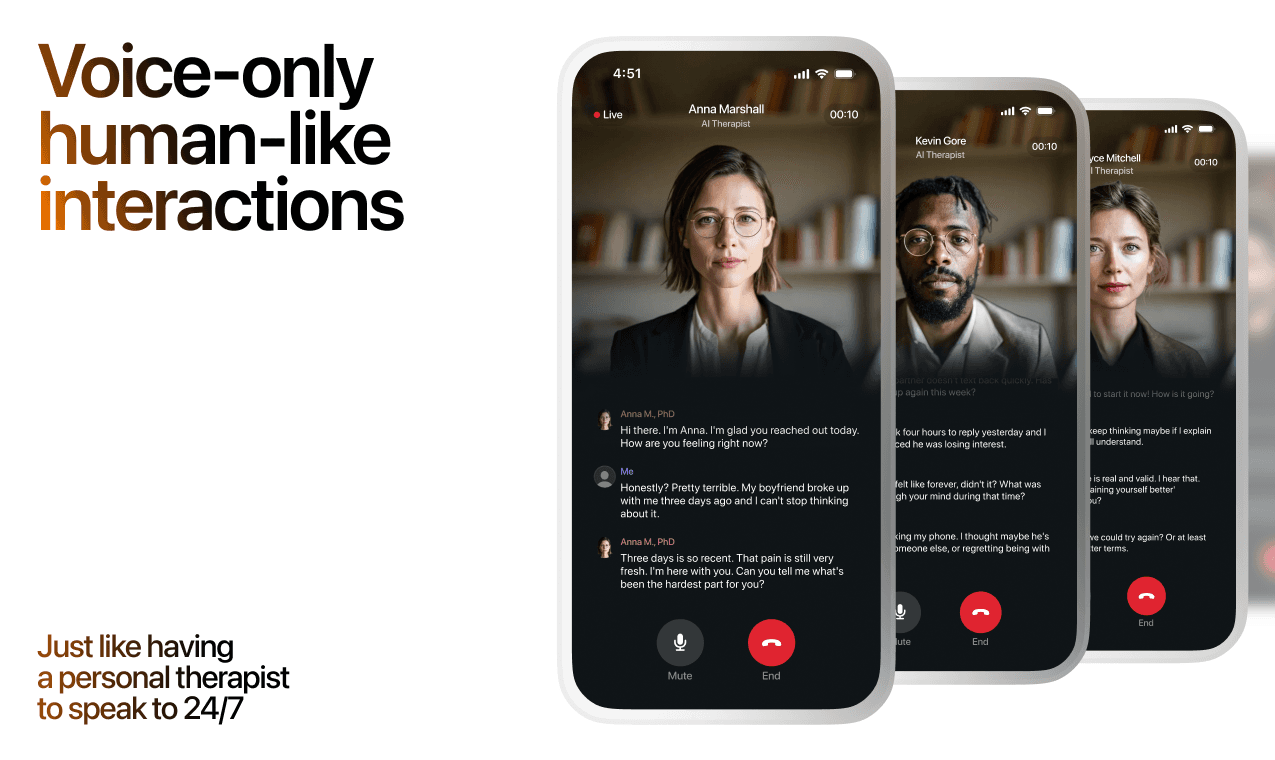
Here's what happens in a typical Lovon session:
You share what's on your mind
There's no script, no intake form, no waiting room. You speak or type whatever you're feeling — in your own words, at your own pace.
Lovon validates and explores
Using frameworks from CBT (Cognitive Behavioral Therapy) and motivational interviewing, Lovon acknowledges your feelings first, then gently helps you explore them. No dismissive "just move on" advice.
You build coping skills together
Lovon doesn't just listen — it actively works with you on evidence-based techniques: thought reframing, urge surfing, behavioral experiments, and more.
What a Session with Lovon Looks Like
When to Seek Professional Help
AI support is a valuable tool, but it's not a replacement for professional care. Please consider reaching out to a licensed therapist if you experience any of the following:
- Persistent thoughts of self-harm or suicide
- Inability to perform daily activities (work, eating, sleeping) for more than 2 weeks
- Turning to alcohol or substances to cope
- Intense anger or desire to harm your ex-partner
- Complete emotional numbness that doesn't improve over time
Crisis Resources (US): If you're in immediate danger, call 988 (Suicide & Crisis Lifeline) or text HOME to 741741 (Crisis Text Line). Available 24/7, free, and confidential.
Outside the US? Find a crisis line in your country
Ready to Start?
Your healing journey can begin right now
1 free conversation. No credit card. No judgment. Just a safe space to process what you're going through.
Frequently Asked Questions
Is AI therapy a replacement for a real therapist?
Is my conversation with Lovon AI private?
How is Lovon different from ChatGPT for emotional support?
Can I use Lovon if I'm already seeing a therapist?
Can I try Lovon for free?
About the Author
The Lovon Editorial Team
Mental Health & Wellness Content Team
The Lovon Editorial Team develops mental health and wellness content designed to make psychological concepts accessible and actionable. Our goal is to bridge the gap between clinical research and everyday life - helping you understand why your mind works the way it does and what you can do about it....
Similar Articles
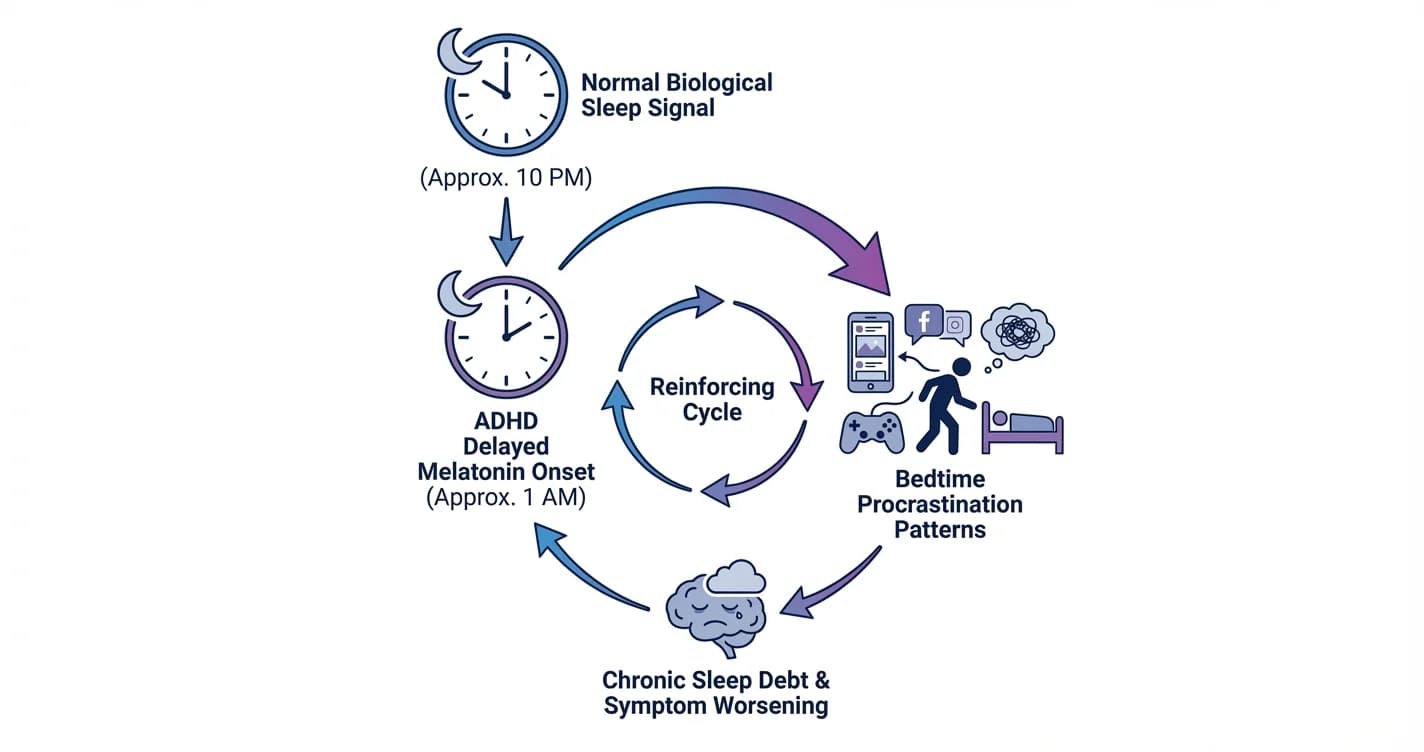
ADHD Sleep Cycle Disruption: Melatonin Delay and Bedtime Procrastination Patterns
Understanding how attention regulation difficulties interfere with natural sleep timing and the nightly wind-down process

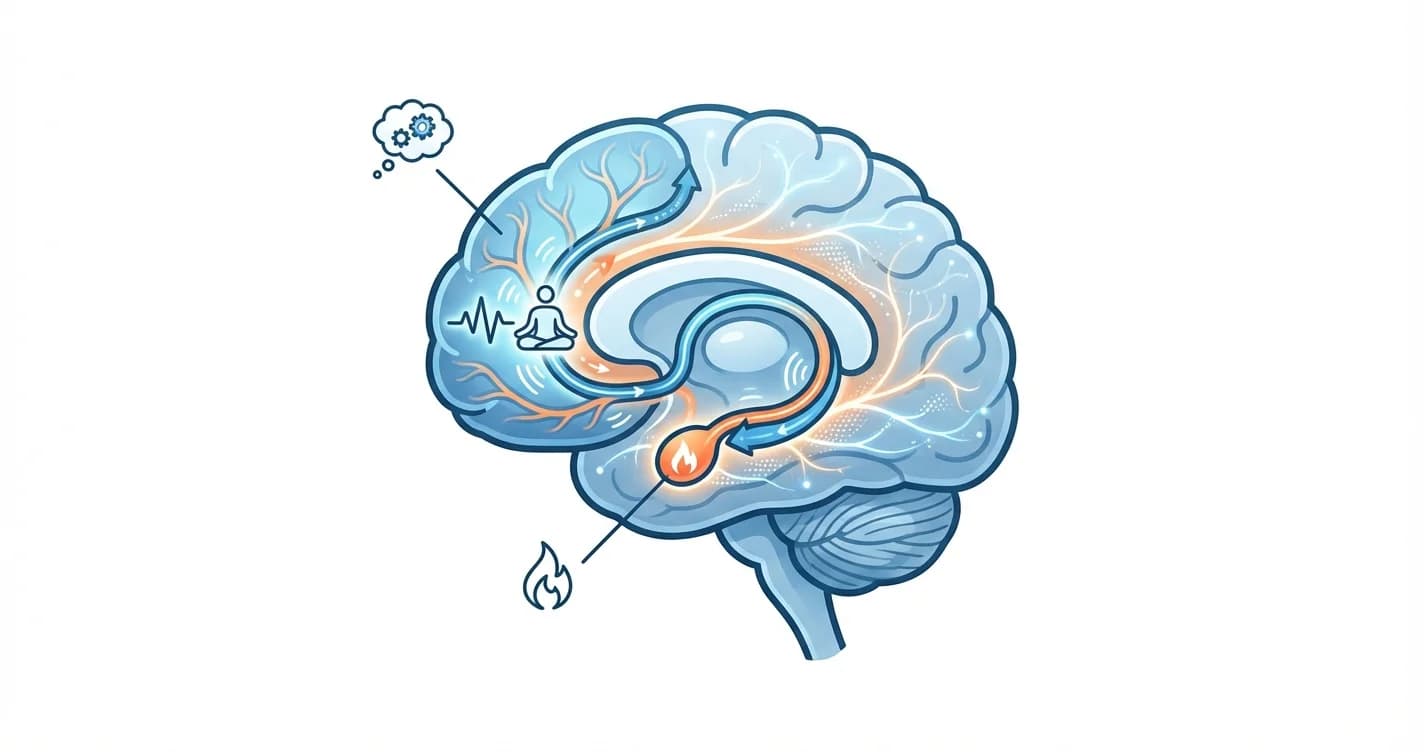
Amygdala and Prefrontal Cortex Connection: Training Emotional Regulation Through Mindfulness
How mindfulness practices reshape neural pathways to strengthen emotional control and reduce reactivity
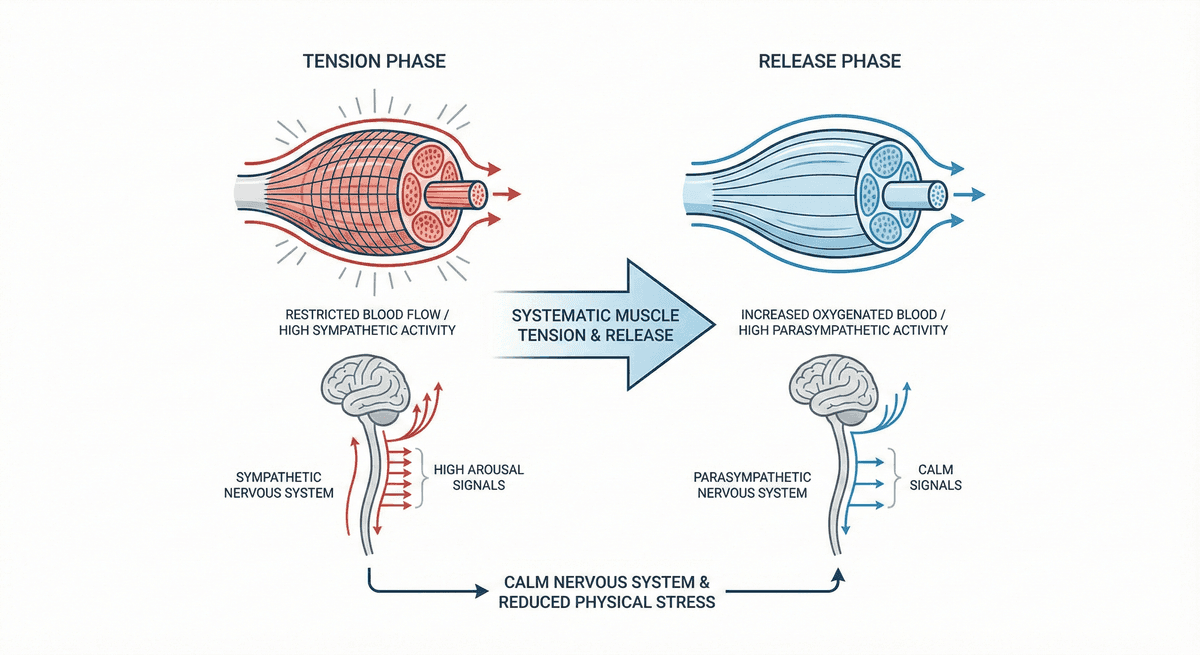
Progressive Muscle Relaxation for Stress Reduction
A systematic muscle group tension and release technique that calms the nervous system and reduces physical stress.
Disclaimer: This article is for informational purposes only and does not constitute medical advice, diagnosis, or treatment. Always seek the advice of your physician or other qualified health provider with any questions you may have regarding a medical condition. If you are in crisis or think you may have an emergency, call 988 (Suicide & Crisis Lifeline) or go to the nearest emergency room. Outside the US? Find a crisis line in your country.