
Scarcity Mindset vs Abundance Mindset: Fix It in 2026
Scarcity mindset vs abundance mindset explained with a 7-step shift plan for 2026 — track triggers, reframe beliefs, and build proof that enough is real.

Key Takeaways
- Scarcity mindset vs abundance mindset is a filter shift, not a personality fix — track three scarcity moments this
- Cognitive distortion patterns like all-or-nothing thinking fuel scarcity; naming them cuts their grip within days.
- A written proof list of evidence against the scarcity story works faster than affirmations alone.
- Lovon's AI voice therapy app gives you a place to talk through scarcity spirals between sessions, not instead of one.
- Skip 'just think positive' advice — it ignores the nervous system state driving the scarcity loop in the first place.
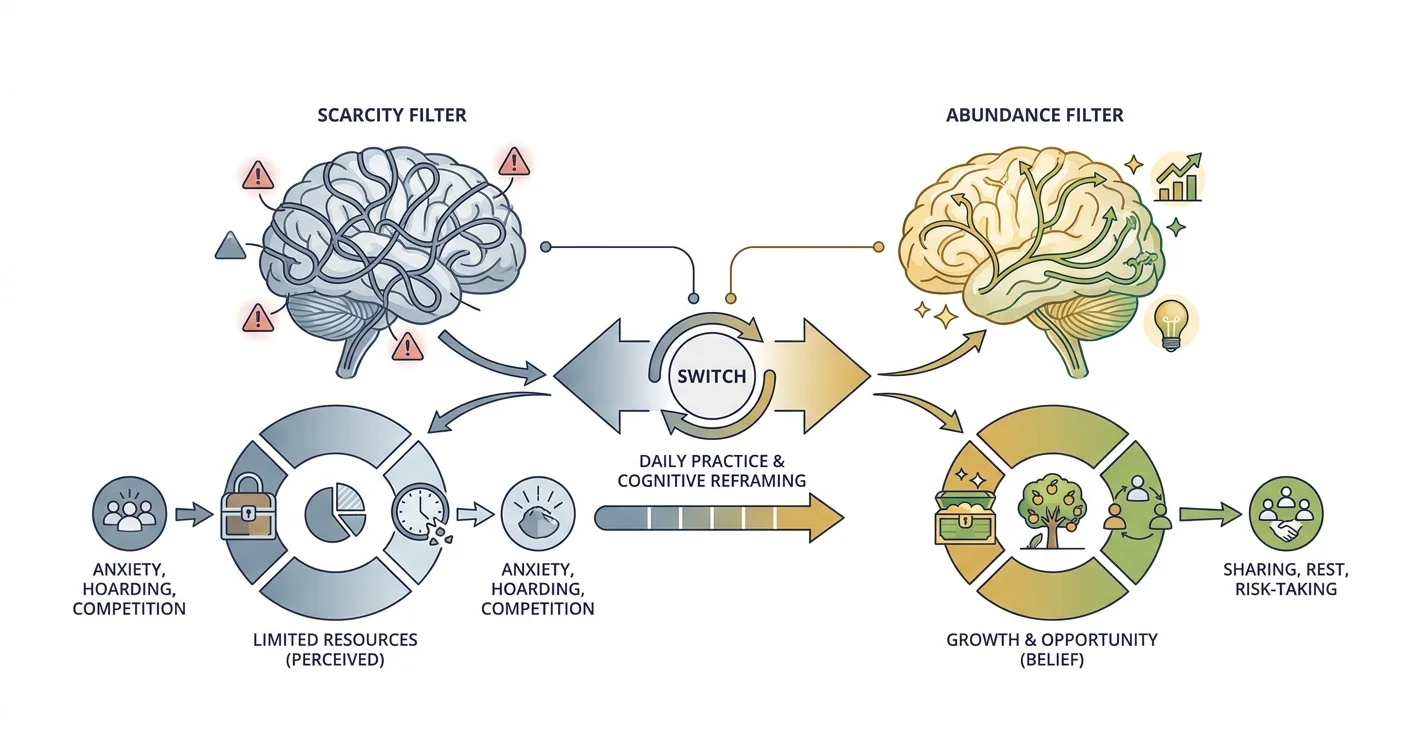
Scarcity mindset and abundance mindset aren't personality traits — they're two different filters your brain runs on the same facts, and you can switch the filter with daily practice starting now, in 2026.
TL;DR
- Scarcity mindset vs abundance mindset is a filter shift, not a personality fix — track three scarcity moments this week to start.
- Cognitive distortion patterns like all-or-nothing thinking fuel scarcity; naming them cuts their grip within days.
- A written proof list of evidence against the scarcity story works faster than affirmations alone.
- Lovon's AI voice therapy app gives you a place to talk through scarcity spirals between sessions, not instead of one.
- Skip 'just think positive' advice — it ignores the nervous system state driving the scarcity loop in the first place.
Why this matters
Scarcity mindset tells you there's never enough — time, money, love, opportunity — and it makes you grip, hoard, and compete even when the actual numbers say otherwise. Abundance mindset isn't naive optimism; it's the belief that resources, chances, and connection can grow, so you can share, rest, and take risks without collapsing.
The shift matters because scarcity thinking often runs on cognitive distortion patterns like catastrophizing and all-or-nothing thinking. Left unchecked in 2026's high-pressure work and dating culture, these patterns show up as chronic comparison, hoarding behavior, and burnout that looks like ambition but functions like fear.
You don't fix this by repeating affirmations in a mirror. You fix it by interrupting the pattern at the moment it fires, then building evidence that contradicts it, over and over, until the new filter becomes the default one.
What you'll need
- 10 minutes a day for one week (this is a practice, not a one-time realization)
- A notes app or notebook for tracking scarcity moments
- One trigger situation you already know sets off scarcity thinking (money, dating, career comparison)
- A way to talk through the loop out loud when it spikes — voice notes, a trusted person, or an AI voice therapy session
- Willingness to sit with discomfort for 30-60 seconds before reacting
The steps
1. Name the scarcity script running your day
Before you can shift a mindset, you have to catch it operating. Spend one day just noticing the sentence your brain finishes automatically: "There's not enough X," "If they get it, I lose it," "I have to grab this now."
Write down the exact wording, not a summary. The specific phrase is what you'll target later. Most people find the same three or four scripts repeating — money running out, being replaced, missing the window.
Common mistake: treating this as self-criticism. You're not diagnosing a flaw, you're collecting data on a pattern.
2. Track three scarcity moments this week
Log the trigger, the thought, the physical sensation, and what you did next. Three is enough to spot a pattern without turning the whole week into surveillance.
Look for the trigger category: is it always money-adjacent, always relationship-adjacent, always work-adjacent? Scarcity mindset is rarely global — it clusters around one or two domains where an old lack was real once.
Common mistake: logging the thought but skipping the body sensation. The tightness in your chest or jaw is the nervous system signal that tells you this isn't a logic problem yet — it's a stress response.
3. Reframe one belief per moment with an abundance rewrite
Take each logged thought and write a second version that's still true but not scarcity-framed. "There's only one promotion this year" becomes "This promotion is one chance among several I'll have over my career."
This isn't about lying to yourself — both sentences can be factually accurate. The reframe just widens the timeline instead of collapsing everything into one moment. If you're stuck on how to phrase it, how to stop negative self-talk walks through the exact wording swaps that hold up under stress.
Common mistake: reframing too big, too fast — jumping from "I'll never have enough money" to "I'm wealthy" doesn't land. Smaller, believable steps stick.
4. Build a proof list of evidence against the scarcity story
List five specific times the scarcity outcome didn't happen: a time money came through, a time love didn't run out, a time a missed opportunity led to a better one. Specific dates and details make this list credible to your own brain.
Re-read this list before any situation that historically triggers scarcity thinking — a salary negotiation, a first date, a competitive work meeting. The goal is to have counter-evidence ready before the old script fires, not after.
Expected outcome: by day four or five, the reframe in step three starts firing faster on its own, because you've primed it with real data.
5. Practice one abundance action daily
Abundance mindset needs behavioral proof, not just mental reframing. Share a resource you'd normally hoard — a contact, a tip, a piece of credit at work. Give without immediately calculating what you get back.
This single daily action does more to rewire the pattern than a week of journaling alone, because it puts your body through the experience of giving without depletion. Track how you actually feel 20 minutes after, not in the anxious moment right before.
Common mistake: picking an action so large it triggers scarcity all over again. Keep the stakes low enough that you can actually follow through.
6. Set a boundary that says "enough" out loud
Scarcity mindset often masquerades as overwork or overgiving — saying yes to everything because you fear there won't be another chance. Pick one request this week and decline it, stating that your current capacity is enough.
Saying "enough" out loud, even in a low-stakes context, retrains the belief that stopping doesn't cost you the opportunity forever. Notice what actually happens afterward versus what you predicted would happen.
7. Debrief with a coping tool at night
End each day of this practice by naming one scarcity moment and one abundance moment out loud, even briefly. This closes the loop instead of letting the day's data disappear into vague anxiety.
If a scarcity spiral hits harder than usual — a rejection, a financial scare, a comparison spiral after scrolling — talk it through rather than sitting with it alone. Lovon's AI voice therapy sessions are built for exactly this kind of on-demand debrief, available whenever the spike happens, not just during a scheduled appointment.
Talk through a scarcity spiral tonight
Lovon gives you an AI voice session on demand, built with input from PhD psychologists.
Troubleshooting
The reframe feels like lying to myself. Make the abundance version more specific, not more positive — specificity is what makes it believable, not optimism.
I can name the scarcity thought but can't stop the reaction. That's a nervous system issue, not a logic issue — the thought fires faster than your prefrontal cortex can intervene. Pair the reframe step with a grounding technique before you try to think your way out.
I only notice the pattern in scarcity related to relationships, not money. That's useful data, not a failure — most people have one dominant domain. Focus your proof list there first instead of trying to cover every area at once.
The abundance action feels fake or performative. Shrink it. A genuine small action beats a large forced one every time — one specific piece of credit given at work beats a vague "be generous" resolution.
I relapse into scarcity thinking under real financial stress. That's expected — abundance mindset doesn't mean ignoring real constraints. The goal is catching the spiral before it drives a decision, not pretending the constraint doesn't exist.
I keep forgetting to log the moments. Set one phone reminder at a predictable trigger time — right before a work meeting, right after checking a bank balance — instead of relying on memory.
Tools and resources
- A notes app for the daily scarcity/abundance log
- Lovon's AI voice journaling app for talking through the pattern out loud instead of only writing it
- An AI life coach for confidence and self-esteem, useful for the boundary-setting step specifically
- A trusted friend who can call out the scarcity script when you can't see it yourself
- Ten minutes of quiet time, same time daily, for the debrief step
What to do next
Once the seven-step cycle feels familiar, the deeper work is usually attachment-related — scarcity around love and connection often traces back to earlier patterns of feeling like affection was limited or conditional. A guide on self-worth vs self-esteem is the natural next step if scarcity mindset keeps showing up in how you value yourself rather than just your finances or career.
FAQ
What's the real difference between scarcity mindset vs abundance mindset?
Scarcity mindset believes resources, love, and opportunity are fixed and limited, so you hoard, compete, and grip. Abundance mindset believes they can grow, so you share and take reasonable risks. Neither is about ignoring real limits — it's about the filter you apply to ambiguous situations.
How long does it take to shift from scarcity to abundance mindset?
Most people notice the reframe firing faster within one to two weeks of daily tracking, based on cognitive behavioral practice patterns. Full behavioral change, like giving freely without anxiety, tends to take several weeks of repeated practice through 2026's typical stress cycles.
Is scarcity mindset the same as anxiety?
No, but they overlap heavily. Scarcity mindset is a belief pattern about resources being limited; anxiety is a nervous system state of heightened alert. Scarcity thinking often triggers anxious sensations, and anxious states make scarcity thoughts feel more true than they are.
Can an AI app help with shifting a scarcity mindset?
Yes, an AI voice therapy app like Lovon can help you talk through scarcity spirals in the moment and practice reframes out loud, which reinforces the pattern faster than silent journaling alone. It works as support between sessions, not as a replacement for licensed clinical care.
Does abundance mindset mean ignoring real financial problems?
No. Abundance mindset changes how you respond to a constraint, not whether the constraint is real. Someone with real financial limits can still practice abundance thinking by focusing on what's actually possible instead of catastrophizing every decision.
What triggers scarcity mindset the most?
Money stress, romantic rejection, and career comparison are the three most common triggers reported in coaching and therapy contexts. Most people have one dominant domain where an earlier real lack shaped the pattern, rather than scarcity showing up equally everywhere.
Are affirmations enough to build an abundance mindset?
Affirmations alone rarely hold up under real stress because they lack evidence your brain finds credible. Pairing a reframe with a written proof list of specific counter-examples works faster than repeating a positive statement without backing it.
How do I know if I have a scarcity mindset around relationships specifically?
Signs include jealousy that spikes without a clear reason, difficulty being happy for a partner's success, and a pull to control or monitor rather than trust. This pattern often overlaps with anxious attachment, where fear of loss drives behavior more than the actual relationship does.
One last thing
The fastest tell that scarcity mindset is running the show isn't what you think — it's what you can't say out loud. If you can't tell a partner, friend, or coworker "I have enough" without flinching, that's the exact sentence to practice this week, before any reframe or proof list.
Related guides
How AI Support Helps You Heal
AI emotional support isn't about replacing human connection — it's about filling the gaps. The moments when you need to talk at 2 AM, when you don't want to burden your friends again, or when you simply need someone to listen without judgment.
Here's what happens in a typical Lovon session:
You share what's on your mind
There's no script, no intake form, no waiting room. You speak or type whatever you're feeling — in your own words, at your own pace.
Lovon validates and explores
Using frameworks from CBT (Cognitive Behavioral Therapy) and motivational interviewing, Lovon acknowledges your feelings first, then gently helps you explore them. No dismissive "just move on" advice.
You build coping skills together
Lovon doesn't just listen — it actively works with you on evidence-based techniques: thought reframing, urge surfing, behavioral experiments, and more.
What a Session with Lovon Looks Like

When to Seek Professional Help
AI support is a valuable tool, but it's not a replacement for professional care. Please consider reaching out to a licensed therapist if you experience any of the following:
- Persistent thoughts of self-harm or suicide
- Inability to perform daily activities (work, eating, sleeping) for more than 2 weeks
- Turning to alcohol or substances to cope
- Intense anger or desire to harm your ex-partner
- Complete emotional numbness that doesn't improve over time
Crisis Resources (US): If you're in immediate danger, call 988 (Suicide & Crisis Lifeline) or text HOME to 741741 (Crisis Text Line). Available 24/7, free, and confidential.
Outside the US? Find a crisis line in your country
Ready to Start?
Your healing journey can begin right now
1 free conversation. No credit card. No judgment. Just a safe space to process what you're going through.
Frequently Asked Questions
Is AI therapy a replacement for a real therapist?
Is my conversation with Lovon AI private?
How is Lovon different from ChatGPT for emotional support?
Can I use Lovon if I'm already seeing a therapist?
Can I try Lovon for free?
About the Author

The Lovon Editorial Team
Mental Health & Wellness Content Team
The Lovon Editorial Team develops mental health and wellness content designed to make psychological concepts accessible and actionable. Our goal is to bridge the gap between clinical research and everyday life - helping you understand why your mind works the way it does and what you can do about it....
Similar Articles
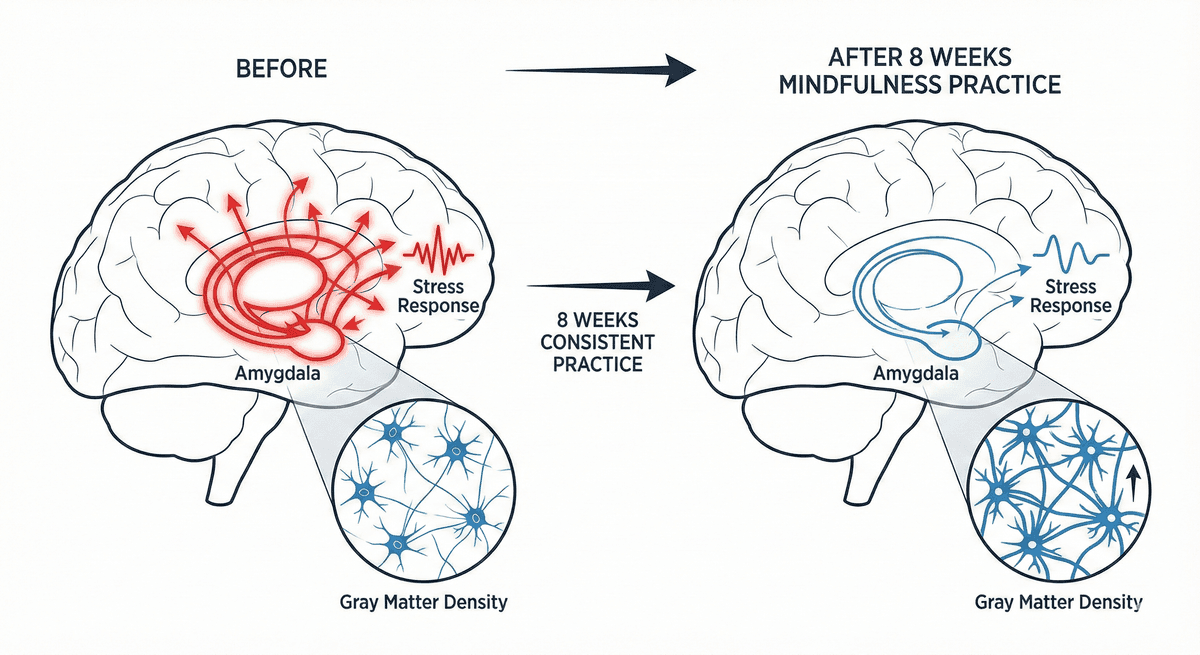
What 8 Weeks of Meditation Does to Your Amygdala
See what changes in your brain after eight weeks of daily meditation, why you react less to stress, and how to build a routine that actually sticks.


Amygdala and Prefrontal Cortex Connection: Training Emotional Regulation Through Mindfulness
How mindfulness practices reshape neural pathways to strengthen emotional control and reduce reactivity
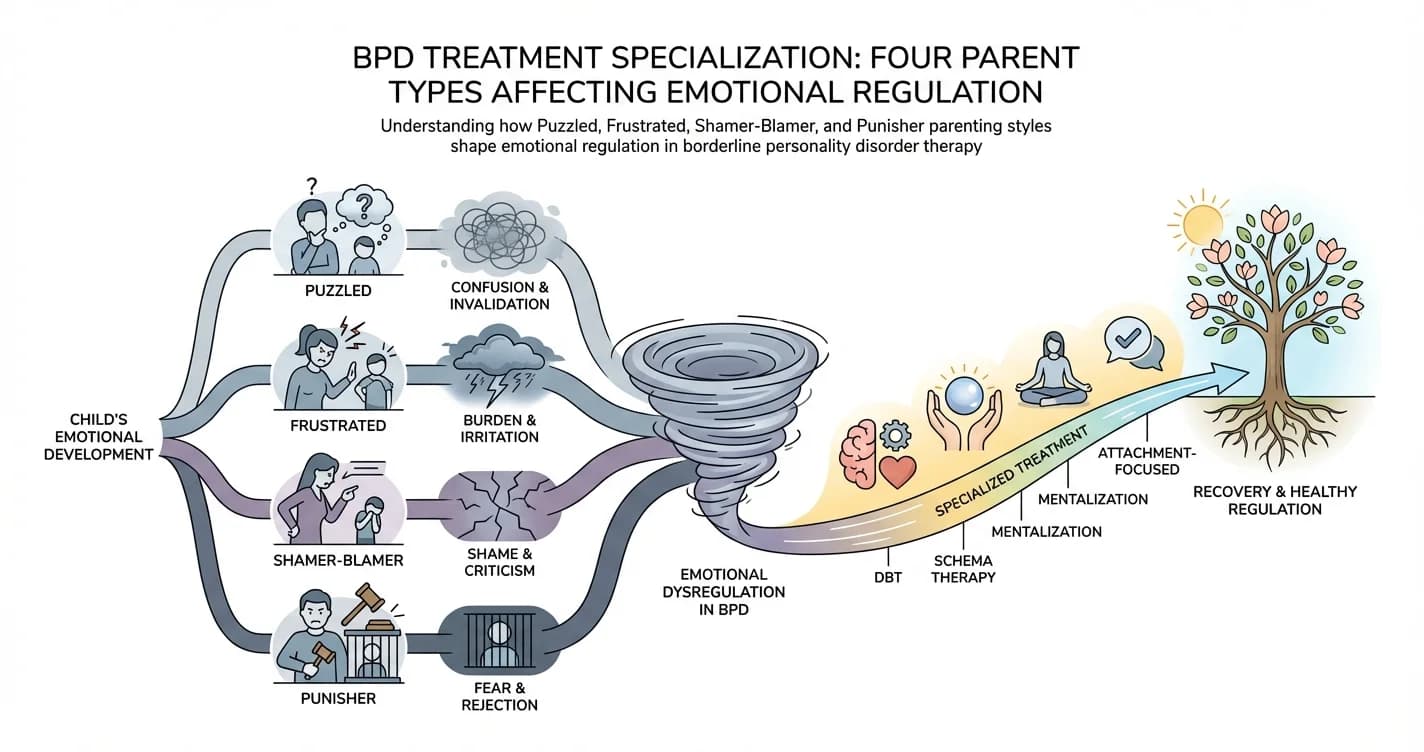
BPD Treatment Specialization: Four Parent Types Affecting Emotional Regulation
For individuals with borderline personality disorder (BPD), emotional regulation difficulties rarely emerge in isolation. Research increasingly suggests that
Disclaimer: This article is for informational purposes only and does not constitute medical advice, diagnosis, or treatment. Always seek the advice of your physician or other qualified health provider with any questions you may have regarding a medical condition. If you are in crisis or think you may have an emergency, call 988 (Suicide & Crisis Lifeline) or go to the nearest emergency room. Outside the US? Find a crisis line in your country.