
Spiritual Bypassing in 2026: Signs, Steps, and Fixes
Spiritual bypassing swaps real healing for forced positivity. Learn the signs, six steps to work through it, and when to get support in 2026.
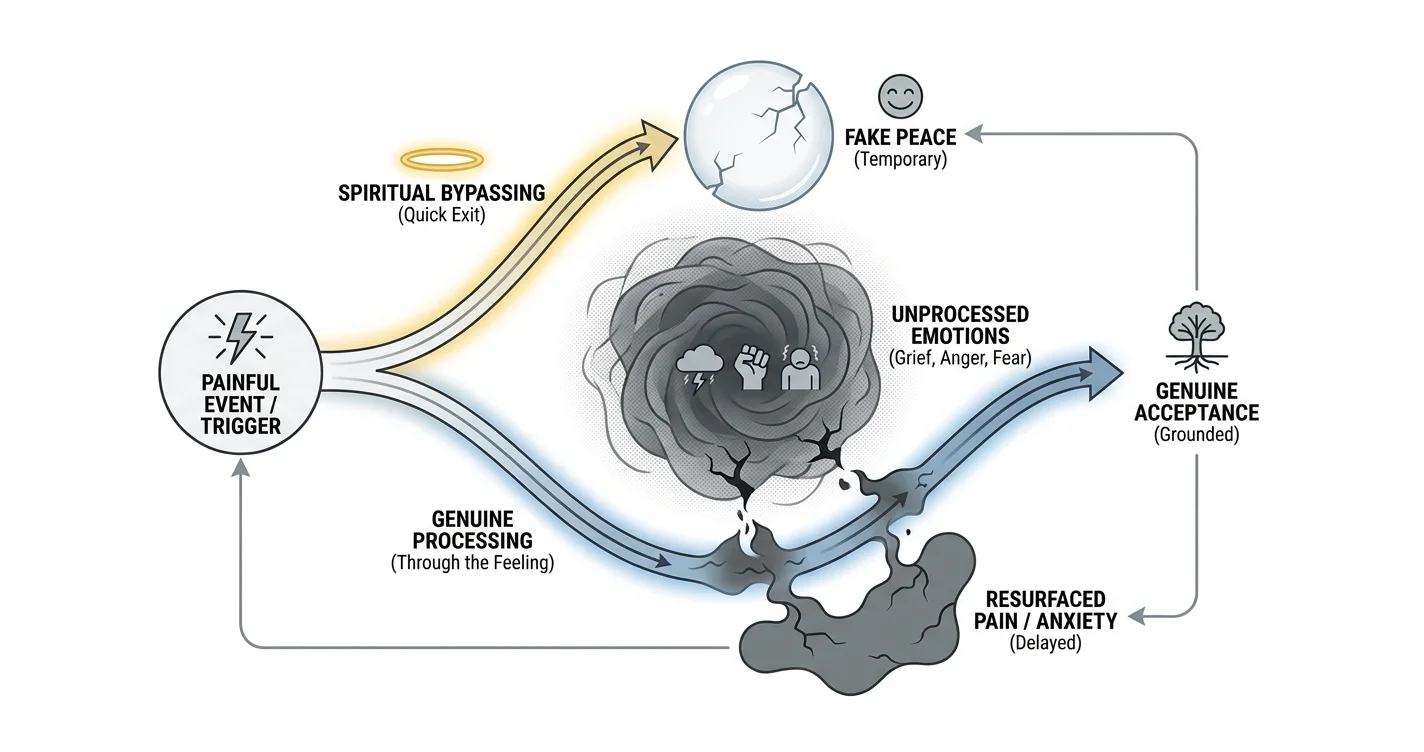

Key Takeaways
- Spiritual bypassing replaces grief, anger, or fear with forced positivity like 'it was meant to be' — the feeling
- Signs include rushing to forgive, meditating instead of confronting, and using gratitude to shut down a hard
- The fix is naming the emotion before reframing it — six steps below walk through how, no incense required.
- If the pattern keeps repeating after weeks of trying alone, structured support like Lovon's AI voice sessions can
Spiritual bypassing turns real pain into a slogan — you skip the grief, skip the anger, and jump straight to gratitude before you've actually felt anything. This guide walks through how to spot the pattern in yourself and how to work through what it's covering up instead of decorating it.
TL;DR
- Spiritual bypassing replaces grief, anger, or fear with forced positivity like 'it was meant to be' — the feeling never actually gets processed.
- Signs include rushing to forgive, meditating instead of confronting, and using gratitude to shut down a hard conversation.
- The fix is naming the emotion before reframing it — six steps below walk through how, no incense required.
- If the pattern keeps repeating after weeks of trying alone, structured support like Lovon's AI voice sessions can help you slow down and name what's underneath.
Why this matters
The term comes from psychologist John Welwood, who coined it in the 1980s to describe using spiritual ideas to sidestep unresolved emotional wounds. Almost 40 years later, in 2026, the pattern shows up less in monasteries and more in Instagram captions: "good vibes only," "everything happens for a reason," "just raise your vibration."
The problem isn't gratitude or meditation. The problem is using them as an exit ramp from a feeling instead of a way through it. Someone who bypasses doesn't feel less pain — they just stop letting anyone, including themselves, see it. That pain usually resurfaces later as anxiety, a short fuse, or a body that won't relax, because emotional triggers that never got named don't go quiet on their own.
Spiritual bypassing is common enough that most people do some version of it without noticing. The goal here isn't to shame anyone out of a yoga class. It's to give you a way to tell the difference between processing a feeling and performing past it.
What you'll need
- 20-30 minutes of uninterrupted time — this isn't a five-minute exercise
- A notebook or notes app — writing slows down the impulse to reframe too fast
- One specific memory or situation you've been "staying positive" about instead of sitting with
- A willingness to feel worse before you feel better — this is the part most people skip
- Optional: a voice-based outlet, like talking it through out loud with a person or an AI voice session, if writing feels too slow or too exposed
The steps
1. Name the feeling you're bypassing
Start by picking one situation where you reached for a positive spin fast — a breakup you called "a blessing" within 48 hours, a layoff you framed as "the universe redirecting me" before the shock even wore off. Write down the actual emotion underneath the reframe: anger, humiliation, fear, grief. Most people can only name one feeling at first; push for a second and third.
The common mistake here is naming a feeling and immediately explaining it away ("I was angry but that's not productive"). Just name it. No follow-up sentence.
2. Track how fast you moved to positivity
Write down the timeline: how many hours or days between the event and the "silver lining" version of the story. A gap under 24 hours on anything significant — a breakup, a health scare, a job loss — is a strong sign of bypassing rather than genuine processing. Real acceptance in 2026 psychology research still tracks closer to weeks or months for major losses, not a single afternoon.
Expected outcome: you'll likely notice a pattern of speed, not just one instance. That pattern is the actual thing to work on.
3. Separate acceptance from avoidance
Acceptance says "this happened, it hurt, and I can hold both that and my life moving forward." Avoidance says "this happened but I've already made peace with it" while your sleep, appetite, or temper says otherwise. Check your body: tight jaw, shallow breathing, or a stomach that won't settle usually means the story you're telling yourself and what your nervous system is doing don't match.
A nervous system dysregulation pattern — feeling wired, numb, or shut down at random points in the day — is often the tell that acceptance hasn't actually happened yet.
Common mistake: assuming that because you can talk calmly about something, you've processed it. Calm speech and a regulated body are two different things.
4. Sit with the feeling for a set amount of time
Set a timer for 10 minutes. Let yourself feel angry, sad, or scared without journaling a lesson out of it yet. No affirmations, no reframing, no "but at least." Just the feeling, on its own, for 10 minutes.
This step feels unproductive by design. That's the point — bypassing is often really an allergy to sitting still with discomfort. Ten minutes of discomfort on purpose builds tolerance for the next time a hard feeling shows up uninvited.
5. Write the unedited version of the story
After the timer, write the version of events you'd never post: the petty thoughts, the parts where you weren't gracious, the parts where you were scared or small. This draft is not for anyone else. It exists so the polished, spiritual-sounding version doesn't become the only version you're allowed to have.
Expected outcome: the unedited draft usually reveals a specific unmet need — safety, respect, being chosen — that the positive-spin version conveniently skipped.
6. Reframe only after you've felt it
Now, and only now, look for meaning if you want to. Maybe there is a lesson. Maybe the breakup did clear space for something better. The difference is you've earned that conclusion instead of using it to skip the line. A reframe built on top of a felt emotion tends to hold up; one used to avoid a feeling tends to crack under stress a few weeks later.
Troubleshooting
"I can't tell if I'm bypassing or actually okay." Check the body signals from step 3 first — tight chest, clenched jaw, disrupted sleep are more reliable than the story you're telling. If your body is calm and the story matches, you're likely fine.
"Sitting with the feeling makes me want to scroll or numb out instead." That urge is normal and is often labeled as a window of tolerance issue — the feeling is outside the range your nervous system can currently hold. Shorten the sit to 3-5 minutes and build up gradually rather than forcing 10 minutes on day one.
"My family or partner gets uncomfortable when I stop being positive." That reaction is common in families where bypassing was modeled early — someone showing real anger or grief can feel destabilizing to people used to a cheerful surface. That discomfort is information about the family pattern, not proof you're doing something wrong.
"I did the exercise once and nothing changed." One session rarely undoes years of a habit. Expect to repeat steps 1-4 across several separate incidents before the speed of your bypassing (step 2) noticeably slows down.
"I keep intellectualizing the feeling instead of feeling it." Try saying the feeling out loud instead of writing it. Speaking a feeling engages a different part of processing than typing it, and voice-based reflection tends to catch avoidance patterns that a polished paragraph can hide.
"I'm not sure the feeling is even about the thing I think it's about." That's normal — bypassed feelings often stack. Grief about a breakup can sit on top of older grief about a parent. Pick the most recent layer first; older layers tend to surface once the top one has actually been felt.
Tools and resources
- A plain notebook, kept separate from any journal you'd share or post from
- A timer — phone timer is fine, the point is the boundary it creates
- A trusted person who can tolerate hearing the unedited version without rushing you to "look on the bright side"
- Voice-based reflection through something like Lovon's AI voice therapy, for anyone who processes better out loud than on paper, especially between therapy sessions or when nothing is scheduled
Talk through it out loud
Lovon gives you a voice conversation with an AI trained on real coping tools, anytime.
What to do next
Once you can tell the difference between acceptance and avoidance on one memory, apply the same six steps to a recurring pattern — a relationship dynamic, a work stress cycle, a family conflict you keep "letting go of" without actually resolving. Bypassing tends to cluster around whatever topic feels most threatening, so the second round is often more revealing than the first.
FAQ
What is spiritual bypassing exactly?
Spiritual bypassing is using spiritual or positive-thinking language to avoid feeling or resolving real emotional pain. The term was coined by psychologist John Welwood in the 1980s and still applies directly to phrases like 'everything happens for a reason' used within hours of a loss.
Is spiritual bypassing the same as toxic positivity?
They overlap but aren't identical. Toxic positivity is forcing an upbeat tone in any context, while spiritual bypassing specifically uses spiritual or self-help framing to skip past grief, anger, or fear before it's been felt.
How do I know if I'm spiritually bypassing my emotions?
Check the timeline between a painful event and your 'silver lining' version of it. A gap under 24-48 hours on something significant, paired with physical tension or disrupted sleep, usually means you're bypassing rather than actually processing the feeling.
Can meditation or gratitude practices cause spiritual bypassing?
They can, if used to skip a feeling rather than sit with it. Meditation used to numb out from grief is bypassing; meditation used after you've already felt the grief is regulation, and the difference is entirely in the sequence.
What are common examples of spiritual bypassing in relationships?
Rushing to forgive a partner before addressing what actually happened, calling a breakup 'a blessing' within days, or using phrases like 'I only attract what I put out' to avoid naming a specific hurt are frequent 2026 examples in dating and relationship contexts.
How long does it take to stop spiritual bypassing?
There's no fixed timeline, but expect the pattern to loosen gradually across several separate incidents rather than disappearing after one exercise. Tracking the speed of your reframes over a few months is a more reliable measure than a single attempt.
Does spiritual bypassing count as a mental health diagnosis?
No — it's a behavioral pattern, not a clinical diagnosis. It commonly shows up alongside anxiety, unresolved grief, or avoidant coping styles, which is why sitting with the underlying feeling tends to matter more than labeling the pattern itself.
Can an AI tool help with spiritual bypassing?
A voice-based tool like Lovon can help you slow down and name a feeling out loud between therapy sessions or when nothing else is available, though it works as support alongside real processing, not a replacement for licensed care when the pattern is tied to deeper trauma.
One last thing
The fastest tell for spiritual bypassing isn't the words someone uses — it's the speed. Genuine acceptance almost always arrives slower than a slogan, and if your "peace" showed up before your grief did, it's worth going back and checking which one is real.
Related guides
How AI Support Helps You Heal
AI emotional support isn't about replacing human connection — it's about filling the gaps. The moments when you need to talk at 2 AM, when you don't want to burden your friends again, or when you simply need someone to listen without judgment.
Here's what happens in a typical Lovon session:
You share what's on your mind
There's no script, no intake form, no waiting room. You speak or type whatever you're feeling — in your own words, at your own pace.
Lovon validates and explores
Using frameworks from CBT (Cognitive Behavioral Therapy) and motivational interviewing, Lovon acknowledges your feelings first, then gently helps you explore them. No dismissive "just move on" advice.
You build coping skills together
Lovon doesn't just listen — it actively works with you on evidence-based techniques: thought reframing, urge surfing, behavioral experiments, and more.
What a Session with Lovon Looks Like

When to Seek Professional Help
AI support is a valuable tool, but it's not a replacement for professional care. Please consider reaching out to a licensed therapist if you experience any of the following:
- Persistent thoughts of self-harm or suicide
- Inability to perform daily activities (work, eating, sleeping) for more than 2 weeks
- Turning to alcohol or substances to cope
- Intense anger or desire to harm your ex-partner
- Complete emotional numbness that doesn't improve over time
Crisis Resources (US): If you're in immediate danger, call 988 (Suicide & Crisis Lifeline) or text HOME to 741741 (Crisis Text Line). Available 24/7, free, and confidential.
Outside the US? Find a crisis line in your country
Ready to Start?
Your healing journey can begin right now
1 free conversation. No credit card. No judgment. Just a safe space to process what you're going through.
Frequently Asked Questions
Is AI therapy a replacement for a real therapist?
Is my conversation with Lovon AI private?
How is Lovon different from ChatGPT for emotional support?
Can I use Lovon if I'm already seeing a therapist?
Can I try Lovon for free?
About the Author

The Lovon Editorial Team
Mental Health & Wellness Content Team
The Lovon Editorial Team develops mental health and wellness content designed to make psychological concepts accessible and actionable. Our goal is to bridge the gap between clinical research and everyday life - helping you understand why your mind works the way it does and what you can do about it....
Similar Articles
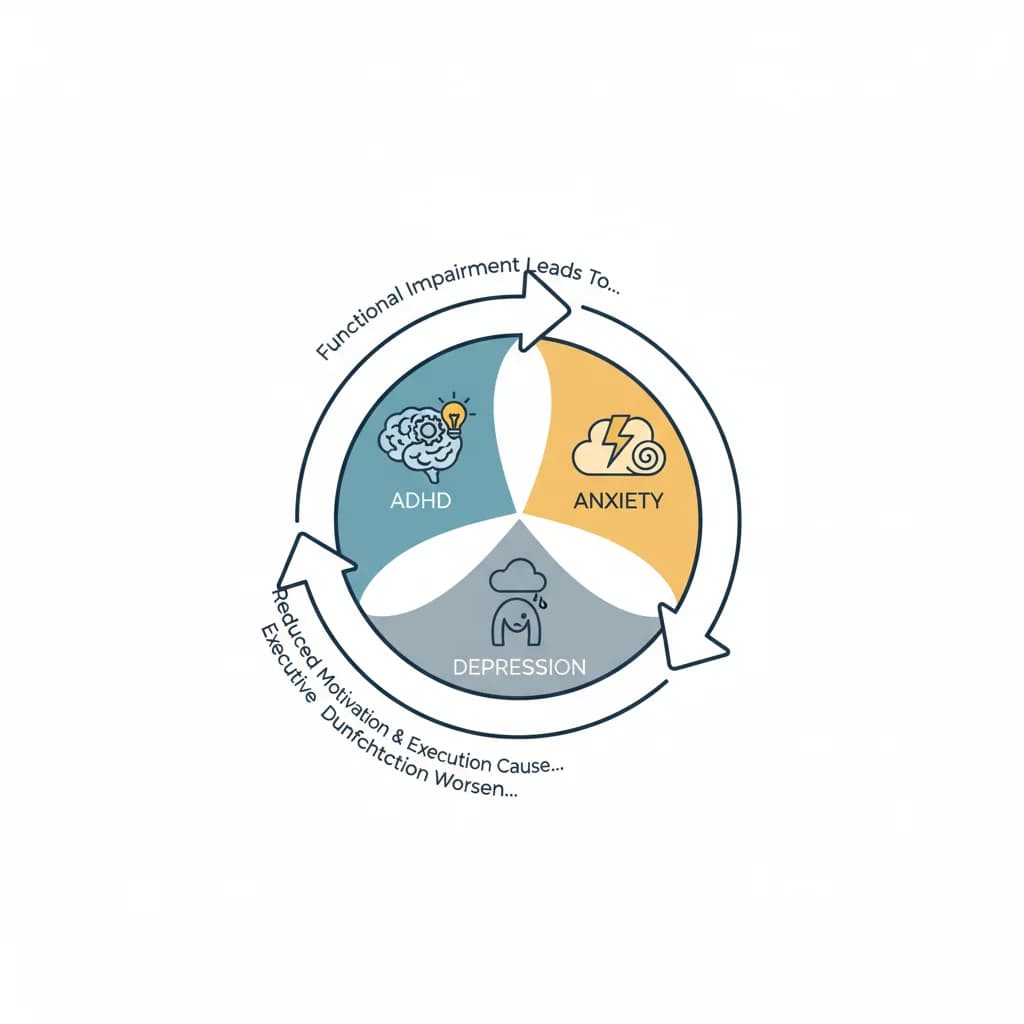
ADHD Comorbidity with Anxiety and Depression Cycles
Understanding the Complex Interplay Between ADHD and Recurring Mental Health Patterns

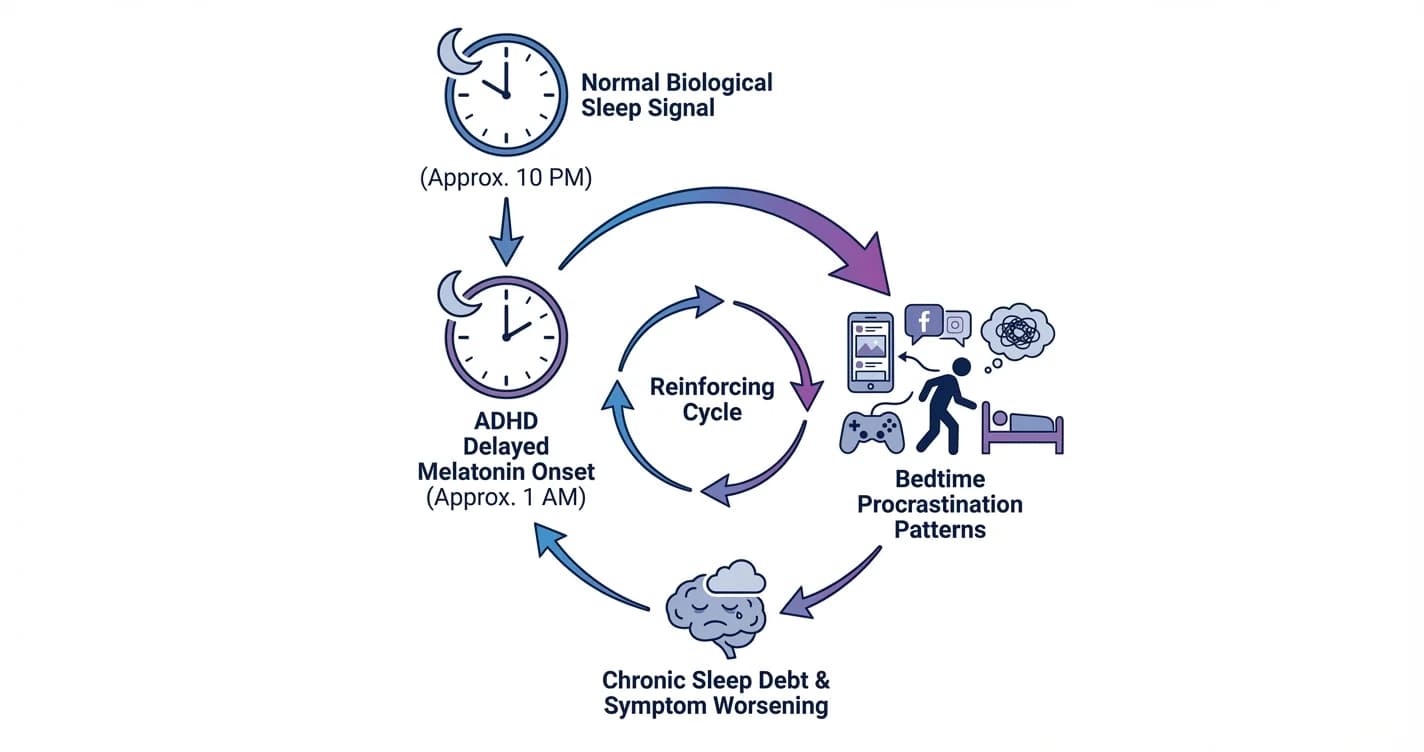
ADHD Sleep Cycle Disruption: Melatonin Delay and Bedtime Procrastination Patterns
Understanding how attention regulation difficulties interfere with natural sleep timing and the nightly wind-down process
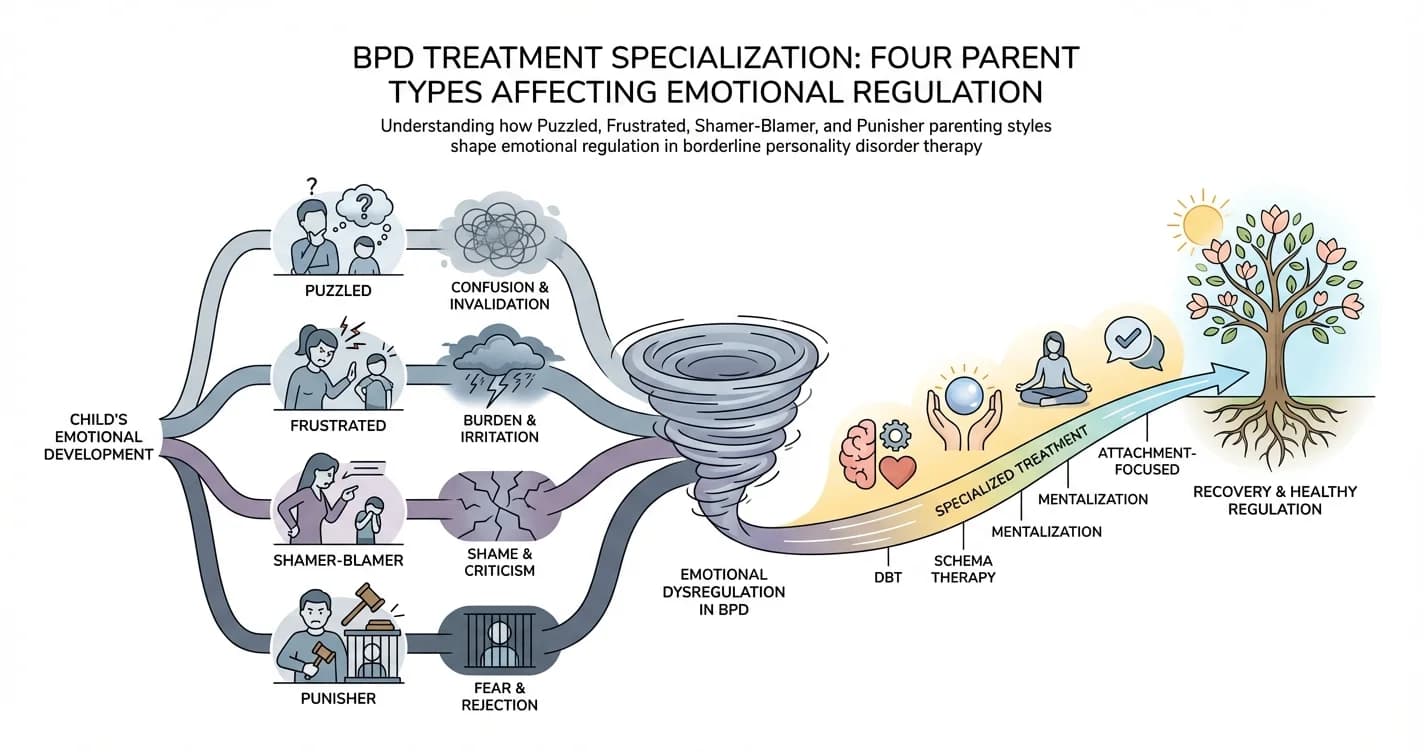
BPD Treatment Specialization: Four Parent Types Affecting Emotional Regulation
For individuals with borderline personality disorder (BPD), emotional regulation difficulties rarely emerge in isolation. Research increasingly suggests that
Disclaimer: This article is for informational purposes only and does not constitute medical advice, diagnosis, or treatment. Always seek the advice of your physician or other qualified health provider with any questions you may have regarding a medical condition. If you are in crisis or think you may have an emergency, call 988 (Suicide & Crisis Lifeline) or go to the nearest emergency room. Outside the US? Find a crisis line in your country.