
How to Cope With Religious Trauma (2026 Guide)
Learn how to cope with religious trauma with 8 concrete steps, troubleshooting tips, and when to bring in professional support. Practical guidance for 2026.

Key Takeaways
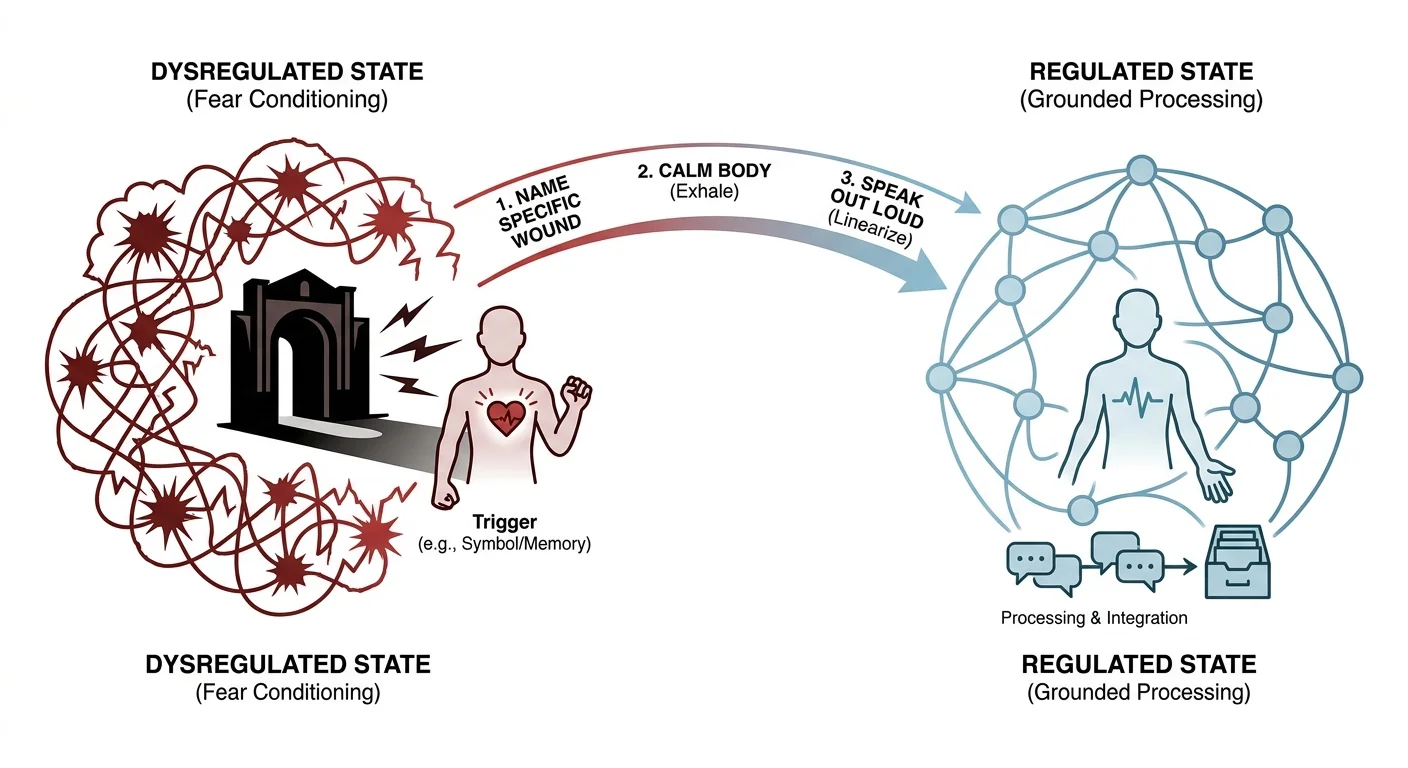
- Name the specific wound first — vague shame keeps you stuck longer than a clear diagnosis of what harmed you.
- Calm your body before you analyze your beliefs; a dysregulated nervous system can't do honest reflection.
- Lovon's AI voice therapy gives you somewhere to talk through spiritual grief at 2am — a solid between-session tool,
- Expect nonlinear progress through 2026 and beyond; rebuilding meaning takes months, not a single breakthrough.
Religious trauma doesn't always look like a crisis of faith. It looks like guilt that flares at 2am, a racing heart walking past your old church, or grief for a community you can't go back to. This guide walks through how to cope with religious trauma with specific steps you can start today, not a theology debate.
TL;DR
- Name the specific wound first — vague shame keeps you stuck longer than a clear diagnosis of what harmed you.
- Calm your body before you analyze your beliefs; a dysregulated nervous system can't do honest reflection.
- Lovon's AI voice support gives you somewhere to talk through spiritual grief at 2am — a solid between-session tool, not a replacement for trauma-informed clinical care.
- Expect nonlinear progress through 2026 and beyond; rebuilding meaning takes months, not a single breakthrough.
Why this matters
Religious trauma happens when a faith system used fear, control, or shame to manage your behavior, and your body still reacts to that system even after you've left it or changed your relationship to it. It's distinct from simply disagreeing with a religion's teachings. The hallmark is the physical response: guilt that doesn't match the situation, panic near religious symbols, or a reflex to apologize for having thoughts at all.
As of 2026, more people are naming this experience out loud instead of assuming they're broken or ungrateful. That naming matters because the guilt loop feeds on silence. AI therapy for religious trauma exists precisely because a lot of this processing happens outside business hours, alone, at the exact moment the old fear response fires.
What you'll need
- A quiet 15-20 minutes a day, ideally the same time each day
- A notebook or notes app for tracking specific triggers, not general feelings
- One person you trust enough to say the hard sentence out loud to
- A licensed therapist if guilt, panic, or intrusive thoughts are disrupting sleep or work
- Optional: a voice-based AI tool like Lovon for the moments between sessions when the guilt spikes and no one else is awake
The steps to cope with religious trauma
1. Name the specific wound
Vague shame is harder to treat than a named injury. Write down the exact belief or event that still triggers a physical reaction — not "my whole religion," but "the sermon that told me doubt equals damnation" or "being shunned by my youth group at 16."
This matters because your nervous system responds to specifics, not categories. Spend 10 minutes listing three concrete incidents. The common mistake here is jumping straight to "I need to forgive them" before you've even named what happened — that's premature closure, and it usually backfires within weeks.
2. Separate guilt from grounded values
Guilt that was installed by fear feels identical to guilt that comes from your own values, until you slow down and check the source. Ask: would this bother me if no one had ever threatened me with consequences for it?
This distinction is the difference between healing and just swapping one set of rules for another. Practice on one belief a week rather than trying to audit your entire worldview at once — that overload is what stalls people at week two.
3. Regulate your nervous system before you analyze
A body in fight-or-flight can't do honest reflection — it can only defend or comply, the same two moves the original system trained. Before journaling or talking about triggering material, spend 3-5 minutes on slow exhale breathing: four counts in, six counts out, ten cycles.
This lowers your heart rate enough to think instead of just react. Skipping this step is the single biggest reason people say "I journaled about it and just felt worse." Understanding your window of tolerance helps you recognize when you've left the zone where reflection is even possible.
4. Rebuild a support network deliberately
Religious communities often functioned as your entire social structure, so leaving or restructuring that relationship leaves a real gap, not just a symbolic one. Replacing it takes deliberate effort, not waiting for it to happen naturally.
Set a concrete target: one new low-stakes social contact per week, whether that's a hobby group, an online community, or reconnecting with an old friend outside the former structure. The mistake to avoid is isolating until you "feel ready" — readiness usually follows contact, not the other way around.
5. Talk it out loud instead of ruminating
Rumination happens in loops inside your head; speaking forces the thought into a linear sequence your brain can actually process and file away. This is why talking to a trusted person, a therapist, or a voice-based tool works better than another night of silent replay.
Try a 10-minute voice memo or conversation where you say the triggering thought out loud, start to finish, without editing it. The expected outcome is that the thought loses some intensity simply from being spoken rather than looped.
6. Grieve the community you lost
Even a harmful community provided belonging, ritual, and identity, and losing all three at once is a real loss that deserves grief, not just relief. Skipping the grief step is common because relief feels more socially acceptable to admit.
Give yourself permission to miss specific things — the music, a mentor, the sense of certainty — without that missing meaning you made the wrong choice. This usually takes months to settle, not days.
7. Test new beliefs slowly
Rebuilding a belief system after trauma works best in small, testable steps rather than one dramatic overhaul. Pick one question a month — about meaning, community, or ethics — and sit with it rather than needing an answer by Friday.
The common mistake is replacing one rigid system with another rigid system just to escape the discomfort of uncertainty. Slow testing prevents that swap.
8. Get outside support when you're stuck
If guilt, panic, or intrusive thoughts are interfering with sleep, work, or relationships for more than a few weeks, that's the signal to bring in a licensed therapist trained in trauma, not just general counseling. A between-session tool can hold you over, but it isn't a substitute for that level of care.
Talk it through before you go to bed
Lovon gives you a voice conversation with AI-guided support whenever the guilt spikes.
Troubleshooting common setbacks
- Guilt spikes at random times with no clear trigger. Track the 30 minutes before each spike in your notes app — a smell, a phrase, a time of day usually shows up as the real trigger within a week or two.
- Family relationships get harder as you process this. Set one boundary at a time rather than announcing a full worldview shift in one conversation; sudden disclosure tends to trigger defensiveness on both sides.
- You feel spiritually numb instead of angry or sad. Numbness is a nervous system protecting you from overload, not proof you don't care — give it weeks, not days, before assuming it's permanent.
- Specific places or sounds cause panic. Grounding techniques — naming five things you see, four you hear — interrupt the panic loop faster than trying to reason your way out of it in the moment.
- You feel disloyal or ungrateful for questioning any of this. That reaction is often the trained response itself showing up, not new information about whether questioning is allowed.
- Progress feels like it's reversing. Trauma processing is nonlinear by nature; a hard week after a good month is data, not proof you're back at square one.
Tools and resources
- A trauma-informed therapist, ideally one with specific experience in religious or spiritual trauma
- A daily grounding practice — breathing, a short walk, or a body scan
- A voice journal or notes app for tracking specific triggers over time
- Lovon for on-demand voice conversations when guilt or panic hits outside office hours
- A trusted friend or support group who won't try to re-explain your former beliefs to you
What to do next
Once the acute guilt and panic settle into something more manageable, the next stage is usually rebuilding a sense of identity and community that isn't organized around fear. That's a slower, quieter phase, and it's normal for it to take the rest of 2026 or longer depending on how deep the original conditioning ran.
FAQ
What is religious trauma exactly?
Religious trauma is the lasting emotional and physical impact of fear-based or controlling religious teaching or community dynamics. It shows up as guilt, panic, or shame that persists even after you've left or changed your relationship to the belief system.
How long does it take to cope with religious trauma?
Most people see real shifts in guilt and panic within a few months of consistent practice, but full identity rebuilding often takes a year or more. Progress is typically nonlinear, with setbacks that don't mean you're starting over.
Is religious trauma the same as losing your faith?
No. You can keep your faith and still carry religious trauma from how it was taught or enforced, and you can leave a religion entirely without having trauma from it. The trauma is about the fear conditioning, not the beliefs themselves.
Can an AI app help with religious trauma?
An AI voice support app like Lovon can give you a place to talk through guilt or panic in the moment, especially outside therapy hours, but it isn't a replacement for a licensed therapist trained in trauma. Use it alongside professional care, not instead of it.
Why do I feel guilty for questioning my former religion?
Guilt at questioning is often the trained response itself firing, not new evidence that questioning is wrong. Naming that pattern out loud usually reduces its intensity over a few weeks.
What is spiritual bypassing and how does it relate to religious trauma?
Spiritual bypassing is using positivity or forced forgiveness to avoid processing real pain, and it commonly shows up in religious trauma recovery when people rush to 'let it go' before doing the actual work.
Should I talk to my family about my religious trauma?
Only when you feel ready and only in small steps, since sudden full disclosure often triggers defensiveness rather than understanding. Setting one boundary at a time tends to go better than one big conversation.
What are the physical symptoms of religious trauma?
Common physical symptoms include a racing heart near religious symbols or settings, sleep disruption from guilt, and panic responses to specific sounds like hymns or phrases. These are nervous system reactions, not moral failures.
One last thing
The part almost nobody mentions is that healing from religious trauma often includes missing pieces of the very system that hurt you — the music, a specific mentor, the certainty. That's not a setback and it's not evidence you're doing this wrong. Grief and relief show up in the same week more often than any guide admits, and by 2026 the language for naming both at once finally exists.
Related guides
How AI Support Helps You Heal
AI emotional support isn't about replacing human connection — it's about filling the gaps. The moments when you need to talk at 2 AM, when you don't want to burden your friends again, or when you simply need someone to listen without judgment.
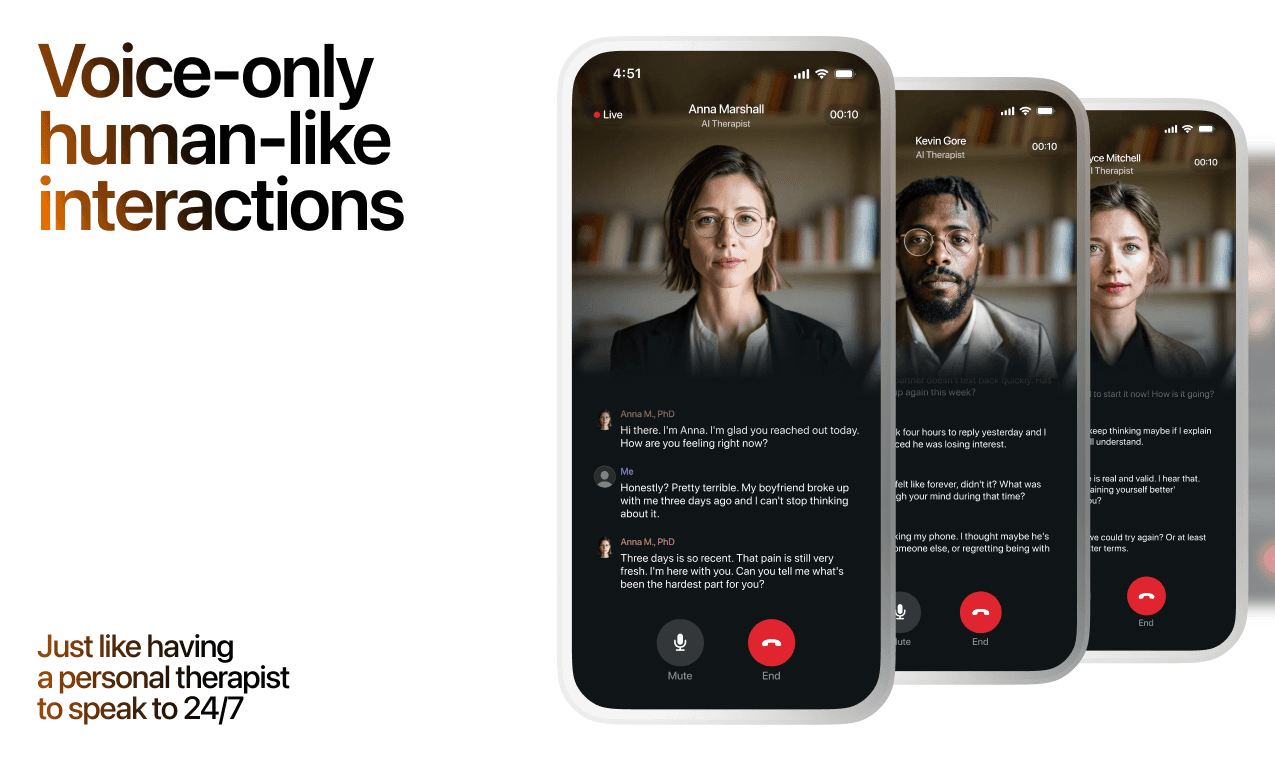
Here's what happens in a typical Lovon session:
You share what's on your mind
There's no script, no intake form, no waiting room. You speak or type whatever you're feeling — in your own words, at your own pace.
Lovon validates and explores
Using frameworks from CBT (Cognitive Behavioral Therapy) and motivational interviewing, Lovon acknowledges your feelings first, then gently helps you explore them. No dismissive "just move on" advice.
You build coping skills together
Lovon doesn't just listen — it actively works with you on evidence-based techniques: thought reframing, urge surfing, behavioral experiments, and more.
What a Session with Lovon Looks Like
When to Seek Professional Help
AI support is a valuable tool, but it's not a replacement for professional care. Please consider reaching out to a licensed therapist if you experience any of the following:
- Persistent thoughts of self-harm or suicide
- Inability to perform daily activities (work, eating, sleeping) for more than 2 weeks
- Turning to alcohol or substances to cope
- Intense anger or desire to harm your ex-partner
- Complete emotional numbness that doesn't improve over time
Crisis Resources (US): If you're in immediate danger, call 988 (Suicide & Crisis Lifeline) or text HOME to 741741 (Crisis Text Line). Available 24/7, free, and confidential.
Outside the US? Find a crisis line in your country
Ready to Start?
Your healing journey can begin right now
A 7-day trial. No judgment. Just a safe space to process what you're going through.
Frequently Asked Questions
Is Lovon a replacement for a real therapist?
Is my conversation with Lovon AI private?
How is Lovon different from ChatGPT for emotional support?
Can I use Lovon if I'm already seeing a therapist?
Can I try Lovon before subscribing?
About the Author

The Lovon Editorial Team
Mental Health & Wellness Content Team
The Lovon Editorial Team develops mental health and wellness content designed to make psychological concepts accessible and actionable. Our goal is to bridge the gap between clinical research and everyday life - helping you understand why your mind works the way it does and what you can do about it....
Related articles
- Can AI therapy replace a human therapist?
AI therapy can't replace a licensed human therapist for diagnosis or crisis care in 2026, but it fills the gap between…
- AI Support for PTSD: What to Expect in 2026
AI support for PTSD gives you on-demand coping tools and grounding exercises 24/7. Learn what it does, what it can't do…
- Best AI apps for postpartum depression support in 2026
Compare the best AI apps for postpartum depression support. Choose voice, text, or mood reflection alongside clinical…
- Emotional Flashbacks: What They Are & How to Manage in 2026
Emotional flashbacks flood you with old feelings without warning. Learn the 2026 grounding steps that shorten them fast…
See also
Quizzes
- Guilt Test: Is Your Guilt Doing Its Job?
See whether your guilt repairs or just hurts.
- What Stage of Grief Am I In? Free 12-Question Quiz
See what your grief is actually doing, in 3 minutes.
Free tools
- Words of Encouragement for Him When He Is Struggling
Words of encouragement for him that fit what he is actually going through, for when your usual lines are not landing…
- How to Reconnect With an Old Friend
A chat for how to reconnect with an old friend, starting with the text you have been meaning to send for a year. Tell it…
From the wiki
- How to stop maladaptive daydreaming?
Maladaptive daydreaming is immersive waking fantasy that eats hours, usually with music and pacing attached. You rarely…
Disclaimer: This article is for informational purposes only and does not constitute medical advice, diagnosis, or treatment. Always seek the advice of your physician or other qualified health provider with any questions you may have regarding a medical condition. If you are in crisis or think you may have an emergency, call 988 (Suicide & Crisis Lifeline) or go to the nearest emergency room. Outside the US? Find a crisis line in your country.