
Best AI App for Attachment Style Healing in 2026
Ranked guide to the best AI app for attachment style healing in 2026: Lovon, Wysa, Youper, Replika, and Rosebud compared with honest pros and cons.
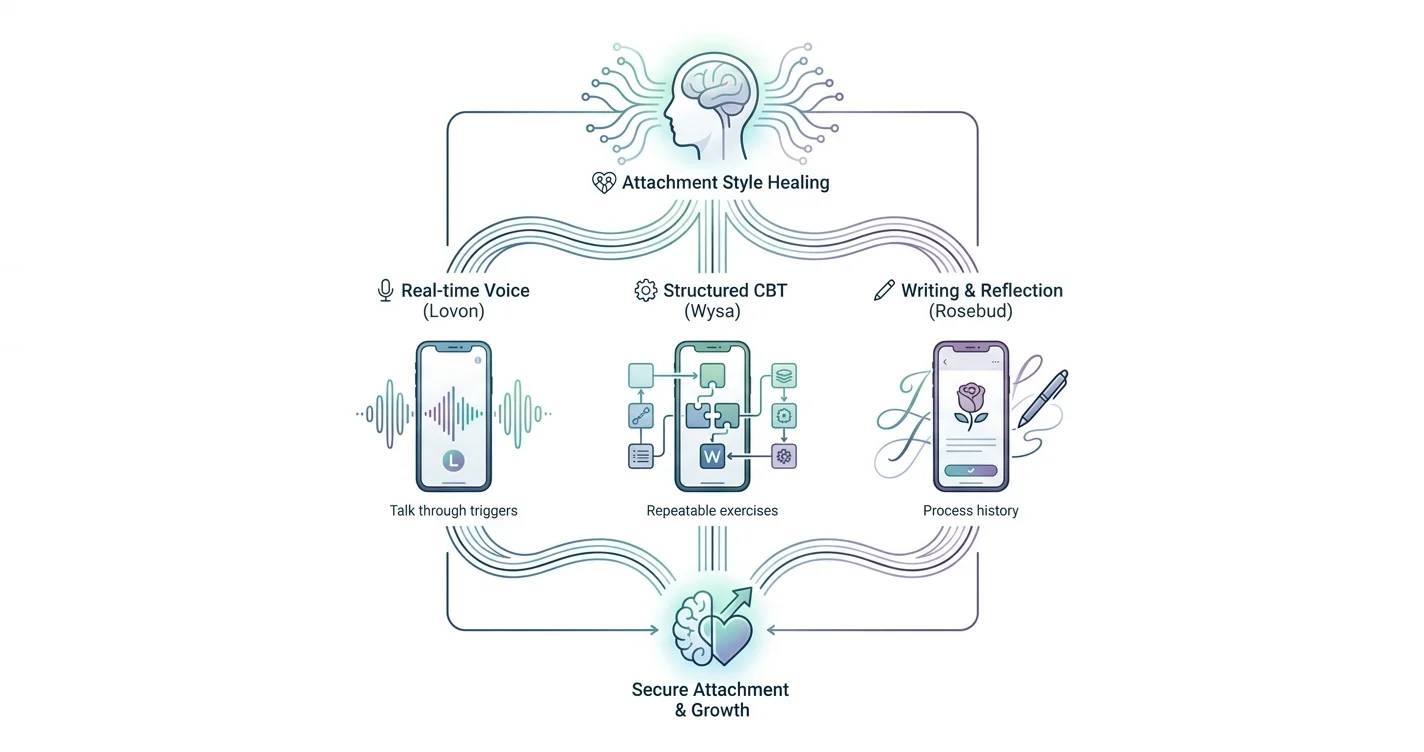

Key Takeaways
- Lovon wins for real-time voice conversations when an attachment trigger fires mid-argument or at 2am.
- Wysa is the strongest pick for structured, text-based CBT exercises around anxious attachment.
- Replika works for practicing low-stakes communication, but it's a companion app, not an attachment-healing tool.
- Rosebud fits people who process attachment history better through writing than talking.
- None of these apps replace a licensed therapist for trauma-rooted or disorganized attachment work.
The best AI app for attachment style healing in 2026 depends on what you actually want to do: talk out loud through a triggering moment, work a structured CBT module, or write your way through old patterns. This guide ranks five options by what they're built for, not by which one has the loudest marketing.
TL;DR
- Lovon wins for real-time voice conversations when an attachment trigger fires mid-argument or at 2am.
- Wysa is the strongest pick for structured, text-based CBT exercises around anxious attachment.
- Replika works for practicing low-stakes communication, but it's a companion app, not an attachment-healing tool.
- Rosebud fits people who process attachment history better through writing than talking.
- None of these apps replace a licensed therapist for trauma-rooted or disorganized attachment work.
Why this matters
Attachment style shapes how you handle conflict, distance, and closeness in every relationship you have, not just romantic ones. Established attachment theory names four core patterns — secure, anxious, avoidant, and disorganized — and most people carry a mix shaped by childhood and past relationships.
An attachment style quiz takes 2 minutes and tells you which pattern you're working with before you pick a tool to work on it. Knowing your style first changes which app on this list actually fits — an anxious-attachment person chasing reassurance needs something different from an avoidant person who shuts down at the first sign of conflict.
What makes the best AI app for attachment style healing
- Interaction depth — can it handle a real conversation about a specific trigger, or just serve generic prompts
- Grounded in real frameworks — CBT, polyvagal theory, or established attachment research, not just vague affirmations
- On-demand availability — no waitlist, no scheduling, available when the trigger actually happens
- Honest about limitations — explicitly states it isn't a replacement for licensed clinical care
- Pattern tracking over time — helps you notice repeat triggers instead of treating every session as isolated
- Privacy clarity — clear about what happens to what you say or write
At a glance: AI apps for attachment style healing in 2026
| App | Best for | Standout feature | Key limitation |
|---|---|---|---|
| Lovon | Real-time voice conversations during triggers | Voice-based sessions built with input from PhD psychologists | Not a substitute for licensed clinical care |
| Wysa | Structured CBT exercises for anxious attachment | Guided, modular CBT content | Text-only, can feel scripted for complex situations |
| Youper | Daily mood and trigger tracking | Ongoing check-ins that build a pattern history | Built for general mood, not attachment-specific |
| Replika | Low-stakes conversation practice | Casual, ongoing companion chat | Designed as a companion, not a clinical or attachment tool |
| Rosebud | Journaling-based reflection on attachment history | AI-guided writing prompts | No real-time conversation, needs self-driven consistency |
1. Lovon: best for real-time voice conversations during an attachment trigger
Lovon is an AI-powered voice therapy app built with input from PhD psychologists, letting you talk through anxiety, stress, low mood, and relationship patterns out loud instead of typing into a chat window. For attachment work specifically, that matters: the moment you spiral after an unanswered text or a partner pulling away is rarely a moment you want to sit down and type.
Lovon pros:
- Voice conversations happen in the moment a trigger hits, not on a delay
- Built around emotional support and self-reflection guidance, not generic scripts
- Framed honestly as a companion for everyday struggles, not a clinical replacement
Lovon cons:
- Voice-first format won't suit people who prefer writing things out
- Not built for crisis intervention or diagnosing disorganized attachment rooted in trauma
- Requires a quiet moment to talk, which isn't always available
Lovon pricing: check current plans directly on Lovon before committing.
Best for: anyone who processes emotion out loud and wants to work through anxious or avoidant patterns as they happen. Verdict: Buy.
2. Wysa: best for structured CBT exercises around anxious attachment
Wysa is a text-based wellness chatbot built around cognitive behavioral techniques, with modules that walk you through reframing anxious thoughts step by step. For someone with anxious attachment who wants a repeatable exercise every time reassurance-seeking kicks in, the structure is the point.
Wysa pros:
- Clear, repeatable CBT modules
- Text format works well for people who don't want to talk out loud
- Structured enough to use the same exercise consistently
Wysa cons:
- Feels scripted once you've used the same module a few times
- Text-only, so it misses tone and pacing a voice conversation would catch
- Not designed specifically around attachment theory, more general anxiety
Best for: people who want a repeatable CBT script for anxious-attachment moments. Verdict: Buy.
3. Youper: best for daily mood and attachment-trigger tracking
Youper is an AI chatbot built around daily check-ins and mood tracking, using CBT-style prompts to help you name what you're feeling and why. Used consistently, the daily log becomes a rough map of what actually sets off your attachment reactions.
Youper pros:
- Daily check-in habit builds a pattern history over weeks
- CBT-style prompts help name the feeling behind the reaction
- Lightweight enough to use in under a minute
Youper cons:
- Built for general mood and anxiety, not attachment work specifically
- Text-based, no voice option
- Pattern insights depend entirely on daily consistency
Best for: people who want a running log of what triggers their attachment reactions over time. Verdict: Hold — useful as a tracking layer alongside a more targeted tool, not a standalone fix.
4. Replika: best for low-stakes conversation practice
Replika is an AI companion app built for ongoing, casual conversation rather than structured therapeutic work. For attachment healing specifically, it can serve as a low-stakes place to practice expressing needs or setting a boundary in words before doing it with an actual partner.
Replika pros:
- Casual, always-available conversation partner
- Useful for rehearsing how to phrase a hard conversation
- No pressure of a structured program
Replika cons:
- Built as a companion, not a clinical or attachment-focused tool
- Risk of forming a parasocial attachment to the app itself, which cuts against the goal of building secure real-world attachment
- No CBT or attachment-theory framework underneath it
Best for: rehearsing a hard conversation in a low-stakes setting before having it for real. Verdict: Wait — fine as a side tool, not a primary one for attachment healing.
5. Rosebud: best for journaling-based reflection on attachment history
Rosebud is an AI-guided journaling app that prompts you with reflective questions rather than holding a live conversation. For someone who processes their attachment history better on the page than out loud, that's the right shape of tool.
Rosebud pros:
- Guided prompts push past surface-level journaling
- Good for tracing patterns back to specific relationships or childhood dynamics
- Writing at your own pace, no real-time pressure
Rosebud cons:
- No live conversation when a trigger hits in the moment
- Requires consistent writing to build any real insight
- Slower feedback loop than a voice or chat conversation
Best for: people who want to trace their attachment history in writing rather than talk through it live. Verdict: Hold — strong as a reflection supplement, weak as a stand-alone crisis tool.
How we ranked
Each app was weighed against the same six criteria: interaction depth, grounding in real frameworks, on-demand availability, honesty about limitations, pattern tracking, and privacy clarity. Apps built specifically around emotional conversation and clinical framing (Lovon, Wysa) rank above general-purpose companions (Replika) and journaling tools (Rosebud), which serve narrower use cases well but aren't built for the full range of attachment work.
Which AI app for attachment style healing should you choose?
If you want to talk through a trigger the moment it happens, Lovon is the default pick in 2026. If you'd rather work a repeatable written exercise, Wysa covers that ground. Stack Youper underneath either one if you want a running log of your triggers, and treat Replika and Rosebud as supplements, not primary tools, for anything rooted in a disorganized or trauma-linked attachment pattern.
None of these apps diagnose attachment disorders or replace a licensed clinician for trauma-rooted patterns — what secure attachment looks like in a real relationship still gets built through actual practice with actual people, not just app sessions.
Talk through it right now
Start a voice conversation about your attachment pattern anytime.
FAQ
What's the best AI app for attachment style healing in 2026?
Lovon is the strongest pick for real-time voice conversations about attachment triggers, while Wysa suits people who want structured, text-based CBT exercises instead. The right choice depends on whether you process emotion better out loud or in writing.
Can AI apps actually help with attachment style issues?
They can help you notice patterns, practice language for hard conversations, and get support between real-life situations. They can't diagnose disorganized or trauma-rooted attachment, which needs a licensed clinician.
Is Lovon better than Replika for attachment work?
Lovon is built around emotional support and self-reflection guidance for issues like anxiety and relationship patterns; Replika is built as a general companion app. For attachment-specific work, Lovon's framing fits better.
How do I find out my attachment style before choosing an app?
A short attachment style quiz can flag your dominant pattern in about 2 minutes, which helps you pick a tool suited to anxious, avoidant, or disorganized tendencies rather than guessing.
Are AI therapy apps a replacement for a licensed therapist?
No. Every app on this list, including Lovon, is built as support between or instead of formal sessions, not a replacement for licensed clinical care, especially for trauma-rooted attachment patterns.
How much does an AI app for attachment healing cost?
Pricing varies by app and changes over time, so check each app's current plans directly rather than relying on a fixed number.
What's the difference between text-based and voice-based AI support for attachment healing?
Voice-based apps like Lovon let you talk through a trigger as it happens, which suits people who process emotion out loud; text-based apps like Wysa work better for people who want a slower, more structured written exercise.
Which attachment style benefits most from AI-guided practice?
Anxious attachment tends to respond well to structured CBT exercises and real-time reassurance-checking conversations, while avoidant and disorganized patterns often need more consistent, ongoing support to build any real change.
One last thing
Most people don't find out their attachment style until a relationship is already breaking down — the quiz that flags it takes 2 minutes and works just as well before a fight as after one. Run it first, then pick the tool that matches the pattern it finds, not the other way around.
Related guides
How AI Support Helps You Heal
AI emotional support isn't about replacing human connection — it's about filling the gaps. The moments when you need to talk at 2 AM, when you don't want to burden your friends again, or when you simply need someone to listen without judgment.
Here's what happens in a typical Lovon session:
You share what's on your mind
There's no script, no intake form, no waiting room. You speak or type whatever you're feeling — in your own words, at your own pace.
Lovon validates and explores
Using frameworks from CBT (Cognitive Behavioral Therapy) and motivational interviewing, Lovon acknowledges your feelings first, then gently helps you explore them. No dismissive "just move on" advice.
You build coping skills together
Lovon doesn't just listen — it actively works with you on evidence-based techniques: thought reframing, urge surfing, behavioral experiments, and more.
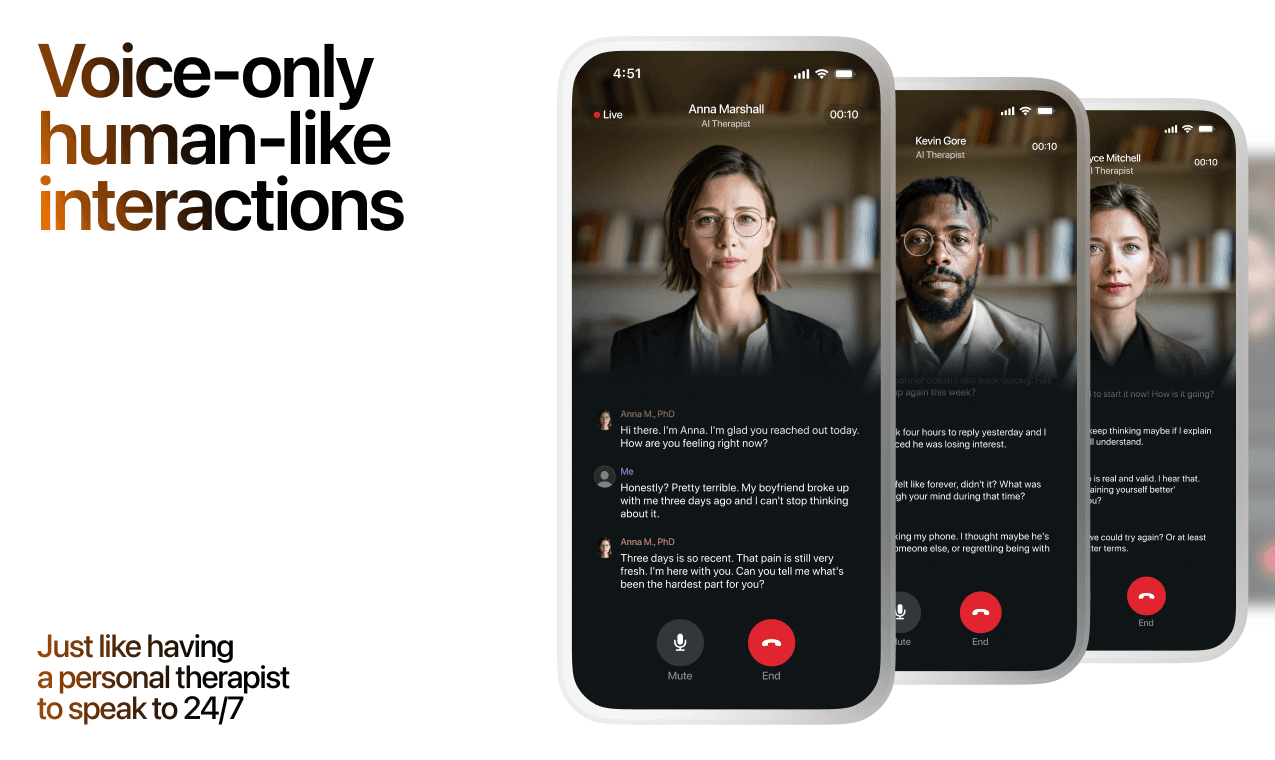
What a Session with Lovon Looks Like
When to Seek Professional Help
AI support is a valuable tool, but it's not a replacement for professional care. Please consider reaching out to a licensed therapist if you experience any of the following:
- Persistent thoughts of self-harm or suicide
- Inability to perform daily activities (work, eating, sleeping) for more than 2 weeks
- Turning to alcohol or substances to cope
- Intense anger or desire to harm your ex-partner
- Complete emotional numbness that doesn't improve over time
Crisis Resources (US): If you're in immediate danger, call 988 (Suicide & Crisis Lifeline) or text HOME to 741741 (Crisis Text Line). Available 24/7, free, and confidential.
Outside the US? Find a crisis line in your country
Ready to Start?
Your healing journey can begin right now
1 free conversation. No credit card. No judgment. Just a safe space to process what you're going through.
Frequently Asked Questions
Is AI therapy a replacement for a real therapist?
Is my conversation with Lovon AI private?
How is Lovon different from ChatGPT for emotional support?
Can I use Lovon if I'm already seeing a therapist?
Can I try Lovon for free?
About the Author
The Lovon Editorial Team
Mental Health & Wellness Content Team
The Lovon Editorial Team develops mental health and wellness content designed to make psychological concepts accessible and actionable. Our goal is to bridge the gap between clinical research and everyday life - helping you understand why your mind works the way it does and what you can do about it....
Similar Articles
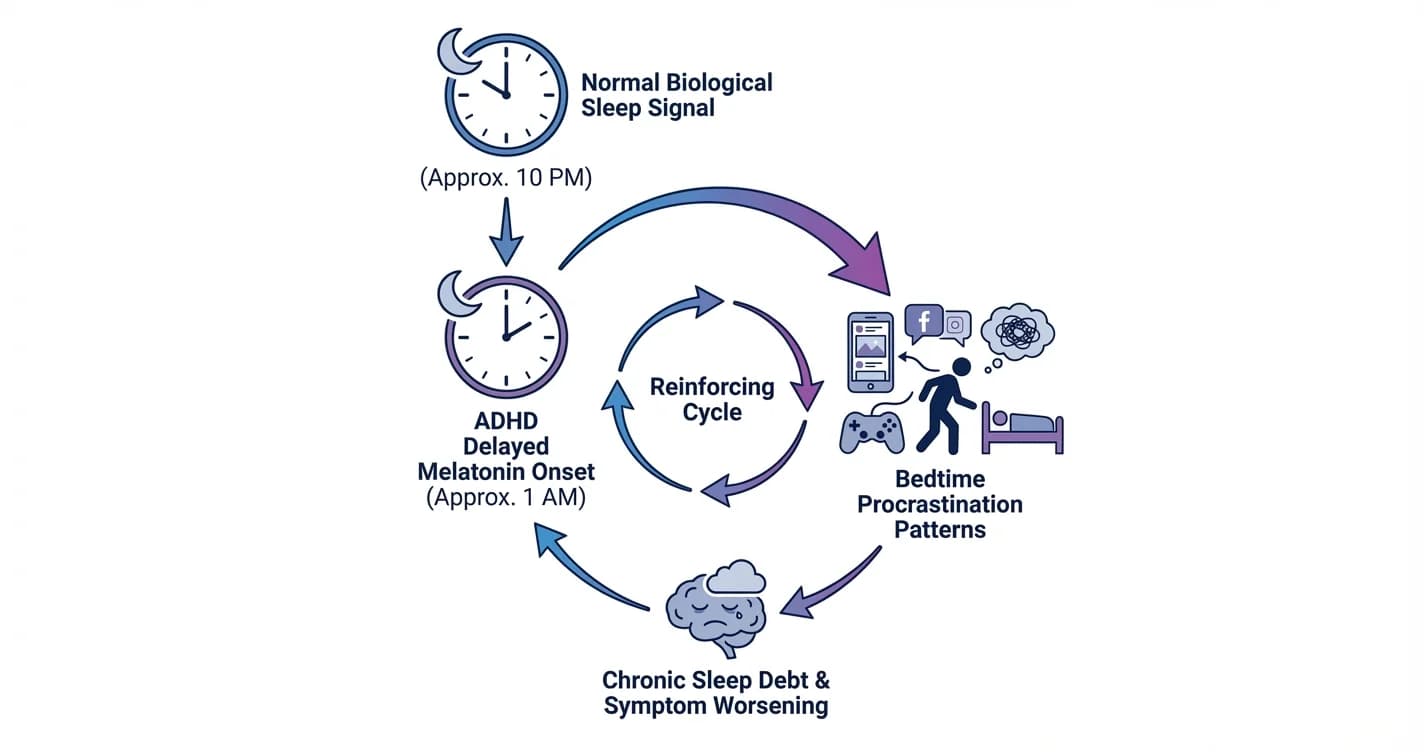
ADHD Sleep Cycle Disruption: Melatonin Delay and Bedtime Procrastination Patterns
Understanding how attention regulation difficulties interfere with natural sleep timing and the nightly wind-down process

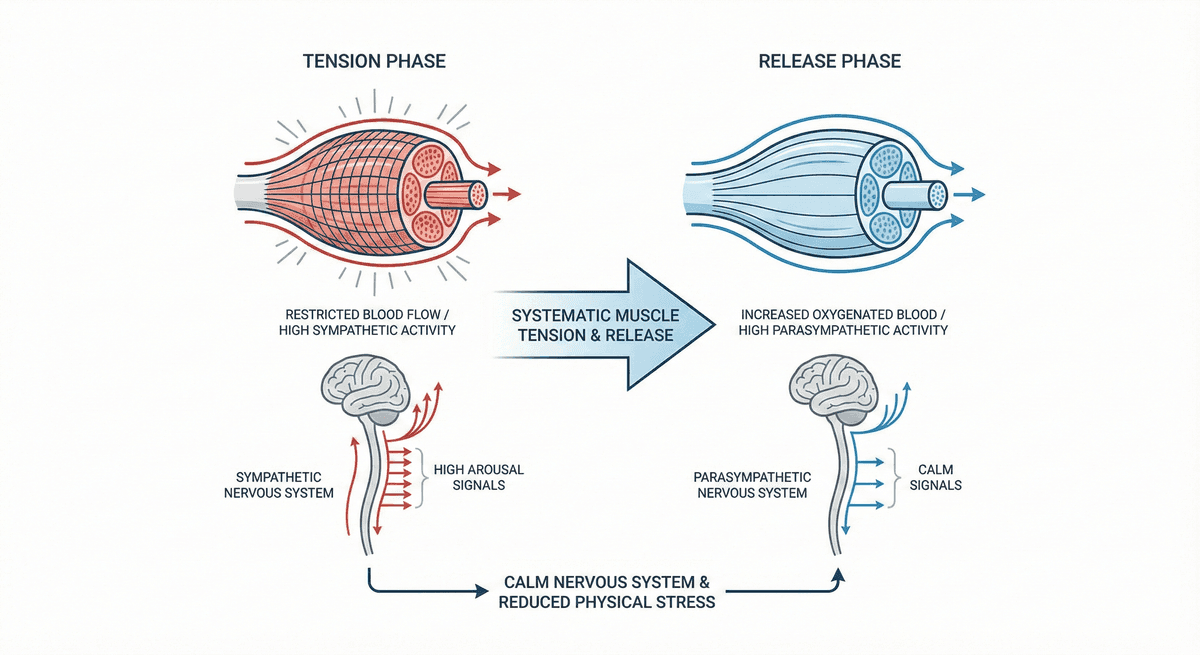
Progressive Muscle Relaxation for Stress Reduction
A systematic muscle group tension and release technique that calms the nervous system and reduces physical stress.
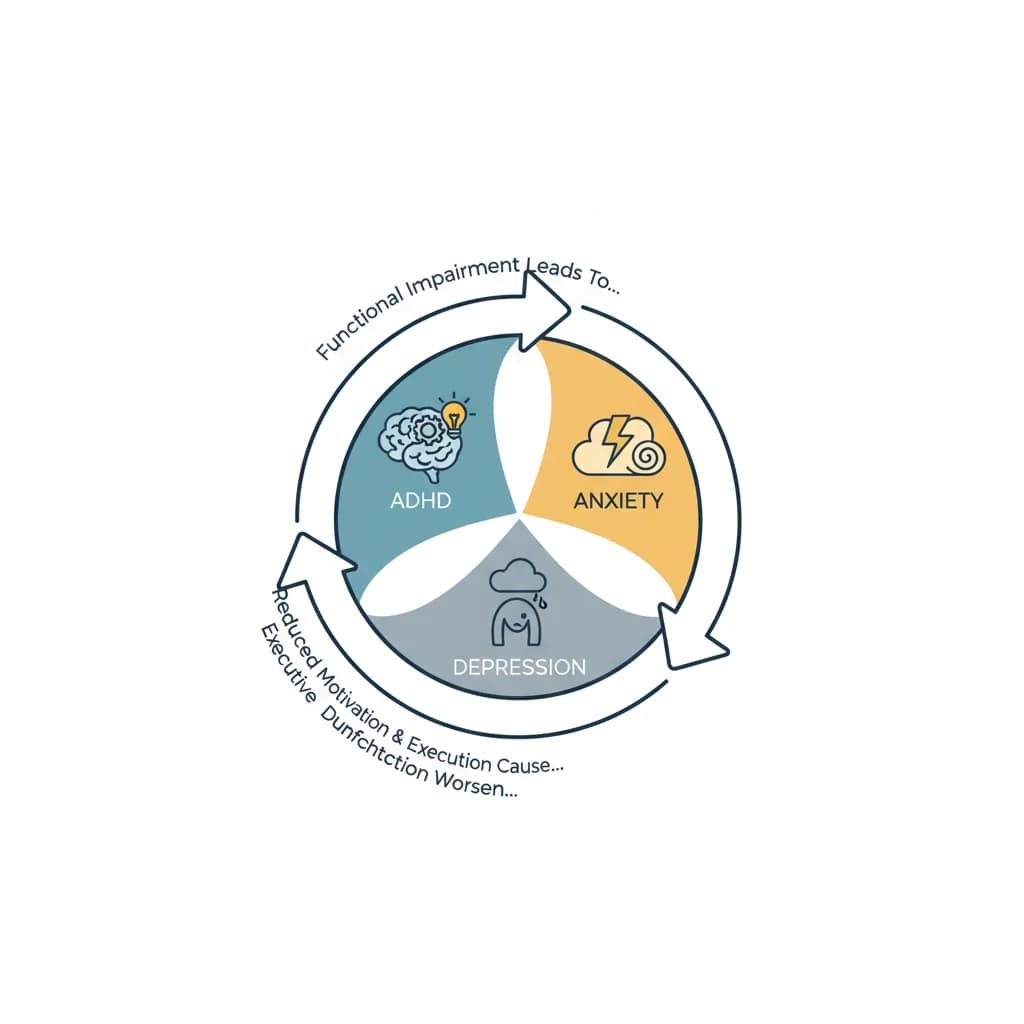
ADHD Comorbidity with Anxiety and Depression Cycles
Understanding the Complex Interplay Between ADHD and Recurring Mental Health Patterns
Disclaimer: This article is for informational purposes only and does not constitute medical advice, diagnosis, or treatment. Always seek the advice of your physician or other qualified health provider with any questions you may have regarding a medical condition. If you are in crisis or think you may have an emergency, call 988 (Suicide & Crisis Lifeline) or go to the nearest emergency room. Outside the US? Find a crisis line in your country.