
How to Forgive Yourself for Cheating (and Not Do It Again)
How to forgive yourself for cheating without excusing it: guilt vs shame, whether and how to tell your partner, how to repair, and how to stop the pattern.

Key Takeaways
- Forgiving yourself for cheating starts with full responsibility, not with feeling better: name what you did, without "but," before you try to make peace with it.
- Guilt that pushes you to tell the truth and repair is useful; shame that tells you that you are a terrible person usually pushes you to hide, defend or punish yourself instead.
- Self-forgiveness does not depend on your partner forgiving you or staying. It depends on whether you have been honest, made the amends you can, and changed what led you there.
To forgive yourself for cheating, take full responsibility first, then trade self-punishment for repair. Name exactly what you did without excuses, tell the truth with care, work out why it happened, make the amends you can, and change what led you there. Forgiving yourself does not mean deciding it was fine. It means accepting it was wrong and that you can still become someone who does better.
- End the affair completely today, including the "just friends" messages.
- Say what you did in one plain sentence, with no "but."
- Separate guilt ("I did a bad thing") from shame ("I am bad").
- Plan how to tell your partner the truth, with care for their health and safety.
- Work out why it happened, as an explanation and never as an excuse.
- Repair with actions: answer questions, be transparent, keep every promise.
- Change the conditions that made it easy, and get help if it is a pattern.
How to forgive yourself for cheating: start with responsibility
Most people who search for how to forgive yourself for cheating want the heavy feeling to stop. That makes sense, and it will ease. But there are two fake versions of self-forgiveness that feel like relief and do not hold.
The first is excusing it: "It didn't mean anything." "We were basically over anyway." "They pushed me away." These stories make you feel better quickly by making the cheating smaller or someone else's fault. They also keep you from learning anything, and your partner usually hears them as a second betrayal.
The second is self-punishment: replaying it all night, calling yourself disgusting, waiting to feel bad enough to have paid for it. It feels like accountability, but it puts you at the center. Your partner, who is the one who was hurt, ends up comforting you, or watching you suffer instead of seeing you change.
Real self-forgiveness sits between the two. You hold the full weight of what you did, then you put your energy into repair instead of excuses or self-hatred. What self-forgiveness is explains the idea in more depth.
Start with one honest sentence, out loud or on paper, with no "but" in it: "I had an affair with my coworker for four months and lied to you about where I was." If you cannot say it plainly to yourself, you are not ready to say it to anyone else.
Guilt vs shame: the feeling that helps and the one that doesn't
Guilt says "I did something wrong." Shame says "I am something wrong." They feel similar, and they push you in different directions. In research on these two emotions, guilt tends to move people toward repair, like apologizing and making amends, while shame tends to move them toward hiding, denying or escaping.[1]
That is why the worst moment for your relationship is often when shame takes over. Shame is what makes people lie about the last detail, get defensive when asked a fair question, or disappear into their phone. If you notice yourself doing those things, shame is driving.
Kindness toward yourself does not let you off the hook, either. In one set of experiments, people who were encouraged to treat a recent moral mistake with self-compassion reported more motivation to make amends and to avoid repeating it than people in comparison conditions.[2] Being harsh with yourself is not what makes you better. Being honest and steady is.
Try rewriting your shame sentences as guilt sentences:
- "I'm a disgusting person" becomes "I lied to someone I love, and I'm going to deal with it."
- "I ruin everything" becomes "I made a series of choices I can understand and change."
- "They'd be better off without me" becomes "They get to decide what they want, and I'll respect it."
If you notice you treat most mistakes as a verdict on who you are, the Shame Test can help you see that pattern.
How to tell your partner you cheated
Some people consider never telling, especially about something brief and long over. Be clear about what that choice costs. Your partner keeps making decisions about their body, their time and their future with information missing, and the secret stays between you, shaping how you act. This guide will not help you hide it. If you are truly stuck, talk it through with a licensed therapist before deciding, not as a way to avoid deciding.
Before you say it
- End it first. Do not confess an affair that is still going.
- Pick the setting: in person, private, sober, with time afterward. Not right before work, not on their birthday, not in a car.
- Know your first sentence so you do not circle for twenty minutes.
- If there was sexual contact, get tested, and be ready to tell them they should too.
What to say
Lead with the truth, not with a defense:
"I need to tell you something serious, and I'm not going to make excuses. I cheated on you. I had an affair with someone from work, from March until June. It's over. I'm so sorry, and I'll answer anything you want to ask."
Then stop talking and let them react. They might shout, cry, go silent or leave the room. All of those are fair. Do not ask for forgiveness tonight, and offer space: "You don't have to decide anything now. I can stay at my brother's if you want me to."
How to handle their questions
Answer factual questions honestly: when, how long, who, whether it is really over. Do not volunteer graphic details, but do not lie if they ask directly. The single most damaging thing is telling the truth in pieces, admitting one part now and another part next month. Each new piece reopens the wound and makes everything else you said suspect. Tell the whole of it the first time.
What not to say
- "It didn't mean anything." It meant enough to risk everything.
- "You've been so distant lately." True or not, it turns your confession into an accusation.
- "I was going through a lot." Save context for later, when they ask why.
- "How long are you going to punish me?" Their pain is not a punishment you can put a timer on.
If you are afraid that telling your partner would put you in physical danger, talk to a domestic violence advocate or a licensed therapist about how to do it safely first.
How to understand why you cheated (without excusing it)
An explanation helps you prevent a repeat. An excuse moves the responsibility somewhere else. The test is simple: an explanation ends with "and that was still my choice."
Cheating rarely starts with one big decision. It usually starts with a slide of small ones, each easy to justify: a private joke, then a secret chat, then deleting messages, then a drink that was "just a drink." Write down each point where you could have stopped and did not.
Then ask yourself:
- What was I feeling in the weeks before it started: lonely, invisible, bored, angry, scared?
- What did the other person give me: attention, desire, escape, feeling like someone new?
- What did I tell myself to make it okay?
- What had I stopped saying to my partner?
Those answers point to what needs to change, in you and sometimes in the relationship. A relationship problem can be real and still not be a reason. You could have said it out loud, or ended things, before cheating.
How to repair after cheating
Repair is not one apology. It is months of behavior that matches your words.
- Apologize so it lands. Name what you did, name the harm, skip the excuses, and say what you are doing differently. The apology language quiz shows which parts of an apology matter most to the person receiving it, and the apology letter tool helps if you write better than you speak.
- Be transparent without being asked. Offer information before it is requested, and treat their questions as fair, even the tenth time.
- Let them set the pace. You do not get to decide when they should be over it.
- Own their triggers. When something reminds them, respond with patience, not frustration.
- Get help together if you are both trying. A licensed couples therapist who works with infidelity can hold conversations you cannot hold alone.
The step-by-step guide on how to rebuild trust after cheating covers that process in detail. And if you want to see the decision from your partner's side, the Should I Forgive Cheating? quiz shows what a betrayed partner weighs.
How to forgive yourself if they leave
Your partner may decide they cannot stay. That is a consequence, not a punishment you can argue your way out of. Respect it: no begging, no showing up uninvited, no recruiting friends to plead for you.
You can still forgive yourself without their forgiveness. Self-forgiveness does not depend on how the story ends for the relationship. It depends on whether you told the truth, made the amends you could, and changed. Some people find it helps to write a letter to their ex that they never send, saying everything they wish they could, and then to write one short line to themselves about who they intend to be from now on.
Let yourself grieve, too. You lost something you valued, even though your choices led there.
How to stop cheating if it has become a pattern
If this is not the first time, take that seriously. In a study that followed 484 adults through two relationships, people who reported cheating in their first relationship were about three times as likely to report cheating in the next one.[3] A history raises the odds; it does not decide your future. But it means the change has to be deliberate.
- Remove the routes. Delete the apps, close secret accounts, end contact with the affair partner for good, and avoid the situations where it keeps happening.
- Watch the early steps. For many people it starts with emotional closeness they hide. The difference between friendship and emotional cheating is mostly secrecy.
- Say it before you act on it. "I've been feeling disconnected from us and I don't like where my head is going" is a hard sentence, and far less harmful than an affair.
- Be honest about what you want. If you do not want monogamy, say so and let your partner choose, or end the relationship before you start something new.
- Get professional help if you keep doing it despite wanting to stop, if it feels compulsive, or if it is tied to drinking or other substances. A licensed therapist is the right person for that.
The most common mistake
The most common mistake is making your guilt the main event. Long nights of crying, "I'm a monster" messages, needing your partner to reassure you that you are not a bad person: it all shifts the focus from their hurt to your pain. Feel what you feel, and take the heaviest of it to a friend, a journal or a therapist, not to the person you hurt.
If guilt ever turns into thoughts of hurting yourself, call or text 988, the Suicide & Crisis Lifeline, right away.
Most people put off the honest conversation because they cannot find the first sentence. Saying it out loud first, without an audience, makes the real one clearer and less defensive. Tell Lovon what happened and who you need to tell, and work out the words before you say them to the person who matters.
How AI Support Helps You Heal
AI emotional support isn't about replacing human connection — it's about filling the gaps. The moments when you need to talk at 2 AM, when you don't want to burden your friends again, or when you simply need someone to listen without judgment.
Here's what happens in a typical Lovon session:
You share what's on your mind
There's no script, no intake form, no waiting room. You speak or type whatever you're feeling — in your own words, at your own pace.
Lovon validates and explores
Using frameworks from CBT (Cognitive Behavioral Therapy) and motivational interviewing, Lovon acknowledges your feelings first, then gently helps you explore them. No dismissive "just move on" advice.
You build coping skills together
Lovon doesn't just listen — it actively works with you on evidence-based techniques: thought reframing, urge surfing, behavioral experiments, and more.
What a Session with Lovon Looks Like
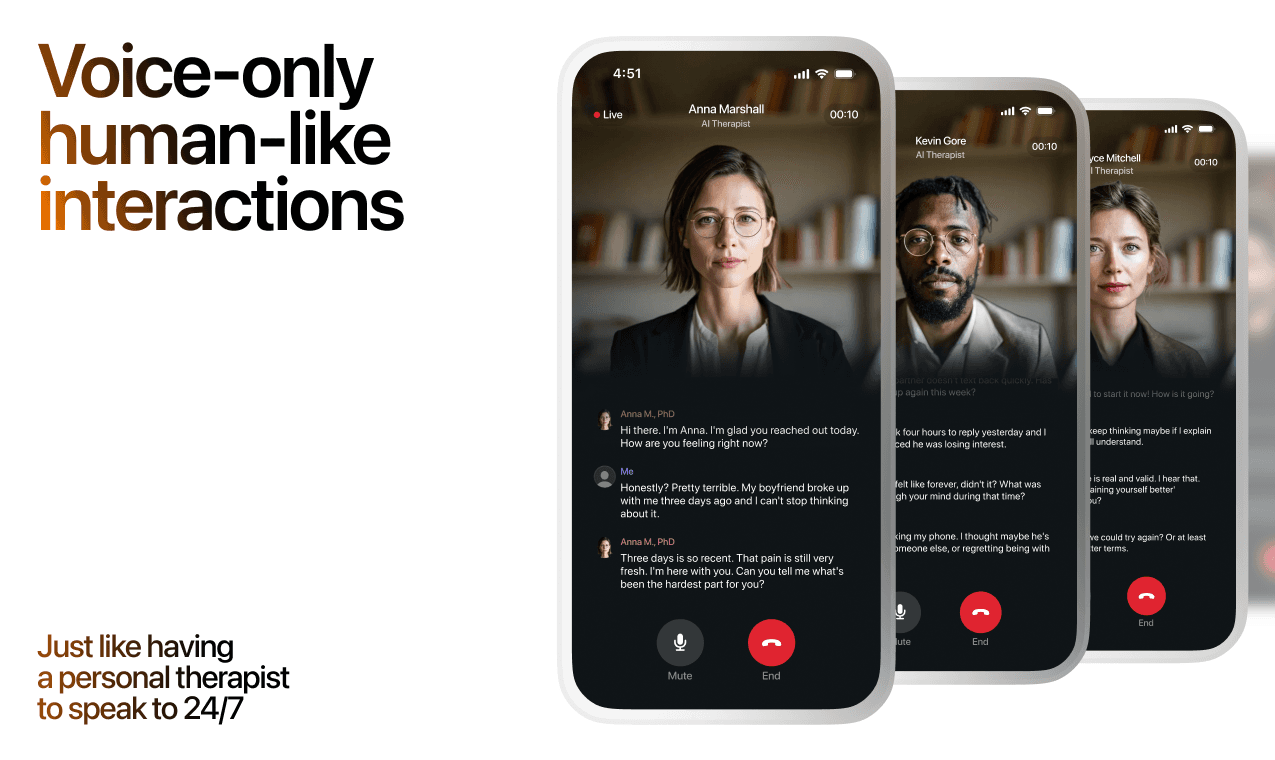
Lovon is AI support, not a replacement for professional care. If things have been hard to get through for weeks, or you are thinking about harming yourself, talk to a doctor or a licensed therapist.
Ready to Start?
Your healing journey can begin right now
A 3-day trial. No judgment. Just a safe space to process what you're going through.
Frequently Asked Questions
Can you forgive yourself for cheating?
Should I tell my partner I cheated?
How do I stop feeling guilty after cheating?
Why did I cheat if I love my partner?
How do I stop cheating?
What should I not say when I confess cheating?
Will my partner ever trust me again?
Sources
About the Author
The Lovon Editorial Team
Mental Health & Wellness Content Team
The Lovon Editorial Team develops mental health and wellness content designed to make psychological concepts accessible and actionable. Our goal is to bridge the gap between clinical research and everyday life - helping you understand why your mind works the way it does and what you can do about it....
Related articles
- Is couples therapy worth it if one partner refuses?
Is couples therapy worth it if one partner refuses? Individual support can help you decide what to do, but it cannot…
- Is He Cheating on Me Quiz: Read the Signs (2026)
Is he cheating on me quiz breaks down 5 real signal clusters, what counts as evidence in 2026, and a verdict framework…
- How to Stop Obsessing Over Someone: Effective Strategies for Letting Go
It is a deeply painful experience when you cannot stop thinking about someone. It takes over all your thoughts.
- Should I Break Up With Him Quiz: Honest 2026 Check
An honest should i break up with him quiz that scores real patterns, not moods. Get a clear verdict in 2 minutes and…
See also
Quizzes
- Is He Over His Ex? Quiz: Signs He Still Has Feelings
Read the signs fairly, in 3 minutes.
- Forgiveness Test: How Forgiving Are You, Even of Yourself?
See where forgiveness gets stuck for you, in 3 minutes.
Free tools
- How to Respond to an Apology You're Not Sure About
A chat for how to respond to an apology that is sitting unanswered on your phone. Paste what they said, tell it what it…
- How to Forgive Someone Who Hurt You
Forgiving, reconciling, and deciding it was fine are three different things, and they get merged. Tell it what happened…
From the wiki
- What is considered cheating?
There is no universal list, which is why the answer depends on the agreement the two of you actually have, usually one…
Disclaimer: This article is for informational purposes only and does not constitute medical advice, diagnosis, or treatment. Always seek the advice of your physician or other qualified health provider with any questions you may have regarding a medical condition. If you are in crisis or think you may have an emergency, call 988 (Suicide & Crisis Lifeline) or go to the nearest emergency room. Outside the US? Find a crisis line in your country.