
Can menopause cause anxiety and panic attacks?
Can menopause cause anxiety and panic attacks? Yes. Learn how hormones and sleep contribute, what treatments help, and when symptoms need urgent care.

Key Takeaways
- Can menopause cause anxiety and panic attacks? Yes, but new symptoms still need medical assessment.
- Perimenopause can bring anxiety before periods stop; hot flashes and poor sleep can add to distress.
- New chest pain, fainting, or severe breathing difficulty needs urgent care, not an assumption of panic.
- Lovon offers everyday emotional support, not a menopause diagnosis, licensed clinical care, or emergency treatment.
Yes, menopause and the transition before it, called perimenopause, can contribute to anxiety and panic attacks. Hormonal changes, hot flashes, and disrupted sleep can affect how you feel, but new anxiety or a racing heart still needs assessment rather than being automatically blamed on hormones. This 2026 guide explains the connection, what helps, and when to get medical care.
TL;DR
- Can menopause cause anxiety and panic attacks? Yes, but new symptoms still need medical assessment.
- Perimenopause can bring anxiety before periods stop; hot flashes and poor sleep can add to distress.
- New chest pain, fainting, or severe breathing difficulty needs urgent care, not an assumption of panic.
- Lovon offers everyday emotional support, not a menopause diagnosis, licensed clinical care, or emergency treatment.
Can menopause cause anxiety and panic attacks?
Yes. Anxiety can begin or worsen during perimenopause and continue after menopause. Panic attacks can also occur during this transition, although having a panic attack does not establish that hormones caused it.
The pattern matters more than any single symptom. Your clinician can consider menstrual changes, sleep, hot flashes, medications, and your mental health history together. Understanding the difference between a panic attack and an anxiety attack also helps you describe what happened.
| Experience | What you might notice | What it does not prove |
|---|---|---|
| Ongoing anxiety | Persistent worry, tension, irritability, or difficulty settling | That menopause is the only cause |
| Panic attack | A sudden surge of fear with symptoms such as shaking, breathlessness, or a pounding heart | That you have panic disorder |
| Hot flash | Sudden heat, flushing, sweating, sometimes with palpitations | That every racing heartbeat is hormonal |
| Another medical condition | Symptoms that overlap with anxiety, including palpitations or dizziness | That coping exercises replace an assessment |
Menopause is generally identified after 12 months without a menstrual period, when another cause does not explain the absence. Perimenopause comes before that point, so you do not need to have stopped having periods to discuss menopause-related anxiety.
Why this matters
New anxiety can feel especially unsettling when you have handled stress differently in the past. You might start avoiding meetings, driving, exercise, or bedtime because you fear another episode. That change deserves attention, even if you can still get through the day.
The practical message for 2026 is simple: address the anxiety and assess the menopause symptoms together. You do not have to choose between a physical explanation and a mental health explanation. Both can contribute, and both deserve care.
Why menopause-related anxiety varies
There is no single menopause anxiety pattern. These factors help explain why symptoms differ between people and across the transition:
- Hormonal changes: Fluctuating estrogen during perimenopause can affect mood and stress sensitivity. Hormones are part of the assessment, not a diagnosis by themselves.
- Sleep disruption: Night sweats and repeated waking can leave you feeling more reactive and less able to manage worry the next day.
- Physical sensations: Heat, sweating, and palpitations can feel alarming. Fear of those sensations can add another layer of anxiety.
- Previous anxiety or depression: Earlier mental health difficulties matter when a clinician considers new or returning symptoms.
- Current pressures: Work, caregiving, relationships, and health concerns can add stress during the same period of life.
- Medicines and substances: Caffeine, alcohol, some medications, and medication changes can affect sleep, anxiety, or heart rate.
Keep the explanation personal. Someone else's menopause experience does not tell you how severe your symptoms should be or which treatment fits you.
Can perimenopause cause anxiety before my periods stop?
Yes, perimenopause can bring anxiety while you are still having periods. Changes in cycle timing, hot flashes, sleep, and mood can occur before the final menstrual period.
A clinician generally considers your age, symptoms, menstrual history, and circumstances. A single hormone result does not capture every fluctuation during perimenopause, and testing decisions depend on the clinical situation.
If contraception, a hysterectomy, or another condition makes bleeding patterns difficult to interpret, say so at your appointment. Do not wait for 12 months without periods before asking for help with anxiety that affects daily life.
Can menopause anxiety feel like a panic attack?
Yes, menopause-related symptoms and panic can overlap, particularly when heat, sweating, or a pounding heart feels frightening. A panic attack involves a sudden surge of intense fear or discomfort that reaches a peak within minutes.
You might notice trembling, tingling, dizziness, nausea, chest discomfort, or a feeling that something terrible is happening. These symptoms are real. They are not evidence of weakness or a failure to cope.
However, symptoms alone cannot reliably distinguish panic from a medical emergency. A first episode, a different pattern, or symptoms during physical exertion deserves medical attention rather than self-diagnosis.
When should I get urgent help?
Call 911 for new or severe chest pain, severe difficulty breathing, fainting, or signs of a stroke. Do not wait to see whether a breathing exercise works. A history of panic attacks does not rule out another illness.
Seek prompt medical advice for a new irregular heartbeat, repeated palpitations, or symptoms that are worsening. Your clinician can decide whether you need a heart assessment, thyroid testing, medication review, or another investigation.
If you have thoughts of suicide or feel unable to stay safe, call or text 988 in the United States. Call 911 for immediate danger. An emotional support app is not an emergency service.
What can I do during a familiar panic episode?
Use these steps only when the symptoms match an episode that has already been medically assessed and there are no emergency warning signs. The goal is to reduce the struggle with the sensations, not force them to disappear on command.
- Check safety. Stop what you are doing and move somewhere safe. If you are driving, pull over safely before trying a coping exercise.
- Ease breathing. Let your breath become gentle and comfortable. Avoid forcing repeated deep breaths or holding your breath if that increases dizziness or distress.
- Notice surroundings. Feel your feet against the floor. Name 5 things you can see and 4 things you can feel, then continue noticing the space around you.
- Allow sensations. Remind yourself that a familiar panic response can feel intense without requiring you to fight every sensation. Keep checking for anything new or different.
- Record patterns. Once the episode settles, briefly note what happened, your sleep, any hot flash, and what helped. Save the explanation for later rather than analyzing everything mid-episode.
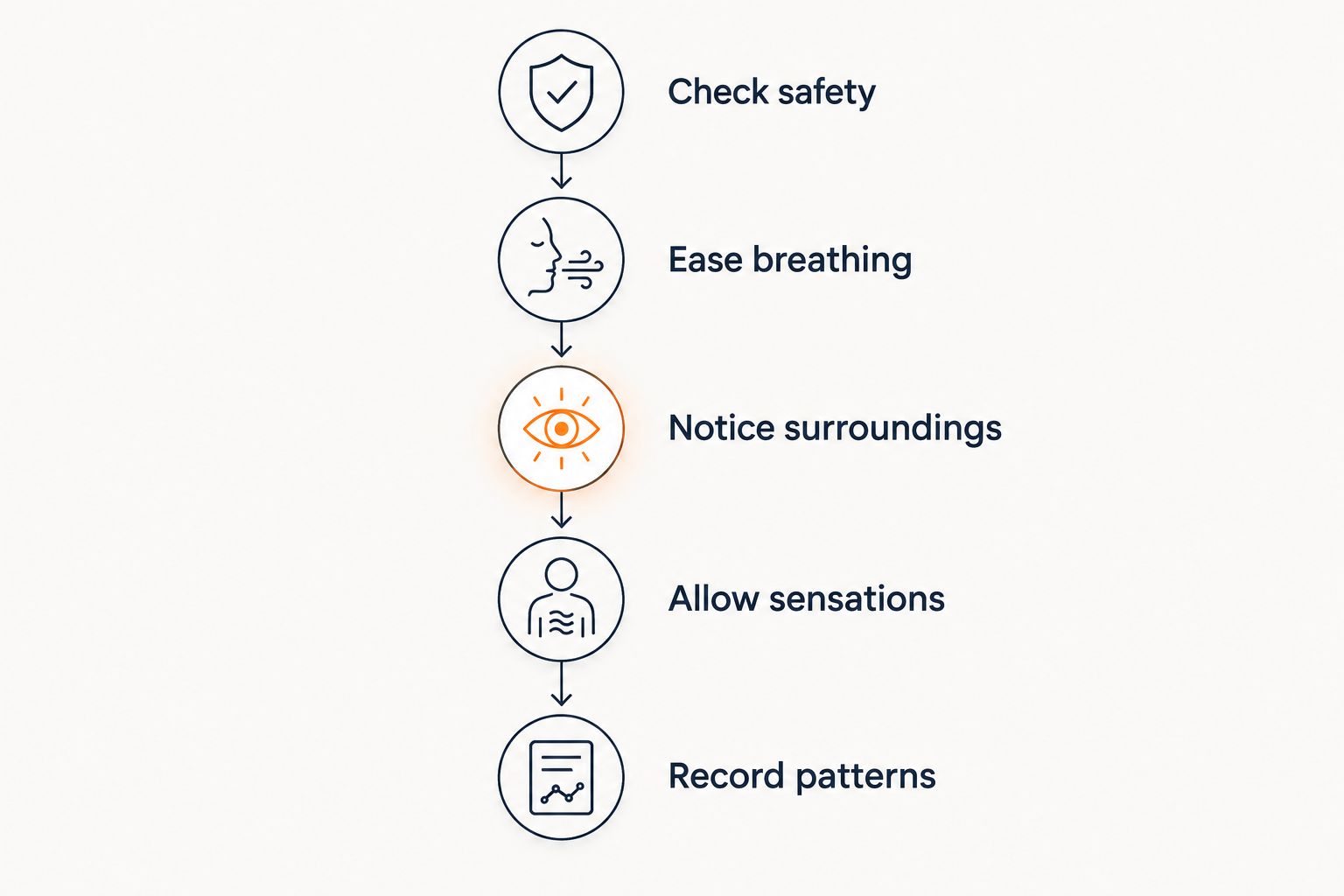 A coping sequence from checking safety to recording patterns after a familiar panic episode
Check safety before using coping tools for a familiar panic episode.
Grounding is a coping option, not a test you need to pass. If focusing on your breath makes you feel worse, shift attention to your feet, a nearby object, or the sound of someone's voice instead.
Which treatments help menopause-related anxiety?
The best starting point is a clinical assessment that covers both anxiety and menopause symptoms. Treatment depends on what is happening, your health history, and your preferences. The options below have different purposes; they are not interchangeable.
| Option | Best for | Main benefit | Limitation |
|---|---|---|---|
| Menopause-focused medical care | Anxiety alongside disruptive hot flashes or other menopause symptoms | Addresses menopause symptoms and considers suitable treatments | Does not replace assessment or treatment of an anxiety disorder |
| Cognitive behavioral therapy | Recurrent panic, persistent worry, or avoidance | Helps change responses to feared sensations and situations | Requires practice; progress is not always immediate |
| Prescribed anxiety treatment | Anxiety that needs clinical treatment | Offers a clinician-led plan, including medication when appropriate | Medication can cause side effects and needs follow-up |
| Sleep and daily habit changes | Sleep disruption or identifiable daily triggers | Supports sleep and reduces avoidable strain | Does not replace care for severe or persistent symptoms |
| Voice-based emotional support | Reflection and coping practice between appointments | Gives you a place to talk through feelings | Cannot diagnose, prescribe, or assess emergencies |
Menopause-focused medical care
Menopausal hormone therapy is used for menopause symptoms such as hot flashes and night sweats. When those symptoms disrupt sleep and add distress, treating them can be part of a broader care plan.
Hormone therapy is not a guaranteed treatment for panic attacks. Ask about benefits, risks, alternatives, and whether your medical history makes it suitable. Do not start, stop, or change prescribed hormones on your own.
Cognitive behavioral therapy
Cognitive behavioral therapy, or CBT, is an established treatment for anxiety and panic disorder. It helps you work with frightening interpretations of body sensations and reduce avoidance that keeps fear going.
For example, you might stop exercising because an increased heartbeat feels dangerous. A qualified therapist can help you approach that fear safely after relevant medical assessment, rather than relying on repeated reassurance alone.
Sleep and everyday habits
Protect a regular sleep opportunity and discuss persistent insomnia or night sweats with your clinician. For most adults, 7–9 hours of sleep each night is a general reference range, not a promise that reaching it will resolve anxiety.
Notice whether caffeine or alcohol is linked with worse symptoms, and discuss medication concerns with a prescriber. Keep changes manageable. You do not need a perfect routine to deserve treatment.
For a 2026 care plan, choose steps you can repeat and arrange follow-up. Avoid changing several treatments at once without guidance; a clear plan makes it easier to understand what helps.
What should I tell my clinician?
Bring a short account of the episodes rather than trying to prove they are hormonal. Describe whether fear arrived suddenly, how your body felt, what you were doing, and whether symptoms woke you from sleep.
Useful details include:
- Changes in your periods, hot flashes, or night sweats.
- Sleep problems and daytime exhaustion.
- New medicines, supplements, or changes in caffeine or alcohol use.
- Previous anxiety, depression, panic attacks, or relevant medical conditions.
- Activities you now avoid because of symptoms.
Ask what needs checking, which treatment fits your symptoms, and when to review progress. If your symptoms are dismissed but continue to interfere with life, request another assessment.
Where does voice-based emotional support fit?
Lovon is best for people who want voice-based emotional support between appointments, not a menopause diagnosis or treatment for panic disorder. You can talk through everyday stress, reflect on feelings, and practice coping tools. Lovon is not a licensed clinician.
For anxiety support in 2026, Lovon belongs alongside appropriate care, not instead of it. Its limitation is clear: a conversation cannot check a heart rhythm, determine whether hormones are responsible, or prescribe treatment.
Use Lovon anxiety support to organize what you want to discuss with a professional. If symptoms are severe, persistent, or changing, move from reflection to a clinical appointment.
FAQ
Can menopause cause anxiety even if I have never had it before?
Yes, anxiety can begin during perimenopause or after menopause even without a previous anxiety diagnosis. New symptoms still deserve assessment because hormonal changes are not the only possible explanation.
Can I have menopause anxiety while I still get my period?
Yes, anxiety can occur during perimenopause while you still have periods. You do not need to wait for 12 months without periods before seeking help.
How do I know whether it is a hot flash or a panic attack?
Heat and sweating suggest a hot flash, while a sudden surge of intense fear suggests panic, but the experiences can overlap. New chest symptoms, fainting, or severe breathing difficulty need urgent assessment rather than a guess.
Will hormone therapy stop my panic attacks?
Hormone therapy is not a guaranteed treatment for panic attacks. A clinician can assess menopause symptoms and anxiety together, then discuss suitable menopause treatment and established anxiety treatments.
Does menopause anxiety go away on its own?
There is no single timeline for menopause-related anxiety, and you should not wait for the transition to end before getting help. Persistent worry, repeated panic, or avoidance deserves treatment now.
Can I use an emotional support app instead of seeing a doctor?
No, an emotional support app cannot replace medical assessment of new or worsening symptoms. It can support reflection and coping practice alongside care.
What should I do if menopause panic symptoms feel different this time?
Treat new or different symptoms as a reason for medical assessment, not proof of another panic attack. In the United States, call 911 for new or severe chest pain, severe breathing difficulty, fainting, or stroke symptoms.
One last thing
The most useful detail is often what anxiety has stopped you from doing. Tell your clinician if you no longer drive alone, attend meetings, exercise, or sleep without fear. That describes the impact more clearly than simply saying you feel stressed.
For 2026, make the next step specific: book an appointment and bring a brief symptom record. You do not need certainty about the cause before asking for help.
Related guides
How AI Support Helps You Heal
AI emotional support isn't about replacing human connection — it's about filling the gaps. The moments when you need to talk at 2 AM, when you don't want to burden your friends again, or when you simply need someone to listen without judgment.
Here's what happens in a typical Lovon session:
You share what's on your mind
There's no script, no intake form, no waiting room. You speak or type whatever you're feeling — in your own words, at your own pace.
Lovon validates and explores
Using frameworks from CBT (Cognitive Behavioral Therapy) and motivational interviewing, Lovon acknowledges your feelings first, then gently helps you explore them. No dismissive "just move on" advice.
You build coping skills together
Lovon doesn't just listen — it actively works with you on evidence-based techniques: thought reframing, urge surfing, behavioral experiments, and more.
What a Session with Lovon Looks Like
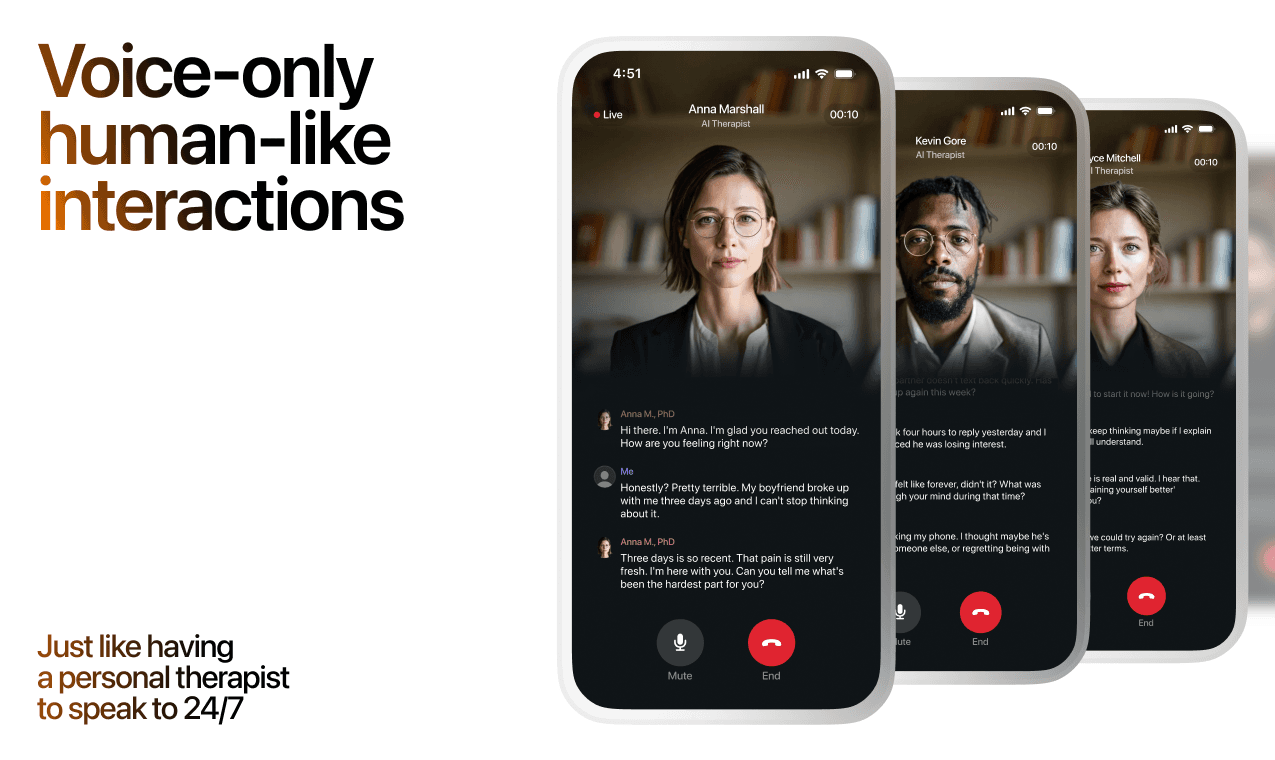
Lovon is AI support, not a replacement for professional care. If things have been hard to get through for weeks, or you are thinking about harming yourself, talk to a doctor or a licensed therapist.
Ready to Start?
Your healing journey can begin right now
A 3-day trial. No judgment. Just a safe space to process what you're going through.
Frequently Asked Questions
Is Lovon a replacement for a real therapist?
Is my conversation with Lovon AI private?
How is Lovon different from ChatGPT for emotional support?
Can I use Lovon if I'm already seeing a therapist?
Can I try Lovon before subscribing?
About the Author
The Lovon Editorial Team
Mental Health & Wellness Content Team
The Lovon Editorial Team develops mental health and wellness content designed to make psychological concepts accessible and actionable. Our goal is to bridge the gap between clinical research and everyday life - helping you understand why your mind works the way it does and what you can do about it....
Related articles
- Can changing your diet reduce anxiety symptoms?
Can diet reduce anxiety? Food changes can support symptom management, not replace care. Learn where caffeine, regular…
- AI Therapy for Perimenopause Mood Swings: 2026 Verdict
AI therapy for perimenopause mood swings in 2026: what to look for, the top picks worth trying, and what to avoid before…
- App for Panic Disorder: 2026 Verdict on What Works
App for panic disorder in 2026: Lovon wins for real-time voice support, text apps and meditation apps rank lower. See…
- Can stress cause hair loss?
Can stress cause hair loss? Yes, often through temporary shedding. Learn the signs, recovery timeline, other possible…
See also
Quizzes
- Resilience Test: How Fast Do You Bounce Back?
See how you recover from setbacks, in 3 minutes.
- Perfectionism Test: What Are Your Standards Costing?
See what your standards actually cost, in 3 minutes.
Free tools
- Breakup Meditation
For when it's over and it still hurts. Seven minutes of slow breathing, noticing where the breakup sits in your body…
- Breathing Exercises for Anxiety
Pick a technique, pick a length, follow the circle. Start with the physiological sigh if you are in the middle of a…
From the wiki
- Why do I keep dreaming about my ex?
Recurring dreams about an ex usually mean your brain is still consolidating a relationship that took up years of memory…
Disclaimer: This article is for informational purposes only and does not constitute medical advice, diagnosis, or treatment. Always seek the advice of your physician or other qualified health provider with any questions you may have regarding a medical condition. If you are in crisis or think you may have an emergency, call 988 (Suicide & Crisis Lifeline) or go to the nearest emergency room. Outside the US? Find a crisis line in your country.