
Emotional Sobriety: What It Is & How to Build It (2026)
Emotional sobriety explained: a 7-step method to feel hard emotions without reacting, plus tools and troubleshooting to build the skill in 2026.

Key Takeaways
- Emotional sobriety is the skill of feeling a hard emotion without acting on it impulsively or shutting down.
- Building it takes daily practice: naming the feeling, widening your window of tolerance, and tracking triggers.
- Most people see change in 4-8 weeks of consistent practice, not overnight.
- An AI voice therapist like Lovon works well for the daily reps this skill actually requires between real sessions.
Emotional sobriety means staying steady when a feeling hits hard, instead of reacting, numbing, or spiraling. This guide breaks down what it actually looks like day to day and gives you a concrete method to build it, step by step, in 2026.
TL;DR
- Emotional sobriety is the skill of feeling a hard emotion without acting on it impulsively or shutting down.
- Building it takes daily practice: naming the feeling, widening your window of tolerance, and tracking triggers.
- Most people see change in 4-8 weeks of consistent practice, not overnight.
- An AI voice therapist like Lovon works well for the daily reps this skill actually requires between real sessions.
Why this matters
Emotional sobriety isn't about never feeling anger, grief, or panic. It's about not letting those feelings drive the car. Someone with low emotional sobriety picks a fight after one bad email, or numbs out with three hours of scrolling after a hard conversation. Someone building it notices the spike, names it, and picks a response instead of getting hijacked by it.
The term comes out of recovery language, but it applies just as much to anyone dealing with anxiety, relationship stress, or burnout in 2026 — you don't need a substance problem to benefit from the skill. If your emotions currently run the show more than you'd like, this is the fix, and it's trainable. A wider window of tolerance is the physiological version of the same idea: the bigger that window gets, the calmer you stay under real pressure.
What you'll need
- 10-15 minutes a day, ideally the same time each day, for the first three weeks
- A way to track feelings — notes app, journal, or a voice memo tool
- A short list of your top 3-5 emotional triggers (you'll build this in step two if you don't have one yet)
- One grounding technique you can do anywhere (breathing, a body scan, a short walk)
- Optional: an on-demand tool for the moments a trigger hits and no one's around — this is where an AI voice therapist like Lovon fits, since it's available at 2am when your therapist isn't
The steps
1. Name the feeling before you act on it
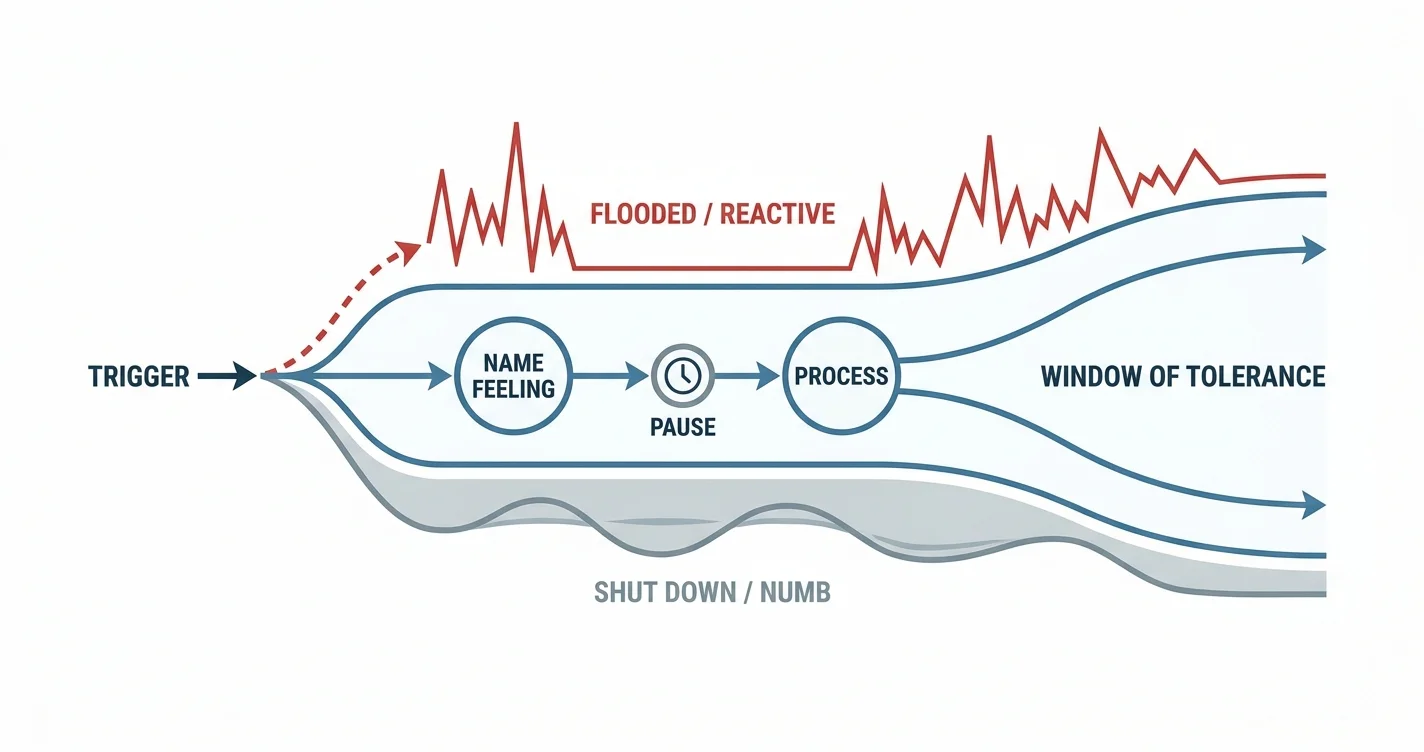
This is the single highest-leverage habit in emotional sobriety, and almost nobody does it automatically. When a feeling spikes, you have maybe 2-3 seconds before your body picks a reaction — fight, flight, freeze, or fawn. Naming the feeling out loud or in your head ("this is anger," "this is shame") slows that reflex down enough for your prefrontal cortex to catch up.
Do it literally: say the emotion's name, not the story around it. "I'm anxious" beats "he always does this to me." Common mistake: people skip straight to the story and never name the raw feeling, which keeps the nervous system in reactive mode.
2. Map your top triggers
You can't regulate what you haven't identified. Spend one evening this week writing down the last five times you reacted in a way you regretted — snapped at someone, ghosted a text, ate your feelings, spiraled into worry. Look for the pattern: was it feeling criticized? Ignored? Rushed?
Most people find 3-5 recurring triggers cover 80% of their bad reactions. A structured way to identify your emotional triggers speeds this up if you're stuck. Common mistake: listing triggers as people ("my partner") instead of patterns ("feeling dismissed mid-conversation") — the pattern is what you can actually work with.
3. Widen your window of tolerance daily
Your window of tolerance is the zone where you can feel a strong emotion and still think clearly. Outside it, you're either flooded (panic, rage) or shut down (numb, checked out). Daily practice — even five minutes of slow breathing or a body scan — expands that zone over 2026's stretch of weeks, not days.
Practice this on a calm day, not just in crisis. That's the part people skip, and it's why the skill doesn't stick. Common mistake: only trying grounding techniques mid-meltdown, when the nervous system is too activated to learn anything new.
4. Build a two-minute pause ritual
When a trigger hits, you need a physical off-ramp before you speak or act. Box breathing — four seconds in, four hold, four out, four hold, repeated for two minutes — drops heart rate measurably and buys you the gap between stimulus and response.
Practice it now, not later, so it's automatic when you need it. Ten reps a day for one week is enough to make it reflexive. Common mistake: trying a brand-new technique for the first time in the middle of a real fight — it won't hold under pressure if you haven't rehearsed it calm.
5. Process the feeling instead of parking it
Naming and pausing stop the reaction. Processing is what actually resolves the emotion instead of letting it resurface next week. Talk it out loud, write it down, or run through it with a voice journaling habit at the end of the day.
Voice works better than typing for a lot of people because speaking forces you to slow down and structure the thought. An AI voice journaling app gives you a place to do this every night without needing to schedule anyone's time. Common mistake: confusing venting with processing — venting repeats the story, processing asks what the story means and what you'll do differently.
6. Track your nervous system, not just your mood
Emotional sobriety is partly physiological. Polyvagal theory explains why your body drops into fight-flight-freeze before your thinking brain even catches up, and understanding how your nervous system reads safety versus threat helps you stop blaming yourself for reactions that are actually reflexes.
Track sleep, caffeine, and stress load alongside your emotional log. A dysregulated nervous system makes every trigger hit harder. Common mistake: treating every emotional spike as a psychological problem when half the time it's a tired, under-fed nervous system reacting to normal stress.
7. Rehearse with low-stakes conversations first
Don't test your new skill on the highest-stakes fight you have all month. Practice naming feelings and pausing in smaller moments — a snippy coworker email, a friend running late — before you bring it to a major relationship conversation.
Emotional regulation skills for adults build the same way muscle does: small reps first, heavier load later. Common mistake: giving up after one failed attempt during a major blowup instead of noting it and rehearsing more at lower intensity.
Practice emotional sobriety daily
Talk it through with an AI voice therapist whenever a trigger hits, day or night.
Troubleshooting
- You name the feeling but still react anyway. Naming isn't a magic switch — it buys you a few seconds, but the pause ritual (step 4) has to follow immediately, every time, for weeks before it sticks.
- You can't tell what you're feeling in the moment. Start with body sensations instead: tight chest, clenched jaw, racing heart. The label comes easier once you notice the physical signal first.
- Progress feels invisible. Emotional sobriety builds in 2026's slow-and-steady pattern, not a straight line — track weekly, not daily, so you can see the trend instead of one bad hour.
- You regulate fine alone but lose it with your partner. That's usually an attachment pattern layered on top, and emotional regulation after a fight walks through the relationship-specific version of this work.
- You feel numb instead of regulated. Numbness is a freeze response, not sobriety — check whether you're suppressing the feeling entirely rather than processing it, and slow the pause ritual down if so.
- Late-night spirals undo daytime progress. Nighttime is when willpower is lowest and triggers replay loudest; keep a grounding tool within reach for exactly that window.
Tools and resources
- A trigger journal (paper or app) updated weekly
- Box breathing or another rehearsed grounding technique
- A window of tolerance tracker to gauge progress over time
- An on-demand outlet for the moments a trigger fires outside session hours — Lovon's AI voice therapist is built for exactly that gap, giving you a place to talk through a spike as it happens rather than sitting with it alone until your next appointment
- A short daily voice-journaling habit to close the loop on what came up
What to do next
Once the daily naming-pause-process loop feels automatic, move to relationship-specific practice — most people's hardest triggers show up with a partner, not a stranger. Reviewing emotional regulation skills for adults is the natural next step once the basics from this guide are running on autopilot.
FAQ
What is emotional sobriety exactly?
Emotional sobriety is the ability to feel a strong emotion without reacting impulsively or shutting down. It comes from recovery language but applies to anyone dealing with anxiety, anger, or relationship stress in 2026.
How long does it take to build emotional sobriety?
Most people notice a real shift after 4-8 weeks of daily practice with naming feelings, pausing, and processing. It builds gradually rather than in one breakthrough moment.
Is emotional sobriety the same as emotional regulation?
They overlap heavily but emotional sobriety leans more on the recovery framework of staying steady under stress, while emotional regulation is the broader clinical skill set behind it.
Can an app actually help with emotional sobriety?
A voice-based tool like Lovon can give you a place to name and process a feeling the moment it spikes, which is exactly the gap between scheduled therapy sessions where most people lose ground.
What's the first sign someone lacks emotional sobriety?
Reacting to a small trigger with an outsized response — snapping over a minor comment, ghosting after mild conflict, or numbing out for hours after one hard conversation.
Does emotional sobriety mean suppressing feelings?
No. Suppressing is a freeze response and the opposite of the goal. Emotional sobriety means feeling the emotion fully while choosing your response instead of being run by it.
How is emotional sobriety different from being calm all the time?
Calm all the time is often numbness or avoidance. Emotional sobriety allows for anger, grief, and anxiety — it just keeps you in the driver's seat while you feel them.
What role does the nervous system play in emotional sobriety?
Your nervous system decides in milliseconds whether a moment is safe or threatening, based on polyvagal patterns learned over years. Widening your window of tolerance retrains that response over time.
One last thing
The people who build emotional sobriety fastest aren't the ones with the fewest triggers — they're the ones who practice the pause ritual on boring, low-stakes days, not just in crisis. If you only rehearse box breathing during a fight, it won't hold; rehearse it bored on a Tuesday and it'll actually show up when you need it in 2026's harder moments.
Related guides
How AI Support Helps You Heal
AI emotional support isn't about replacing human connection — it's about filling the gaps. The moments when you need to talk at 2 AM, when you don't want to burden your friends again, or when you simply need someone to listen without judgment.
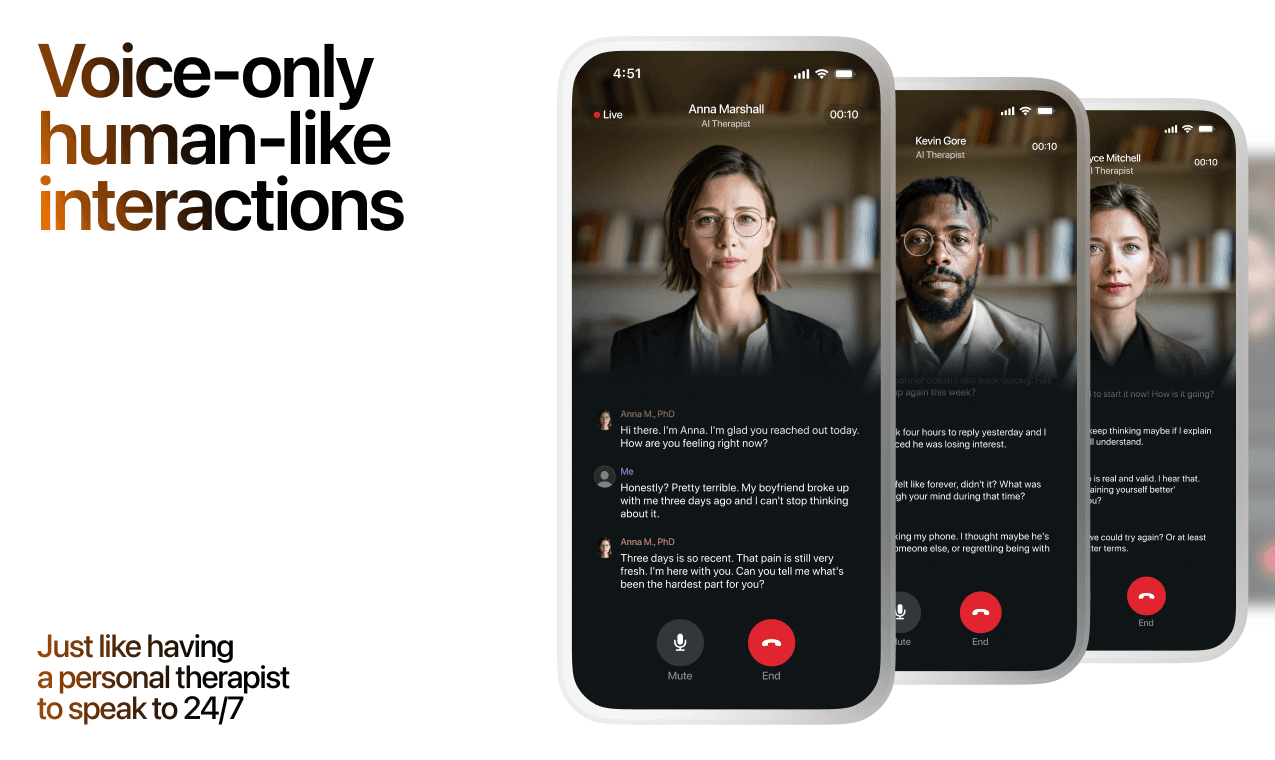
Here's what happens in a typical Lovon session:
You share what's on your mind
There's no script, no intake form, no waiting room. You speak or type whatever you're feeling — in your own words, at your own pace.
Lovon validates and explores
Using frameworks from CBT (Cognitive Behavioral Therapy) and motivational interviewing, Lovon acknowledges your feelings first, then gently helps you explore them. No dismissive "just move on" advice.
You build coping skills together
Lovon doesn't just listen — it actively works with you on evidence-based techniques: thought reframing, urge surfing, behavioral experiments, and more.
What a Session with Lovon Looks Like
When to Seek Professional Help
AI support is a valuable tool, but it's not a replacement for professional care. Please consider reaching out to a licensed therapist if you experience any of the following:
- Persistent thoughts of self-harm or suicide
- Inability to perform daily activities (work, eating, sleeping) for more than 2 weeks
- Turning to alcohol or substances to cope
- Intense anger or desire to harm your ex-partner
- Complete emotional numbness that doesn't improve over time
Crisis Resources (US): If you're in immediate danger, call 988 (Suicide & Crisis Lifeline) or text HOME to 741741 (Crisis Text Line). Available 24/7, free, and confidential.
Outside the US? Find a crisis line in your country
Ready to Start?
Your healing journey can begin right now
1 free conversation. No credit card. No judgment. Just a safe space to process what you're going through.
Frequently Asked Questions
Is AI therapy a replacement for a real therapist?
Is my conversation with Lovon AI private?
How is Lovon different from ChatGPT for emotional support?
Can I use Lovon if I'm already seeing a therapist?
Can I try Lovon for free?
About the Author
The Lovon Editorial Team
Mental Health & Wellness Content Team
The Lovon Editorial Team develops mental health and wellness content designed to make psychological concepts accessible and actionable. Our goal is to bridge the gap between clinical research and everyday life - helping you understand why your mind works the way it does and what you can do about it....
Similar Articles
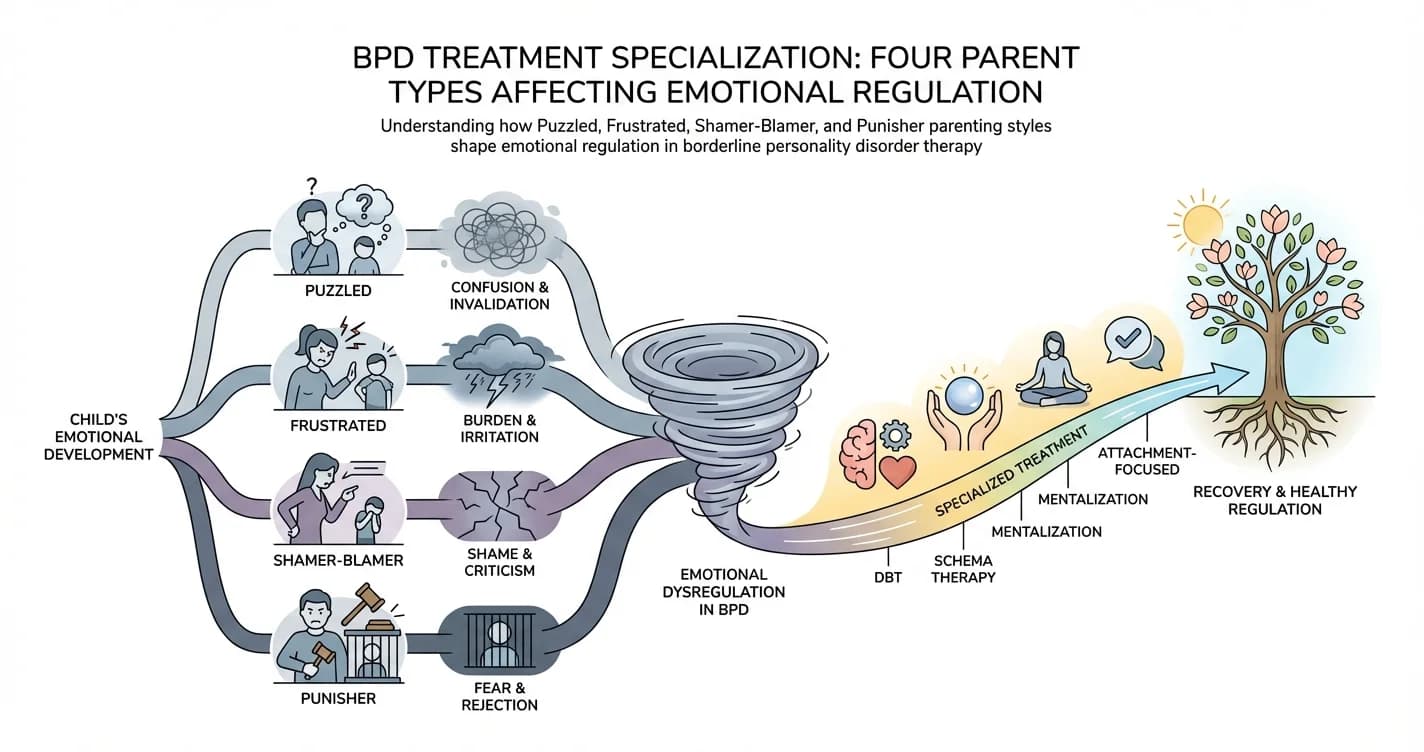
BPD Treatment Specialization: Four Parent Types Affecting Emotional Regulation
For individuals with borderline personality disorder (BPD), emotional regulation difficulties rarely emerge in isolation. Research increasingly suggests that

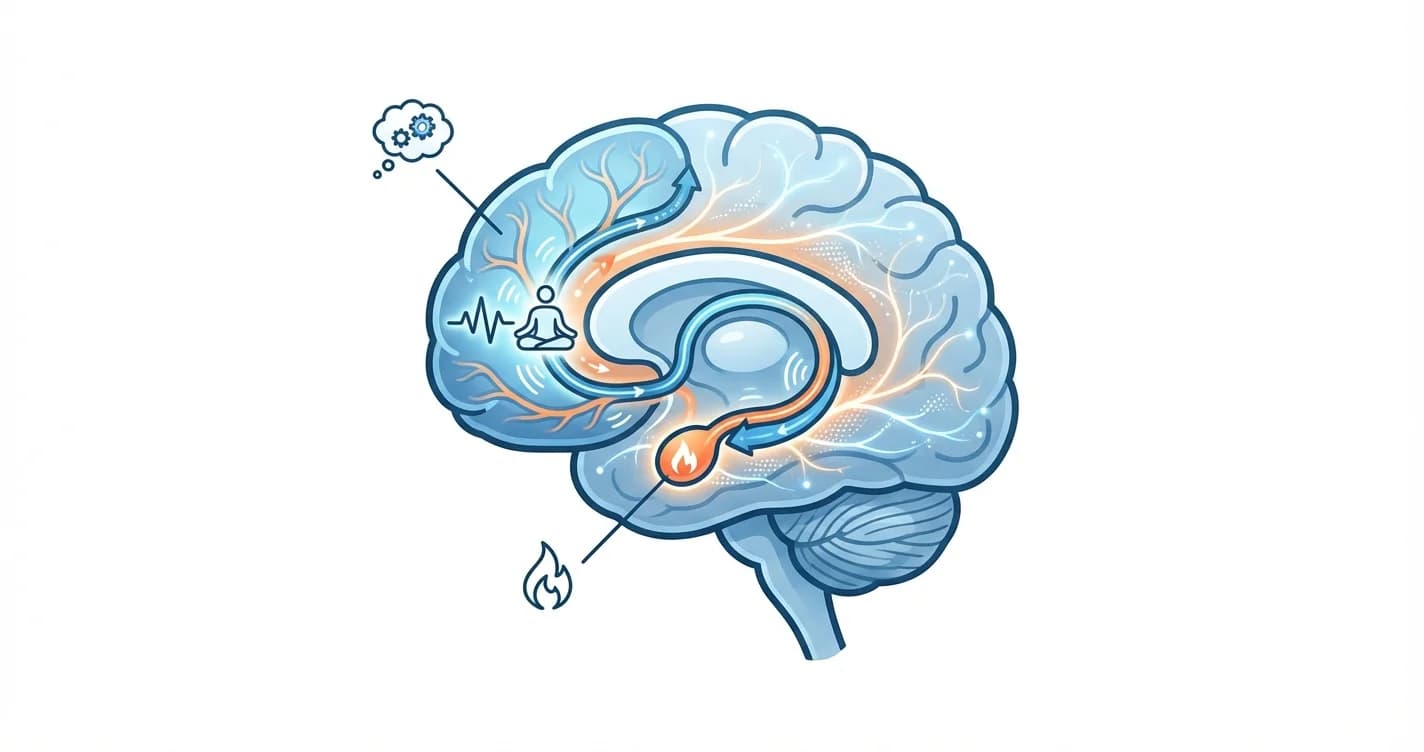
Amygdala and Prefrontal Cortex Connection: Training Emotional Regulation Through Mindfulness
How mindfulness practices reshape neural pathways to strengthen emotional control and reduce reactivity
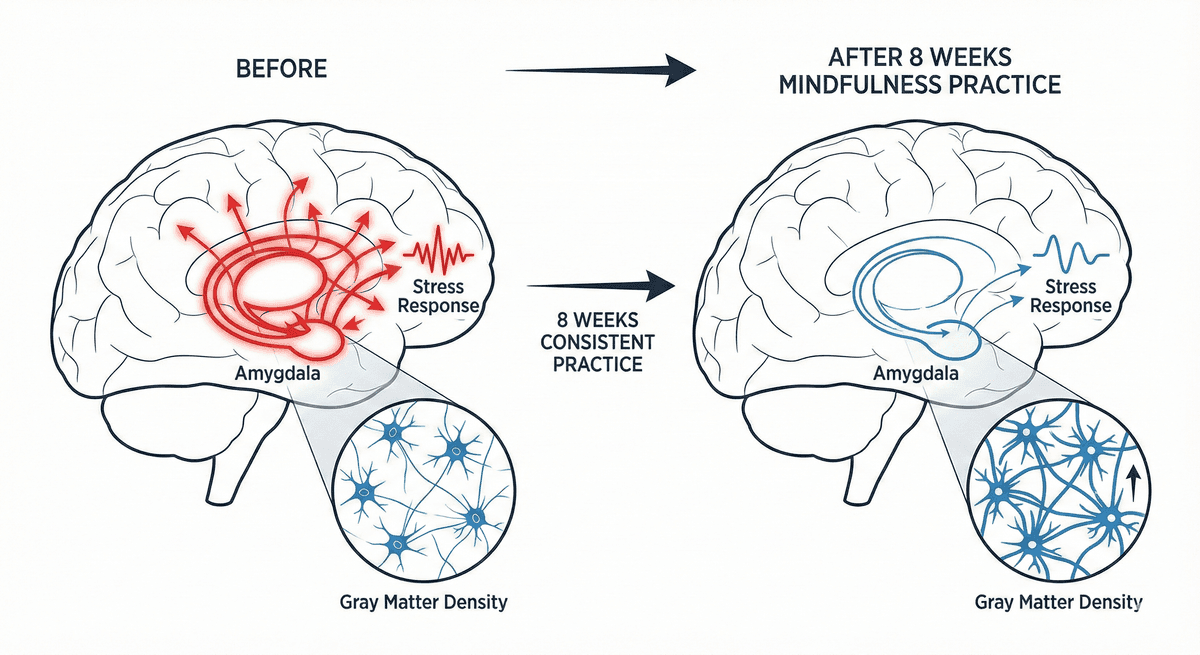
What 8 Weeks of Meditation Does to Your Amygdala
See what changes in your brain after eight weeks of daily meditation, why you react less to stress, and how to build a routine that actually sticks.
Disclaimer: This article is for informational purposes only and does not constitute medical advice, diagnosis, or treatment. Always seek the advice of your physician or other qualified health provider with any questions you may have regarding a medical condition. If you are in crisis or think you may have an emergency, call 988 (Suicide & Crisis Lifeline) or go to the nearest emergency room. Outside the US? Find a crisis line in your country.