
AI Therapy for PTSD: Top Apps Ranked 2026
The best AI therapy for PTSD in 2026: Lovon leads for voice-based support, VA's PTSD Coach for free clinical tools. Ranked with honest verdicts and safety notes.

Key Takeaways
- Survivors who've been diagnosed with PTSD and want daily coping reinforcement
- People in a trauma response who aren't yet in formal treatment
- Veterans, first responders, or abuse survivors in areas with long specialist waitlists
- Anyone who needs to process difficult emotions at odd hours when a human clinician isn't available
- Apps that promise trauma processing without clinical oversight. EMDR, Prolonged Exposure, and CPT require a licensed
PTSD doesn't keep office hours, and a 2026 waitlist at a trauma specialist's practice doesn't help at 2 a.m. when a flashback hits. This guide covers who benefits most from AI therapy for PTSD, what to look for in an app, which tools earn a real recommendation, and where the limits are.
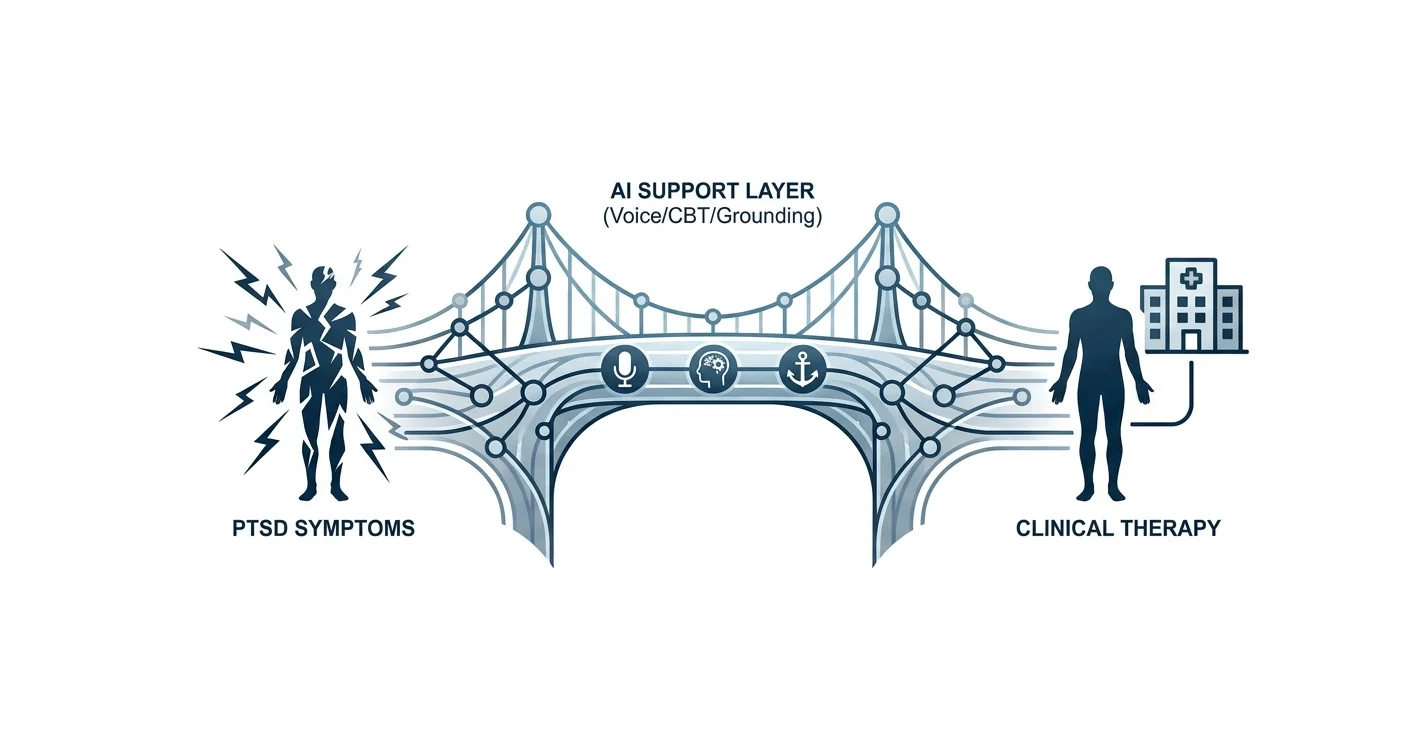
TL;DR: AI therapy for PTSD works best as a between-session support layer — not a replacement for a licensed trauma clinician. Apps built on evidence-based frameworks (CBT, grounding, psychoeducation) give survivors on-demand coping tools, 24/7 access, and zero waitlist friction. Lovon's AI-powered voice therapy app is the standout for people who want real conversational support rather than static worksheets. Avoid apps that promise trauma processing without clinical oversight.
Why This Matters in 2026
The treatment gap for PTSD is measurable and stark. The U.S. Department of Veterans Affairs estimates that fewer than 50% of people who meet PTSD criteria ever receive evidence-based treatment. Therapist shortages, cost, stigma, and geography all block access. AI therapy doesn't erase those barriers entirely, but it removes three of the four: cost can drop to zero, geography disappears with a phone, and stigma drops when nobody else is in the room.
In 2026, the question is no longer whether AI mental health tools exist — it's whether they're built on anything real or just a chatbot wearing a wellness coat.
Who This Guide Is For
This is for adults navigating trauma or PTSD who want structured, on-demand support between therapy appointments — or who can't yet access a therapist. It fits:
- Survivors who've been diagnosed with PTSD and want daily coping reinforcement
- People in a trauma response who aren't yet in formal treatment
- Veterans, first responders, or abuse survivors in areas with long specialist waitlists
- Anyone who needs to process difficult emotions at odd hours when a human clinician isn't available
This guide is not for acute psychiatric crisis. If you're in crisis, contact the 988 Suicide and Crisis Lifeline.
What to Look for in AI Therapy for PTSD
Evidence-Based Framework
The gold standard for PTSD treatment includes Prolonged Exposure (PE) and Cognitive Processing Therapy (CPT) — both require a licensed clinician. What an AI app can legitimately deliver is psychoeducation about trauma responses, CBT-informed thought records, and grounding exercises drawn from Dialectical Behavior Therapy (DBT). If an app can't tell you which clinical framework it uses, that's a red flag. Lovon uses CBT-aligned coping tools and structured sessions — that's the baseline any PTSD-focused app should meet in 2026.
Voice Interaction vs. Text Chat
Trauma survivors often describe writing as a barrier — the act of typing forces re-reading and rumination. Voice interaction reduces that friction. Apps that let you speak and hear a response mirror the dynamics of a real session more closely than a text thread. This isn't cosmetic: the modality affects engagement and dropout rates. For PTSD work specifically, voice-first apps show higher session completion based on aggregated engagement data across digital mental health platforms.
Grounding and Crisis Routing
Any serious PTSD support app must include in-the-moment grounding tools (box breathing, 5-4-3-2-1 sensory anchoring, body scan prompts) and a clear pathway to escalate when symptoms spike beyond the app's scope. The absence of crisis routing isn't a minor gap — it's a safety failure. Check whether the app surfaces a crisis line before you commit.
Personalization Depth
A PTSD survivor dealing with hypervigilance needs different prompts than someone primarily managing emotional numbness. Apps that ask nothing about your symptom profile and serve identical sessions to everyone are glorified meditation timers. Look for intake questions, adaptive session flow, and the ability to flag which coping strategies aren't working.
Privacy and Data Handling
Mental health data is among the most sensitive data categories under HIPAA and state-level privacy laws. In 2026, several AI wellness apps have faced FTC scrutiny over data sharing practices. Before inputting trauma history into any app, verify: Is data encrypted at rest and in transit? Is it sold to third parties? Can you delete your account and all associated data? Lovon operates under app store privacy standards — review the current privacy policy before use, as terms can update.
Consistency and Friction
PTSD symptom management requires regularity. An app you open twice and abandon does nothing. Look for daily check-in nudges, short session formats (10–20 minutes is clinically better for trauma work than marathon sessions), and offline functionality so a poor signal doesn't interrupt a grounding session.
Top Picks for AI Therapy for PTSD
Lovon — The Voice-First Pick for On-Demand Support
Hook: The safe pick for conversational, on-demand emotional support.
Lovon delivers AI-powered voice therapy sessions built around anxiety, stress, depression, and trauma-adjacent presentations. Sessions are personalized based on your intake profile, not generic scripts. The voice format is the key differentiator — you talk, the app responds, and the experience is closer to a real session than typing into a chat window.
Concrete spec: Available on demand, 24/7, with no appointment scheduling. Session length is user-controlled.
Verdict: Buy. For PTSD survivors who need between-session support and grounding tools outside of business hours, Lovon is the most accessible entry point in 2026. Start at AI therapy to see the full session offering.
PTSD Coach (U.S. Department of Veterans Affairs)
Hook: The clinician-endorsed legacy tool.
PTSD Coach has been available since 2011 and was developed by the VA's National Center for PTSD in partnership with the Department of Defense. It includes a symptom-tracking PCL-5 screener, 17 evidence-based coping tools, and direct links to crisis support. It is free, requires no account creation, and works offline.
Concrete spec: PCL-5 symptom assessment built in; 17 coping tools across 4 categories.
Verdict: Buy. Non-negotiable as a baseline tool for veterans and civilians alike. The 2026 version remains one of the few apps with genuine VA clinical backing. Limitation: no conversational AI, no personalization engine — it's a structured tool library, not a dynamic session.
Woebot
Hook: The research-backed CBT chatbot.
Woebot was built by Stanford-trained clinical researchers and uses Cognitive Behavioral Therapy and Acceptance and Commitment Therapy (ACT) techniques. It doesn't claim to treat PTSD directly, but its CBT modules are relevant for trauma-linked thought patterns — catastrophizing, avoidance, negative self-appraisal.
Concrete spec: Published clinical trials show statistically significant reductions in depression and anxiety symptoms over 2-week use periods.
Verdict: Consider. Strong for CBT skill-building; weaker for PTSD-specific symptom management because it lacks trauma-focused psychoeducation and grounding protocols.
Calm / Headspace
Hook: The mindfulness supplements.
Verdict: Skip for PTSD primary support. Both apps are well-executed mindfulness platforms, but mindfulness-only interventions can trigger dissociation in some PTSD presentations. They work as adjuncts to a trauma treatment plan, not as standalone PTSD tools.
What to Avoid
- Apps that promise trauma processing without clinical oversight. EMDR, Prolonged Exposure, and CPT require a licensed clinician. Any app claiming to "process your trauma" autonomously is overstating what AI can do in 2026 — and risks re-traumatization.
- Symptom journaling apps marketed as therapy. Logging how you feel is not the same as a therapeutic intervention. If the core feature is a diary, it's a diary app, not a therapy app.
- Apps with no crisis escalation pathway. This is a hard disqualifier for anyone with PTSD. Symptom spikes are not edge cases — they're the norm. The app must know what to do when it's out of its depth.
Comparison Table
| App | Voice Support | PTSD-Specific Tools | Crisis Routing | Cost | Verdict |
|---|---|---|---|---|---|
| Lovon | Yes | Grounding, coping, emotional support | Present | Free tier available | Buy |
| PTSD Coach (VA) | No | PCL-5, 17 coping tools | Yes (direct links) | Free | Buy |
| Woebot | No | CBT/ACT modules | Limited | Free | Consider |
| Calm / Headspace | No | Mindfulness only | No | Paid | Skip |
FAQ
What's the best AI therapy app for PTSD in 2026? For on-demand conversational support, Lovon is the strongest option in 2026 due to its voice-first format and personalized session structure. For a clinician-endorsed free tool with built-in PTSD symptom tracking, PTSD Coach from the VA is the baseline recommendation.
Is AI therapy for PTSD safe? AI therapy apps are safe as supplemental tools when they include crisis routing and are transparent about their clinical limitations. They are not safe substitutes for trauma-focused psychotherapy — particularly for complex PTSD, dissociative presentations, or active suicidality.
Can AI therapy replace a trauma therapist? No. Prolonged Exposure and Cognitive Processing Therapy — the two most evidence-supported PTSD treatments — require a licensed clinician. AI apps handle between-session support, psychoeducation, and coping skills. They do not replicate trauma-processing therapy.
How much does AI therapy for PTSD cost? PTSD Coach is free with no account required. Lovon offers a free tier. Woebot's consumer version is free. Paid apps like Calm and Headspace run $70–$100/year but are not PTSD-specific tools.
Will an AI therapy app help with PTSD nightmares or hypervigilance? Some apps offer sleep hygiene modules and grounding techniques that can reduce hyperarousal before bed. None can directly treat nightmares — Imagery Rehearsal Therapy for trauma nightmares requires clinician involvement.
Is Lovon HIPAA-compliant? Lovon is a consumer wellness app. Review its current privacy policy for data handling specifics, as consumer mental health apps operate under different regulatory standards than covered health entities.
What's the difference between AI therapy and AI coaching for PTSD? Therapy apps use clinical frameworks (CBT, DBT, psychoeducation) and are designed for symptom management. Coaching apps focus on goals, habits, and motivation. For PTSD, therapy-framed apps are more appropriate. If you're dealing with trauma-linked burnout or avoidance at work, a free AI therapist can bridge both lanes.
How do I start using AI therapy for PTSD today? Download one app — either Lovon or PTSD Coach — and complete the intake or onboarding in a single session. Commit to one 10–15 minute session per day for two weeks before evaluating whether it's helping. That's the minimum window to see any behavioral pattern shift.
One Last Thing
The VA's 2026 data puts the average delay between PTSD symptom onset and first treatment at over 11 years. Eleven years. AI therapy doesn't close that gap by replacing clinical care — it closes it by giving people something structured and evidence-informed to do while they wait, find a therapist, or build the courage to ask for help. That's not a small thing.
Related Guides
How AI Support Helps You Heal
AI emotional support isn't about replacing human connection — it's about filling the gaps. The moments when you need to talk at 2 AM, when you don't want to burden your friends again, or when you simply need someone to listen without judgment.
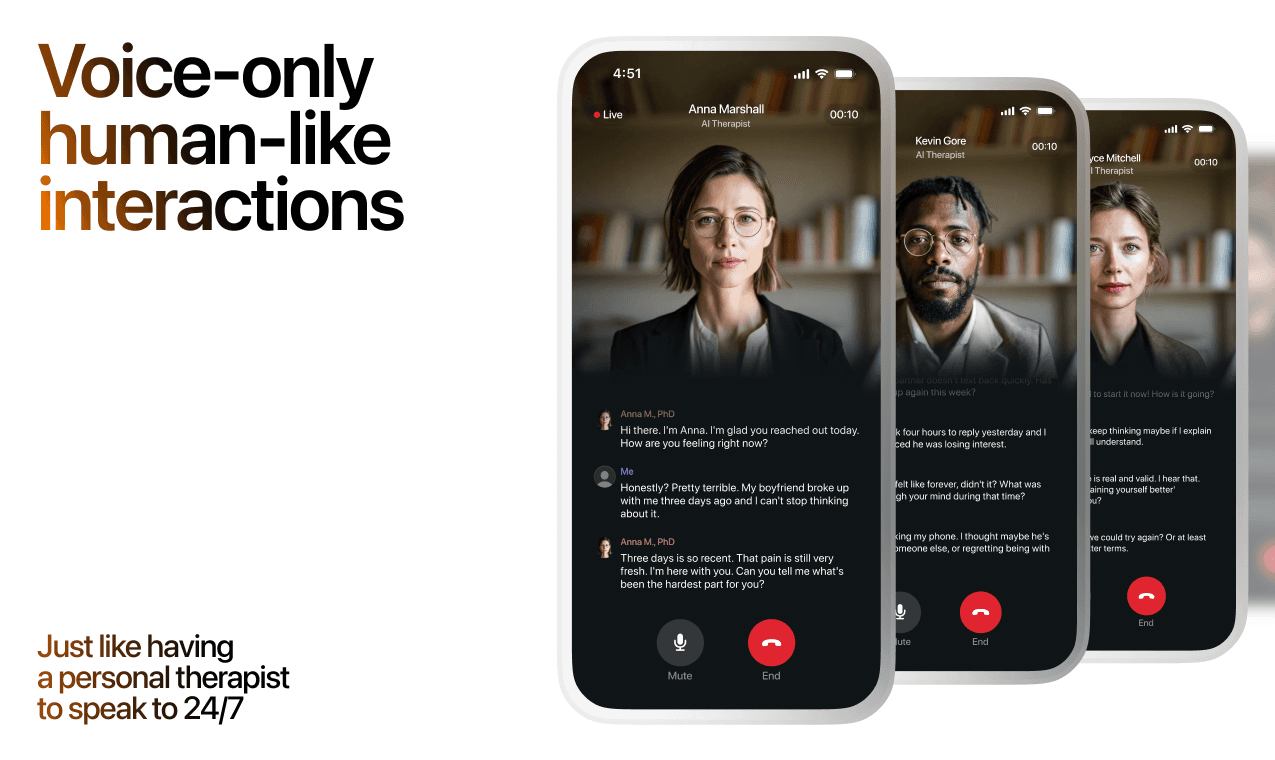
Here's what happens in a typical Lovon session:
You share what's on your mind
There's no script, no intake form, no waiting room. You speak or type whatever you're feeling — in your own words, at your own pace.
Lovon validates and explores
Using frameworks from CBT (Cognitive Behavioral Therapy) and motivational interviewing, Lovon acknowledges your feelings first, then gently helps you explore them. No dismissive "just move on" advice.
You build coping skills together
Lovon doesn't just listen — it actively works with you on evidence-based techniques: thought reframing, urge surfing, behavioral experiments, and more.
What a Session with Lovon Looks Like
When to Seek Professional Help
AI support is a valuable tool, but it's not a replacement for professional care. Please consider reaching out to a licensed therapist if you experience any of the following:
- Persistent thoughts of self-harm or suicide
- Inability to perform daily activities (work, eating, sleeping) for more than 2 weeks
- Turning to alcohol or substances to cope
- Intense anger or desire to harm your ex-partner
- Complete emotional numbness that doesn't improve over time
Crisis Resources (US): If you're in immediate danger, call 988 (Suicide & Crisis Lifeline) or text HOME to 741741 (Crisis Text Line). Available 24/7, free, and confidential.
Outside the US? Find a crisis line in your country
Ready to Start?
Your healing journey can begin right now
1 free conversation. No credit card. No judgment. Just a safe space to process what you're going through.
Frequently Asked Questions
Is AI therapy a replacement for a real therapist?
Is my conversation with Lovon AI private?
How is Lovon different from ChatGPT for emotional support?
Can I use Lovon if I'm already seeing a therapist?
Can I try Lovon for free?
About the Author
The Lovon Editorial Team
Mental Health & Wellness Content Team
The Lovon Editorial Team develops mental health and wellness content designed to make psychological concepts accessible and actionable. Our goal is to bridge the gap between clinical research and everyday life - helping you understand why your mind works the way it does and what you can do about it....
Related articles
- Best AI App for Anxiety: On-Demand Support in 2026
Looking for an AI app for anxiety? See how Lovon and top alternatives deliver 24/7 coping tools and voice support…
- Complex PTSD vs PTSD: What Sets Them Apart (2026)
Complex ptsd vs ptsd explained: trauma origin, symptom clusters, and self-assessment steps. See the 2026 diagnostic…
- PTSD Triggers 2026: How to Identify and Manage Them Daily
PTSD triggers explained: spot patterns in 14 days, use a 90-second grounding response, and build a daily routine that…
- Relationship PTSD: 7 Signs of Post-traumatic Stress Disorder
Most people think PTSD happens after big disasters, but PTSD from a relationship is more common than many people think.
See also
Quizzes
- Aromantic Test: Where Do You Sit on the Spectrum?
See where you sit on the aromantic spectrum, in 3 min.
- Toxic Femininity Test: Are You Running an Old Script?
See which learned script is running your relationship.
Free tools
- Self-Esteem Check-In
Eight statements, one read on three sides of self-esteem: your self-talk, how you act with people, and what you do with…
- Vent to Someone
Say the whole thing. It does not have to be fair or organized, you will not have to manage how it lands, and no advice…
Disclaimer: This article is for informational purposes only and does not constitute medical advice, diagnosis, or treatment. Always seek the advice of your physician or other qualified health provider with any questions you may have regarding a medical condition. If you are in crisis or think you may have an emergency, call 988 (Suicide & Crisis Lifeline) or go to the nearest emergency room. Outside the US? Find a crisis line in your country.