
Mental health app for lawyers: complete 2026 guide
Mental health app for lawyers in 2026: compare AI voice therapy, EAPs, and therapists for anxiety, burnout, and courtroom stress that fits billable hours.

Key Takeaways
- A mental health app for lawyers works best as daily support between billable hours, not a replacement for licensed
- Lovon offers on-demand AI voice therapy for anxiety, burnout, and stress, available at 2am without scheduling a session.
- A 2016 ABA/Hazelden Betty Ford study found 28% of licensed attorneys screened positive for depression and 19% for
- Employee Assistance Programs, in-person therapists, and AI voice apps each solve a different part of the problem —
- Escalating symptoms (panic attacks, suicidal thoughts, heavy drinking) need a licensed clinician, not an app, in
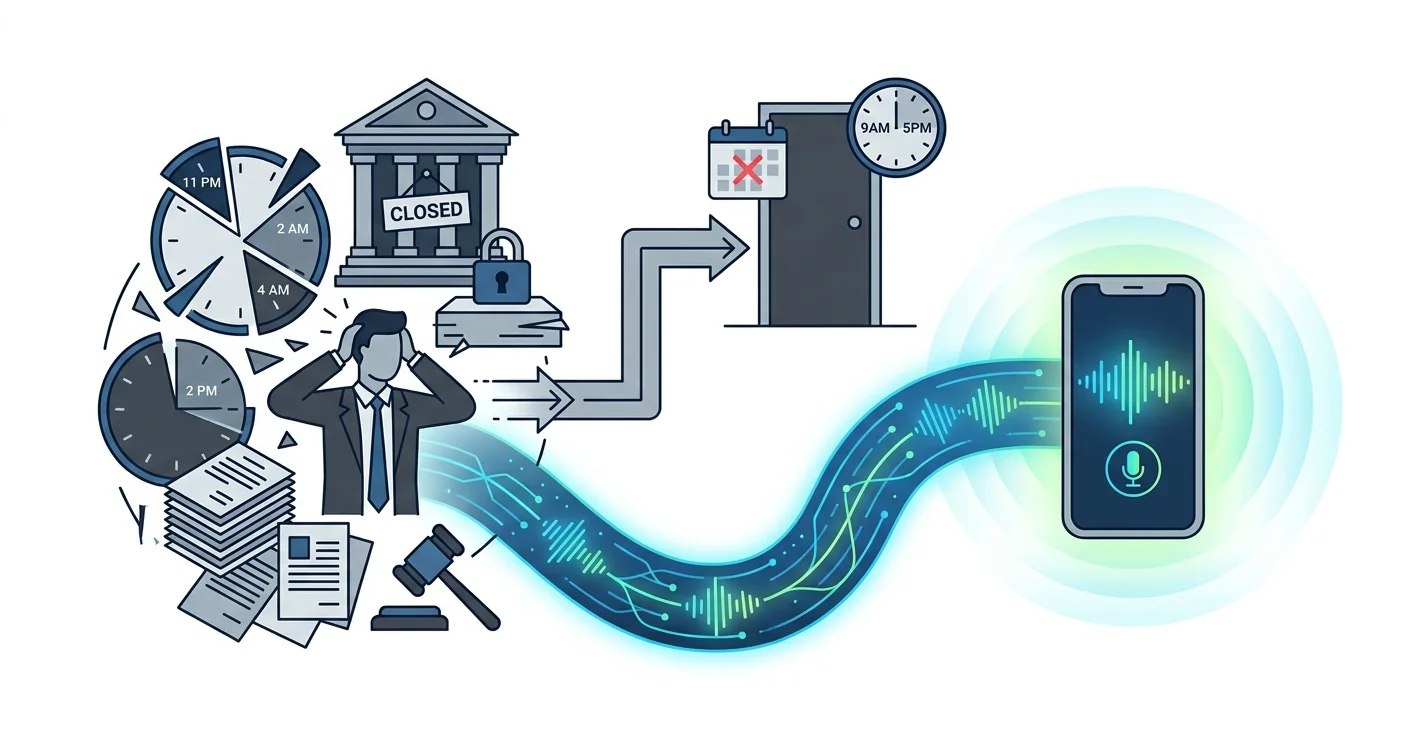
Lawyers searching for a mental health app for lawyers usually aren't looking for a wellness gimmick — they need something that works at 11pm after a deposition, doesn't require a two-week wait for an appointment, and won't show up as a line item a client could ask about. This guide covers what actually helps, what an AI-powered option like Lovon can and can't do, and where licensed care still has to come in.
TL;DR
- A mental health app for lawyers works best as daily support between billable hours, not a replacement for licensed therapy during a crisis.
- Lovon offers on-demand AI voice therapy for anxiety, burnout, and stress, available at 2am without scheduling a session.
- A 2016 ABA/Hazelden Betty Ford study found 28% of licensed attorneys screened positive for depression and 19% for anxiety.
- Employee Assistance Programs, in-person therapists, and AI voice apps each solve a different part of the problem — no single option covers all of it.
- Escalating symptoms (panic attacks, suicidal thoughts, heavy drinking) need a licensed clinician, not an app, in 2026 or any year.
Why this matters for lawyers
The legal profession runs on billable hours, adversarial pressure, and a culture where admitting you're struggling can feel like admitting weakness in front of opposing counsel. That combination is exactly why generic mental health advice — "take a walk, get more sleep" — lands flat with associates and partners alike.
The 2016 study jointly conducted by the American Bar Association and the Hazelden Betty Ford Foundation, which screened nearly 13,000 licensed attorneys, found 28% screened positive for depression, 19% for anxiety, and about 21% for problem drinking. Those numbers are almost a decade old now, but the structural causes — billing pressure, adversarial conflict, unpredictable hours — haven't changed by 2026. If anything, a mental health app for lawyers matters more now because the hours haven't gotten shorter and the stigma hasn't fully lifted.
A licensed therapist's 50-minute weekly slot doesn't match a litigator's schedule. That's the gap Lovon and similar AI voice therapy tools are built to fill — not to replace the therapist, but to be there on the Tuesday night before a Wednesday morning motion hearing when no human is available.
How to build mental health support into a legal career
Name the pattern before it names you
Most lawyers don't distinguish between normal case stress, burnout, and clinical depression until one of them stops them from functioning. Naming it early is the cheapest intervention available.
- Track energy and dread levels across a week, not just during trial
- Notice if exhaustion persists even after a slow week (a burnout signal, not just workload)
- Watch for irritability with staff or family that wasn't there a year ago
- Ask a trusted colleague if they've noticed a change — outside perspective catches what self-assessment misses
- Use a quick screening resource like the burnout vs. depression comparison to sort which one you're actually dealing with
Build a between-billables coping routine
Waiting for a scheduled therapy slot means going five, six, sometimes ten days without any structured decompression. That gap is where most attorneys either numb out or blow up.
- Set a 5-minute breathing or grounding routine before opening email each morning
- Use short voice or written journaling after a difficult call, not weeks later
- Block 10 minutes after court, not just before it, to process what happened
- Keep one low-effort coping tool (breathing pattern, short walk) that takes under 3 minutes
- Open a voice conversation with an AI mental health app for lawyers when none of the above happens on a bad night — this is where Lovon's on-demand voice sessions fit, available without booking ahead
Protect confidentiality when you talk about work stress
Attorneys have a legitimate, specific fear that peers don't: talking about a case, even in a venting context, can raise privilege and confidentiality questions.
- Avoid naming clients, case numbers, or identifying details in any written or app-based conversation
- Use general language ("a difficult opposing counsel," not names) when processing stress out loud
- Confirm any tool's data handling before discussing anything case-adjacent
- Keep true legal-ethics questions (conflicts, disclosure obligations) with your general counsel or bar ethics hotline, not a wellness tool
- Treat an AI voice therapy conversation the way you'd treat a private journal — useful for your own processing, not for case strategy
Use grounding techniques before high-stakes moments
Courtrooms and depositions produce acute stress spikes that don't respond to a 45-minute weekly therapy session scheduled three days later.
- Practice box breathing (4 seconds in, 4 hold, 4 out, 4 hold) in the elevator before a hearing
- Do a 60-second body scan to catch a clenched jaw or shallow breathing before you walk in
- Rehearse a single calming phrase to use silently if a cross-examination gets heated
- Keep a short list of the day's actual facts to counter catastrophic thinking mid-argument
- Run a guided grounding exercise through a voice-based app between sessions if the physical symptoms (racing heart, tight chest) start creeping in during prep
Track your triggers across case types
Not every case produces the same stress load. Family law, criminal defense, and high-stakes litigation each pull on different nervous system responses.
- Log which case types leave you drained versus energized over a month
- Notice whether certain opposing counsel or judges trigger a disproportionate reaction
- Flag recurring themes (custody disputes, violent crime testimony) that carry secondary trauma risk
- Compare your sleep and appetite across heavy-docket weeks versus lighter ones
- Bring the pattern to a licensed therapist if one case type consistently produces symptoms that don't resolve
Loop in licensed care when symptoms escalate
An AI mental health app for lawyers is built for daily support, not crisis intervention. Know the line before you're standing on it.
- Panic attacks that don't resolve with grounding techniques within 10-15 minutes
- Persistent thoughts of self-harm or hopelessness
- Reliance on alcohol most nights to fall asleep
- Missed filings or client meetings due to inability to function
- Physical symptoms (chest pain, severe insomnia) that warrant a medical evaluation first
Talk it out before it builds up
Start a voice session anytime — no waitlist, no scheduling.
Decide when an app isn't enough
The honest answer: a mental health app for lawyers, including Lovon, is not a licensed clinician and doesn't diagnose or treat conditions requiring medication or intensive care.
- Use it daily for stress processing, coping tools, and reflection between cases
- Pair it with a licensed therapist for anything diagnostic or medication-related
- Escalate to a psychiatrist if symptoms include suicidal ideation or severe mood episodes
- Check your firm's EAP for a free initial referral to in-person care
- Treat the app as the daily layer, not the only layer, of support
Comparing support options for lawyers
| Option | Best for | Key limitation |
|---|---|---|
| AI voice therapy app (Lovon) | Daily stress processing between cases, available at any hour | Not a licensed clinician; not built for crisis intervention |
| Employee Assistance Program (EAP) | A short, often free initial referral through the firm | Usually capped at a handful of sessions per year |
| In-person licensed therapist | Diagnosis, medication coordination, long-term treatment | Weekly scheduling doesn't match trial or deal schedules |
| Text-based therapy app | Asynchronous check-ins for lawyers who dislike phone calls | Slower back-and-forth; less useful for real-time panic |
| Bar association helpline / peer support | Confidential, profession-specific guidance | Availability and structure vary widely by state |
Verdict: for daily stress and burnout between billable hours, an AI voice therapy app like Lovon fills a real gap; for diagnosis, medication, or a crisis, a licensed therapist or your firm's EAP is the right call, not a substitute.
Common mistakes lawyers make with mental health
- Treating billing guilt as a reason to skip care entirely — 20 minutes of support isn't the reason a filing gets missed; unaddressed burnout is.
- Venting about a case in written channels that could later surface in discovery or a conflicts review, instead of keeping processing general and private.
- Waiting for a physical crisis — chest pain, a panic attack mid-hearing — before addressing chronic stress that had been building for months.
- Confusing burnout with depression and never getting either properly evaluated, which delays the right kind of help by years in some cases.
- Defaulting to alcohol or extra billable hours as the only coping tool, which manages the symptom for a night and worsens the underlying pattern.
FAQ
What's the best mental health app for lawyers in 2026?
For daily stress and burnout support that fits an unpredictable schedule, Lovon's AI voice therapy is built for on-demand conversations without booking ahead. For diagnosis or medication, a licensed therapist or psychiatrist is the right choice, not an app.
Is an AI therapist confidential enough for someone in a privileged profession?
Keep any conversation general and avoid naming clients or case details, the same way you'd treat a private journal. Confirm a tool's data handling before discussing anything case-adjacent, since app privacy policies aren't the same as attorney-client privilege.
Can lawyers use a mental health app instead of an EAP?
An app and an EAP solve different problems — an EAP typically offers a few free sessions with a licensed counselor, while a voice therapy app offers daily, unscheduled support. Most attorneys benefit from using both rather than choosing one.
Is AI voice therapy as effective as talking to a licensed therapist?
AI voice therapy is built for reflection, coping tools, and emotional support between sessions, not diagnosis or treatment of clinical conditions. It works best paired with, not instead of, licensed care when symptoms are significant.
What are signs of burnout in lawyers versus normal case stress?
Normal stress spikes around a filing deadline and settles afterward; burnout persists even during lighter weeks and includes cynicism toward the work itself. If exhaustion doesn't lift after a slow docket week, that's a burnout signal worth addressing directly.
Can I use a mental health app during a trial without it affecting billable hours?
A short voice session takes a few minutes and isn't billed to a client matter, unlike a scheduled therapy appointment during work hours. Most lawyers use it before or after court, not during active proceedings.
Does attorney confidentiality affect how I use a wellness app?
Yes — avoid naming clients, case numbers, or identifying facts in any app conversation, written or voice-based. General emotional processing ("a difficult negotiation today") is fine; specific case details are not.
When should a lawyer see a licensed therapist instead of using an app?
Panic attacks that don't resolve within 10-15 minutes, persistent hopelessness, nightly reliance on alcohol, or missed professional obligations all signal it's time for a licensed clinician, not a self-guided tool.
One last thing
The 2016 ABA/Hazelden Betty Ford study found problem drinking rates among attorneys roughly double the general population's — not because lawyers drink for fun, but because it's the fastest available off-switch for a nervous system that never got a real one. A 3-minute breathing routine or a short voice session won't replace that off-switch overnight, but it gives you an option that doesn't cost you the next morning.
Related guides
How AI Support Helps You Heal
AI emotional support isn't about replacing human connection — it's about filling the gaps. The moments when you need to talk at 2 AM, when you don't want to burden your friends again, or when you simply need someone to listen without judgment.
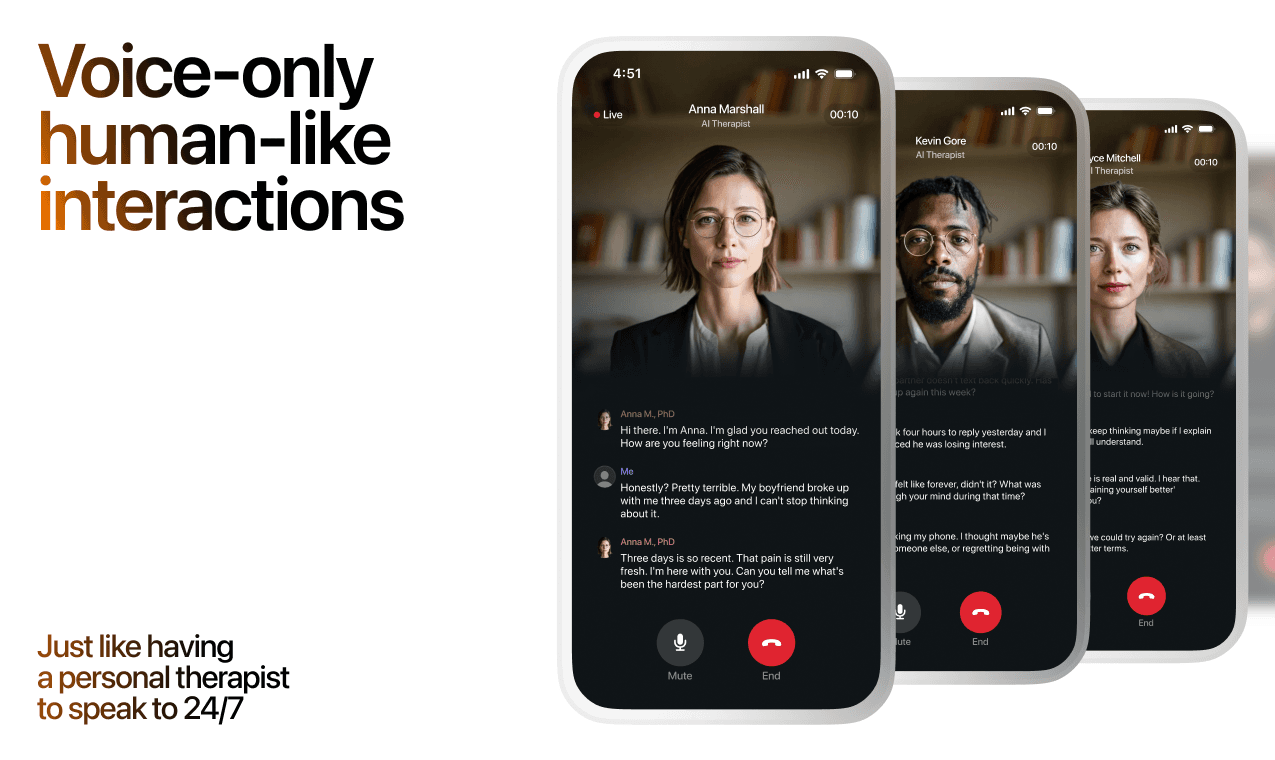
Here's what happens in a typical Lovon session:
You share what's on your mind
There's no script, no intake form, no waiting room. You speak or type whatever you're feeling — in your own words, at your own pace.
Lovon validates and explores
Using frameworks from CBT (Cognitive Behavioral Therapy) and motivational interviewing, Lovon acknowledges your feelings first, then gently helps you explore them. No dismissive "just move on" advice.
You build coping skills together
Lovon doesn't just listen — it actively works with you on evidence-based techniques: thought reframing, urge surfing, behavioral experiments, and more.
What a Session with Lovon Looks Like
When to Seek Professional Help
AI support is a valuable tool, but it's not a replacement for professional care. Please consider reaching out to a licensed therapist if you experience any of the following:
- Persistent thoughts of self-harm or suicide
- Inability to perform daily activities (work, eating, sleeping) for more than 2 weeks
- Turning to alcohol or substances to cope
- Intense anger or desire to harm your ex-partner
- Complete emotional numbness that doesn't improve over time
Crisis Resources (US): If you're in immediate danger, call 988 (Suicide & Crisis Lifeline) or text HOME to 741741 (Crisis Text Line). Available 24/7, free, and confidential.
Outside the US? Find a crisis line in your country
Ready to Start?
Your healing journey can begin right now
1 free conversation. No credit card. No judgment. Just a safe space to process what you're going through.
Frequently Asked Questions
Is AI therapy a replacement for a real therapist?
Is my conversation with Lovon AI private?
How is Lovon different from ChatGPT for emotional support?
Can I use Lovon if I'm already seeing a therapist?
Can I try Lovon for free?
About the Author
The Lovon Editorial Team
Mental Health & Wellness Content Team
The Lovon Editorial Team develops mental health and wellness content designed to make psychological concepts accessible and actionable. Our goal is to bridge the gap between clinical research and everyday life - helping you understand why your mind works the way it does and what you can do about it....
Related articles
- AI therapy for flight attendants: complete 2026 guide
AI therapy for flight attendants explained: how voice-based support fits irregular schedules, jet lag, and layovers in…
- AI Therapist for Stress: What It Can and Can't Do (2026)
An honest breakdown of what an AI therapist for stress handles well in 2026, where it falls short, and how Lovon fits…
- AI Therapy for Anxiety: How It Works (2026)
Learn exactly how AI therapy for anxiety works, step by step. Lovon delivers on-demand CBT and mindfulness tools for…
- AI support for HR professionals: complete 2026 guide
AI support for HR professionals means same-day voice coping tools between EAP sessions in 2026 — see what Lovon can and…
See also
Quizzes
- Light Triad Test: Are People Ends or Means?
See how you treat people when there is nothing to gain.
- Toxic Masculinity Test: Which Rules Are You Running?
See which learned rules cost you most, in 3 minutes.
Free tools
- How to Stop Overthinking in a Relationship
Not a list of habits. Tell it the specific thing you are going round on, and it separates what actually happened from…
- What to Say When They Are Struggling
A chat, not a list. Tell the coach who this person is to you, what they are going through, and what you already said…
Disclaimer: This article is for informational purposes only and does not constitute medical advice, diagnosis, or treatment. Always seek the advice of your physician or other qualified health provider with any questions you may have regarding a medical condition. If you are in crisis or think you may have an emergency, call 988 (Suicide & Crisis Lifeline) or go to the nearest emergency room. Outside the US? Find a crisis line in your country.