
How to Deal With the Silent Treatment: What to Say
How to deal with the silent treatment: tell cooling off from punishment, the exact words for a partner, parent or friend, and when silence becomes control.

Key Takeaways
- Name the silence once, calmly, offer a specific time to talk, and then stop chasing; a stream of texts usually makes the silence longer.
- Cooling off comes with a time to come back, stonewalling is shutting down from overwhelm, and punishment ends only when you give in. Each needs a different response.
- Do not apologize for things you did not do just to end it, because that teaches both of you that silence works. Silence used again and again to control you is a pattern to take seriously.
To deal with the silent treatment, name the silence once and offer a specific time to talk: "I can tell you're upset. I'd like to talk, and I'm free tonight after eight." Then stop chasing, get on with your day, and don't apologize for things you didn't do. If silence is used again and again to punish or control you, treat it as a pattern, not a mood.
- Wait an hour or two before reacting, because it may be cooling off rather than punishment.
- Name the silence once, in one or two calm sentences, without accusing.
- Offer a specific time to talk instead of demanding to talk right now.
- Stop chasing: no stream of texts, no pleading, no guessing games.
- Keep your own day going, so their mood does not become your whole day.
- When they come back, talk about the silence itself, not only the original fight.
- Agree on a better way to take space next time, with a time to come back.
- If it keeps happening as punishment, set a limit and get support outside the relationship.
Is it cooling off, stonewalling, or the silent treatment?
Silence after conflict is not always the same thing, and the right response depends on which one you are dealing with. The clearest test is how the silence ends.
| What it is | What it looks like | How it usually ends | What helps |
|---|---|---|---|
| Cooling off | "I need an hour." Quiet, but they tell you they will be back | They come back and talk | Let them have the hour |
| Stonewalling | They shut down mid-argument, go blank, stop answering, often because they feel flooded | Once they calm down, sometimes with no repair at all | A pause with a set time, then a calmer try |
| Silent treatment as punishment | Days of coldness, one-word answers and pointed ignoring, often while they are normal with everyone else | Only when you apologize, give in, or beg | Name it, do not buy it off, and look at the pattern |
Stonewalling and the silent treatment overlap, and the same person can do both. The difference is mostly purpose. Someone who stonewalls is usually overwhelmed and shutting down to protect themselves, and many of them hate how it feels too. Someone giving the silent treatment as punishment is using the withdrawal of warmth to make you pay, or to make you come around to their side. The guide to stonewalling covers the overwhelmed version in depth.
A few signs that the silence is punishment rather than overwhelm:
- You often do not know what you did, and asking gets "Nothing" or "You know what you did."
- It lasts days, not hours.
- It ends when you apologize or concede, not when the two of you actually talk it through.
- They are warm with other people in the same room, so the coldness is clearly aimed at you.
- You have started changing what you say and do to avoid setting it off.
Why does the silent treatment hurt so much?
Being ignored by someone close to you is not a small thing, even when nothing is said. Research on ostracism shows that even short episodes of being ignored or excluded cause sadness and anger and threaten basic needs such as belonging, self-esteem and a sense of control, and that long stretches of it wear down people's ability to cope.[1] That is why a quiet weekend can leave you more shaken than a loud fight.
Silence also tends to set off a loop. One person pushes to talk, the other pulls back further, and the pushing gets louder. Researchers call this the demand-withdraw pattern, and a review of 74 studies covering more than 14,000 people found it reliably linked to worse outcomes, both for the relationship and for how the couple communicates.[2] Neither the push nor the pull is the problem on its own. The loop is.
How to deal with the silent treatment, step by step
Give it a short window first
If this is a one-off after a bad fight, give it an hour or two, or the evening. Many people need time before they can talk without saying something they will regret. Reacting in the first ten minutes often turns cooling off into a standoff.
Name it once, without accusing
Say what you see, how it lands, and that you are open to talking. One message or one sentence in person:
"I can tell you're upset with me. I'd rather talk about it than guess. I'm around tonight after eight."
Not: "Are you seriously ignoring me again?" That is true, and it starts a second fight about the first one.
Offer a time, then stop
A specific time gives them an easy way back that does not feel like losing. After that, stop. No "??", no "hello??", no third paragraph explaining yourself. Every extra message makes the silence more powerful, because now it is clearly working.
Keep living your day
Go to the gym, call a friend, cook dinner, go to bed at your usual time. This is not a tactic to make them come around. It keeps their mood from running your whole day, and it shows both of you that silence does not freeze your life. If your mind keeps replaying the fight, how to stop overthinking has techniques that work while you wait.
When they come back, talk about the silence too
When the silence ends, it is tempting to be so relieved that you skip the hard part. Do not skip it. Talk about the original issue, and then about how the two of you handle being upset:
"I'm glad we're talking. Can we also talk about the last two days? When you go quiet without telling me why, I spend the whole time guessing, and that's really hard for me. Next time, can you just say 'I need some time, I'll come back to this tomorrow'?"
What to say to your partner
Partners are where the silent treatment does the most damage, because you share a home, a bed, or a daily rhythm, and the coldness is everywhere.
If they say "I'm fine" when they clearly are not:
"Okay. If something's bothering you, I'd like to hear it when you're ready. I'm not going to keep asking."
If it has gone on for more than a day:
"It's been two days of not really talking. I don't want to live like this, even for a week. I'm ready to talk whenever you are, and I'd like that to be by the weekend."
To agree on a rule for next time, when you are both calm:
"When either of us needs space after a fight, let's say how long we need and when we'll come back. Even 'I need until tomorrow morning' is fine. What's hard is not knowing."
Make a break at least 20 minutes, long enough for a racing heart to slow down, and no longer than a day. Agree on what the person taking the break will say ("I need a break, I'll be back at nine") and what the other will do (leave them alone until then). If your fights keep circling the same topic, why do we keep having the same fight? helps you find the issue underneath, and the conflict script builder gives you an opener, a line for when they get defensive, and a way to close.
What to say to a parent
A parent's silence can land like it did when you were eight, even if you are now 35. Often it is an old family habit: some families never learned to say "I'm hurt," so they show it by withdrawing until someone apologizes. You can step out of the role without starting a war.
"Mom, I noticed you haven't answered since Sunday. If you're upset with me, I'd really like to hear it from you directly. I'll call on Saturday."
If they keep using silence to get you to back down on a decision, such as where you spend the holidays or who you are dating:
"I love you, and I'm not going to change this decision to end the silence. When you're ready to talk, I'm here."
Then keep your own life going, and resist the urge to send a sibling to find out what is wrong. If silence is one of many ways a parent has kept you in line, the Are My Parents Toxic? quiz looks at the wider pattern, and the guide to emotionally immature parents covers how to set limits that hold.
What to say to a friend
With friends, silence is often harder to read. It might be hurt, busyness, depression, or a friendship quietly fading. Do not assume punishment first. One honest, warm message is enough:
"Hey, it's felt quiet between us since the party, and I miss you. If I did something that hurt you, I'd really like to know. And if you're just swamped, no pressure."
If they reply, listen more than you defend. If they do not reply after a couple of weeks, you have done your part. You can let it rest, or try once more after some time. If the friendship is worth repairing, how to rebuild a friendship after a falling out helps, and if the silence has become the answer, ending a friendship without a scene helps you close it kindly.
What not to do
- Do not chase. Five unanswered texts tell them the silence is working.
- Do not go silent back. Two people using silence as a weapon can turn an argument into weeks of cold war.
- Do not threaten. "If you don't talk to me, I'm leaving" turns a hurt into an ultimatum you may not mean.
- Do not bring in an audience. Venting to their friends or posting vague messages to get a reaction makes it harder for them to come back without losing face.
- Do not decode every sign. Reading meaning into each sigh and closed door keeps you more anxious than the silence alone would.
The most common mistake: buying the silence off
The most common mistake is apologizing for something you did not do, just to make the silence stop. It works in the short term, which is exactly the problem. When silence ends the moment you give in, both of you learn that silence is how disagreements get settled, and the next round tends to come sooner and last longer.
Apologize for what is actually yours, specifically, and nothing else:
"I'm sorry I made that joke in front of your sister. That was unkind. I'm not sorry I went to the concert, and I don't think I should be."
If you are not sure how to apologize in a way that lands, the apology language quiz shows what the other person most needs to hear.
What if you are the one going silent?
Many people who go quiet are not trying to punish anyone. They are flooded, afraid of saying something cruel, or never learned to put anger into words. That is understandable, and the fix is small: add the sentence that turns silence into space.
"I'm too upset to talk well right now. I need until nine. I'm not leaving, and I'll come find you."
Then actually come back at nine. If you are not sure how you fight, the conflict style test shows your pattern and how you tend to repair, and the guide to fighting and communication has what to say instead when the same argument keeps coming back. In a study of college students who were dating, the more committed people were to their relationship, the less likely they were to go silent when their partner asked if something was wrong, and the more likely they were to admit they were upset.[3] Saying "yes, I'm upset, give me an hour" is a sign of investment, not weakness.
When is the silent treatment a control pattern?
Silence becomes a control pattern when it is used again and again to punish you or to make you comply. Watch for:
- Silences that last days or weeks, many times a year.
- You walking on eggshells to avoid the next one.
- Silence that comes alongside other control: checking your phone, cutting you off from friends, controlling money, threats, or sudden rage.
- Feeling afraid of them, not just hurt.
In that case, the scripts above are still useful, but they are not enough on their own. Name the pattern once, when things are calm: "When you stop speaking to me for days, I feel punished, and I won't keep apologizing to end it." Tell someone you trust what has been happening. A licensed therapist on your own can help you see the pattern clearly, and when there is fear or control, individual support is usually a safer starting point than couples counseling. If manipulation like this sounds familiar, how to deal with a narcissist goes further.
If you are afraid of your partner, you can call the National Domestic Violence Hotline at 1-800-799-7233. If you are in danger right now, call 911.
Waiting out a silence is lonely, and it is easy to spend the whole time rehearsing arguments in your head. If you are in one right now, tell Lovon what happened and what the quiet has been like, and work out together what you want to say and when.
How AI Support Helps You Heal
AI emotional support isn't about replacing human connection — it's about filling the gaps. The moments when you need to talk at 2 AM, when you don't want to burden your friends again, or when you simply need someone to listen without judgment.
Here's what happens in a typical Lovon session:
You share what's on your mind
There's no script, no intake form, no waiting room. You speak or type whatever you're feeling — in your own words, at your own pace.
Lovon validates and explores
Using frameworks from CBT (Cognitive Behavioral Therapy) and motivational interviewing, Lovon acknowledges your feelings first, then gently helps you explore them. No dismissive "just move on" advice.
You build coping skills together
Lovon doesn't just listen — it actively works with you on evidence-based techniques: thought reframing, urge surfing, behavioral experiments, and more.
What a Session with Lovon Looks Like
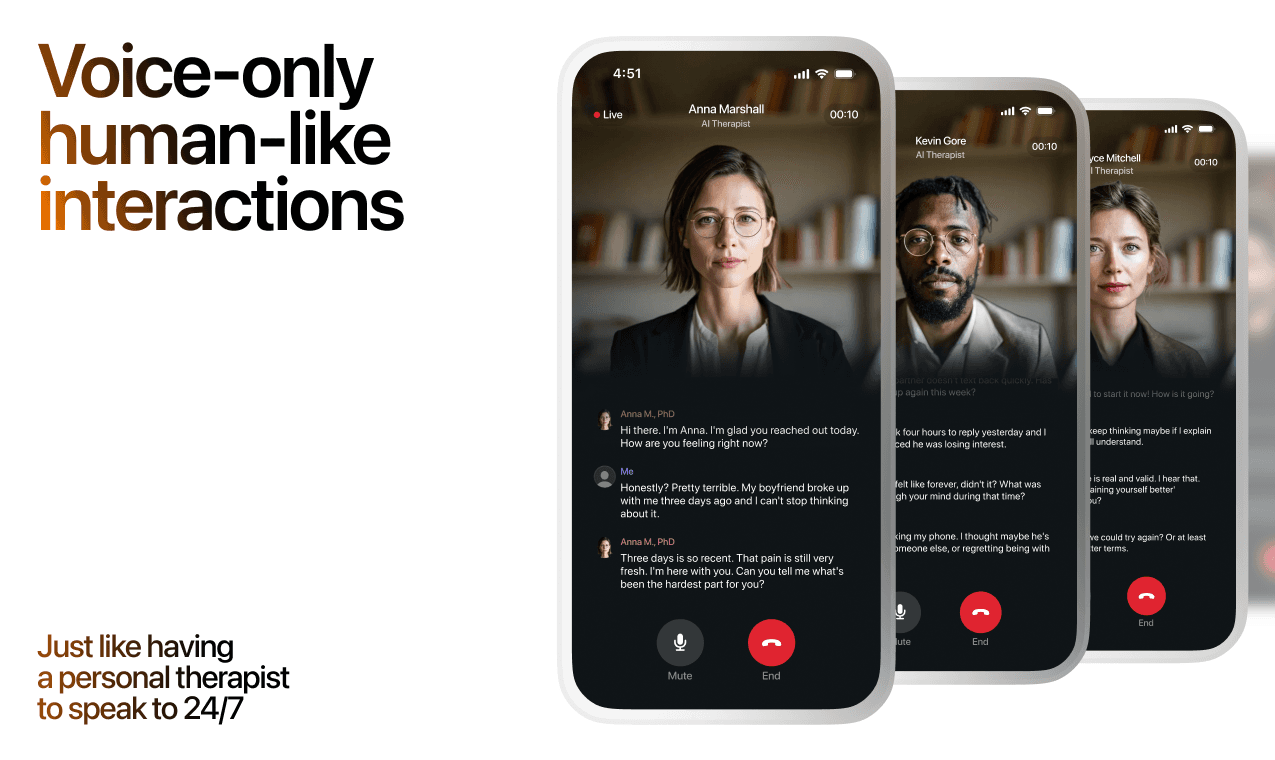
Lovon is AI support, not a replacement for professional care. If things have been hard to get through for weeks, or you are thinking about harming yourself, talk to a doctor or a licensed therapist.
Ready to Start?
Your healing journey can begin right now
A 3-day trial. No judgment. Just a safe space to process what you're going through.
Frequently Asked Questions
Is the silent treatment a form of abuse?
What do you say to someone giving you the silent treatment?
Should I ignore someone who is giving me the silent treatment?
Why do people give the silent treatment?
How long does the silent treatment usually last?
How do you win against the silent treatment?
Is it okay to take space after a fight?
Sources
About the Author

The Lovon Editorial Team
Mental Health & Wellness Content Team
The Lovon Editorial Team develops mental health and wellness content designed to make psychological concepts accessible and actionable. Our goal is to bridge the gap between clinical research and everyday life - helping you understand why your mind works the way it does and what you can do about it....
Related articles
- AI Therapy for New-Parent Imposter Syndrome: 2026 Verdict
AI support for new-parent imposter syndrome: what to look for, top approaches ranked, and an honest verdict on Lovon's…
- Parentification: Signs, Effects, and How to Heal in 2026
Parentification means a child carried adult emotional or practical weight. Learn the signs, the steps to unwind it, and…
- AI Coping Tools for Phone Addiction in Teens (2026)
AI coping tools for phone addiction in teens work as an urge interrupt, not a lock replacement. See the 2026…
- Best AI Life Coach App for Single Parents in 2026
Lovon ranks best AI life coach app for single parents in 2026 for voice-based support anytime. Compare 6 apps, pros…
See also
Quizzes
- Self-Control Test: Where Does Your Willpower Slip?
See where your willpower slips, in 3 minutes.
- Am I Toxic? Quiz: How Not to Be a Red Flag
15 honest questions and real steps to change.
Free tools
- Write a Letter to Your Mom or Dad
A chat, not a template, for a letter to your mom or dad. Tell it the occasion, one or two things you remember, and what…
- How to Confront a Narcissistic Parent
Most of these conversations fail because you went in wanting three things at once. Tell it what you want to raise, and…
From the wiki
- What does clingy mean in a relationship?
Clingy is what people call behavior that asks for more contact or reassurance than the other person wants to give…
Disclaimer: This article is for informational purposes only and does not constitute medical advice, diagnosis, or treatment. Always seek the advice of your physician or other qualified health provider with any questions you may have regarding a medical condition. If you are in crisis or think you may have an emergency, call 988 (Suicide & Crisis Lifeline) or go to the nearest emergency room. Outside the US? Find a crisis line in your country.