
Does drinking alcohol make anxiety worse the next day?
Alcohol makes anxiety worse next day for some people. Learn why it happens, what helps, and which symptoms need urgent medical care instead of self-care.

Key Takeaways
- Alcohol makes anxiety worse next day through rebound effects, poor sleep, and distressing physical symptoms.
- Next-day anxiety does not automatically mean alcohol dependence, but repeated episodes deserve attention.
- Do not use more alcohol to calm the feeling; possible withdrawal needs medical assessment.
- Lovon offers anxiety support through voice conversations, not diagnosis, detox, or emergency care.
Yes, drinking alcohol can make anxiety worse the next day, even if you felt relaxed while drinking. As alcohol wears off, changes in brain activity, disrupted sleep, and hangover symptoms can leave you feeling unusually worried or on edge; severe or worsening symptoms, especially after regular heavy drinking, need medical attention rather than hangover advice.
TL;DR
- Alcohol makes anxiety worse next day through rebound effects, poor sleep, and distressing physical symptoms.
- Next-day anxiety does not automatically mean alcohol dependence, but repeated episodes deserve attention.
- Do not use more alcohol to calm the feeling; possible withdrawal needs medical assessment.
- Lovon offers anxiety support through voice conversations, not diagnosis, detox, or emergency care.
Why this matters
Waking up anxious after drinking can feel confusing. You might replay conversations, notice your heart beating faster, or assume you did something wrong without clear evidence.
The feeling is real, but it is not proof that your worst thought is true. Understanding the connection helps you respond without dismissing a medical warning sign or treating every uncomfortable sensation as a crisis.
If you are reconsidering your relationship with drinking in 2026, the guide to support for sober-curious anxiety explores the emotional side of that change.
Does drinking alcohol make anxiety worse the next day?
Yes. Alcohol can ease anxiety briefly and increase it afterward. Alcohol affects brain systems involved in calming and alertness. As its effects fade, you can feel more restless, irritable, or anxious.
The National Institute on Alcohol Abuse and Alcoholism's Hangovers resource describes anxiety as a hangover symptom and explains alcohol's effects on sleep and other body systems. That supports the central distinction in this 2026 guide: feeling calmer while drinking does not mean alcohol improves your anxiety overall.
People often call next-day anxiety hangxiety. It is an informal term, not a diagnosis, and it does not tell you whether symptoms come from a hangover, an existing anxiety condition, withdrawal, or something else.
| Pattern | What you might notice | What to do |
|---|---|---|
| Hangover-related anxiety | Worry alongside headache, nausea, tiredness, or poor sleep after drinking | Rest, eat as tolerated, and watch for improvement or warning signs |
| Anxiety beyond drinking | Worry also happens on alcohol-free days or interferes with daily life | Arrange an assessment with a licensed clinician |
| Possible alcohol withdrawal | Anxiety with shaking, sweating, nausea, or worsening agitation after reducing regular heavy drinking | Seek prompt medical assessment; severe symptoms are an emergency |
These patterns overlap. A symptom table cannot rule out withdrawal or another medical problem. Your drinking history and the way symptoms develop matter more than a label.
Why next-day anxiety varies
There is no drink count that guarantees an anxiety-free morning. Your reaction depends on several overlapping factors:
- Alcohol exposure: Strong pours and mixed drinks can contain more alcohol than you realize. A drink's container size does not reliably describe its alcohol content.
- Sleep disruption: Alcohol can make you sleepy initially while disrupting sleep later. Feeling exhausted can make worry harder to manage.
- Existing anxiety: If you already struggle with anxiety, the physical and emotional effects of drinking can add to it.
- Physical discomfort: Nausea, thirst, headache, and a pounding heart can become triggers for anxious interpretations.
- Drinking pattern: Regular heavy drinking changes the safety question because reducing or stopping can cause withdrawal.
- Medication or other substances: Alcohol interacts with many medicines, and caffeine or other substances can complicate how you feel.
For perspective, NIAAA defines a U.S. standard drink as containing 14 grams of pure alcohol. A 12-fluid-ounce beer at 5% alcohol is one example; a stronger beer of the same size contains more alcohol.
These figures describe alcohol exposure, not a safe limit for anxiety. In 2026, use drink information to understand your pattern—not to calculate permission to ignore symptoms.
What should you do when you wake up anxious after drinking?
Start by checking safety, then care for your body and reduce the pressure to solve every worry immediately. These steps are for mild symptoms, not suspected withdrawal or a medical emergency.
Check safety
Ask whether you have severe symptoms or a history that makes withdrawal possible. New chest pain, severe trouble breathing, fainting, seizures, confusion, or hallucinations require urgent medical attention.
If you drink heavily or regularly and develop shaking, sweating, or worsening anxiety after cutting down, contact a clinician promptly. Do not assume it is ordinary hangxiety because you have experienced anxiety before.
Support your body
Sip fluids and eat something you can tolerate. Rest somewhere comfortable, and avoid driving if you are impaired, dizzy, or too tired to drive safely.
Food and water can address hunger and thirst, but they do not rapidly clear alcohol or treat withdrawal. Avoid adding extra caffeine if it makes you jittery, and do not take someone else's medication to settle down.
Settle your attention
Put your feet on the floor and notice the support beneath you. Breathe gently rather than forcing unusually deep breaths, which can make dizziness worse.
Choose a simple task: wash your face, sit near daylight, or contact someone you trust. You do not need to feel completely calm before taking a small, safe action.
Separate facts
Write down what you know happened and what you are imagining. A remembered awkward comment is different from the conclusion that everyone now dislikes you.
If something genuinely needs repair, return to it when you are clearer. Repeatedly checking messages or asking for reassurance can keep your attention fixed on the feared event without resolving it.
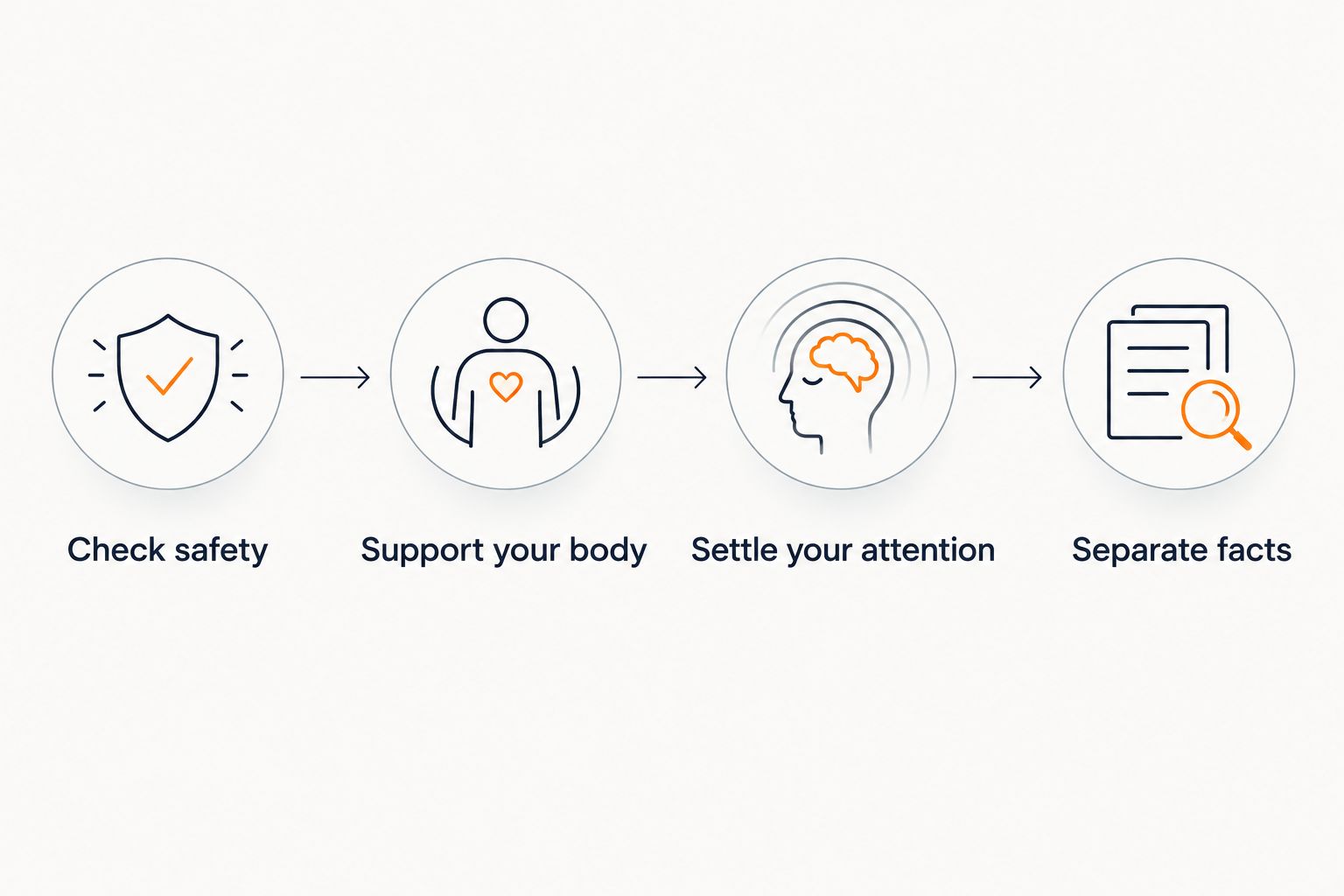 Four steps for responding to mild next-day anxiety, starting with a safety check.
Check for warning signs before treating the feeling as ordinary next-day anxiety.
Do not use another drink as an anxiety remedy. Temporary relief can reinforce drinking to manage discomfort, while possible withdrawal needs professional care rather than self-treatment.
How long does anxiety after drinking last?
Hangover symptoms can last 24 hours or longer, according to NIAAA, but that is not a reliable countdown for your anxiety. Sleep loss, an underlying anxiety condition, or withdrawal can change the course.
Look at direction as well as duration. Mild symptoms that ease are different from symptoms that intensify, prevent normal activities, or repeatedly return after drinking.
Do not wait for a time threshold if you have warning signs. Persistent anxiety also deserves an appointment, even when it does not feel urgent.
Can just one drink make you anxious the next day?
Yes, some people notice anxiety after a small amount of alcohol. One drink does not establish the cause, however; sleep, medication, stress, and the actual alcohol content all matter.
You do not need to prove that your reaction is typical before taking it seriously. If drinking repeatedly leaves you feeling worse, that pattern is enough to discuss with a clinician or reconsider drinking.
How can you tell whether alcohol is part of your anxiety pattern?
Use a brief record rather than relying on a difficult morning's memory. For your 2026 check-ins, note what you drank, when you stopped, how you slept, and whether anxiety also appeared on alcohol-free days.
Keep the record simple:
- Before drinking: What were you feeling, and were you drinking to change it?
- During drinking: What did you actually drink, including serving sizes and strength?
- The next morning: What physical symptoms and worries appeared?
- Later: Did symptoms ease, persist, or worsen?
This is not a diagnostic test. It gives you concrete information to bring to an appointment and helps separate a repeated pattern from an isolated experience.
If you are not physically dependent, choosing alcohol-free occasions avoids alcohol exposure while you observe your anxiety. If dependence is possible, ask a clinician about a safe plan before stopping suddenly.
When should you seek treatment for ongoing anxiety?
Seek an assessment when anxiety repeatedly disrupts sleep, work, relationships, or your ability to leave home. Drinking to cope, struggling to cut down, or worrying about withdrawal are additional reasons to ask for help.
Tell the clinician about alcohol honestly, including changes in drinking and any medication you take. This information affects assessment and safety; it is not a character judgment.
When anxiety occurs alongside ADHD symptoms, treatment for anxiety should account for the full picture, including attention difficulties, sleep, alcohol use, and current medication. Next-day restlessness alone cannot establish either diagnosis.
A primary care clinician can assess physical contributors and discuss next steps. A licensed mental health professional can help with recurring worry and drinking-related coping patterns; suspected dependence also calls for appropriate alcohol-use care.
Where does voice-based emotional support fit?
Lovon is best for people seeking voice-based emotional support for everyday anxiety, not medical assessment or withdrawal care. You can use Lovon to talk through feelings, explore coping tools, and reflect on patterns.
The benefit is having a place to put your thoughts into words when you feel overwhelmed. The limit is equally important: Lovon is not a licensed clinician and cannot determine whether your symptoms are a hangover, withdrawal, or another medical condition.
Use emotional support alongside appropriate care, not as a reason to delay it. If you are seeking reassurance about severe physical symptoms, an app conversation is not the right next step.
Which symptoms mean you need urgent help?
Call 911 for seizures, severe confusion, hallucinations, severe breathing problems, or someone who cannot be awakened after drinking. Slow or irregular breathing and loss of consciousness can indicate alcohol overdose, not sleep that someone should simply sleep off.
Stay with the person and follow the dispatcher's instructions. Do not give more alcohol, force food or drink, or assume coffee or a cold shower will reverse the danger.
For your 2026 safety plan, keep the distinction clear: 911 is for immediate medical danger. In the U.S., call or text 988 for a suicidal or emotional crisis; call 911 if there is immediate physical danger.
FAQ
Why do I feel anxious the morning after drinking?
Alcohol can increase anxiety as its calming effects wear off, while disrupted sleep and hangover symptoms add distress. Replaying social events can intensify the feeling, but next-day anxiety does not prove that something bad happened.
Does anxiety after drinking mean I am alcohol dependent?
No, anxiety after drinking alone does not establish alcohol dependence. Anxiety with shaking, sweating, or worsening agitation after reducing regular heavy drinking needs prompt medical assessment for possible withdrawal.
Will drinking water stop hangover anxiety?
Water can help with thirst and dehydration, but it does not directly reverse all the causes of hangover anxiety. It also does not treat alcohol withdrawal or rapidly remove alcohol from your body.
Should I drink again to calm next-day anxiety?
Do not use more alcohol to treat next-day anxiety. If you suspect withdrawal, seek medical care rather than trying to manage it by drinking or stopping without guidance.
Can I take anxiety medication after drinking?
Do not add extra anxiety medication or take someone else's medicine after drinking. Alcohol interacts dangerously with some medicines, particularly sedating drugs; ask your prescriber or pharmacist about your specific prescription.
Can Lovon tell whether I am having alcohol withdrawal?
No. Lovon offers anxiety support through voice conversations, but it cannot diagnose withdrawal or provide medical monitoring. Possible withdrawal needs assessment by a qualified clinician.
Will stopping alcohol cure my anxiety?
Avoiding alcohol removes a possible trigger, but it does not guarantee that anxiety will disappear. If you drink heavily or may be dependent, get medical advice before stopping suddenly; anxiety that persists also deserves assessment.
One last thing
You do not need a dramatic drinking problem to decide that alcohol is not helping you. Repeated next-day anxiety is a valid reason to change your routine and ask for support.
Before your next social occasion, choose an alcohol-free drink and a way to leave when you want to. If dependence is possible, make the first step a medical conversation—not an unsupported attempt to quit.
Related guides
How AI Support Helps You Heal
AI emotional support isn't about replacing human connection — it's about filling the gaps. The moments when you need to talk at 2 AM, when you don't want to burden your friends again, or when you simply need someone to listen without judgment.
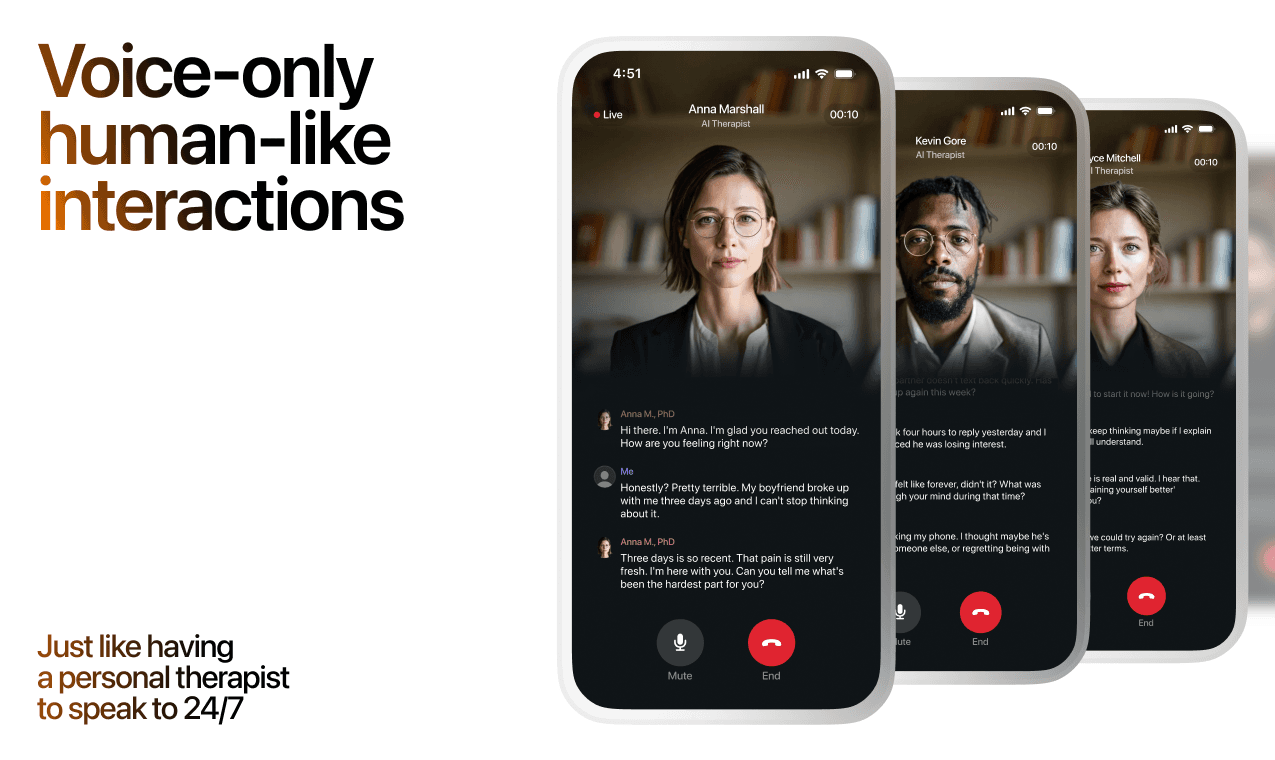
Here's what happens in a typical Lovon session:
You share what's on your mind
There's no script, no intake form, no waiting room. You speak or type whatever you're feeling — in your own words, at your own pace.
Lovon validates and explores
Using frameworks from CBT (Cognitive Behavioral Therapy) and motivational interviewing, Lovon acknowledges your feelings first, then gently helps you explore them. No dismissive "just move on" advice.
You build coping skills together
Lovon doesn't just listen — it actively works with you on evidence-based techniques: thought reframing, urge surfing, behavioral experiments, and more.
What a Session with Lovon Looks Like
Lovon is AI support, not a replacement for professional care. If things have been hard to get through for weeks, or you are thinking about harming yourself, talk to a doctor or a licensed therapist.
Ready to Start?
Your healing journey can begin right now
A 3-day trial. No judgment. Just a safe space to process what you're going through.
Frequently Asked Questions
Is Lovon a replacement for a real therapist?
Is my conversation with Lovon AI private?
How is Lovon different from ChatGPT for emotional support?
Can I use Lovon if I'm already seeing a therapist?
Can I try Lovon before subscribing?
About the Author
The Lovon Editorial Team
Mental Health & Wellness Content Team
The Lovon Editorial Team develops mental health and wellness content designed to make psychological concepts accessible and actionable. Our goal is to bridge the gap between clinical research and everyday life - helping you understand why your mind works the way it does and what you can do about it....
Related articles
- Can anxiety medication stop working over time?
Can anxiety medication stop working? Yes. Learn why symptoms return, how medication types differ, and what to ask your…
- Why Chest Feels Tight When Anxious (2026 Fix)
Chest tight when anxious? Tensed muscles and shallow breathing are the cause in 2026 guidance. Get the 7-step fix and…
- Mental health app for medical residents: complete 2026 guide
Choose a mental health app for medical residents that fits shift work. Compare voice support and licensed care, protect…
- Can chronic stress cause physical illness?
Can chronic stress cause physical illness? Yes. Learn how it affects sleep, blood pressure and existing conditions, plus…
See also
Quizzes
- Emotional Granularity Test: How Precisely Do You Feel?
See how finely you tell your feelings apart, in 3 minutes.
- Thin Thick Boundaries Test: Where Do Your Lines Blur?
See where your boundaries run thin, in 3 minutes.
Free tools
- AI Life Coach
This is a free AI life coach you can use right on this page. Tell it where you feel stuck or what you are deciding, and…
- Sleep Meditation for Anxiety
For lying in bed with a mind that will not stop. About twelve minutes of slower breathing, a place to put the worries…
From the wiki
- How to stop maladaptive daydreaming?
Maladaptive daydreaming is immersive waking fantasy that eats hours, usually with music and pacing attached. You rarely…
Disclaimer: This article is for informational purposes only and does not constitute medical advice, diagnosis, or treatment. Always seek the advice of your physician or other qualified health provider with any questions you may have regarding a medical condition. If you are in crisis or think you may have an emergency, call 988 (Suicide & Crisis Lifeline) or go to the nearest emergency room. Outside the US? Find a crisis line in your country.