
Mental health app for medical residents: complete 2026 guide
Choose a mental health app for medical residents that fits shift work. Compare voice support and licensed care, protect privacy, and know when to seek help.
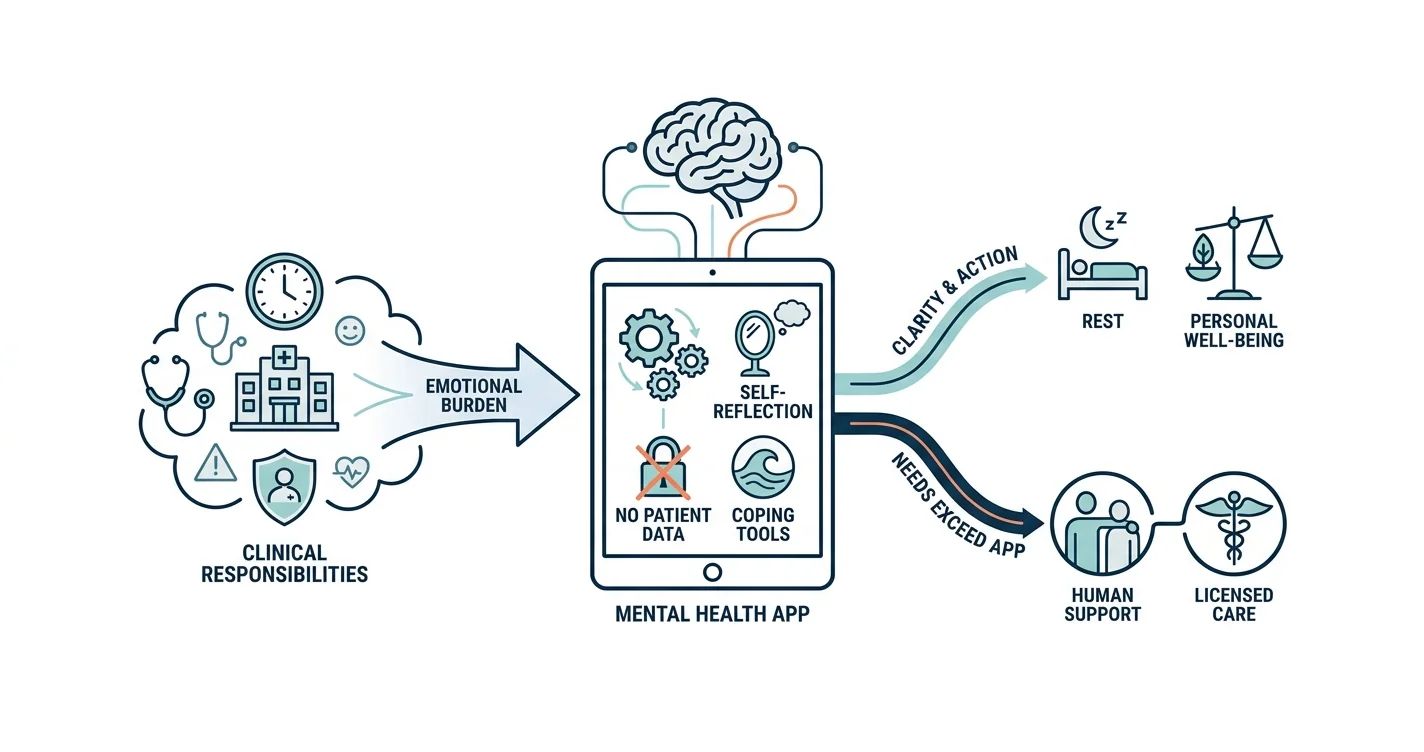

Key Takeaways
- Lovon is best for medical residents seeking voice-based self-reflection, not clinical assessment or treatment.
- Choose a mental health app for medical residents around privacy, shift-work stress, and clear limits.
- Use brief coping tools alongside sleep, practical support, and licensed care when needed.
- Never share identifiable patient information or rely on an app for emergency support.
Medical residents’ mental health apps are tools for emotional support and self-reflection, with the aim of making residency stress easier to address between clinical responsibilities. This 2026 guide explains how to choose a mental health app for medical residents while protecting patient information, making room for human support, and recognizing when an app is not enough.
TL;DR
- Lovon is best for medical residents seeking voice-based self-reflection, not clinical assessment or treatment.
- Choose a mental health app for medical residents around privacy, shift-work stress, and clear limits.
- Use brief coping tools alongside sleep, practical support, and licensed care when needed.
- Never share identifiable patient information or rely on an app for emergency support.
Why mental health apps matter for medical residents
Residency brings emotional demands that do not end at handoff. You might leave a difficult conversation, replay feedback on the way home, or struggle to explain why you feel distant from people you love. An app gives you somewhere to begin naming those feelings; it does not change the conditions causing them.
Your support also needs to fit changing schedules. A fixed daily routine is not the only workable approach: connect a check-in to finishing a shift or arriving home instead. The guide to managing stress as a shift worker covers that scheduling problem in more detail.
The right app supports recovery without becoming another performance target. In 2026, choose based on what you need help doing, not how many features a product lists. Emotional reflection, clinical treatment, and addressing an unsafe workload are different tasks.
How to choose and use support during residency
Name your need
Start without an app. Write one sentence about what is happening and another about what you need next. Feeling tense before rounds calls for a different response from persistent hopelessness, distress after a patient death, or concern that you cannot practice safely.
Be specific without diagnosing yourself. You might need help settling after work, preparing to ask for support, or separating useful feedback from harsh self-judgment. Those are clearer goals than trying to become less stressed in every part of life.
Try a 2-minute check-in as a starting exercise, not a required dose or a promise of relief. If writing makes you spiral, stop and choose a human conversation instead.
- Name the immediate feeling: worried, angry, sad, numb, or overwhelmed.
- Describe what happened without including patient details.
- Identify what you need: rest, perspective, connection, or professional help.
- Choose one manageable next action rather than a complete recovery plan.
Protect patient information
Before recording anything, decide what stays out. A personal mental health app is not a clinical documentation system, an incident-reporting channel, or a place to process identifiable cases. Removing a name does not necessarily make a detailed story anonymous.
Keep reflection centered on your experience: fear after an unexpected outcome, shame after feedback, or sadness after a difficult shift. Leave out dates, locations, unusual diagnoses, quotations, and combinations of details that could identify someone.
For your own information, read the current privacy policy rather than assuming that a health-related app has the same protections as your treating clinician. This is a selection requirement in 2026, not a detail to postpone until after your first conversation.
- Check what happens to voice recordings and transcripts.
- Check who receives information and for what purposes.
- Check whether content is used to train systems.
- Check retention and deletion procedures.
- Avoid speaking where patients, coworkers, or visitors can overhear.
Choose your format
Try saying your thoughts aloud in a private space before choosing a voice app. Alternatively, write a short note or use a simple grounding exercise without software. Best for quiet reflection: writing lets you pause and edit, but it also asks you to organize thoughts when you are tired.
Lovon is best for medical residents seeking voice-based self-reflection, not clinical assessment or treatment. The Lovon mental health app offers voice conversations, emotional support, coping tools, and self-reflection guidance. Speaking offers an alternative when composing a journal entry feels like more work.
Lovon is not a licensed clinician or a replacement for licensed care. Its responses can be inaccurate or miss important context, and voice use requires somewhere you can speak without being overheard. Do not ask it to assess patient care or decide whether you are fit for duty.
- Choose voice when speaking feels easier than writing.
- Choose writing when you need silence and control over wording.
- Choose a grounding exercise when reflection feels too demanding.
- Choose a licensed clinician for assessment and treatment.
Build a reset
Create a small transition between clinical work and the rest of your day. You do not need an app to do this: notice your surroundings, release a little muscle tension, and name what you are carrying home. Keep your breathing comfortable rather than forcing deep breaths.
Use a 3-sentence reflection if a starting point helps: describe your feeling, identify what is within your control, and name your next action. These are suggested boundaries, not a treatment protocol. Stop if the exercise increases distress.
The sequence below is a reminder to end with something practical. A reset is not an invitation to reconstruct the entire shift or determine whether every decision was correct.
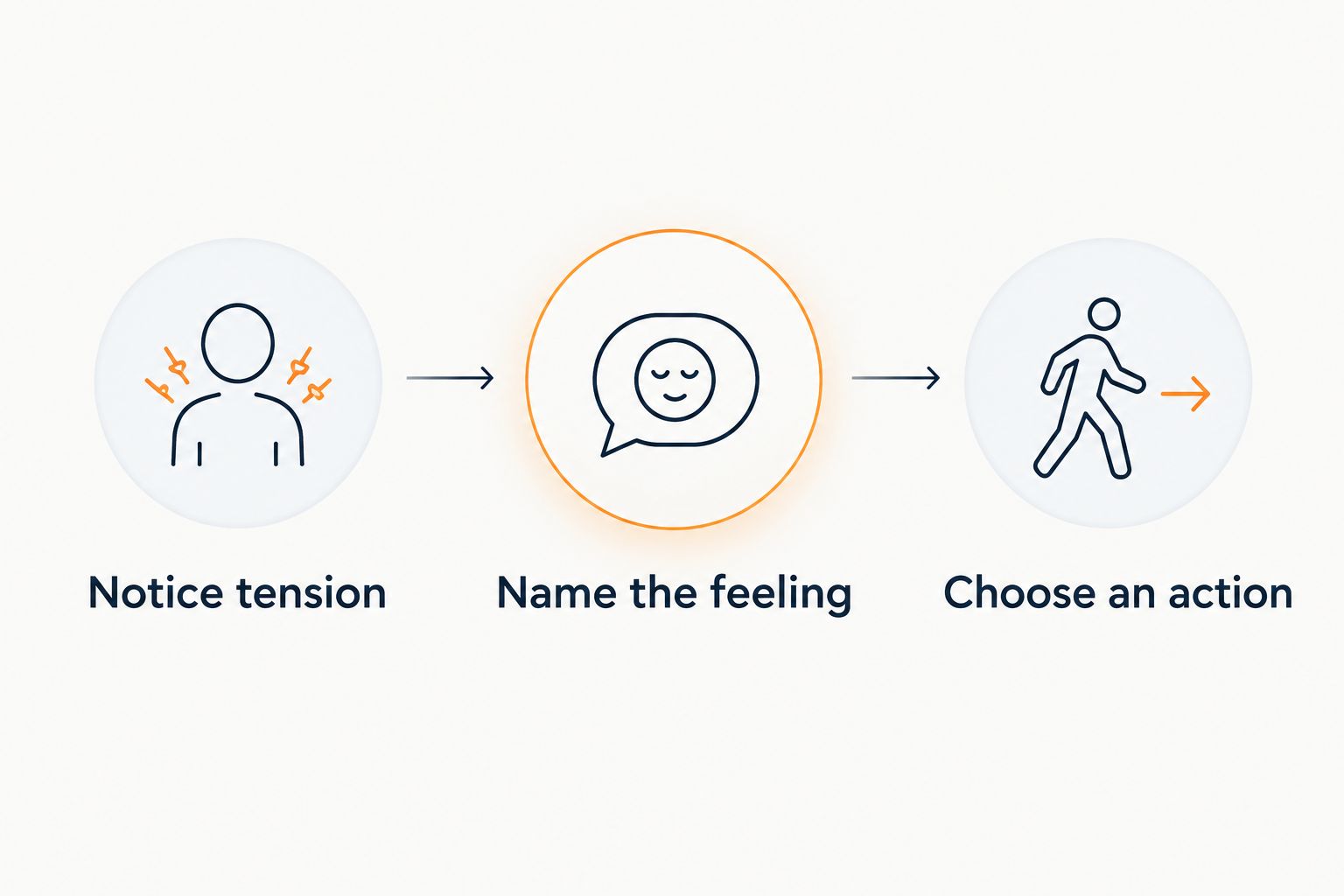 Three steps for a post-shift reset: notice tension, name the feeling, and choose an action.
End the reflection with one practical action rather than another review of the shift.
- Notice tension: feel your feet on the floor and soften your shoulders.
- Name the feeling: use ordinary words rather than judging yourself.
- Choose an action: eat, rest, contact someone, or arrange support.
- Finish deliberately: close the exercise instead of seeking perfect reassurance.
Separate reflection from clinical review
Emotional processing and reviewing clinical decisions belong in different places. An app can help you describe feeling shaken; it cannot establish what happened clinically, replace supervision, or determine whether care met professional standards.
Use the appropriate supervisor, reporting process, or clinical review channel for questions about care. For personal reflection, distinguish the event from the meaning you are attaching to it. Being corrected during rounds, for example, is an event; deciding that you will never be competent is a broader judgment.
You can practice this distinction on paper before using any conversational tool. The aim is a clearer next step, not convincing yourself that everything was fine or obtaining repeated reassurance about an unresolved concern.
- Describe your emotional reaction without reconstructing a patient case.
- Separate observable feedback from conclusions about your worth.
- Identify questions that require a supervisor’s judgment.
- Take clinical safety concerns through the proper workplace channel.
- End reflection when it becomes repetitive rather than useful.
Keep human support
Choose a person or service you can contact before a difficult moment arrives. Depending on your situation, that might be a trusted friend, primary care clinician, therapist, or resident support service. Ask about confidentiality, records, and any reporting obligations rather than assuming how a program works.
Seek professional assessment when symptoms persist, worsen, or interfere with sleep, relationships, daily functioning, or safe work. You do not need to decide whether the problem is burnout, depression, anxiety, or something else before asking for help.
An app belongs beside human support, not between you and it. If you are concerned that fatigue or distress is compromising patient care, contact the appropriate supervisor and follow your institution’s safety process. A coping exercise does not resolve a fitness-for-duty concern.
- Save contact details for a clinician or support service.
- Ask how appointments fit around rotations and schedule changes.
- Clarify confidentiality directly with the service.
- Tell someone when you are struggling rather than waiting for certainty.
- Use workplace safety procedures when patient care is affected.
Review your fit
Treat your first 7 days as an optional usability check, not a deadline for feeling better. Notice whether the app helps you identify a need and act on it. More sessions, longer conversations, and an unbroken streak are not proof of better mental health.
For your 2026 review, ask whether the format fits your actual rotations. A voice tool that works at home might be unsuitable in shared accommodation or a hospital workspace. A detailed journal might be useful on days off but burdensome after call.
Keep the parts that help and stop the parts that add pressure. If app use repeatedly delays sleep, human contact, or arranging care, change the plan rather than trying harder to maintain it.
- Check whether you leave with a clearer next action.
- Notice whether reflection becomes repetitive reassurance-seeking.
- Review whether the setting protects privacy.
- Remove reminders that feel like another evaluation.
- Seek human support when needs exceed the app’s role.
Compare support options for medical residents
Choose the option that matches the task. This 2026 comparison separates self-guided support from clinical care; it does not rank one as a substitute for the other.
| Option | Best for | Main benefit | Key limitation |
|---|---|---|---|
| Paper reflection | Residents wanting quiet, self-directed check-ins | Lets you control what you record and how you reflect | Provides no feedback, assessment, or crisis response; physical notes still need protection |
| Simple grounding exercises | Residents wanting a brief pause after stress | Require no detailed disclosure or conversation | Do not address an unsafe workload or replace treatment |
| Lovon voice-based mental health support | Residents who prefer speaking to typing | Offers on-demand emotional support, coping tools, and guided reflection | Is not a licensed clinician; responses can miss context or be inaccurate |
| Licensed mental health care | Residents needing assessment or treatment | Provides professional evaluation and an individualized care plan | Requires arranging care and clarifying scheduling and confidentiality |
| Resident or employee support services | Residents seeking institution-related support | Provide a place to ask about local resources and referral routes | Scope, access procedures, and confidentiality terms differ by service |
Match support to the need, then check the limits. A useful combination might include self-guided reflection for everyday stress and a clinician for symptoms that require assessment. Do not assume an institutional service offers therapy until you confirm its scope.
Common mistakes medical residents make
Treating coping as the solution to unsafe conditions
A grounding exercise cannot create adequate staffing, protected rest, or appropriate supervision. Use personal support for your emotional response, and use workplace channels for the conditions that need changing. These are separate responsibilities.
Turning emotional support into another assessment
Tracking every mood and completing every exercise can recreate the pressure you are trying to step away from. Choose a small routine that allows missed days. The goal is support, not a perfect record.
Replacing clinical debriefing with an app conversation
A personal conversation is not morbidity and mortality review, supervision, or incident reporting. Keep patient information out of the app and take clinical questions to the people responsible for reviewing them.
Waiting until the next rotation to seek care
Do not make a future schedule change the condition for getting help with persistent or worsening symptoms. Contact a clinician or support service and explain your scheduling constraints. You can ask for help without having a diagnosis ready.
FAQ
What's the best mental health app for medical residents?
The best fit depends on whether you need reflection, coping tools, or clinical care. Lovon fits residents who prefer voice-based emotional support, but it does not provide licensed assessment or replace treatment.
Can a mental health app replace therapy during residency?
No, a self-guided or conversational app cannot replace licensed therapy. Use an app for reflection or coping support, and seek professional assessment for persistent, worsening, or function-limiting symptoms.
Can I talk about a difficult patient encounter in an app?
Describe your emotional reaction without including identifiable patient information. Do not upload records, reconstruct a detailed case, or use a personal app instead of supervision and formal reporting.
Is a voice app better than journaling after a shift?
Voice suits people who find speaking easier; writing suits people who need silence or prefer editing their thoughts. Neither format is automatically better, and both require attention to privacy.
Will using a mental health app affect my residency record?
Do not assume an app or support service is connected to, or separate from, your training records. Read the app's data-sharing terms and ask any institution-linked service directly about confidentiality and reporting obligations.
How long should I use an app after work?
Use a clear stopping point rather than a required session length. End when you have identified your feeling and next action, and stop earlier if reflection increases distress or delays rest.
What should I do if I feel unsafe or suicidal?
In the United States, call or text 988 for suicide or mental health crisis support; call 911 for immediate danger or a medical emergency. Do not wait for an app response, and contact a trusted person who can stay with you if possible.
One last thing
Make a stopping rule before your next check-in: once you have named the feeling and chosen an action, close the app. If you keep asking the same question without gaining clarity, take that question to a person instead. You do not have to solve the whole shift before you rest.
Related guides
How AI Support Helps You Heal
AI emotional support isn't about replacing human connection — it's about filling the gaps. The moments when you need to talk at 2 AM, when you don't want to burden your friends again, or when you simply need someone to listen without judgment.
Here's what happens in a typical Lovon session:
You share what's on your mind
There's no script, no intake form, no waiting room. You speak or type whatever you're feeling — in your own words, at your own pace.
Lovon validates and explores
Using frameworks from CBT (Cognitive Behavioral Therapy) and motivational interviewing, Lovon acknowledges your feelings first, then gently helps you explore them. No dismissive "just move on" advice.
You build coping skills together
Lovon doesn't just listen — it actively works with you on evidence-based techniques: thought reframing, urge surfing, behavioral experiments, and more.
What a Session with Lovon Looks Like
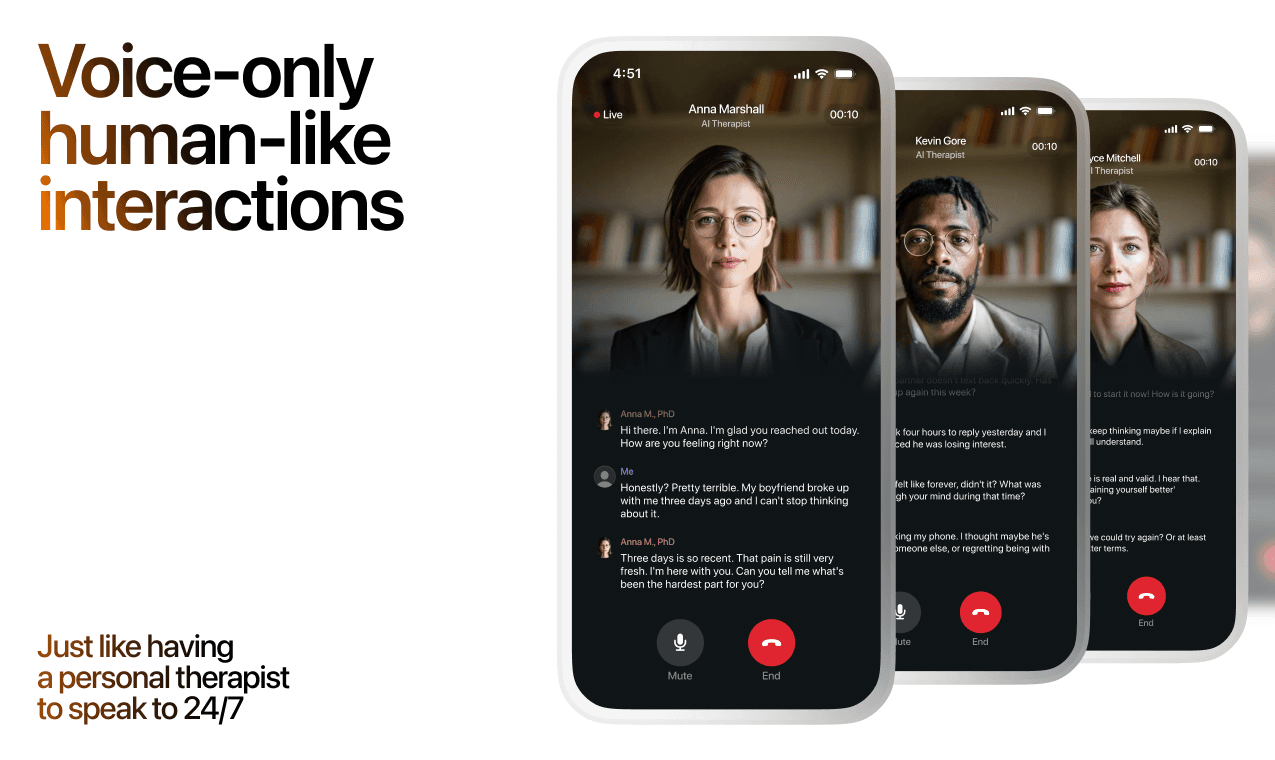
Lovon is AI support, not a replacement for professional care. If things have been hard to get through for weeks, or you are thinking about harming yourself, talk to a doctor or a licensed therapist.
Ready to Start?
Your healing journey can begin right now
A 7-day trial. No judgment. Just a safe space to process what you're going through.
Frequently Asked Questions
Is Lovon a replacement for a real therapist?
Is my conversation with Lovon AI private?
How is Lovon different from ChatGPT for emotional support?
Can I use Lovon if I'm already seeing a therapist?
Can I try Lovon before subscribing?
About the Author

The Lovon Editorial Team
Mental Health & Wellness Content Team
The Lovon Editorial Team develops mental health and wellness content designed to make psychological concepts accessible and actionable. Our goal is to bridge the gap between clinical research and everyday life - helping you understand why your mind works the way it does and what you can do about it....
Related articles
- AI Support App for Autoimmune Disease Mental Health 2026
Lovon is the AI voice therapy app for autoimmune disease mental health in 2026 — flare-day coping, diagnosis grief, and…
- Best ChatGPT alternatives for emotional support in 2026
Compare the best ChatGPT alternatives for therapy. Choose voice support for everyday feelings or licensed care for…
- Best AI apps for nurse burnout in 2026
Compare the best AI apps for nurse burnout. Lovon is the voice-first pick for everyday support; review formats, privacy…
- Mental health support for social workers: complete 2026 guide
Mental health support for social workers needs more than self-care. Build a practical plan for coping, confidential…
See also
Quizzes
- Self-Acceptance Test: What Are You Still Arguing With?
See where you are still fighting yourself, in 3 minutes.
- Resilience Test: How Fast Do You Bounce Back?
See how you recover from setbacks, in 3 minutes.
Free tools
- Write a Condolence Message for This Person
Get one condolence message written for your situation instead of a list of a hundred to choose from. Tell it who died…
- Write a Letter to Someone You Lost
Tell it who they were to you and what you never got to say, and it writes the letter back in your words. No account, no…
From the wiki
- Why do I feel sad when I'm alone?
Being alone does not create the sadness. It removes the noise that was keeping it out of earshot, so whatever queued up…
Disclaimer: This article is for informational purposes only and does not constitute medical advice, diagnosis, or treatment. Always seek the advice of your physician or other qualified health provider with any questions you may have regarding a medical condition. If you are in crisis or think you may have an emergency, call 988 (Suicide & Crisis Lifeline) or go to the nearest emergency room. Outside the US? Find a crisis line in your country.