
Can grief resurface years after a loss without warning?
Can grief resurface years later? Yes. Learn why grief returns, how to cope with sudden waves, and when to seek support from a mental health professional.

Key Takeaways
- Can grief resurface years later? Yes. Bereavement can bring renewed sadness long after a loss.
- A grief wave does not mean you are starting over or grieving incorrectly.
- Notice what you need now rather than forcing yourself to identify a trigger.
- Lovon offers emotional support through voice conversations, not licensed grief treatment or crisis care.
Yes, grief can resurface years after a loss, sometimes without an obvious warning or trigger. A sudden wave of sadness, longing, anger, or tears does not mean you have lost your progress, but ongoing distress that disrupts daily life deserves professional support.
TL;DR
- Can grief resurface years later? Yes. Bereavement can bring renewed sadness long after a loss.
- A grief wave does not mean you are starting over or grieving incorrectly.
- Notice what you need now rather than forcing yourself to identify a trigger.
- Lovon offers emotional support through voice conversations, not licensed grief treatment or crisis care.
Can grief resurface years after a loss without warning?
Yes. Grief does not follow a fixed schedule, and a quieter period does not prevent painful feelings from returning. You can feel settled in your life and still suddenly miss someone intensely. Both experiences can be true.
A reminder is sometimes obvious: a birthday, a familiar song, or a photograph. Other times, you notice the feeling before you recognize any connection. You do not need to discover a hidden cause for your sadness to be real.
Grief also does not require completing emotional stages in order. Our guide to grief stages and how long they last explains why those labels are not a timetable you must follow.
Renewed grief can include:
- Longing to speak with the person who died.
- Tears during an otherwise ordinary activity.
- Anger about what the person is missing.
- Sadness mixed with gratitude or happy memories.
- A temporary wish to step back from social plans.
These experiences alone do not establish a mental health diagnosis. Their persistence, intensity, and effect on your life matter more than the fact that they happened years later.
Why this matters
If grief returns in 2026 after a long quiet stretch, you might judge the feeling more harshly than you did soon after the loss. You might think you should be finished grieving because you have returned to work, formed new relationships, or felt happy again.
That expectation adds pressure. Feeling grief again is not evidence that the life you have rebuilt is false or fragile. You do not have to choose between remembering someone and participating in the present.
The more useful question is not whether you should still feel this way. It is whether you need comfort, practical help, company, or clinical care right now.
Why grief returns at different times
There is no single explanation for every grief wave. These situations can bring a loss back into focus, even when you were not deliberately thinking about it:
- Sensory reminders. A smell, voice, place, or piece of music can bring back memories associated with the person.
- Anniversaries and traditions. Birthdays, holidays, and familiar seasonal routines can make an absence more noticeable.
- Life milestones. Becoming a parent, graduating, retiring, or celebrating a marriage can highlight who is not there.
- Another loss. A new death or separation can bring earlier losses back to mind.
- Changes in support. Moving away or losing contact with people who knew the person can leave you missing shared remembrance.
- Everyday stress. When life feels difficult, you might especially miss the comfort or advice that person once offered.
Treat these as possibilities to notice, not a checklist you must solve. Searching repeatedly for an explanation can become another demand on an already painful day.
What if I cannot find a trigger?
You can respond to grief without identifying its cause. Notice the emotion, check what you need, and decide whether you want company or quiet. An explanation is optional; care is not.
Does this mean I never processed the loss?
A returning grief wave does not prove that you avoided the loss or failed to process it. You can understand that someone has died and still feel their absence deeply. If you want to explore unresolved questions, a grief-informed therapist can help without treating every painful memory as a problem.
What can I do when grief hits suddenly in 2026?
You do not need to settle the whole loss in the moment. Start with the immediate situation and choose a manageable response. The following steps are options, not a test you need to complete.
- Name the feeling. Try acknowledging that you are missing someone or feeling a wave of grief. Naming it can help you describe what is happening without adding a judgment about what it means.
- Find your footing. Notice your feet against the floor and look around the room. If you are driving or doing something that needs close attention, stop somewhere safe before turning toward the emotion.
- Ease the demand. Postpone a nonessential task, step outside a busy room, or let someone know you need a pause. You do not have to explain your full history to ask for space.
- Choose support. Contact someone who can listen, write privately, or make room for a memory. Choose what feels manageable rather than forcing a particular coping exercise.
- Check your needs. Ask whether you have eaten, need rest, or want help with an immediate responsibility. Meeting ordinary needs does not diminish the importance of the loss.
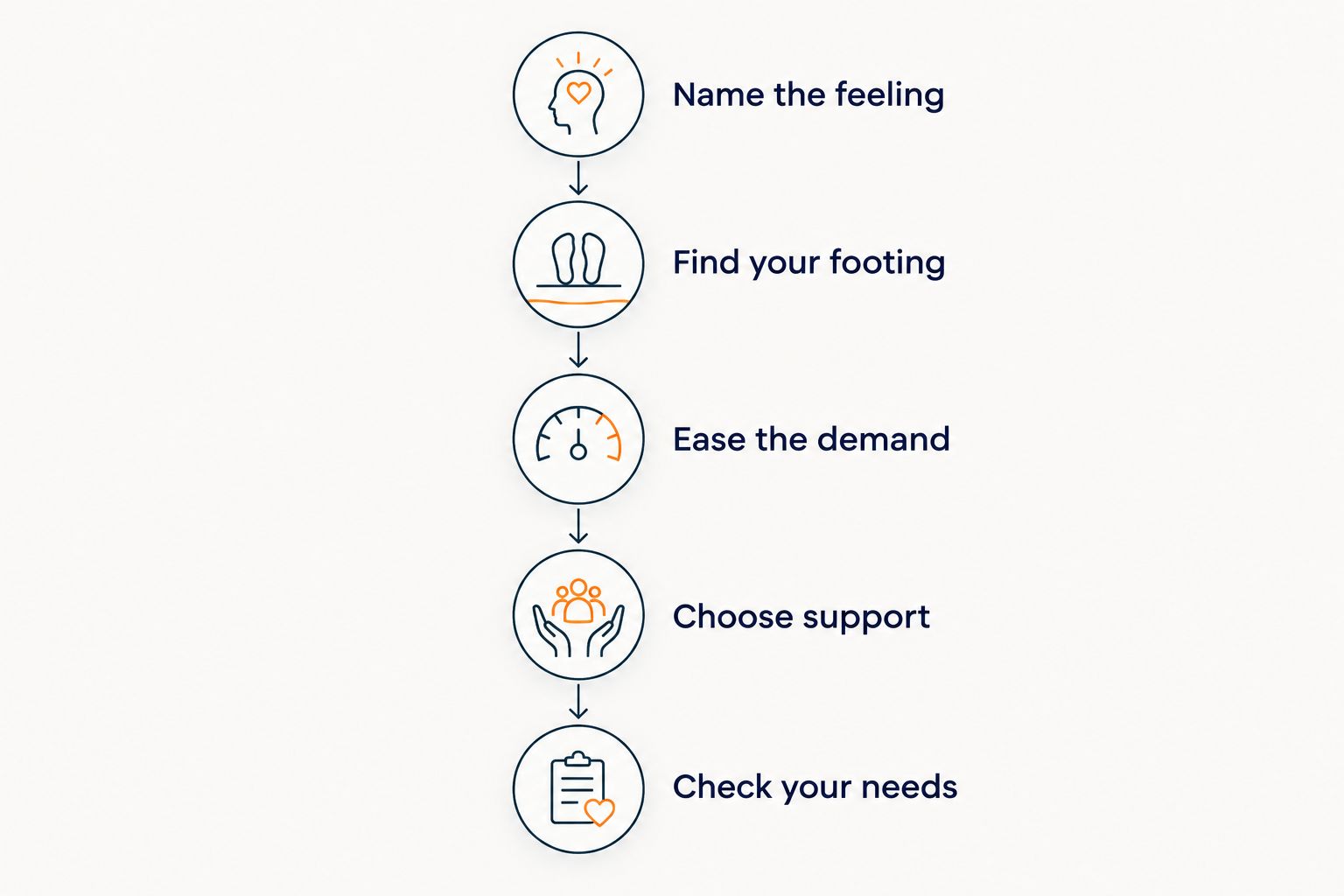 Five steps for responding to a sudden wave of grief
Respond to the moment before trying to explain the whole loss.
You can stop after any step. If focusing inward makes you feel more distressed, shift toward your surroundings or contact someone you trust instead. Coping does not require making yourself stay with an overwhelming feeling.
Make a small plan for difficult dates
For the rest of 2026, mark dates you already know are emotionally significant. Leave room to change your plans; an anniversary does not obligate you to visit a grave, attend a gathering, or share memories publicly.
Decide whom you could contact and what responsibilities you could simplify. You might also choose a private way to remember the person, such as preparing a familiar meal or writing down something you wish you could tell them.
Plan for support, not for a perfect emotional outcome. A meaningful day can still be painful, and a quiet day does not mean you cared less.
What kind of support fits a returning grief wave?
The right support depends on what you need, not on how long ago the death happened. Everyday companionship and clinical treatment serve different purposes. Neither requires you to defend why the loss still matters.
| Support option | Best for | What it offers | Limitation |
|---|---|---|---|
| Trusted person | Company and shared remembrance | Listening, familiar memories, and practical help | Not a substitute for assessment or treatment |
| Bereavement group | Connection with others experiencing loss | A place to discuss grief with peers | Group format and experiences will not suit everyone |
| Licensed therapist | Persistent distress or difficulty functioning | Clinical assessment and individualized treatment | Finding a suitable clinician takes effort |
| Lovon | On-demand voice-based emotional support | Conversation, coping tools, and self-reflection guidance | Not a licensed clinician, grief treatment, or crisis service |
Lovon is best suited to people seeking voice-based emotional support, not clinical grief treatment. You can use a conversation to describe what you are feeling or reflect on what support to seek next. That does not establish that the app treats bereavement or replaces a therapist.
If you use Lovon for emotional support, keep human support in the picture. Persistent distress, safety concerns, or difficulty managing daily responsibilities need attention beyond an app.
When should I seek professional help for returning grief?
Seek help when grief is making daily life difficult, feels unmanageable, or raises concerns about your safety. You do not need to wait until symptoms meet a diagnostic threshold. Support is appropriate before a situation becomes a crisis.
Reasons to contact a licensed mental health professional include:
- Regularly missing work or being unable to manage essential responsibilities.
- Ongoing difficulty eating, sleeping, or caring for yourself.
- Increasing reliance on alcohol or other substances to cope.
- Persistent hopelessness, severe guilt, or withdrawal from others.
- Distressing memories or avoidance that substantially restrict your life.
If you are seeking care in 2026, tell the clinician both when the loss happened and what has changed recently. Describe the effect on your day rather than trying to arrive with the correct diagnosis.
Is returning grief the same as prolonged grief disorder?
No. An occasional return of grief is not the same as prolonged grief disorder. Under the American Psychiatric Association's DSM-5-TR criteria, the death must have occurred at least 12 months earlier for adults or 6 months earlier for children and adolescents, alongside other required symptoms and significant impairment beyond expected cultural, social, or religious norms.
Those time thresholds are not deadlines for recovery. A clinician evaluates the full pattern; the number of months since the death cannot establish the diagnosis by itself.
Could it be depression rather than grief?
Grief and depression can overlap, and a person can experience both. A major depressive episode involves symptoms lasting at least 2 weeks, including depressed mood or loss of interest, with other required symptoms and meaningful distress or impairment.
Do not use that threshold to diagnose yourself or delay asking for help. Persistent hopelessness, loss of interest across your life, or difficulty functioning deserves an assessment, whether or not the feelings began with a bereavement.
What if I am thinking about harming myself?
Get immediate human support. In the United States, call or text 988 for the Suicide & Crisis Lifeline; call 911 if you are in immediate danger or need emergency medical help.
If possible, stay with someone you trust while getting help. Do not rely on an app to assess your safety or manage a crisis.
FAQ
Can grief resurface years later even if I felt fine before?
Yes, grief can resurface years later even after a period of feeling settled. Renewed sadness does not erase your progress or mean that your happier experiences were not real.
Why am I suddenly crying about someone who died a long time ago?
A reminder, milestone, or renewed sense of absence can bring tears long after a death. Sometimes there is no obvious trigger, and you do not need to identify one before seeking comfort.
Does grief coming back mean I am starting over?
No, a returning grief wave does not mean you are starting over. You still carry the experience, relationships, and coping skills you developed since the loss.
How long should a sudden wave of grief last?
There is no fixed duration that every grief wave should follow. Pay attention to whether distress settles, keeps returning, or interferes with daily life, and seek help when you need it.
Should I make myself look at photos when I miss someone?
You do not have to look at photos to cope correctly. Choose remembrance that feels manageable, and pause or seek company if it becomes overwhelming.
Can Lovon replace a grief counselor?
No, Lovon is not a licensed clinician and does not replace grief counseling. It offers voice-based emotional support, coping tools, and self-reflection guidance rather than clinical assessment or crisis care.
What should I tell a therapist if grief returns in 2026?
Tell the therapist when the loss happened, what you are experiencing now, and how it affects your daily life. Mention changes in sleep, appetite, relationships, substance use, or safety without worrying about choosing a diagnosis.
One last thing
You do not have to turn every memory into a coping task. Sometimes remembering someone means letting a song play, saying their name, or briefly wishing they were here. Not every moment of sadness needs analysis.
A useful goal for 2026 is to make room for both remembrance and present-day living. When grief returns, ask what would make this moment more bearable—not what would prove you have finally moved on.
Related guides
How AI Support Helps You Heal
AI emotional support isn't about replacing human connection — it's about filling the gaps. The moments when you need to talk at 2 AM, when you don't want to burden your friends again, or when you simply need someone to listen without judgment.
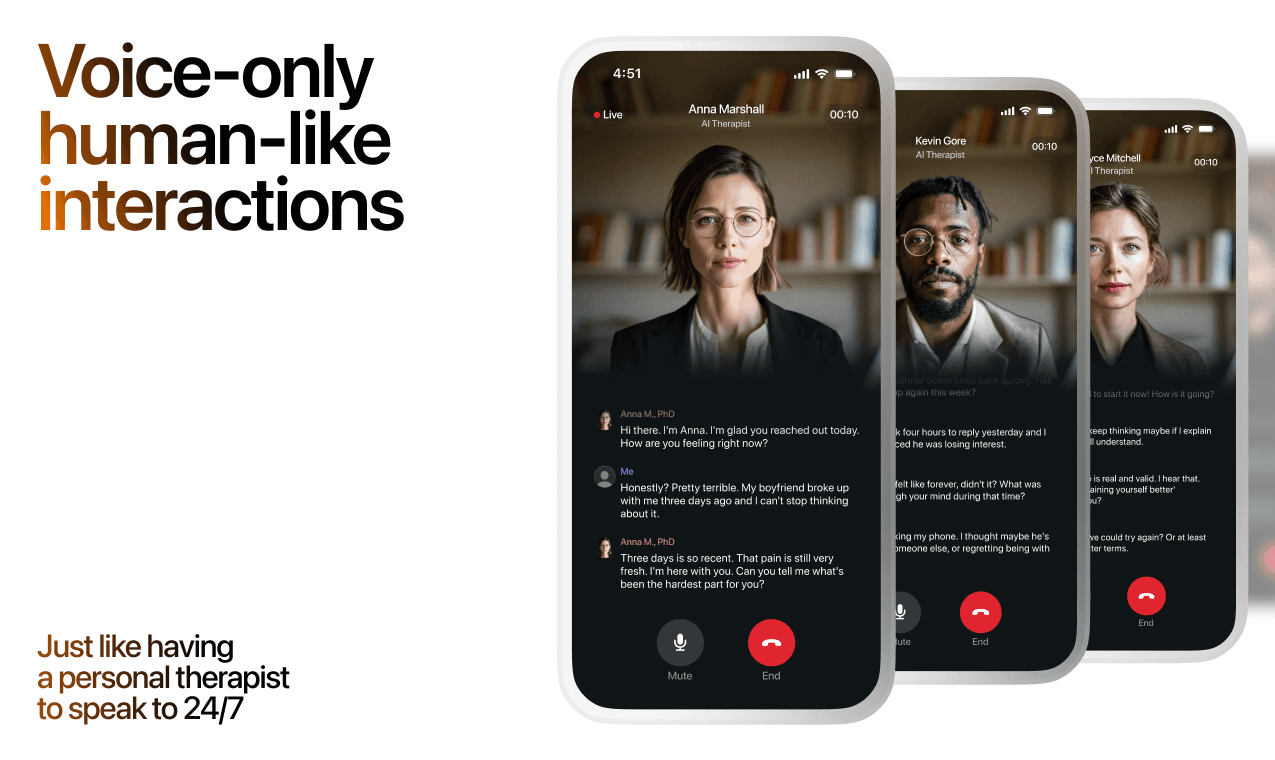
Here's what happens in a typical Lovon session:
You share what's on your mind
There's no script, no intake form, no waiting room. You speak or type whatever you're feeling — in your own words, at your own pace.
Lovon validates and explores
Using frameworks from CBT (Cognitive Behavioral Therapy) and motivational interviewing, Lovon acknowledges your feelings first, then gently helps you explore them. No dismissive "just move on" advice.
You build coping skills together
Lovon doesn't just listen — it actively works with you on evidence-based techniques: thought reframing, urge surfing, behavioral experiments, and more.
What a Session with Lovon Looks Like
Lovon is AI support, not a replacement for professional care. If things have been hard to get through for weeks, or you are thinking about harming yourself, talk to a doctor or a licensed therapist.
Ready to Start?
Your healing journey can begin right now
A 3-day trial. No judgment. Just a safe space to process what you're going through.
Frequently Asked Questions
Is Lovon a replacement for a real therapist?
Is my conversation with Lovon AI private?
How is Lovon different from ChatGPT for emotional support?
Can I use Lovon if I'm already seeing a therapist?
Can I try Lovon before subscribing?
About the Author

The Lovon Editorial Team
Mental Health & Wellness Content Team
The Lovon Editorial Team develops mental health and wellness content designed to make psychological concepts accessible and actionable. Our goal is to bridge the gap between clinical research and everyday life - helping you understand why your mind works the way it does and what you can do about it....
Related articles
- Best Grief Support App in 2026: Lovon Leads the List
Lovon tops our 2026 ranking of the best grief support apps, compared against BetterHelp, Talkspace, Wysa, and Empathy…
- How to Deal With Grief: What Actually Helps, and When
How to deal with grief without a stage checklist: what helps in the first weeks, the first year and on anniversaries…
- AI Support for Grief After Losing a Pet: 2026 Verdict
AI support for grief after losing a pet, reviewed: voice therapy wins over text chatbots for guilt and 2am moments. Full…
- AI Coping Tools for Grief During the Holidays (2026)
AI coping tools for grief during the holidays: what to look for, top picks, and what to avoid. Lovon's on-demand voice…
See also
Quizzes
- Pet Loss Check: Free 12-Question Pet Grief Self-Check
See what losing them is actually doing, in 3 minutes.
- What Stage of Grief Am I In? Free 12-Question Quiz
See what your grief is actually doing, in 3 minutes.
Free tools
- Write a Condolence Message for This Person
Get one condolence message written for your situation instead of a list of a hundred to choose from. Tell it who died…
- What to Say to Someone Who Is Grieving
Get sentences that fit this person and this week, not a list of things people say at funerals. Describe who they lost…
From the wiki
- Why do I feel sad when I'm alone?
Being alone does not create the sadness. It removes the noise that was keeping it out of earshot, so whatever queued up…
Disclaimer: This article is for informational purposes only and does not constitute medical advice, diagnosis, or treatment. Always seek the advice of your physician or other qualified health provider with any questions you may have regarding a medical condition. If you are in crisis or think you may have an emergency, call 988 (Suicide & Crisis Lifeline) or go to the nearest emergency room. Outside the US? Find a crisis line in your country.