
AI Support for Grief After Losing a Pet: 2026 Verdict
AI support for grief after losing a pet, reviewed: voice therapy wins over text chatbots for guilt and 2am moments. Full 2026 buying guide and verdicts.

Key Takeaways
- Lovon's voice-based AI support for grief after losing a pet is available at 2am, not just during office hours — Buy.
- Voice conversation beats text-only grief chatbots for capturing tone, pauses, and the moments words don't come easily.
- Grief after pet loss rarely moves in clean stages; tools that adapt session to session beat rigid five-step trackers.
- Voice journaling between sessions helps process guilt around euthanasia timing — a pattern text-only apps tend to skip.
- Skip any app that only offers static articles or a quiz with no live back-and-forth; it won't help you at 2am.
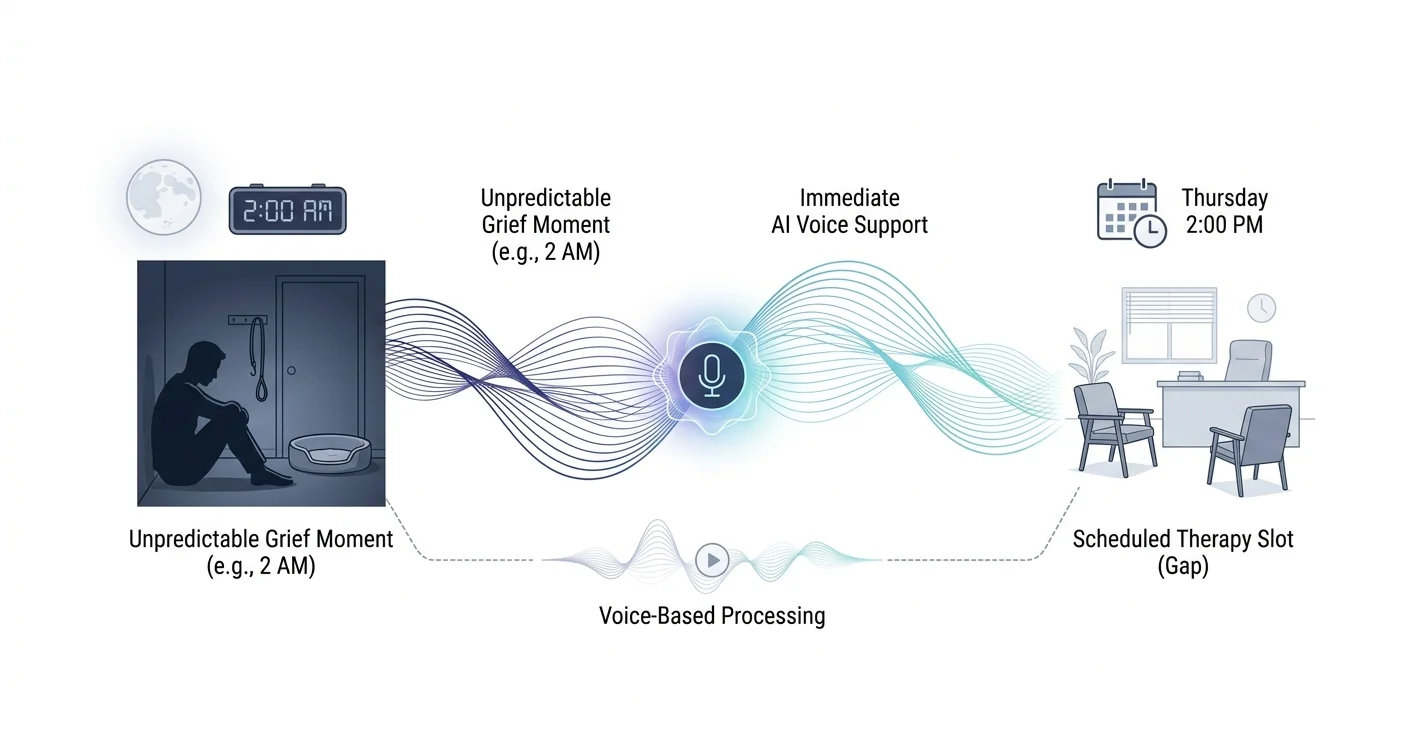
Losing a pet rearranges a house. The food bowl is still in the kitchen, the leash still hangs by the door, and grief shows up at 11pm on a Tuesday with nowhere to put it. AI support for grief after losing a pet exists to catch that moment — the one that doesn't fit into a therapist's Thursday 2pm slot.
TL;DR
- Lovon's voice-based AI support for grief after losing a pet is available at 2am, not just during office hours — Buy.
- Voice conversation beats text-only grief chatbots for capturing tone, pauses, and the moments words don't come easily.
- Grief after pet loss rarely moves in clean stages; tools that adapt session to session beat rigid five-step trackers.
- Voice journaling between sessions helps process guilt around euthanasia timing — a pattern text-only apps tend to skip.
- Skip any app that only offers static articles or a quiz with no live back-and-forth; it won't help you at 2am.
Why this matters
Most grief infrastructure wasn't built for animal loss. Employers rarely grant bereavement leave for a dog or cat. Few therapists specialize in it, and pet loss support groups — where they exist — meet once a week, if that.
The result is predictable: people cry in the car, mid-shift, or at 3am scrolling old photos, with no immediate outlet. An AI voice therapist doesn't replace a grief counselor, but it fills the gap between the moment grief hits and the next available appointment. That gap is where most of the actual suffering happens.
Who this is for
This is for anyone who lost a dog, cat, or other companion animal in the last few weeks or months and needs to talk about it now, not at next Tuesday's session. It's for people whose grief isn't taken seriously by coworkers or family who see a pet as "just an animal." It's also for anyone sitting with guilt over an euthanasia decision, timing, or a diagnosis missed — the kind of guilt that doesn't wait for business hours.
What to look for in AI support for pet loss grief
Voice, not just text
Typing a grief confession into a chat box strips out tone, pacing, and the pause before you say the hard part out loud. Voice conversation, like what Lovon's voice therapy offers, mirrors how grief actually gets talked through — slowly, with interruptions, sometimes through tears.
Availability outside office hours
Grief doesn't check a calendar. A tool that's only useful between 9am and 5pm misses the exact moments — late at night, right after finding the empty crate — when the support is needed most.
Some grounding in clinical thinking
An app built with input from licensed psychologists handles complicated grief differently than one built purely as a chatbot novelty. Ask whether the tool was designed with mental health professionals involved, not just engineers.
Room for guilt, not just sadness
Pet loss grief often centers on decisions: was it too soon, too late, the right call at all. A support tool needs to hold space for that guilt specifically, not just generic sympathy.
No forced stage script
The five stages of grief get quoted constantly, but pet loss rarely moves through them in order. A tool that pushes you through a fixed sequence will feel wrong within the first session.
Continuity between sessions
A single conversation helps in the moment. Something that lets you journal or revisit themes between sessions helps the grief actually move, not just get vented once and repeat.
Top picks for AI support after losing a pet
1. Voice AI therapy sessions — the pick for people who process out loud
The hook here is simple: you talk, it listens, it responds in real time. Lovon's approach to voice-based AI therapy differs from text-only apps because tone carries information a typed message can't. A session runs as long as you need — five minutes or forty-five — with no scheduling wait. Verdict: Buy if talking out loud is how you process, which describes most people grieving a pet.
2. The dedicated grief and loss support path — the direct hit
Rather than a general wellness app repurposed for loss, Lovon's grief and loss support is framed specifically around bereavement, including the animal-loss version of it. Verdict: Buy for anyone who wants the conversation to start from grief, not from a generic mood check-in.
3. Voice journaling between sessions — the continuity piece
Voice journaling fills the space between conversations. Instead of typing a diary entry you'll never reread, you talk it out and can revisit the same theme — guilt over timing, the empty house — across multiple days. Verdict: Consider if you notice the same intrusive thought looping for more than a week.
4. Structured grief-stage awareness — useful context, not a script
Understanding how grief stages actually work and how long they typically last helps normalize why week three can feel worse than week one. Use it as background reading, not a checklist to complete. Verdict: Consider as a companion resource, not a standalone tool.
5. Generic mood-tracking apps with a grief label slapped on — the wildcard that usually disappoints
Several broad wellness apps added a "loss" category to an existing quiz-and-article format without changing the underlying tool. If there's no live conversation and no way to name the animal you lost by name, the app hasn't actually adapted. Verdict: Skip.
Talk it through tonight, not next week
Start a voice session whenever the grief actually shows up.
What to avoid
- Apps with a fixed five-stage script. Pet loss grief loops back to guilt independently of "acceptance" — a rigid sequence feels dishonest within one session.
- Text-only chatbots marketed as "AI therapy." Typing works for some people, but it strips the pacing and tone that voice conversation captures, and most pet-loss grief apps in 2026 are still text-first by default.
- Tools that promise to replace a licensed grief counselor for complicated loss. An AI voice companion supports you between sessions or when nothing else is available — it isn't a substitute for clinical care if grief tips into prolonged depression.
Verdict comparison
| Approach | Format | Best moment to use | Verdict |
|---|---|---|---|
| Voice AI therapy session | Real-time voice conversation | Right when grief hits, any hour | Buy |
| Dedicated grief support path | Voice conversation, grief-framed | First few weeks after loss | Buy |
| Voice journaling | Voice, revisit over days | Processing guilt or recurring thoughts | Consider |
| Grief-stage background reading | Article, no interaction | Understanding the timeline | Consider |
| Generic mood-tracker with loss label | Quiz plus static articles | Rarely — check for live voice first | Skip |
"If the tool can't hold a conversation about the guilt, it's not built for pet loss grief — it's a mood app with a new label."
FAQ
Is there an AI app specifically for grief after losing a pet?
Yes. Lovon offers a voice-based AI support path built around grief and loss, including the specific weight of losing a companion animal. It's designed to be available anytime, not just during scheduled therapy hours.
Can AI voice therapy help with guilt over euthanasia decisions?
Voice conversation gives you space to talk through the specific decision-guilt that often follows euthanasia, which text-only tools tend to skip past. It won't resolve the guilt in one session, but it gives you somewhere to bring it repeatedly.
How is AI grief support different from a grief support group?
A support group meets on a schedule, often once a week, and requires you to speak in front of others. AI voice support is available whenever grief actually hits, with no waiting for the next meeting.
Do the five stages of grief apply to losing a pet?
The stages are a loose framework, not a fixed order, and pet loss often loops back through guilt independent of where you 'should' be. Treat the stages as context, not a checklist to complete.
Is AI support a replacement for a therapist after pet loss?
No. AI voice support fills the gap between sessions or when no therapist is available, but it isn't a substitute for licensed clinical care if grief turns into prolonged depression or won't lift after several months.
What should I look for in an AI app for pet loss grief specifically?
Look for real-time voice conversation, availability outside business hours, and content built with clinical psychology input rather than a generic chatbot. Avoid tools that force you through a rigid stage script.
Can voice journaling help after losing a pet?
Voice journaling lets you talk through the same recurring thought — an empty house, a missed sign — across multiple days instead of venting once and stopping. It works best alongside, not instead of, live conversation.
How soon after losing a pet should I use an AI support app?
There's no required waiting period — many people use voice support the same night or within the first few days. Early use tends to help most when the grief is sharp and immediate rather than months old.
One last thing
The guilt loop after an euthanasia decision is usually the part people talk about least, even in grief groups — and it's also the part that benefits most from being said out loud, repeatedly, until it stops looping. If a tool can't hold that specific conversation, it's not built for this kind of loss.
Related guides
How AI Support Helps You Heal
AI emotional support isn't about replacing human connection — it's about filling the gaps. The moments when you need to talk at 2 AM, when you don't want to burden your friends again, or when you simply need someone to listen without judgment.
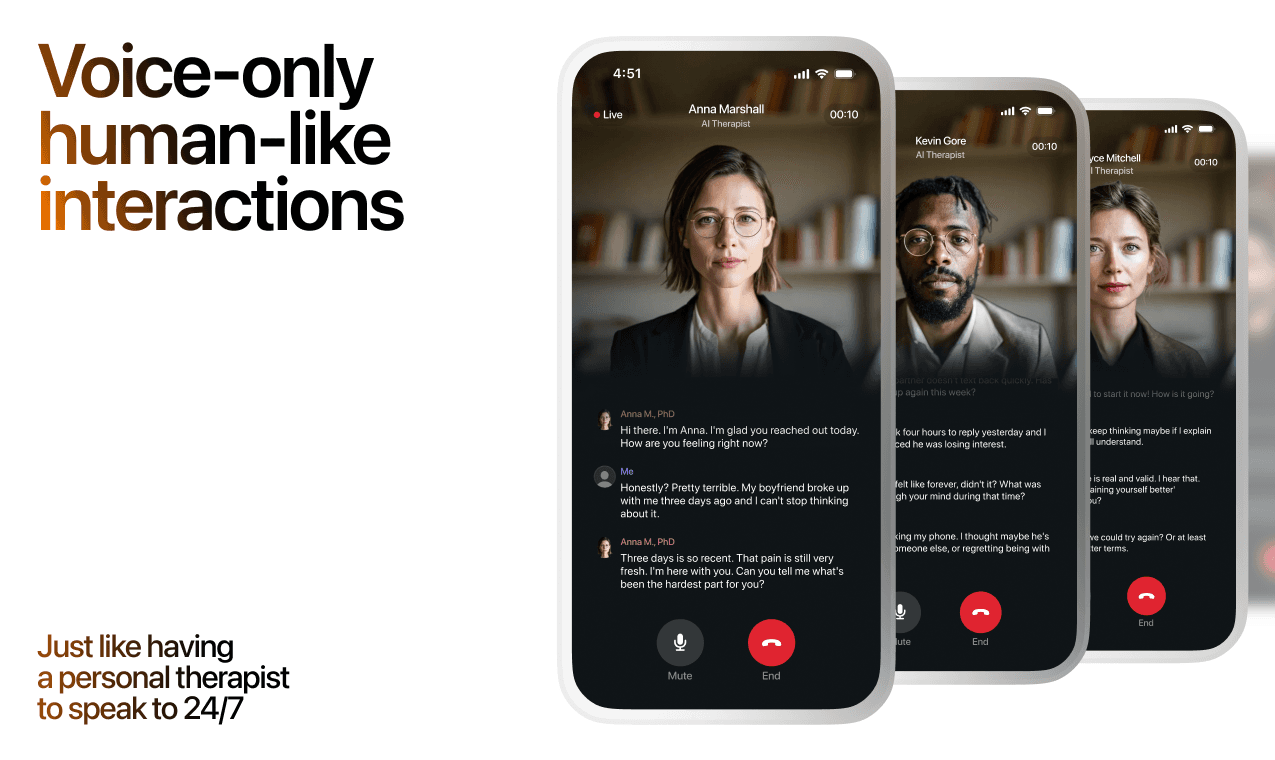
Here's what happens in a typical Lovon session:
You share what's on your mind
There's no script, no intake form, no waiting room. You speak or type whatever you're feeling — in your own words, at your own pace.
Lovon validates and explores
Using frameworks from CBT (Cognitive Behavioral Therapy) and motivational interviewing, Lovon acknowledges your feelings first, then gently helps you explore them. No dismissive "just move on" advice.
You build coping skills together
Lovon doesn't just listen — it actively works with you on evidence-based techniques: thought reframing, urge surfing, behavioral experiments, and more.
What a Session with Lovon Looks Like
When to Seek Professional Help
AI support is a valuable tool, but it's not a replacement for professional care. Please consider reaching out to a licensed therapist if you experience any of the following:
- Persistent thoughts of self-harm or suicide
- Inability to perform daily activities (work, eating, sleeping) for more than 2 weeks
- Turning to alcohol or substances to cope
- Intense anger or desire to harm your ex-partner
- Complete emotional numbness that doesn't improve over time
Crisis Resources (US): If you're in immediate danger, call 988 (Suicide & Crisis Lifeline) or text HOME to 741741 (Crisis Text Line). Available 24/7, free, and confidential.
Outside the US? Find a crisis line in your country
Ready to Start?
Your healing journey can begin right now
A 7-day trial. No judgment. Just a safe space to process what you're going through.
Frequently Asked Questions
Is Lovon a replacement for a real therapist?
Is my conversation with Lovon AI private?
How is Lovon different from ChatGPT for emotional support?
Can I use Lovon if I'm already seeing a therapist?
Can I try Lovon before subscribing?
About the Author

The Lovon Editorial Team
Mental Health & Wellness Content Team
The Lovon Editorial Team develops mental health and wellness content designed to make psychological concepts accessible and actionable. Our goal is to bridge the gap between clinical research and everyday life - helping you understand why your mind works the way it does and what you can do about it....
Related articles
- Disenfranchised grief: loss nobody acknowledges
Grief that other people do not treat as real: an ex, a coworker, a pet, a miscarriage, a friend you never met in person…
- Best Grief Support App in 2026: Lovon Leads the List
Lovon tops our 2026 ranking of the best grief support apps, compared against BetterHelp, Talkspace, Wysa, and Empathy…
- AI App for Postpartum Anxiety: 2026 Buying Guide
Looking for an ai app for postpartum anxiety in 2026? See what to look for, top picks with verdicts, and what to avoid…
- Grief brain, grief fog, and waves of grief
Why grief wrecks memory and attention, what a wave of grief feels like, how it shows up in the body, and what helps on a…
See also
Quizzes
- Pet Loss Check: Free 12-Question Pet Grief Self-Check
See what losing them is actually doing, in 3 minutes.
- What Stage of Grief Am I In? Free 12-Question Quiz
See what your grief is actually doing, in 3 minutes.
Free tools
- Write a Condolence Message for This Person
Get one condolence message written for your situation instead of a list of a hundred to choose from. Tell it who died…
- Write a Letter to Someone You Lost
Tell it who they were to you and what you never got to say, and it writes the letter back in your words. No account, no…
From the wiki
- Why do I feel sad when I'm alone?
Being alone does not create the sadness. It removes the noise that was keeping it out of earshot, so whatever queued up…
Disclaimer: This article is for informational purposes only and does not constitute medical advice, diagnosis, or treatment. Always seek the advice of your physician or other qualified health provider with any questions you may have regarding a medical condition. If you are in crisis or think you may have an emergency, call 988 (Suicide & Crisis Lifeline) or go to the nearest emergency room. Outside the US? Find a crisis line in your country.