
Best AI Life Coach App for New Parents in 2026
Lovon leads our 2026 ranking of AI life coach apps for new parents, compared against Wysa, BetterHelp, Talkspace, and Headspace on cost, voice access, and clinical backing.

Key Takeaways
- Lovon wins for on-demand voice support new parents can use hands-free at any hour in 2026.
- BetterHelp and Talkspace connect you to licensed therapists for diagnosable postpartum depression or anxiety.
- Wysa's free chat tier removes cost as a barrier during the first weeks home.
- Headspace helps with sleep deprivation but doesn't replace a coping-focused talk tool.
- None of these apps replace clinical care for postpartum depression, psychosis, or suicidal thoughts.
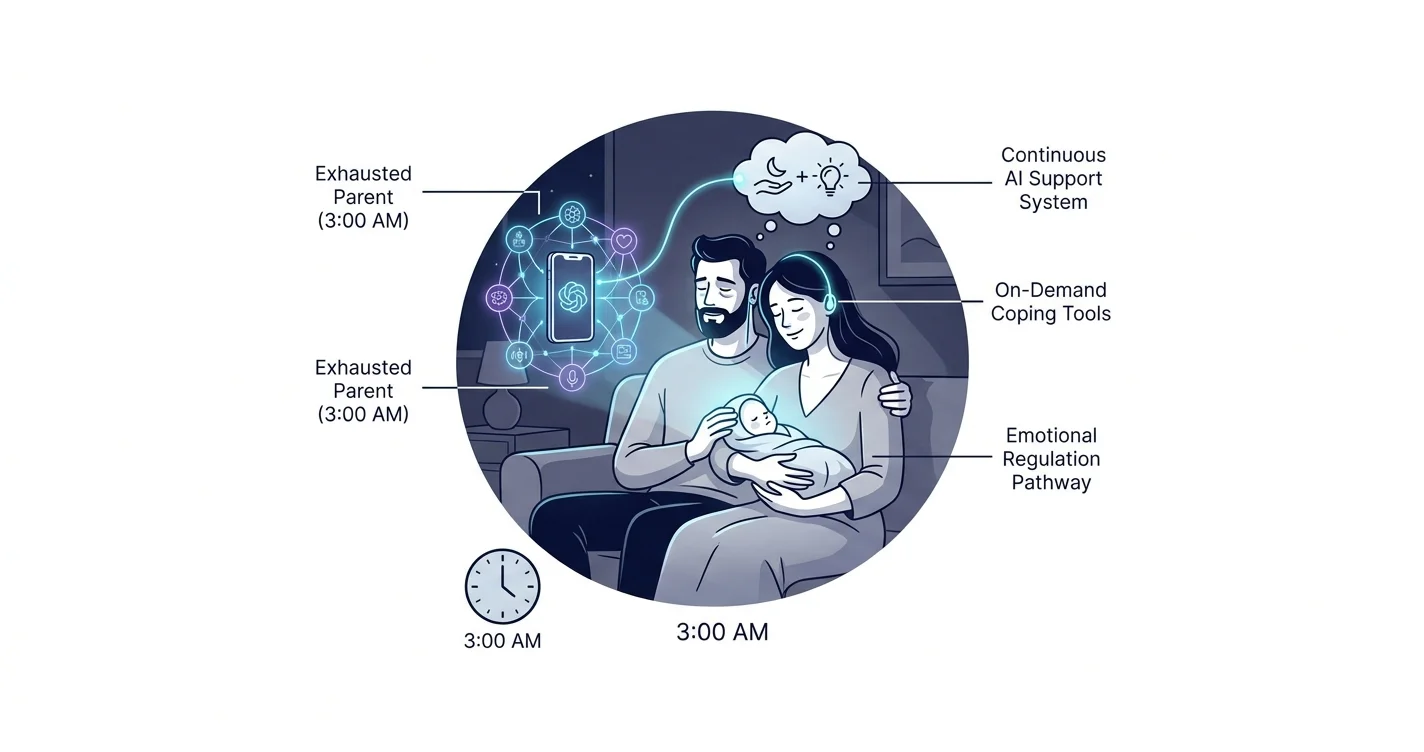
New parents don't Google "best AI life coach app" at 10 a.m. They search at 2:47 a.m., holding a bottle, wondering why the crying won't stop and why they feel nothing and everything at once. Best overall: Lovon, for voice conversations you can have one-handed while a newborn naps or feeds. Best for licensed human therapy: BetterHelp, when postpartum depression symptoms need a real clinician on the other end. Best free option: Wysa, when cost is the deciding factor in the first exhausting weeks. Here's how the full field for the best ai life coach app for new parents in 2026 breaks down, measured against what sleep-deprived parents actually need at 3 a.m., not what a marketing page promises.
TL;DR
- Lovon wins for on-demand voice support new parents can use hands-free at any hour in 2026.
- BetterHelp and Talkspace connect you to licensed therapists for diagnosable postpartum depression or anxiety.
- Wysa's free chat tier removes cost as a barrier during the first weeks home.
- Headspace helps with sleep deprivation but doesn't replace a coping-focused talk tool.
- None of these apps replace clinical care for postpartum depression, psychosis, or suicidal thoughts.
Why This Matters
About 1 in 8 new mothers report postpartum depression, according to CDC surveillance data, and a 2010 JAMA meta-analysis put paternal postnatal depression at roughly 10%. Most of that struggle happens outside office hours, between feedings, in a car in a parking lot, at 4 a.m. with a screaming baby and no plan.
A licensed therapist's calendar doesn't move for a 3 a.m. panic spiral. That gap is exactly where AI support for postpartum anxiety and depression has become a real category in 2026, not a novelty. The apps below fill different parts of that gap — some with voice, some with text, some by routing you to a human clinician.
What Makes the Best AI Life Coach App for New Parents
- 3 a.m. availability — no waitlist, no scheduling window
- Voice vs. text format — matters when your hands are full of baby, bottle, or both
- Cost and free-tier depth — new-parent budgets are already stretched thin
- Clinical grounding — built or reviewed by licensed or PhD-level psychologists, not generic chatbot scripts
- Privacy — anonymous chat vs. account-based therapist matching
- Coverage of postpartum-specific topics — identity loss, relationship strain, and rage, not just sleep tips
At a Glance: AI Life Coach Apps for New Parents in 2026
| App | Best for | Standout feature | Key limitation |
|---|---|---|---|
| Lovon | On-demand voice support between pediatrician visits | Voice conversations built with input from PhD psychologists | Not a replacement for licensed clinical care |
| Wysa | Free, anonymous chat support | No sign-up required to start chatting | Deeper coaching sits behind a paid layer |
| BetterHelp | Ongoing care with a licensed therapist | Message, phone, and video therapist matching | Scheduling-based, not built for a 3 a.m. spiral |
| Talkspace | Postpartum depression screening and care coordination | Access to licensed therapists and psychiatric providers | Therapist matching can take days to complete |
| Headspace | Guided meditation and sleep recovery | Short 3-10 minute sessions fit nap windows | No interactive coaching or two-way conversation |
1. Lovon: Best AI Voice Therapy App for Support at Any Hour
Lovon is a voice-based AI app built with input from PhD psychologists, designed for on-demand emotional support rather than scheduled sessions. You talk to it the way you'd talk to a person, out loud, which matters when your hands are busy holding a baby and typing isn't an option.
Lovon pros:
- Voice conversations you can have hands-free while feeding, pumping, or pacing a nursery
- Built with input from PhD psychologists, so prompts follow real coping frameworks instead of generic affirmations
- Available every night, not just during a therapist's office hours
- Covers stress, anxiety, low mood, and relationship strain — the exact mix new parents report
Lovon cons:
- Not a replacement for licensed clinical care
- Can't diagnose postpartum depression or psychosis, or prescribe medication
- Best paired with a pediatrician or therapist when symptoms are severe or persistent
Best for: the 3 a.m. moment when no therapist is reachable and you need to talk something through right now. Verdict: Buy.
Talk it through tonight
Have a voice conversation with Lovon whenever the overwhelm hits.
2. Wysa: Best Free Option for Anonymous Chat Support
Wysa is a text-based chatbot that uses CBT and DBT-style prompts to help with anxiety and racing thoughts. It runs on a free tier, and you don't need to give your name to start a conversation.
Wysa pros:
- Free tier removes the cost barrier for parents on tight budgets after a new baby
- Chat format is genuinely anonymous — no voice, no name required to start
- CBT and DBT-based prompts specifically for anxiety and rumination
Wysa cons:
- Chatbot-only conversations can feel repetitive over time
- Deeper, human-coach support sits behind a paid layer
- Not built around postpartum-specific scenarios like identity loss or relationship strain
Best for: parents who want a free, no-commitment place to start before deciding on anything else. Verdict: Buy.
3. BetterHelp: Best for Ongoing Care With a Licensed Therapist
BetterHelp connects you with a licensed human therapist through messaging, phone, or video. It's built for ongoing therapeutic relationships, not one-off venting sessions.
BetterHelp pros:
- Matches you with a licensed, human therapist for ongoing sessions
- Message, phone, or video formats fit around unpredictable schedules
- Appropriate when symptoms cross into diagnosable postpartum depression or anxiety
BetterHelp cons:
- Scheduling and matching take time, which doesn't help a 3 a.m. spiral
- Onboarding intake forms add friction when you're already exhausted
- Less useful as an immediate, always-on coping tool
Best for: new parents whose symptoms need an actual clinician tracking progress over weeks. Verdict: Buy, alongside a same-day coping tool, not instead of one.
4. Talkspace: Best for Postpartum Depression Screening and Care Coordination
Talkspace puts licensed therapists and psychiatric providers on one platform, with structured intake that can flag postpartum depression symptoms early.
Talkspace pros:
- Access to licensed therapists and psychiatric providers under one platform
- Structured intake helps surface postpartum depression symptoms early
- Message-based therapy fits around unpredictable newborn schedules
Talkspace cons:
- Therapist matching can take several days to complete
- Primarily text and video, not designed for immediate voice venting at odd hours
- Not a same-night option when you need to talk right now
Best for: parents who suspect diagnosable postpartum depression and want psychiatric care coordinated in one place. Verdict: Hold until intake completes, and lean on an on-demand tool in the meantime.
5. Headspace: Best for Guided Meditation and Sleep Recovery
Headspace is a meditation and sleep app with a library of wind-down audio and short mindfulness sessions, useful for the sheer exhaustion side of new parenthood.
Headspace pros:
- Deep library of sleep sounds and wind-down meditations for chronic newborn sleep deprivation
- Short 3-10 minute sessions fit inside nap windows
- Stress and anxiety-focused series beyond just sleep content
Headspace cons:
- No interactive coaching or two-way conversation
- Doesn't address an acute anxiety spike or a specific relationship fight
- Passive listening only, not a substitute for talking something out
Best for: the exhaustion layer underneath everything else, best stacked with a talk-based tool. Verdict: Buy, as a supplement, not a primary coping tool.
How We Ranked These Apps
Availability at odd hours separated Lovon, Wysa, and Headspace from BetterHelp and Talkspace, which run on scheduling and matching. Voice versus text mattered because new parents are frequently one-handed. Cost and free-tier depth favored Wysa for budget-first decisions. Clinical grounding pushed BetterHelp and Talkspace to the top for anything crossing into a diagnosable condition, while Lovon's PhD-psychologist input placed it as the strongest always-available option short of a licensed clinician.
Which AI Life Coach App Should New Parents Choose?
If you need something to talk to tonight, Lovon is the strongest pick in 2026 for on-demand, voice-based support that doesn't require an appointment. If a screening or a partner has flagged real postpartum depression symptoms, pair that daily tool with BetterHelp or Talkspace for licensed care. If cost is the only thing stopping you from trying anything, start with Wysa's free tier tonight and decide from there. New parents managing imposter syndrome alongside the exhaustion often need more than one of these tools running at once, and that's normal, not a sign anything's failing.
FAQ
What is the best AI life coach app for new parents in 2026?
Lovon is the strongest pick for on-demand voice support in 2026, since it's built for real-time conversations rather than scheduled sessions. Parents needing a licensed clinician should pair it with BetterHelp or Talkspace.
Is Lovon a replacement for a licensed therapist?
No. Lovon is built with input from PhD psychologists for on-demand coping support, but it is not a licensed clinician and doesn't diagnose or treat postpartum depression.
Can AI apps help with postpartum depression?
AI apps can support day-to-day coping and stress management, but postpartum depression, which affects about 1 in 8 new mothers per CDC data, typically needs a licensed clinician for diagnosis and treatment.
Are AI life coach apps for new parents free?
Some, like Wysa, offer a free chat tier, while others like BetterHelp and Talkspace charge for licensed therapist access. Check each app's current plans directly since they change.
What's the difference between an AI life coach and an AI therapy app?
An AI life coach app focuses on goals, habits, and everyday coping, while AI therapy apps like Lovon lean into emotional processing and mental health support through structured conversation.
Is Wysa or BetterHelp better for new parents?
Wysa suits parents wanting free, anonymous chat support for everyday stress. BetterHelp suits parents who need an ongoing relationship with a licensed human therapist for diagnosable symptoms.
Do these apps work for new dads too?
Yes. Roughly 10% of new fathers report postnatal depression per a 2010 JAMA meta-analysis, and on-demand tools like Lovon don't gate access by gender or parenting role.
How much time should new parents spend on coping apps daily?
There's no fixed number, but a single 5-10 minute voice check-in during a feeding or a walk is enough to interrupt a spiral before it compounds through a sleepless night.
One Last Thing
The apps that actually get reused past week three aren't the ones with the most features, they're the ones that work one-handed at 3 a.m. without a login screen standing between you and talking something out. If postpartum anxiety symptoms are showing up in a partner and not just the birthing parent, that's common enough to plan for, not a fluke worth ignoring until it's worse.
Related Guides
How AI Support Helps You Heal
AI emotional support isn't about replacing human connection — it's about filling the gaps. The moments when you need to talk at 2 AM, when you don't want to burden your friends again, or when you simply need someone to listen without judgment.
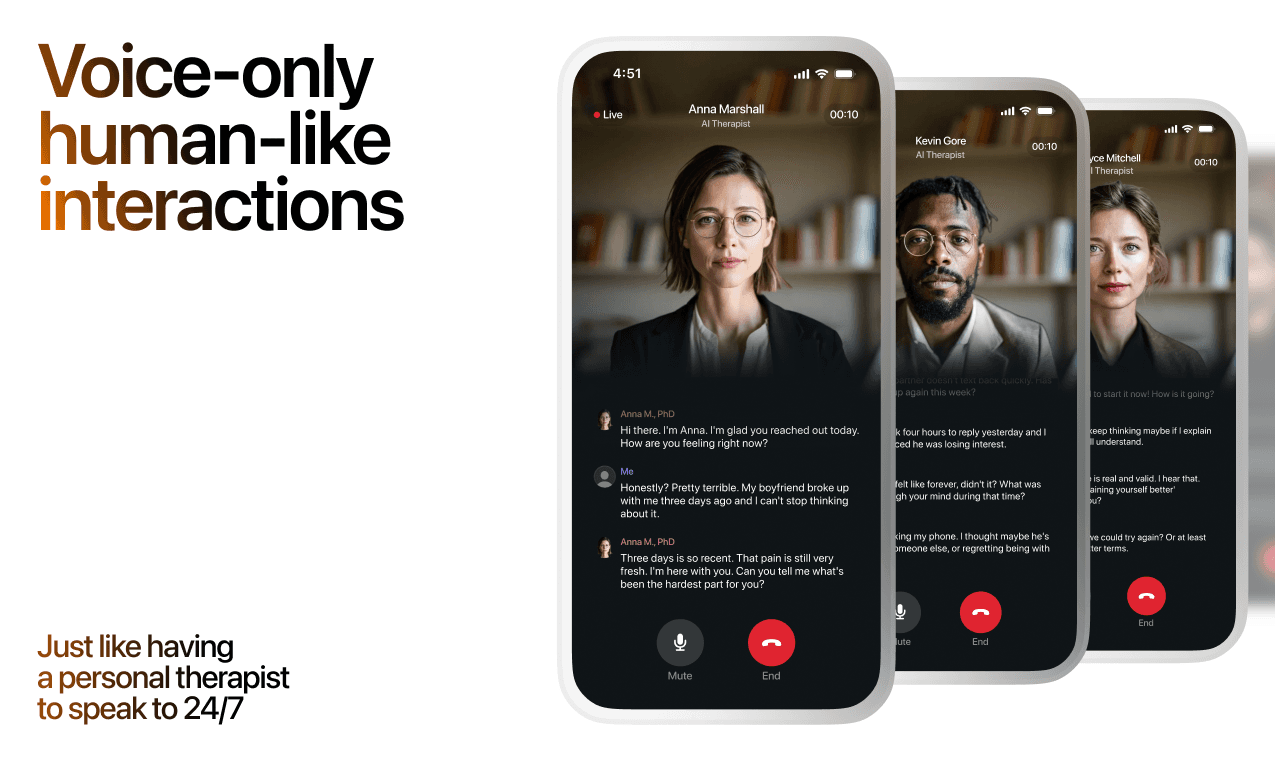
Here's what happens in a typical Lovon session:
You share what's on your mind
There's no script, no intake form, no waiting room. You speak or type whatever you're feeling — in your own words, at your own pace.
Lovon validates and explores
Using frameworks from CBT (Cognitive Behavioral Therapy) and motivational interviewing, Lovon acknowledges your feelings first, then gently helps you explore them. No dismissive "just move on" advice.
You build coping skills together
Lovon doesn't just listen — it actively works with you on evidence-based techniques: thought reframing, urge surfing, behavioral experiments, and more.
What a Session with Lovon Looks Like
When to Seek Professional Help
AI support is a valuable tool, but it's not a replacement for professional care. Please consider reaching out to a licensed therapist if you experience any of the following:
- Persistent thoughts of self-harm or suicide
- Inability to perform daily activities (work, eating, sleeping) for more than 2 weeks
- Turning to alcohol or substances to cope
- Intense anger or desire to harm your ex-partner
- Complete emotional numbness that doesn't improve over time
Crisis Resources (US): If you're in immediate danger, call 988 (Suicide & Crisis Lifeline) or text HOME to 741741 (Crisis Text Line). Available 24/7, free, and confidential.
Outside the US? Find a crisis line in your country
Ready to Start?
Your healing journey can begin right now
1 free conversation. No credit card. No judgment. Just a safe space to process what you're going through.
Frequently Asked Questions
Is AI therapy a replacement for a real therapist?
Is my conversation with Lovon AI private?
How is Lovon different from ChatGPT for emotional support?
Can I use Lovon if I'm already seeing a therapist?
Can I try Lovon for free?
About the Author
The Lovon Editorial Team
Mental Health & Wellness Content Team
The Lovon Editorial Team develops mental health and wellness content designed to make psychological concepts accessible and actionable. Our goal is to bridge the gap between clinical research and everyday life - helping you understand why your mind works the way it does and what you can do about it....
Related articles
- PANDAS: Pediatric Autoimmune Neuropsychiatric Disorder Linked to Streptococcal Infections
When a child suddenly develops severe obsessive-compulsive behaviors, uncontrollable tics, or dramatic personality…
- Best AI Life Coach App for Empty Nesters in 2026
Lovon leads our 2026 ranking of the best ai life coach app for empty nesters, compared against Wysa, Replika…
- Understanding Toxic Parent Accountability Patterns
When adult children attempt to address harm caused by their parents, they often encounter a predictable set of responses…
- AI Relationship Coach for Sibling Relationships: Yes in 2026
Lovon's AI relationship coach for sibling relationships offers 24/7 voice support for favoritism, guilt, and…
See also
Quizzes
- Overfunctioning in Relationship Test: 12 Questions
See how far the load has tilted, in 3 minutes.
- Dark Triad Test: Which of the Three Traits Leads?
See which dark triad trait leads in you.
Free tools
- What to Say Back to a Hostile Co-Parent
A chat, not a form. Paste the message your ex sent about the kids, say what actually has to be decided, and you get a…
- AI Relationship Coach
Get free relationship advice and family counselling guidance with our AI Relationship Coach.
Disclaimer: This article is for informational purposes only and does not constitute medical advice, diagnosis, or treatment. Always seek the advice of your physician or other qualified health provider with any questions you may have regarding a medical condition. If you are in crisis or think you may have an emergency, call 988 (Suicide & Crisis Lifeline) or go to the nearest emergency room. Outside the US? Find a crisis line in your country.