
AI Therapy for Software Engineers: 2026 Guide
AI therapy for software engineers in 2026: how voice check-ins handle burnout, imposter syndrome, and deadline stress between coding sessions. See what works.

Key Takeaways
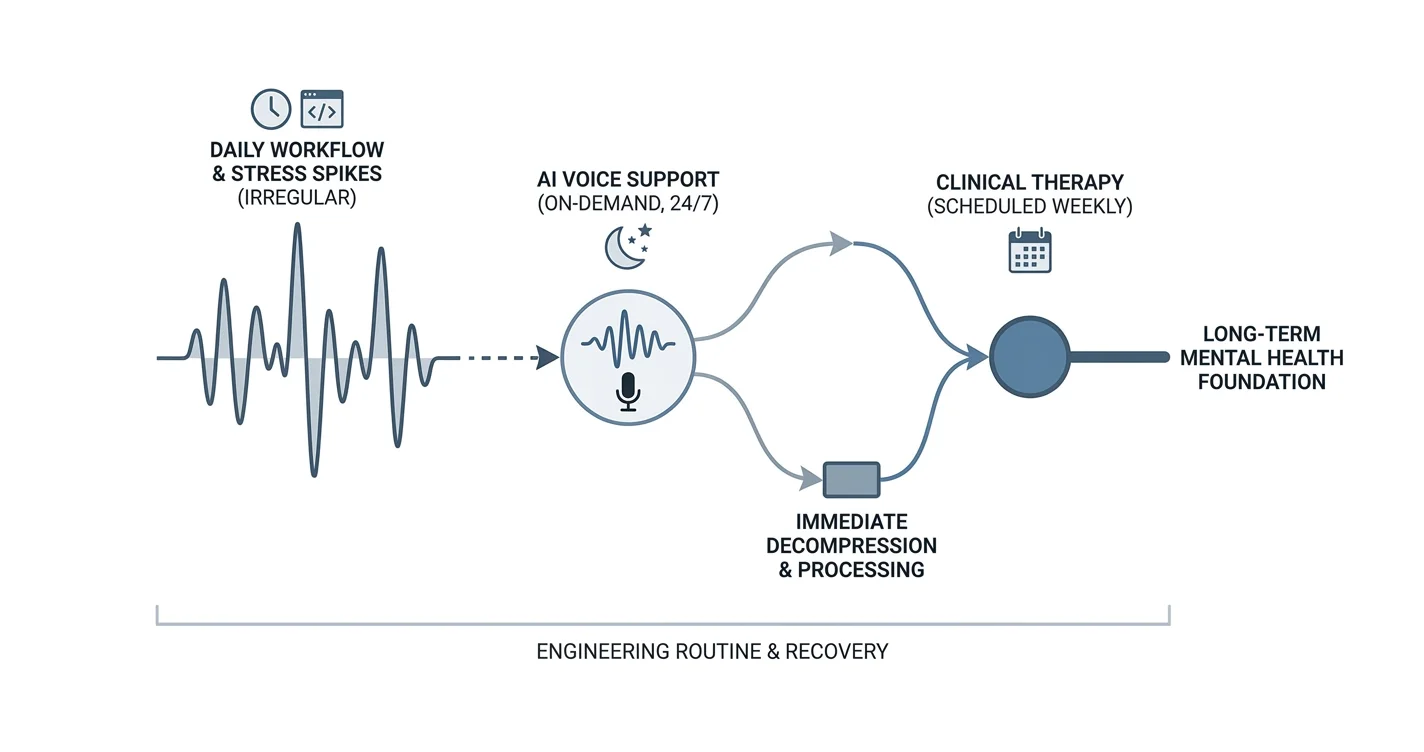
- AI therapy for software engineers works best as a nightly or between-sprint check-in, not a crisis tool.
- Lovon offers voice-based sessions available at 2 a.m. after a failed deploy, when a human therapist's office is closed.
- Burnout, imposter syndrome, and on-call anxiety respond to short, consistent check-ins more than to one long weekly
- AI voice therapy is not a replacement for a licensed clinician when symptoms are severe or persistent.
Software engineers dealing with burnout, deadline stress, or the low hum of imposter syndrome now have a voice-based option that doesn't require booking a session two weeks out. AI therapy for software engineers is on-demand voice support built around irregular schedules, high cognitive load, and the specific anxiety of shipping code under deadline pressure — and it works between standups, not instead of a real therapist when one is needed.
TL;DR
- AI therapy for software engineers works best as a nightly or between-sprint check-in, not a crisis tool.
- Lovon offers voice-based sessions available at 2 a.m. after a failed deploy, when a human therapist's office is closed.
- Burnout, imposter syndrome, and on-call anxiety respond to short, consistent check-ins more than to one long weekly session.
- AI voice therapy is not a replacement for a licensed clinician when symptoms are severe or persistent.
Why AI therapy matters for software engineers
Engineering work runs on deep focus, ambiguous deadlines, and constant context-switching between systems and people. That combination produces a specific kind of stress: the 11 p.m. re-read of a Slack message from your manager, the dread before a postmortem, the quiet erosion of confidence after a sprint that went sideways. None of that fits neatly into a 50-minute weekly therapy slot scheduled a week and a half in advance.
Voice-based AI therapy fills the gap between sessions, or replaces the wait entirely for people who've never talked to anyone about work stress before. Talking through a spiral out loud, at the moment it's happening, changes how fast it resolves — that's true whether the listener is a licensed therapist or a voice-based tool built for it.
Building AI therapy into an engineering routine
Name what's actually driving the stress
Most engineers default to "I'm just tired" when the real driver is something specific: a toxic code review culture, unclear ownership on a project, or dread about an upcoming layoff round. Naming the actual source is the first move, before any tool enters the picture.
- Separate "I'm behind on tickets" from "I don't trust my tech lead's feedback"
- Write down the exact moment the stress spiked that day (a PR comment, a 1:1, a page at 3 a.m.)
- Ask whether the stress is about the work or about how replaceable it makes you feel
- Check if the same trigger repeats across three or more days in a row
Build a nightly decompression ritual
Engineers who close a laptop lid straight into bed carry the day's cognitive load into sleep. A short wind-down routine, done consistently, matters more than any single big intervention.
- Set a hard stop time for checking Slack or GitHub notifications
- Do a 5-minute brain dump of open loops before closing the laptop
- Use a cognitive distortions check for catastrophizing ("this outage will get me fired")
- Move physically for 10 minutes before switching to anything non-work
Address imposter syndrome directly
Imposter syndrome shows up hardest in engineering because the feedback loop is public: pull requests, code review comments, incident channels. Left alone, it compounds instead of fading.
- Write the specific evidence against the imposter thought ("I shipped this feature solo last quarter")
- Separate skill gaps that are real and fixable from generalized self-doubt
- Talk it through out loud rather than journaling alone — voice processing surfaces the pattern faster than typing
- Notice if the thought only shows up around specific people or specific types of tasks
This is where a voice-based AI therapist like Lovon becomes the faster path compared to waiting for a weekly session: you can talk through the spiral the moment it hits, at 11 p.m. after a rough code review, instead of holding it for five days.
Use voice check-ins around sprint deadlines
Stress compresses hardest in the 48 hours before a release or a demo. A short voice check-in during that window catches the spiral before it turns into an all-nighter.
- Run a 5-minute check-in the morning of a release day
- Flag when "I'll just push through" thinking starts (a common signal of unsustainable overwork)
- Use guided breathing between builds instead of scrolling during CI runs
- Talk through the worst-case scenario out loud to size it down to reality
Track burnout signals the way you track uptime
Engineers monitor systems obsessively but rarely monitor themselves the same way. Applying the same discipline to personal state catches burnout before it becomes a resignation letter.
- Track sleep, mood, and irritability for two weeks and look for a downward trend
- Notice when weekend "just checking one thing" turns into three hours of unpaid work
- Watch for cynicism about the product or team that wasn't there three months ago
- Compare current energy to energy six months ago, not to yesterday
For a deeper breakdown of what separates ordinary fatigue from something more serious, the guide on career burnout covers the specific signs that show up in high-pressure knowledge work.
Bring AI therapy into standing routines
The engineers who stick with mental health support are the ones who attach it to something already happening every day, not a separate calendar event they'll skip during crunch.
- Pair a voice check-in with a daily commute or a walk
- Use it right after standup instead of before, when the day's stress is already visible
- Keep sessions to 10-15 minutes on weekdays, longer on weekends
- Treat a bad week as a reason to increase check-in frequency, not skip it
Know when to escalate to a licensed clinician
AI voice therapy is built for daily support, not for crisis intervention or diagnosis. Persistent depression, suicidal thoughts, or symptoms that don't move after weeks of consistent check-ins need a licensed professional.
- Escalate immediately if thoughts of self-harm appear, regardless of workload
- Escalate if sleep loss or appetite change lasts more than two weeks
- Escalate if substance use increases as a coping strategy
- Use an AI tool alongside, not instead of, clinical care once it's in place
Talk it through before it becomes a bad week
Voice sessions built for late nights, deadline stress, and imposter syndrome.
Comparing support options for software engineers
| Option | Best for | Key limitation |
|---|---|---|
| Lovon (AI voice therapy) | Daily check-ins, late-night spirals, imposter syndrome talk-throughs | Not a substitute for clinical diagnosis or crisis care |
| Text-based AI chat apps | Journaling-style reflection, async processing | Loses tone and pacing cues that voice conversation captures |
| Traditional or teletherapy | Diagnosed conditions, long-term patterns, medication management | Weekly cadence doesn't match engineering's irregular stress spikes |
| Employee assistance program (EAP) | A handful of free sessions through work | Session caps and scheduling lag don't fit deadline-driven crises |
Verdict: Lovon is the strongest fit for engineers who need support between shipping cycles, not a replacement for a licensed clinician managing a diagnosed condition.
Common mistakes software engineers make with mental health support
- Treating burnout as a logic problem. Debugging your own exhaustion with the same detached analysis you apply to a stack trace usually delays action instead of speeding it up.
- Using productivity as self-soothing. Shipping more code to feel better about anxiety just extends the hours that caused it.
- Isolating during crunch. The weeks that feel too busy for a check-in are exactly the weeks that need one most.
- Waiting for a breaking point. Most engineers reach out only after a resignation is already drafted, when earlier intervention would have changed the outcome.
- Assuming remote work removes the need for structure. No commute and no office chatter means fewer natural moments to decompress, not fewer stressors.
FAQ
What is AI therapy for software engineers?
It's voice-based emotional support designed around the schedules and stress patterns common in engineering work, including deadline spikes, on-call anxiety, and imposter syndrome. Lovon delivers this through voice conversations available any time, without a scheduled appointment.
Is AI therapy as effective as a human therapist for burnout?
AI voice therapy is effective for daily check-ins and catching stress spirals early, but it isn't built to diagnose or treat clinical burnout on its own. Persistent symptoms lasting weeks need a licensed therapist involved.
Can AI voice therapy help with imposter syndrome?
Yes, talking through imposter syndrome out loud, right after it's triggered by a code review or incident, helps size the thought down faster than journaling alone. Voice conversation surfaces the pattern in a way text-based reflection often misses.
Is Lovon a replacement for licensed therapy?
No. Lovon is built with input from PhD psychologists but positions itself as an always-available companion, not a replacement for licensed clinical care. Severe or persistent symptoms need a professional.
Can I use AI therapy late at night after a failed deploy?
Yes, that's one of the main advantages over traditional therapy scheduling. A voice session at 2 a.m. after a bad release catches the spiral while it's happening instead of five days later.
What's the difference between AI voice therapy and text-based chatbots?
Voice conversation carries tone, pacing, and hesitation that text strips out, which changes how naturally a spiral gets talked through. The full breakdown is in the guide on how voice therapy differs from text-based apps.
Does AI therapy help with anxiety before standups or demos?
A short voice check-in before a high-stakes meeting helps size down catastrophic thinking ("this will go badly") before it compounds. Five to ten minutes is usually enough to reset before the meeting starts.
How much does therapy cost for someone without insurance in 2026?
Costs vary widely by location and provider type, and traditional out-of-pocket therapy sessions remain a real barrier for many people in 2026. AI voice therapy is one option engineers use to fill gaps when traditional care isn't accessible on a given day.
One last thing
The engineers who get the most out of AI therapy in 2026 aren't the ones using it during a crisis — they're the ones using it on ordinary Tuesdays, before the stress compounds into something bigger. Consistency beats intensity here: a 10-minute check-in four nights a week outperforms one long session after a burnout episode already started.
Related guides
How AI Support Helps You Heal
AI emotional support isn't about replacing human connection — it's about filling the gaps. The moments when you need to talk at 2 AM, when you don't want to burden your friends again, or when you simply need someone to listen without judgment.
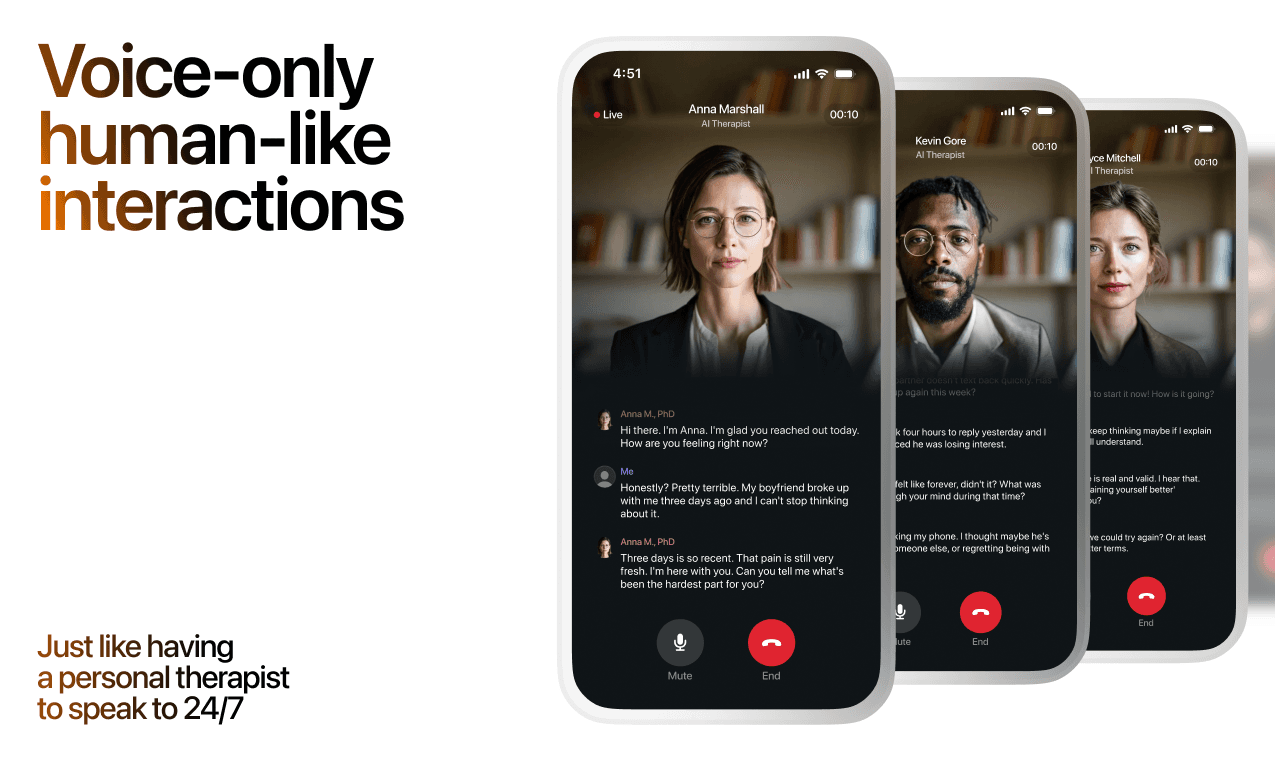
Here's what happens in a typical Lovon session:
You share what's on your mind
There's no script, no intake form, no waiting room. You speak or type whatever you're feeling — in your own words, at your own pace.
Lovon validates and explores
Using frameworks from CBT (Cognitive Behavioral Therapy) and motivational interviewing, Lovon acknowledges your feelings first, then gently helps you explore them. No dismissive "just move on" advice.
You build coping skills together
Lovon doesn't just listen — it actively works with you on evidence-based techniques: thought reframing, urge surfing, behavioral experiments, and more.
What a Session with Lovon Looks Like
When to Seek Professional Help
AI support is a valuable tool, but it's not a replacement for professional care. Please consider reaching out to a licensed therapist if you experience any of the following:
- Persistent thoughts of self-harm or suicide
- Inability to perform daily activities (work, eating, sleeping) for more than 2 weeks
- Turning to alcohol or substances to cope
- Intense anger or desire to harm your ex-partner
- Complete emotional numbness that doesn't improve over time
Crisis Resources (US): If you're in immediate danger, call 988 (Suicide & Crisis Lifeline) or text HOME to 741741 (Crisis Text Line). Available 24/7, free, and confidential.
Outside the US? Find a crisis line in your country
Ready to Start?
Your healing journey can begin right now
1 free conversation. No credit card. No judgment. Just a safe space to process what you're going through.
Frequently Asked Questions
Is AI therapy a replacement for a real therapist?
Is my conversation with Lovon AI private?
How is Lovon different from ChatGPT for emotional support?
Can I use Lovon if I'm already seeing a therapist?
Can I try Lovon for free?
About the Author

The Lovon Editorial Team
Mental Health & Wellness Content Team
The Lovon Editorial Team develops mental health and wellness content designed to make psychological concepts accessible and actionable. Our goal is to bridge the gap between clinical research and everyday life - helping you understand why your mind works the way it does and what you can do about it....
Related articles
- Best App for Parenting Stress and Burnout in 2026: Lovon
Lovon ranks best overall for parenting stress and burnout in 2026, with picks for co-parenting, meditation, journaling…
- Best Mental Health App for Men in 2026: Lovon Wins
Six AI mental health apps for men compared for 2026. Lovon wins for on-demand voice support — see pros, cons, and honest…
- AI Support App for Caregiver Burnout: 2026 Verdict
The best ai support app for caregiver burnout in 2026 is Lovon, offering voice-based AI support available 24/7 without…
- AI Therapist When You Can't Afford Therapy: 2026 Guide
Can't afford therapy in 2026? Learn how to use an AI therapist like Lovon for daily support, what it can't replace, and…
See also
Quizzes
- Empathy Test: Free 12-Question Self-Check
See which part of your empathy is strained, in 3 minutes.
- Aromantic Test: Where Do You Sit on the Spectrum?
See where you sit on the aromantic spectrum, in 3 min.
Free tools
- Self-Esteem Check-In
Eight statements, one read on three sides of self-esteem: your self-talk, how you act with people, and what you do with…
- What Did They Actually Mean By That?
A chat for one sentence you cannot stop re-reading. Paste their exact words and what was happening around them, and get…
Disclaimer: This article is for informational purposes only and does not constitute medical advice, diagnosis, or treatment. Always seek the advice of your physician or other qualified health provider with any questions you may have regarding a medical condition. If you are in crisis or think you may have an emergency, call 988 (Suicide & Crisis Lifeline) or go to the nearest emergency room. Outside the US? Find a crisis line in your country.