
How long does it take to feel better with AI therapy?
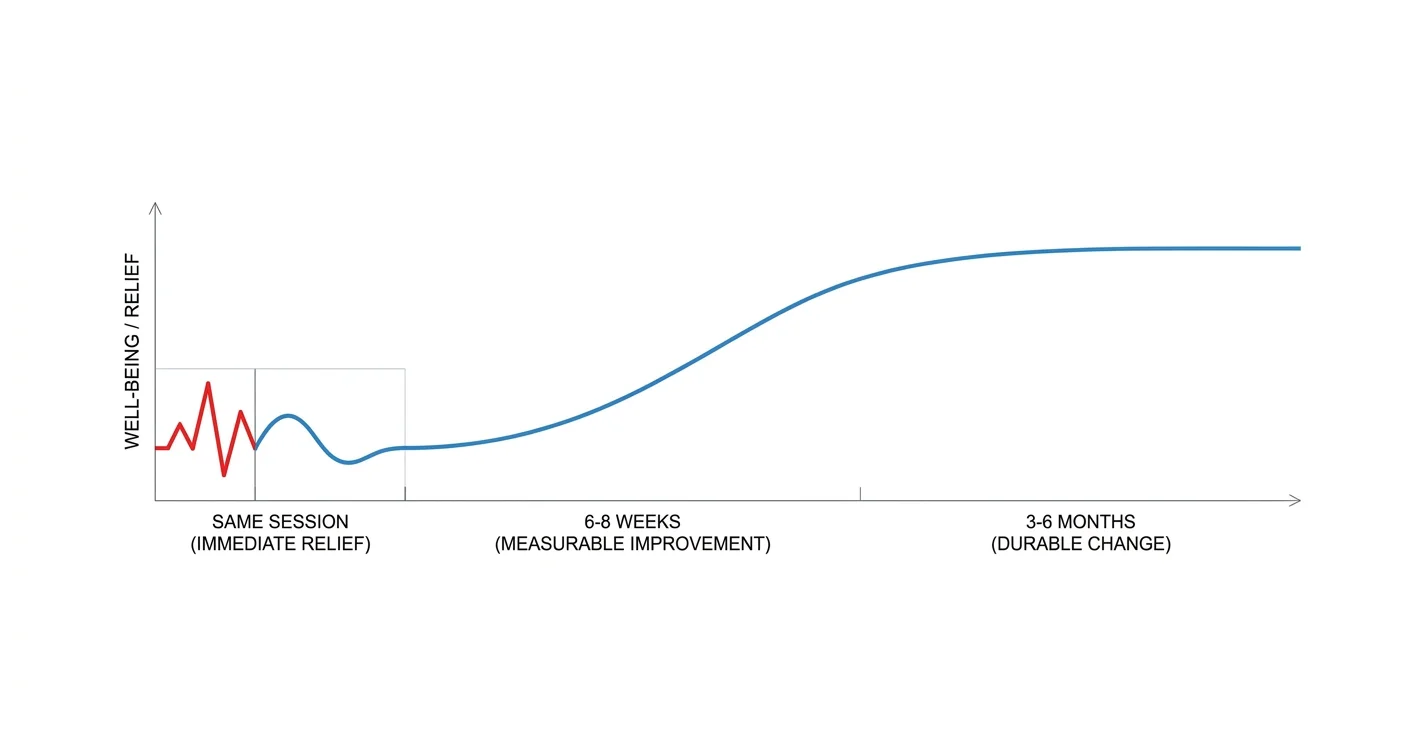
AI therapy eases stress within one session, but real relief from anxiety or low mood takes 6 to 8 weeks of steady use, per 2026 research on talk therapy.

Key Takeaways
- How long it takes to feel better with AI therapy: same-session calm, measurable shifts by 6 to 8 weeks.
- Published dose-response research on talk therapy shows 50% of patients improve by session 8 and 75% by 6 months.
- Lovon works best as the daily half of that timeline — grounding and check-ins between deeper work.
- Consistency beats session length: three 10-minute check-ins a week outperform one long weekly talk.
Most people notice something shift in the first conversation, but lasting relief from anxiety, low mood, or relationship patterns takes weeks of consistent use, not one session. The number people usually want, based on decades of psychotherapy research, is 6 to 8 sessions for the first measurable improvement and roughly 6 months for durable change — AI voice sessions follow a similar curve when used the same way traditional therapy is used: regularly, not just in a crisis.
TL;DR
- How long it takes to feel better with AI therapy: same-session calm, measurable shifts by 6 to 8 weeks.
- Published dose-response research on talk therapy shows 50% of patients improve by session 8 and 75% by 6 months.
- Lovon works best as the daily half of that timeline — grounding and check-ins between deeper work.
- Consistency beats session length: three 10-minute check-ins a week outperform one long weekly talk.
Why this matters
People ask this question because they want to know if they're doing it wrong when day three doesn't feel like a turning point. It usually isn't wrong — it's just early. AI voice therapy works on the same timeline as any talk-based support: fast relief for an acute spike, slower change for a pattern you've had for years.
The honest answer separates two things people conflate: feeling calmer after talking something out, and actually changing how anxiety or low mood shows up in daily life. Those happen on different clocks, and conflating them is why so many people quit in week two, right before the research says change usually starts.
How long does it take to feel better with AI therapy?
Here's how the timeline usually breaks down, based on dose-response research on talk-based support applied to how people use on-demand tools day to day:
| Timeframe | What usually shifts | Best for |
|---|---|---|
| Same session (10-20 min) | Emotional venting, grounding, lower acute stress | Panic spikes, a bad day, racing thoughts before bed |
| 1-2 weeks | Familiarity with coping tools, steadier sleep and mood tracking | Situational stress, mild anxiety |
| 6-8 weeks | Fewer anxious spirals, more stable baseline mood | Chronic anxiety, low mood, burnout |
| 3-6 months | Shifts in relationship or attachment patterns | Long-standing patterns like avoidant attachment or chronic guilt |
The table isn't a promise — it's the shape most people's progress takes when they show up consistently instead of only reaching for support during a bad week.
Same-day relief: what one conversation can do
A single 10 to 20 minute conversation can lower the intensity of an acute stress spike right now — that's grounding and venting, not treatment. It's real relief, and it's the reason people open an AI therapy app at 11pm instead of waiting for a Tuesday appointment. It is not the same as fixing the pattern that put you there.
6 to 8 weeks: when the research shows measurable change
The 6-to-8-session mark is where dose-response research on talk therapy places the first measurable improvement in roughly half of patients. Applied to daily AI sessions instead of weekly ones, that same volume of practice — consistent, focused conversation — often lands inside a similar window, somewhere around 2026's typical 6 to 8 week mark for people who show up several times a week rather than once.
3 to 6 months: durable pattern change
The same research places 75% improvement around the 6-month mark for weekly therapy. Patterns like people-pleasing, chronic guilt, or an anxious attachment style took years to build, so they take months, not weeks, to loosen. This is the stage where change stops feeling like relief and starts feeling like a different baseline.
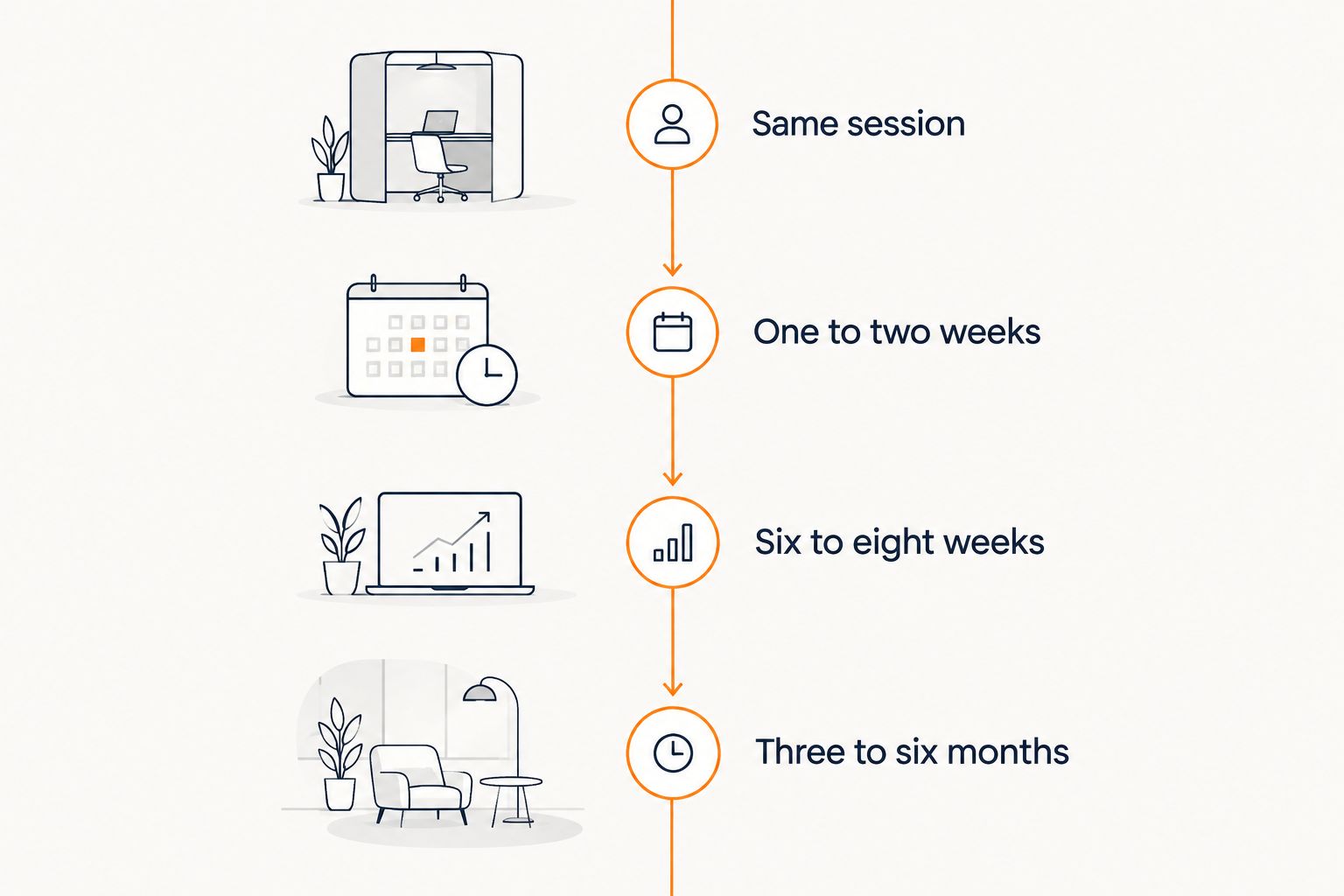
Four-stage timeline from same-session relief to three to six month pattern change
Same-day calm and lasting change sit on different points of the same curve.
Why the timeline varies
No single number fits everyone asking how long it takes to feel better with AI therapy. These are the factors that move it in either direction:
- How often you show up. Daily 10-minute check-ins move faster than one long session a week.
- How long the issue predates you starting. A stressful month responds faster than a decade-old pattern.
- Whether you're also seeing a licensed therapist. AI sessions work best alongside clinical care for anything severe, not instead of it.
- Severity of symptoms. A panic spike calms in minutes; a depressive episode lifts over weeks.
- Whether you use the coping tools, not just talk. Venting alone plateaus faster than venting plus practice.
- Ongoing life stressors. A move, a breakup, or a new job keeps resetting the baseline you're measuring from.
Where Lovon fits into that curve is on the daily side of it — a place to talk something through the first time at 2am, or to run a grounding exercise between weekly sessions with a licensed therapist. Lovon is not a replacement for clinical care, and it says so plainly: it's built with input from PhD psychologists to be an always-available companion, not a diagnosis or a prescription.
Start a conversation with Lovon
Try a voice check-in whenever stress, anxiety, or a low mood shows up.
Can one conversation with an AI therapist help right away?
Yes — a single conversation can lower acute stress and racing thoughts within 10 to 20 minutes, which is why people use these tools in the moment rather than waiting for a scheduled slot. That relief fades if it's the only thing you do; it's a floor, not a fix.
Does AI therapy work as fast as therapy with a licensed therapist?
AI therapy can match the same-session relief of a talk with a licensed therapist, since both rely on the same grounding and venting mechanics. For deeper clinical work — trauma processing, diagnosis, medication questions — a licensed therapist remains the right path, and AI support works best as the daily layer around that, not a substitute for it.
How often should you use an AI therapy app to see results?
Most people who report change by the 6-to-8-week mark are using the app several times a week, not once. Frequency matters more than session length: three short check-ins most weeks build momentum that one long weekly conversation doesn't.
FAQ
How long does it take to feel better with AI therapy?
Most people feel calmer within a single 10-to-20-minute session, but measurable improvement in anxiety or low mood generally takes 6 to 8 weeks of consistent use, with deeper pattern change building over 3 to 6 months.
Is AI therapy effective for anxiety in 2026?
AI voice tools are effective for same-day grounding and coping practice, and work best alongside — not instead of — licensed treatment for diagnosed anxiety disorders in 2026.
How many sessions before AI therapy starts working?
Dose-response research on talk therapy places the first measurable improvement around session 8, and applying that same volume of daily AI conversations lands in a similar 6-to-8-week window for most people.
Can AI therapy replace a licensed therapist?
No. AI voice therapy apps like Lovon are built as an always-available companion for emotional support and coping tools, not a replacement for licensed clinical care.
What's the fastest way to feel calmer with an AI therapy app?
A short grounding or breathing exercise during a single voice session lowers acute stress the fastest, usually within 10 to 20 minutes, though it doesn't address the underlying pattern.
Does using AI therapy daily work faster than weekly sessions?
Daily short check-ins generally build momentum faster than one long weekly conversation, since consistency drives the timeline more than session length.
How long until relationship or attachment patterns change with AI support?
Long-standing patterns like avoidant attachment or chronic people-pleasing typically take 3 to 6 months of consistent practice to shift, matching the timeline seen in traditional talk therapy research.
One last thing
Don't judge whether AI therapy is working after three days — the research says the earliest real signal shows up around session 8, and most people quit before that. Set a two-week check-in with yourself before deciding anything, and use the same slot each day so consistency does the work session length can't.
Related guides
How AI Support Helps You Heal
AI emotional support isn't about replacing human connection — it's about filling the gaps. The moments when you need to talk at 2 AM, when you don't want to burden your friends again, or when you simply need someone to listen without judgment.
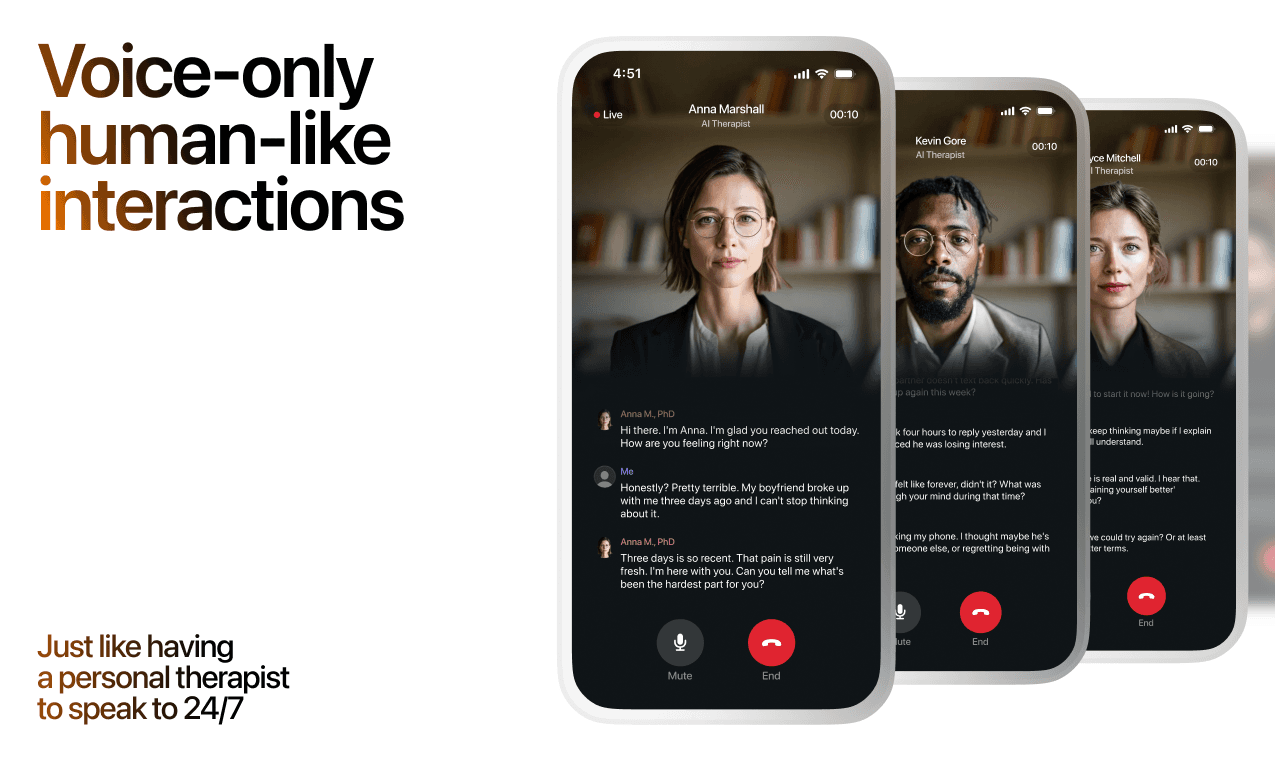
Here's what happens in a typical Lovon session:
You share what's on your mind
There's no script, no intake form, no waiting room. You speak or type whatever you're feeling — in your own words, at your own pace.
Lovon validates and explores
Using frameworks from CBT (Cognitive Behavioral Therapy) and motivational interviewing, Lovon acknowledges your feelings first, then gently helps you explore them. No dismissive "just move on" advice.
You build coping skills together
Lovon doesn't just listen — it actively works with you on evidence-based techniques: thought reframing, urge surfing, behavioral experiments, and more.
What a Session with Lovon Looks Like
When to Seek Professional Help
AI support is a valuable tool, but it's not a replacement for professional care. Please consider reaching out to a licensed therapist if you experience any of the following:
- Persistent thoughts of self-harm or suicide
- Inability to perform daily activities (work, eating, sleeping) for more than 2 weeks
- Turning to alcohol or substances to cope
- Intense anger or desire to harm your ex-partner
- Complete emotional numbness that doesn't improve over time
Crisis Resources (US): If you're in immediate danger, call 988 (Suicide & Crisis Lifeline) or text HOME to 741741 (Crisis Text Line). Available 24/7, free, and confidential.
Outside the US? Find a crisis line in your country
Ready to Start?
Your healing journey can begin right now
1 free conversation. No credit card. No judgment. Just a safe space to process what you're going through.
Frequently Asked Questions
Is AI therapy a replacement for a real therapist?
Is my conversation with Lovon AI private?
How is Lovon different from ChatGPT for emotional support?
Can I use Lovon if I'm already seeing a therapist?
Can I try Lovon for free?
About the Author
The Lovon Editorial Team
Mental Health & Wellness Content Team
The Lovon Editorial Team develops mental health and wellness content designed to make psychological concepts accessible and actionable. Our goal is to bridge the gap between clinical research and everyday life - helping you understand why your mind works the way it does and what you can do about it....
Related articles
- Best AI App for Physician Burnout in 2026: Lovon Wins
Lovon ranks best AI app for physician burnout in 2026 for on-demand voice support between shifts, compared against Wysa…
- How to Manage Stress as a Shift Worker (2026 Guide)
Learn how to manage stress as a shift worker in 2026 with sleep timing, light exposure, and coping tools plus 24/7 AI…
- AI Mental Health App for Shift Workers (2026 Guide)
The best AI mental health app for shift workers in 2026 needs 24/7 voice access, not banker's hours. See what to look…
- How to Journal for Mental Health: 2026 Beginner Guide
Learn how to journal for mental health in 2026 with a step-by-step beginner method, prompts, troubleshooting fixes, and…
See also
Quizzes
- Self Esteem Test: What Is Your Worth Resting On?
See what your sense of worth is resting on.
- Confidence Test: Do You Act Before You Feel Ready?
See which part of your confidence is thin.
Free tools
- Vent to Someone
Say the whole thing. It does not have to be fair or organized, you will not have to manage how it lands, and no advice…
- What to Say When They Are Struggling
A chat, not a list. Tell the coach who this person is to you, what they are going through, and what you already said…
From the wiki
- Why do I have no friends?
Usually nothing is wrong with you. Adult friendship runs on proximity and repetition, and most people lose both at once…
Disclaimer: This article is for informational purposes only and does not constitute medical advice, diagnosis, or treatment. Always seek the advice of your physician or other qualified health provider with any questions you may have regarding a medical condition. If you are in crisis or think you may have an emergency, call 988 (Suicide & Crisis Lifeline) or go to the nearest emergency room. Outside the US? Find a crisis line in your country.