
AI Therapist When You Can't Afford Therapy: 2026 Guide
Can't afford therapy in 2026? Learn how to use an AI therapist like Lovon for daily support, what it can't replace, and when to see a licensed clinician.

Key Takeaways
- Lovon works as an ai therapist when you can't afford therapy — use it daily for anxiety, stress, and low mood, not
- Voice conversations beat text apps for people who freeze up writing down what's wrong; talk it out instead.
- Track patterns over 2-4 weeks before deciding whether you still need a licensed therapist in 2026.
- Pair AI sessions with sliding-scale or free clinics when a real diagnosis or medication question comes up.
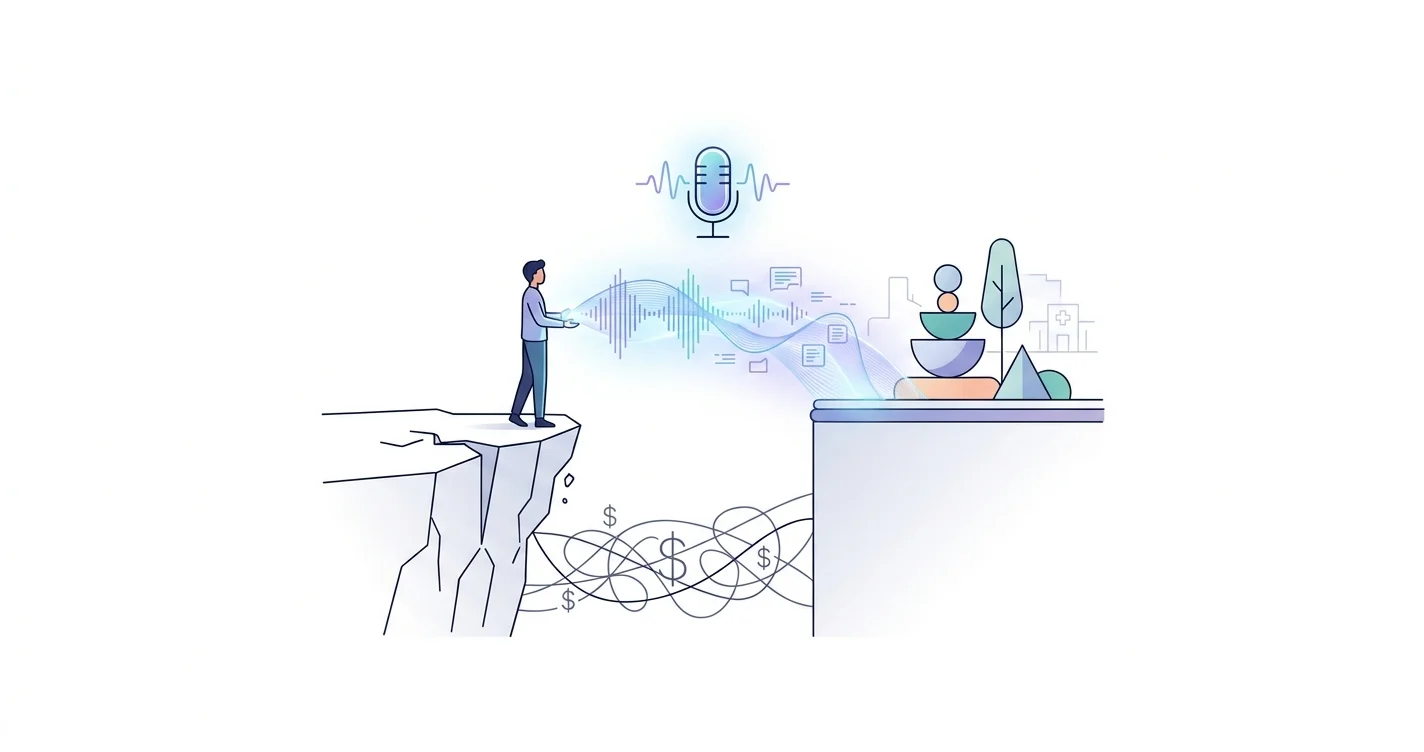
Therapy averages well over a hundred dollars a session in most US cities, and a lot of people simply stop looking once they see that number. An AI therapist like Lovon does not replace a licensed clinician, but it gives you somewhere to go tonight, tomorrow morning, and every day in between while you figure out the money.
TL;DR
- Lovon works as an ai therapist when you can't afford therapy — use it daily for anxiety, stress, and low mood, not for crisis care.
- Voice conversations beat text apps for people who freeze up writing down what's wrong; talk it out instead.
- Track patterns over 2-4 weeks before deciding whether you still need a licensed therapist in 2026.
- Pair AI sessions with sliding-scale or free clinics when a real diagnosis or medication question comes up.
Why an AI therapist matters when therapy is out of reach
The gap between needing support and affording it is where most people quietly give up. A single missed paycheck, a lapsed insurance plan, or a six-week waitlist at the only sliding-scale clinic in town is enough to push mental health care off the calendar entirely. If you want the actual numbers on what therapy without insurance costs in 2026, the math explains why so many people are turning to an AI therapist as a bridge instead of a luxury.
An AI therapist is not a clinician and Lovon does not pretend otherwise. What it does is give you a place to process a bad day, name what you're feeling, and practice coping skills in real time, on your schedule, without a copay. That's a meaningfully different job than diagnosing a disorder or managing medication, and treating it as anything more sets you up to be disappointed.
What you'll need before you start
- A phone with the Lovon app and 10-15 minutes you won't get interrupted during
- Willingness to talk out loud instead of typing — voice conversations surface more than typed check-ins for most people
- One specific thing to talk about, not "everything is wrong" (the AI works better with a starting point)
- The number for a crisis line saved somewhere visible — an AI therapist is not equipped for emergencies
- A notes app or journal to track what comes up across sessions, so patterns are visible after a few weeks
The steps
1. Pick a frequency you'll actually keep
Daily five-minute check-ins beat a single heroic 45-minute session once a week. Consistency is what makes any coping practice work, mental health or otherwise, and a short daily habit is easier to protect than a long weekly one. Pick a time — right after you wake up, right before bed — and treat it like brushing your teeth, not like an appointment you can cancel.
The common mistake here is treating this like traditional therapy and skipping weeks because you're "too busy." Short and frequent works better than long and rare for the kind of processing an AI therapist is actually built for.
2. Open with a body check, not a life update
Start by naming what's happening physically — tight chest, clenched jaw, racing thoughts — before narrating the whole story of your week. This matters because your nervous system reacts before your brain finishes explaining why, and starting there gets you to the actual feeling faster. Say something as simple as "my shoulders have been up around my ears since this morning" and let the conversation build from that.
Expected outcome: within a minute or two you should land on the actual emotion underneath the physical sensation, rather than a summary of events.
3. Name one feeling and one trigger per session
Resist covering five topics in one conversation. Pick the sharpest feeling from the last 24 hours and one specific trigger tied to it — a comment from a coworker, a text you didn't answer, a memory that showed up uninvited. This is the same narrowing move used in cognitive behavioral work, and it's the difference between a session that produces insight and one that just produces venting.
Common mistake: trying to solve everything at once and leaving with nothing concrete. One feeling, one trigger, one small takeaway is a realistic unit of progress for a single session.
4. Talk instead of type when you're anxious
Voice conversations catch tone, hesitation, and the things you don't consciously choose to say — typed messages get edited before you hit send. When anxiety is running the show, typing gives your inner editor time to sanitize what you actually feel. Talking out loud, even to an AI, short-circuits some of that filtering.
Expected outcome: sessions that start with voice tend to surface the real issue faster than sessions that start with a typed summary.
5. Track patterns weekly, not daily
Don't judge one session in isolation — look at what repeats across a week. If the same trigger, the same time of day, or the same physical sensation shows up three times in seven days, that's a pattern worth acting on, whether that means a lifestyle change or a conversation with a professional. Daily tracking creates noise; weekly review creates signal.
Common mistake: quitting after one session that "didn't help," instead of giving the pattern-recognition part of this a full week to show something.
6. Set the boundary upfront: no diagnosis, no crisis care
Say it out loud to yourself before you need it: an AI therapist does not diagnose conditions, prescribe medication, or handle active crisis situations. Lovon is built with input from PhD psychologists to support everyday struggles — anxiety, stress, low mood, relationship friction, burnout — not to replace a licensed clinician when something more serious is happening. Knowing that line in advance means you won't waste a bad moment testing an app's limits instead of calling for real help.
Expected outcome: clarity about what you're using this for, so you're not disappointed when it can't do something it was never built to do.
7. Revisit cheaper professional options every few months
Affordability isn't fixed. Sliding-scale clinics open new slots, employers add mental health benefits, and community programs run seasonal waitlists that shrink. Check back on local options roughly every three months instead of assuming the door stays closed forever. An AI therapist is the bridge, not the destination, and the goal is to keep the bridge in use only as long as you actually need it.
Ready to talk it out right now?
Have a voice conversation with Lovon whenever anxiety or stress hits.
Troubleshooting: when the AI therapist route stalls
- Sessions feel repetitive after a few weeks. Narrow the topic further — instead of "work stress," try the specific meeting or the specific person. Vague prompts produce vague conversations.
- You want an actual diagnosis. Stop and reroute toward a licensed clinician or a sliding-scale clinic. An AI therapist can support you through the wait, but it cannot tell you if you have generalized anxiety disorder or something else.
- A crisis moment hits mid-session. Close the app and call a crisis line immediately. This is the one situation where an AI therapist is the wrong tool, full stop.
- You keep forgetting to open the app. Attach the habit to something you already do daily — coffee, commute, brushing your teeth — instead of relying on willpower alone.
- It feels like "cheating" compared to real therapy. It isn't a substitute and doesn't need to be one. Using support you can access beats waiting for support you can't afford yet.
Tools and resources
Beyond the daily habit, a few resources make the affordability gap easier to manage:
- Free AI therapy on your phone walks through what's actually available at no cost in 2026 and where the limits are.
- Coping tools built for anxiety specifically — grounding exercises, breathing patterns, guided reflection — give you something concrete to do between sessions, not just something to talk about.
- A simple mood log, even three words a day, turns vague "I feel off" into data you can bring to a clinician later if you need one.
The honest version of this plan uses an AI therapist for the daily maintenance work and saves human professionals for diagnosis, medication management, and anything involving real risk.
What to do next
If you've never used voice-based AI support before, walk through what a first conversation actually looks like before you start — knowing the shape of it removes most of the awkwardness. From there, the daily habit above is the whole plan: show up, name one thing, track the pattern, and keep the door open to a licensed therapist whenever your situation changes.
FAQ
What's the best ai therapist when you can't afford therapy in 2026?
Lovon is built around daily voice conversations for anxiety, stress, low mood, and relationship struggles, which makes it a practical option when paid sessions aren't affordable. It works best as a daily habit, not a replacement for a licensed clinician.
Is an AI therapist as good as a licensed therapist?
No, and it isn't meant to be. An AI therapist can't diagnose conditions or manage medication, but it can support daily coping and reflection between or instead of paid sessions when cost is the barrier.
How much does AI therapy cost compared to traditional therapy without insurance?
Traditional therapy without insurance typically runs well over a hundred dollars per session in most US markets in 2026. AI-based support removes that per-session cost, which is why it works as a bridge for people priced out of weekly sessions.
Can Lovon replace my current therapist?
No. Lovon is designed to support everyday struggles between sessions, not to replace licensed clinical care. If you have an active therapist, use both together rather than swapping one for the other.
What should I do if I'm in crisis and can't afford therapy?
Call a crisis line immediately — an AI therapist is not equipped to handle active crisis situations regardless of cost. Affordability matters for ongoing support, but crisis moments need a human on the other end.
How often should I use an AI therapist for anxiety or depression?
Short daily check-ins, five to fifteen minutes, tend to work better than one long weekly session. Consistency matters more than session length for the kind of processing an AI therapist supports.
Is voice-based AI therapy better than text-based apps?
For most people dealing with anxiety, yes — talking out loud surfaces tone and hesitation that typed messages get edited out of. Text apps still work for people who process better in writing, so the right choice depends on how you naturally think.
Can I use an AI therapist alongside a sliding-scale therapist?
Yes, and it's one of the most effective ways to use both. Use the AI therapist for daily maintenance and the sliding-scale clinician for less frequent, deeper clinical work.
One last thing
The biggest mistake people make with an AI therapist isn't using it wrong — it's treating the first flat or unhelpful session as proof the whole approach doesn't work. Give it a full week of the same narrow habit before deciding, because pattern recognition needs repetition to show anything, and one bad Tuesday tells you almost nothing about whether this actually helps.
Related guides
How AI Support Helps You Heal
AI emotional support isn't about replacing human connection — it's about filling the gaps. The moments when you need to talk at 2 AM, when you don't want to burden your friends again, or when you simply need someone to listen without judgment.
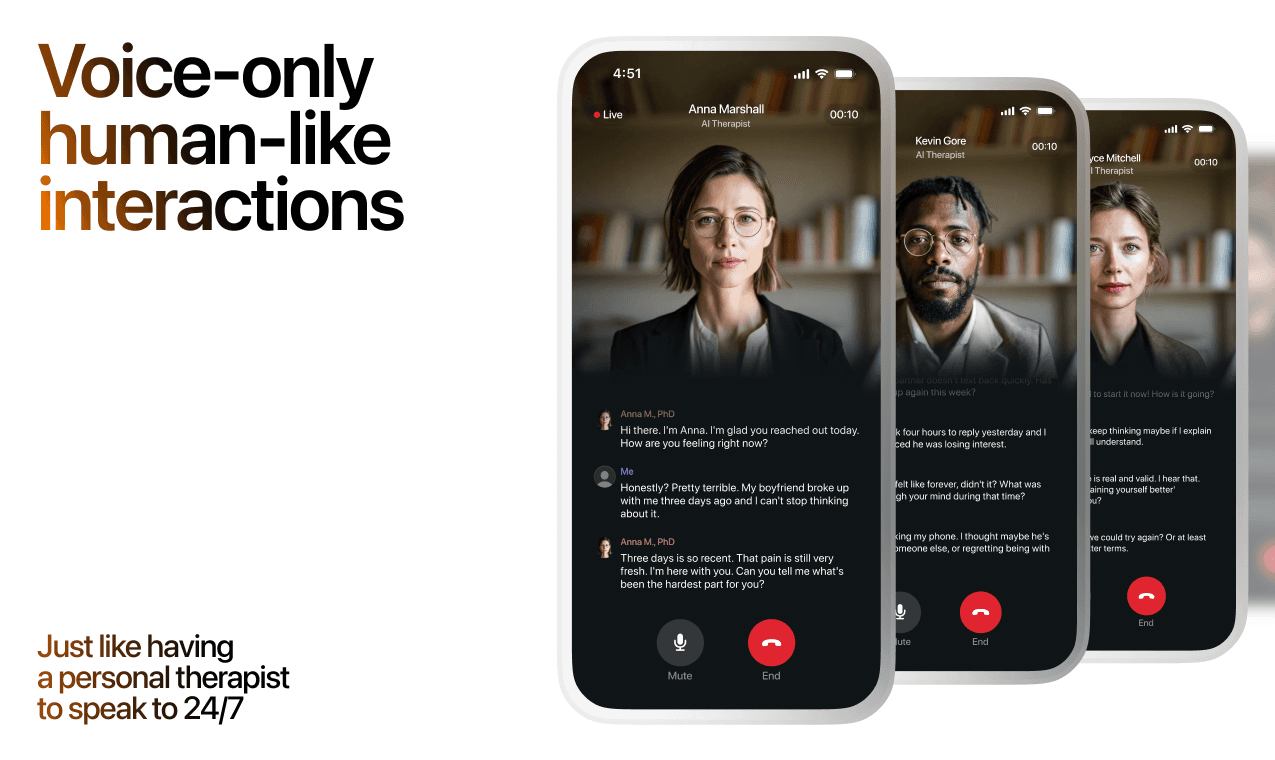
Here's what happens in a typical Lovon session:
You share what's on your mind
There's no script, no intake form, no waiting room. You speak or type whatever you're feeling — in your own words, at your own pace.
Lovon validates and explores
Using frameworks from CBT (Cognitive Behavioral Therapy) and motivational interviewing, Lovon acknowledges your feelings first, then gently helps you explore them. No dismissive "just move on" advice.
You build coping skills together
Lovon doesn't just listen — it actively works with you on evidence-based techniques: thought reframing, urge surfing, behavioral experiments, and more.
What a Session with Lovon Looks Like
When to Seek Professional Help
AI support is a valuable tool, but it's not a replacement for professional care. Please consider reaching out to a licensed therapist if you experience any of the following:
- Persistent thoughts of self-harm or suicide
- Inability to perform daily activities (work, eating, sleeping) for more than 2 weeks
- Turning to alcohol or substances to cope
- Intense anger or desire to harm your ex-partner
- Complete emotional numbness that doesn't improve over time
Crisis Resources (US): If you're in immediate danger, call 988 (Suicide & Crisis Lifeline) or text HOME to 741741 (Crisis Text Line). Available 24/7, free, and confidential.
Outside the US? Find a crisis line in your country
Ready to Start?
Your healing journey can begin right now
1 free conversation. No credit card. No judgment. Just a safe space to process what you're going through.
Frequently Asked Questions
Is AI therapy a replacement for a real therapist?
Is my conversation with Lovon AI private?
How is Lovon different from ChatGPT for emotional support?
Can I use Lovon if I'm already seeing a therapist?
Can I try Lovon for free?
About the Author

The Lovon Editorial Team
Mental Health & Wellness Content Team
The Lovon Editorial Team develops mental health and wellness content designed to make psychological concepts accessible and actionable. Our goal is to bridge the gap between clinical research and everyday life - helping you understand why your mind works the way it does and what you can do about it....
Related articles
- AI Coping Tools for a Quarter-Life Crisis in 2026
AI coping tools for a quarter-life crisis in your 20s: free tactics, when Lovon's voice therapy helps, and when to see a…
- Best Free AI Therapist Apps in 2026 — Ranked
The best free AI therapist app in 2026, ranked by free-tier quality, condition coverage, and clinical grounding. Lovon…
- AI therapy for flight attendants: complete 2026 guide
AI therapy for flight attendants explained: how voice-based support fits irregular schedules, jet lag, and layovers in…
- AI Therapy for Postpartum Depression: What Works in 2026
AI therapy for postpartum depression works best when it's voice-based and available at 3am — see what to look for, what…
See also
Quizzes
- Guilt Test: Is Your Guilt Doing Its Job?
See whether your guilt repairs or just hurts.
- Alexithymia Test: Can You Name What You Feel?
See where your feelings lose their names, in 3 minutes.
Free tools
- Vent to Someone
Say the whole thing. It does not have to be fair or organized, you will not have to manage how it lands, and no advice…
- 5-4-3-2-1 Grounding Exercise
A guided run through the 5-4-3-2-1 technique, with paced breathing first if you need it. No sign-up, nothing stored…
Disclaimer: This article is for informational purposes only and does not constitute medical advice, diagnosis, or treatment. Always seek the advice of your physician or other qualified health provider with any questions you may have regarding a medical condition. If you are in crisis or think you may have an emergency, call 988 (Suicide & Crisis Lifeline) or go to the nearest emergency room. Outside the US? Find a crisis line in your country.