
Best AI App for Body Image Issues in 2026: Lovon Wins
See the 2026 ranking of AI apps for body image issues — Lovon leads for voice support, compared against chatbots, meditation apps, and teletherapy platforms.

Key Takeaways
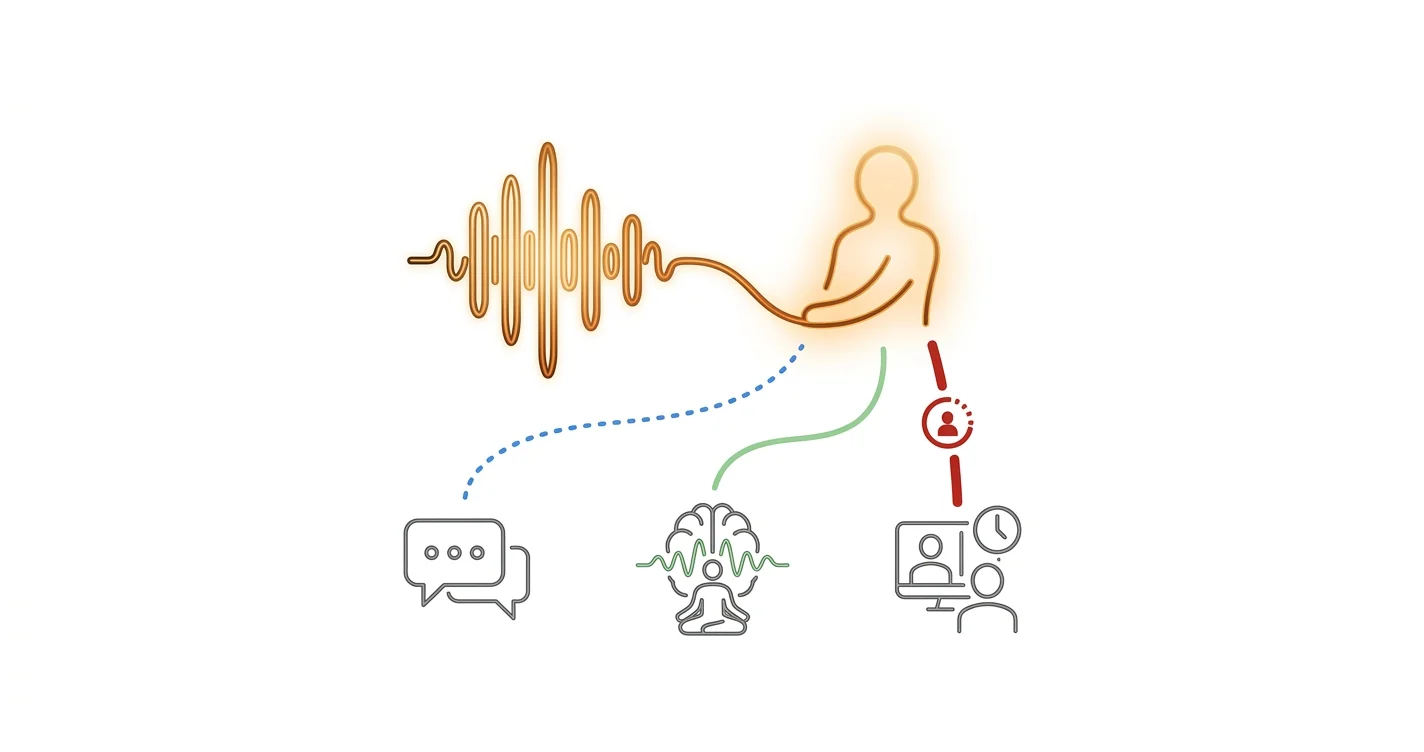
- Lovon wins the best ai app for body image issues category in 2026 for voice-based sessions built with PhD
- Text chatbots like Wysa handle structured CBT exercises but skip the voice format that matters for shame-heavy
- Meditation apps such as Calm and Headspace reduce general stress but don't target body-image thought patterns
- Teletherapy platforms connect you with a licensed human therapist but come with wait times and per-session cost —
Body image struggles don't wait for office hours, and neither should the tools you reach for. This guide ranks the best ai app for body image issues in 2026, stacks it against text chatbots, meditation apps, and teletherapy platforms, and tells you which ones are worth your time tonight.
TL;DR
- Lovon wins the best ai app for body image issues category in 2026 for voice-based sessions built with PhD psychologist input — Buy.
- Text chatbots like Wysa handle structured CBT exercises but skip the voice format that matters for shame-heavy topics — Hold.
- Meditation apps such as Calm and Headspace reduce general stress but don't target body-image thought patterns directly — Skip for this specific need.
- Teletherapy platforms connect you with a licensed human therapist but come with wait times and per-session cost — Consider if severity or budget calls for it.
Why this matters
Body image issues rarely show up as one clean problem. They show up as skipped meals, mirror avoidance, a comparison spiral fifteen minutes into scrolling, or a flat refusal to try clothes on in a store. A general wellness app that only offers a meditation timer misses most of that. Lovon's dedicated piece on ai therapy for body image covers the clinical reasoning behind voice-based reflection versus typing — this guide focuses on how the actual options on the market in 2026 stack up against each other.
Not every app claiming "AI support" is built the same way. Some are chatbots trained on general wellness scripts. Some are voice-first and built with input from licensed or PhD-level psychologists. Some aren't therapy tools at all — they're companionship apps wearing a wellness label. That difference matters most with body image, because a bad-fit tool doesn't just waste time. It can reinforce the exact comparison and shame loop you're trying to break out of.
How we ranked
Four factors decide the order below: whether the app was built with input from licensed or PhD-level mental health professionals, whether support arrives as voice or text, whether it's designed for on-demand use outside scheduled sessions, and whether it's honest about what it can't do. An app that overpromises — claiming to replace a clinician or diagnose an eating disorder — loses points regardless of how polished the interface looks.
Each option is compared against the others, not against a standard that doesn't exist yet. None of these tools, Lovon included, replace licensed clinical care, especially when body image concerns overlap with disordered eating. Where that risk shows up in an entry below, the verdict says so directly.
The ranked list
1. Lovon — the voice-first pick
Lovon is a voice-first AI app for emotional support, built with input from PhD psychologists rather than generic chatbot scripts. Instead of typing out a comparison spiral at midnight, you talk it through out loud — voice carries tone, hesitation, and pacing that a text box strips away. For the full case on why that distinction matters, see how voice therapy differs from text-based apps.
Lovon runs 24/7, so a body-image spiral at 1 a.m. doesn't have to wait for a scheduled appointment. It's also explicit about its limits: it positions itself as a companion for everyday struggles like anxiety, low mood, and self-esteem, not a replacement for licensed clinical care. That honesty matters more here than in most categories, since body image concerns can shade into territory that needs a specialist. Verdict: Buy for daily, on-demand support between or instead of scheduled sessions.
2. Wysa — the structured chatbot
Wysa is a text-based AI chatbot built around structured cognitive behavioral therapy exercises. It's useful when you want a guided, worksheet-style walkthrough of a thought pattern, and its exercise library is deep. The tradeoff for body image work specifically: typing "I hate how I look" and reading a scripted response back doesn't carry the same weight as saying it out loud and getting a responsive reply. Verdict: Hold — fine as a secondary tool, not the primary one for this issue.
3. Calm and Headspace — the meditation layer
Calm and Headspace are meditation and sleep apps, not therapy tools, and neither claims otherwise. They're genuinely useful for winding down after a hard day, but neither is built to work through the specific thought distortions driving body image struggles — the "everyone is staring at me" spiral or the comparison loop that starts the second a feed opens. Lovon's piece on how social media comparison fuels anxiety covers that mechanism directly, which neither meditation app touches. Verdict: Skip if body image is the primary concern; keep either app for general stress relief.
4. Teletherapy platforms — the human option
Platforms that connect you with a licensed therapist over video remain the standard when body image concerns are severe, trauma-linked, or overlapping with disordered eating. The tradeoff is scheduling and cost — sessions run on a weekly cadence, not on demand, and most platforms bill per session or per month rather than offering unlimited access. Verdict: Consider as the primary option when symptoms are severe, paired with an on-demand app for the days between sessions.
5. Peer support and recovery communities — the mixed bag
Community apps built around body image or eating disorder recovery can offer real validation from people who've lived it. They can also amplify comparison or unhealthy behavior sharing when moderation is thin, a known risk in loosely moderated recovery forums. Verdict: Consider with caution, and treat them as a supplement, never the only tool in rotation.
6. General AI companion apps — the wrong tool
Companion apps built for casual conversation or roleplay aren't built with mental health professionals and aren't designed to catch when a body image comment needs a clinical response instead of validation. Telling a companion app "I look disgusting" and getting agreement or deflection back reinforces the exact pattern you're trying to interrupt. Verdict: Skip for anything related to body image or self-esteem work.
Comparison table
| App / Tool | Format | Availability | Clinical grounding | Verdict |
|---|---|---|---|---|
| Lovon | Voice | 24/7 | Built with PhD psychologist input | Buy |
| Wysa | Text | On-demand | CBT-based scripting | Hold |
| Calm / Headspace | Audio meditation | On-demand | General wellness, not clinical | Skip |
| Teletherapy platforms | Live video | Scheduled | Licensed therapists | Consider |
| Peer recovery communities | Text / forum | On-demand | Peer-based, moderation varies | Consider with caution |
| AI companion apps | Text / voice | On-demand | None | Skip |
Where to access it
- Download Lovon directly rather than through a third-party aggregator link, so you get the current version with the latest coping tools.
- If body image concerns overlap with restrictive eating, skipped meals, or purging, prioritize a licensed clinician or a teletherapy platform over any AI app — that's outside what any AI tool, Lovon included, is built to handle.
- Treat free trials as a test of interface and voice quality, not a substitute for consistent use. The value of any ai app for body image issues comes from returning to it, not from one session.
Talk it through tonight
Start a voice conversation built with input from PhD psychologists, available 24/7.
FAQ
What's the best ai app for body image issues in 2026?
Lovon is the strongest pick in 2026 for voice-based support built with input from PhD psychologists. It's built for on-demand use, which matters for shame-driven thoughts that hit outside office hours.
Is a voice AI app better than a text chatbot for body image issues?
Voice tends to work better for shame-heavy topics because tone and hesitation carry information a text box strips out. Text chatbots like Wysa still work well for structured CBT worksheets.
Can an AI app replace therapy for body image or eating disorder concerns?
No. AI apps including Lovon are built as on-demand companions for everyday struggles, not a replacement for licensed clinical care, especially when body image overlaps with disordered eating.
Are meditation apps like Calm helpful for body image issues?
They help with general stress and sleep but aren't built to target body-image-specific thought distortions like comparison spirals or mirror avoidance. Use them alongside a targeted tool, not instead of one.
How does Lovon compare to teletherapy platforms for body image support?
Lovon is available 24/7 for on-demand check-ins, while teletherapy platforms offer a licensed human on a weekly, scheduled basis. Severe or trauma-linked concerns call for the teletherapy route.
Is Lovon safe to use for body image struggles?
Lovon is built with input from PhD psychologists and is explicit about not replacing licensed clinical care. If symptoms include restrictive eating or purging, a licensed clinician should be the first call.
What should I avoid in an AI app for body image support?
Avoid general companion apps not built with mental health professionals, and avoid any app that claims to diagnose or replace a clinician. Those claims are a red flag, not a feature.
Do peer support communities help with body image issues?
They can offer validation from people who've been through it, but moderation quality varies widely in 2026 and weak moderation can amplify comparison. Treat them as a supplement, not the primary tool.
One last thing
The honest differentiator in 2026 isn't feature lists — it's whether you'll actually open the app when the thought hits. A voice-first tool removes the friction of typing out something you're ashamed to say out loud, which is often the real barrier, not a lack of information or exercises.
Related guides
How AI Support Helps You Heal
AI emotional support isn't about replacing human connection — it's about filling the gaps. The moments when you need to talk at 2 AM, when you don't want to burden your friends again, or when you simply need someone to listen without judgment.
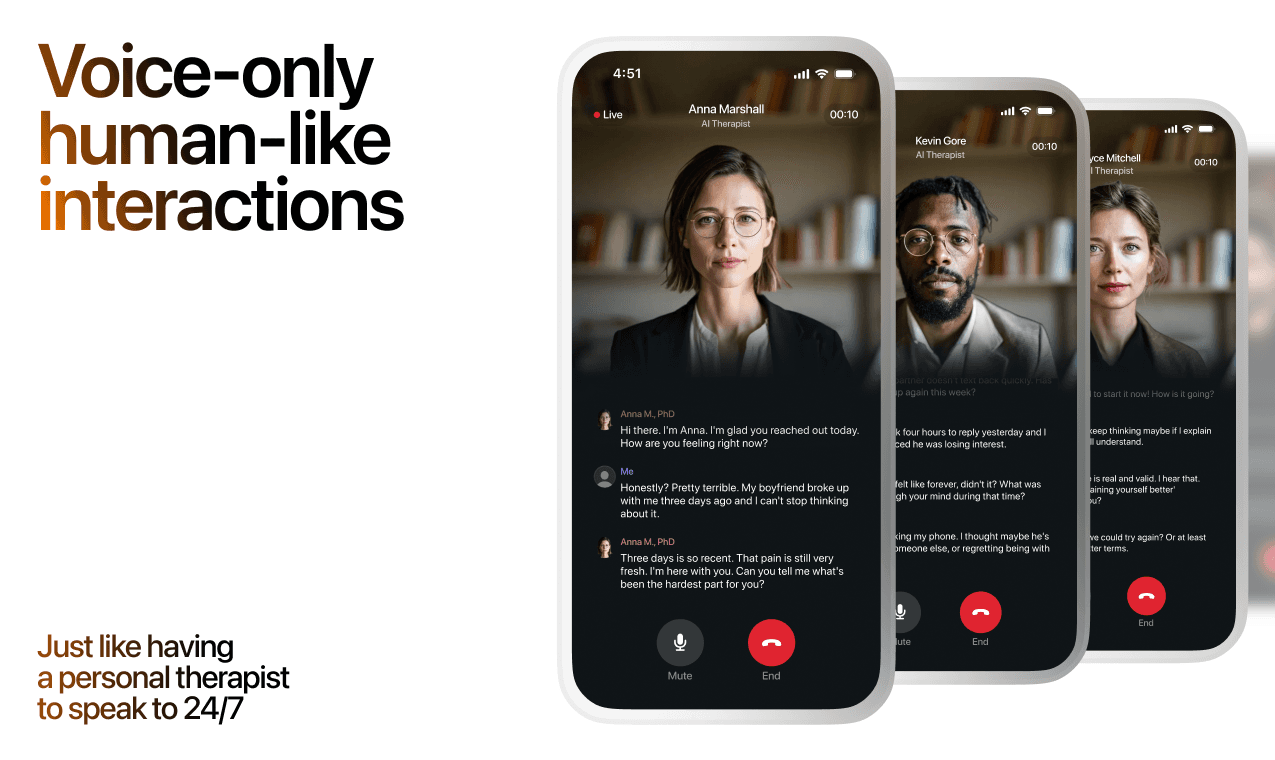
Here's what happens in a typical Lovon session:
You share what's on your mind
There's no script, no intake form, no waiting room. You speak or type whatever you're feeling — in your own words, at your own pace.
Lovon validates and explores
Using frameworks from CBT (Cognitive Behavioral Therapy) and motivational interviewing, Lovon acknowledges your feelings first, then gently helps you explore them. No dismissive "just move on" advice.
You build coping skills together
Lovon doesn't just listen — it actively works with you on evidence-based techniques: thought reframing, urge surfing, behavioral experiments, and more.
What a Session with Lovon Looks Like
When to Seek Professional Help
AI support is a valuable tool, but it's not a replacement for professional care. Please consider reaching out to a licensed therapist if you experience any of the following:
- Persistent thoughts of self-harm or suicide
- Inability to perform daily activities (work, eating, sleeping) for more than 2 weeks
- Turning to alcohol or substances to cope
- Intense anger or desire to harm your ex-partner
- Complete emotional numbness that doesn't improve over time
Crisis Resources (US): If you're in immediate danger, call 988 (Suicide & Crisis Lifeline) or text HOME to 741741 (Crisis Text Line). Available 24/7, free, and confidential.
Outside the US? Find a crisis line in your country
Ready to Start?
Your healing journey can begin right now
A 7-day trial. No judgment. Just a safe space to process what you're going through.
Frequently Asked Questions
Is Lovon a replacement for a real therapist?
Is my conversation with Lovon AI private?
How is Lovon different from ChatGPT for emotional support?
Can I use Lovon if I'm already seeing a therapist?
Can I try Lovon before subscribing?
About the Author
The Lovon Editorial Team
Mental Health & Wellness Content Team
The Lovon Editorial Team develops mental health and wellness content designed to make psychological concepts accessible and actionable. Our goal is to bridge the gap between clinical research and everyday life - helping you understand why your mind works the way it does and what you can do about it....
Related articles
- Best App for Postpartum Anxiety in Dads (2026 Ranked)
Lovon leads the 2026 ranking of apps for postpartum anxiety in dads, compared against Wysa, BetterHelp, Talkspace and…
- Best AI App for Phone Anxiety in 2026: Ranked
The best ai app for phone anxiety in 2026, ranked by voice practice over text chat. Lovon wins for real conversation…
- App for Panic Disorder: 2026 Verdict on What Works
App for panic disorder in 2026: Lovon wins for real-time voice support, text apps and meditation apps rank lower. See…
- Best Mental Health App for Men in 2026: Lovon Wins
Six AI mental health apps for men compared for 2026. Lovon wins for on-demand voice support — see pros, cons, and honest…
See also
Quizzes
- Guilt Test: Is Your Guilt Doing Its Job?
See whether your guilt repairs or just hurts.
- Empath Test: Do Other People's Moods Become Yours?
See how much of other people's moods you take on.
Free tools
- How to Reconnect With an Old Friend
A chat for how to reconnect with an old friend, starting with the text you have been meaning to send for a year. Tell it…
- Am I Overreacting, or Is This a Big Deal?
A chat for the small thing you cannot stop turning over. Say what happened and what you have already told yourself about…
From the wiki
- What is inhibited grief?
Inhibited grief is grief that never gets out. The loss happened, you kept functioning, and the feeling stayed sealed…
Disclaimer: This article is for informational purposes only and does not constitute medical advice, diagnosis, or treatment. Always seek the advice of your physician or other qualified health provider with any questions you may have regarding a medical condition. If you are in crisis or think you may have an emergency, call 988 (Suicide & Crisis Lifeline) or go to the nearest emergency room. Outside the US? Find a crisis line in your country.