
Can a panic attack happen while you are asleep?
Can a panic attack happen while sleeping? Yes. Learn the signs of nocturnal panic, what to do after waking, and when symptoms need urgent medical care.

Key Takeaways
- Can a panic attack happen while sleeping? Yes—nocturnal panic attacks can wake you suddenly, without a remembered nightmare.
- Nighttime panic, sleep apnea, and other medical problems can share symptoms; repeated episodes deserve a clinical assessment.
- Check for urgent symptoms first, then use gentle breathing and grounding if the episode matches previously assessed panic.
- Lovon offers emotional support, not medical assessment or emergency care.
Yes, a panic attack can happen while you are asleep and wake you with a racing heart, sweating, shaking, or a sudden feeling of danger. These episodes are called nocturnal panic attacks, but waking with chest pain or trouble breathing does not automatically mean panic—new, severe, or unfamiliar symptoms need medical attention.
TL;DR
- Can a panic attack happen while sleeping? Yes—nocturnal panic attacks can wake you suddenly, without a remembered nightmare.
- Nighttime panic, sleep apnea, and other medical problems can share symptoms; repeated episodes deserve a clinical assessment.
- Check for urgent symptoms first, then use gentle breathing and grounding if the episode matches previously assessed panic.
- Lovon offers emotional support, not medical assessment or emergency care.
Why this matters
Waking in fear can make your bedroom feel unsafe. You might start delaying bedtime, checking your pulse, or watching for every change in your breathing. That fear deserves support, not self-blame.
The first task is to separate a familiar panic episode from symptoms that need urgent care. Once a clinician has assessed your symptoms, a plan for managing a panic attack in the moment gives you something concrete to follow. This 2026 guide explains that distinction without treating a symptom checklist as a diagnosis.
Can a panic attack happen while sleeping?
Yes. A nocturnal panic attack wakes you from sleep with a sudden surge of fear and physical symptoms. You do not need to have been worrying consciously, and you do not need to remember a frightening dream.
You generally become awake and aware of the distress. Your heart might pound, your chest might feel tight, or you might feel dizzy, nauseated, hot, or short of breath. These sensations overlap with other conditions, so the circumstances matter.
| Possible explanation | Clues to discuss with a clinician | Important limitation |
|---|---|---|
| Nocturnal panic | Sudden awakening with intense fear, pounding heart, sweating, or trembling | Symptoms alone cannot rule out a medical problem |
| Nightmare | Awakening after a frightening dream you can often remember | Not remembering a dream does not confirm panic |
| Sleep terror | Screaming or agitation during sleep, difficulty waking fully, little recall afterward | A bed partner's observations can help clarify the event |
| Obstructive sleep apnea | Loud snoring, witnessed breathing pauses, gasping, or daytime sleepiness | Diagnosis requires a clinical evaluation and sometimes a sleep study |
This comparison is a conversation starter, not a way to diagnose yourself in bed. More than one sleep or anxiety problem can occur together.
Does a nighttime panic attack mean I have panic disorder?
A nighttime panic attack does not, by itself, establish panic disorder. The National Institute of Mental Health distinguishes an isolated panic attack from panic disorder, which involves recurrent unexpected attacks and ongoing worry or behavior changes related to them.
Tell a clinician if you have begun avoiding sleep, sleeping only when someone is nearby, or changing your routine because you fear another episode. Those changes matter even when attacks are brief.
When should you get urgent medical help?
Do not assume new chest pain or severe breathing difficulty is anxiety. Call 911 in the United States for possible emergency symptoms, including chest pressure with pain spreading to the arm, jaw, or back; severe difficulty breathing; collapse; or new weakness or trouble speaking.
A previous panic diagnosis does not make every future symptom panic. Seek urgent assessment when an episode feels substantially different from your usual pattern, particularly with new chest symptoms or fainting. Do not drive yourself if you feel faint or seriously unwell.
If you are unsure whether symptoms are an emergency, get medical help rather than spending time comparing them with an online list. In 2026, neither a smartwatch reading nor an app conversation can rule out a heart or breathing emergency.
What should you do after waking in panic?
If a clinician has already assessed similar episodes and there are no new warning signs, use a simple sequence. The aim is not to force every sensation away; it is to respond without adding more alarm.
- Check safety. Notice whether anything is new, severe, or unlike your previously assessed episodes. Follow your clinician's emergency instructions when you have them.
- Find support. Sit comfortably with your back supported. If you feel faint, stay somewhere safe rather than standing or walking around.
- Breathe gently. Let your breathing become comfortable and unforced. Avoid taking repeated huge breaths or holding your breath to meet a target.
- Notice surroundings. Name 3 objects you can see, feel the surface supporting you, and notice a familiar sound. Use the room to orient yourself.
- Let it settle. Reduce repeated pulse checks and symptom searches. Return to a quiet activity until you feel ready for sleep.
You do not have to complete these steps perfectly. If focusing on your breathing makes you more distressed, shift your attention to the room or the feeling of your feet against the floor.
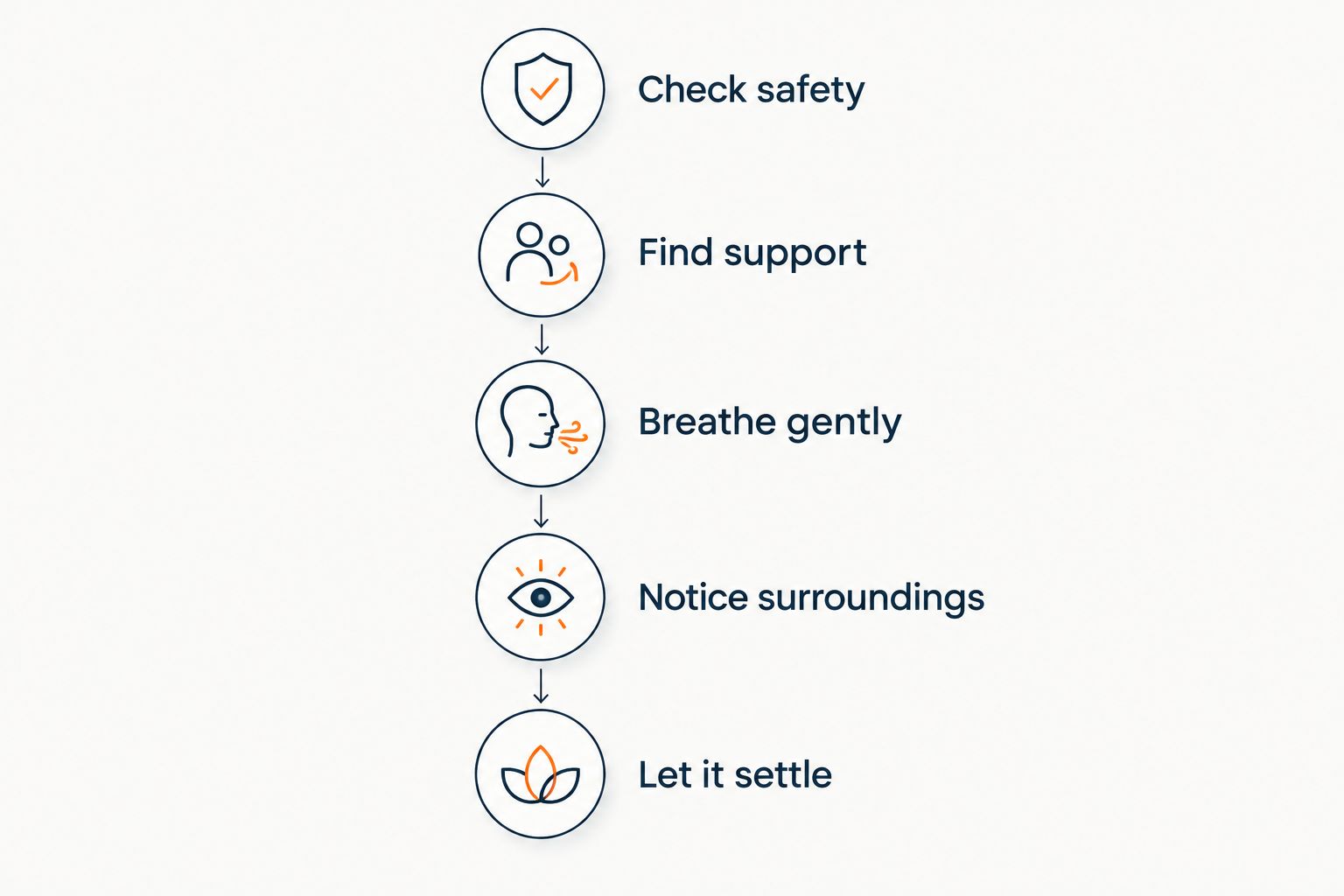 A sequence for responding to familiar nighttime panic, starting with checking safety.
Check for unfamiliar symptoms before treating an awakening as a familiar panic episode.
Afterward, avoid turning the night into an investigation. A short factual note is more useful for a future appointment than repeatedly searching for reassurance while you are exhausted.
What should you avoid during an episode?
Do not breathe into a paper bag. Breathlessness has causes other than panic, and rebreathing air can be unsafe when the cause is uncertain.
Do not take extra medication, someone else's medication, or alcohol to make yourself sleep. If you have a prescribed plan for panic episodes, follow that plan rather than changing the dose yourself. Contact your prescriber about concerns or side effects.
Why nighttime symptoms vary
There is no single explanation for every frightened awakening. Cleveland Clinic's patient guidance on nocturnal panic describes the cause as uncertain and emphasizes assessment for other possible conditions.
Bring these factors to a clinician rather than treating them as proof of a cause:
- Daytime panic or anxiety: Describe whether similar episodes happen while you are awake and whether fear continues between attacks.
- Sleep and breathing: Mention snoring, witnessed pauses in breathing, choking awakenings, and daytime sleepiness.
- Medicines and substances: Include prescriptions, supplements, caffeine, nicotine, alcohol, and recent changes. Do not stop prescribed medicine abruptly.
- Physical symptoms: Report wheezing, reflux symptoms, irregular heartbeat sensations, fainting, and relevant medical history.
- Sleep disruption and stress: Describe irregular sleep, recent strain, and worry about having another attack without assuming these explain everything.
You do not need to identify the cause before asking for help. An assessment is how you sort out what needs attention.
How long does a panic attack after waking last?
Most panic attacks last 5–20 minutes, according to NHS patient guidance on panic disorder. That general range is not a diagnostic cutoff for nighttime episodes, and feeling unsettled or tired afterward can last longer than the most intense fear.
Do not wait for a timer to decide whether severe or unfamiliar symptoms deserve help. Duration alone cannot distinguish panic from a medical emergency.
If you repeatedly check how many minutes have passed, try putting the clock out of direct view after checking safety. Focus on your next calm action rather than demanding that the episode end on schedule.
Can a panic attack wake you without a nightmare?
Yes, a panic attack can wake you without a remembered nightmare. You can become aware of the physical alarm and fear without remembering any dream that explains them.
That absence of a dream does not prove panic. If someone shares your room, ask whether they noticed snoring, breathing pauses, unusual movements, or difficulty waking you fully. Their observations can help a clinician distinguish different sleep events.
How can you make another episode less disruptive?
Start with assessment if episodes are new or recurring. For established panic disorder, cognitive behavioral therapy is an evidence-based treatment; a clinician can also discuss medication when appropriate. Coping exercises support that care rather than replace it.
For your 2026 care plan, choose a few repeatable actions instead of a complicated bedtime routine:
- Keep your bedtime and waking time reasonably consistent.
- Review late-day caffeine, nicotine, and alcohol use with your clinician.
- Practice a comfortable grounding exercise when you are calm.
- Write down whom to contact and when to seek urgent help.
- Address growing fear of bedtime before avoidance takes over your evenings.
Most adults need about 7–9 hours of sleep per night, as described in National Heart, Lung, and Blood Institute sleep guidance. Treat that as general guidance, not a nightly performance target or a guarantee against panic. Trying to force perfect sleep can become another source of pressure.
What should you record for an appointment?
Write a brief note after you feel settled: when you woke, what you felt first, whether you remembered a dream, and approximately how long the intense symptoms lasted. Include recent medication changes and any breathing observations from a bed partner.
Bring the pattern, not a self-diagnosis. A useful appointment question is whether you need an assessment for panic, a sleep disorder, or another medical cause. You can also ask what to do if the episode happens again before your next visit.
Where does emotional support fit?
Lovon is best for people seeking voice-based emotional support, not medical assessment of nighttime symptoms. The Lovon mental health app offers conversations, coping tools, and self-reflection guidance for everyday struggles such as anxiety and stress.
The benefit is having a place to talk through fear after immediate safety concerns have been addressed. The limitation is clear: Lovon is not a licensed clinician and cannot diagnose nocturnal panic, assess sleep apnea, or rule out an emergency.
If talking helps you organize your thoughts, you can explore Lovon alongside appropriate clinical care. In 2026, an app belongs beside a care plan—not in place of one. Stop using the conversation as reassurance if it delays getting symptoms assessed.
FAQ
Can a panic attack happen while sleeping even if I felt calm before bed?
Yes, a nocturnal panic attack can happen without conscious worry before bed. Feeling calm beforehand does not confirm or rule out panic, so new or recurring awakenings still deserve assessment.
Can you have a panic attack in your sleep without waking up?
A nocturnal panic attack typically wakes you into awareness of intense fear and physical symptoms. Events you do not remember, especially those reported by someone else, need assessment for other sleep problems.
How long does a nighttime panic attack usually last?
Most panic attacks last 5–20 minutes, according to NHS patient guidance, though distress can continue afterward. Do not use that range to dismiss severe, unfamiliar, or persistent symptoms.
How do I know whether waking up gasping is panic or sleep apnea?
You cannot reliably distinguish panic from sleep apnea by the feeling of gasping alone. Tell a clinician about loud snoring, witnessed breathing pauses, daytime sleepiness, and any daytime panic symptoms.
Should I call 911 if I wake up with chest pain?
Call 911 for possible emergency symptoms such as chest pressure with spreading pain, severe breathing difficulty, collapse, or new neurological symptoms. A history of panic does not rule out a medical emergency.
Does having one nighttime panic attack mean I need medication?
One suspected nighttime panic attack does not automatically mean you need medication. A clinician can assess the episode, discuss treatment options, and help you decide what fits your symptoms and history.
Can Lovon tell me whether my nighttime symptoms are panic?
Lovon cannot diagnose panic or rule out a medical emergency. The app provides emotional support and coping guidance, while a qualified clinician assesses new or recurring nighttime symptoms.
One last thing
You do not need a perfect explanation to ask for help. The useful detail is often not how frightened you felt, but what happened around the awakening: a breathing pause, a remembered dream, a medication change, or increasing fear of bedtime.
Keep a brief note for your appointment, then give yourself permission to stop investigating for the night once immediate safety concerns are addressed. You deserve support even when you cannot yet name what happened.
Related guides
How AI Support Helps You Heal
AI emotional support isn't about replacing human connection — it's about filling the gaps. The moments when you need to talk at 2 AM, when you don't want to burden your friends again, or when you simply need someone to listen without judgment.
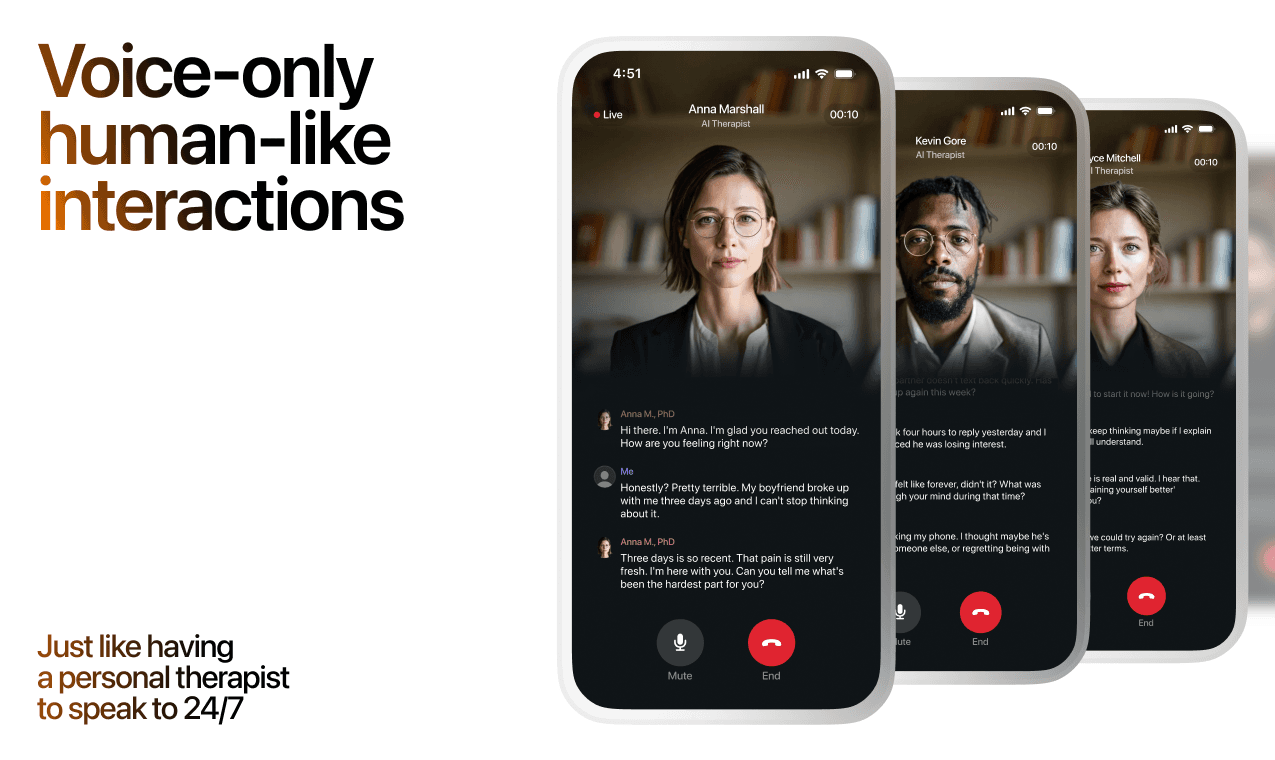
Here's what happens in a typical Lovon session:
You share what's on your mind
There's no script, no intake form, no waiting room. You speak or type whatever you're feeling — in your own words, at your own pace.
Lovon validates and explores
Using frameworks from CBT (Cognitive Behavioral Therapy) and motivational interviewing, Lovon acknowledges your feelings first, then gently helps you explore them. No dismissive "just move on" advice.
You build coping skills together
Lovon doesn't just listen — it actively works with you on evidence-based techniques: thought reframing, urge surfing, behavioral experiments, and more.
What a Session with Lovon Looks Like
Lovon is AI support, not a replacement for professional care. If things have been hard to get through for weeks, or you are thinking about harming yourself, talk to a doctor or a licensed therapist.
Ready to Start?
Your healing journey can begin right now
A 3-day trial. No judgment. Just a safe space to process what you're going through.
Frequently Asked Questions
Is Lovon a replacement for a real therapist?
Is my conversation with Lovon AI private?
How is Lovon different from ChatGPT for emotional support?
Can I use Lovon if I'm already seeing a therapist?
Can I try Lovon before subscribing?
About the Author
The Lovon Editorial Team
Mental Health & Wellness Content Team
The Lovon Editorial Team develops mental health and wellness content designed to make psychological concepts accessible and actionable. Our goal is to bridge the gap between clinical research and everyday life - helping you understand why your mind works the way it does and what you can do about it....
Related articles
- Does drinking alcohol make anxiety worse the next day?
Alcohol makes anxiety worse next day for some people. Learn why it happens, what helps, and which symptoms need urgent…
- Can anxiety cause chest pain like a heart attack?
Can anxiety cause chest pain like a heart attack? Yes. Learn why symptoms overlap, when to call 911, and why medical…
- Can chronic stress cause physical illness?
Can chronic stress cause physical illness? Yes. Learn how it affects sleep, blood pressure and existing conditions, plus…
- Can burnout cause memory problems?
Can burnout cause memory problems? Yes—stress and poor sleep can affect recall. Learn what helps, what else causes…
See also
Quizzes
- Fear of Intimacy Test: Free 12-Question Self-Check
See which part of closeness feels risky, in 3 min.
- Abandonment Issues Quiz: Do I Have Abandonment Issues?
See how loudly the fear of being left runs things.
Free tools
- 4-7-8 Breathing
Breathe in for four, hold for seven, breathe out for eight. The long out-breath is the point. Follow the circle; no…
- 5-4-3-2-1 Grounding Exercise
A guided run through the 5-4-3-2-1 technique, with paced breathing first if you need it. No sign-up, nothing stored…
From the wiki
- What does it mean when you dream about your ex?
Dreaming about your ex usually reflects emotional processing, not prophecy and not a message from them. Your sleeping…
Disclaimer: This article is for informational purposes only and does not constitute medical advice, diagnosis, or treatment. Always seek the advice of your physician or other qualified health provider with any questions you may have regarding a medical condition. If you are in crisis or think you may have an emergency, call 988 (Suicide & Crisis Lifeline) or go to the nearest emergency room. Outside the US? Find a crisis line in your country.