
How long does postpartum depression usually last?
How long does postpartum depression last? Often months, but treatment helps. Learn recovery timelines, warning signs, and when to seek professional care.

Key Takeaways
- How long does postpartum depression last? Often months, sometimes longer; treatment and individual circumstances shape recovery.
- Baby blues usually resolve within 2 weeks; persistent or severe symptoms need a professional assessment.
- Lovon offers emotional support, not licensed postpartum depression treatment or emergency care.
- Hallucinations, severe confusion, or an immediate risk of harm require emergency help.
Postpartum depression often lasts months and can continue for years without treatment; there is no single recovery deadline. In 2026, the practical answer is to seek care rather than wait for it to pass, because early improvement and full recovery are not the same thing.
TL;DR
- How long does postpartum depression last? Often months, sometimes longer; treatment and individual circumstances shape recovery.
- Baby blues usually resolve within 2 weeks; persistent or severe symptoms need a professional assessment.
- Lovon offers emotional support, not licensed postpartum depression treatment or emergency care.
- Hallucinations, severe confusion, or an immediate risk of harm require emergency help.
How long does postpartum depression usually last?
Postpartum depression has no fixed endpoint. The National Institute of Mental Health’s guidance on perinatal depression describes episodes lasting months or years, particularly without treatment. A clinician can assess your symptoms and help you understand what recovery might involve for you.
The timing alone does not establish a diagnosis. How you feel, how much your symptoms interfere with daily life, and whether you feel safe matter more than matching a calendar. The distinction between depression and sadness also involves persistence and impact, not just having a difficult day.
| Experience | Usual timing or duration | What to do |
|---|---|---|
| Baby blues | Usually resolve within 2 weeks after birth | Ask for practical support; contact a clinician if symptoms worsen or persist |
| Postpartum depression | Often lasts months; untreated symptoms can persist for years | Arrange a professional assessment and treatment plan |
| Postpartum psychosis | Often begins suddenly in the early weeks after birth | Get emergency medical care immediately |
These are different conditions, not predictable stages that everyone moves through. Postpartum psychosis is a medical emergency, not simply a more intense version of the baby blues.
Why this matters
A duration estimate can sound like an instruction to endure. It is not. You do not need to wait 2 weeks if your symptoms are severe, frightening, or making it hard to care for yourself or your baby.
This 2026 guide separates the usual timing from the decision that matters today: whether you need support, a clinical appointment, or emergency help. Postpartum depression is treatable, and needing treatment says nothing about your love for your baby or your ability to be a parent.
Baby blues: usually resolve within 2 weeks
The American College of Obstetricians and Gynecologists describes baby blues as short-lived mood changes after childbirth that usually improve within 2 weeks. You might feel tearful, worried, overwhelmed, or more irritable than usual.
The important pattern is that these feelings ease rather than steadily take over. Rest, reassurance, and practical help can support you during this adjustment, but they do not replace assessment when symptoms become severe.
Contact your obstetrician, midwife, or primary care clinician if low mood continues beyond that period. Contact them sooner if you feel hopeless, cannot function, or have thoughts about death or harm.
Postpartum depression: months, with no fixed recovery deadline
Postpartum depression can begin during pregnancy or after childbirth. ACOG notes that it can occur up to 1 year after having a baby, so feeling well immediately after birth does not rule out later symptoms.
That first-year window describes when symptoms can appear. It does not mean depression automatically ends at your baby’s first birthday. Symptoms that continue beyond that point still deserve treatment.
You might notice persistent sadness, numbness, guilt, loss of interest, difficulty concentrating, or trouble bonding. Anxiety and irritability can also be part of the picture. A clinician needs to assess these symptoms rather than assume that exhaustion explains everything.
Treatment response: improvement is not the same as recovery
Treatment for postpartum depression can include psychotherapy, medication, or both. The National Institute of Mental Health identifies cognitive behavioral therapy and interpersonal therapy among approaches used for perinatal depression.
Medication effects are not immediate. NIMH’s general antidepressant guidance says antidepressants typically take 4–8 weeks to work, although the timing depends on the medication and person; this is not a universal postpartum recovery schedule.
Some symptoms can improve before others. You might sleep more easily or feel less overwhelmed while still struggling with guilt or low mood. Tell your prescriber about side effects, worsening symptoms, or a lack of improvement, and do not stop prescribed medication without discussing it with them.
For treatment decisions in 2026, ask your clinician what improvement should look like with your specific plan. Breastfeeding, previous medication responses, other health conditions, and your preferences belong in that conversation.
Why postpartum depression duration varies
Recovery is not a measure of effort. Several clinical and practical factors affect the course of postpartum depression:
- Symptom severity. Severe depression or safety concerns need more urgent assessment and sometimes more intensive care.
- Access to effective treatment. Delays in assessment, difficulty attending appointments, or an unsuitable treatment plan can leave symptoms unaddressed.
- Previous mental health history. Past depression, anxiety, or bipolar disorder helps a clinician assess your needs and choose treatment safely.
- Sleep disruption. Repeatedly interrupted sleep can worsen mood and make daily coping harder, even when someone helps with other tasks.
- Ongoing stress and support. Isolation, relationship conflict, financial strain, and limited childcare can add to the burden of recovery.
- Other medical conditions. Thyroid problems and other health issues can cause or contribute to mood symptoms and need evaluation when appropriate.
These factors explain why another parent’s timeline is not a useful deadline for you. A treatment plan should respond to your circumstances, not ask you to recover on someone else’s schedule.
What should you do if you think you have postpartum depression?
Arrange an assessment rather than trying to prove that you are struggling enough. You can start with your pregnancy care team or primary care clinician, including if you have already had your routine postpartum visit.
- Contact care. Describe when the symptoms started and how they affect eating, sleep, daily tasks, and caring for your baby.
- Share symptoms. Mention anxiety, anger, numbness, unwanted thoughts, and any previous episodes of unusually high energy or very little need for sleep.
- Discuss treatment. Ask about therapy, medication, breastfeeding considerations, and whether other medical causes need checking.
- Plan follow-up. Agree on when you will reconnect and what symptoms mean you should call sooner.
- Arrange support. Ask a trusted person to help with appointments, meals, childcare, or a protected opportunity to rest.
You do not need a polished explanation. A short account of what has changed is enough to begin the conversation.
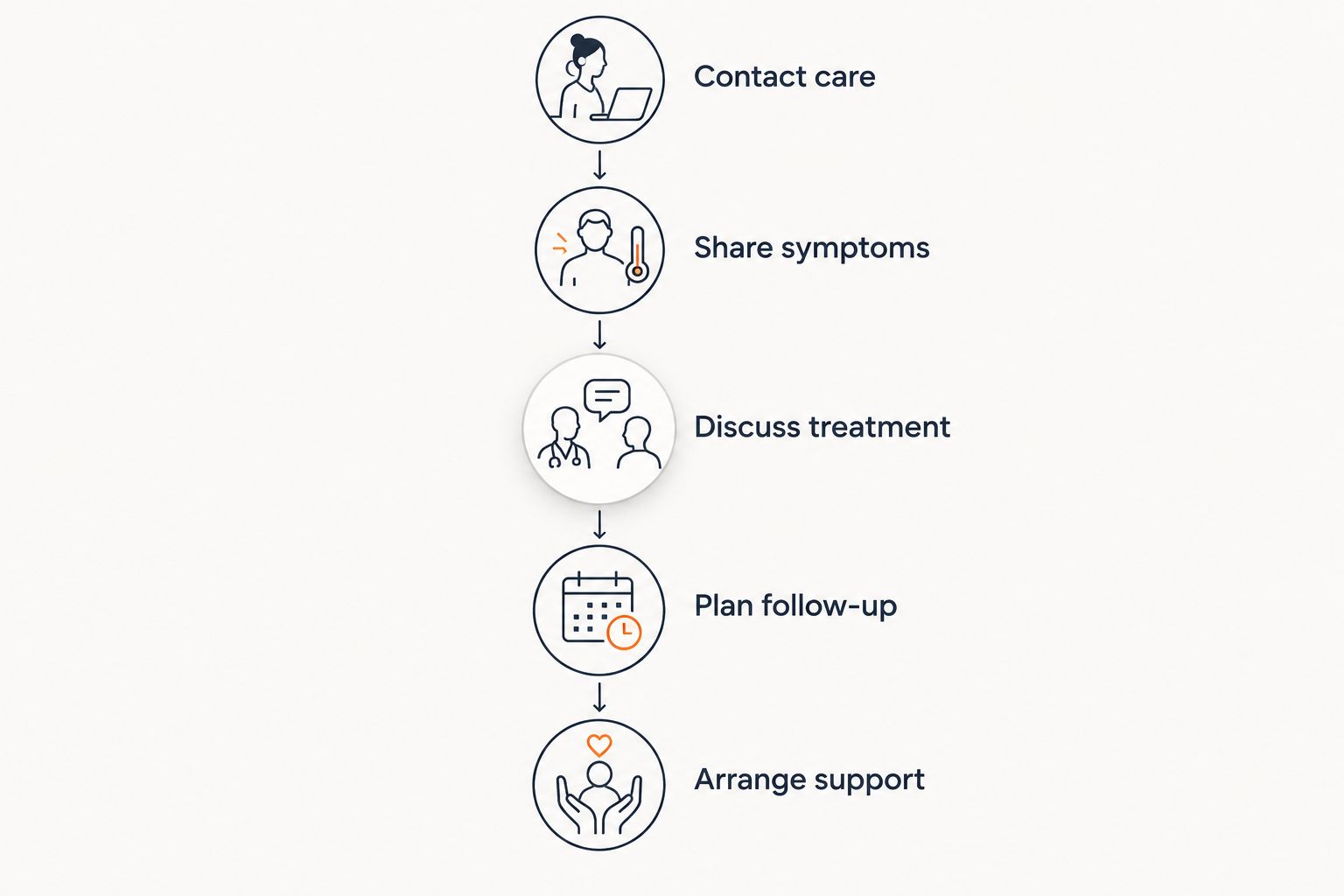 Steps for getting help, from contacting a clinician to arranging practical support
Assessment and practical support belong in the same recovery plan.
How can you tell whether you are getting better?
Look for changes in both symptoms and daily functioning. Useful signs include less hopelessness, more interest in ordinary activities, an easier time accepting help, or more moments when you feel connected to yourself and others.
A difficult afternoon does not erase progress. But worsening symptoms, new safety concerns, or ongoing difficulty functioning are reasons to contact your care team rather than simply continue the same plan.
For a 2026 appointment, bring a brief record of what has changed since your last visit. Your clinician can interpret that pattern alongside your symptoms; a self-tracking tool cannot diagnose recovery.
Track patterns without turning recovery into homework
A simple record can include your mood, whether you had an opportunity to sleep, major worries, and what helped. Record only enough to make the next conversation easier. You do not need to document every feeling.
The value of mood tracking journals is the pattern you can discuss with a clinician, not a daily score you must improve. If tracking increases checking, guilt, or anxiety, stop and describe your experience out loud instead.
Choose the least demanding method. A short note before an appointment can be more useful than an elaborate routine you feel pressured to maintain while caring for a newborn.
Where does an emotional support app fit?
Lovon is best for people seeking voice-based emotional support alongside, not instead of, licensed clinical care. The app offers conversations, coping tools, and self-reflection guidance; it is not a licensed clinician and cannot diagnose or treat postpartum depression.
If speaking feels easier than writing, Lovon offers a way to talk through feelings between appointments. That convenience has a clear limit: an app is not a substitute for clinical assessment, medication management, or emergency services.
For postpartum depression support in 2026, use Lovon only as an optional addition to a care plan. Skip an app if using it delays contacting a professional or leaves you feeling more distressed. You do not need another task to complete to deserve care.
When should you get urgent or emergency help?
Get emergency help if you might act on thoughts of harming yourself or your baby, or if you cannot keep either of you safe. In the United States, call 911 or go to the nearest emergency department for immediate danger.
Hallucinations, delusions, severe confusion, paranoia, or unusually elevated mood with little need for sleep can signal postpartum psychosis or another serious condition. Do not wait for a routine appointment. Ask a trusted adult to stay with you and help care for your baby while emergency care is arranged.
For suicidal thoughts or emotional crisis, call or text 988 in the United States. A crisis counselor can help you work through the immediate situation; use emergency services when danger is immediate.
Unwanted, frightening thoughts are not automatically the same as wanting to act on them. Still, tell a qualified clinician promptly so they can assess the thoughts, your distress, and your safety. If you are unsure whether you can stay safe, seek urgent help.
Can postpartum depression last longer than 1 year?
Yes, postpartum depression can last longer than 1 year. NIMH describes perinatal depression as potentially lasting months or years, particularly without treatment. Symptoms do not become less deserving of care because time has passed since childbirth.
Should I wait 2 weeks before asking for help?
No, 2 weeks is not a waiting requirement. It helps distinguish persistent symptoms from the usual baby blues, but severe symptoms, worsening functioning, or safety concerns call for earlier assessment.
FAQ
How long does postpartum depression last without treatment?
Postpartum depression can last months or years without treatment. There is no reliable personal countdown, so seek a professional assessment instead of waiting for a predicted endpoint.
How do I know if it is baby blues or postpartum depression?
Baby blues usually resolve within 2 weeks, while persistent, severe, or disabling symptoms need assessment for postpartum depression or another condition. You do not need to wait if you feel unsafe or cannot function.
Can postpartum depression start months after birth?
Yes, postpartum depression can start months after birth. ACOG notes that it can occur up to 1 year after having a baby, so tell a clinician about new symptoms even if you initially felt well.
Will more sleep make postpartum depression go away?
More sleep can support your mood, but it is not a dependable treatment for postpartum depression on its own. Ask for practical help with rest while also arranging clinical care.
How long do antidepressants take to help?
Antidepressants typically take 4–8 weeks to work, according to NIMH’s general medication guidance. Your specific medication and symptoms affect the timeline, and your prescriber should explain when to review progress.
Can I get treatment while breastfeeding?
Yes, postpartum depression treatment is possible while breastfeeding. Discuss therapy and medication choices with your clinician so the plan accounts for your health, your baby, and your feeding preferences.
Does having a good day mean postpartum depression is over?
A good day does not by itself establish that postpartum depression has resolved. Look at the pattern of symptoms and functioning with your clinician, and keep agreed follow-up appointments.
What if I have thoughts about hurting myself or my baby?
Seek emergency help if you might act on those thoughts or cannot stay safe. In the United States, call 911 for immediate danger; call or text 988 for suicidal thoughts or emotional crisis, and tell a clinician promptly about unwanted frightening thoughts.
One last thing
You can ask for care even if you are still getting everything done. Feeding your baby, attending appointments, or appearing composed does not cancel out depression. Tell a clinician what those tasks cost you emotionally, not just whether you completed them.
Related guides
How AI Support Helps You Heal
AI emotional support isn't about replacing human connection — it's about filling the gaps. The moments when you need to talk at 2 AM, when you don't want to burden your friends again, or when you simply need someone to listen without judgment.
Here's what happens in a typical Lovon session:
You share what's on your mind
There's no script, no intake form, no waiting room. You speak or type whatever you're feeling — in your own words, at your own pace.
Lovon validates and explores
Using frameworks from CBT (Cognitive Behavioral Therapy) and motivational interviewing, Lovon acknowledges your feelings first, then gently helps you explore them. No dismissive "just move on" advice.
You build coping skills together
Lovon doesn't just listen — it actively works with you on evidence-based techniques: thought reframing, urge surfing, behavioral experiments, and more.
What a Session with Lovon Looks Like
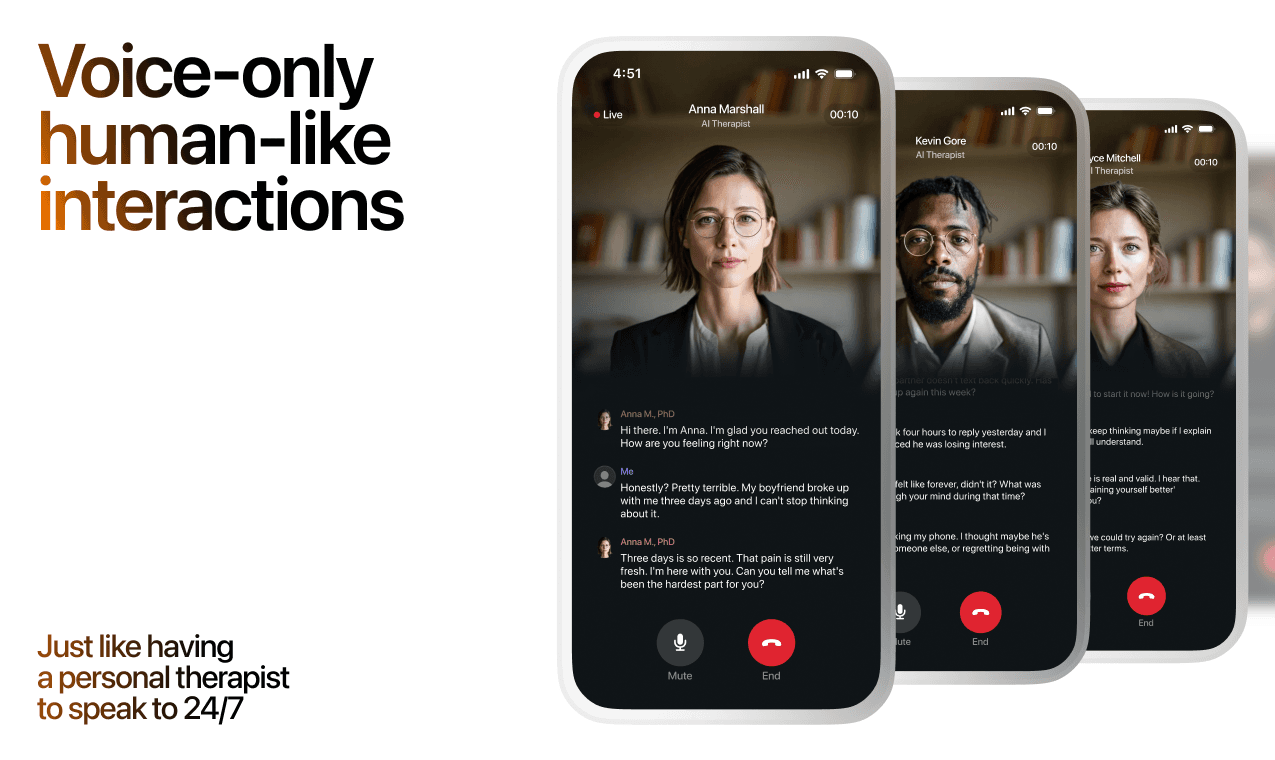
Lovon is AI support, not a replacement for professional care. If things have been hard to get through for weeks, or you are thinking about harming yourself, talk to a doctor or a licensed therapist.
Ready to Start?
Your healing journey can begin right now
A 3-day trial. No judgment. Just a safe space to process what you're going through.
Frequently Asked Questions
Is Lovon a replacement for a real therapist?
Is my conversation with Lovon AI private?
How is Lovon different from ChatGPT for emotional support?
Can I use Lovon if I'm already seeing a therapist?
Can I try Lovon before subscribing?
About the Author

The Lovon Editorial Team
Mental Health & Wellness Content Team
The Lovon Editorial Team develops mental health and wellness content designed to make psychological concepts accessible and actionable. Our goal is to bridge the gap between clinical research and everyday life - helping you understand why your mind works the way it does and what you can do about it....
Related articles
- Can anxiety come back after years of being fine?
Can anxiety come back after years of being fine? Yes. Learn what a return of symptoms means, what to do now, and when to…
- Can depression cause physical pain in your body?
Can depression cause physical pain? Yes. Learn how mood and pain connect, which symptoms need medical care, and what to…
- Best AI apps for postpartum depression support in 2026
Compare the best AI apps for postpartum depression support. Choose voice, text, or mood reflection alongside clinical…
- Freudly alternatives in 2026
Compare Freudly alternatives: choose Lovon for voice-based emotional support, a licensed professional for clinical care…
See also
Quizzes
- Highly Sensitive Person Test: How Much Do You Take In?
See how deeply you process, notice and get overloaded.
- What Stage of Grief Am I In? Free 12-Question Quiz
See what your grief is actually doing, in 3 minutes.
Free tools
- Words of Encouragement for Him When He Is Struggling
Words of encouragement for him that fit what he is actually going through, for when your usual lines are not landing…
- How to Reconnect With an Old Friend
A chat for how to reconnect with an old friend, starting with the text you have been meaning to send for a year. Tell it…
From the wiki
- What does it mean when you dream about your ex?
Dreaming about your ex usually reflects emotional processing, not prophecy and not a message from them. Your sleeping…
Disclaimer: This article is for informational purposes only and does not constitute medical advice, diagnosis, or treatment. Always seek the advice of your physician or other qualified health provider with any questions you may have regarding a medical condition. If you are in crisis or think you may have an emergency, call 988 (Suicide & Crisis Lifeline) or go to the nearest emergency room. Outside the US? Find a crisis line in your country.