
Can poor gut health affect your mental health?
Can gut health affect mental health? Yes, but it is not the whole story. Learn what the gut-brain link means, what helps, and when to seek care.

Key Takeaways
- Can gut health affect mental health? Yes, but the gut-brain connection does not establish the cause of your symptoms.
- Persistent digestive symptoms and anxiety deserve attention together, not competing explanations.
- Probiotics are not a proven replacement for depression or anxiety treatment.
- Lovon offers emotional support, not diagnosis or treatment of digestive disease.
Yes, gut health can affect mental health through two-way communication between your digestive system and brain, and ongoing digestive symptoms can add to anxiety or low mood. Stress also changes digestion, so the connection works in both directions. The practical takeaway in 2026: support both your digestive and emotional health rather than assuming your gut is the single cause of how you feel.
TL;DR
- Can gut health affect mental health? Yes, but the gut-brain connection does not establish the cause of your symptoms.
- Persistent digestive symptoms and anxiety deserve attention together, not competing explanations.
- Probiotics are not a proven replacement for depression or anxiety treatment.
- Lovon offers emotional support, not diagnosis or treatment of digestive disease.
Why this matters
When stomach problems and anxiety happen together, you can end up wondering which one is real. Both are real. A physical symptom does not stop being physical because stress influences it.
Understanding how anxiety causes nausea and stomach problems helps explain why calming your mind and getting medical care can belong in the same plan. You do not need to settle on a single cause before asking for help.
Can poor gut health affect your mental health?
Yes, but digestive symptoms alone cannot show that gut problems caused your anxiety or depression. Your gut and brain communicate through nerves, hormones, immune signals, and substances produced during digestion and by gut microbes.
The National Institute of Diabetes and Digestive and Kidney Diseases describes irritable bowel syndrome, or IBS, as a disorder of gut-brain interaction. That means the way the gut and brain work together contributes to symptoms; it does not mean the symptoms are imaginary.
Here is what the connection explains—and what it does not:
| Connection | What it means | What it does not prove |
|---|---|---|
| Stress changes digestion | Anxiety can affect bowel movements and sensitivity to discomfort | Every stomach symptom comes from anxiety |
| Digestive symptoms affect daily life | Pain, urgency, and disrupted sleep can add to emotional distress | Digestive symptoms automatically cause a mental health disorder |
| Gut microbes interact with the body | Microbes produce substances that interact with immune and nervous-system pathways | A commercial microbiome result identifies the cause of depression |
| Gut-focused treatment helps some conditions | Treating a diagnosed digestive problem can reduce its burden | Treating your gut replaces mental health care |
The strongest practical message is not that every mental health problem starts in the gut. It is that digestive health and emotional health should not be assessed in isolation.
What does poor gut health actually mean?
Poor gut health is a broad phrase, not a diagnosis. People use it to describe constipation, diarrhea, bloating, reflux, food intolerance, or concerns about their gut microbes.
Those are different problems. A clinician needs your symptoms, history, and sometimes testing to identify what needs treatment; a wellness label cannot do that work.
How does the gut-brain connection work?
Your digestive tract has its own network of nerves and communicates with your brain through several routes. The vagus nerve is one route, but it is not the whole system.
Stress responses can change how quickly food moves through your digestive tract and how strongly you experience discomfort. Gut signals also reach brain regions involved in sensation and emotion. This helps explain why a stressful event can bring stomach symptoms—and why persistent stomach symptoms can make you feel distressed.
Gut microbes are part of this picture. However, finding a difference between the microbes of people with and without depression does not establish which came first, or whether that difference caused the depression.
A biological connection is not the same as a personal diagnosis. Your symptoms still need an individual assessment.
Does gut serotonin explain depression?
Serotonin has important roles in both digestion and brain function, but those roles are not interchangeable. Serotonin made outside the brain does not freely cross the blood-brain barrier.
That is why the claim that increasing gut serotonin will fix depression is misleading. Depression cannot be reduced to a single chemical, a single food, or a single group of microbes.
Why the gut's effect on mental health varies
There is no universal pattern where a particular stomach symptom produces a particular emotion. These factors help explain why your experience differs from someone else's:
- The digestive condition: IBS, inflammatory bowel disease, reflux, and constipation have different causes and treatment needs.
- Symptom burden: Pain, urgency, and unpredictable bowel movements can interfere with work, meals, travel, and relationships.
- Stress exposure: Ongoing stress can change digestion while making symptoms harder to manage.
- Sleep disruption: Poor sleep can worsen emotional strain and make coping with physical discomfort harder.
- Eating patterns: Skipping meals or restricting foods can affect nutrition and make daily routines harder to maintain.
- Medicines and supplements: Some cause digestive side effects, so a medication review belongs in the assessment.
None of these factors makes symptoms your fault. They identify places where support or treatment can make daily life more manageable.
What should you do if digestion and mood worsen together?
For a practical 2026 starting plan, focus on observation and appropriate care—not a gut reset. You want enough information to make a sensible next decision without turning your whole day into symptom monitoring.
Notice patterns
Keep brief notes about digestive symptoms, mood, sleep, meals, and medication changes. Record what happened rather than deciding what caused it.
For example, noting that nausea appeared before a stressful meeting is useful. Concluding that every future episode must be anxiety is not. If tracking increases checking or food fear, simplify it or discuss it with a clinician.
Keep routines
Choose regular meals, adequate fluids, and a consistent sleep schedule where possible. Add fiber gradually if appropriate for your digestive condition; increasing it suddenly can worsen gas and bloating.
For adults, CDC guidance recommends at least 7 hours of sleep per night. That is general health guidance, not a promise that sleep alone will resolve digestive symptoms or anxiety.
Seek assessment
Arrange medical care for persistent, recurring, or worsening digestive symptoms. Bring your notes and a list of medicines and supplements, including products marketed for gut health.
Mention emotional symptoms too. Explain whether worry, low mood, or fear of symptoms is changing what you eat or where you go.
Review progress
Evaluate whether your plan helps you function: eating more comfortably, sleeping better, leaving home, or concentrating. A plan that makes you increasingly afraid of food or dependent on constant checking needs review.
These steps form a care process, not a diagnostic test. You can seek assessment immediately rather than waiting to complete them.
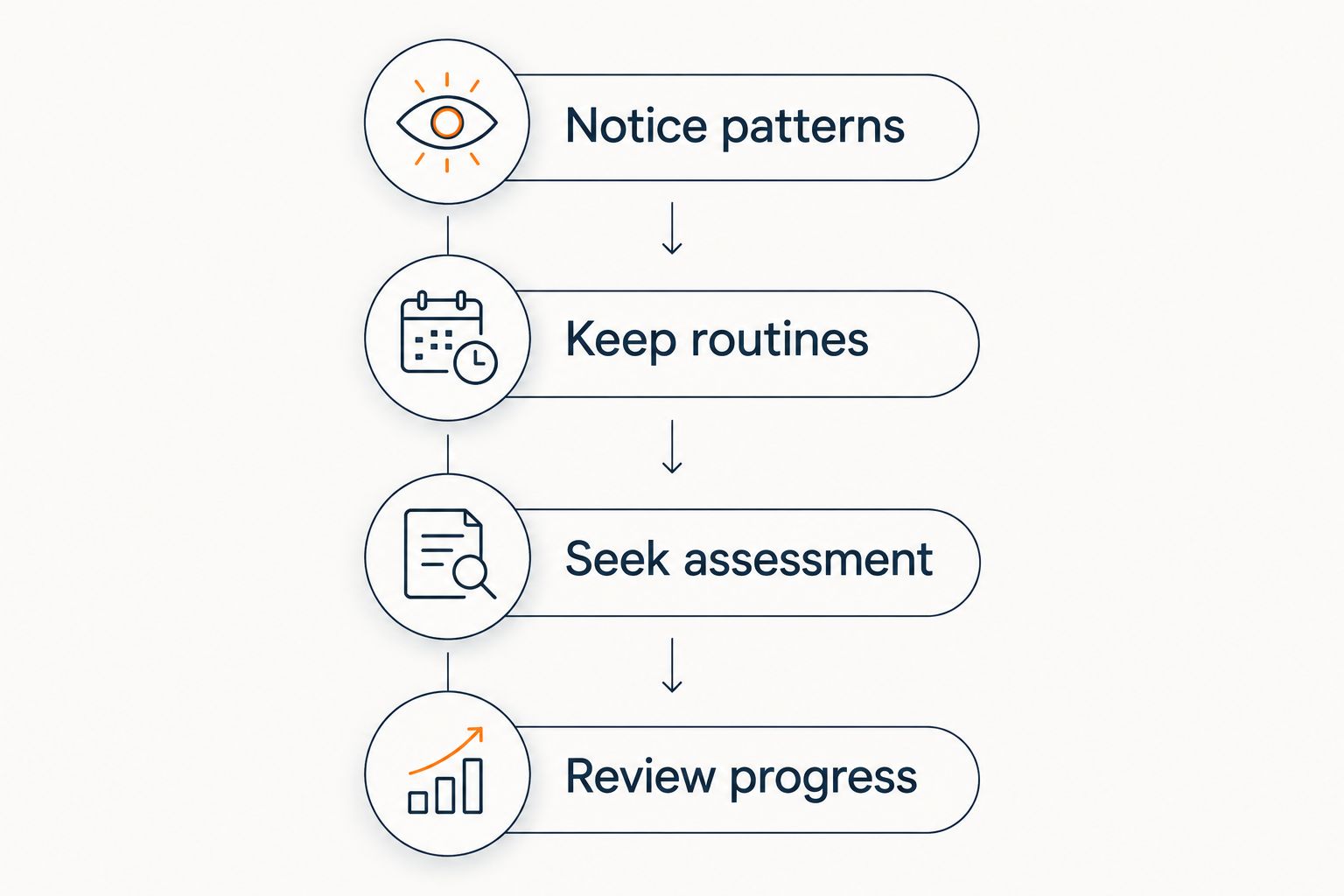 Four steps for responding to digestive symptoms and changes in mood
Observe patterns without postponing care or assuming a cause.
Which approaches help, and what are their limits?
Start with the problem you need help solving. A clinician assesses persistent digestive symptoms; psychological care addresses anxiety, depression, and coping. Neither requires you to prove which problem started first.
Use this comparison when sorting through gut-health advice in 2026:
| Approach | Best for | Main benefit | Main limitation |
|---|---|---|---|
| Medical assessment | Persistent or unexplained digestive symptoms | Evaluating causes and choosing appropriate treatment | Assessment sometimes requires follow-up or testing |
| Registered dietitian support | Food restrictions or condition-specific nutrition needs | Adapting food choices while protecting nutrition | Nutrition care does not replace mental health treatment |
| Psychological treatment | Anxiety, depression, or distress around symptoms | Addressing emotions, behavior, and coping | It does not rule out digestive disease |
| Routine changes | Supporting everyday health alongside care | Creating a steadier foundation for sleep, meals, and movement | They are not a diagnosis or a guaranteed treatment |
| Probiotic supplements | A specific indication discussed with a clinician | Some strains have evidence for particular digestive uses | Effects are strain- and condition-specific; mood benefits are not established enough to replace care |
Movement also belongs in general health support. WHO guidance recommends at least 150 minutes of moderate-intensity activity per week for adults. Adapt activity to your health and ability; this is not a gut-specific treatment target.
Can probiotics improve anxiety or depression?
Probiotics are not an established replacement for anxiety or depression treatment. Research on mood outcomes varies by strain, study population, and treatment design, so a positive finding for one preparation does not apply to every supplement.
A product name such as Florajen probiotics does not establish whether its particular strains have evidence for a mental health outcome. The relevant questions are which preparation was studied, for which condition, and whether the result applies to your situation.
Before adding a probiotic, ask what specific problem you are trying to address. Discuss supplements with a clinician, especially if you are immunocompromised or seriously ill.
For decisions in 2026, avoid replacing prescribed treatment with a supplement based on a gut-brain claim. Keep taking prescribed medicines unless your prescriber advises a change.
Can changing your diet fix gut-related anxiety?
Changing your diet is not a guaranteed fix for anxiety, even when digestive symptoms improve. Food changes should address your nutritional needs and any diagnosed digestive condition, not promise control over every emotion.
Avoid removing multiple food groups without a clear reason. Restriction can make eating stressful and leave nutritional needs unmet; condition-specific diets need appropriate guidance.
If food rules already create guilt, fear, or compulsive checking, say that directly when seeking care. Your relationship with food matters alongside digestive comfort.
Where does emotional support fit?
Digestive uncertainty can leave you worrying about meals, bathrooms, or the next symptom. Talking through those feelings is a separate need from finding the medical cause.
Lovon is best for people seeking on-demand voice-based emotional support alongside, not instead of, licensed care. The Lovon mental health app offers conversations, coping tools, and self-reflection guidance for everyday emotional struggles.
The limitation matters: Lovon is not a licensed clinician and cannot diagnose a digestive condition or replace clinical assessment. Use emotional support to help you cope, not to confirm that a symptom is harmless.
When should you get medical or mental health care?
Seek prompt medical attention for blood in your stool, black tarry stools, unexplained weight loss, persistent vomiting, or significant worsening of symptoms. Severe abdominal pain, fainting, or signs of serious dehydration need urgent assessment.
For mental health concerns, NIMH describes major depression as involving symptoms present most of the day, nearly every day, for at least 2 weeks. Do not use that duration as a reason to wait if symptoms are severe or your safety is at risk.
In the United States in 2026, call or text 988 for suicide or mental health crisis support. Call 911 for an immediate life-threatening emergency. An app or gut-health plan is not a substitute for urgent help.
FAQ
Can gut health affect mental health even if I do not have stomach pain?
Yes, gut-brain communication occurs without stomach pain, but that does not establish that your gut caused a mental health symptom. Anxiety or low mood deserves assessment based on its own severity and effect on your life.
Can anxiety cause diarrhea or constipation?
Yes, anxiety and stress can affect bowel movement patterns and sensitivity to discomfort. Persistent or new bowel changes still need medical assessment rather than an automatic anxiety explanation.
Does bloating mean my gut is causing depression?
No, bloating does not identify the cause of depression. Digestive symptoms and depression can coexist, and both deserve appropriate assessment.
Should I take probiotics instead of antidepressants?
No, probiotics should not replace prescribed antidepressants. Discuss supplements and any medication changes with your prescriber rather than stopping treatment on your own.
Do I need a microbiome test to understand my anxiety?
A commercial microbiome test cannot establish the cause of your anxiety. Start with a clinician's assessment of symptoms, health history, medicines, and daily functioning.
Can therapy help if my stomach symptoms are real?
Yes, psychological treatment can help with distress and coping even when digestive symptoms have a physical basis. For conditions such as IBS, gut-directed psychological therapies are also part of recognized treatment options.
Can Lovon tell me whether gut problems are causing my anxiety?
No, Lovon cannot diagnose the cause of anxiety or digestive symptoms. The mental health app provides emotional support and coping guidance alongside, not instead of, licensed clinical care.
One last thing
You do not need to decide whether your symptoms are physical or emotional before seeking help. Describe both at the same appointment: what your digestion is doing, how you feel, and what has become harder to do. That gives your clinician a clearer starting point than a self-diagnosis of poor gut health.
Related guides
How AI Support Helps You Heal
AI emotional support isn't about replacing human connection — it's about filling the gaps. The moments when you need to talk at 2 AM, when you don't want to burden your friends again, or when you simply need someone to listen without judgment.
Here's what happens in a typical Lovon session:
You share what's on your mind
There's no script, no intake form, no waiting room. You speak or type whatever you're feeling — in your own words, at your own pace.
Lovon validates and explores
Using frameworks from CBT (Cognitive Behavioral Therapy) and motivational interviewing, Lovon acknowledges your feelings first, then gently helps you explore them. No dismissive "just move on" advice.
You build coping skills together
Lovon doesn't just listen — it actively works with you on evidence-based techniques: thought reframing, urge surfing, behavioral experiments, and more.
What a Session with Lovon Looks Like
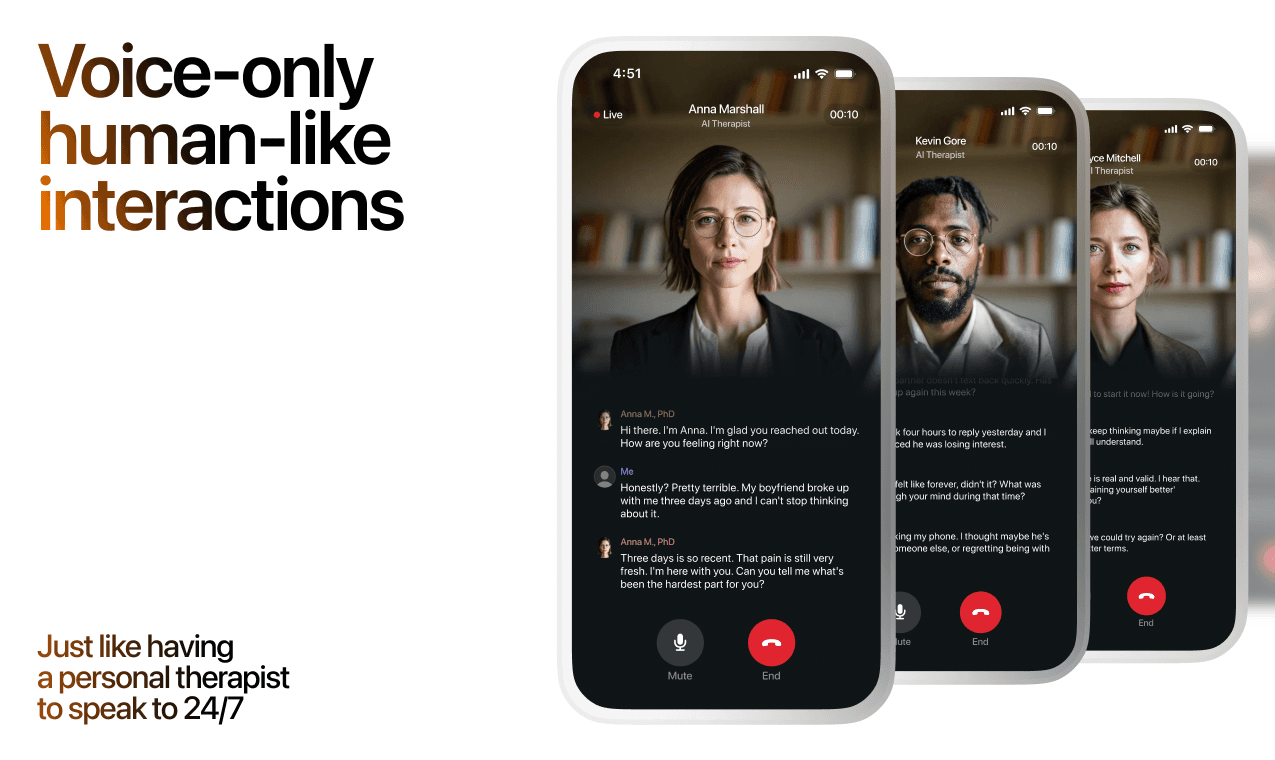
Lovon is AI support, not a replacement for professional care. If things have been hard to get through for weeks, or you are thinking about harming yourself, talk to a doctor or a licensed therapist.
Ready to Start?
Your healing journey can begin right now
A 3-day trial. No judgment. Just a safe space to process what you're going through.
Frequently Asked Questions
Is Lovon a replacement for a real therapist?
Is my conversation with Lovon AI private?
How is Lovon different from ChatGPT for emotional support?
Can I use Lovon if I'm already seeing a therapist?
Can I try Lovon before subscribing?
About the Author
The Lovon Editorial Team
Mental Health & Wellness Content Team
The Lovon Editorial Team develops mental health and wellness content designed to make psychological concepts accessible and actionable. Our goal is to bridge the gap between clinical research and everyday life - helping you understand why your mind works the way it does and what you can do about it....
Related articles
- Can menopause cause anxiety and panic attacks?
Can menopause cause anxiety and panic attacks? Yes. Learn how hormones and sleep contribute, what treatments help, and…
- Can anxiety cause chest pain like a heart attack?
Can anxiety cause chest pain like a heart attack? Yes. Learn why symptoms overlap, when to call 911, and why medical…
- Is it possible to self-diagnose ADHD accurately?
Can you self diagnose ADHD? Self-assessment cannot confirm it. Learn what screening tells you, what clinicians check…
- Does taking a mental health day actually help?
Does a mental health day actually help? Yes, for short-term relief. Learn how to rest, plan your return, and recognize…
See also
Quizzes
- Emotional Intelligence Test: Your EQ in a Relationship
Find where your EQ slips when things get tense.
- Self Esteem Test: What Is Your Worth Resting On?
See what your sense of worth is resting on.
Free tools
- 5-4-3-2-1 Grounding Exercise
A guided run through the 5-4-3-2-1 technique, with paced breathing first if you need it. No sign-up, nothing stored…
- Sleep Meditation for Anxiety
For lying in bed with a mind that will not stop. About twelve minutes of slower breathing, a place to put the worries…
From the wiki
- What does it mean when you dream about your ex?
Dreaming about your ex usually reflects emotional processing, not prophecy and not a message from them. Your sleeping…
Disclaimer: This article is for informational purposes only and does not constitute medical advice, diagnosis, or treatment. Always seek the advice of your physician or other qualified health provider with any questions you may have regarding a medical condition. If you are in crisis or think you may have an emergency, call 988 (Suicide & Crisis Lifeline) or go to the nearest emergency room. Outside the US? Find a crisis line in your country.