
Vulnerability in Relationships: Why It Feels Unsafe 2026
Vulnerability in relationships feels dangerous because your nervous system reads it as threat, not weakness. See what actually helps you open up in 2026.

Key Takeaways
- Vulnerability in relationships triggers the same threat circuitry as physical danger — your body reacts before your
- People with anxious or avoidant attachment patterns feel vulnerability as more dangerous than securely attached
- Verdict: small, repeated low-stakes disclosures rebuild safety faster than one big confession.
- Shutdown after opening up is a nervous system response, not proof the relationship is broken.
Vulnerability in relationships feels dangerous because your nervous system treats emotional exposure like physical risk, not because something is wrong with you. This guide breaks down why opening up triggers a threat response and gives you a concrete way to practice it without flooding your system.
TL;DR
- Vulnerability in relationships triggers the same threat circuitry as physical danger — your body reacts before your brain evaluates the risk.
- People with anxious or avoidant attachment patterns feel vulnerability as more dangerous than securely attached people do, and the fix is practice, not willpower.
- Verdict: small, repeated low-stakes disclosures rebuild safety faster than one big confession.
- Shutdown after opening up is a nervous system response, not proof the relationship is broken.
Why this matters
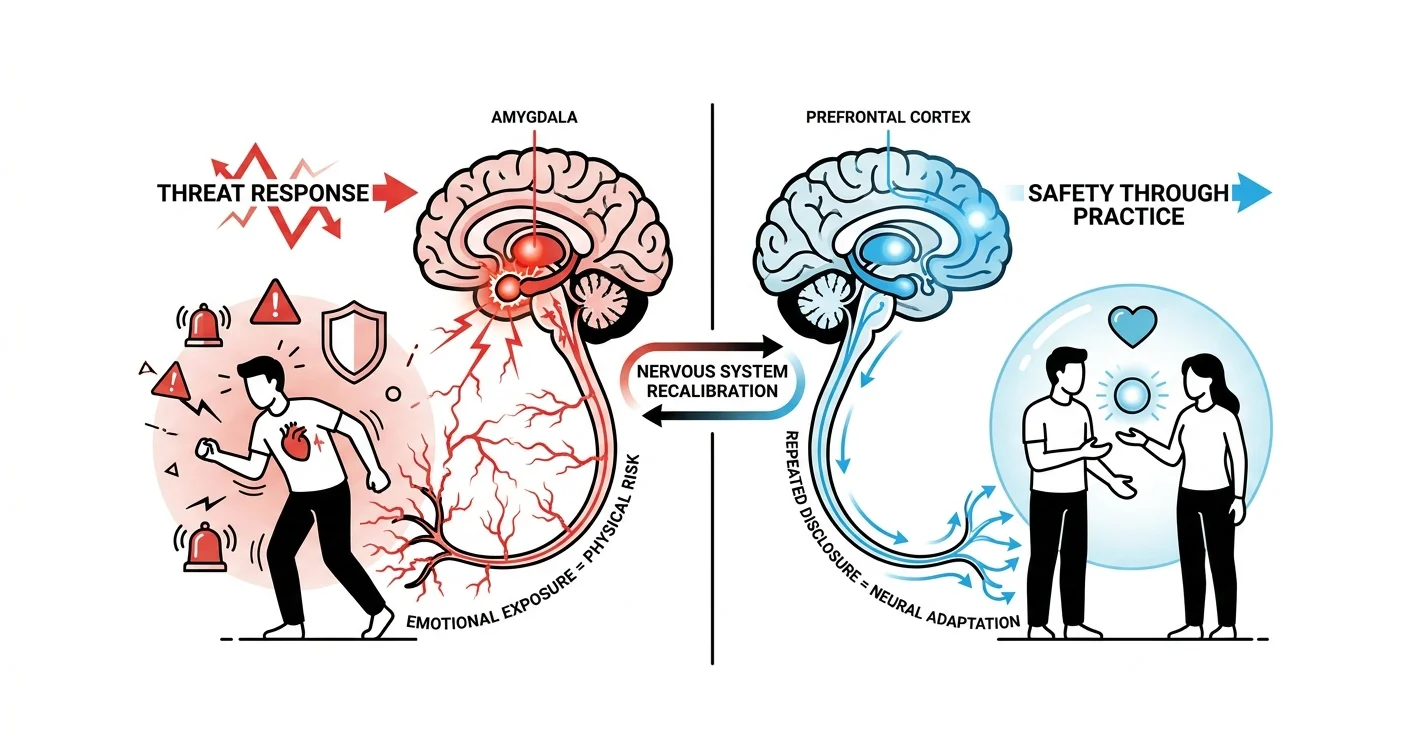
Vulnerability isn't a personality trait you either have or lack. It's a physiological event — heart rate shifts, breath shortens, your face gets hot before you even finish the sentence you're about to say. That's the amygdala doing its job: scanning the moment you say "I felt hurt when you did that" for signs of rejection, ridicule, or abandonment, and firing a warning before your prefrontal cortex gets a vote.
If you grew up in a home where honesty got punished, ignored, or used against you later, that warning system got calibrated early and stays calibrated into adulthood. You can read what triggers avoidant attachment shutdown for a deeper look at how this plays out when a partner goes quiet mid-conversation instead of leaning in.
The practical point for 2026: vulnerability doesn't get less scary because you understand the theory. It gets less scary because you practice small versions of it and your nervous system collects enough safe data points to stop treating disclosure as an emergency.
What you'll need
- A specific relationship or person you want to practice with — this doesn't work as an abstract exercise
- One true, low-stakes thing you haven't said yet (not the biggest secret you're carrying)
- 10-15 minutes without interruption
- A way to track your body's signals — a notes app, a voice memo, or a private space to talk it through
- Realistic expectations: this is a skill built over weeks in 2026, not a single conversation
The steps
1. Name the fear before you name the feeling
Before you say the vulnerable thing, silently name what you're afraid will happen if you say it. "They'll think less of me" or "they'll use this later" or "they'll leave." Naming the fear separates it from the actual content of what you want to share, so you're not accidentally editing your words to manage a fear you haven't identified. Common mistake: skipping this step and then wondering why your sentence came out defensive or apologetic.
2. Start with low-stakes disclosure
Don't open with the heaviest thing you're holding. Start with something true but survivable — "I felt embarrassed when that happened at dinner" rather than a childhood wound. Low-stakes disclosure gives your nervous system a win it can log as safe, which makes the next disclosure easier. Expected outcome: a slightly awkward but uneventful conversation. That's the goal, not a failure.
3. Watch your nervous system, not just your words
Notice your breath, jaw, and shoulders while you talk. If your chest tightens or your voice speeds up, that's data, not a signal to stop. Slow your exhale on purpose — a longer exhale than inhale tells your body the threat has passed even mid-sentence. This is the same regulation principle behind polyvagal theory, which explains why safety cues from your own body matter as much as safety cues from your partner.
4. Say the vulnerable thing once, plainly
Say it in one or two sentences and stop. Over-explaining, justifying, or immediately softening what you said ("it's not a big deal, I just...") undercuts the disclosure and signals to your own brain that the thing wasn't safe to say. Specific instruction: write the sentence down beforehand if you tend to spiral once you start talking.
5. Let the silence sit
After you say it, resist filling the silence. Silence feels unbearable when you're used to associating quiet with disapproval, but a pause is often your partner processing, not rejecting. Common mistake: reading three seconds of silence as a verdict and retracting what you said.
6. Ask for what you need instead of hinting
Vulnerability collapses into resentment fast if you share a feeling but never ask for anything. "I felt hurt when you canceled — can we set a heads-up rule for next time?" does more work than the feeling alone. This is where healthy relationship boundaries become part of the same skill, not a separate one.
7. Repair fast when it goes sideways
Sometimes the disclosure lands badly — your partner gets defensive, or you shut down mid-sentence. Repair within the same day: "That felt harder to say than I expected, can we try again tonight?" A fast repair teaches your nervous system that a rough moment isn't the same as a relationship-ending one.
Troubleshooting
Your partner shuts down when you open up. This is often a freeze response, not disinterest — give it space, then follow up later rather than pushing in the moment. Emotional intimacy in relationships has more on rebuilding closeness after a partner goes quiet.
You over-explain or apologize for feeling things. This usually points to a fear of being "too much." Cut the apology clause entirely from your sentence and notice how uncomfortable the bare statement feels — that discomfort is the actual work.
You feel exposed for days after sharing. A disclosure hangover is normal the first several times. It fades as repetition builds tolerance; if it consistently lasts more than a few days, that's worth naming out loud in the relationship.
Old relationship reflexes take over mid-conversation. You start defending, deflecting, or joking to exit the moment. Pause and name it out loud: "I'm noticing I want to make a joke right now." Saying the reflex out loud interrupts it more reliably than trying to suppress it silently.
You avoid the conversation entirely, again. Set a specific time and tell the other person in advance — "I want to talk about something tonight" — so avoidance isn't the default outcome by 9pm.
Tools and resources
- A private space to rehearse what you want to say before you say it
- A short check-in journal to track which disclosures felt survivable
- AI voice therapy for practicing the actual sentence out loud before a real conversation — useful when writing it down isn't the same as saying it
- A trusted friend or licensed therapist for disclosures that carry real risk, not just discomfort
Practice the hard conversation first
Talk it through out loud with Lovon before you say it to your partner.
What to do next
If the fear underneath your hesitation is specifically about being left, not just misunderstood, that's a separate pattern worth naming directly. Read through what actually drives that fear before your next attempt at opening up.
FAQ
What does vulnerability in relationships actually mean?
Vulnerability in relationships means sharing a true feeling, need, or fear without knowing how the other person will respond. It's the willingness to be seen accurately, not just favorably, and it always carries some emotional risk by definition.
Why does vulnerability feel unsafe even in a good relationship?
Vulnerability activates the same threat circuitry as physical danger, regardless of how safe the relationship actually is. If your nervous system was calibrated by past rejection or punishment for honesty, it fires warnings even when the current partner has never given you a reason to distrust them.
Is vulnerability the same as oversharing?
No. Vulnerability is intentional disclosure tied to a specific feeling or need in the moment; oversharing is often unfiltered disclosure that overwhelms the listener or lacks a clear point. The difference is usually pacing and purpose, not content.
How do you become vulnerable with an avoidant partner?
Start smaller and slower than feels natural, and give an avoidant partner explicit space to process before responding. Pushing for immediate emotional reciprocity tends to trigger withdrawal rather than closeness.
How much vulnerability is too much, too soon?
Vulnerability that outpaces the trust already built in the relationship tends to backfire, leaving one person exposed and the other overwhelmed. A rough guide: match the weight of what you share to how long and how consistently the relationship has already proven safe.
Can therapy help with fear of vulnerability?
Yes, therapy — including structured practice with an AI voice therapy tool between sessions — helps by giving you low-stakes reps of saying hard things out loud before you say them to someone with a stake in the outcome. Repetition, not insight alone, is what changes the fear response over time.
What's the difference between vulnerability and codependency?
Vulnerability is sharing a feeling while staying grounded in your own identity; codependency is sharing a feeling in a way that depends on the other person's reaction to feel okay. The tell is whether you can survive a lukewarm response without abandoning your own sense of stability.
Does vulnerability get easier with age or experience?
It gets easier with repeated safe disclosures, not simply with age. Someone in their 40s who has never practiced disclosure can find it just as hard as someone in their 20s doing it for the first time in 2026.
One last thing
The moment vulnerability feels most dangerous — right before you say the thing — is also the most reliable signal you're about to do something that matters. Fear spiking right before disclosure isn't a sign to stop; in most nervous systems calibrated by past hurt, it's the sign you're doing it correctly. The goal for 2026 isn't to make that spike disappear. It's to keep talking through it enough times that your body stops treating honesty as an emergency.
Related guides
How AI Support Helps You Heal
AI emotional support isn't about replacing human connection — it's about filling the gaps. The moments when you need to talk at 2 AM, when you don't want to burden your friends again, or when you simply need someone to listen without judgment.
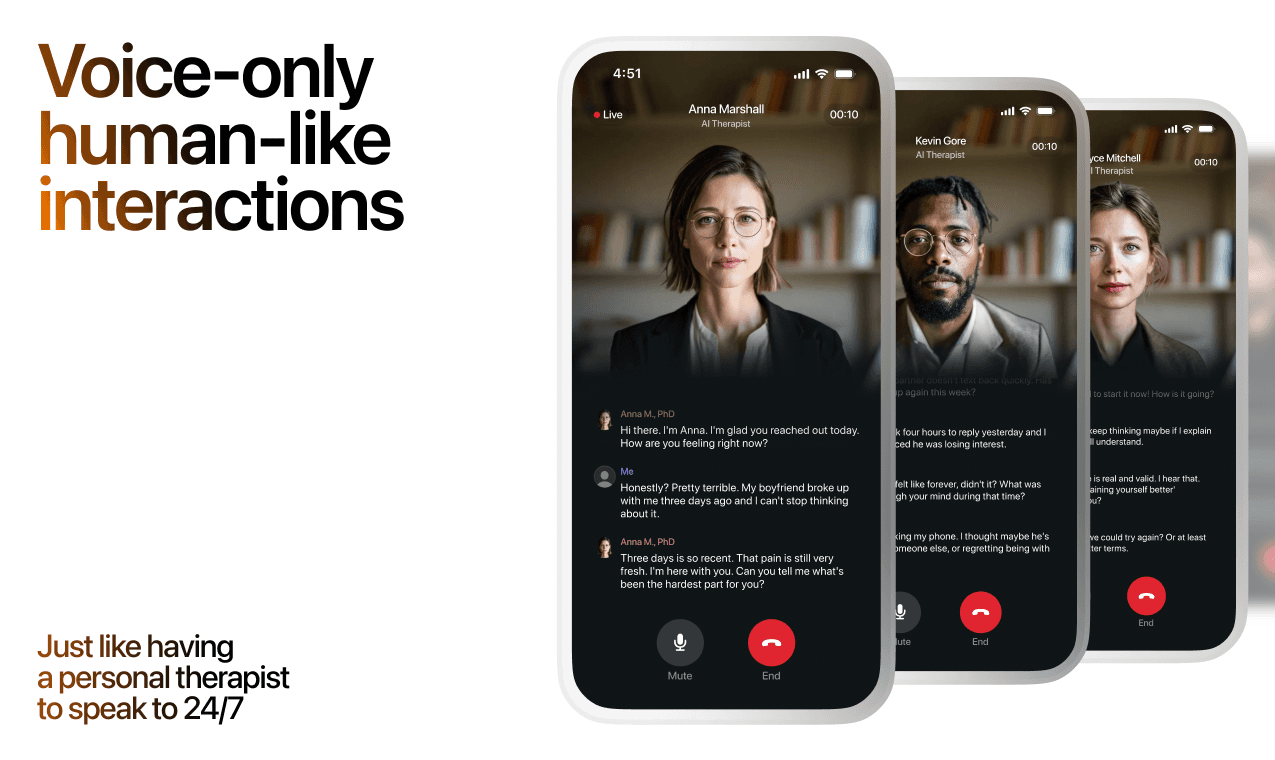
Here's what happens in a typical Lovon session:
You share what's on your mind
There's no script, no intake form, no waiting room. You speak or type whatever you're feeling — in your own words, at your own pace.
Lovon validates and explores
Using frameworks from CBT (Cognitive Behavioral Therapy) and motivational interviewing, Lovon acknowledges your feelings first, then gently helps you explore them. No dismissive "just move on" advice.
You build coping skills together
Lovon doesn't just listen — it actively works with you on evidence-based techniques: thought reframing, urge surfing, behavioral experiments, and more.
What a Session with Lovon Looks Like
When to Seek Professional Help
AI support is a valuable tool, but it's not a replacement for professional care. Please consider reaching out to a licensed therapist if you experience any of the following:
- Persistent thoughts of self-harm or suicide
- Inability to perform daily activities (work, eating, sleeping) for more than 2 weeks
- Turning to alcohol or substances to cope
- Intense anger or desire to harm your ex-partner
- Complete emotional numbness that doesn't improve over time
Crisis Resources (US): If you're in immediate danger, call 988 (Suicide & Crisis Lifeline) or text HOME to 741741 (Crisis Text Line). Available 24/7, free, and confidential.
Outside the US? Find a crisis line in your country
Ready to Start?
Your healing journey can begin right now
1 free conversation. No credit card. No judgment. Just a safe space to process what you're going through.
Frequently Asked Questions
Is AI therapy a replacement for a real therapist?
Is my conversation with Lovon AI private?
How is Lovon different from ChatGPT for emotional support?
Can I use Lovon if I'm already seeing a therapist?
Can I try Lovon for free?
About the Author
The Lovon Editorial Team
Mental Health & Wellness Content Team
The Lovon Editorial Team develops mental health and wellness content designed to make psychological concepts accessible and actionable. Our goal is to bridge the gap between clinical research and everyday life - helping you understand why your mind works the way it does and what you can do about it....
Similar Articles
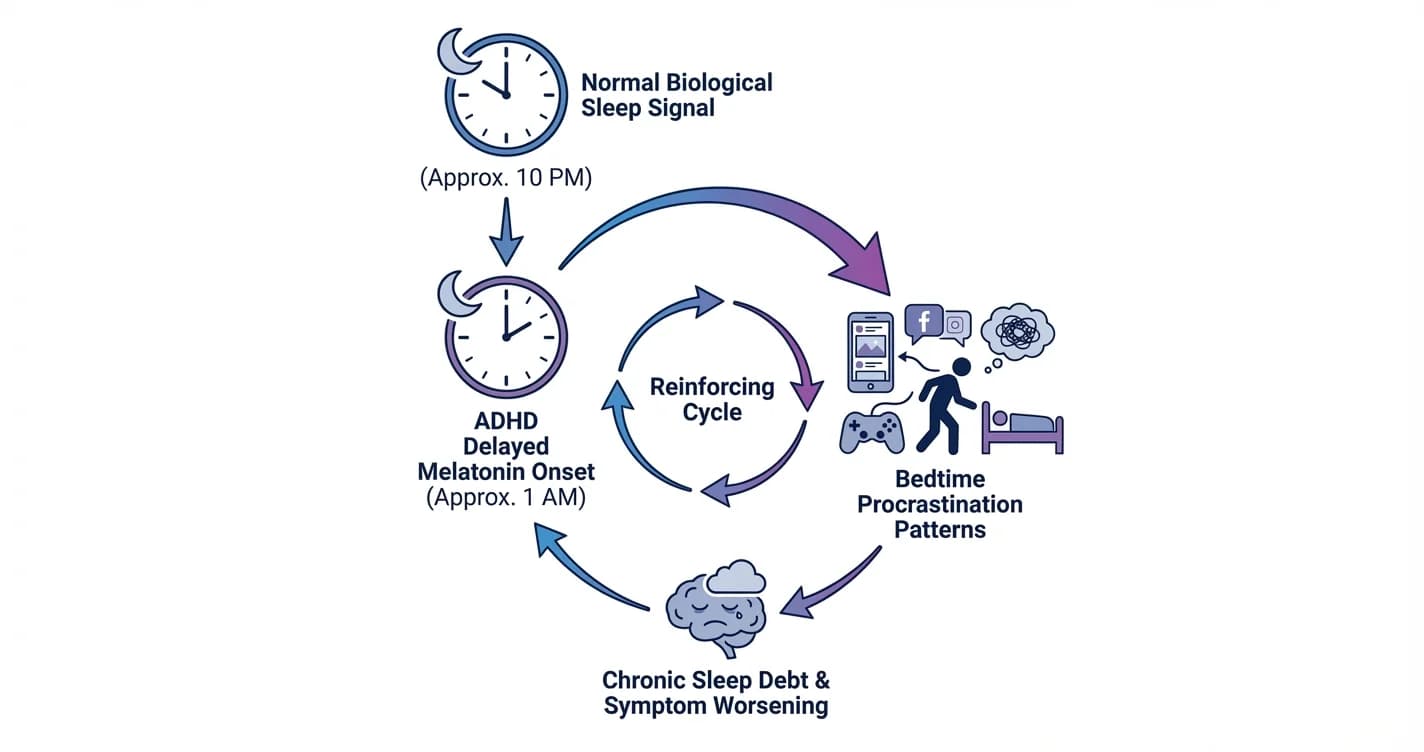
ADHD Sleep Cycle Disruption: Melatonin Delay and Bedtime Procrastination Patterns
Understanding how attention regulation difficulties interfere with natural sleep timing and the nightly wind-down process

Progressive Muscle Relaxation for Stress Reduction
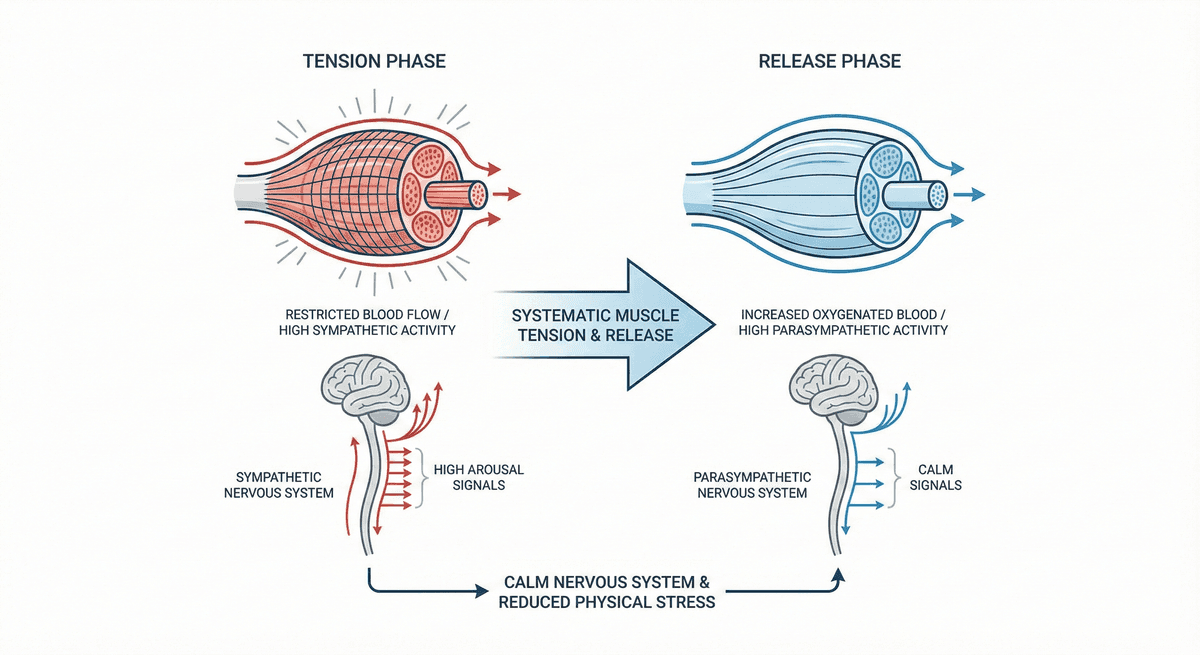
A systematic muscle group tension and release technique that calms the nervous system and reduces physical stress.
PTSD vs CPTSD: Single Trauma vs Repeated Trauma Symptom Differences
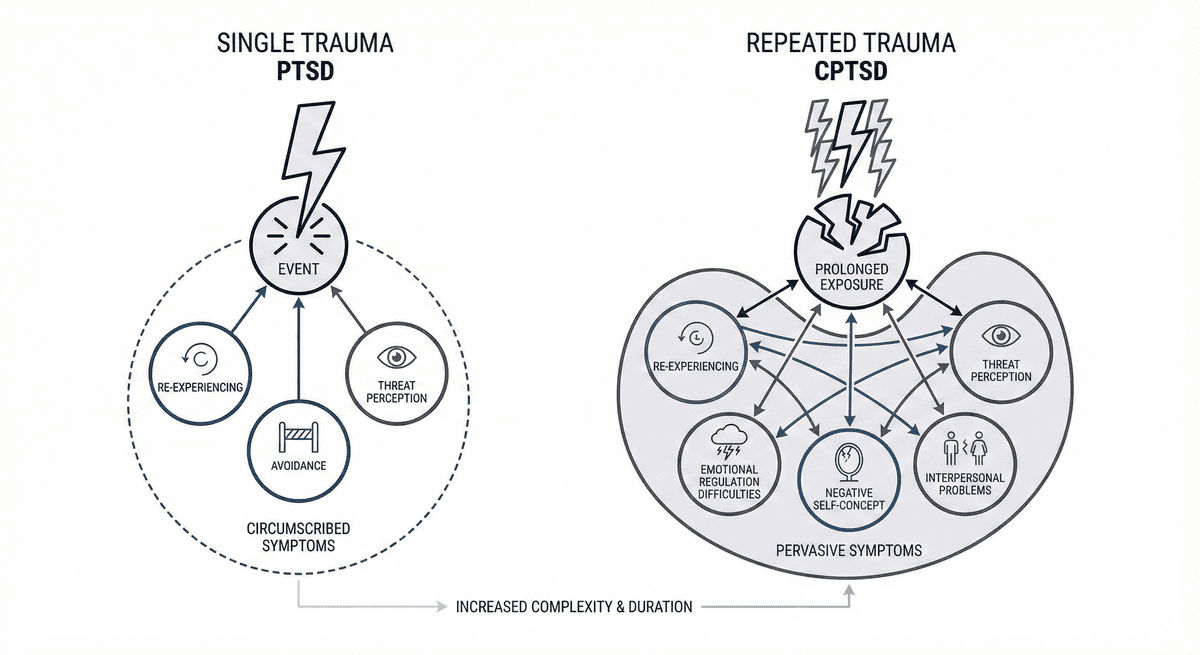
Learn how PTSD from a single traumatic event differs from CPTSD shaped by repeated trauma, including symptom patterns and treatment approaches.
Disclaimer: This article is for informational purposes only and does not constitute medical advice, diagnosis, or treatment. Always seek the advice of your physician or other qualified health provider with any questions you may have regarding a medical condition. If you are in crisis or think you may have an emergency, call 988 (Suicide & Crisis Lifeline) or go to the nearest emergency room. Outside the US? Find a crisis line in your country.