
How to Calm Down Fast: Body First, Then Your Thoughts
How to calm down fast: breathing, cold water and grounding to settle your body first, then your thoughts, plus what to do when angry or after a fight.

Key Takeaways
- Calm your body before you try to calm your thoughts: a long exhale, cold water and naming what is around you work faster than reasoning with yourself.
- When you are angry, slow things down instead of letting it out. Hitting things, yelling and hard runs do not reliably reduce anger, and calming activities do.
- Give yourself at least 20 minutes before you text, reply or decide anything, and if you are on edge most days, talk to a doctor or a licensed therapist.
The fastest way to calm down is to settle your body before you try to fix your thoughts. Breathe out longer than you breathe in, put cold water on your face or hands, and name what you can see and hear around you. Once your heart slows, name the feeling, and wait at least 20 minutes before you reply, decide, or argue.
- Step away from whatever set you off, even if it is only to another room.
- Breathe out slower than you breathe in, for at least ten breaths.
- Put cold water on your face or wrists, or hold something cold.
- Name five things you can see and three things you can hear.
- Unclench your jaw, drop your shoulders and open your hands.
- Say the feeling in one plain sentence: "I'm furious and my chest is tight."
- Wait 20 minutes before you text, reply or decide anything.
How to calm down in the moment: start with your body
When you are upset, your body is running an alarm: a fast heart, shallow breathing, tight muscles and a narrow focus on the threat. Telling yourself to "just relax" rarely works, because you are arguing with a body that is still sounding the alarm. Turn the alarm down first. Thinking clearly comes after.
Breathe out longer than you breathe in
Breathe in through your nose for a count of four, then out through your mouth for a count of six to eight, as if you were blowing through a straw. Do ten rounds. A variation called cyclic sighing works the same way: a full breath in through the nose, a short extra sip of air on top, then one long, slow breath out.
In a month-long randomized study, five minutes a day of exhale-focused breathing like this improved mood and lowered breathing rate more than the same five minutes of mindfulness meditation.[1] That study tested a daily habit rather than an emergency, but the same breath is easy to use in the moment. If counting helps, box breathing and 4-7-8 breathing pace you on screen. If holding your breath makes you feel more panicky, skip the holds and just lengthen the out-breath.
Use cold
Splash cold water on your face for 15 to 30 seconds, hold an ice cube or a cold can, or press something cold to the back of your neck. Cold water on the face triggers the dive reflex, which slows the heart, and the shock of it breaks the loop in your head. If you have a heart condition or tend to faint, use cool water on your hands and wrists instead of your face.
Bring your attention back into the room
Name five things you can see, four you can touch, three you can hear, two you can smell and one you can taste. The 5-4-3-2-1 grounding exercise walks you through it. It works because it gives your attention a job other than replaying what happened. If you cannot remember the numbers, press your feet into the floor and describe one object in detail: its color, its edges, what it is made of.
Loosen what is clenched
Check your jaw, shoulders, hands and stomach. Tense one area hard for five seconds, then let it go and notice the difference. Doing this from your feet up is called progressive muscle relaxation, and it is one of the easiest ways to show your body the threat has passed.
What to do with your thoughts once your body settles
Name the feeling in one sentence
"I'm hurt and embarrassed, and it's coming out as anger." "I'm scared this means they're leaving." Putting a word to a feeling sounds too simple to matter, but in one brain imaging study, labeling the emotion in a picture reduced activity in the amygdala, a part of the brain involved in threat responses, more than other ways of looking at the same images.[2]
Talk to yourself by name
Try "Okay, Sam, you're upset, and you don't have to answer tonight" instead of "I'm so upset." In a series of studies, people who used their own name or "you" when they talked themselves through a stressful task felt less distressed and handled it better than people who used "I."[3] It gives you a little distance, the way you have distance when you advise a friend.
Ask whether this needs to be solved tonight
Most things do not. Write the thought down, along with the time you will come back to it: "Tomorrow at 10, I'll decide whether to reply." If the same thoughts keep circling anyway, how to stop overthinking has techniques for the loop itself.
Sentences that help in this stage:
- "This is loud, and it will pass. It always has."
- "I don't have to act on this in the next 20 minutes."
- "What would I tell a friend who called me feeling like this?"
How to calm down when you're angry
Anger usually announces itself in the body before it reaches your words: heat in your face, a louder voice, faster speech, and thoughts full of "always" and "never." That is the moment to leave, before you say the thing you cannot take back. Say when you will return, so the break does not feel like punishment:
"I'm too angry to talk well right now. I'm going to take 20 minutes, and then I'll come back and we can finish this."
Then calm down slowly, not loudly. It is tempting to punch a pillow, scream in the car or go for a hard run to "get it out." A review of 154 studies found that calming activities such as deep breathing, mindfulness and meditation reduced anger and aggression, while activities that raised arousal, like hitting a bag, jogging or cycling, did not help overall.[4] A slow walk is fine. A hard workout spent replaying the fight is not.
Once you are calmer, look at what sits under the anger. It is often hurt, fear or embarrassment, and that is usually the more useful thing to say out loud. If anger shows up often or out of proportion, the anger test helps you see your pattern, and how to stop yelling at your partner covers what to do before it boils over.
If your anger is turning into breaking things or threats, or you are afraid of what you might do, leave the room now and talk to a doctor or a licensed therapist soon. If you are the one who is afraid of someone else's anger, get somewhere safe first; the National Domestic Violence Hotline is 1-800-799-7233.
How to calm down after a fight
After an argument, most people try to calm down while still running the fight in their head, which keeps the body on alarm. Do it in this order.
Take a real break. Plan on at least 20 to 30 minutes, often more. A body that has gone into fight mode usually takes longer to settle than it feels like it should.
Settle your body first. Use the breathing, cold water and grounding steps above.
Do something absorbing. Wash dishes, walk, cook or play a game. If you notice yourself drafting your next comeback, write it down once and put the paper away. How to stop overthinking after an argument goes deeper on the replay.
Come back and listen first. Try: "I'm calmer now. Can we try again? I want to understand what you meant before I explain my side." If you need longer, name a time: "Can we talk tomorrow after dinner?" Sleeping on an argument is fine, as long as you both know when you will pick it up again. If the same fight keeps returning, what to say instead in the same fight is the next step.
How to self-soothe when nobody is there
Self-soothing means calming yourself without needing another person to do it for you. It is a skill you can practice, not a sign that something is wrong with you, and it mostly runs through your senses:
- Warmth: a hot shower, a heavy blanket, both hands around a warm mug.
- Touch: a hand flat on your chest, or slow, firm pressure on your own arms.
- Sound: one song that slows you down, not one that fuels the mood.
- Your own voice: talk to yourself the way a kind friend would, out loud if you can.
Self-soothing is different from numbing. Scrolling for three hours, drinking or eating until you feel nothing postpones the feeling rather than settling it. If you can only calm down with a substance, or you only ever calm down alone because letting someone in feels impossible, that is worth bringing to a licensed therapist.
How to relax when you can't switch off
Calming down handles a spike. Relaxing lowers the baseline after a long, tense day, and it usually needs a little planning:
- Write tomorrow's list and any worries on paper, so your head does not have to hold them.
- Dim the lights and put the phone in another room for the last half hour.
- Take a warm shower, then do a few minutes of long exhales or muscle relaxation in bed.
Some people feel more anxious when they try to relax, because quiet gives worries room. If that is you, choose something gentle and slightly absorbing instead, like a walk, a puzzle or folding laundry. If it is nighttime and your mind is racing, how to calm anxiety at night has a plan for lying awake.
When it is a panic attack, not just stress
A panic attack is a sudden surge of intense fear that peaks within minutes, often with a pounding heart, shaking, shortness of breath and a sense that something terrible is happening. The steps above still help, but panic has its own approach, which is set out in how to stop a panic attack in the moment. If you have chest pain or trouble breathing and you have never had a panic attack before, or you are not sure what is happening, call 911 rather than assuming it is anxiety.
The most common mistake: trying to win the argument while you are still flooded
The most common mistake is trying to think your way calm, or settle the problem, while your body is still on alarm. That is when people send the paragraph-long text, reopen the fight at midnight, or decide to quit a job or a relationship. The words feel clear and true in the moment, and they usually read differently an hour later.
The fix is a simple rule: no sending, no deciding, no "one more thing" until your body has settled. Write the message in your notes app if you need to get it out. Read it again in 20 minutes, and you will usually be glad you waited.
When calming down is not enough
These steps are for ordinary spikes of stress, anger and worry. They are not meant to carry everything. If you are on edge most days, cannot settle for hours at a time, have repeated panic attacks, use alcohol to wind down, or your anger frightens the people around you, see a doctor or a licensed therapist. An anxiety disorder, depression or a long run of stress can all show up this way, and they respond well to proper help.
Sometimes the fastest way through a bad moment is to say exactly what happened out loud, before you text anyone or decide anything. If you are still shaking from it, tell Lovon what set you off and what you want to say, and work out together whether it needs to be said tonight at all.
How AI Support Helps You Heal
AI emotional support isn't about replacing human connection — it's about filling the gaps. The moments when you need to talk at 2 AM, when you don't want to burden your friends again, or when you simply need someone to listen without judgment.
Here's what happens in a typical Lovon session:
You share what's on your mind
There's no script, no intake form, no waiting room. You speak or type whatever you're feeling — in your own words, at your own pace.
Lovon validates and explores
Using frameworks from CBT (Cognitive Behavioral Therapy) and motivational interviewing, Lovon acknowledges your feelings first, then gently helps you explore them. No dismissive "just move on" advice.
You build coping skills together
Lovon doesn't just listen — it actively works with you on evidence-based techniques: thought reframing, urge surfing, behavioral experiments, and more.
What a Session with Lovon Looks Like
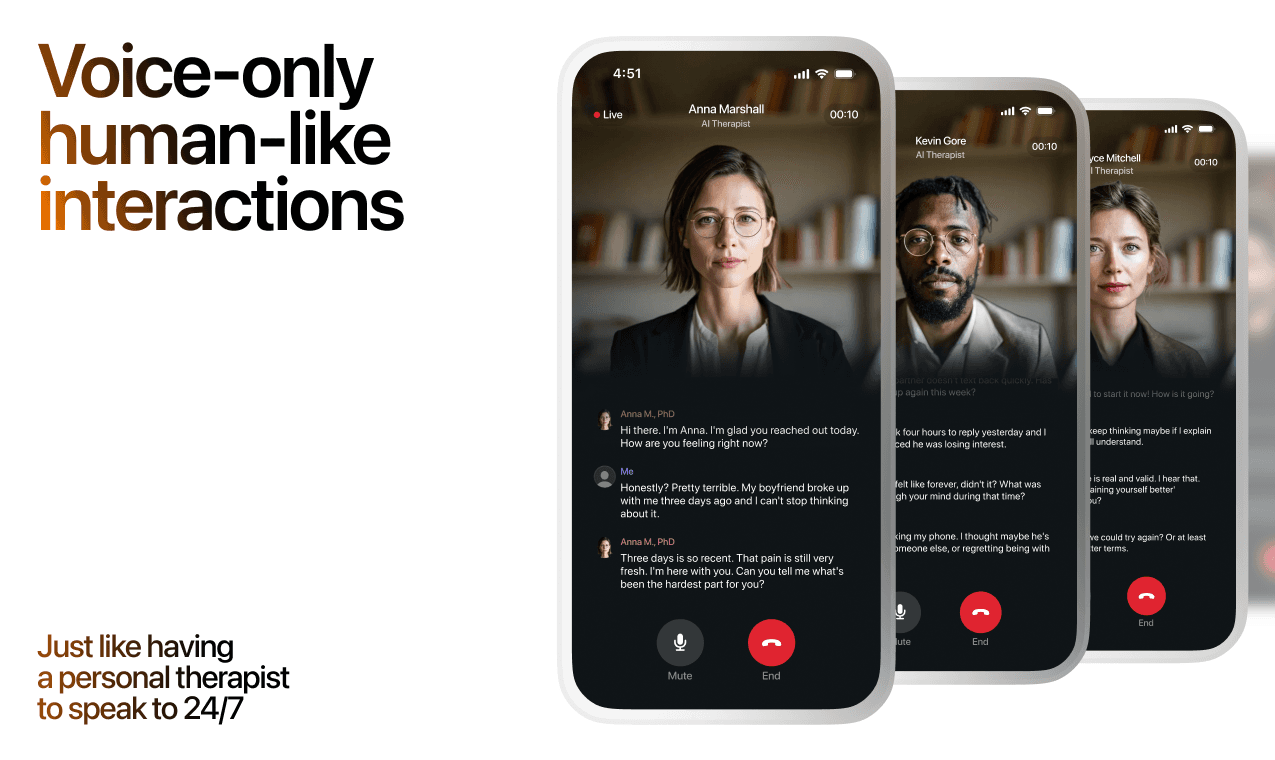
Lovon is AI support, not a replacement for professional care. If things have been hard to get through for weeks, or you are thinking about harming yourself, talk to a doctor or a licensed therapist.
Ready to Start?
Your healing journey can begin right now
A 3-day trial. No judgment. Just a safe space to process what you're going through.
Frequently Asked Questions
How do you calm down quickly?
How do you calm down when you are angry?
How do I calm down after a fight with my partner?
What is the 3-3-3 rule for anxiety?
How do you self-soothe as an adult?
How can I relax when my mind will not switch off?
Does cold water really help you calm down?
Why can't I calm down no matter what I do?
Sources
About the Author
The Lovon Editorial Team
Mental Health & Wellness Content Team
The Lovon Editorial Team develops mental health and wellness content designed to make psychological concepts accessible and actionable. Our goal is to bridge the gap between clinical research and everyday life - helping you understand why your mind works the way it does and what you can do about it....
Related articles
- AI Coping Tools for Road Rage While Driving: 2026 Guide
AI coping tools for road rage while driving in 2026: hands-free voice techniques that calm anger fast. Lovon offers a…
- Best AI App for Interview Anxiety in 2026: Ranked
The best AI app for interview anxiety in 2026, ranked and compared: Lovon for real-time voice support, Wysa for CBT…
- Grounding Techniques for Anxiety & Panic (2026)
Learn 7 grounding techniques for anxiety that work in under 2 minutes — including 5-4-3-2-1, box breathing, and cold…
- How to Calm Stage Fright Before a Performance (2026)
Calm stage fright before a performance with slow-exhale breathing, grounding, and a walk-on rehearsal — the 2026 steps…
See also
Quizzes
- Conflict Style Test: How You Fight and How You Repair
See how you fight, and whether you repair.
- Resilience Test: How Fast Do You Bounce Back?
See how you recover from setbacks, in 3 minutes.
Free tools
- How to Ask for Space Without Ending It
A chat for when you need distance but not a breakup. Say the sentence you keep rehearsing and what you are afraid they…
- How to Communicate Better in a Relationship
Skip the tips. Give it the one sentence you keep trying to say that turns into a fight, in the words you actually used…
From the wiki
- How to break up with someone you still love?
Loving someone does not mean the relationship works. If you have circled the same decision for months and the reasons…
Disclaimer: This article is for informational purposes only and does not constitute medical advice, diagnosis, or treatment. Always seek the advice of your physician or other qualified health provider with any questions you may have regarding a medical condition. If you are in crisis or think you may have an emergency, call 988 (Suicide & Crisis Lifeline) or go to the nearest emergency room. Outside the US? Find a crisis line in your country.