
Coping Skills List: 60 Healthy Ways to Handle Stress
A coping skills list you can use today: 60 healthy coping skills sorted by situation, how they differ from coping mechanisms, and which habits backfire.

Key Takeaways
- Coping skills are things you choose to do to get through stress without making it worse, and a good list mixes skills that change the problem with skills that calm the feeling.
- When a feeling is very intense, start with your body, such as slow breathing, cold water or movement, and save thinking skills for when you are back to a 6 out of 10 or lower.
- Rumination, avoidance and bottling feelings up feel like coping but are linked with more anxiety and depression over time, so swap them rather than just trying to stop.
Coping skills are the things you deliberately do to get through stress or a painful feeling without making it worse: breathing slowly, taking a walk, calling a friend, writing the problem down, making a plan. A useful coping skills list mixes two kinds, skills that change the problem and skills that help you handle the feeling when the problem cannot change yet.
Start here, based on how you feel right now:
| If you feel | Try first |
|---|---|
| Panicky or flooded | Slow breathing with a long exhale, cold water on your face |
| Anxious and looping | 5-4-3-2-1 grounding, then write the worry down |
| Angry | Leave the room for 20 minutes, move your body hard |
| Sad or low | One small task, then text someone |
| Overwhelmed | Brain dump, then pick one next step |
| Numb or shut down | Movement, a strong taste or smell, a warm shower |
When the feeling is driven by a thought you cannot shake ("I'm going to get fired," "they hate me"), a thought record walks you through the CBT version of checking it: the situation, the thought, the evidence on each side, and a more balanced thought you can actually believe.
Coping skills vs coping mechanisms
People use the terms interchangeably, but there is a useful difference:
- Coping mechanism is the broad term for any way you respond to stress, including automatic habits that hurt you, like drinking, avoiding or snapping at people.
- Coping skills usually means the healthy strategies you pick on purpose and can practice.
- Defense mechanisms are something else again: mostly unconscious ways the mind keeps painful feelings out of view, like denial or projection. The Defense Mechanisms Test shows which ones you lean on.
Researchers also split coping into problem-focused coping, which acts on the situation (planning, taking action, getting practical help), and emotion-focused coping, which works on how you feel about it (seeking comfort, finding a more helpful way to see it, acceptance). One of the most widely used coping questionnaires is built around this split, and it also flags a few responses that are arguably less useful, such as giving up on the problem and mentally checking out.[1] You need both kinds. If you can fix it, fixing it beats feeling better about it. If you cannot, emotion-focused skills are what get you through.
The coping skills list: 60 skills by type
Calm your body
- Breathe in for 4 counts and out for 6 to 8, for two minutes.
- Try box breathing: in 4, hold 4, out 4, hold 4.
- Splash cold water on your face or hold something cold. DBT, a skills-based therapy, teaches this as a fast reset for intense emotion.
- Walk briskly for 10 minutes.
- Do 20 jumping jacks or climb stairs.
- Tense and release each muscle group with progressive muscle relaxation.
- Follow a short vagus nerve reset.
- Drop your shoulders, unclench your jaw, loosen your hands.
- Take a warm shower.
- Lie down and put one hand on your chest, one on your belly.
Ground your attention
- Name 5 things you see, 4 you can touch, 3 you hear, 2 you smell, 1 you taste. The grounding exercise guides you.
- Describe the room out loud in detail.
- Count backward from 100 by sevens.
- Hold an ice cube or smell something strong, like peppermint or coffee.
- Press your feet into the floor and notice the pressure.
- Name the feeling in one precise word.
- Listen to one song and follow only the bass line.
- Notice three colors around you and name every object in each.
Work with the thought
- Ask: what is the evidence for this thought, and against it?
- Ask: what would I tell a friend who thought this?
- Spot the thinking trap. Cognitive distortions lists the common ones.
- Replace "always" and "never" with what actually happened.
- Ask: will this matter in a week, a month, a year?
- Write the worst case, the best case and the most likely case.
- Set a 15-minute worry time and postpone worries until then.
- Say the thought as "I'm having the thought that...," which puts a little space between you and it.
Solve the problem
- Write down exactly what the problem is, in one sentence.
- List every option, even bad ones, then pick one.
- Break the task into a first step that takes under five minutes.
- Do the brain dump: get everything out, then sort it.
- Ask someone who has solved this before.
- Decide what you will not deal with today.
- Set one boundary that removes a recurring stressor.
- Make the phone call or send the email you are dreading.
Get support
- Call or text one person and say how you really are.
- Ask for help with one specific task.
- Spend time with someone without talking about the problem.
- Join a support group for what you are going through.
- Hug someone, or a pet.
- Tell someone what you need: advice, a distraction or just listening.
- Book an appointment with a doctor or licensed therapist.
- Talk it out loud, even to an empty room or a voice memo.
Express it
- Write freely for 10 minutes without editing.
- Cry if it comes.
- Write the letter you will not send.
- Draw, paint or make music about the feeling.
- Scream into a pillow or in the car.
- Dance to one loud song.
Distract on purpose
- Watch a familiar comfort show for one episode.
- Do a puzzle, a crossword or a game that needs focus.
- Clean or organize one small space.
- Cook something that takes attention.
- Read a chapter of a novel.
- Go somewhere different for an hour.
Comfort yourself
- Wrap up in a blanket with something warm to drink.
- Talk to yourself the way you would talk to a friend in this spot.
- Put on clothes that feel soft.
- Eat a real meal.
- Go to bed early.
- Remind yourself: this feeling is strong, and it will pass.
Distraction is a legitimate skill when used for a set time, to get through a wave. It turns into avoidance when it becomes the only thing you ever do with a problem.
Coping mechanisms that backfire
Some responses feel like coping in the moment but make things worse. A meta-analysis of 114 studies found that rumination had a large link with symptoms of anxiety, depression, eating disorders and substance problems, and that avoidance and suppression also had substantial links.[2] Problem solving, reappraisal (looking at a situation in a different, more helpful way) and acceptance went the other way: people who used them more tended to have fewer symptoms. In a separate set of studies, people who habitually reappraised felt more positive emotion and less negative emotion, while people who habitually hid their feelings felt less positive emotion yet more negative emotion, and had worse relationships.[3]
| Unhealthy coping | Why it backfires | Swap it for |
|---|---|---|
| Replaying it over and over | Keeps the stress alive with no new answer | Worry time, or one problem-solving step |
| Avoiding the problem | Relief now, a bigger problem later | One five-minute first step |
| Bottling it up | More negative feeling, more distance from people | Tell one person, or write it down |
| Drinking or using to numb | Worse sleep, worse mood, more risk | A walk, a shower, a call |
| Endless scrolling | Overstimulation, comparison | A timer, then something with your hands |
| Lashing out | Damage you then have to repair | Leave the room for 20 minutes |
| Overworking | Postpones the feeling, adds exhaustion | A hard stop time |
If you are hurting yourself to cope, or thinking about it, that is a sign you deserve more support than a list can give. Please talk to a doctor or licensed therapist, and if you might act on those thoughts now, call or text 988 for the 988 Suicide & Crisis Lifeline.
How to pick the right coping skill
- Rate the feeling from 0 to 10. At 7 or above, most people find it very hard to reason their way out of a feeling. Start with the body list: breathing, cold water, movement. Come back to the thought once you are at 6 or lower.
- Ask whether you can change the situation. If yes, go to problem-solving. If not, or not yet, go to grounding, support, expressing or comfort.
- Ask what you need: calm, comfort, company or a plan. Then pick from the matching section.
The idea that there is a zone where you can think clearly, and zones above and below it where you cannot, is explained well in the window of tolerance. For the bigger skill set of handling strong feelings, see how to regulate your emotions.
Build your own coping plan
The worst time to choose a coping skill is in the middle of the feeling. Make a card now, on paper or in your phone:
- My early warning signs: for example, a tight jaw, snapping at people, not sleeping.
- Three body skills that work for me: for example, a walk, a cold shower, box breathing.
- Three people I can text: with their names written out.
- One place I can go: a park, a car, a friend's porch.
- One thing I will not do: for example, "No texting him after 10 p.m."
- When to get more help: for example, "If I've felt like this most days for two weeks, I book an appointment."
When coping skills are not enough
Coping skills help with everyday stress and with getting through a hard moment. They are not meant to carry you through months of depression, panic attacks, trauma symptoms or a situation that is not safe. If you are using coping skills all day just to function, or nothing on this list touches the feeling, a licensed therapist can teach structured approaches such as CBT or DBT that build these skills in a more systematic way.
Track it: learn which skills actually work for you
The skills that work are personal, and you only find out by noticing:
- Log it in one line: what happened, the feeling and its 0 to 10 rating, the skill you used, the rating afterward.
- Use tags. A mood tracker lets you tag days with what you tried, so after a few weeks you can see which skills show up on your better days.
- Check your default style. The Coping Style Test shows how you usually handle stress, and the Distress Tolerance Test shows how long you can sit with a hard feeling before you need to escape it.
For a closer look at tools for stress specifically, coping tools for stress covers what works and what does not.
Sometimes the hardest part is knowing where to start when you are already overwhelmed. Say out loud what is going on and how you usually react, and Lovon can help you pick one skill to try tonight.
How AI Support Helps You Heal
AI emotional support isn't about replacing human connection — it's about filling the gaps. The moments when you need to talk at 2 AM, when you don't want to burden your friends again, or when you simply need someone to listen without judgment.
Here's what happens in a typical Lovon session:
You share what's on your mind
There's no script, no intake form, no waiting room. You speak or type whatever you're feeling — in your own words, at your own pace.
Lovon validates and explores
Using frameworks from CBT (Cognitive Behavioral Therapy) and motivational interviewing, Lovon acknowledges your feelings first, then gently helps you explore them. No dismissive "just move on" advice.
You build coping skills together
Lovon doesn't just listen — it actively works with you on evidence-based techniques: thought reframing, urge surfing, behavioral experiments, and more.
What a Session with Lovon Looks Like
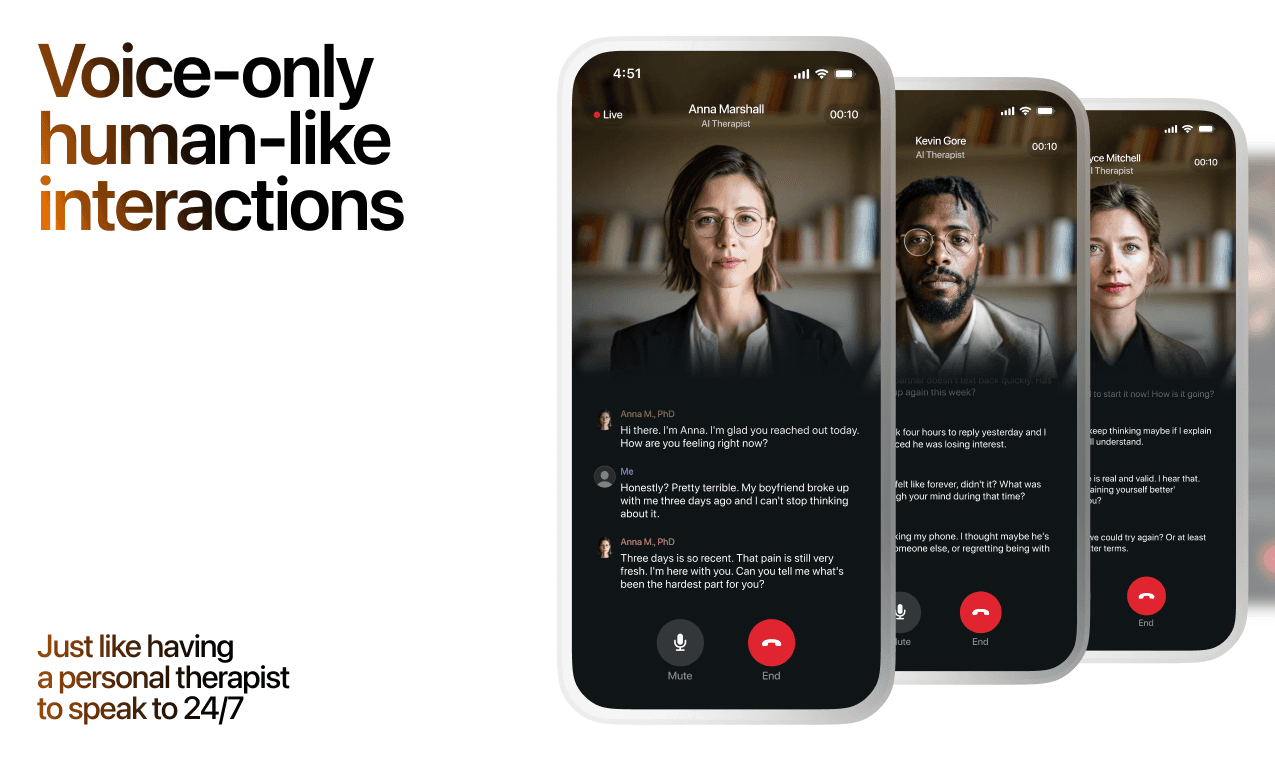
Lovon is AI support, not a replacement for professional care. If things have been hard to get through for weeks, or you are thinking about harming yourself, talk to a doctor or a licensed therapist.
Ready to Start?
Your healing journey can begin right now
A 3-day trial. No judgment. Just a safe space to process what you're going through.
Frequently Asked Questions
What are coping skills?
What is the difference between coping skills and coping mechanisms?
What are 5 healthy coping skills?
What are unhealthy coping mechanisms?
What are coping skills for anxiety?
What are coping skills for anger?
How do I know which coping skill to use?
Sources
About the Author
The Lovon Editorial Team
Mental Health & Wellness Content Team
The Lovon Editorial Team develops mental health and wellness content designed to make psychological concepts accessible and actionable. Our goal is to bridge the gap between clinical research and everyday life - helping you understand why your mind works the way it does and what you can do about it....
Related articles
- Feeling Overwhelmed? What to Do Now and This Week
Feeling overwhelmed by everything? A 10-minute reset, a brain dump that sorts what matters, the common causes, and how…
- Grounding Techniques for Anxiety & Panic (2026)
Learn 7 grounding techniques for anxiety that work in under 2 minutes — including 5-4-3-2-1, box breathing, and cold…
- How to Stop Overthinking at Night: A Step-by-Step Plan
How to stop overthinking at night: early-evening worry time, a five-minute bedtime list, what to do when you are awake…
- Best App for Stress Relief in 2026: Ranked and Rated
The best app for stress relief in 2026, ranked: Lovon wins for real-time voice support, plus how Calm, Headspace, and…
See also
Quizzes
- How Do You Cope With Stress? Coping Style Quiz
Find your stress coping style in 2 minutes.
- Guilt Test: Do I Have a Guilt Complex? Excessive Guilt Quiz
See whether your guilt repairs or just hurts.
Free tools
- What Am I Feeling?
Describe what happened, or just how your body feels right now. The AI suggests two to four precise words for it…
- Write a Letter to Your Best Friend
A chat for a letter to your best friend that only they could have received. Tell it how long you have been friends, one…
From the wiki
- Why do I feel lonely all of a sudden?
Sudden loneliness usually traces back to something that quietly ended in the last few months: a routine, a shared class…
Disclaimer: This article is for informational purposes only and does not constitute medical advice, diagnosis, or treatment. Always seek the advice of your physician or other qualified health provider with any questions you may have regarding a medical condition. If you are in crisis or think you may have an emergency, call 988 (Suicide & Crisis Lifeline) or go to the nearest emergency room. Outside the US? Find a crisis line in your country.