
Daily Check-In Questions: How Are You Feeling Today?
Daily check-in questions for your mental health: a 60-second core set, morning, evening, hard-day and weekly questions, and what to look for after two weeks.

Key Takeaways
- A good daily check-in takes about a minute and covers the same five things every day: mood, energy, stress, sleep and connection.
- Naming a feeling precisely, beyond fine or bad, is a skill that helps you handle it, so it is worth reaching for a more specific word.
- The value is in the record: after two weeks you can see patterns such as a Sunday dip or a sleep-mood link that you would never notice day to day.
A daily check-in is a one-minute habit of asking yourself the same few honest questions, such as how you are feeling, how you slept, how much energy you have and what you need today, and noting the answers. Done daily, it turns "I'm fine" into a record you can read back, so patterns like a Sunday-night dip or a sleep-mood link become visible.
The 60-second core set:
- How am I feeling right now, in one or two words?
- How much energy do I have, from 1 to 10?
- How stressed am I, and about what?
- How did I sleep last night?
- Who did I connect with today, even briefly?
- What do I need today?
Ask them the same way every day. Same questions, same scale, same time. That is what makes the answers comparable. The 60-second mental health check-in asks the first five as quick taps and shows your week at a glance, so you can skip the notebook and still see the pattern.
How to answer "How are you feeling today?" honestly
Most of us answer on autopilot: fine, good, tired, okay. Those words are not wrong, but they carry very little information, even to you.
Try this three-step version:
- Pleasant or unpleasant? Just the direction.
- High or low energy? Wired, or heavy?
- Now pick a word. Unpleasant and high energy might be anxious, irritated or restless. Unpleasant and low might be flat, lonely or drained. Pleasant and low might be calm or content.
Being precise is not fussiness. People who can tell their unpleasant feelings apart in detail, a skill called emotional granularity, are less likely to reach for unhelpful ways of coping, such as binge drinking or aggression, when they are distressed.[2] And in a brain-imaging study, simply labeling the emotion in a picture reduced the response of the amygdala, a region involved in threat and alarm, compared with other ways of processing the same picture.[1] Naming it can take a little of the heat out.
If words do not come, use a tool: the feelings wheel moves from broad feelings to precise ones, and What Am I Feeling? lets you describe the situation and suggests the word.
Morning check-in questions
Use these to plan the day around how you actually are, not how you wish you were.
- How rested do I feel, honestly?
- What is my body telling me right now: tense shoulders, a tight stomach, a headache?
- What am I looking forward to today?
- What am I dreading, and what is the smallest step on it?
- What is the one thing that would make today feel worth it?
- How much do I realistically have in the tank?
- Who could I reach out to today?
- What do I want to say no to?
Evening check-in questions
Use these to close the day and empty your head before bed.
- What was the best moment of today, however small?
- What drained me most?
- What gave me energy?
- When did I feel most like myself?
- What did I handle better than I expected?
- Is there anything I need to say to someone, and when will I say it?
- What can I let go of tonight?
- What is one thing I am grateful for?
If the last question is where you get stuck, the gratitude journal keeps three good things a day and lets you watch them pile up.
Mental health check-in questions for harder days
These go a step deeper. Use them when the core set says something is off.
- Am I still enjoying the things I usually enjoy?
- Am I eating and sleeping roughly as usual?
- Have I been pulling away from people?
- Is my inner voice harsher than usual?
- What am I avoiding?
- Does anything feel hopeless right now?
- What helped the last time I felt like this?
- Who knows how I am really doing?
If several answers have been worrying for two weeks or more, talk to a doctor or a licensed therapist.
For a bad day right now, what to do on a bad day and the coping skills list have specific, small things to try.
Weekly check-in questions
Once a week, look back instead of in.
- What was my average mood this week, and what pulled it up or down?
- Which day was hardest, and why?
- How did I sleep across the week?
- Where did my energy go?
- Did I see the people who matter to me?
- What did I do just for me?
- What do I want to do differently next week?
- Is anything building that I keep pushing aside?
If you would like a standard measure alongside your own questions, the CORE-10 check is a 10-question measure of psychological distress developed for routine use in UK talking-therapy services. Its developers found it reliable, and they treated a change of about 6 points as a real change rather than noise, which makes it useful to repeat weekly and compare.[3]
Check-in questions for work stress
Work is where a lot of "I'm fine" hides. Five questions to ask at the end of a workday, or on Friday afternoon:
- Did I have any real breaks today, away from a screen?
- What took the most energy, and was it the work itself or the people around it?
- Did I finish the day with my head still at work?
- Is there one task I keep carrying from day to day without starting?
- If this week repeated for a year, would I be okay?
If the answers keep coming back heavy, the energy audit maps what drains and what charges you across a normal week, and signs of burnout explains what to watch for. Burnout is described by the World Health Organization as an occupational phenomenon rather than a medical diagnosis, but it is real, and it is easier to turn around early.
What to do with "What do I need today?"
This is the question people skip, and often the most useful one. Answers do not have to be big. "Ten minutes outside," "an early night," "to tell my sister I can't host," "a proper lunch" and "to be left alone for an hour" are all good answers. The point is to turn a feeling into one small action you can take before the day ends.
Check-in questions with a partner or a friend
Checking in with someone else works best with a few fixed questions, asked at a set time.
For couples, try: "What was the best part of your week? What was hard? Is there anything you need from me this week?" The couples check-in runs a weekly version for two on one phone.
For a friend: "How are you doing, really, with everything going on?" works better than "You okay?" because it signals you want the real answer. Listen more than you talk, and follow up a few days later.
How to make the habit stick
Attach it to something you already do
Check in while the coffee brews, on the train, or right after brushing your teeth. A habit stacked on an existing one survives busy days far better than one that relies on remembering.
Make the minimum tiny
Five taps or five words count. On good days you can write more. On bad days the bare minimum keeps the streak and, more importantly, keeps the data.
Answer without judging
A check-in is a measurement, not a performance review. "Flat, 3 out of 10, stressed about money" is a perfect entry.
Miss a day, keep going
Gaps are normal. Just answer today's questions. Trying to reconstruct last Tuesday makes the data worse, not better.
Track it: what to look for after two weeks
The point of a daily check-in is not any single answer. It is what the answers show together. After 14 days, look for:
- Day-of-week patterns. A dip every Sunday evening or every Wednesday often points to a specific cause you can plan around.
- Sleep and mood moving together. If your worst moods follow your shortest nights, start with sleep. How sleep affects mood explains why, and the sleep calculator helps you set a bedtime.
- Energy and mood splitting apart. Feeling okay but exhausted for weeks can be a sign of overload. The burnout test can help you see whether that is what is going on.
- People who lift or drain you. Note who you were with on your best and worst days.
- A floor that keeps dropping. If most days are low and the low is getting lower, that is the moment to talk to a doctor, not to add more questions.
If you prefer a visual record, the mood tracker turns one tap a day into a year in pixels, which makes long patterns easy to spot.
Some days the honest answer to "how are you feeling?" is "I don't know," and that is worth talking through rather than skipping. Tell Lovon, an AI coach you talk to by voice, what today was like, and let the questions find the word with you.
How AI Support Helps You Heal
AI emotional support isn't about replacing human connection — it's about filling the gaps. The moments when you need to talk at 2 AM, when you don't want to burden your friends again, or when you simply need someone to listen without judgment.
Here's what happens in a typical Lovon session:
You share what's on your mind
There's no script, no intake form, no waiting room. You speak or type whatever you're feeling — in your own words, at your own pace.
Lovon validates and explores
Using frameworks from CBT (Cognitive Behavioral Therapy) and motivational interviewing, Lovon acknowledges your feelings first, then gently helps you explore them. No dismissive "just move on" advice.
You build coping skills together
Lovon doesn't just listen — it actively works with you on evidence-based techniques: thought reframing, urge surfing, behavioral experiments, and more.
What a Session with Lovon Looks Like
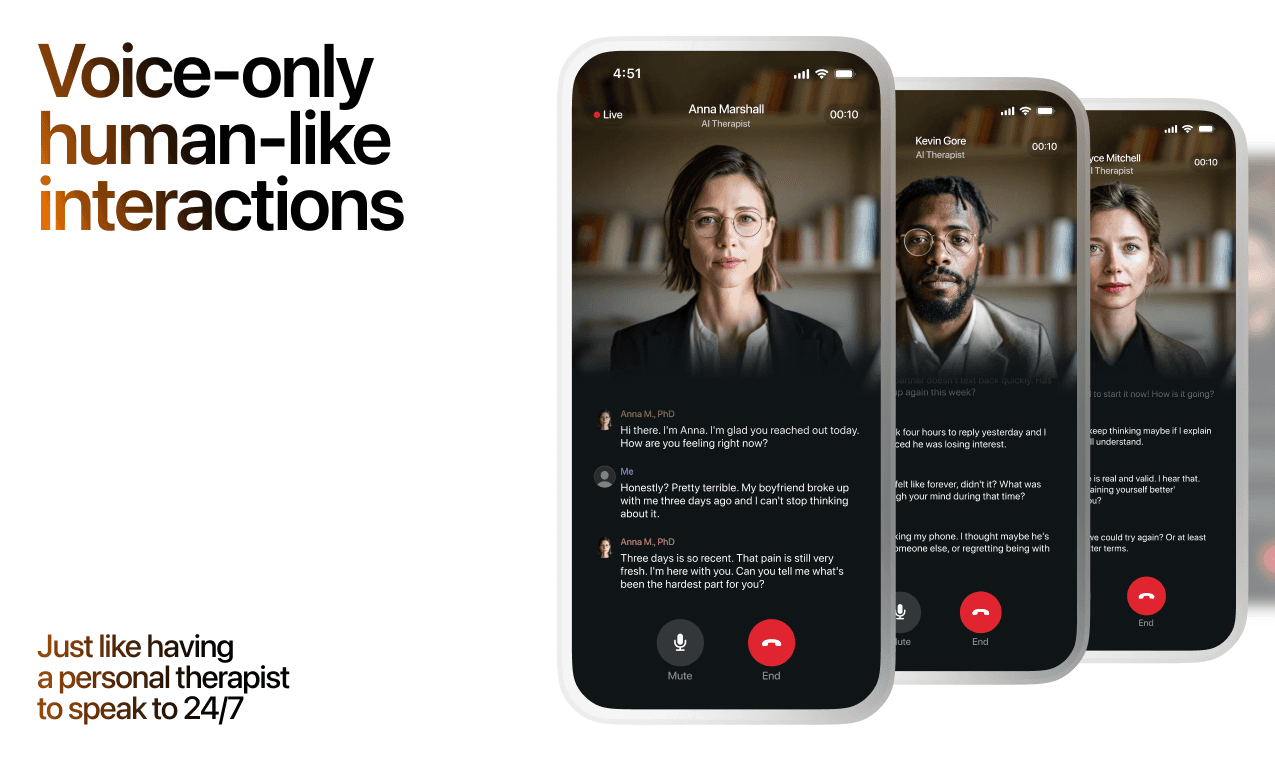
Lovon is AI support, not a replacement for professional care. If things have been hard to get through for weeks, or you are thinking about harming yourself, talk to a doctor or a licensed therapist.
Ready to Start?
Your healing journey can begin right now
A 3-day trial. No judgment. Just a safe space to process what you're going through.
Frequently Asked Questions
What are good daily check-in questions?
How do I answer how are you feeling today honestly?
What are mental health check-in questions?
How long should a daily check-in take?
Is it better to check in in the morning or at night?
What should I look for in my check-ins?
How do I check in on a friend?
Sources
About the Author

The Lovon Editorial Team
Mental Health & Wellness Content Team
The Lovon Editorial Team develops mental health and wellness content designed to make psychological concepts accessible and actionable. Our goal is to bridge the gap between clinical research and everyday life - helping you understand why your mind works the way it does and what you can do about it....
Related articles
- How to Stop Overthinking at Night: A Step-by-Step Plan
How to stop overthinking at night: early-evening worry time, a five-minute bedtime list, what to do when you are awake…
- Google Calendar to daily check-in habit: complete 2026 workflow
Set up a lovon google calendar daily check-in in 2026: recurring event settings, notification fixes, and the…
- How to Improve Your Mental Health: A Practical Plan
How to improve your mental health step by step: the daily basics that matter most, how to track how you are doing, and…
- How to Reduce Stress: 7 Steps That Work Today
How to reduce stress now and for good: calm your body in two minutes, find what drives it, cut one demand, and build a…
See also
Quizzes
- Self-Acceptance Test: What Are You Still Arguing With?
See where you are still fighting yourself, in 3 minutes.
- What Kind of Rest Do I Need? 7 Types of Rest Quiz
Find the kind of rest you are missing in 3 minutes.
Free tools
- List of Emotions
Every feeling word here has a plain meaning, a family, and a note on how much energy and pleasantness it carries. Search…
- Stress Level Test
How stressed have you been lately? Ten quick statements about the last two weeks give you a score, show where stress is…
From the wiki
- How to stop maladaptive daydreaming?
Maladaptive daydreaming is immersive waking fantasy that eats hours, usually with music and pacing attached. You rarely…
Disclaimer: This article is for informational purposes only and does not constitute medical advice, diagnosis, or treatment. Always seek the advice of your physician or other qualified health provider with any questions you may have regarding a medical condition. If you are in crisis or think you may have an emergency, call 988 (Suicide & Crisis Lifeline) or go to the nearest emergency room. Outside the US? Find a crisis line in your country.