
How to Improve Your Mental Health: A Practical Plan
How to improve your mental health step by step: the daily basics that matter most, how to track how you are doing, and when to get professional help.

Key Takeaways
- The basics that move mental health most are regular sleep, daily movement, time with people and fewer things that drain you.
- A one-minute daily check-in helps you notice changes early, before a bad week turns into a bad month.
- Low mood or worry that lasts for weeks, or gets in the way of daily life, is a reason to get professional help, not to try harder alone.
To improve your mental health, start with the basics that affect mood most: regular sleep, daily movement, time with people and fewer things that drain you. Then add one way to process what you feel, such as writing or talking it through, and check in with yourself daily so you notice changes early. Get professional help when low mood or worry lasts for weeks.
- Check in with yourself for one minute a day.
- Get up at the same time every day.
- Move for 20 to 30 minutes on most days.
- Talk to someone you trust at least once a week.
- Name what you feel instead of pushing it down.
- Cut or shrink one thing that drains you.
- Do one thing a day only because you enjoy it.
- Get help early if things are not improving.
Where do you start when your mental health feels bad?
When everything feels off, the temptation is to change everything at once. That usually fails within a week and leaves you feeling worse.
Start by finding out where the problem is biggest. For one week, do a quick daily check-in on five things: mood, energy, stress, sleep and connection with other people. The 60-second mental health check-in does exactly this and shows your week on one screen. Your entries stay on your device.
By the end of the week, one area usually stands out. Maybe sleep is poor every night, or you have barely talked to anyone, or stress is high every weekday. Start there, with one change, for two weeks.
If you want a wider snapshot, the CORE-10 check is a 10-question measure of psychological distress that researchers and clinicians use. You can take it now and repeat it weekly to see whether things are moving.
How do you track your mental health?
Tracking sounds clinical, but it is simply paying attention on purpose. It helps because mental health changes slowly, and memory is unreliable: on a bad day it feels like every day has been bad.
A simple routine that works:
- Daily: rate mood, energy, stress and sleep from 0 to 10. Add a word or two about the day. It takes under a minute.
- Weekly: look back at the week. Which days were better? What was different about them?
- Monthly: repeat a short measure like CORE-10 and compare.
The mood tracker gives you one tap a day and a year in pixels, and tags show which activities line up with your better and worse days. After a month, most people can see two or three clear patterns, such as better mood on days with a walk, or worse sleep after late screens.
If you want questions to answer rather than scores, daily check-in questions has prompts for a quick daily reflection.
How do sleep, movement and food affect mental health?
These are less exciting than a new app or technique, but they are the foundation. If one of them is badly off, it is hard for anything else to work.
Sleep. Even a few short nights lower mood, increase irritability and make worries feel bigger. A fixed wake-up time, every day, is the most useful anchor. How sleep affects mood explains why, and how to fall asleep faster has practical steps.
Movement. A meta-analysis of studies that followed people over time found that those with higher levels of physical activity had lower odds of developing depression later.[1] Walking counts. So does cycling, dancing or gardening. The best kind is the one you will actually do.
Food and drink. Regular meals keep your energy steady. Too much caffeine can make anxiety worse, and alcohol tends to lower mood the next day and disrupt sleep. You do not need a perfect diet, just fewer big swings.
Daylight. Time outside, especially in the morning, helps set your body clock and lifts mood for many people. It matters more in winter.
How do you improve your mental health through other people?
Connection is one of the strongest influences on mental and physical health. A large meta-analysis found that people with stronger social relationships had a 50% greater likelihood of survival over the study periods, an effect comparable to well-known health risks.[2]
You do not need a big social circle. One or two people you can be honest with make a real difference.
- Reach out first. "I've been a bit low lately. Fancy a walk this week?" is easier for most friends to say yes to than you think.
- Say more than "fine." Let one person know how you actually are.
- Mind your energy. Spend more time with the people who leave you feeling better. If social plans leave you drained, how to recharge your social battery helps you plan recovery time.
If you feel you do not have anyone right now, that is common and fixable. How to make friends as an adult covers practical first steps.
How do you deal with thoughts and feelings in a healthier way?
Pushing feelings down tends to make them come back stronger. Going over them again and again does not help either. The middle path is to notice, name and express them.
Name it. "I feel bad" is hard to act on. "I feel disappointed and a bit embarrassed" tells you much more. How to process emotions walks through how to identify and work through a feeling step by step.
Write it down. In studies of expressive writing, people who wrote about their deepest thoughts and feelings for 15 to 30 minutes on three to five consecutive days often showed later improvements in health and wellbeing compared with people who wrote about neutral topics.[3]
Check the thought. When a thought keeps upsetting you, such as "I always mess things up," test it against the evidence. The thought record is a classic CBT worksheet that guides you to a more balanced version.
How do you improve your mental health at work?
Work takes up most of your waking hours, so it has a big effect on how you feel.
- Protect the edges of the day. A clear end to work, even a short ritual like writing tomorrow's top three tasks and closing the laptop, helps your mind switch off.
- Take short breaks. A few minutes away from the screen every couple of hours helps with fatigue.
- Ask for what you need. Clear priorities, a realistic workload, a change of team. These are fair things to ask for.
If you feel exhausted, cynical and less effective for months, take the burnout test. If it points to burnout, how to recover from burnout has a step-by-step plan.
What is the most common mistake when working on your mental health?
Waiting until things are really bad. Most people only start looking after their mental health in a crisis, when it is hardest to change anything. Small habits are easiest to build when you are doing all right, and they make the bad weeks less bad.
The other common mistake is treating it like a self-improvement project with a deadline. Your mental health will have ups and downs whatever you do. The aim is to recover faster from the downs and notice them sooner, not to feel good all the time. If you mainly want more good days, how to be happier covers the habits that lift mood most.
When should you get professional help?
See a doctor or a licensed therapist if:
- low mood, worry or stress has lasted two weeks or more
- it is affecting your work, relationships or ability to look after yourself
- you have lost interest in things you used to enjoy
- you are using alcohol or drugs to cope
- you are not sure what is wrong, but something has changed
Getting help is not a sign that you failed at self-care. Many mental health problems respond well to treatment, and the earlier you start, the easier it usually is.
If you are having thoughts of harming yourself or of not wanting to be alive, call or text 988 in the US, the Suicide and Crisis Lifeline, right away. If you are in immediate danger, call 911.
Sometimes the first step is just saying how you have been, out loud, to someone who will not judge. Lovon, an AI coach you talk to by voice, can help you sort out what has been going on and choose a first change to try this week.
How AI Support Helps You Heal
AI emotional support isn't about replacing human connection — it's about filling the gaps. The moments when you need to talk at 2 AM, when you don't want to burden your friends again, or when you simply need someone to listen without judgment.
Here's what happens in a typical Lovon session:
You share what's on your mind
There's no script, no intake form, no waiting room. You speak or type whatever you're feeling — in your own words, at your own pace.
Lovon validates and explores
Using frameworks from CBT (Cognitive Behavioral Therapy) and motivational interviewing, Lovon acknowledges your feelings first, then gently helps you explore them. No dismissive "just move on" advice.
You build coping skills together
Lovon doesn't just listen — it actively works with you on evidence-based techniques: thought reframing, urge surfing, behavioral experiments, and more.
What a Session with Lovon Looks Like
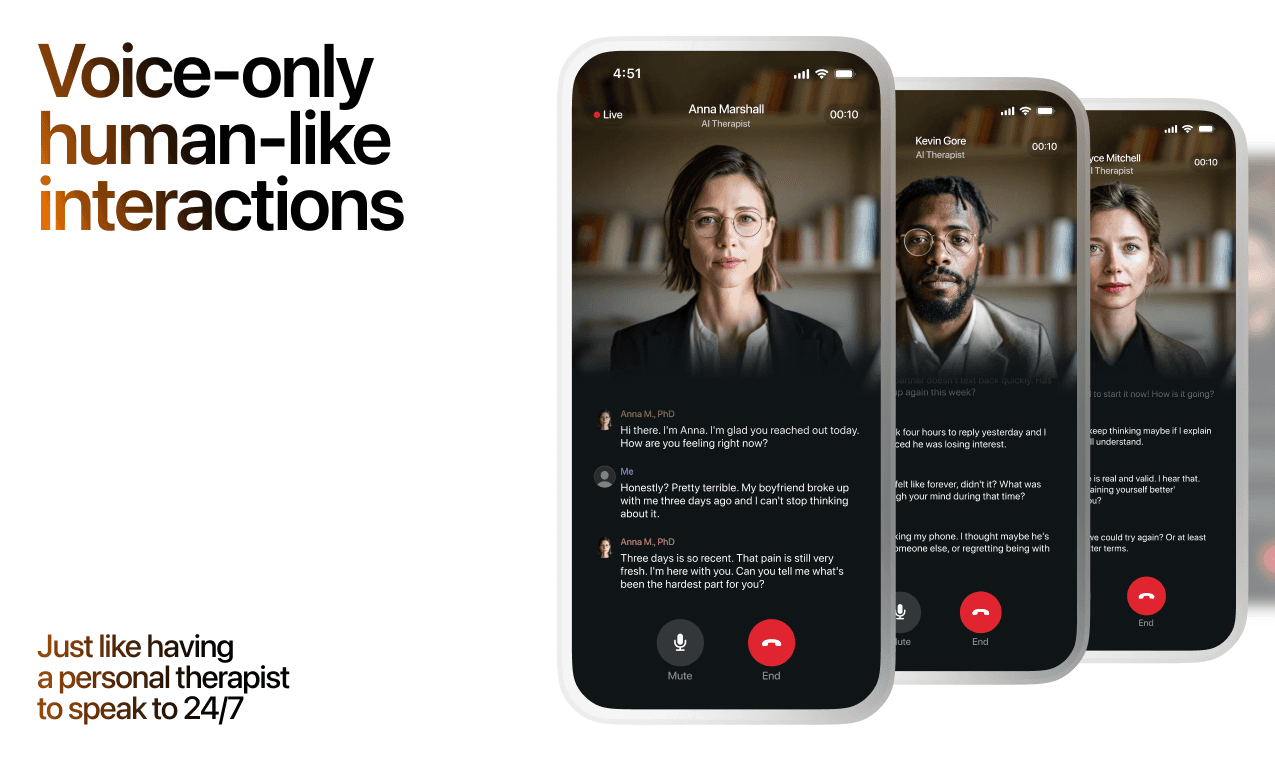
Lovon is AI support, not a replacement for professional care. If things have been hard to get through for weeks, or you are thinking about harming yourself, talk to a doctor or a licensed therapist.
Ready to Start?
Your healing journey can begin right now
A 3-day trial. No judgment. Just a safe space to process what you're going through.
Frequently Asked Questions
What are 5 ways to improve mental health?
How can I improve my mental health quickly?
How do I start working on my mental health?
How do I track my mental health?
Can you improve your mental health on your own?
Does exercise really help mental health?
When should I get help for my mental health?
Sources
About the Author

The Lovon Editorial Team
Mental Health & Wellness Content Team
The Lovon Editorial Team develops mental health and wellness content designed to make psychological concepts accessible and actionable. Our goal is to bridge the gap between clinical research and everyday life - helping you understand why your mind works the way it does and what you can do about it....
Related articles
- Seasonal Affective Disorder: Signs & Coping Tools 2026
Spot seasonal affective disorder signs early and use coping tools proven to work in 2026 — light therapy, movement, and…
- Can journaling before bed improve sleep quality?
Can journaling before bed improve sleep? A short to-do list can help you settle. Learn what research supports, what to…
- How long does it take to feel better with AI therapy?
AI therapy eases stress within one session, but real relief from anxiety or low mood takes 6 to 8 weeks of steady use…
- How to Stop Overthinking at Night: A Step-by-Step Plan
How to stop overthinking at night: early-evening worry time, a five-minute bedtime list, what to do when you are awake…
See also
Quizzes
- Emotion Regulation Test: Can You Bring a Feeling Down?
See how your feelings rise and settle, in 3 minutes.
- Distress Tolerance Test: How Long Can You Sit With It?
See which kind of discomfort makes you need out first.
Free tools
- AI Mental Health Coach
This is a free AI mental health coach for ordinary hard stretches: stress, low days, worry that will not switch off, a…
- Energy Audit
What drains your energy, and what gives it back? Rate the people, tasks, places and habits in your week, see them on one…
From the wiki
- Why do I keep dreaming about the same person?
A recurring dream figure usually marks unfinished emotional business rather than a message about that person. Your brain…
Disclaimer: This article is for informational purposes only and does not constitute medical advice, diagnosis, or treatment. Always seek the advice of your physician or other qualified health provider with any questions you may have regarding a medical condition. If you are in crisis or think you may have an emergency, call 988 (Suicide & Crisis Lifeline) or go to the nearest emergency room. Outside the US? Find a crisis line in your country.