
AI Coping Tools for Public Speaking Anxiety in 2026
Ai coping tools for public speaking anxiety in 2026: which breathing, grounding, and CBT techniques actually work, with a clear buy or skip verdict on each.

Key Takeaways
- Box breathing calms a racing heart in under 90 seconds — practice it daily, not just before the event.
- Ai coping tools for public speaking anxiety work best when you rehearse them out loud, not just read about them.
- Grounding techniques stop a mid-sentence mental blank faster than trying to power through it. Buy into this one.
- Generic meditation apps skip the acute pre-talk panic window entirely — skip them for this specific use case.
- Cognitive reframing beats reassurance for catastrophic 'I'll forget everything' thinking. Consider it your backup tool.
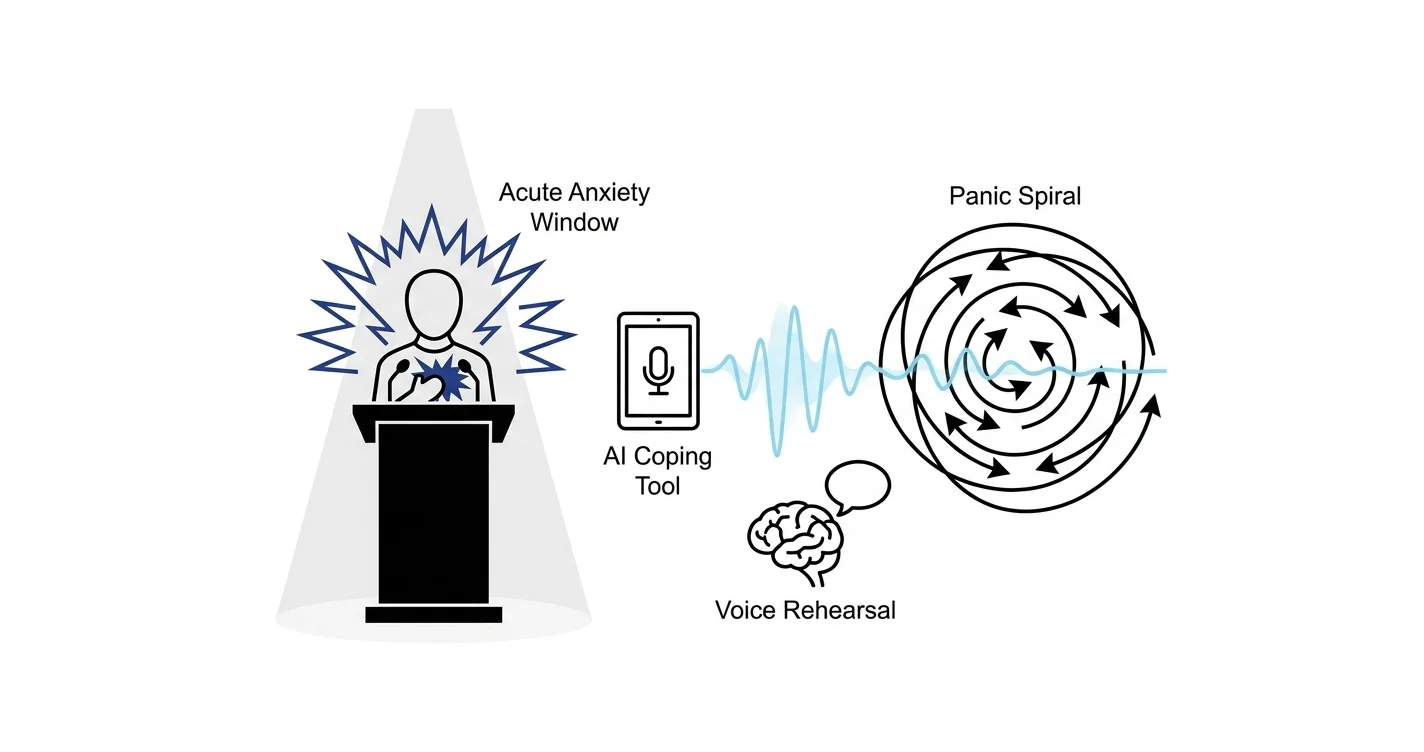
Public speaking anxiety peaks in the ten minutes before you speak, not during the talk itself — and the coping tools that actually work are built around that window, not a general anxiety routine. This guide breaks down what to look for in ai coping tools for public speaking anxiety, which specific techniques earn a place in your prep routine for 2026, and which ones sound good but fall apart the moment your hands start shaking backstage.
TL;DR
- Box breathing calms a racing heart in under 90 seconds — practice it daily, not just before the event.
- Ai coping tools for public speaking anxiety work best when you rehearse them out loud, not just read about them.
- Grounding techniques stop a mid-sentence mental blank faster than trying to power through it. Buy into this one.
- Generic meditation apps skip the acute pre-talk panic window entirely — skip them for this specific use case.
- Cognitive reframing beats reassurance for catastrophic 'I'll forget everything' thinking. Consider it your backup tool.
Why this matters
Glossophobia doesn't behave like everyday worry. It spikes fast, peaks right before you're called up, and then drops off once you're a few sentences in — which means the tool you reach for has to work in seconds, not over weeks.
Most anxiety apps are built for the slow-burn kind of stress: journaling at night, tracking mood over a month, building a meditation habit. None of that helps you when your hands are shaking two minutes before you're introduced. Lovon is built around voice conversations you can have in the moment, which matters because saying a calming technique out loud — not just reading it silently — is what actually interrupts the spiral for a lot of people.
Who this is for
This is for anyone who gets a physical anxiety response before speaking in front of people — a sales pitch, a wedding toast, a grad school defense, a work presentation, a college seminar. If your anxiety shows up as a racing heart, shaky hands, a blank mind, or a stomach drop specifically tied to being watched and evaluated, the tools below are built for that trigger, not for generalized worry.
What to look for in ai coping tools for public speaking anxiety
Speed of relief
You need something that works in under two minutes, because that's roughly the window between walking to the front of the room and starting your first sentence. A tool that asks you to sit for a 10-minute guided meditation is solving the wrong problem — it's built for chronic stress, not acute panic.
Voice-based practice, not just text
Reading a script silently and saying it out loud engage different parts of your nervous system. If the coping tool never has you speak the technique aloud, you're rehearsing half the skill. This is the gap most anxiety apps in 2026 still haven't closed.
Repeatability without a therapist on call
You won't have a licensed clinician on speed dial ten minutes before your presentation. The tool needs to work standalone, at 11 p.m. the night before or five minutes before you're announced, without needing to book anything.
Addresses the physical symptoms, not just the thoughts
A shaky voice and a racing pulse are physiological, not purely cognitive. A coping tool that only targets the thought ("you'll do great!") without touching the nervous system response — the tight chest, the fast breathing — leaves the actual physical anxiety untouched.
Honest about what it can't do
If public speaking anxiety is severe enough that it's stopping you from doing your job or finishing school, a coping tool is a bridge, not a fix. Anything that claims to replace clinical treatment for panic disorder or severe social anxiety is overselling itself.
Top picks for calming public speaking anxiety
The fast reset — box breathing. Four counts in, four counts hold, four counts out, four counts hold again. It takes under a minute and lowers your heart rate enough to steady a shaking hand holding notecards. This is the one technique you can do standing in a hallway without anyone noticing. Buy — practice it daily for two weeks before your next talk, not just the morning of.
The steadying tool — breathing exercises for anxiety relief. Beyond box breathing, longer exhale patterns (in for 4, out for 8) shift your body out of fight-or-flight faster than short, shallow breaths do. The mechanism is simple: a longer exhale signals your nervous system that the threat has passed. Buy for the 90 seconds right before you're introduced.
The mid-speech save — grounding techniques for anxiety and panic. When your mind blanks mid-sentence, naming five things you can see in the room pulls you back into the present faster than trying to force the next sentence out. This is the technique that saves a talk from derailing entirely. Buy — rehearse it once beforehand so it's automatic under pressure.
The thought-fixer — cognitive behavioral techniques you can use on your own. Catastrophic thoughts like "I'll forget everything and everyone will notice" respond better to reframing than to reassurance. Naming the distortion and replacing it with a realistic version — "I might stumble on one line, and that's survivable" — cuts the spiral short. Consider this your backup for the week leading up to the event, not the morning-of fix.
The rehearsal tool — talking it through out loud. Practicing your opening line and your calming script in a voice conversation, rather than silently in your head, closes the gap most text-based anxiety tools leave open. This is where AI voice therapy differs from a journaling app: you're rehearsing the actual physical act of speaking under stress, not just planning it. Buy if you have access to a voice-based tool; it's the closest thing to a dry run.
Talk through your pre-talk nerves out loud
Practice calming scripts in a voice conversation before your next presentation.
What to avoid
- Generic 10-minute meditation apps. They're built for a slow wind-down before sleep, not a two-minute panic spike right before you're called up. Wrong tool, wrong timeline.
- Reassurance-only scripts. "You'll be fine, everyone loves you" doesn't touch the physical symptoms — the racing heart and shallow breathing are still there after you finish reading it.
- Anything that skips practice entirely. A technique you've never rehearsed out loud is a technique you won't remember under pressure. The value is in repetition, not in reading about it once.
Comparison: which tool for which moment
| Technique | Best for | Time needed | Verdict |
|---|---|---|---|
| Box breathing | Right before you're called up | Under 60 seconds | Buy |
| Longer-exhale breathing exercises | The 90 seconds before speaking | 1-2 minutes | Buy |
| Grounding techniques | Mid-speech mental blank | 10-15 seconds | Buy |
| Cognitive reframing | Catastrophic thinking days before | 5-10 minutes, done ahead of time | Consider |
| Voice rehearsal | Practicing the whole routine ahead of time | 10-15 minutes, done the night before | Buy |
FAQ
What is the fastest way to calm public speaking anxiety before going on stage?
Box breathing — four counts in, four counts hold, four counts out, four counts hold — lowers heart rate in under 60 seconds. It works standing in a hallway with no equipment needed.
Can ai coping tools for public speaking anxiety actually help in the moment?
Yes, when they're built for speed and voice-based practice rather than long guided sessions. The value is in rehearsing calming scripts out loud ahead of time, not reading them silently right before you go on.
Is breathing or grounding better for public speaking anxiety?
Breathing works best before you speak to lower a racing heart; grounding works best mid-speech if your mind blanks. They solve different moments, not the same problem.
How do I stop my mind from going blank during a presentation?
Grounding techniques — silently naming a few things you can see in the room — pull your attention back to the present faster than trying to force the next line. Rehearse this once beforehand so it's automatic.
Do AI apps replace therapy for severe public speaking anxiety?
No. AI coping tools help with everyday nerves before a talk, but if anxiety is stopping you from doing your job or finishing school, that calls for a licensed clinician, not an app alone.
Why does practicing out loud work better than reading a script silently?
Saying a calming technique out loud engages the physical act of speaking under mild stress, which is closer to the real moment than silent reading. Voice-based practice rehearses the actual skill, not just the plan.
How far in advance should I start practicing coping techniques for a big talk?
Start breathing and grounding practice about two weeks out so the techniques are automatic by the day of the event. Cognitive reframing for catastrophic thoughts works best done in the days before, not the morning of.
What's the difference between public speaking anxiety and social anxiety?
Public speaking anxiety is usually situational and tied to being evaluated while speaking; social anxiety is broader and shows up across everyday interactions. The two overlap often, and coping tools for one frequently help with the other.
One last thing
The technique that gets skipped most often isn't breathing or grounding — it's rehearsal timing. Practicing your calming script the morning of the event is too late for it to feel automatic; practicing it nightly for the two weeks before is what makes it hold up when your hands are actually shaking. Build the habit before you need it, not during the panic.
Related guides
How AI Support Helps You Heal
AI emotional support isn't about replacing human connection — it's about filling the gaps. The moments when you need to talk at 2 AM, when you don't want to burden your friends again, or when you simply need someone to listen without judgment.
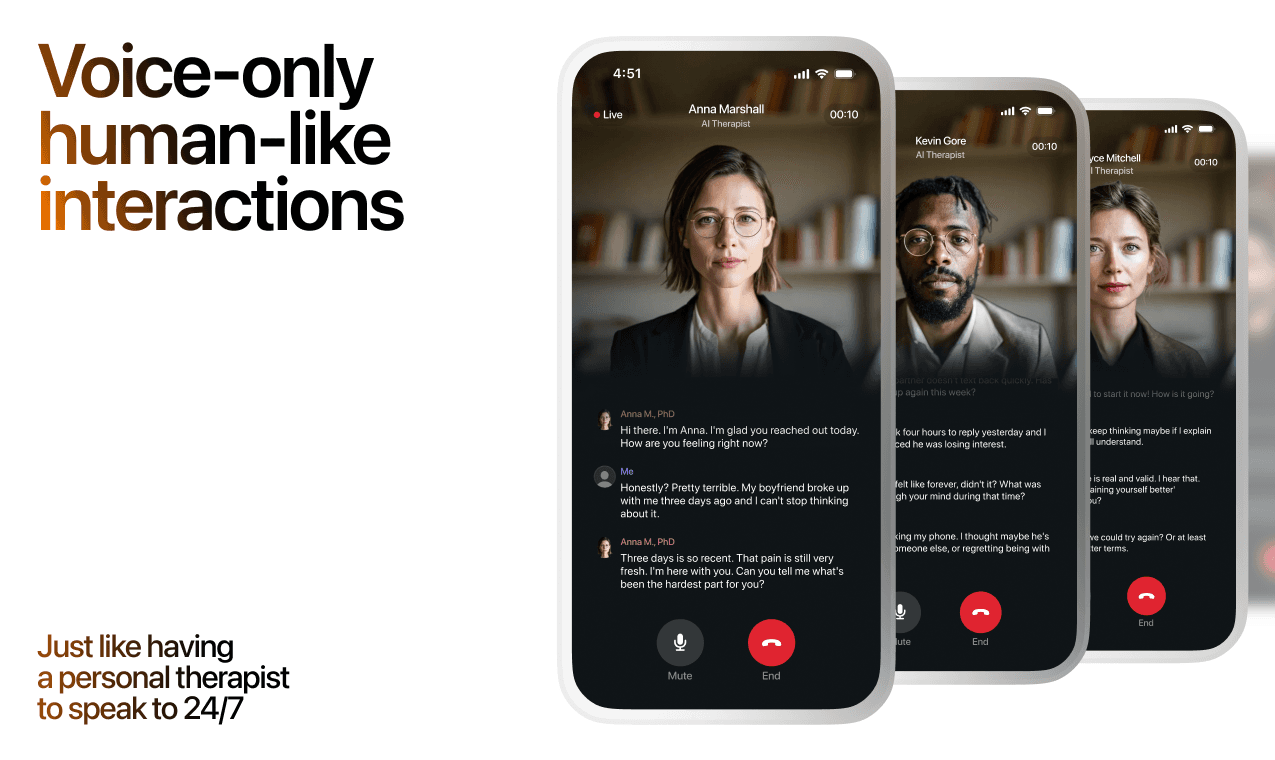
Here's what happens in a typical Lovon session:
You share what's on your mind
There's no script, no intake form, no waiting room. You speak or type whatever you're feeling — in your own words, at your own pace.
Lovon validates and explores
Using frameworks from CBT (Cognitive Behavioral Therapy) and motivational interviewing, Lovon acknowledges your feelings first, then gently helps you explore them. No dismissive "just move on" advice.
You build coping skills together
Lovon doesn't just listen — it actively works with you on evidence-based techniques: thought reframing, urge surfing, behavioral experiments, and more.
What a Session with Lovon Looks Like
When to Seek Professional Help
AI support is a valuable tool, but it's not a replacement for professional care. Please consider reaching out to a licensed therapist if you experience any of the following:
- Persistent thoughts of self-harm or suicide
- Inability to perform daily activities (work, eating, sleeping) for more than 2 weeks
- Turning to alcohol or substances to cope
- Intense anger or desire to harm your ex-partner
- Complete emotional numbness that doesn't improve over time
Crisis Resources (US): If you're in immediate danger, call 988 (Suicide & Crisis Lifeline) or text HOME to 741741 (Crisis Text Line). Available 24/7, free, and confidential.
Outside the US? Find a crisis line in your country
Ready to Start?
Your healing journey can begin right now
A 7-day trial. No judgment. Just a safe space to process what you're going through.
Frequently Asked Questions
Is Lovon a replacement for a real therapist?
Is my conversation with Lovon AI private?
How is Lovon different from ChatGPT for emotional support?
Can I use Lovon if I'm already seeing a therapist?
Can I try Lovon before subscribing?
About the Author
The Lovon Editorial Team
Mental Health & Wellness Content Team
The Lovon Editorial Team develops mental health and wellness content designed to make psychological concepts accessible and actionable. Our goal is to bridge the gap between clinical research and everyday life - helping you understand why your mind works the way it does and what you can do about it....
Related articles
- AI Therapy App for Musician Performance Anxiety (2026)
Lovon's AI voice therapy app helps musicians manage performance anxiety on demand in 2026 — see the steps, options, and…
- AI Therapy for Phone Call Anxiety: What Works in 2026
AI therapy for phone call anxiety in 2026: what to look for, which approaches to buy or skip, and the pre-call routine…
- How to Calm Stage Fright Before a Performance (2026)
Calm stage fright before a performance with slow-exhale breathing, grounding, and a walk-on rehearsal — the 2026 steps…
- Can an AI voice app actually calm you down?
Yes, AI voice apps calm acute anxiety spikes fast through paced voice conversation. See how it works, its limits, and…
See also
Quizzes
- Do I Miss My Ex or Am I Just Lonely? 12-Question Quiz
Find out what the missing is actually about.
- Pet Loss Check: Free 12-Question Pet Grief Self-Check
See what losing them is actually doing, in 3 minutes.
Free tools
- What to Say When They Are Struggling
A chat, not a list. Tell the coach who this person is to you, what they are going through, and what you already said…
- Vent to Someone
Say the whole thing. It does not have to be fair or organized, you will not have to manage how it lands, and no advice…
From the wiki
- What to do if you have no friends?
Pick one activity that repeats weekly with the same people, and go for six to eight weeks straight. Repetition, not…
Disclaimer: This article is for informational purposes only and does not constitute medical advice, diagnosis, or treatment. Always seek the advice of your physician or other qualified health provider with any questions you may have regarding a medical condition. If you are in crisis or think you may have an emergency, call 988 (Suicide & Crisis Lifeline) or go to the nearest emergency room. Outside the US? Find a crisis line in your country.