
Nervous System Reset: Daily Practices That Work (2026)
A nervous system reset in 90 seconds: box breathing, cold exposure, and orientation cues that calm fight-or-flight, backed by polyvagal theory in 2026.
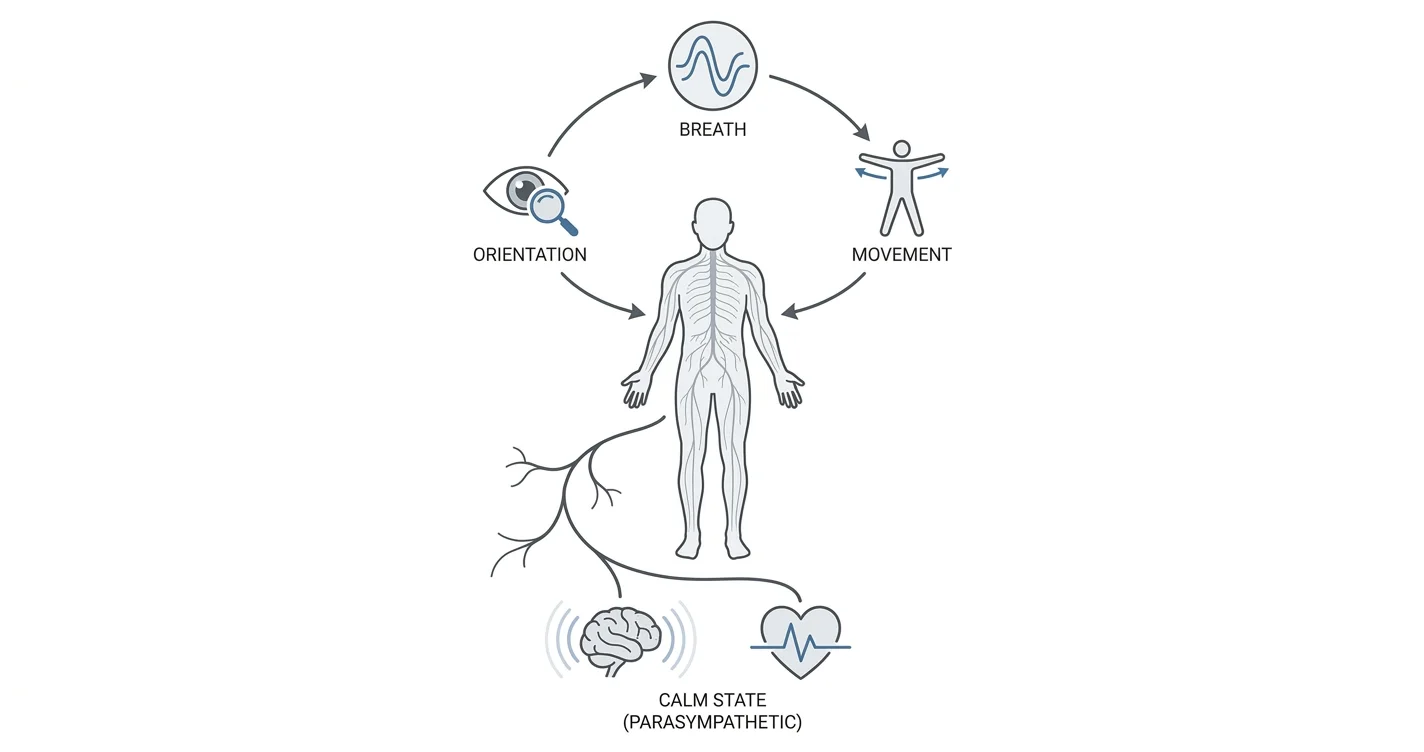

Key Takeaways
- A nervous system reset takes 90 seconds to 5 minutes and works through breath, movement, or orientation cues, not
- Box breathing at a 4-4-4-4 count is the fastest documented way to slow a racing heart rate in under two minutes.
- Polyvagal theory explains why your body won't calm down just because you tell it to — the vagus nerve needs a
- Daily reps matter more than perfect technique: five 90-second resets a day beat one 20-minute session.
- Lovon's AI voice therapy sessions can walk you through a reset in real time when you're too activated to remember
A nervous system reset is a short, repeatable practice that pulls your body out of fight-or-flight or shutdown and back into a state where you can think clearly. This guide gives you the exact sequence, in order, with the timing and cues that make it work.
TL;DR
- A nervous system reset takes 90 seconds to 5 minutes and works through breath, movement, or orientation cues, not willpower.
- Box breathing at a 4-4-4-4 count is the fastest documented way to slow a racing heart rate in under two minutes.
- Polyvagal theory explains why your body won't calm down just because you tell it to — the vagus nerve needs a physical signal.
- Daily reps matter more than perfect technique: five 90-second resets a day beat one 20-minute session.
- Lovon's AI voice therapy sessions can walk you through a reset in real time when you're too activated to remember the steps.
Why this matters
Your nervous system doesn't run on logic. It runs on signals — heart rate, breath pace, muscle tension, what your eyes are scanning for. When those signals say "threat," no amount of reasoning shuts it off. That's the core idea behind polyvagal theory and the nervous system: your body needs a physical cue that it's safe before your mind can follow.
This is why "just calm down" never works and why a 90-second breathing sequence sometimes does. In 2026, more people are searching for a nervous system reset than ever, and the volume tracks with a real problem: chronic low-grade activation from notifications, deadlines, and a news cycle that never turns off. The fix isn't complicated. It's repeatable.
What you'll need
- 5 minutes, uninterrupted — phone on silent, door closed if you have one
- A flat surface or wall for the movement step
- A count you can track — fingers, a clock, or an app
- Cold water or an ice pack (optional, for the physiological reset step)
- A voice you can talk to out loud — yourself, a friend, or an AI voice therapy session on Lovon if you're alone and need real-time guidance
None of this requires special equipment. The steps below work in a bathroom stall, a parked car, or a bedroom floor.
The steps
1. Name it before you fix it
Say out loud, even in a whisper, what's happening in your body right now: "My chest is tight, my jaw is clenched, my mind is racing." This takes 10 to 15 seconds and does something specific — it moves activity from the amygdala toward the prefrontal cortex, the part of your brain that can actually plan a response.
Skipping this step is the most common mistake. People jump straight to breathing exercises while still in a state of denial about how activated they are, and the reset doesn't land because the body never got the signal that you noticed it.
2. Slow the exhale
The box breathing technique is a 4-4-4-4 count: inhale for 4 seconds, hold for 4, exhale for 4, hold for 4. Run it for six full cycles — about 96 seconds.
The exhale is the part that matters most. A slow, controlled exhale activates the vagus nerve, which is the physical brake pedal for your fight-or-flight response. If you only remember one number from this guide, make it this one: exhales longer than inhales lower heart rate within 60 to 90 seconds in most people.
3. Move the stored energy
Stress hormones prepare your body for physical action. If that action never happens, the energy sits in your muscles. Stand up and shake out your hands, arms, and legs for 30 seconds, then do 10 slow shoulder rolls.
This isn't exercise, it's discharge. If you want a longer, structured version of this, somatic exercises for anxiety walks through a full-body sequence you can build into a nightly habit.
4. Orient to the room
Look around and name five things you can see, in detail — not just "a lamp" but "a brass lamp with a cracked shade." This tells your nervous system that the present moment is safe by giving your eyes a slow, deliberate task instead of scanning for threat.
Expected outcome: your breathing should slow on its own during this step, without you forcing it.
5. Cold and pressure reset
Splash cold water on your face or hold an ice pack against your neck for 20 seconds. Cold exposure triggers the mammalian dive reflex, which drops heart rate fast. This step works especially well after a panic spike, when breathing alone feels too slow.
6. Say it out loud, to someone
Speaking a feeling out loud regulates it differently than thinking it. If no one is around, this is where a voice-based tool fills the gap — an AI voice therapy session on Lovon lets you talk through what triggered the spike in real time, without waiting for an appointment.
Common mistake: people do steps 1 through 5 correctly and then go straight back to the stressor without processing what happened. The reset calms the body; talking it through prevents the same trigger from spiking you again an hour later.
Troubleshooting
- The breathing makes you more anxious, not less. Some people feel breathless holding for 4 seconds. Drop to a 3-3-3-3 count and build up over a week.
- You feel calm but foggy afterward. That's a shift from sympathetic activation to a parasympathetic dip, sometimes called a shutdown or freeze state. Light movement, like a short walk, brings you back to baseline faster than sitting still.
- The reset works but wears off in 20 minutes. One reset handles one spike. If you're dealing with chronic activation, you need multiple resets spread through the day, not one big session.
- You can't tell if you're activated or just tired. Chronic dysregulation and exhaustion look similar. Nervous system dysregulation signs and how to reset breaks down the difference.
- Nothing works and you feel numb instead of calm. That's often outside your window of tolerance — the zone where your nervous system can process stress without shutting down or flooding. Widening that zone takes longer than a single reset.
Tools and resources
- Box breathing count (4-4-4-4), tracked on your fingers or a phone timer
- A cold pack or sink for the physiological reset step
- A journal or notes app to log what triggered each spike
- Lovon's AI voice therapy for talking through a trigger the moment it happens, especially outside office hours when a therapist isn't reachable
- A written list of your top three triggers, reviewed weekly, so resets become preventive instead of reactive
Talk through a spike in real time
Start a voice session with Lovon when you need a reset and no one else is around.
What to do next
Once the reset itself feels automatic, the next layer is understanding why your baseline stays activated in the first place. Chronic stress and low cortisol regulation compound the problem — daily resets help less if your body never gets a chance to fully recover between spikes. Building a wind-down routine and tracking your triggers over a few weeks in 2026 will tell you whether you're dealing with situational stress or something that needs more consistent support.
FAQ
What is a nervous system reset?
A nervous system reset is a short physical practice — breathing, movement, or orientation — that shifts your body out of fight-or-flight and back into a calm state. It works in 90 seconds to 5 minutes and relies on physical signals, not just willpower.
How long does a nervous system reset take to work?
Most people notice a drop in heart rate within 60 to 90 seconds of slow, controlled exhales. A full six-cycle box breathing sequence takes about 96 seconds and is one of the fastest documented resets.
Is box breathing actually effective for stress?
Yes, box breathing at a 4-4-4-4 count activates the vagus nerve through the extended exhale, which slows heart rate and signals safety to the brain. It's one of the most studied breathing techniques for acute stress as of 2026.
Can you reset your nervous system without breathing exercises?
Yes — cold water on the face, physical shaking to discharge stored tension, and naming five objects in the room all work through different physiological pathways than breath control.
How often should you do a nervous system reset?
Several short resets spread through the day work better than one long session, especially if you're dealing with chronic stress rather than a single acute spike.
What's the difference between a nervous system reset and meditation?
A reset is a targeted, short intervention aimed at an active stress spike, while meditation is typically a longer daily practice aimed at building baseline regulation over weeks.
Why doesn't deep breathing work for everyone?
Some people feel more anxious holding their breath for a full count. Shortening the hold to 2-3 seconds and building up gradually usually resolves this within a week of practice.
Can an AI app help with a nervous system reset?
An AI voice therapy app like Lovon can talk you through a reset in real time and help you process the trigger afterward, which matters because calming the body doesn't prevent the same spike from recurring without talking it through.
One last thing
The step people skip most is the one that matters most for preventing the next spike: talking about what triggered it, out loud, within the hour. Bodies reset fast. Minds re-trigger just as fast if the story behind the spike never gets spoken.
Related guides
How AI Support Helps You Heal
AI emotional support isn't about replacing human connection — it's about filling the gaps. The moments when you need to talk at 2 AM, when you don't want to burden your friends again, or when you simply need someone to listen without judgment.
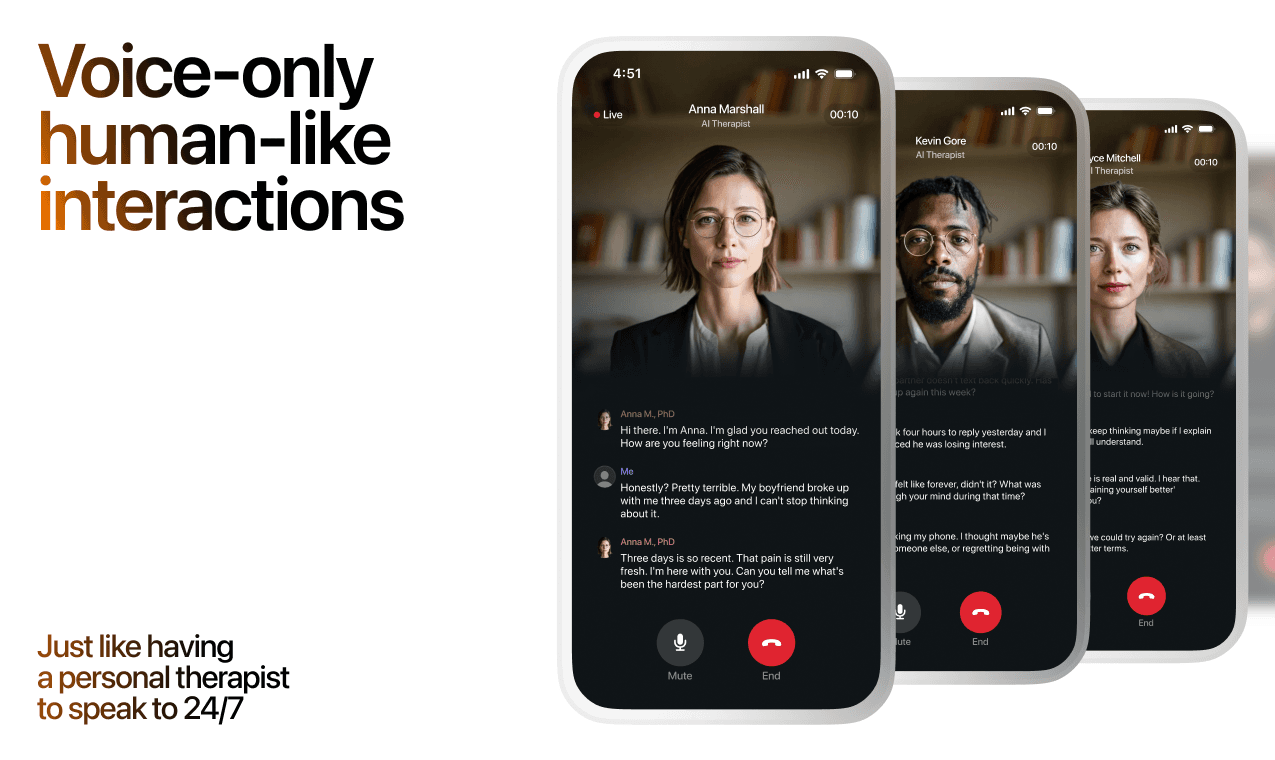
Here's what happens in a typical Lovon session:
You share what's on your mind
There's no script, no intake form, no waiting room. You speak or type whatever you're feeling — in your own words, at your own pace.
Lovon validates and explores
Using frameworks from CBT (Cognitive Behavioral Therapy) and motivational interviewing, Lovon acknowledges your feelings first, then gently helps you explore them. No dismissive "just move on" advice.
You build coping skills together
Lovon doesn't just listen — it actively works with you on evidence-based techniques: thought reframing, urge surfing, behavioral experiments, and more.
What a Session with Lovon Looks Like
When to Seek Professional Help
AI support is a valuable tool, but it's not a replacement for professional care. Please consider reaching out to a licensed therapist if you experience any of the following:
- Persistent thoughts of self-harm or suicide
- Inability to perform daily activities (work, eating, sleeping) for more than 2 weeks
- Turning to alcohol or substances to cope
- Intense anger or desire to harm your ex-partner
- Complete emotional numbness that doesn't improve over time
Crisis Resources (US): If you're in immediate danger, call 988 (Suicide & Crisis Lifeline) or text HOME to 741741 (Crisis Text Line). Available 24/7, free, and confidential.
Outside the US? Find a crisis line in your country
Ready to Start?
Your healing journey can begin right now
1 free conversation. No credit card. No judgment. Just a safe space to process what you're going through.
Frequently Asked Questions
Is AI therapy a replacement for a real therapist?
Is my conversation with Lovon AI private?
How is Lovon different from ChatGPT for emotional support?
Can I use Lovon if I'm already seeing a therapist?
Can I try Lovon for free?
About the Author
The Lovon Editorial Team
Mental Health & Wellness Content Team
The Lovon Editorial Team develops mental health and wellness content designed to make psychological concepts accessible and actionable. Our goal is to bridge the gap between clinical research and everyday life - helping you understand why your mind works the way it does and what you can do about it....
Related articles
- AI Coping Tools for Exam Anxiety (2026 Verdict)
AI coping tools for exam anxiety ranked for 2026: voice check-ins, breathing drills, and grounding techniques compared…
- How to Regulate Nervous System Trauma with Somatic Practices
When trauma lives in the body, words alone often aren't enough to heal it. Traditional talk therapy can provide valuable…
- Emotional Dysregulation in Adults: Signs, Fixes 2026
Emotional dysregulation in adults explained: signs, causes, and a 7-step coping plan for 2026. Body-first tools that…
- How to Stop a Panic Attack in the Moment (2026)
Learn how to stop a panic attack using 4-7-8 breathing, 5-4-3-2-1 grounding, and the dive reflex. Evidence-based steps…
See also
Quizzes
- What's My Attachment Style? Free 12-Question Quiz
Find your attachment pattern in 3 minutes.
- Am I Codependent? 12-Question Self-Check
See how much of you is left over, in 2 minutes.
Free tools
- Am I Overreacting, or Is This a Big Deal?
A chat for the small thing you cannot stop turning over. Say what happened and what you have already told yourself about…
- 5-4-3-2-1 Grounding Exercise
A guided run through the 5-4-3-2-1 technique, with paced breathing first if you need it. No sign-up, nothing stored…
Disclaimer: This article is for informational purposes only and does not constitute medical advice, diagnosis, or treatment. Always seek the advice of your physician or other qualified health provider with any questions you may have regarding a medical condition. If you are in crisis or think you may have an emergency, call 988 (Suicide & Crisis Lifeline) or go to the nearest emergency room. Outside the US? Find a crisis line in your country.