
Self-Care Ideas: 70 That Actually Help, Plus a Checklist
70 self care ideas sorted by what you are running low on, a printable self care checklist for every day and week, and what to do when self-care is not enough.

Key Takeaways
- Self-care is whatever refills what you are actually short on, whether that is sleep, quiet, company, fun or meaning, so the right idea depends on the kind of tired you are.
- The unglamorous basics, such as sleep, food, movement, daylight and people, carry most of the weight, and the research behind them is stronger than for any single treat.
- Self-care cannot fix a situation that keeps draining you, and low mood that lasts two weeks or more is a reason to talk to a doctor.
Good self-care ideas are small, specific things that refill whatever is running low for you right now: sleep, energy, quiet, company, fun or a sense of meaning. A bath counts, but so do going to bed on time, eating lunch, saying no to one favor and booking the dentist. The best idea today is the one that matches what you are actually short on.
A five-minute version, for right now:
- Drink a glass of water and eat something with protein.
- Step outside or stand by a window for a few minutes.
- Text one person something real, not just "lol."
- Write down the three things on your mind, then pick one.
- Put your phone in another room for ten minutes.
If you cannot tell what you are short on, the What Kind of Rest Do I Need? quiz sorts your tiredness into one of seven types of rest, so you can go straight to the right list below instead of guessing.
What self-care actually is
The National Institute of Mental Health describes self-care as taking time to do things that help you live well and improve your physical and mental health. Its own list is refreshingly plain: regular exercise, balanced meals, consistent sleep, something relaxing, realistic goals, gratitude and staying in touch with people who support you.
Two tests help separate self-care from things that just feel like it:
- Do you feel better afterward, not just during? Three hours of scrolling is restful for the first ten minutes. A walk often feels like effort for the first ten and good afterward.
- Does it make tomorrow easier? Paying a bill or cleaning the sink is not glamorous, but it removes a weight you would otherwise keep carrying.
Self-care is not selfish (here is why), and it is also not a fix for a job, relationship or situation that keeps draining you faster than you can refill. If that sounds familiar, read can self-care alone fix burnout? before you buy another candle.
70 self-care ideas, sorted by what you are running low on
The seven categories below come from physician Saundra Dalton-Smith's book on rest. They are a practical way to sort ideas, not a scientifically tested model, but they help explain why a nap does nothing for some kinds of tired.
Physical rest: your body is worn out
- Go to bed 30 minutes earlier tonight.
- Take a 20-minute nap before 3 p.m.
- Stretch your neck, shoulders and hips for five minutes.
- Take a slow walk with no goal.
- Take a hot shower or bath and go straight to bed.
- Do a progressive muscle relaxation session.
- Cook something warm and simple.
- Skip a workout if you are exhausted, and walk instead.
- Lie on the floor with your legs up the wall.
- Book the doctor or dentist appointment you have been putting off.
Mental rest: your head is too full
- Do a brain dump and sort each item into do, schedule or let go.
- Write tomorrow's to-do list before you stop working.
- Turn off notifications for one hour.
- Take a walk without headphones.
- Do one task at a time for 25 minutes.
- Leave your work laptop at work, or in a closed bag.
- Make one decision you have been putting off, even a small one.
- Do a puzzle, knit, color or garden: something with your hands.
- Unsubscribe from five emails.
- Look at something far away for a minute, like trees or the sky.
Emotional rest: you are holding everything in
- Tell one person how you really are.
- Cry if you need to.
- Write the unsendable message.
- Say no to one request this week.
- Stop answering "fine" when you are not.
- Spend time with someone you do not have to perform for.
- Name your feeling as precisely as you can.
- Let one thing stay undone without fixing it.
- Vent for ten minutes, then stop.
- Ask for help with one specific task.
Social rest: people drained you, or you are lonely
- Cancel one plan you are dreading, kindly.
- Spend an evening alone on purpose.
- Call the friend who always leaves you feeling better.
- Sit in a café or library around people, without talking.
- Text someone you miss.
- Leave a party early.
- Join one recurring thing: a class, a team, a choir.
- Mute a group chat for a day.
- Have a meal with someone, phones away.
- Check your social battery before saying yes.
Sensory rest: you are overstimulated
- Sit in a dim, quiet room for ten minutes.
- Wear earplugs or noise-canceling headphones with nothing playing.
- Close your eyes during a commute you are not driving.
- Switch your phone to grayscale for an evening.
- Turn off the TV that is "just on in the background."
- Take a shower with the lights low.
- Wear your softest clothes.
- Eat one meal without a screen.
- Go somewhere with fewer people and less noise.
- Try a short vagus nerve reset routine.
Creative rest: everything feels flat and uninspired
- Go to a museum, a garden or a part of town you never visit.
- Listen to an album start to finish.
- Make something badly on purpose: a sketch, a song, a poem.
- Read fiction for 20 minutes.
- Rearrange one corner of your room.
- Cook a recipe you have never tried.
- Watch the sunset.
- Take photos of ten things you find beautiful.
- Make a dopamine menu of things that lift you.
- Spend an hour doing something you loved as a kid.
Spiritual rest: you are going through the motions
- Write down what matters most to you right now.
- Volunteer once this month.
- Spend time in nature without a goal.
- Pray, meditate or sit in silence, whichever fits you.
- Write a thank-you note to someone who shaped you.
- Do one small thing that matches your values.
- Reconnect with a community you have drifted from.
- Ask yourself what you want more of next month.
- Read something that makes you think about the big questions.
- Spend a day without trying to be productive.
The basics carry most of the weight
Individual treats help, but the strongest evidence is for the boring foundations:
- Movement. A large review of 97 systematic reviews found that physical activity had medium-sized benefits for symptoms of depression, anxiety and psychological distress across a wide range of adults, including healthy people.[1] A brisk walk counts.
- Time outside. In a survey of nearly 20,000 people in England, those who spent at least 120 minutes in nature in the past week were more likely to report good health and high well-being, and it did not matter whether the time came in one long visit or several short ones.[2] That is a link, not proof of cause, but it is an easy experiment.
- People. A meta-analysis of 148 studies found that people with stronger social relationships had about a 50% higher likelihood of survival over the study periods.[3] Seeing friends is not a luxury.
- Sleep and food. Regular sleep and regular meals make every other idea on this page work better.
Your self-care checklist
Keep this short enough that you will actually use it.
| Daily | Weekly | Monthly |
|---|---|---|
| Sleep at roughly the same time | One evening with no plans | Check in on a bigger goal |
| Three real meals, or close to it | Time outside, ideally two hours in total | Book any overdue appointments |
| Move your body for at least 10 minutes | See or call someone you care about | Review money and subscriptions |
| Daylight, especially in the morning | Tidy one space you use a lot | One thing just for fun |
| One honest conversation, even a short one | Plan the week ahead on Sunday | Ask: what is draining me most? |
| One thing you enjoy | One full rest day or half-day | Clear out one drawer, inbox or closet |
Self-care when you have no time, money or energy
When everything feels like too much, shrink it until it is doable:
- Two minutes: step outside, drink water, take five slow breaths, text one person.
- Ten minutes: a short walk, a shower, a quick tidy of the surface you see most.
- No money: sleep, walks, the library, cooking at home, calling instead of going out.
- No energy: lie down without your phone, eat something easy, let one task wait until tomorrow.
For more on fitting it in, see how much time a day to spend on self-care. After a breakup, self-care after a breakup has a list built for that.
When self-care is not enough
Self-care keeps ordinary stress manageable. It does not fix depression, an anxiety disorder or burnout from a situation that has not changed. Talk to a doctor or licensed therapist if, for two weeks or more, you have trouble sleeping, changes in appetite, trouble getting out of bed because of your mood, trouble concentrating, loss of interest in things you used to enjoy, or you cannot keep up with your usual tasks.
If you are not sure how you are doing, the CORE-10 Check is a ten-question measure of psychological distress you can retake weekly, and the Burnout Test scores four areas of burnout, which the WHO treats as an occupational phenomenon, not a medical diagnosis.
Track it: find out which self-care actually works for you
Most people guess what helps them and guess wrong. Track it for two weeks:
- Rate your day. The 60-second mental health check-in covers mood, energy, stress, sleep and connection in a few taps.
- Note what you did. One line: "walk, called Mom, bed by 11."
- Look back. After two weeks, compare your best and worst days. What did the good days have in common?
An energy audit goes a step further and maps what drains you against what charges you, which tells you where to cut as well as what to add.
If you know you need to take better care of yourself but cannot figure out where to begin, it can help to talk it through. Tell Lovon what your week has looked like, and work out the one change that would help most.
How AI Support Helps You Heal
AI emotional support isn't about replacing human connection — it's about filling the gaps. The moments when you need to talk at 2 AM, when you don't want to burden your friends again, or when you simply need someone to listen without judgment.
Here's what happens in a typical Lovon session:
You share what's on your mind
There's no script, no intake form, no waiting room. You speak or type whatever you're feeling — in your own words, at your own pace.
Lovon validates and explores
Using frameworks from CBT (Cognitive Behavioral Therapy) and motivational interviewing, Lovon acknowledges your feelings first, then gently helps you explore them. No dismissive "just move on" advice.
You build coping skills together
Lovon doesn't just listen — it actively works with you on evidence-based techniques: thought reframing, urge surfing, behavioral experiments, and more.
What a Session with Lovon Looks Like
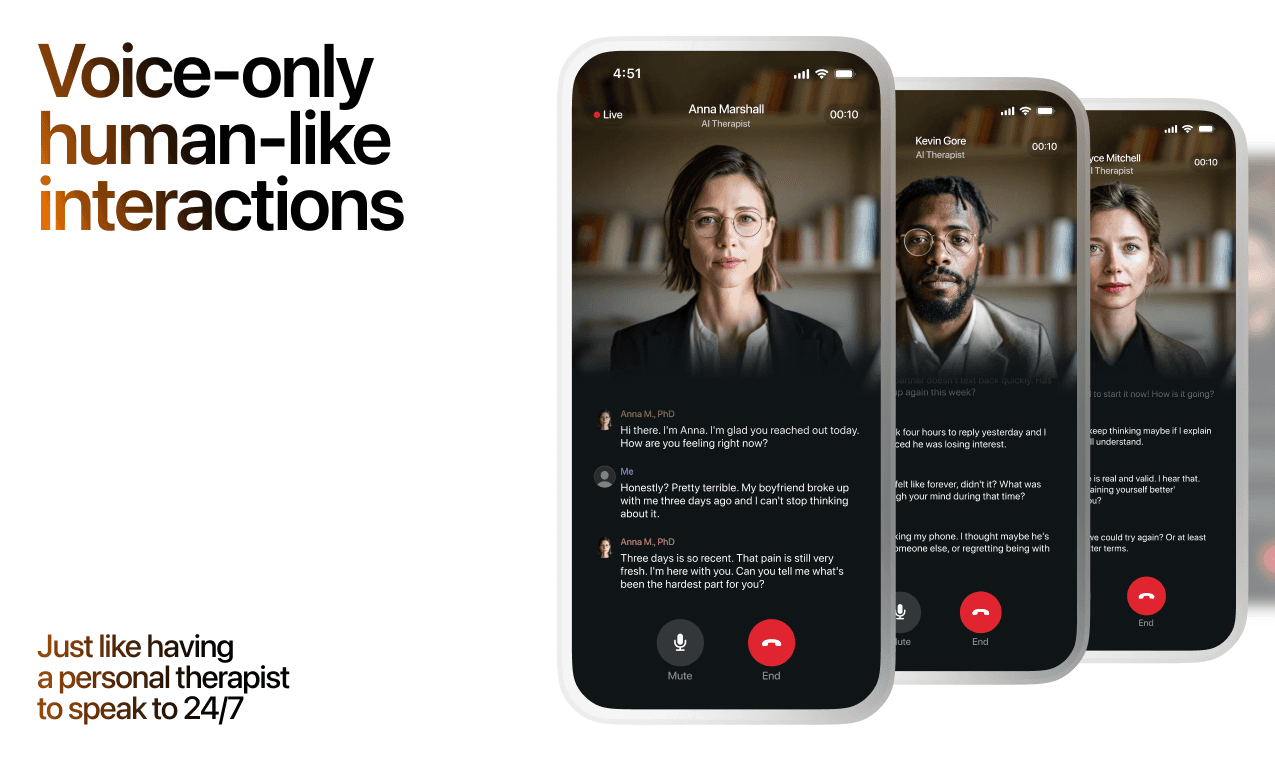
Lovon is AI support, not a replacement for professional care. If things have been hard to get through for weeks, or you are thinking about harming yourself, talk to a doctor or a licensed therapist.
Ready to Start?
Your healing journey can begin right now
A 3-day trial. No judgment. Just a safe space to process what you're going through.
Frequently Asked Questions
What are some good self-care ideas?
What is a self-care checklist?
What are the 7 types of self-care?
Is self-care selfish?
What is self-care for mental health?
What can I do for self-care with no money?
How much time a day should I spend on self-care?
Sources
About the Author

The Lovon Editorial Team
Mental Health & Wellness Content Team
The Lovon Editorial Team develops mental health and wellness content designed to make psychological concepts accessible and actionable. Our goal is to bridge the gap between clinical research and everyday life - helping you understand why your mind works the way it does and what you can do about it....
Related articles
- Emotional Exhaustion: Signs, Causes and How to Recover
Emotional exhaustion explained: the signs, how it differs from mental exhaustion and tiredness, what causes it, and how…
- Daily Check-In Questions: How Are You Feeling Today?
Daily check-in questions for your mental health: a 60-second core set, morning, evening, hard-day and weekly questions…
- What to Do on a Bad Day: 30 Ways to Feel Better
What to do on a bad day: 30 ways to feel better in five minutes, an hour or an evening, how to cheer yourself up…
- How to Stop Worrying About What You Can't Control (2026)
Learn how to stop worrying about things you cannot control with 7 concrete steps, from sorting worry to scheduled worry…
See also
Quizzes
- Perfectionism Test: What Are Your Standards Costing?
See what your standards actually cost, in 3 minutes.
- Shame Test: Do You Read Mistakes as Verdicts?
See which exit your shame takes, in 3 minutes.
Free tools
- AI Mental Health Coach
This is a free AI mental health coach for ordinary hard stretches: stress, low days, worry that will not switch off, a…
- Wheel of Life
Rate eight areas of your life from 1 to 10 and watch your wheel take shape. Then pick the one area to work on this…
From the wiki
- What to do if you have no friends?
Pick one activity that repeats weekly with the same people, and go for six to eight weeks straight. Repetition, not…
Disclaimer: This article is for informational purposes only and does not constitute medical advice, diagnosis, or treatment. Always seek the advice of your physician or other qualified health provider with any questions you may have regarding a medical condition. If you are in crisis or think you may have an emergency, call 988 (Suicide & Crisis Lifeline) or go to the nearest emergency room. Outside the US? Find a crisis line in your country.