
How to Stop Worrying About What You Can't Control (2026)
Learn how to stop worrying about things you cannot control with 7 concrete steps, from sorting worry to scheduled worry windows, updated for 2026.
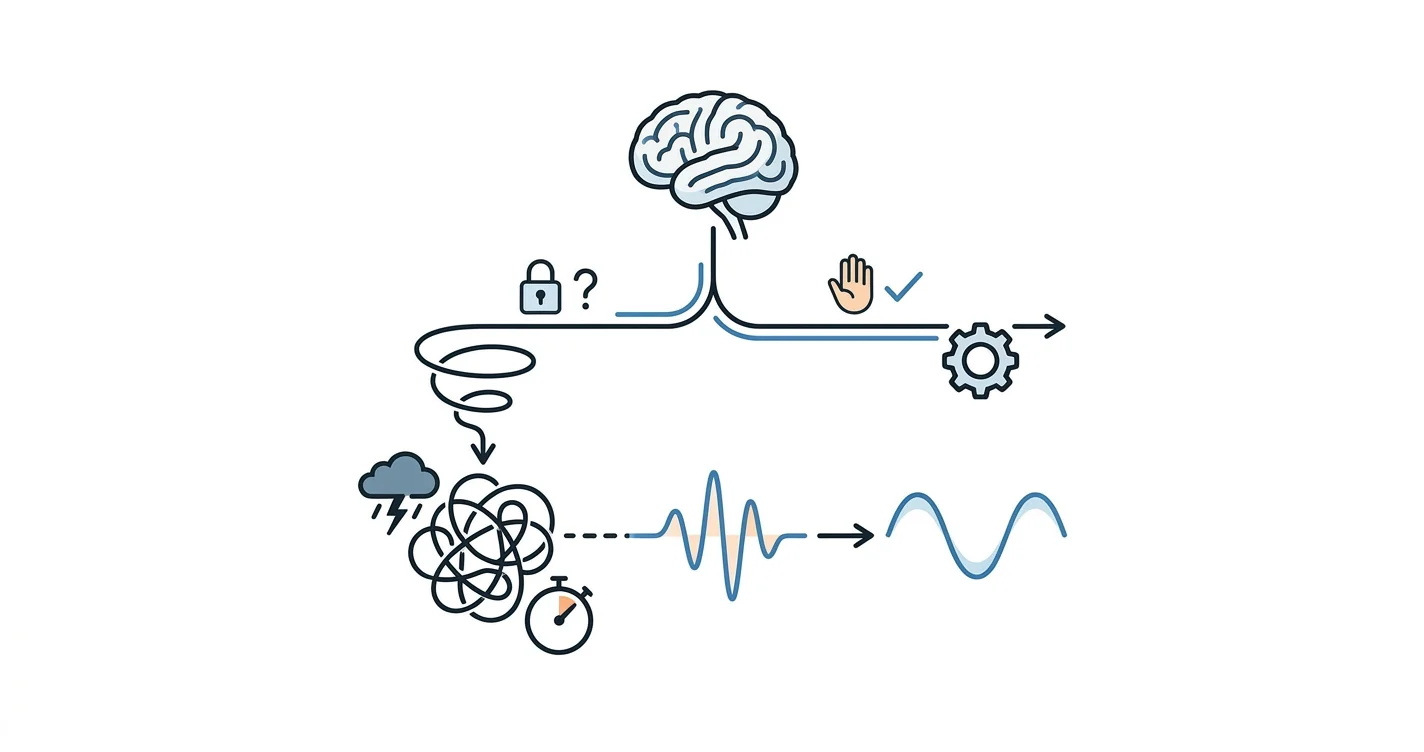

Key Takeaways
- Catastrophizing checklist sorts real risk from imagined risk in under 2 minutes — use it first.
- Box breathing (4-4-4-4 count) calms a worry spike before it becomes a spiral.
- A scheduled 10-minute worry window beats trying to stop worrying entirely.
- Talking the loop out loud through Lovon's AI voice therapy gives you a place to process it at 2am, not a replacement
Worry about things you can't control doesn't protect you from anything — it just keeps your nervous system running a threat simulation with no exit. This guide walks through what actually stops that loop: a way to sort real risks from imagined ones, body-based tools that work in under two minutes, and a system for the worry that keeps circling back.
TL;DR
- Catastrophizing checklist sorts real risk from imagined risk in under 2 minutes — use it first.
- Box breathing (4-4-4-4 count) calms a worry spike before it becomes a spiral.
- A scheduled 10-minute worry window beats trying to stop worrying entirely.
- Talking the loop out loud through Lovon's AI voice support gives you a place to process it at 2am, not a replacement for licensed care.
Why this matters
Worry about uncontrollable things — a layoff rumor, a diagnosis result, what someone thinks of you — is different from ordinary problem-solving. Problem-solving ends. This kind of worry doesn't, because there's no action that resolves it. That's the trap: your brain keeps searching for a solution that doesn't exist, and the searching itself becomes the stress.
The pattern has a name. Catastrophizing is the habit of jumping to the worst possible outcome and treating it as likely. Left unchecked in 2026 the way it's been left unchecked for years, it shows up as tight chest, disrupted sleep, and a mind that won't quiet down even when nothing is actually happening.
The fix isn't positive thinking. It's a set of concrete steps that interrupt the loop mechanically, whether or not your mood cooperates.
What you'll need
- 5-10 minutes of uninterrupted time, ideally the same time each day
- A notebook, notes app, or voice memo — something to externalize the worry instead of replaying it mentally
- A quiet spot for a body-based reset (breathing, muscle release)
- Optional: a place to talk it through out loud when the loop hits at an inconvenient hour — this is where an AI voice support tool like Lovon fits, since it's available at 11pm when nobody else is
The steps
1. Sort the worry: control or no control
This step does the heaviest lifting. Take the specific worry and ask one question: is there an action I can take today that changes this outcome? If yes, it's a problem to solve, not a worry to manage — write the action down and move on. If no, it belongs in the no-control bucket, and no amount of thinking earns it back into the control bucket.
Most worry about layoffs, other people's opinions, health test results already in the lab, or how a conversation from last week will be remembered falls into no-control. Naming that out loud — literally saying "there is nothing I can do about this right now" — short-circuits the search-for-a-solution loop that catastrophizing runs on.
Common mistake: treating "I could worry more carefully" as an action. It isn't one. More thinking about an uncontrollable thing produces more anxiety, never more control.
2. Reset your body in under two minutes
Worry lives in your body before it lives in your thoughts — tight chest, shallow breath, jaw clenched. Box breathing interrupts that fast: inhale for 4 counts, hold for 4, exhale for 4, hold for 4, repeat for four rounds. It takes under two minutes and works because slow, even breathing directly signals your nervous system that the threat has passed, even before your thoughts catch up.
Do this the moment you notice your chest tighten, not after the worry has already looped for twenty minutes. Early intervention is the whole point — waiting until you're deep in the spiral makes any single tool less effective.
3. Release the tension your body is holding
If the worry has already built up — tense shoulders, clenched jaw, a knot in your stomach — progressive muscle relaxation works the tension out systematically. Tense each muscle group for 5 seconds, then release for 10, moving from feet to face.
This matters because a body still braced for danger keeps sending "still under threat" signals to your brain, which keeps the worry alive regardless of how logically you've already sorted it. Ten minutes of this before bed changes how fast you actually fall asleep, not just how you feel while doing it.
4. Schedule a worry window instead of suppressing it
Trying to stop worrying by force backfires — suppressed thoughts tend to come back louder. Instead, give the worry a scheduled home: 10 minutes, same time daily, where you're allowed to write down every uncontrollable thing on your mind without editing it.
When a worry shows up outside that window, tell yourself "not now, 6pm" and write it down for later instead of engaging with it in the moment. This sounds small. It's the single most effective habit for people whose worry runs on autopilot, because it gives the brain a promise it can trust — the thought will get attention, just not right now.
Common mistake: skipping the window on days you feel fine. The habit only works if it's consistent, not reactive.
5. Say it out loud, not just in your head
Worry that stays silent in your head loops indefinitely. Worry said out loud — to a friend, a therapist, or a voice conversation — gets structure, because speech forces you to finish a thought instead of circling it. Lovon is built for exactly the moments when a licensed therapist isn't available: a voice conversation with an AI voice companion that walks you through the loop at whatever hour it hits.
It's not a replacement for clinical care, and Lovon says so directly. But as a place to talk through a 2am spiral about something you can't control, it fills a real gap between sessions.
Talk the worry out loud right now
Start a voice conversation with Lovon whenever the spiral hits.
6. Widen your capacity over weeks, not one session
One breathing exercise won't retrain a lifetime worry habit. What changes it is repetition — the same sort-reset-release-schedule sequence run consistently until your baseline tolerance for uncertainty actually shifts. That's a gradual expansion of what you can sit with before your nervous system tips into alarm, and it happens in weeks, not one sitting.
7. Track what triggers the spiral
After two weeks of worry windows, look back at what you wrote. Most people find the same three or four themes repeating — money, a specific relationship, health, work performance. Once you see the pattern, you can build a specific response for that trigger instead of treating every worry as a fresh emergency.
Common mistake: journaling without ever rereading it. The pattern-spotting is where the real payoff is, not the writing itself.
Troubleshooting
The worry comes back the second I finish breathing. That's normal — breathing calms the body, it doesn't resolve the thought. Pair it with the sort step: name whether it's control or no-control, every time.
I can't tell if something is actually in my control. Ask if there's a concrete action available today. "I could handle it better" isn't an action. "I can send the email today" is.
My worry window turns into a 40-minute spiral instead of 10 minutes. Set a timer. When it goes off, stop writing mid-sentence if you have to — the boundary matters more than finishing the thought.
I worry most at night and can't fall asleep. Move progressive muscle relaxation to right before bed and keep a notepad on the nightstand for stray worries, so your brain doesn't have to hold them until morning.
Nothing works when the worry is about something huge, like a health scare. Big, high-stakes uncertainty needs more support than a self-help checklist — that's a reasonable moment to loop in a licensed clinician alongside anything you're doing on your own.
Tools and resources
- A timer or phone alarm for the worry window and breathing counts
- A notes app or physical notebook for the daily dump
- The catastrophizing guide for a deeper look at worst-case thinking patterns
- Box breathing and progressive muscle relaxation as your two fastest body-based resets
- Lovon, for the nights the loop won't quit and nobody else is awake
What to do next
Once the daily sort-and-reset routine feels automatic, the next skill to build is widening how much uncertainty you can sit with before your body flags it as danger — that's a longer-term nervous system project, not a one-time fix.
FAQ
How do I stop worrying about things I cannot control?
Sort the worry first — ask if there's an action available today. If there isn't, name it out loud as no-control, then use a body-based reset like box breathing to calm the physical spike before it loops further.
Is worrying about the future a sign of anxiety?
Occasional worry about the future is normal; it becomes a concern when it's constant, disrupts sleep, or focuses on outcomes you have zero ability to influence. That pattern is closer to catastrophizing than ordinary planning.
What is the fastest way to calm a worry spiral?
Box breathing — inhale 4 counts, hold 4, exhale 4, hold 4, repeated for four rounds — calms the physical spike in under two minutes, which is usually faster than any amount of thinking your way out of it.
Does journaling actually help with worry?
Yes, when it's scheduled rather than reactive. A 10-minute daily worry window, written down instead of replayed mentally, reduces how much the same worry loops throughout the day.
Can an AI therapist help with worrying about things I can't control?
An AI voice support app like Lovon gives you a place to talk through the spiral in the moment, especially outside normal therapy hours. It's not a substitute for licensed clinical care, but it fills the gap between sessions.
Why does worrying feel like it's helping even when it isn't?
Worry mimics problem-solving, so your brain treats the mental activity as productive even when no action results from it. That false sense of control is exactly why the sort-by-action step matters — it exposes when worry has nowhere useful to go.
How long does it take to break a chronic worry habit?
Most people notice a shift in baseline tolerance after a few weeks of consistent daily practice — the sort-reset-schedule sequence run repeatedly, not a single session of any one technique.
Should I try to stop worrying completely?
No — trying to eliminate worry entirely tends to backfire and make it louder. Scheduling it into a defined window works better than suppressing it outright.
One last thing
The worry window trick sounds too simple to work, and that's exactly why most people skip it. But it's the one piece of this routine that treats worry as something to manage on a schedule rather than something to defeat outright — and scheduled worry, oddly, quiets down faster than worry you're fighting all day.
Related guides
How AI Support Helps You Heal
AI emotional support isn't about replacing human connection — it's about filling the gaps. The moments when you need to talk at 2 AM, when you don't want to burden your friends again, or when you simply need someone to listen without judgment.
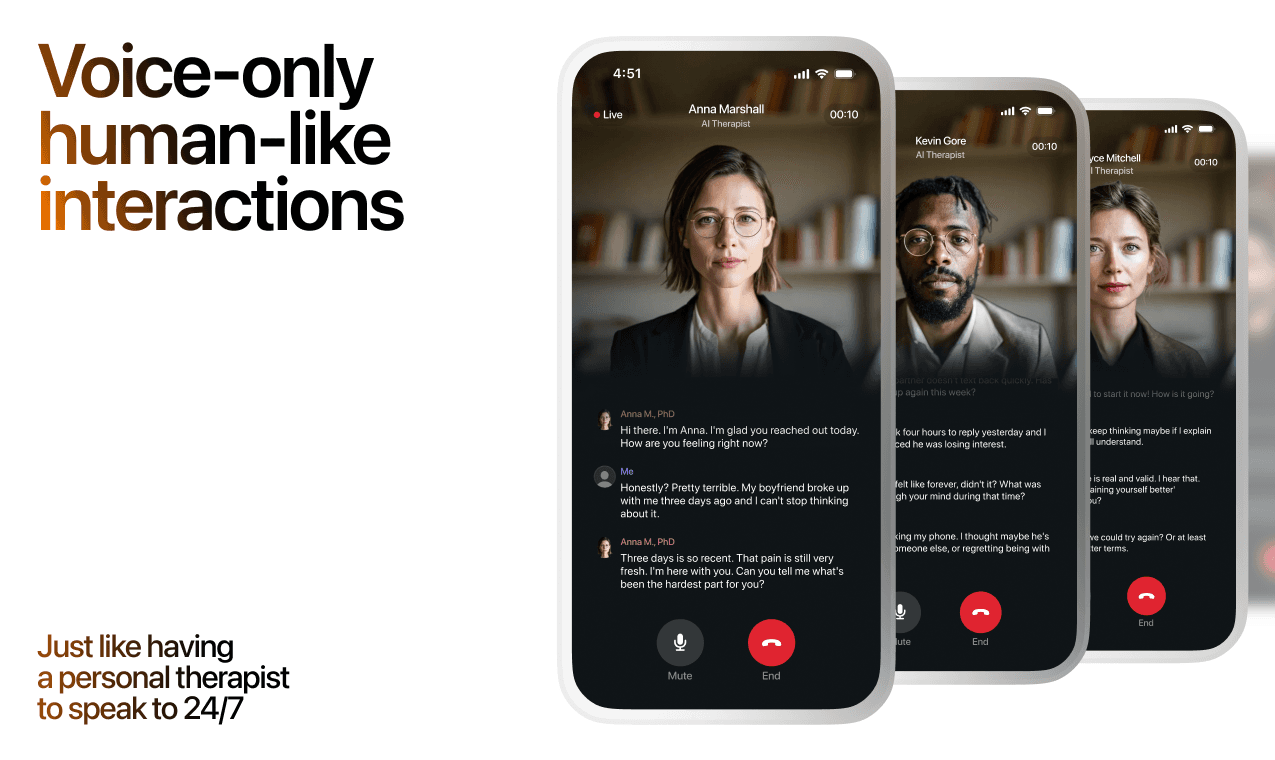
Here's what happens in a typical Lovon session:
You share what's on your mind
There's no script, no intake form, no waiting room. You speak or type whatever you're feeling — in your own words, at your own pace.
Lovon validates and explores
Using frameworks from CBT (Cognitive Behavioral Therapy) and motivational interviewing, Lovon acknowledges your feelings first, then gently helps you explore them. No dismissive "just move on" advice.
You build coping skills together
Lovon doesn't just listen — it actively works with you on evidence-based techniques: thought reframing, urge surfing, behavioral experiments, and more.
What a Session with Lovon Looks Like
When to Seek Professional Help
AI support is a valuable tool, but it's not a replacement for professional care. Please consider reaching out to a licensed therapist if you experience any of the following:
- Persistent thoughts of self-harm or suicide
- Inability to perform daily activities (work, eating, sleeping) for more than 2 weeks
- Turning to alcohol or substances to cope
- Intense anger or desire to harm your ex-partner
- Complete emotional numbness that doesn't improve over time
Crisis Resources (US): If you're in immediate danger, call 988 (Suicide & Crisis Lifeline) or text HOME to 741741 (Crisis Text Line). Available 24/7, free, and confidential.
Outside the US? Find a crisis line in your country
Ready to Start?
Your healing journey can begin right now
A 7-day trial. No judgment. Just a safe space to process what you're going through.
Frequently Asked Questions
Is Lovon a replacement for a real therapist?
Is my conversation with Lovon AI private?
How is Lovon different from ChatGPT for emotional support?
Can I use Lovon if I'm already seeing a therapist?
Can I try Lovon before subscribing?
About the Author

The Lovon Editorial Team
Mental Health & Wellness Content Team
The Lovon Editorial Team develops mental health and wellness content designed to make psychological concepts accessible and actionable. Our goal is to bridge the gap between clinical research and everyday life - helping you understand why your mind works the way it does and what you can do about it....
Related articles
- Intrusive Thoughts: Why They Happen, How to Stop Them 2026
Intrusive thoughts explained: why 94% of people get them, 7 steps to stop the spiral, and when to seek help. Practical…
- How to Calm Anxiety at Night in 2026: 7 Steps
Learn how to calm anxiety at night with 7 evidence-based steps — breathing techniques, body scans, and worry dumps that…
- Nervous System Reset: Daily Practices That Work (2026)
A nervous system reset in 90 seconds: box breathing, cold exposure, and orientation cues that calm fight-or-flight…
- Rumination and Depression: How to Break the Loop (2026)
Rumination and depression fuel each other. These 8 evidence-based steps interrupt the cycle, reduce repetitive negative…
See also
Quizzes
- Highly Sensitive Person Test: How Much Do You Take In?
See how deeply you process, notice and get overloaded.
- Am I a People Pleaser? 12-Question Quiz
Where kindness stops and self-erasure starts.
Free tools
- 5-4-3-2-1 Grounding Exercise
A guided run through the 5-4-3-2-1 technique, with paced breathing first if you need it. No sign-up, nothing stored…
- Vent to Someone
Say the whole thing. It does not have to be fair or organized, you will not have to manage how it lands, and no advice…
From the wiki
- Why do I have no friends?
Usually nothing is wrong with you. Adult friendship runs on proximity and repetition, and most people lose both at once…
Disclaimer: This article is for informational purposes only and does not constitute medical advice, diagnosis, or treatment. Always seek the advice of your physician or other qualified health provider with any questions you may have regarding a medical condition. If you are in crisis or think you may have an emergency, call 988 (Suicide & Crisis Lifeline) or go to the nearest emergency room. Outside the US? Find a crisis line in your country.