
Is self-care actually selfish?
Is self care selfish? No. Learn how to tell a real need from avoidance, set a clear boundary, and respect commitments without treating rest as a moral failure.

Key Takeaways
- Is self care selfish? No. In 2026, meeting a real need is different from disregarding someone else's needs.
- A healthy boundary names what you can do, what you cannot do, and when you can return.
- Lovon is best for talking through everyday stress by voice, not for replacing licensed clinical care.
No, self-care is not selfish when it helps you meet a real need without ignoring a responsibility you can reasonably meet. Rest, support, and boundaries are different from expecting someone else to absorb every consequence of your choice. In 2026, the useful question is not whether you deserve care; it is how to care for yourself while staying honest with the people affected.
TL;DR
- Is self care selfish? No. In 2026, meeting a real need is different from disregarding someone else's needs.
- A healthy boundary names what you can do, what you cannot do, and when you can return.
- Lovon is best for talking through everyday stress by voice, not for replacing licensed clinical care.
Why this matters
Guilt can make a simple need feel like a moral failure. You decline a call because you are exhausted, then spend the evening wondering whether you let someone down. That feeling deserves attention, but it is not a verdict. If this happens often, chronic guilt is a more useful issue to examine than whether you are a selfish person.
Self-care also has consequences for other people. A last-minute cancellation leaves someone waiting; a clear boundary gives them a chance to plan. Both can begin with the same need for rest. What changes the impact is how you communicate, whether you have made a commitment, and whether you take responsibility when your choice causes a problem.
That distinction matters in 2026 because self-care advice is easy to repeat and harder to apply. You do not need a blanket rule that says always put yourself first. You need a way to decide what the situation calls for.
Is self-care actually selfish?
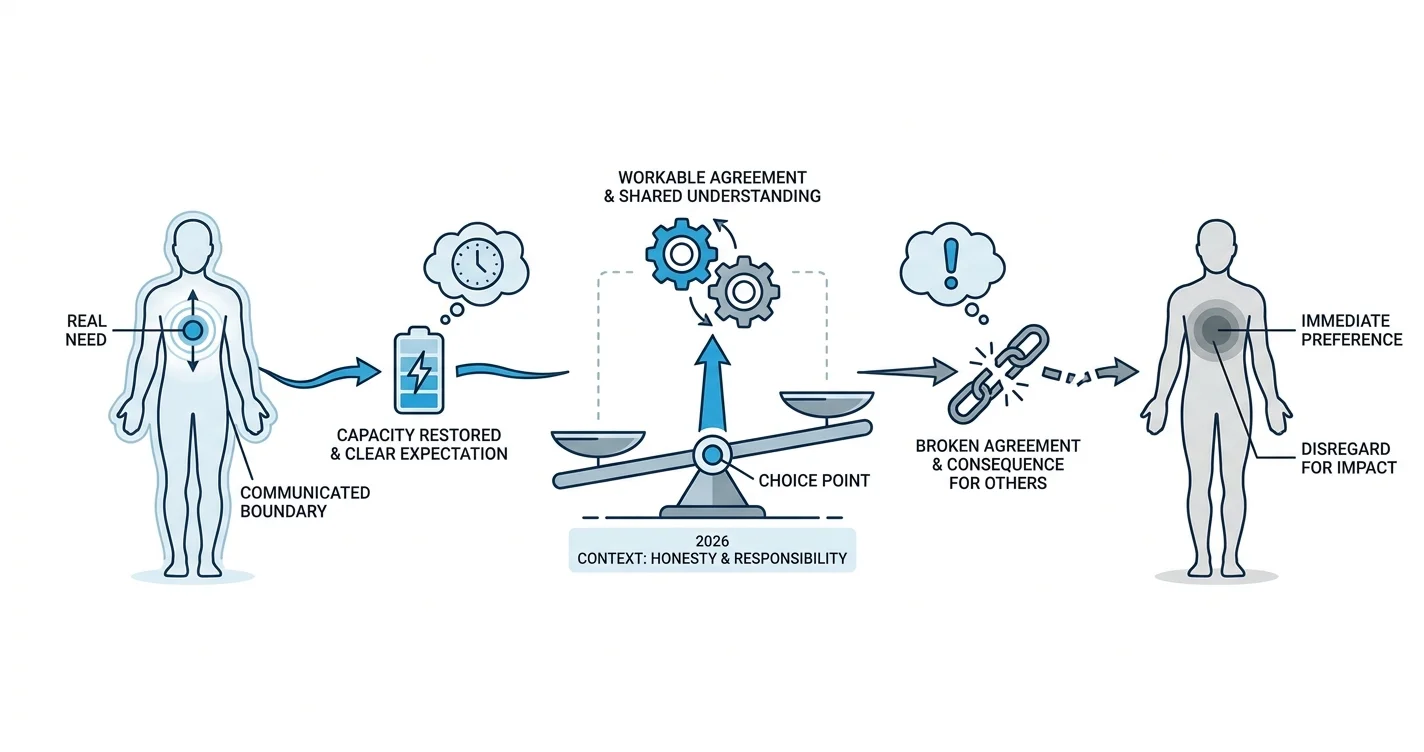
Self-care is not selfish when it meets a need and leaves room for other people's needs. It becomes unfair when you treat your needs as the only ones that count, repeatedly break agreements without acknowledgment, or ask others to manage problems you can address yourself.
Use this comparison when guilt makes every choice look the same:
| Choice | Best for | What it helps with | What to watch for |
|---|---|---|---|
| Self-care | Restoring your capacity or asking for support | Gives a real need attention | A need does not erase an existing commitment |
| A boundary | Making your availability clear | Lets others know what to expect | A vague or changing limit can confuse people |
| Avoidance | Getting away from an uncomfortable task or conversation | Offers short-term relief | The unresolved issue remains |
| Selfish behavior | Prioritizing yourself without regard for the impact | Protects your immediate preference | Someone else repeatedly bears the cost |
A choice can move between these categories. Taking a break before a difficult conversation is self-care if you say you will come back and do so. Leaving without explanation and refusing to revisit the issue is avoidance. You can care for yourself and still repair the inconvenience you caused.
In 2026, a practical test is to ask: What do I need, what did I agree to, and what happens to the other person if I change course? The answers give you more direction than the feeling of guilt alone.
What healthy self-care looks like in practice
Self-care does not have to look pleasant. It can mean telling a friend you are not able to listen tonight. It can mean asking for help instead of insisting you are fine, or taking a break from an argument so you can return ready to speak calmly. The common thread is that you name a need and make a workable choice.
Try these steps when you cannot tell whether to rest or follow through:
- Name the need. Use a 2-minute pause to finish the sentence, Right now I need... Be specific: quiet, food, help, space, or time to think.
- Check the commitment. Ask whether someone is relying on you and whether the task can wait. A promise deserves a clear response, even when you cannot keep it as planned.
- State the limit. Use a 1-sentence boundary rather than a long defense: I cannot talk about this tonight, but I can tomorrow. Do not offer a time you cannot keep.
- Offer a workable next step. A 10-minute break, a changed plan, or a direct request for help gives the other person something concrete to respond to.
- Keep your word or repair the change. If you said you would return to the conversation, return. If you cannot, tell them rather than disappearing.
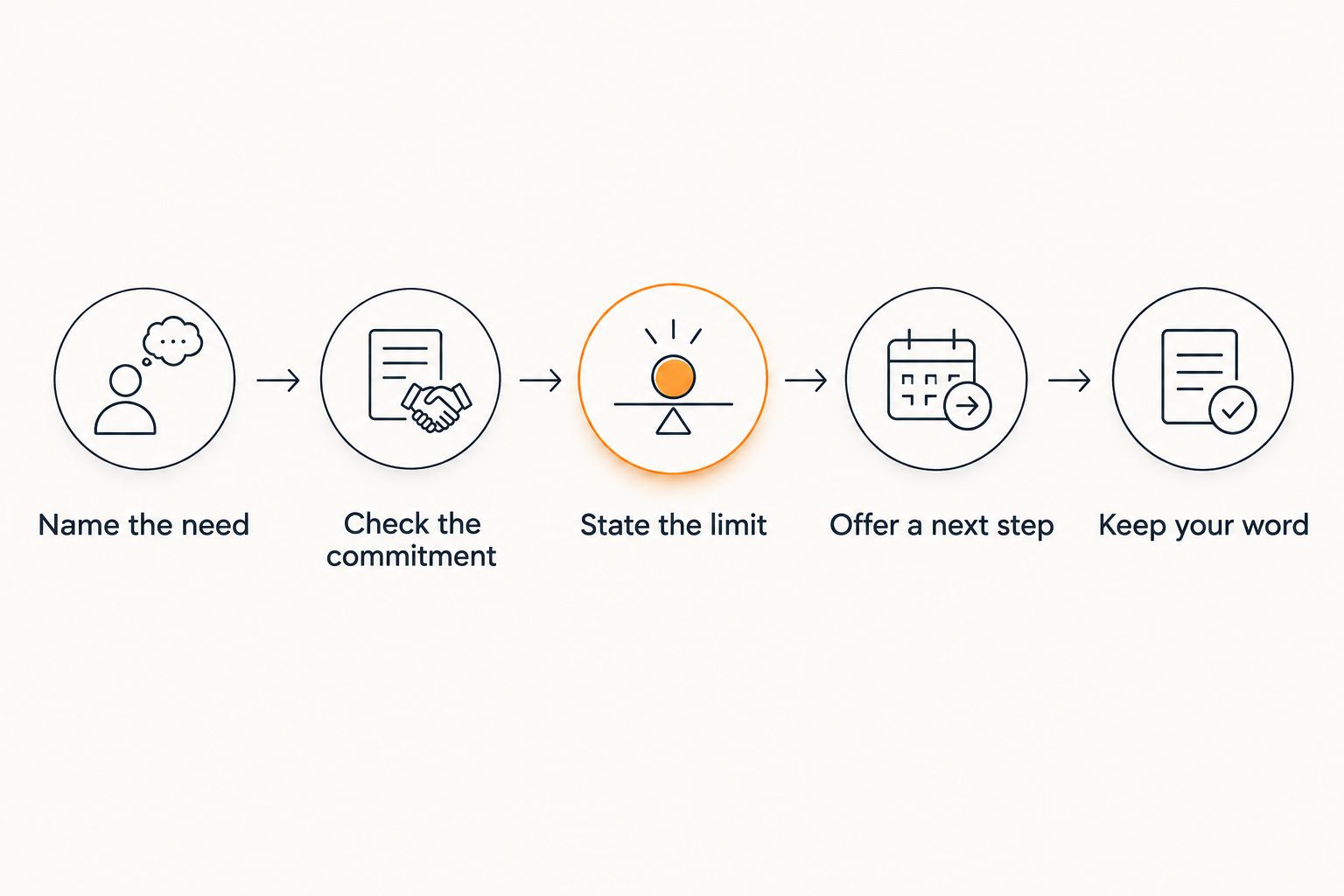 Steps for balancing a personal need with an existing commitment
A clear next step makes a boundary easier for someone else to understand.
You are not required to make every request convenient for someone else. You are responsible for saying what you can do as plainly as you can. That is a steadier approach than saying yes out of guilt and becoming unable to follow through.
Why self-care can feel selfish
The same choice can carry different feelings depending on what else is happening. These are reasons to look more closely at your situation, not reasons to dismiss your need:
- Anxiety: You might keep replaying how someone reacted to your boundary. Their disappointment is information about their feelings, not proof that your choice was wrong.
- Stress or burnout: When you have taken on more than you can manage, even a small break can feel like another unfinished task. Ask which commitments need a new plan rather than treating rest as the problem.
- Low mood: It can be hard to tell whether you need restorative time alone or are withdrawing from support you want. Look at what happens after you step away, and tell someone you trust if isolation is becoming difficult to change.
- Relationship expectations: If you usually respond right away, a slower reply can feel like a major shift. Explain the change instead of expecting the other person to guess.
- A pattern of saying yes: If you agree before checking your capacity, your first honest no will feel unfamiliar. The discomfort does not make the limit unfair.
In 2026, none of these factors makes every boundary the right boundary. They tell you what to examine: your need, your agreement, the effect on someone else, and what you can say clearly.
When a boundary is caring, and when it needs repair
Suppose a friend wants to talk late at night and you need sleep. You can say you cannot talk now and offer another time if you genuinely have one. That is a boundary. If you promised to help with an urgent task and now cannot, acknowledge the change and tell your friend as soon as you can. That is repair.
You do not have to justify every private detail of your decision. A short explanation can still be considerate: I do not have the energy for this conversation tonight. I can talk tomorrow. It states a limit without blaming the person who asked.
Repair is not the same as taking back a necessary boundary. You can apologize for late notice without apologizing for needing rest. You can recognize that someone is disappointed without agreeing to a plan you cannot sustain. Both people's experiences can be real at once.
Be equally honest when your choice is avoidance. If you have postponed the same conversation again and again, another break will not answer the question waiting for you. Choose a time to return to it, ask for support with the conversation, or say directly that you are not ready. Calling every delay self-care makes it harder to see what needs attention.
What if someone calls your self-care selfish?
Ask what specific action affected them. You never listen to me is hard to address; you canceled after I arranged my day around our plan points to a problem you can discuss. You can take the impact seriously without accepting a broad judgment about your character.
Then look for a workable agreement. If they need a reliable time to talk and you need quiet after work, choose a time you can both accept. If no arrangement is possible, you can still state your limit respectfully. A boundary is not a demand that the other person feel happy about it.
Pay attention to whether this is a single disagreement or a repeated pattern. If you frequently make promises you cannot keep, set smaller commitments. If someone repeatedly treats any limit as a betrayal, the issue is no longer just how you phrase your no. You need room for your needs to exist in the relationship.
How can you tell self-care from avoidance?
Self-care makes it easier to return to what matters; avoidance keeps the same issue out of reach. Rest before a conversation can help you participate in it. Repeatedly postponing the conversation without a plan leaves the other person waiting and leaves you with the same concern.
Ask yourself what happens after the pause. Do you feel ready to take a small next step, or do you need more support to face it? You do not have to solve everything in one sitting. You do need to be honest about whether your current approach is helping.
If you want to talk through everyday stress before deciding what to say, Lovon offers voice conversations, emotional support, and coping tools. Lovon is best for people who want a place to talk through an everyday concern by voice; it is not a replacement for licensed clinical care.
Is it selfish to put yourself first in a relationship?
No, not when putting yourself first means being honest about your limits and respecting your partner's needs too. You do not have to agree to every request to show care. You do need to listen when a choice affects a shared plan, then decide what you can reasonably offer.
For example, needing an evening alone and needing to discuss a shared decision are both real. You can say that you need space tonight and agree on when to revisit the decision. That is different from making the decision alone and presenting your partner with the outcome. Self-care gives you a voice; it does not remove theirs.
Is taking time for yourself selfish when someone needs you?
Taking time for yourself is not automatically selfish, even when someone wants your help. The decision depends on what they need, what you agreed to do, and whether another form of help is possible. A request for company is different from an immediate safety concern.
If someone faces immediate danger, seek appropriate emergency help rather than treating a personal boundary as the whole response. Otherwise, be direct about what you can offer. You might listen later, help identify another person they can contact, or say that you cannot take on the request. Do not promise support you cannot give.
FAQ
Is self care selfish in 2026?
No. Self-care meets a real need; selfish behavior disregards the effect of your choices on others. Consider both your limit and any commitment you need to address.
Is saying no a form of self-care?
Yes, when no is an honest statement of what you can do. If you already made a commitment, explain the change and offer a workable next step when you can.
Why do I feel guilty after taking a break?
Guilt can follow a break even when the break is needed. Check whether you left a commitment unaddressed, then respond to that specific issue rather than judging your whole character.
How do I know whether I need rest or I am avoiding something?
Ask whether you plan to return to the issue after resting. If you keep postponing it without a next step, name what makes it hard and consider asking for support.
Can I care for myself and still be a good partner?
Yes. Tell your partner what you need and listen to how your decision affects a shared plan. A clear limit leaves room for both people to respond.
Can Lovon replace a licensed therapist?
No. Lovon offers voice-based emotional support and coping tools, but it does not replace licensed clinical care. Seek qualified professional help when you need clinical assessment or treatment.
One last thing
Before you ask whether you have earned rest, ask whether your current plan is honest. A clear no, a kept promise, or a prompt apology tells someone more than an exhausted yes. In 2026, make the next step specific: name what you need, say what you can do, and follow through on the part you choose.
Related guides
How AI Support Helps You Heal
AI emotional support isn't about replacing human connection — it's about filling the gaps. The moments when you need to talk at 2 AM, when you don't want to burden your friends again, or when you simply need someone to listen without judgment.
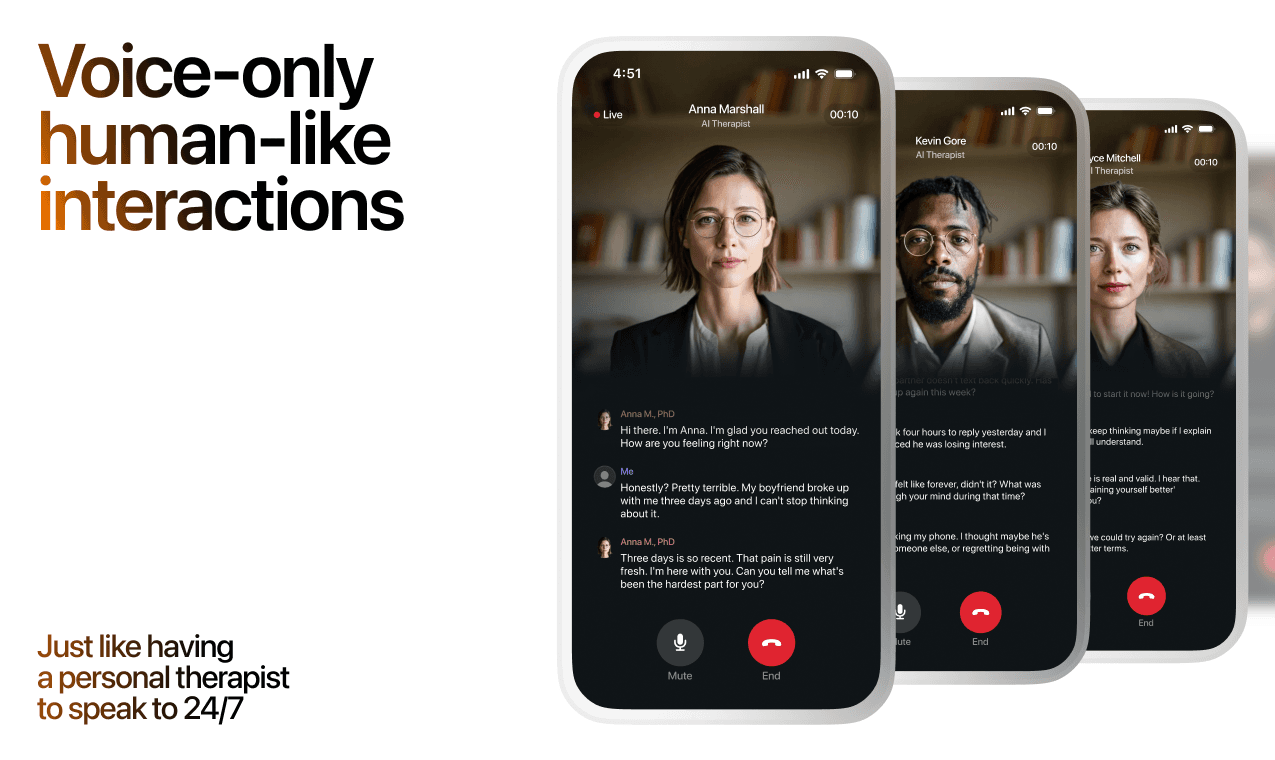
Here's what happens in a typical Lovon session:
You share what's on your mind
There's no script, no intake form, no waiting room. You speak or type whatever you're feeling — in your own words, at your own pace.
Lovon validates and explores
Using frameworks from CBT (Cognitive Behavioral Therapy) and motivational interviewing, Lovon acknowledges your feelings first, then gently helps you explore them. No dismissive "just move on" advice.
You build coping skills together
Lovon doesn't just listen — it actively works with you on evidence-based techniques: thought reframing, urge surfing, behavioral experiments, and more.
What a Session with Lovon Looks Like
When to Seek Professional Help
AI support is a valuable tool, but it's not a replacement for professional care. Please consider reaching out to a licensed therapist if you experience any of the following:
- Persistent thoughts of self-harm or suicide
- Inability to perform daily activities (work, eating, sleeping) for more than 2 weeks
- Turning to alcohol or substances to cope
- Intense anger or desire to harm your ex-partner
- Complete emotional numbness that doesn't improve over time
Crisis Resources (US): If you're in immediate danger, call 988 (Suicide & Crisis Lifeline) or text HOME to 741741 (Crisis Text Line). Available 24/7, free, and confidential.
Outside the US? Find a crisis line in your country
Ready to Start?
Your healing journey can begin right now
A 7-day trial. No judgment. Just a safe space to process what you're going through.
Frequently Asked Questions
Is Lovon a replacement for a real therapist?
Is my conversation with Lovon AI private?
How is Lovon different from ChatGPT for emotional support?
Can I use Lovon if I'm already seeing a therapist?
Can I try Lovon before subscribing?
About the Author

The Lovon Editorial Team
Mental Health & Wellness Content Team
The Lovon Editorial Team develops mental health and wellness content designed to make psychological concepts accessible and actionable. Our goal is to bridge the gap between clinical research and everyday life - helping you understand why your mind works the way it does and what you can do about it....
Related articles
- Self-Sabotaging Relationships: Why It Happens (2026)
Self-sabotaging relationships explained: the trigger pattern behind it and a 6-step process to interrupt it in 2026…
- Healthy Relationship Boundaries: How to Set Them in 2026
Learn how to set healthy relationship boundaries with a 7-step script, troubleshooting fixes, and FAQ. Clear steps that…
- People Pleasing Trauma Response: How to Stop It in 2026
People pleasing trauma response explained: it's the fawn response, not weakness. Six steps to stop it in 2026, plus what…
- AI Coping Tools for Chronic Dieting and Food Guilt (2026)
AI coping tools for chronic dieting and food guilt: what to look for, top picks, what to avoid, and a 2026 verdict…
See also
Quizzes
- Rejection Sensitivity Test: Free 12-Question Check
See how strongly you expect and read rejection.
- Boundaries Test: Free 12-Question Self-Check
See where your boundaries slip, in 3 minutes.
Free tools
- How to Say No Politely (Without Over-Explaining)
A chat for how to say no politely when you have already decided and cannot get the word out. Tell it what you were…
- How to Come Out to Your Parents
A chat about how to come out to your parents that starts with whether now is safe, not with the speech. Tell it your…
From the wiki
- Why do I keep dreaming about the same person?
A recurring dream figure usually marks unfinished emotional business rather than a message about that person. Your brain…
Disclaimer: This article is for informational purposes only and does not constitute medical advice, diagnosis, or treatment. Always seek the advice of your physician or other qualified health provider with any questions you may have regarding a medical condition. If you are in crisis or think you may have an emergency, call 988 (Suicide & Crisis Lifeline) or go to the nearest emergency room. Outside the US? Find a crisis line in your country.