
AI therapy for call center workers: complete 2026 guide
AI therapy for call center workers offers support, not clinical care. Learn how to handle shift stress, protect customer privacy, and choose human help.
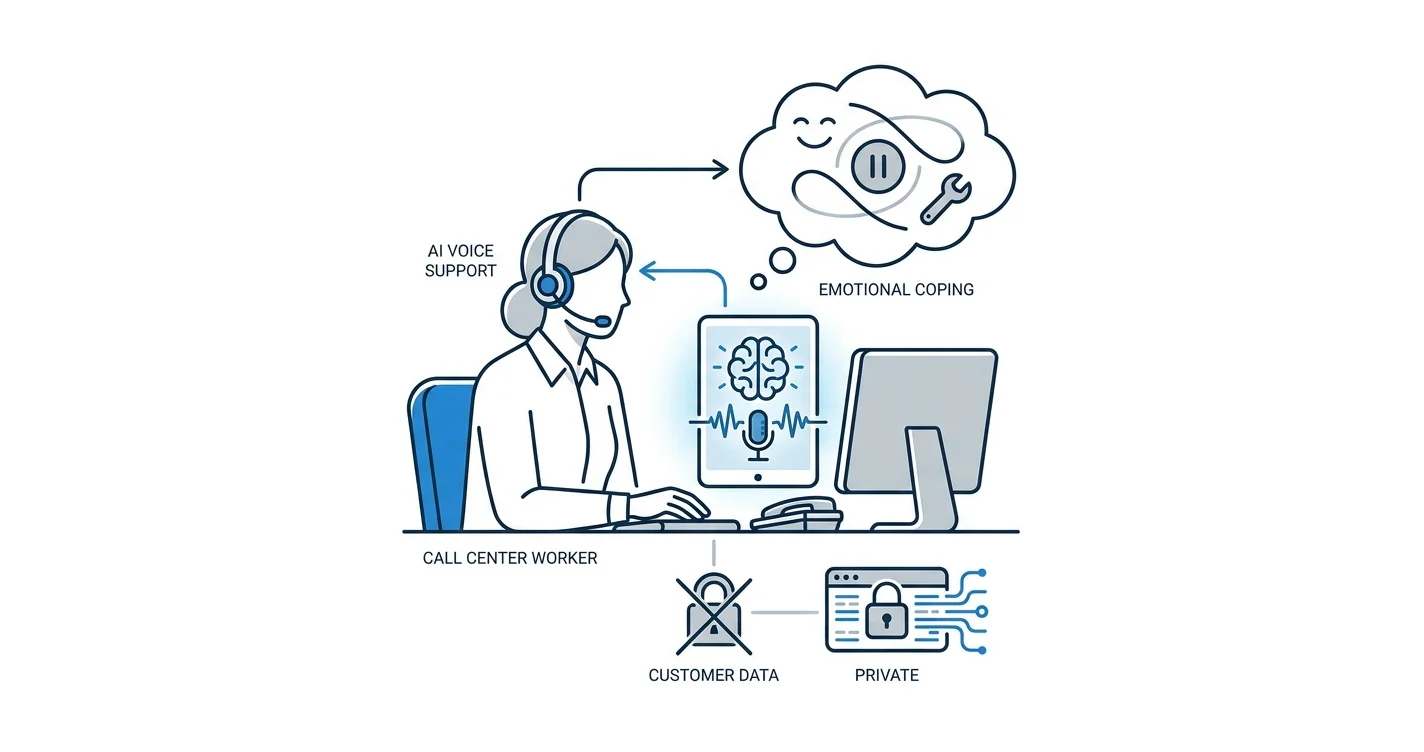

Key Takeaways
- AI therapy for call center workers is emotional support, not licensed treatment or a substitute for safer working
- Lovon suits workers who want voice-based emotional support and coping tools outside customer conversations.
- Keep customer records, recordings, names, and account details out of mental health apps.
- Use human support for persistent distress, workplace threats, or symptoms that affect daily functioning.
Call center workers’ AI therapy is on-demand, software-based emotional support with the aim of managing work stress and reflecting on difficult calls. This 2026 guide explains how to use it around a shift without sharing customer information, overlooking workplace problems, or replacing licensed care.
TL;DR
- AI therapy for call center workers is emotional support, not licensed treatment or a substitute for safer working conditions.
- Lovon suits workers who want voice-based emotional support and coping tools outside customer conversations.
- Keep customer records, recordings, names, and account details out of mental health apps.
- Use human support for persistent distress, workplace threats, or symptoms that affect daily functioning.
Why AI therapy matters for call center workers
A difficult customer conversation does not always feel finished when the call ends. If you are replaying an insult while preparing to greet the next caller, you need support that fits the gap—not another task to perform perfectly.
Call center work also creates a practical tension: talking can help you express yourself, but after a voice-heavy shift, more talking might be the last thing you want. Choose the format that feels manageable, rather than treating voice support as the default.
The useful question in 2026 is not whether an app can make every shift feel calm. It is whether a tool helps you name what happened, choose a next step, and recognize when you need someone qualified to help. This guide to using an AI voice therapist for work-related stress covers the broader approach.
AI support cannot change your staffing levels, break arrangements, escalation policy, or performance targets. Keep those workplace issues separate from the coping skills you practice yourself.
How to use AI support around your shift
1. Identify the moment you need support
Start without an app. Write a short note about when stress appears: before signing in, after an abusive call, during a quality review, or when you try to sleep after work.
Choose a small, specific goal. For example, set aside 60 seconds to name the feeling before deciding what to do next. That is a suggested check-in length, not a promise that distress will disappear within a minute.
Your goal is to understand the moment, not diagnose yourself. An unpleasant shift and a mental health condition are not interchangeable.
- Name the immediate feeling: anger, fear, shame, sadness, or exhaustion.
- Note the trigger without including customer details.
- Separate what happened from what you fear it means.
- Choose whether you need rest, reflection, workplace help, or clinical support.
2. Protect customer information and your own privacy
Begin with a paper note or a private reflection that contains no identifying details. You can describe being shouted at without repeating a caller’s name, account number, medical information, payment details, or exact conversation.
Before choosing any mental health app in 2026, read its current privacy information. Check what it says about voice recordings, transcripts, retention, deletion, and sharing. Do not assume a consumer app has the same confidentiality protections as licensed clinical care.
A personal device does not make it appropriate to upload company records. Follow your employer’s rules, and avoid speaking where coworkers or customers can overhear.
- Leave names, contact details, and account identifiers out.
- Never upload call recordings, screenshots, or customer transcripts.
- Review microphone permissions and notification previews.
- Check whether you can understand the app’s deletion and data-use terms.
3. Choose one goal for a short conversation
Try writing a sentence about what you need before opening a tool. Perhaps you want to unpack embarrassment after feedback, practice a calm boundary, or stop rehearsing an argument after work.
If writing feels like extra effort and speaking feels easier, Lovon offers voice conversations, emotional support, coping tools, and self-reflection guidance. Lovon is best for call center workers who want voice-based emotional support, not clinical treatment. It is not a licensed clinician.
Keep the conversation bounded. You might try 3 minutes of reflection, then decide whether continuing is useful. A short session is an option, not a required routine or a treatment dose.
Use this sequence: Name feelings, Set a goal, Choose an action. The action might be taking an allowed break, asking a supervisor for help, or ending the session to rest.
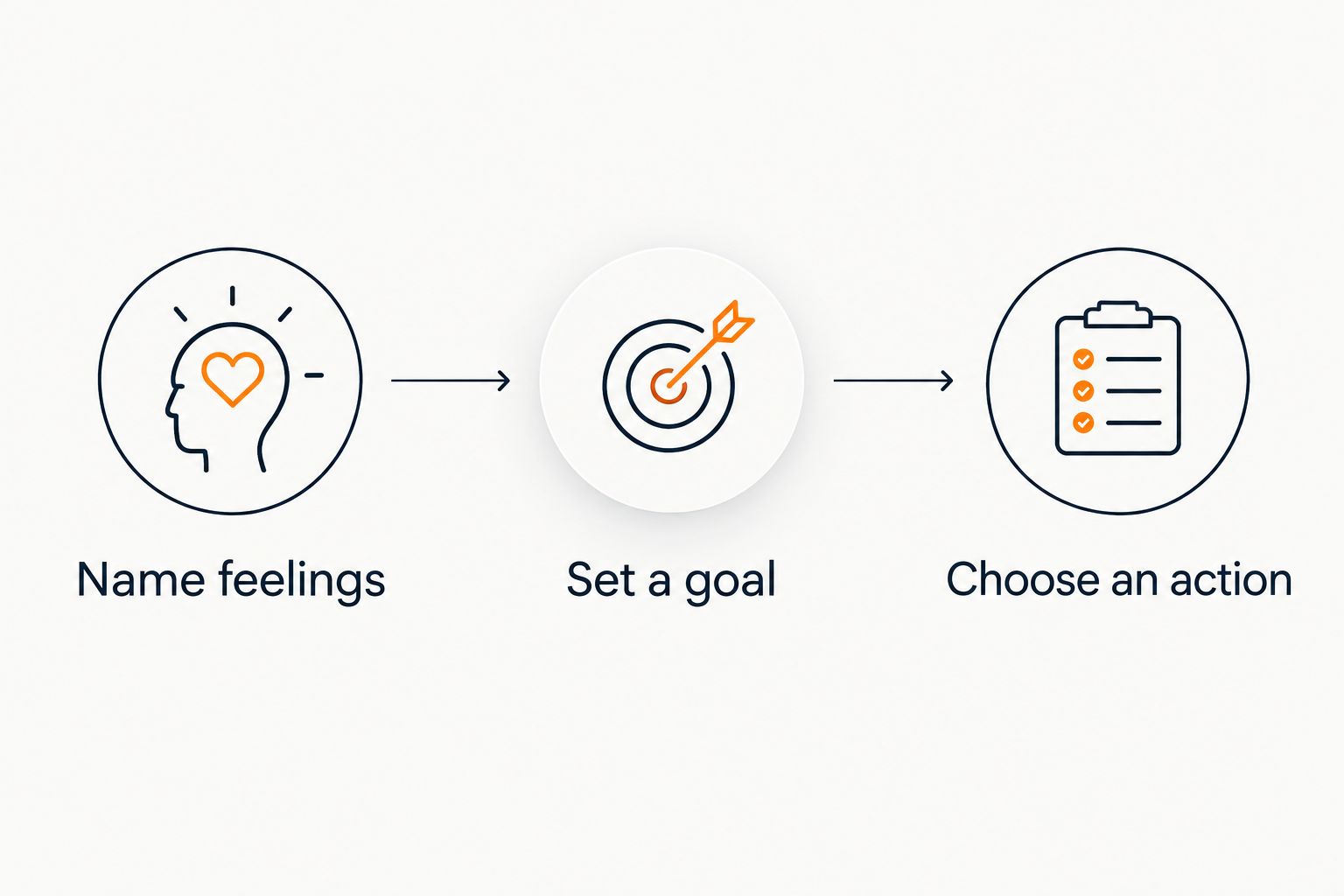 Three steps for a focused check-in: name feelings, set a goal, and choose an action.
A focused check-in ends with a next step, not a requirement to keep talking.
You do not need a polished explanation. Describe the situation in general terms and ask for one manageable exercise rather than a long list of suggestions.
- State the feeling and the work situation without identifying anyone.
- Ask for one coping tool or one reflection question.
- Say when a suggestion does not fit your break or surroundings.
- End with an action you can take outside the app.
4. Practice a response before the next difficult moment
Rehearse privately first. Write down the situation, your usual reaction, and a response that follows your employer’s approved procedures. Keep the wording simple enough to remember under pressure.
An app can help you practice phrasing, but it does not know your workplace rules unless you describe them—and its suggestions can be wrong. Do not let generated advice override required procedures for threats, abuse, emergencies, or customer safeguarding.
Practice is preparation, not permission to tolerate mistreatment. Ask a supervisor to clarify the escalation route when you do not know what you are allowed to do.
- Rehearse asking for help after an abusive interaction.
- Practice receiving feedback without turning it into a judgment of your worth.
- Prepare a factual question about unclear performance expectations.
- Check any suggested customer-facing wording against approved guidance.
5. Close the shift without replaying every call
Try a simple transition before adding technology. Put work materials away, change your surroundings if possible, and write down anything that genuinely needs attention next shift.
If reflection helps, give yourself 5 minutes for a closing note, then move to a non-work activity. This is a suggested boundary, not an evidence-based recovery deadline. If reviewing the day leaves you more distressed, stop rather than pushing through.
You can also choose silence. After hours of customer conversations, eating, resting, or spending quiet time with someone you trust can be a better fit than another voice session.
- Record one unfinished work task in the appropriate work system.
- Name one feeling without analyzing every call.
- Choose a clear stopping point for work reflection.
- Move to an ordinary activity that does not involve performance tracking.
6. Review patterns without scoring yourself
Use a short personal note to see whether support is helping you outside the conversation. Look at concrete experiences: carrying fewer arguments into the evening, asking for assistance sooner, or recognizing that you need rest.
For your 2026 routine, choose a review point that suits your schedule rather than creating another target to miss. The question is whether the habit serves you—not whether you completed a perfect streak.
AI responses are not an objective assessment of your mental health. Avoid asking an app to confirm a diagnosis or repeatedly reassure you that you will never struggle on a call again.
- Note whether reflection leaves you clearer, unchanged, or more upset.
- Watch for sessions replacing sleep, meals, relationships, or needed appointments.
- Reduce or stop use when it becomes repetitive or unhelpful.
- Bring recurring concerns to a qualified professional.
7. Add human support when the problem needs it
Start by identifying the kind of help required. A scheduling problem needs a workplace conversation; persistent anxiety or low mood needs assessment by a qualified professional. You can seek both kinds of support at the same time.
Contact a licensed mental health professional or primary care clinician when distress persists, worsens, or interferes with sleep, relationships, or daily functioning. You do not need an app’s permission to make an appointment.
Do not rely on an AI app in a crisis. In the United States, call or text 988 for suicide or mental health crisis support. If there is immediate danger or a medical emergency, call 911.
- Ask your employer whether an employee assistance program is available.
- Request clear procedures for abusive or threatening calls.
- Arrange clinical support for persistent or worsening symptoms.
- Use crisis or emergency services when safety is at risk.
Compare support options for your situation
Choose support by the problem it can address. For call center workers in 2026, convenience is useful, but clinical needs, privacy, and workplace action come first.
| Option | Best for | Main benefit | Key limitation |
|---|---|---|---|
| Paper journaling | Workers who want quiet reflection | Does not require speaking or entering information into an app | No interactive guidance; notes still need safe storage |
| Lovon AI voice support | Workers who prefer talking through everyday stress | Offers on-demand emotional support, coping tools, and reflection | Not a licensed clinician; requires a suitable place to speak |
| Trusted coworker or friend | Workers who want human connection | Offers a personal conversation and shared understanding | Not a substitute for clinical assessment; keep customer information private |
| Employee assistance program, if offered | Workers seeking employer-provided support | Provides a route to ask about available services | Scope, access, and confidentiality terms depend on the program |
| Licensed mental health professional | Workers with persistent distress or treatment needs | Provides clinical assessment and treatment within professional scope | Requires arranging care; not every service provides immediate support |
| Supervisor or workplace representative | Workers facing workload, abuse, or unclear procedures | Can address work arrangements and escalation questions | Does not replace mental health treatment |
These options are not mutually exclusive. You can use quiet reflection after work, seek clinical care, and ask for safer call-handling procedures without treating any one choice as a complete solution.
Common mistakes call center workers make
Using a coping app instead of reporting abuse
A calming exercise does not resolve threatening calls or unclear escalation procedures. Follow the approved reporting process, record incidents through work channels, and ask what protection or follow-up is available.
Turning customer conversations into app prompts
Even a request for emotional support can expose customer information if you paste in a transcript. Describe your own reaction in broad terms; leave the customer’s story and identifying details out.
Treating every uncomfortable feeling as poor performance
Feeling shaken after an insult is not a performance review. Keep feedback about a specific work behavior separate from conclusions about your worth, and ask for clarification when feedback is vague.
Forcing yourself to talk after a voice-heavy shift
Voice support is an option, not an obligation. If speaking feels draining or there is no private space, choose a quiet activity or wait until you can reflect comfortably.
Expecting self-care to fix working conditions
An app cannot authorize a break or change a queue target. Pair personal coping with workplace action when the source of distress is workload, harassment, or inadequate support.
FAQ
What is AI therapy for call center workers?
AI therapy for call center workers is software-based emotional support for reflecting on work stress and practicing coping tools. The term does not mean the app is a licensed therapist or that it provides clinical treatment.
Is Lovon a replacement for a human therapist?
No. Lovon provides AI-powered voice support, coping tools, and self-reflection guidance, but it is not a licensed clinician. Use qualified clinical care for assessment and treatment needs.
Can I use a mental health app between customer calls?
Only use a mental health app when your workplace rules, available break, and privacy allow it. Do not use it while handling a customer conversation or enter customer information into it.
Is voice support better than journaling after a call center shift?
Neither format is best for everyone. Voice support suits people who want to talk, while journaling or quiet reflection suits people who need a break from speaking.
What should I say during my first AI support session?
Name your feeling, describe the work situation without identifying details, and ask for one manageable next step. You do not need to retell the whole shift or share a call transcript.
When should I see a professional about call center stress?
Seek professional help when distress persists, worsens, or interferes with sleep, relationships, or daily functioning. You can arrange care while also asking your workplace to address the conditions contributing to stress.
What should I do if I feel unsafe or suicidal after work?
In the United States, call or text 988 for suicide or mental health crisis support. Call 911 for immediate danger or a medical emergency, and do not rely on an AI app to manage the crisis.
One last thing
Your support routine should not become another quality score. Keep one question at the center: what do you need after this shift? Sometimes the answer is a conversation; sometimes it is rest, a workplace change, or professional care.
Related guides
How AI Support Helps You Heal
AI emotional support isn't about replacing human connection — it's about filling the gaps. The moments when you need to talk at 2 AM, when you don't want to burden your friends again, or when you simply need someone to listen without judgment.
Here's what happens in a typical Lovon session:
You share what's on your mind
There's no script, no intake form, no waiting room. You speak or type whatever you're feeling — in your own words, at your own pace.
Lovon validates and explores
Using frameworks from CBT (Cognitive Behavioral Therapy) and motivational interviewing, Lovon acknowledges your feelings first, then gently helps you explore them. No dismissive "just move on" advice.
You build coping skills together
Lovon doesn't just listen — it actively works with you on evidence-based techniques: thought reframing, urge surfing, behavioral experiments, and more.
What a Session with Lovon Looks Like
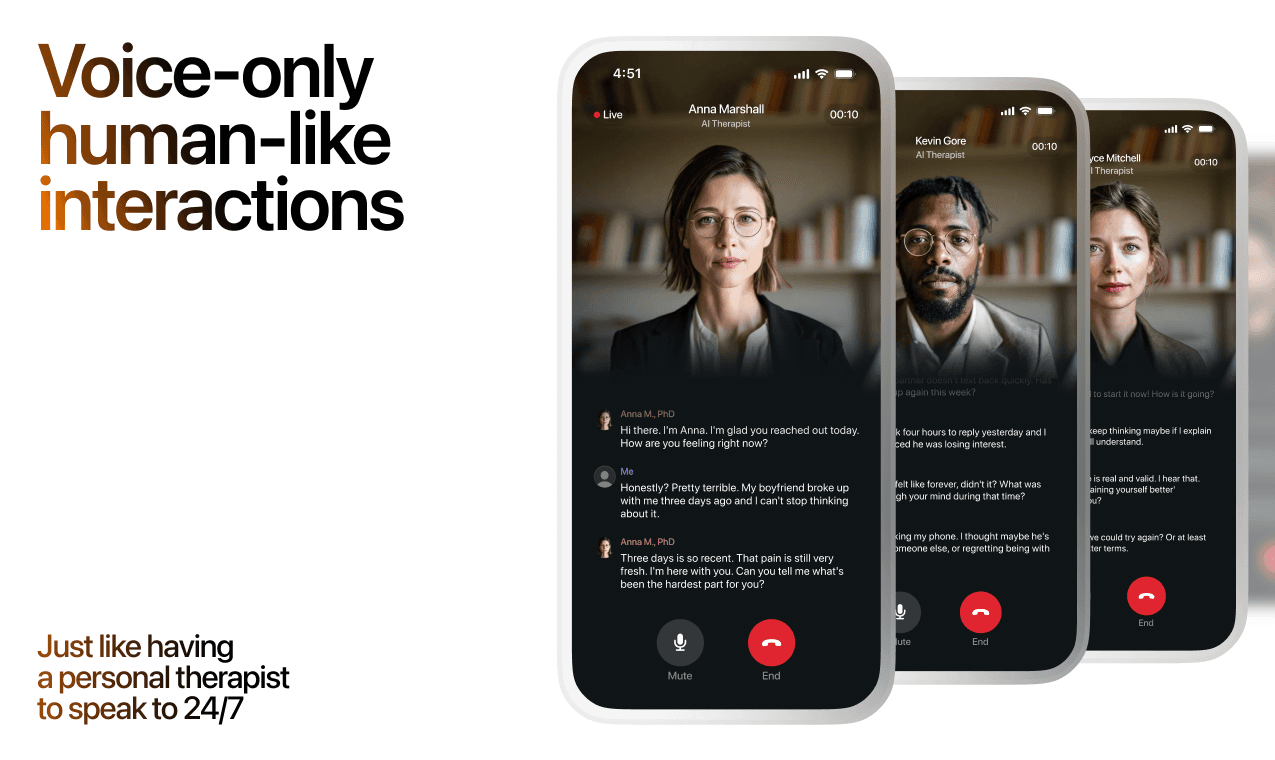
Lovon is AI support, not a replacement for professional care. If things have been hard to get through for weeks, or you are thinking about harming yourself, talk to a doctor or a licensed therapist.
Ready to Start?
Your healing journey can begin right now
A 7-day trial. No judgment. Just a safe space to process what you're going through.
Frequently Asked Questions
Is Lovon a replacement for a real therapist?
Is my conversation with Lovon AI private?
How is Lovon different from ChatGPT for emotional support?
Can I use Lovon if I'm already seeing a therapist?
Can I try Lovon before subscribing?
About the Author

The Lovon Editorial Team
Mental Health & Wellness Content Team
The Lovon Editorial Team develops mental health and wellness content designed to make psychological concepts accessible and actionable. Our goal is to bridge the gap between clinical research and everyday life - helping you understand why your mind works the way it does and what you can do about it....
Related articles
- Mental health support for construction workers: complete 2026 guide
Mental health support for construction workers starts with safe, practical steps. Compare care options, protect privacy…
- Can you get addicted to using an AI therapy app?
Can you get addicted to an AI therapy app? There's no formal diagnosis in 2026. Learn when daily use turns into…
- Best AI apps for caregiver burnout in 2026
Compare the best AI apps for caregiver burnout. Choose Lovon for voice support, or a writing assistant for practical…
- AI Therapy for Software Engineers: 2026 Guide
AI therapy for software engineers in 2026: how voice check-ins handle burnout, imposter syndrome, and deadline stress…
See also
Quizzes
- Distress Tolerance Test: How Long Can You Sit With It?
See which kind of discomfort makes you need out first.
- Experiential Avoidance Test: Do You Avoid Your Feelings?
See which way you keep feelings out, in 3 minutes.
Free tools
- Words of Encouragement for Him When He Is Struggling
Words of encouragement for him that fit what he is actually going through, for when your usual lines are not landing…
- Write a Letter to Your Best Friend
A chat for a letter to your best friend that only they could have received. Tell it how long you have been friends, one…
From the wiki
- Why do I keep dreaming about the same person?
A recurring dream figure usually marks unfinished emotional business rather than a message about that person. Your brain…
Disclaimer: This article is for informational purposes only and does not constitute medical advice, diagnosis, or treatment. Always seek the advice of your physician or other qualified health provider with any questions you may have regarding a medical condition. If you are in crisis or think you may have an emergency, call 988 (Suicide & Crisis Lifeline) or go to the nearest emergency room. Outside the US? Find a crisis line in your country.