
Why Do I Cry So Easily? 10 Reasons and What Helps
Why do I cry so easily? The usual reasons, from short sleep and stress to hormones and sensitivity, how to stop crying in the moment, and when to get help.

Key Takeaways
- Most people who cry easily are running low on sleep, carrying a long stretch of stress, holding back feelings, going through a hormonal shift, or simply wired to feel things strongly.
- Crying when you are angry or in an argument is common and does not mean you are weak or losing the point; it usually means the conversation matters to you.
- See a doctor if the crying is new and constant, comes with low mood most days for two weeks or more, or does not match what you actually feel.
You probably cry easily because your emotional threshold is lower right now, or because you are wired to feel things strongly. Short sleep, long stress, held-back feelings, hormonal shifts, high sensitivity, anxiety and low mood all make tears come faster. Crying easily is common and usually harmless, but it is worth a closer look when it is new, constant, or comes with feeling low most days.
The ten most common reasons, and what helps with each:
| Reason | What it looks like | What helps |
|---|---|---|
| Short sleep | Small things feel huge | A few nights of real sleep |
| Long stress | One more thing tips you over | Less load, more recovery |
| Held-back feelings | Crying at something minor | Naming what is underneath |
| Hormonal shifts | Tears that follow your cycle, pregnancy or perimenopause | Tracking, and a doctor if it is heavy |
| High sensitivity | Moved by music, films and kindness | Nothing to fix; plan for overload |
| Anger or frustration | Tears in arguments | Words for the anger, a short pause |
| Anxiety | Tears with pressure or worry | Calming the body first |
| Grief | Waves of tears after a loss | Room for it, and people around you |
| Low mood or depression | Crying most days, feeling flat | A doctor or licensed therapist |
| Medication, alcohol or a neurological condition | Crying that feels out of character | A doctor |
If you are crying and cannot tell why, What Am I Feeling? lets you describe what happened in your own words and helps you name the feeling underneath. Often the tears are not about sadness at all but about overwhelm, embarrassment, relief or anger, and knowing which one tells you what you need.
Is it normal to cry easily?
Yes. How often people cry varies a lot, and much of that is temperament, upbringing and culture. A study of crying across 37 countries found that people in wealthier, more democratic and more individualistic countries reported crying more often, which the researchers read as a sign of freedom to express feelings rather than of more suffering. The gap between women and men was also larger in wealthier and more democratic countries.[4]
So crying easily is not a character flaw, and it does not mean you are weak. It becomes something to look at when it gets in the way of your life, when it is a sudden change for you, or when it comes with other signs that you are not okay.
The most common reasons you cry so easily
You are running on too little sleep
Sleep loss lowers the bar for how much stress it takes to upset you. In one lab study, people kept awake for a night reported more stress, anxiety and anger than rested people after a mildly stressful task. Under heavy stress, both groups felt about equally bad.[2] In other words, when you are tired, small things start to hit like big ones. If you cried over a spilled coffee after a bad night, that may be most of the explanation. How sleep affects mood explains more.
You have been stressed for a long time
Long stress works like a glass filling up. You cope, and cope, and then a minor comment makes you cry because there is no room left. People in this state often say they feel fine until they suddenly do not. If you are also drained and detached, read about emotional exhaustion, because the fix is usually less load, not more willpower.
There is a feeling you have not let yourself have
Tears over something small often belong to something bigger: a loss you did not grieve, a fear you have not said out loud, a relationship that is not working. If you keep crying at "nothing," try finishing this sentence on paper: "What I have not let myself feel is..." The journal prompts tool can pick prompts for your mood if a blank page does not help.
Your hormones are shifting
Many people cry more easily in the days before a period, during pregnancy, after giving birth and during perimenopause. For some, premenstrual symptoms are severe. The U.S. Office on Women's Health lists mood swings and crying often among the symptoms of premenstrual dysphoric disorder, which can be treated, and notes that keeping a symptom diary is part of how it is diagnosed.
You are a highly sensitive person
Some people take in more from their surroundings and react more strongly to it, including to emotional scenes, music, beauty and other people's moods. Psychologists Elaine and Arthur Aron called this trait sensory-processing sensitivity and developed a scale to measure it.[3] If you cry at weddings, ads and acts of kindness, this may be part of your wiring rather than a problem. The highly sensitive person test shows how much it fits you.
You cry when you are angry
Tears in an argument are extremely common, especially when you feel unheard, powerless or treated unfairly. Many people learned early that anger was not allowed, so it comes out as tears instead. The frustrating part is that others may read the tears as sadness or as giving in. A sentence ready for those moments helps:
"I'm crying because this matters to me, not because I'm done talking. Give me a minute."
Anxiety, grief or low mood
Anxiety can bring tears with pressure, worry or a panic surge. Grief comes in waves, sometimes months later, set off by a song or a smell; the grief guide covers what helps. Low mood and depression can make you cry often, sometimes with no clear reason. If you are unsure which one you are dealing with, depression vs sadness lays out the difference.
Medication, alcohol or a neurological condition
Alcohol lowers emotional brakes, and some people get weepy while drinking or the next day. Some medications can change emotional reactions, so mention new crying to whoever prescribed them. Rarely, sudden crying or laughing that does not match how you feel happens after a stroke, a brain injury or in conditions like multiple sclerosis. That is called pseudobulbar affect, and it needs a doctor, not a coping tip.
How to stop crying in the moment
Sometimes you need to get through a meeting, a phone call or a conversation first. Fighting the tears hard tends to make them stronger, so aim to turn the volume down rather than shut it off:
- Lengthen your out-breath. Breathe in for four counts and out for six to eight, slowly, for a few rounds.
- Give your eyes a job. Pick an object and describe it in your head: its color, edges, what it is made of.
- Use cold. Cold water on your wrists or face, or a cold drink in your hands.
- Ground your body. Press your feet into the floor and your palms together.
- Step out. "Give me two minutes" is a complete sentence.
- Come back to it later. Tears you postpone still need somewhere to go, so give them time that evening.
Is crying good for you?
Often. Many people say they feel better after a good cry, but lab studies sometimes find that crying raises arousal in the moment. Researchers who reviewed this mismatch concluded that the effects of crying depend on how they are measured, who is around, the crier's personality and their emotional state at the time.[1] In everyday terms, crying tends to help most when someone kind is there and when the thing that set it off has eased. It helps less when you feel ashamed of it or completely alone.
If you are the opposite, and the tears will not come even when you want them to, why can't I cry covers that side.
Track it: when do you cry?
Crying easily often has a pattern you cannot see from inside one bad day. For a few weeks, note each time you cry in one line: when, what set it off, the feeling underneath, and how you slept. If you have periods, add your cycle day.
After two or three weeks, look for repeats. Is it the same person, the end of the workday, the night after a short sleep, the week before your period? The mood tracker makes this one tap a day with tags for sleep, cycle and stress, and the 60-second mental health check-in adds energy and connection. If you do see a doctor, a few weeks of notes is far more useful than "I cry a lot."
When to see a doctor about crying
Talk to a doctor or a licensed therapist if:
- Crying easily is new for you and has lasted more than two weeks.
- You feel low, empty or hopeless most of the day, or have lost interest in things you used to enjoy.
- Your sleep, appetite or energy has changed a lot.
- The crying started after a new medication, a pregnancy, a head injury or an illness.
- The tears do not match what you feel, or you cannot stop them once they start.
- It is getting in the way of work, school or relationships.
Tears usually make more sense once you say out loud what set them off. If you cried today and still cannot tell why, tell Lovon, an AI coach you talk to by voice, what happened, and work out together what the tears were really about.
How AI Support Helps You Heal
AI emotional support isn't about replacing human connection — it's about filling the gaps. The moments when you need to talk at 2 AM, when you don't want to burden your friends again, or when you simply need someone to listen without judgment.
Here's what happens in a typical Lovon session:
You share what's on your mind
There's no script, no intake form, no waiting room. You speak or type whatever you're feeling — in your own words, at your own pace.
Lovon validates and explores
Using frameworks from CBT (Cognitive Behavioral Therapy) and motivational interviewing, Lovon acknowledges your feelings first, then gently helps you explore them. No dismissive "just move on" advice.
You build coping skills together
Lovon doesn't just listen — it actively works with you on evidence-based techniques: thought reframing, urge surfing, behavioral experiments, and more.
What a Session with Lovon Looks Like
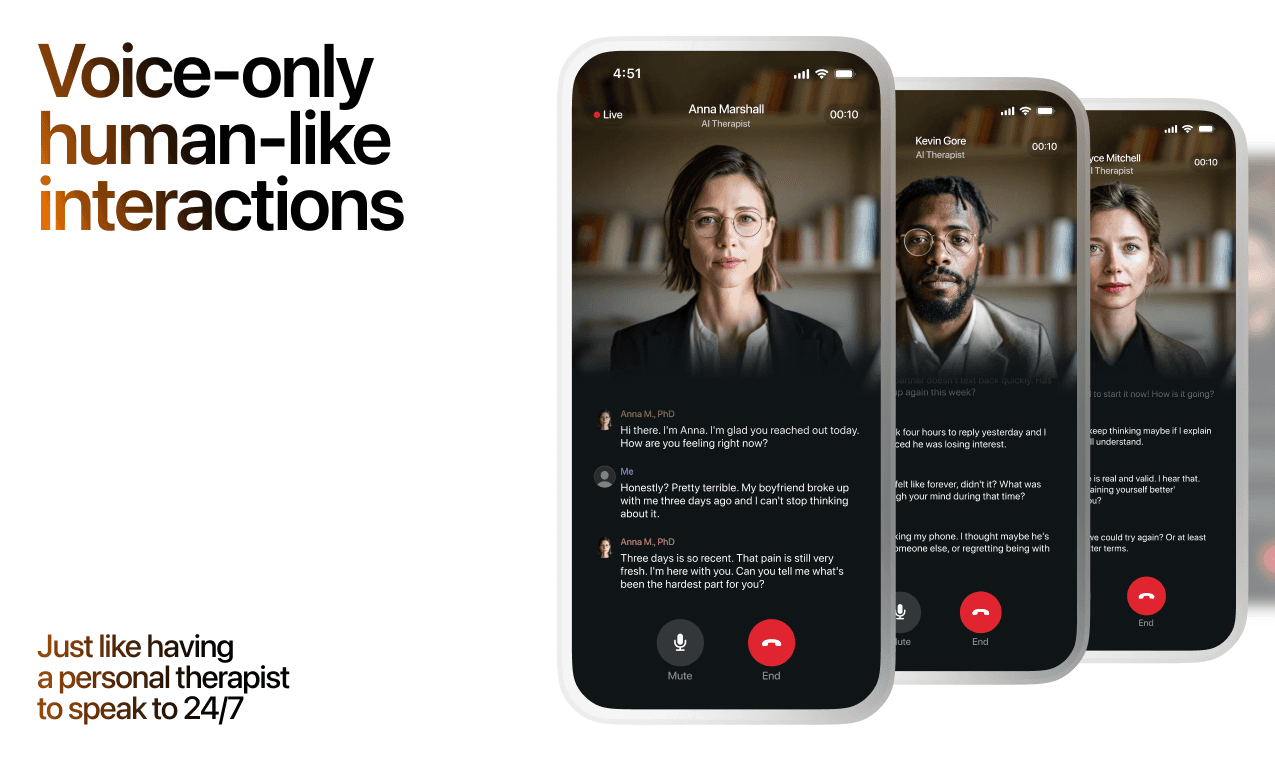
Lovon is AI support, not a replacement for professional care. If things have been hard to get through for weeks, or you are thinking about harming yourself, talk to a doctor or a licensed therapist.
Ready to Start?
Your healing journey can begin right now
A 3-day trial. No judgment. Just a safe space to process what you're going through.
Frequently Asked Questions
Why do I cry so easily?
Is it normal to cry every day?
Why do I cry when I get angry?
Why do I cry at sad movies and commercials?
How do I stop crying when I don't want to?
Can hormones make you cry more?
Is crying easily a sign of depression?
Is crying good for you?
Sources
About the Author
The Lovon Editorial Team
Mental Health & Wellness Content Team
The Lovon Editorial Team develops mental health and wellness content designed to make psychological concepts accessible and actionable. Our goal is to bridge the gap between clinical research and everyday life - helping you understand why your mind works the way it does and what you can do about it....
Related articles
- Fight or Flight Response: What It Is and How to Calm It
Fight or flight response explained: what happens in your body, why it fires when nothing is wrong, how it differs from…
- Not Good Enough? Therapy for Feeling Good Enough
You just finished a very hard task and helped the company succeed. You felt happy for a moment, but then a quick thought…
- How to Rest When You Cannot Switch Off: 7 Steps
How to rest properly: match rest to what is tired, switch off from work in your head, take breaks that work, and rest…
- Cope with Job Rejection Without Spiraling (2026 Guide)
Learn how to cope with job rejection without spiraling in 2026: 7 steps to process the news, stop rumination, and keep…
See also
Quizzes
- Rejection Sensitivity Test: Free 12-Question Check
See how strongly you expect and read rejection.
- Emotion Recognition Test: Do You Read Feelings Right?
See where your reading of feelings slips, in 3 minutes.
Free tools
- AI Journal
Write what is on your mind. The AI says back one thing it noticed, in your words, and asks one question that goes a…
- Self-Love Meditation
Not loving every part of yourself at once, just being a little kinder than usual. Six minutes to notice how you talk to…
From the wiki
- What is inhibited grief?
Inhibited grief is grief that never gets out. The loss happened, you kept functioning, and the feeling stayed sealed…
Disclaimer: This article is for informational purposes only and does not constitute medical advice, diagnosis, or treatment. Always seek the advice of your physician or other qualified health provider with any questions you may have regarding a medical condition. If you are in crisis or think you may have an emergency, call 988 (Suicide & Crisis Lifeline) or go to the nearest emergency room. Outside the US? Find a crisis line in your country.