
Winter Blues: Signs, Causes and What Actually Helps
Winter blues or seasonal depression? The signs, why short days hit mood, what helps (light, routine, movement) and when to see a doctor about SAD.

Key Takeaways
- The winter blues are a common seasonal dip in mood and energy; seasonal affective disorder is a type of depression with the same seasonal timing but enough weight to disrupt daily life.
- Morning light, a steady wake-up time, planned activity and regular contact with people help most, and a 10,000-lux light box is a standard option for SAD.
- See a doctor if low mood, loss of interest, oversleeping or withdrawal last two weeks or more, or if they get in the way of work, relationships or caring for yourself.
The winter blues are a dip in mood and energy that arrives as the days get shorter: you sleep more, want carbs, find it harder to get going and feel flatter than in summer, but you still function and still enjoy things. Seasonal affective disorder (SAD), often called seasonal depression, is the clinical version, where the low mood is strong enough to disrupt daily life.
Here is how the two usually compare:
| Winter blues | Winter-pattern SAD | |
|---|---|---|
| Mood | Flatter, less motivated, more tired | Low most of the day, nearly every day |
| Daily life | You keep up, with more effort | Work, home or relationships suffer |
| Sleep and appetite | Sleeping a bit more, wanting comfort food | Oversleeping, overeating carbohydrates, weight gain |
| Social life | Staying in more | Pulling away, a "hibernating" feeling |
| Timing | Comes and goes through the dark months | Returns each year, often for 4 to 5 months |
| What helps | Light, routine, movement, people | A doctor: light therapy, CBT for SAD, sometimes medication |
The quickest way to see where you sit is the winter blues check. It asks whether your mood and energy follow the seasons and shows how much daylight you are getting where you live right now, so you have something concrete to act on.
How common are the winter blues?
Very. In a telephone survey of randomly chosen households in Montgomery County, Maryland, 92 percent of people said they noticed seasonal changes in their mood and behavior, 27 percent said those changes were a problem for them, and between 4.3 and 10 percent, depending on the definition used, had a level of seasonal impairment similar to people with SAD. Winter was by far the most common time to feel worst.[1] The researchers concluded that SAD sits at the far end of a spectrum that touches a large share of the population.
So if you feel heavier from November on, you are in the majority. The question is not whether you are affected, it is how much.
Signs of the winter blues
- You sleep longer and still feel tired, or getting up in the dark feels much harder.
- You crave bread, pasta and sweets more than in summer.
- Your motivation drops, and plans feel like effort.
- You see friends less and stay in more.
- Your mood is flatter, and things that usually lift you lift you less.
- Focus is harder in the afternoon, especially once it is dark by 5.
- You feel better on bright days or after time outside.
If these are mild and you still enjoy things, you are likely in winter blues territory. If they are strong, constant and getting in the way, read the section on when to see a doctor below.
Why do shorter days affect mood?
The honest answer is that the exact mechanism is not settled. The leading explanations involve light and the body clock. Light reaching your eyes in the morning is one of the main signals that sets your internal clock, and in winter that signal arrives later and weaker, while most people spend the brightest hours indoors. Changes in sleep timing, in hormones such as melatonin and in brain chemicals involved in mood are all being studied.
What is clear in practice is that it is daylight, not the calendar. The National Institute of Mental Health's page on SAD points out that the depression linked to SAD tracks changes in daylight hours, which is also why it is different from the holiday blues. If December stress is the bigger issue for you, see holiday stress.
Winter blues or seasonal depression: when to see a doctor
SAD is a type of depression with a recurring seasonal pattern. According to NIMH, symptoms usually start in late fall or early winter and go away in spring and summer, and the winter pattern often includes oversleeping, overeating with carbohydrate cravings and social withdrawal.
See a doctor or a licensed therapist if, for two weeks or more:
- You feel down, empty or hopeless most of the day.
- You have lost interest in things you usually enjoy.
- You are sleeping or eating much more or much less than usual.
- You are pulling away from people who matter to you.
- You are struggling to keep up with work, school or home.
SAD is very treatable. If you ever have thoughts of harming yourself, call or text 988 to reach the 988 Suicide & Crisis Lifeline.
For a deeper look at the clinical side, our guide to seasonal affective disorder signs and coping tools goes further, and the depression page explains how SAD fits within depression more broadly.
What helps the winter blues
Get outside in the first hour of the day
Even a gray winter morning outdoors is much brighter than a lit room. A 15 to 20 minute walk soon after waking, or coffee by a window with the blinds fully open, gives your body clock the morning signal it is missing.
Consider a light box
NIMH describes light therapy for SAD as sitting near a very bright light box rated at 10,000 lux for about 30 to 45 minutes a day, usually first thing in the morning, from fall to spring, with UV light filtered out. Look for a box that states both. Ask a doctor first if you have bipolar disorder, an eye condition or take a medication that makes you light-sensitive.
Keep your wake-up time steady
Long, sprawling weekend lie-ins make the dark mornings harder. Pick a wake-up time and keep it within about an hour every day, then get light right away. How sleep affects mood explains why the two are so tightly linked.
Schedule things you enjoy, on purpose
Winter makes it easy to wait until you feel like doing something. Flip the order: put two or three small enjoyable things on the calendar each week and do them whether or not you feel like it. Mood often follows action. A dopamine menu gives you a ready list to pick from.
Protect your people
Withdrawal is one of the strongest winter pulls. Set one standing plan, such as a weekly call or a Sunday walk with a friend. If you are not sure whether you need more people or more quiet, the social battery tool helps you tell.
Move, ideally outside
A lunchtime walk combines movement and the brightest light of the day. It does not need to be a workout to count.
On vitamin D: NIMH notes that studies testing vitamin D as a treatment for SAD have had mixed results. Rather than buying high-dose supplements on a hunch, ask your doctor whether a blood test makes sense.
Light therapy or talk therapy?
Both have good evidence for SAD. In a randomized trial of 177 adults with recurrent winter depression, six weeks of a version of cognitive behavioral therapy tailored to SAD worked about as well as daily morning light therapy at 10,000 lux. Remission rates were close to identical, at about 47 percent for each on the clinician-rated scale.[2] CBT is skills-based, so what you learn can be used again next winter, while light therapy works day to day and is usually repeated each season. A doctor can help you decide.
The winter blues and the people around you
Seasonal dips rarely stay private. Sleeping more, having less patience and wanting to stay in can look like distance to a partner, and a partner who loves winter can seem baffling to one who dreads it. It helps to say it plainly: "Winter hits me hard. I am not pulling away from you, I am low on energy. What would help is one walk together on weekends." A weekly couples check-in gives you both a place to say how the season is landing before it turns into an argument.
Track it
Seasonal patterns only show up over months, which is why most people miss them. A little tracking now pays off next fall.
- Take the winter blues check now and again in spring. Comparing the two tells you how strongly your mood follows the seasons.
- Log your mood daily in the mood tracker. Its year in pixels shows the shape of your year at a glance: when the dip starts, how deep it goes and when it lifts.
- Add sleep and energy. The 60-second check-in covers mood, energy, stress, sleep and connection, which are exactly the things winter moves.
- Mark the start date. If your pixels darken in the second half of October every year, start your morning light and activity routine in early October next year, before the slide.
- Watch for a deeper slide. If your check-ins show low mood most days for two weeks or more, take the CORE-10 check, a standard measure of psychological distress, and bring the result to a doctor.
Some winters the hardest part is not the dark, it is explaining to anyone why you feel this way when nothing is wrong. Say it out loud to Lovon, an AI coach you talk to by voice, and plan one small thing for this week that gets you outside and around people.
How AI Support Helps You Heal
AI emotional support isn't about replacing human connection — it's about filling the gaps. The moments when you need to talk at 2 AM, when you don't want to burden your friends again, or when you simply need someone to listen without judgment.
Here's what happens in a typical Lovon session:
You share what's on your mind
There's no script, no intake form, no waiting room. You speak or type whatever you're feeling — in your own words, at your own pace.
Lovon validates and explores
Using frameworks from CBT (Cognitive Behavioral Therapy) and motivational interviewing, Lovon acknowledges your feelings first, then gently helps you explore them. No dismissive "just move on" advice.
You build coping skills together
Lovon doesn't just listen — it actively works with you on evidence-based techniques: thought reframing, urge surfing, behavioral experiments, and more.
What a Session with Lovon Looks Like
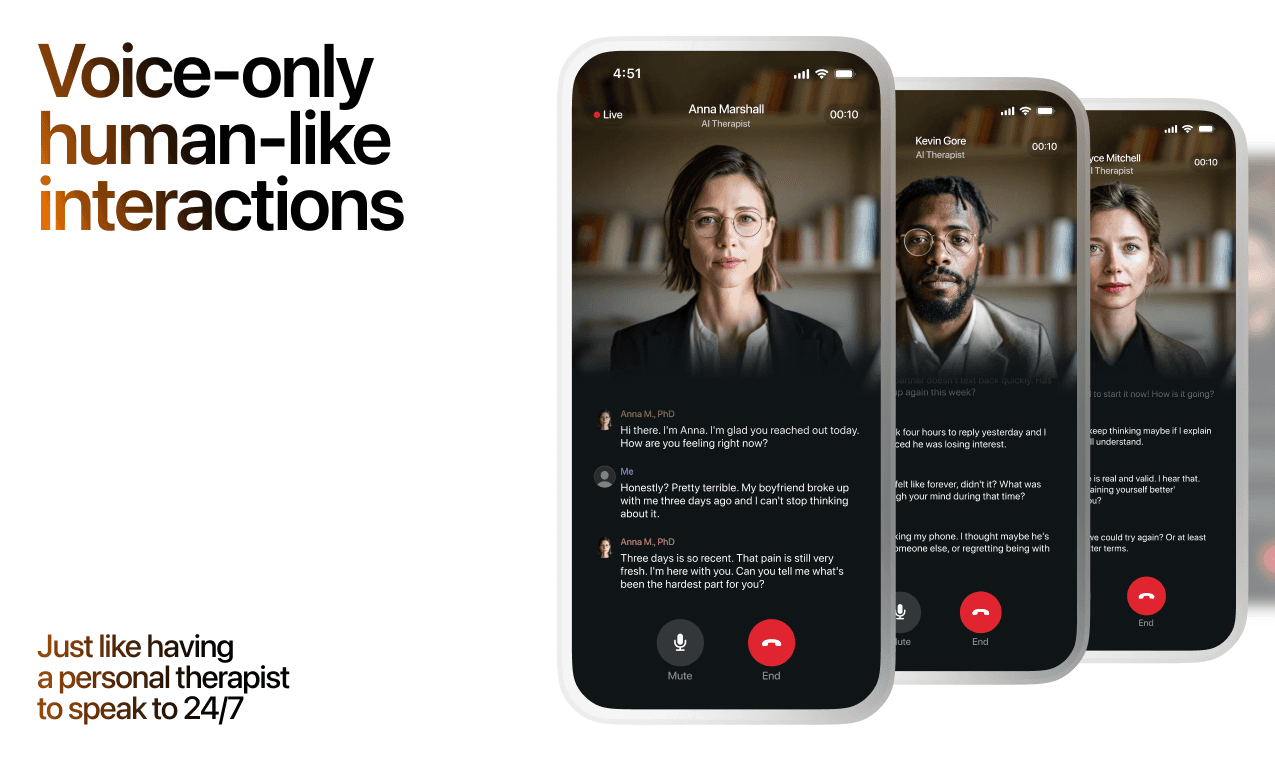
Lovon is AI support, not a replacement for professional care. If things have been hard to get through for weeks, or you are thinking about harming yourself, talk to a doctor or a licensed therapist.
Ready to Start?
Your healing journey can begin right now
A 3-day trial. No judgment. Just a safe space to process what you're going through.
Frequently Asked Questions
What are the winter blues?
What is the difference between the winter blues and seasonal depression?
Do light therapy lamps work for the winter blues?
Does vitamin D help with the winter blues?
When do the winter blues start and end?
How do I know if I should see a doctor?
Can the winter blues affect relationships?
Sources
About the Author

The Lovon Editorial Team
Mental Health & Wellness Content Team
The Lovon Editorial Team develops mental health and wellness content designed to make psychological concepts accessible and actionable. Our goal is to bridge the gap between clinical research and everyday life - helping you understand why your mind works the way it does and what you can do about it....
Related articles
- Caregiver Burnout: Signs, Causes and How to Get Relief
Caregiver burnout explained: the warning signs, why caring for someone wears you down, how to ask for help with exact…
- Can anxiety come back after years of being fine?
Can anxiety come back after years of being fine? Yes. Learn what a return of symptoms means, what to do now, and when to…
- How to Fall Asleep Faster: 8 Steps for Tonight
How to fall asleep faster tonight: a wind-down that works, what to do with a racing mind, the 20-minute rule, and when…
- Can lack of social interaction cause depression?
Can isolation cause depression? Yes, it can contribute. Learn how isolation and low mood connect, which signs need care…
See also
Quizzes
- Hyper-Empathy Test: When Feeling for Others Costs You
See where too much empathy is costing you, in 3 minutes.
- Shame Test: Do You Read Mistakes as Verdicts?
See which exit your shame takes, in 3 minutes.
Free tools
- AI Life Coach
This is a free AI life coach you can use right on this page. Tell it where you feel stuck or what you are deciding, and…
- What to Say When They Are Struggling
A chat, not a list. Tell the coach who this person is to you, what they are going through, and what you already said…
From the wiki
- How to stop maladaptive daydreaming?
Maladaptive daydreaming is immersive waking fantasy that eats hours, usually with music and pacing attached. You rarely…
Disclaimer: This article is for informational purposes only and does not constitute medical advice, diagnosis, or treatment. Always seek the advice of your physician or other qualified health provider with any questions you may have regarding a medical condition. If you are in crisis or think you may have an emergency, call 988 (Suicide & Crisis Lifeline) or go to the nearest emergency room. Outside the US? Find a crisis line in your country.