
Holiday Stress and the Holiday Blues: What Actually Helps
Holiday stress and the holiday blues, handled by cause: money, family conflict, too much to do, grief and loneliness, with exact words for the hard moments.

Key Takeaways
- Most holiday stress has four sources, which are money, family friction, too much to do and missing people, and each needs a different fix.
- The holiday blues are the sad side of the season, often loneliness or grief made louder by everyone else celebrating, and they are tied to the calendar rather than to daylight.
- Decide your limits before the season starts: a budget, how long you stay, which topics you will not discuss, and one thing you will do just for yourself.
Holiday stress is the pile-up of money worries, family friction, packed calendars and missing people that tends to hit between Thanksgiving and New Year. The holiday blues are its sadder side: loneliness, grief or disappointment that the season makes louder. Both are common, both usually ease once the season ends, and both get easier when you plan for them instead of hoping they will not come.
What stresses Americans most at the holidays, from a 2023 American Psychological Association poll of 2,061 adults:
| Stressor | Share of adults | Quick fix |
|---|---|---|
| Spending too much or not having enough to spend | 58% | A written budget, set in November |
| Finding the right gifts | 40% | Fewer gifts, a family swap, or a spending cap |
| Missing family or loved ones | 38% | Plan contact, and plan for grief |
| Holidays feel like a competition | 36% | Decide what matters to you, not to the group chat |
| Stress keeps them from enjoying the holidays | 43% | Cut one obligation and protect one thing you enjoy |
In that poll, 89 percent said something about the season causes them stress, and 41 percent said their stress goes up compared with the rest of the year. If you want a clear picture of your own load before the season starts, the stress level test shows how stressed you have been lately and which areas are driving it, which tells you where to start.
Holiday stress, holiday blues, winter blues: which is it?
| What it is | When it shows up | What helps | |
|---|---|---|---|
| Holiday stress | Too much to do, spend and manage | November to early January | Budgets, limits, sharing the work |
| Holiday blues | Sadness, loneliness or grief made louder by the season | Around the holidays themselves | Planned contact, room for grief, lower expectations |
| Winter blues or SAD | A dip in mood and energy linked to short days | Late fall into spring | Morning light, routine, a doctor if it is heavy |
The National Institute of Mental Health is explicit that seasonal affective disorder should not be confused with the holiday blues: SAD follows daylight, not the calendar. If your low mood started in October and does not lift after New Year, read about the winter blues too.
How to handle holiday stress, by cause
Money
Money was the top stressor in the APA poll, and it is the most fixable one.
- Set a total number before November ends and write it down where you will see it.
- Divide it by person. Seeing "$40 for my brother" stops impulse upgrades.
- Propose a gift swap or a cap to your family early. Plenty of people are relieved when someone else says it first.
- Give time instead of things: a dinner you cook, a day out, a letter.
A line you can send to the family chat: "This year I'd love to do a gift swap instead of everyone buying for everyone. Who's in?"
Family conflict
Most holiday arguments are predictable: the same people, the same topics, the same time of night. Plan for them like you would plan for weather.
- Decide how long you will stay before you go. "We'll come for dinner and head home by 8" is easier to keep than an open-ended day.
- Pick your off-limits topics and one calm line to use: "I'm not going to get into that today. How's the new job?"
- Have an exit. Drive yourself, know when the last train leaves, or agree a signal with your partner.
- Step out early. A walk around the block before you snap does more than an apology afterward.
If you need to say no to an invitation or a demand, how to say no politely helps you find words that are kind and still clear. For bigger patterns, the family boundary plan builds out what you will say and do ahead of time, and cycle breakers at holiday gatherings is written for people who are changing old family patterns.
Too much to do
The season adds dozens of small tasks: cards, food, gifts, travel, school events. Often one person ends up holding almost all of it in their head.
- Write every task down, then cross out a third. Nobody will remember whether you sent cards.
- Split what is left out loud, with names next to each task.
- Buy or borrow time: store-bought dessert counts.
If you suspect you are carrying most of it, the mental load test shows who handles the invisible work at home, which makes the "can you take these three things" conversation much easier. And when your head is full, a five-minute brain dump sorts everything into do, schedule and let go.
Missing someone
Grief often gets sharper at the holidays, because traditions are built around who used to be there. A few things help:
- Decide on traditions on purpose. Keep the ones that comfort you, pause the ones that hurt too much, and know it is fine to change your mind next year.
- Make room for the person. Say their name at dinner, cook their recipe, set out their ornament.
- Tell people what you need. "I'd like to talk about Dad at some point today" or "I might step out for a while, and that's okay."
- Give yourself an exit. You can leave early or skip an event.
Writing to the person can help with what you did not get to say: the letter to someone you lost gives you a place to start. Our grief guide and the piece on coping with grief during the holidays go deeper.
Being alone
Spending the holidays alone is different from feeling lonely during them, and only you know which one it is. If it is loneliness:
- Plan one contact a day for the hardest stretch: a call, a text thread, a walk with someone.
- Volunteer for a shift somewhere. In the APA poll, 16 percent of stressed adults said volunteering helped them cope.
- Make the day your own with a plan you choose, not an empty calendar.
The loneliness test shows which kind of loneliness you are dealing with, which points to what will actually help.
Social overload
Back-to-back parties drain some people fast. Check your social battery before you say yes to the next event, and plan a quiet evening after each big one.
What not to do
In the APA poll, 38 percent of adults who felt holiday stress said they used coping strategies that can backfire: isolating themselves (21 percent), overeating or restricting food (16 percent) and relying on alcohol or nicotine (13 percent). They work for an evening and make the week worse. And while 70 percent said they were comfortable talking about their stress, only 41 percent actually did. Telling one person "this season is hard for me" is one of the simplest things you can do.
When it is more than holiday stress
Talk to a doctor or a licensed therapist if your mood stays low for more than two weeks, if you are drinking more to get through, if you have stopped enjoying almost everything, or if dread about the season starts in October.
If the holidays mean being around someone who hurts or frightens you, or you are having thoughts of harming yourself, reach out now: the 988 Suicide & Crisis Lifeline (call or text 988) and the National Domestic Violence Hotline at 1-800-799-7233.
Track it
Holiday stress builds slowly, then all at once. A few minutes a day helps you catch it early.
- Take the stress level test in mid-November and again in mid-December. The change tells you whether your plan is working.
- Check in daily through the season. The 60-second check-in tracks mood, energy, stress, sleep and connection, the five things the holidays tend to squeeze.
- Tag your days. In the mood tracker, tag "family," "money," "travel" or "alone." In January, look at which tags sat on your worst days, and use that to plan next year.
If you already know which conversation or which day will be the hardest, practice it before you get there. Tell Lovon, an AI coach you talk to by voice, who will be in the room and what you are dreading, and rehearse what you will actually say.
How AI Support Helps You Heal
AI emotional support isn't about replacing human connection — it's about filling the gaps. The moments when you need to talk at 2 AM, when you don't want to burden your friends again, or when you simply need someone to listen without judgment.
Here's what happens in a typical Lovon session:
You share what's on your mind
There's no script, no intake form, no waiting room. You speak or type whatever you're feeling — in your own words, at your own pace.
Lovon validates and explores
Using frameworks from CBT (Cognitive Behavioral Therapy) and motivational interviewing, Lovon acknowledges your feelings first, then gently helps you explore them. No dismissive "just move on" advice.
You build coping skills together
Lovon doesn't just listen — it actively works with you on evidence-based techniques: thought reframing, urge surfing, behavioral experiments, and more.
What a Session with Lovon Looks Like
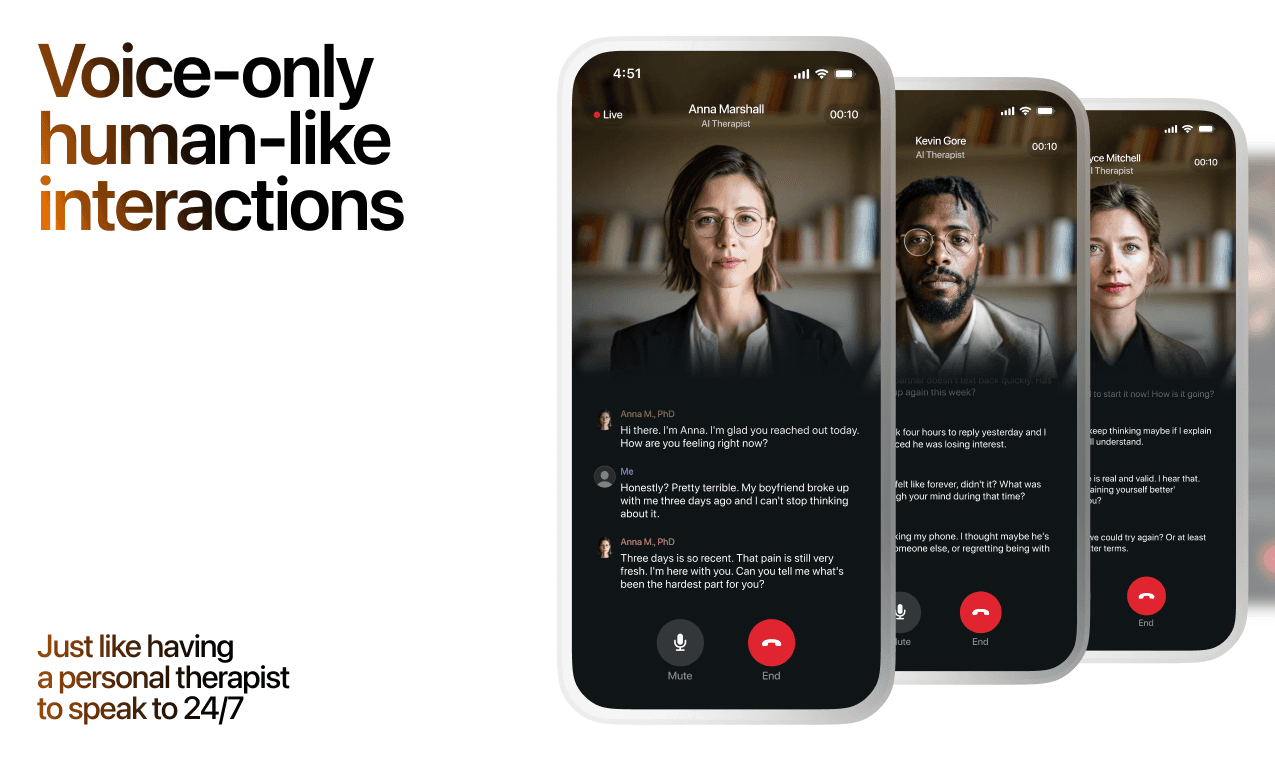
Lovon is AI support, not a replacement for professional care. If things have been hard to get through for weeks, or you are thinking about harming yourself, talk to a doctor or a licensed therapist.
Ready to Start?
Your healing journey can begin right now
A 3-day trial. No judgment. Just a safe space to process what you're going through.
Frequently Asked Questions
Why are the holidays so stressful?
What are the holiday blues?
Is it normal to feel sad during the holidays?
How do I deal with family stress during the holidays?
How do I cope with the holidays after a loss?
How do I avoid overspending at the holidays?
What is the difference between the holiday blues and seasonal affective disorder?
About the Author

The Lovon Editorial Team
Mental Health & Wellness Content Team
The Lovon Editorial Team develops mental health and wellness content designed to make psychological concepts accessible and actionable. Our goal is to bridge the gap between clinical research and everyday life - helping you understand why your mind works the way it does and what you can do about it....
Related articles
- Mood Swings: Common Causes and When to See a Doctor
What causes mood swings in adults, from sleep, stress and hunger to hormones and alcohol, how they differ from a mood…
- Burnout vs Depression: How to Tell in 2026 (Guide)
Burnout vs depression explained with a 7-step self-check for 2026. Learn the key symptom differences, when to rest, and…
- Best AI Therapy App for LGBTQ+ Mental Health in 2026
Find the right AI therapy app for LGBTQ+ mental health in 2026: what to look for, top picks for anxiety, isolation, and…
- How to Cope With Loneliness: Steps That Work in 2026
How to cope with loneliness in 2026: 7 concrete steps, troubleshooting fixes, and tools for the moments between human…
See also
Quizzes
- Guilt Test: Do I Have a Guilt Complex? Excessive Guilt Quiz
See whether your guilt repairs or just hurts.
- What Kind of Rest Do I Need? 7 Types of Rest Quiz
Find the kind of rest you are missing in 3 minutes.
Free tools
- AI Mental Health Coach
This is a free AI mental health coach for ordinary hard stretches: stress, low days, worry that will not switch off, a…
- Words of Encouragement for Him When He Is Struggling
Words of encouragement for him that fit what he is actually going through, for when your usual lines are not landing…
From the wiki
- Why do I have no friends?
Usually nothing is wrong with you. Adult friendship runs on proximity and repetition, and most people lose both at once…
Disclaimer: This article is for informational purposes only and does not constitute medical advice, diagnosis, or treatment. Always seek the advice of your physician or other qualified health provider with any questions you may have regarding a medical condition. If you are in crisis or think you may have an emergency, call 988 (Suicide & Crisis Lifeline) or go to the nearest emergency room. Outside the US? Find a crisis line in your country.