
Seasonal Affective Disorder: Signs & Coping Tools 2026
Spot seasonal affective disorder signs early and use coping tools proven to work in 2026 — light therapy, movement, and on-demand support between sessions.

Key Takeaways
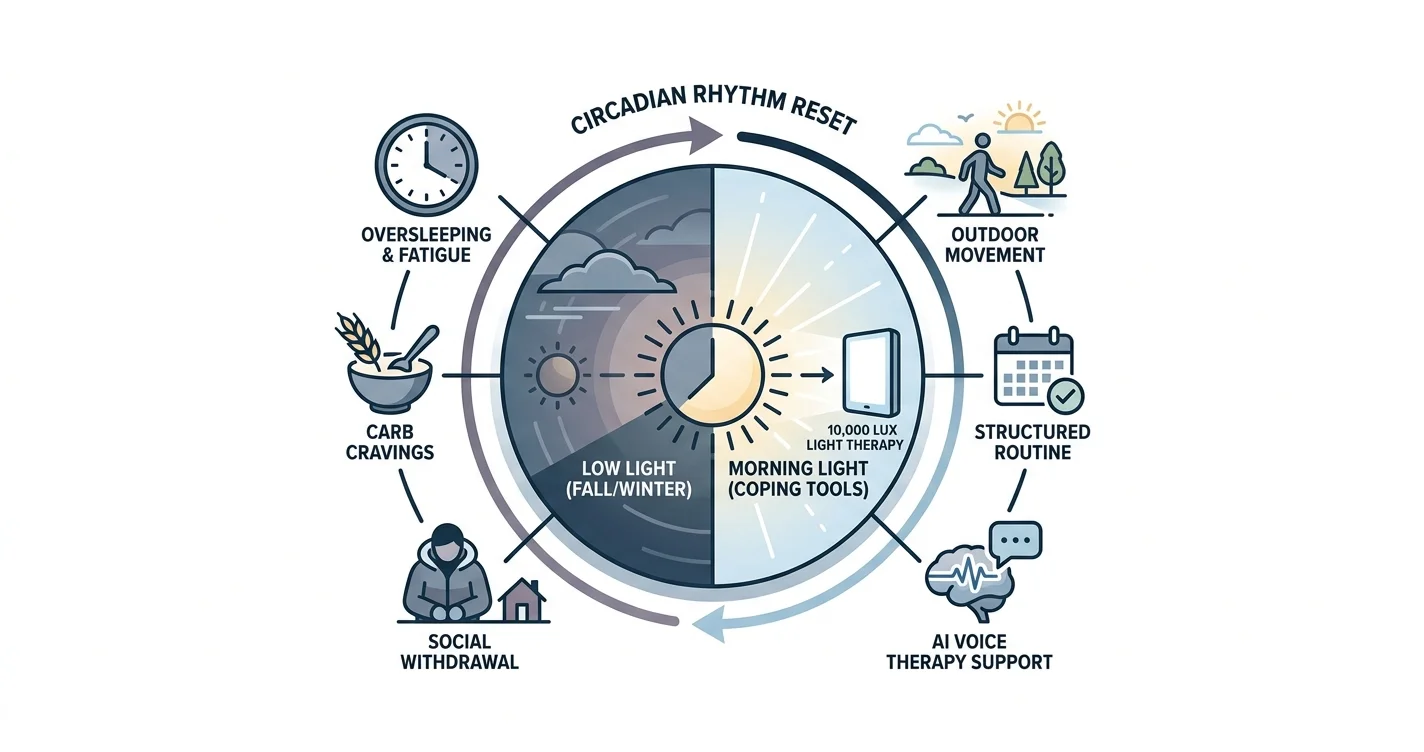
- Seasonal affective disorder signs and coping tools start with tracking oversleeping, carb cravings, and low energy
- A 10,000 lux light box used for 20-30 minutes each morning is the best-supported non-medication coping tool for SAD.
- SAD is diagnosed when symptoms repeat for at least two consecutive winters, not just one rough season.
- An AI voice therapy app like Lovon fills the gap between routine changes and a clinical appointment, not a
- Symptoms that don't lift by early spring, or that include thoughts of self-harm, need a same-week call to a licensed
Short, dark days shift your body's internal clock enough to trigger a real, diagnosable mood disorder in some people every fall and winter — and by the time you notice you've been sleeping 10 hours and still dragging, the pattern has usually been building for weeks. Seasonal affective disorder (SAD) is treatable, but only if you catch the signs early and pair them with coping tools that match how your body actually responds to low light.
TL;DR
- Seasonal affective disorder signs and coping tools start with tracking oversleeping, carb cravings, and low energy that return every fall.
- A 10,000 lux light box used for 20-30 minutes each morning is the best-supported non-medication coping tool for SAD.
- SAD is diagnosed when symptoms repeat for at least two consecutive winters, not just one rough season.
- An AI voice support app like Lovon fills the gap between routine changes and a clinical appointment, not a replacement for either.
- Symptoms that don't lift by early spring, or that include thoughts of self-harm, need a same-week call to a licensed provider.
Why this matters
SAD isn't a mood you talk yourself out of — it's a circadian and neurotransmitter response to reduced daylight, and it hits an estimated 4-5 months of the year for people who get it. Left untreated, it tends to repeat every winter, often getting harder to shake each time because sleep, appetite, and social withdrawal reinforce each other.
The upside: SAD responds well to structured, daily coping tools, more reliably than most mood conditions do. Lovon works as an on-demand voice conversation you can use between the daily habits below, especially on the evenings when motivation to do any of it is at zero.
What you'll need
- A simple way to track mood day-to-day — a notes app, a paper log, or a voice journal works
- A light therapy box rated at 10,000 lux, if you live above roughly the 40th parallel or work indoors most of the day
- 20-30 minutes free each morning for light exposure, ideally before 9am
- A short written list of your personal triggers — early sunset, skipped workouts, canceled plans
- A coping tool for in-the-moment dips, whether that's a breathing exercise, a walk, or a voice session with an AI therapist
- A primary care visit on the calendar if you haven't ruled out thyroid issues or a vitamin D deficiency, both of which mimic SAD symptoms
The steps
1. Track the pattern before you name it
Write down mood, sleep hours, and energy level for two weeks before deciding it's SAD. The diagnostic marker clinicians look for is symptoms recurring at the same time of year for at least two consecutive winters, so a single rough week isn't enough to confirm the pattern. Common mistake: people skip tracking and jump straight to self-diagnosis, then miss that their symptoms actually started with a specific stressor, not the season.
2. Get outside within the first hour of waking
Morning light exposure resets your circadian rhythm faster than light at any other point in the day. Ten minutes outside, even under cloud cover, delivers far more lux than an indoor room. The mistake most people make is waiting until lunch to step outside — by then the signal to your brain's internal clock has already been missed for the day.
3. Add a light box if outdoor light isn't enough
A 10,000 lux box used for 20-30 minutes each morning, positioned about 16-24 inches from your face, is the most studied non-medication treatment for SAD. Sit with it while you eat breakfast or check email so it doesn't feel like a chore. Skipping days is the most common mistake — consistency matters more than duration, so 20 minutes daily beats an hour twice a week.
4. Move your body for 20-30 minutes, even indoors
Exercise raises serotonin and dopamine in ways that directly counter the neurotransmitter dip behind SAD. It doesn't need to be intense: a brisk walk, bodyweight circuit, or stairs count. The common mistake is treating exercise as optional once motivation drops — schedule it at the same time daily so it doesn't depend on how you feel that morning, since a dysregulated nervous system often shows up first as a total loss of the urge to move.
5. Feed the carb craving smarter, not less
SAD drives cravings for refined carbs and sugar because they briefly spike serotonin. Cutting them entirely usually backfires. Swap in complex carbs — oats, sweet potato, whole grains — that give a steadier serotonin curve instead of a crash 90 minutes later. The mistake is white-knuckling total restriction, which tends to end in a bigger binge by evening.
6. Build a wind-down that doesn't feed isolation
SAD makes canceling plans feel reasonable in the moment, but social withdrawal deepens the depressive symptoms it's protecting you from. Keep one standing commitment per week — a call, a class, a coffee — that you don't get to cancel unilaterally. The common mistake is waiting to feel like socializing before scheduling it; by winter, that feeling may not show up until March.
7. Use a coping tool for the 4pm crash
Sunset before 5pm creates a predictable energy dip for most people with SAD. Have a specific tool ready for that window — a short walk, a breathing exercise, or a voice conversation with an AI therapist that doesn't require booking or waiting. Lovon is built for exactly this kind of on-demand check-in, when the dip hits and a scheduled therapy appointment is days away.
8. Know when to loop in a professional
If symptoms interfere with work, relationships, or basic self-care for more than two weeks despite consistent light exposure and movement, that's the line for a clinical evaluation. Light therapy, SSRIs, and CBT are the three treatments with the strongest evidence base for SAD as of 2026, and a licensed provider can combine them. The mistake is waiting until symptoms are severe — earlier treatment in the season shortens the episode.
Troubleshooting
The light box doesn't seem to be working after two weeks. Check the distance and duration first — most people sit too far away or use it for 10 minutes instead of 20-30. If timing and distance are correct and there's still no change after three to four weeks, that's a signal to bring a clinician into the plan rather than increasing box time further.
You're oversleeping despite a morning light routine. Oversleeping is one of the most common and most missed seasonal affective disorder signs, and it can persist even with good light hygiene if the bedroom itself is too dark in the morning. Try leaving curtains cracked or using a sunrise alarm clock alongside the light box.
You can't tell if this is SAD or just a bad stretch of weeks. The clearest distinction is timing and repetition — SAD follows the calendar and recurs annually, while ordinary low mood tends to track a specific event. The difference between everyday sadness and clinical depression comes down to duration and functional impact, and that same lens applies to sorting SAD from a rough week.
Caffeine crash makes the afternoon dip worse. Heavy morning caffeine to fight SAD fatigue often causes a harder crash by 2-3pm. Shift to smaller, more frequent doses instead of one large morning coffee.
You're following the routine but still isolating. This usually means the coping tools are addressing energy but not the avoidance pattern underneath. Pair movement and light exposure with one low-stakes social touchpoint daily — a text, a call, a short in-person moment — rather than waiting for a big plan to feel manageable.
Tools and resources
- A 10,000 lux light therapy box, used each morning for 20-30 minutes
- A mood and sleep tracker, even a basic notes app
- Outdoor time within the first hour of waking, weather permitting
- Support for the stress layered on top of low mood — see what actually works for stress versus what just feels productive
- A primary care visit to rule out vitamin D deficiency or thyroid dysfunction, both of which overlap with SAD symptoms
- On-demand voice support through Lovon's AI voice support for the hours between scheduled care
Need support between light-box sessions?
Talk through a low mood day with Lovon whenever it hits, no appointment needed.
What to do next
Once the daily routine is in place, the next step is separating a manageable seasonal dip from a depressive episode that needs clinical treatment. Reducing baseline stress hormones also shortens how hard the seasonal dip hits — see how to lower cortisol naturally for the daily habits that support the same nervous system the light box is trying to reset.
FAQ
What are the main signs of seasonal affective disorder?
The main signs are oversleeping, low energy, carb cravings, weight gain, and social withdrawal that start in fall and lift by spring. A diagnosis requires the pattern to repeat for at least two consecutive winters, not just occur once.
How is seasonal affective disorder different from normal winter blues?
SAD lasts most of the day, most days, for weeks at a time and interferes with work or relationships, while winter blues are milder and don't disrupt daily function. The recurring, calendar-linked pattern is the clearest marker.
What is the best coping tool for seasonal affective disorder in 2026?
Light therapy with a 10,000 lux box used 20-30 minutes daily has the strongest evidence base among non-medication tools in 2026. Pairing it with daily movement and a consistent sleep schedule improves results further.
Does light therapy actually work for SAD?
Yes, morning light therapy is one of the most studied treatments for seasonal affective disorder and works by resetting circadian rhythm and supporting serotonin regulation. Most people need three to four weeks of daily use before noticing a clear shift.
Can seasonal affective disorder happen in summer?
A less common summer-pattern SAD exists, marked by insomnia, appetite loss, and agitation rather than oversleeping and carb cravings. It follows the same recurring, seasonal pattern but responds to different coping strategies, like cooling and light-blocking at night.
How long does seasonal affective disorder usually last?
SAD episodes typically span 4-5 months, starting in fall and resolving by early spring as daylight hours increase. Without treatment, the same pattern tends to recur each winter.
Is seasonal affective disorder a form of depression?
Yes, SAD is classified as a subtype of major depressive disorder with a seasonal pattern specifier. It shares core depressive symptoms but is distinguished by its predictable, recurring timing tied to daylight exposure.
Can an AI therapy app help with seasonal affective disorder?
An AI voice therapy app can support daily coping between routine changes and clinical appointments, offering a space to talk through low-mood days as they happen. It works alongside light therapy and professional care, not in place of a diagnosis or treatment plan.
One last thing
The symptom people miss most often isn't sadness — it's the carb craving and oversleeping showing up weeks before the mood dip does. If you notice those two on their own, starting the light box and morning walk immediately, before the low mood sets in, tends to shorten the whole episode.
Related guides
How AI Support Helps You Heal
AI emotional support isn't about replacing human connection — it's about filling the gaps. The moments when you need to talk at 2 AM, when you don't want to burden your friends again, or when you simply need someone to listen without judgment.
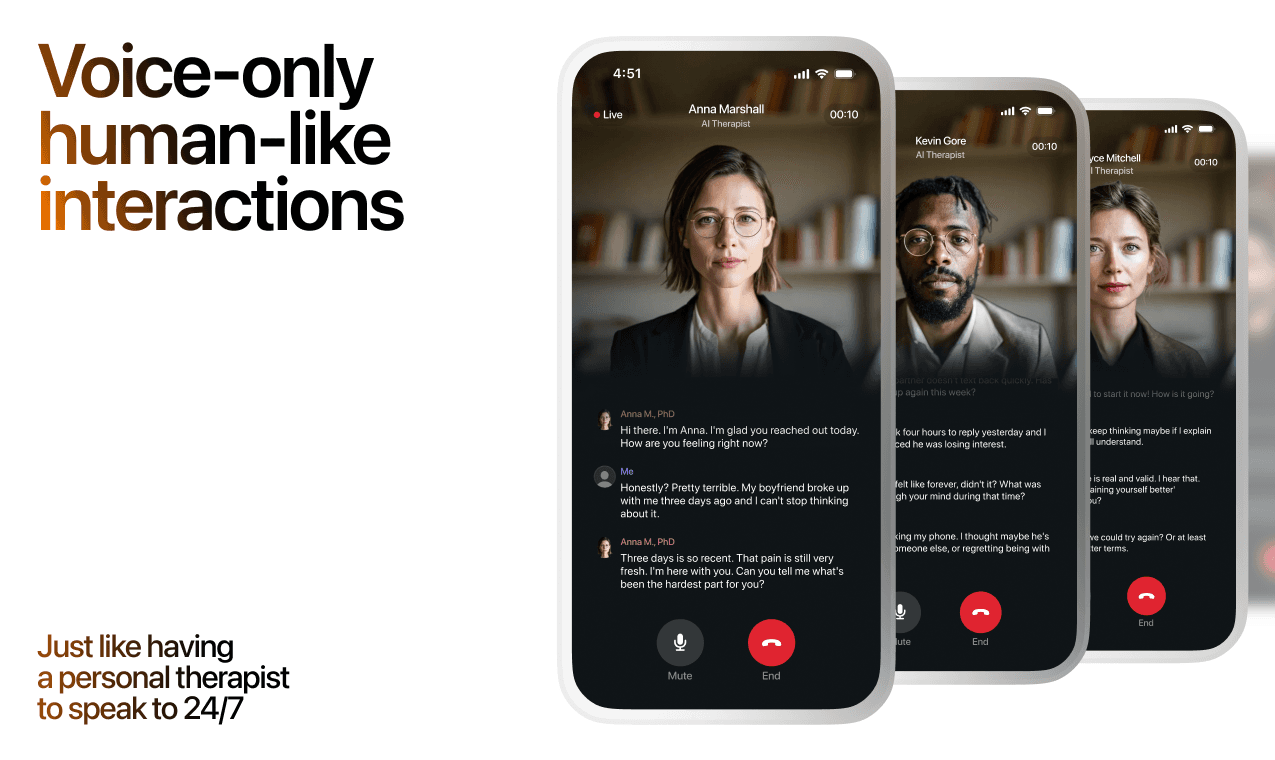
Here's what happens in a typical Lovon session:
You share what's on your mind
There's no script, no intake form, no waiting room. You speak or type whatever you're feeling — in your own words, at your own pace.
Lovon validates and explores
Using frameworks from CBT (Cognitive Behavioral Therapy) and motivational interviewing, Lovon acknowledges your feelings first, then gently helps you explore them. No dismissive "just move on" advice.
You build coping skills together
Lovon doesn't just listen — it actively works with you on evidence-based techniques: thought reframing, urge surfing, behavioral experiments, and more.
What a Session with Lovon Looks Like
When to Seek Professional Help
AI support is a valuable tool, but it's not a replacement for professional care. Please consider reaching out to a licensed therapist if you experience any of the following:
- Persistent thoughts of self-harm or suicide
- Inability to perform daily activities (work, eating, sleeping) for more than 2 weeks
- Turning to alcohol or substances to cope
- Intense anger or desire to harm your ex-partner
- Complete emotional numbness that doesn't improve over time
Crisis Resources (US): If you're in immediate danger, call 988 (Suicide & Crisis Lifeline) or text HOME to 741741 (Crisis Text Line). Available 24/7, free, and confidential.
Outside the US? Find a crisis line in your country
Ready to Start?
Your healing journey can begin right now
A 7-day trial. No judgment. Just a safe space to process what you're going through.
Frequently Asked Questions
Is Lovon a replacement for a real therapist?
Is my conversation with Lovon AI private?
How is Lovon different from ChatGPT for emotional support?
Can I use Lovon if I'm already seeing a therapist?
Can I try Lovon before subscribing?
About the Author
The Lovon Editorial Team
Mental Health & Wellness Content Team
The Lovon Editorial Team develops mental health and wellness content designed to make psychological concepts accessible and actionable. Our goal is to bridge the gap between clinical research and everyday life - helping you understand why your mind works the way it does and what you can do about it....
Related articles
- Best AI App for Health Anxiety in 2026: Ranked
The best ai app for health anxiety in 2026, ranked by availability and risk of reinforcing checking behavior. Lovon wins…
- How to Stop Anger Outbursts Before They Happen (2026)
Learn how to stop anger outbursts before they happen in 2026 with trigger tracking, box breathing, and a pre-planned…
- AI Coping Tools for a Quarter-Life Crisis in 2026
AI coping tools for a quarter-life crisis in your 20s: free tactics, when Lovon's voice therapy helps, and when to see a…
- Best AI App for Anxiety: On-Demand Support in 2026
Looking for an AI app for anxiety? See how Lovon and top alternatives deliver 24/7 coping tools and voice support…
See also
Quizzes
- Light Triad Test: Are People Ends or Means?
See how you treat people when there is nothing to gain.
- Empathy Test: Free 12-Question Self-Check
See which part of your empathy is strained, in 3 minutes.
Free tools
- What to Say When They Are Struggling
A chat, not a list. Tell the coach who this person is to you, what they are going through, and what you already said…
- How to Reconnect With an Old Friend
A chat for how to reconnect with an old friend, starting with the text you have been meaning to send for a year. Tell it…
From the wiki
- Why do I feel sad when I'm alone?
Being alone does not create the sadness. It removes the noise that was keeping it out of earshot, so whatever queued up…
Disclaimer: This article is for informational purposes only and does not constitute medical advice, diagnosis, or treatment. Always seek the advice of your physician or other qualified health provider with any questions you may have regarding a medical condition. If you are in crisis or think you may have an emergency, call 988 (Suicide & Crisis Lifeline) or go to the nearest emergency room. Outside the US? Find a crisis line in your country.