
How to Fall Asleep Faster: 8 Steps for Tonight
How to fall asleep faster tonight: a wind-down that works, what to do with a racing mind, the 20-minute rule, and when trouble sleeping needs a doctor.

Key Takeaways
- The biggest levers for falling asleep faster are a fixed wake-up time, going to bed only when sleepy, and getting out of bed when you cannot sleep.
- In a sleep-lab study, people who wrote a specific to-do list for five minutes at bedtime fell asleep faster than people who wrote about tasks they had already done.
- Trouble falling asleep that lasts for months has an effective first treatment, CBT for insomnia, so it is worth raising with a doctor.
To fall asleep faster, go to bed only when you feel sleepy, get up at the same time every day, and give yourself a 30-minute wind-down without bright screens. If you are still awake after about 20 minutes, get up and do something calm in dim light until sleepiness returns. Slow breathing with a long exhale helps your body switch off.
- Get up at the same time every day, weekends included.
- Have your last coffee or other caffeine by early afternoon.
- Dim the lights and put your phone away 30 to 60 minutes before bed.
- Write a specific to-do list for tomorrow before you lie down.
- Keep your bedroom cool, dark and quiet.
- In bed, breathe in for four counts and out for six to eight.
- If you are awake after about 20 minutes, get up and do something calm.
- Go back to bed only when you feel sleepy.
Why can't I fall asleep?
Most trouble falling asleep comes from one of a few causes, and knowing which one is yours tells you where to start.
- A busy mind. You lie down and your brain starts reviewing the day, tomorrow's tasks, or an argument from last week.
- A body that is still wired. Stress, a late workout, or caffeine keeps your system alert even when you feel tired.
- A shifted body clock. Late nights on weekends, sleeping in, or bright screens late at night push your natural sleep time later, so at 11 pm your body thinks it is still evening.
- A bed that has become a place to be awake. After weeks of lying awake, your brain links the bed with frustration rather than sleep.
Being tired is not the same as being sleepy. You can feel exhausted all day and still be too alert to drop off at night. The steps below work on sleepiness, not effort.
How do you fall asleep fast when your mind won't stop?
A racing mind is the most common reason people give for lying awake. The aim is not to empty your head, which rarely works, but to give your thoughts somewhere else to go.
Write a to-do list before bed. In a sleep-lab study, young adults who spent five minutes writing a specific to-do list for the next few days fell asleep faster than those who wrote about tasks they had already finished. The more specific the list, the faster they fell asleep.[1] Getting tomorrow out of your head and onto paper seems to tell your brain it does not need to keep rehearsing it.
Do a brain dump earlier in the evening. If your worries are bigger than a to-do list, write everything down an hour or two before bed, then sort it. The brain dump tool helps you split it into what to do, what to schedule and what to let go.
Give your mind something boring to hold. Some people find it helps to picture a long, gentle, unrelated scene in detail, or to think of a random word for each letter of the alphabet. It occupies the part of your brain that would otherwise worry, without being interesting enough to wake you up.
Do not argue with the thoughts. Telling yourself "stop thinking" usually backfires. Try noticing the thought, saying "that's for tomorrow," and coming back to your breath.
If night-time thinking is a regular pattern, how to stop overthinking at night goes deeper. If the thoughts feel more like worry or dread, see how to calm anxiety at night.
How do you relax your body so you can sleep?
Your body has to slow down before sleep can start. These help most people:
Slow breathing. Breathe in through your nose for four counts and out for six to eight. A long exhale is one of the most direct ways to calm your system. The 4-7-8 breathing timer paces a version with an especially long out-breath, which many people use in bed.
Progressive muscle relaxation. Tense each muscle group for about five seconds, then release it, starting at your feet and working up. The guided progressive muscle relaxation session takes you through it.
A warm shower or bath. Some people find a warm shower an hour or so before bed helps them feel sleepy afterwards.
The military method. This popular routine asks you to relax your face, drop your shoulders and arms, breathe out, relax your legs and picture a calm scene. It is a reasonable relaxation routine, but there is no good evidence for the claim that it puts people to sleep in two minutes. If it calms you, use it; if it turns into a test you are failing, drop it.
What should you do if you can't sleep after 20 minutes?
Get up. This is the part most people skip, and it is one of the most useful.
If you have been awake for what feels like 20 minutes, do not check the clock, just go to another room and do something calm in dim light: read a paper book, fold laundry, listen to something quiet. Avoid your phone, work and anything exciting. When you feel sleepy, your eyes heavy and your head nodding, go back to bed. Repeat as often as needed.
It sounds backwards, but it works by breaking the link between your bed and lying awake. It is one part of cognitive behavioral therapy for insomnia, known as CBT-I. A meta-analysis of 20 trials found that CBT-I helped adults with chronic insomnia fall asleep about 19 minutes faster on average and spend about 26 fewer minutes awake during the night.[2]
Expect the first few nights to feel worse. Most people find falling asleep gets easier within one to two weeks of doing this consistently.
How do you set a sleep schedule that makes falling asleep easier?
The most important time on your sleep schedule is not bedtime, it is wake-up time. Getting up at the same time every day, including weekends, anchors your body clock so sleepiness arrives at a predictable time each night.
To pick a bedtime that fits, the sleep calculator works back from your wake-up time and shows your sleep debt for the week. Sleep runs in cycles of roughly 90 minutes, which vary from person to person, so treat the result as a starting point.
A few more things help:
- Get daylight in the morning. Ten to twenty minutes outside soon after waking helps set your body clock.
- Keep naps short and early. If you nap, keep it under about 20 minutes and before mid-afternoon.
- Move in the day. Regular daytime activity tends to make night-time sleepiness stronger.
If you have been running short on sleep for weeks, see sleep debt for how to catch up without wrecking your schedule.
What should you avoid before bed?
- Caffeine after early afternoon. It can stay in your system for many hours, even if you do not feel it.
- Alcohol close to bedtime. It makes you drowsy at first, then tends to make sleep lighter and more broken later in the night.
- Big meals late at night. A heavy meal right before bed can make it harder to settle.
- Work, news and intense conversations. Anything that switches your brain into problem-solving mode.
- Scrolling in bed. The feed is designed to keep you awake, and it pushes bedtime later without you noticing.
Habits like these are often called sleep hygiene. A review of the evidence found that individual habits like these do matter for sleep, but that sleep hygiene on its own is usually not enough to fix long-lasting insomnia.[3] That is why the steps above that change behavior, especially the 20-minute rule and a fixed wake-up time, matter more.
What is the most common mistake when trying to fall asleep faster?
Trying too hard. Sleep is one of the few things that gets harder the more effort you put in. Lying in bed willing yourself to sleep, checking the clock and counting how many hours are left all keep your brain alert.
The second most common mistake is going to bed early to "catch up." If you are not sleepy, an early bedtime just means more time lying awake. It is better to go to bed a little later, when you are truly sleepy, and keep your wake-up time fixed.
The third is staying up late to get time for yourself after a busy day. If that sounds familiar, read about revenge bedtime procrastination, and try protecting some free time earlier in the evening instead.
When should you see a doctor about trouble falling asleep?
See a doctor if:
- you have trouble sleeping three or more nights a week, for three months or more
- poor sleep is affecting your mood, work or safety, for example drowsy driving
- you snore loudly, gasp or stop breathing at night, or feel very sleepy in the day
- you have restless, uncomfortable feelings in your legs at night
Long-lasting insomnia has an effective first treatment, CBT-I, which a doctor can refer you to or recommend in a structured program. Some sleep problems, like sleep apnea, need a medical check.
Sleep and mood are closely linked. If stress is what keeps you up, how to reduce stress covers the daytime side, and how sleep affects mood explains why a few bad nights hit your mood so hard. Logging your sleep with the 60-second mental health check-in shows how your nights and your mood move together.
If the same worry keeps you awake night after night, it can help to say it out loud before bed instead of carrying it into the dark. Lovon, an AI coach you talk to by voice, can help you unload the day and leave it there.
How AI Support Helps You Heal
AI emotional support isn't about replacing human connection — it's about filling the gaps. The moments when you need to talk at 2 AM, when you don't want to burden your friends again, or when you simply need someone to listen without judgment.
Here's what happens in a typical Lovon session:
You share what's on your mind
There's no script, no intake form, no waiting room. You speak or type whatever you're feeling — in your own words, at your own pace.
Lovon validates and explores
Using frameworks from CBT (Cognitive Behavioral Therapy) and motivational interviewing, Lovon acknowledges your feelings first, then gently helps you explore them. No dismissive "just move on" advice.
You build coping skills together
Lovon doesn't just listen — it actively works with you on evidence-based techniques: thought reframing, urge surfing, behavioral experiments, and more.
What a Session with Lovon Looks Like
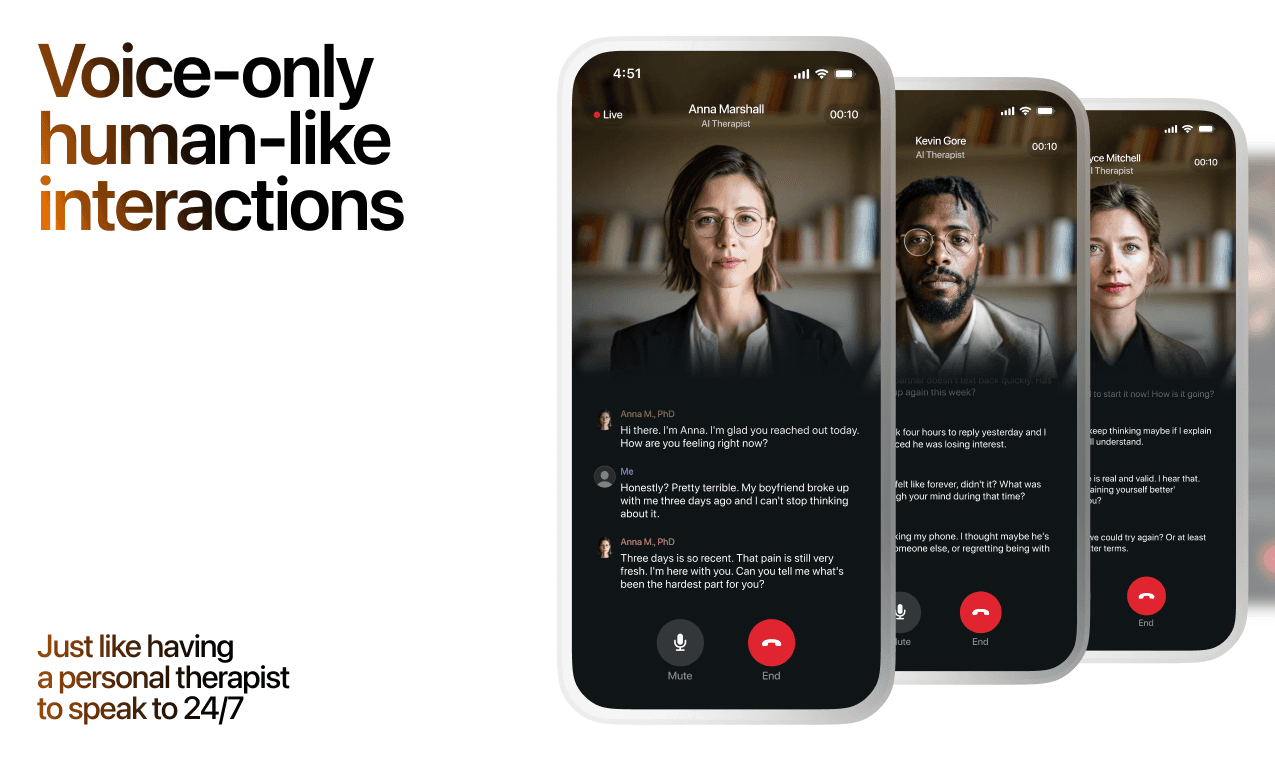
Lovon is AI support, not a replacement for professional care. If things have been hard to get through for weeks, or you are thinking about harming yourself, talk to a doctor or a licensed therapist.
Ready to Start?
Your healing journey can begin right now
A 3-day trial. No judgment. Just a safe space to process what you're going through.
Frequently Asked Questions
How can I fall asleep in 5 minutes?
Does the military sleep method work?
What should I do if I cannot fall asleep?
Why can I not fall asleep even when I am tired?
Is it bad to look at your phone before bed?
Does alcohol help you fall asleep?
When should I see a doctor about trouble falling asleep?
Sources
About the Author

The Lovon Editorial Team
Mental Health & Wellness Content Team
The Lovon Editorial Team develops mental health and wellness content designed to make psychological concepts accessible and actionable. Our goal is to bridge the gap between clinical research and everyday life - helping you understand why your mind works the way it does and what you can do about it....
Related articles
- Best App for Parenting Stress and Burnout in 2026: Lovon
Lovon ranks best overall for parenting stress and burnout in 2026, with picks for co-parenting, meditation, journaling…
- Seasonal Affective Disorder: Signs & Coping Tools 2026
Spot seasonal affective disorder signs early and use coping tools proven to work in 2026 — light therapy, movement, and…
- Can a panic attack happen while you are asleep?
Can a panic attack happen while sleeping? Yes. Learn the signs of nocturnal panic, what to do after waking, and when…
- How to Recharge Your Social Battery: 7 Ways
How to recharge your social battery after people drain you: quiet recovery time, signs you are running low, what to say…
See also
Quizzes
- Light Triad Test: Kantianism, Humanism & Faith Scores
See how you treat people when there is nothing to gain.
- Am I Sabotaging My Relationship? 12-Question Quiz
Find the move you reach for, in 2 minutes.
Free tools
- Box Breathing
Four equal sides: in for four, hold for four, out for four, hold for four. Follow the circle for one, three or five…
- 5-4-3-2-1 Grounding Exercise
A guided run through the 5-4-3-2-1 technique, with paced breathing first if you need it. No sign-up, works on your…
From the wiki
- Why do I keep dreaming about my ex?
Recurring dreams about an ex usually mean your brain is still consolidating a relationship that took up years of memory…
Disclaimer: This article is for informational purposes only and does not constitute medical advice, diagnosis, or treatment. Always seek the advice of your physician or other qualified health provider with any questions you may have regarding a medical condition. If you are in crisis or think you may have an emergency, call 988 (Suicide & Crisis Lifeline) or go to the nearest emergency room. Outside the US? Find a crisis line in your country.