
Revenge Bedtime Procrastination: Why We Do It, How to Stop
Revenge bedtime procrastination is staying up for me-time you did not get all day. Why it happens, what it costs, and how to stop without losing the time.

Key Takeaways
- Revenge bedtime procrastination means staying up later than you meant to, with nothing stopping you from going to bed, because the night is the only time that feels like yours.
- It is a self-regulation problem, not laziness: willpower is lowest at night, phones never end, and going to bed means tomorrow starts.
- The fix that lasts is moving some of that free time earlier in the evening and putting a clear end on it, rather than trying to give it up.
Revenge bedtime procrastination is staying up later than you meant to, even though you are tired and nothing is stopping you from going to bed, because the late hours are the only time that feels like yours. The "revenge" is against a day that took all your time. It is common, it is not laziness, and it usually eases when the day gives some of that time back.
You are probably doing it if most of these sound familiar:
- You are tired, you know you should sleep, and you stay up anyway.
- What you do is low effort: scrolling, one more episode, one more game.
- It feels earned, as in "this is the only time I get to myself."
- It is worst after days with no free time at all.
- You get into bed on time, then lose an hour on your phone before you actually try to sleep.
- You regret it every morning and do it again that night.
The cost shows up as sleep debt. The sleep calculator shows what your real bedtimes add up to over a week and gives you a bedtime that fits your wake-up time, which is a useful number to have before you decide what to change.
What revenge bedtime procrastination is, and what it is not
Researchers first described the core behavior in 2014 as bedtime procrastination: failing to go to bed at the time you intended, when no outside circumstance is keeping you up.[1] The "revenge" version adds the motive. The phrase spread on social media around 2020, translated from a Chinese expression used by people working punishing hours who took their free time back at night.
It helps to separate it from two things it is often confused with:
| Pattern | What it feels like | What usually helps |
|---|---|---|
| Revenge bedtime procrastination | You are sleepy and could sleep, but you choose not to yet | More free time earlier, a set end point, the phone out of reach |
| Insomnia | You want to sleep and go to bed, but you cannot fall or stay asleep | A doctor, and CBT for insomnia |
| A late body clock | You are not sleepy until late, and you sleep well if you can wake later | A schedule that fits your clock where possible, and morning light |
If your brain only seems to switch on at night and bedtime has always been a fight, the ADHD angle may fit better: ADHD sleep problems and ADHD, melatonin delay and bedtime procrastination cover that version. This page is the general one.
Why do I do it?
The day had no room for you
Long work hours, commuting, caregiving and small children leave a day with no unclaimed minutes. The late evening is the first stretch where nobody needs anything from you, so it feels precious in a way the morning never does. Parents and caregivers know this well, and if that is you, parental burnout and caregiver burnout may be worth a look.
Willpower is lowest at night
In a representative survey of 2,431 Dutch adults, people with weaker self-regulation were more likely to feel they got insufficient sleep, and bedtime procrastination explained that link.[2] At 11 p.m., after a full day of decisions, you have the least capacity to stop something pleasant for something good for you. That is not a character flaw. It is the worst possible time to rely on discipline.
The phone never ends
A show ends and a book has chapters, but a feed has no bottom. In a study that tracked how young adults spent their time, the group with high bedtime procrastination spent about 61 more minutes on their smartphones in the three hours before bed than the low group, and they also reported more depression, anxiety and insomnia.[4] That study shows a link, not a cause, but the pattern is familiar to most people.
Getting into bed is not the same as going to sleep
Another study separated bedtime, when you get into bed, from shuteye time, when you actually try to sleep. The gap averaged 39 minutes. People whose gap was over an hour were 9.3 times more likely to be rated poor sleepers than people who tried to sleep as soon as they lay down, and the gap was linked to media use.[3] So "I go to bed at 11" may really mean "I start sleeping at midnight."
Going to sleep means tomorrow starts
If tomorrow holds a job you dread, a hard conversation or a pile of tasks, staying up delays it. And if the quiet brings up thoughts you would rather not have, the screen keeps them away. When that is the real reason, how to stop overthinking at night will help more than any screen-time rule.
What it costs
The obvious cost is sleep. Every lost hour joins your sleep debt, and short sleep makes the next day more irritable, more anxious and less enjoyable, which you can read about in how sleep affects mood. The less obvious cost is that a tired day feels even more like it belongs to everyone else, so the pull to take the night back gets stronger. It is a loop.
How to stop revenge bedtime procrastination
The approach that holds is to keep the free time and move it, rather than give it up.
Give your free time a home earlier
Find 20 to 30 minutes between dinner and bedtime that are only yours, with no chores and no messages, and protect them like an appointment. When the evening already contains some real me time, midnight loses some of its pull.
Decide the end before you start
"Two episodes, then bed" works better than "a bit of TV." Pick the stopping point while you still have willpower, at 8 p.m., not at 11:45.
Set a wind-down alarm, not just a wake-up alarm
An alarm an hour before your target bedtime is your cue to switch to something that ends: a book, a shower, a short stretch, a podcast with a set length.
Put distance between you and the phone
Charge it in the kitchen or across the room and use a cheap alarm clock. This closes the gap between getting into bed and actually trying to sleep, which is where a lot of the lost hour hides.
Make bed the reward
Keep one thing you enjoy only for bed: a novel, a sleep story, a playlist. Then going to bed becomes the start of something pleasant rather than the end of it.
Empty tomorrow out of your head
If dread is part of it, spend five minutes before your wind-down alarm writing tomorrow down. The brain dump sorts everything into do, schedule and let go, so your mind does not have to hold it overnight.
If-then plans you can copy
Vague intentions lose at night. Specific if-then plans give you a decision you already made:
- "If it is 10:30 and I am still on the couch, then the next episode is the last one."
- "If I pick up my phone after getting into bed, then I put it on the charger across the room."
- "If I notice I am scrolling to avoid thinking about tomorrow, then I write down the one thing I am dreading and close the app."
- "If I go to bed late anyway, then I still get up at my usual time and go to bed earlier tomorrow."
Find out what kind of rest you are missing
Scrolling feels like rest but often is not. It gives your eyes and brain more input when what you may need is social contact, creative time or plain quiet. The types of rest quiz shows which kind you are short on, and a dopamine menu gives you a list of quick, chosen things to do with your evening instead of whatever the feed serves next.
When it is more than a habit
Bedtime procrastination is ordinary. These are signs something else may be going on:
- You go to bed on time, put the phone away, and still cannot sleep. That points to insomnia, and a doctor can help.
- You stay up to avoid a low mood, dread or thoughts that feel heavy, and it has lasted more than two weeks.
- Your days are so overloaded that there is no realistic place for free time. The burnout test can show whether exhaustion has spread across work, energy and motivation.
If any of that fits, a doctor or a licensed therapist is the right next step.
Track it
The single most useful number here is your gap: the difference between the time you meant to sleep and the time you put the phone down.
- For one week, write down two times each night: your intended bedtime and the time you actually started trying to sleep. Do not change anything yet.
- Add up the gaps. Put your real sleep into the sleep calculator to see what the week cost.
- Note the day it happened after. Was it worst after long workdays, social days, or days with a hard conversation? The energy audit helps you map what drains and what charges you, so you can see which days need free time built in.
- Watch the next morning. A quick 60-second check-in each morning shows whether your mood and energy drop after late nights, which is usually the most convincing reason to change.
After a week, try one strategy from above and track the gap again. A gap that shrinks from 70 minutes to 30 is a real win.
Often the hardest part is not the phone. It is admitting that the day leaves nothing for you, and saying what you would do with an hour if you had one. Tell Lovon, an AI coach you talk to by voice, what your evenings really look like, and work out together where your free time could live instead.
How AI Support Helps You Heal
AI emotional support isn't about replacing human connection — it's about filling the gaps. The moments when you need to talk at 2 AM, when you don't want to burden your friends again, or when you simply need someone to listen without judgment.
Here's what happens in a typical Lovon session:
You share what's on your mind
There's no script, no intake form, no waiting room. You speak or type whatever you're feeling — in your own words, at your own pace.
Lovon validates and explores
Using frameworks from CBT (Cognitive Behavioral Therapy) and motivational interviewing, Lovon acknowledges your feelings first, then gently helps you explore them. No dismissive "just move on" advice.
You build coping skills together
Lovon doesn't just listen — it actively works with you on evidence-based techniques: thought reframing, urge surfing, behavioral experiments, and more.
What a Session with Lovon Looks Like
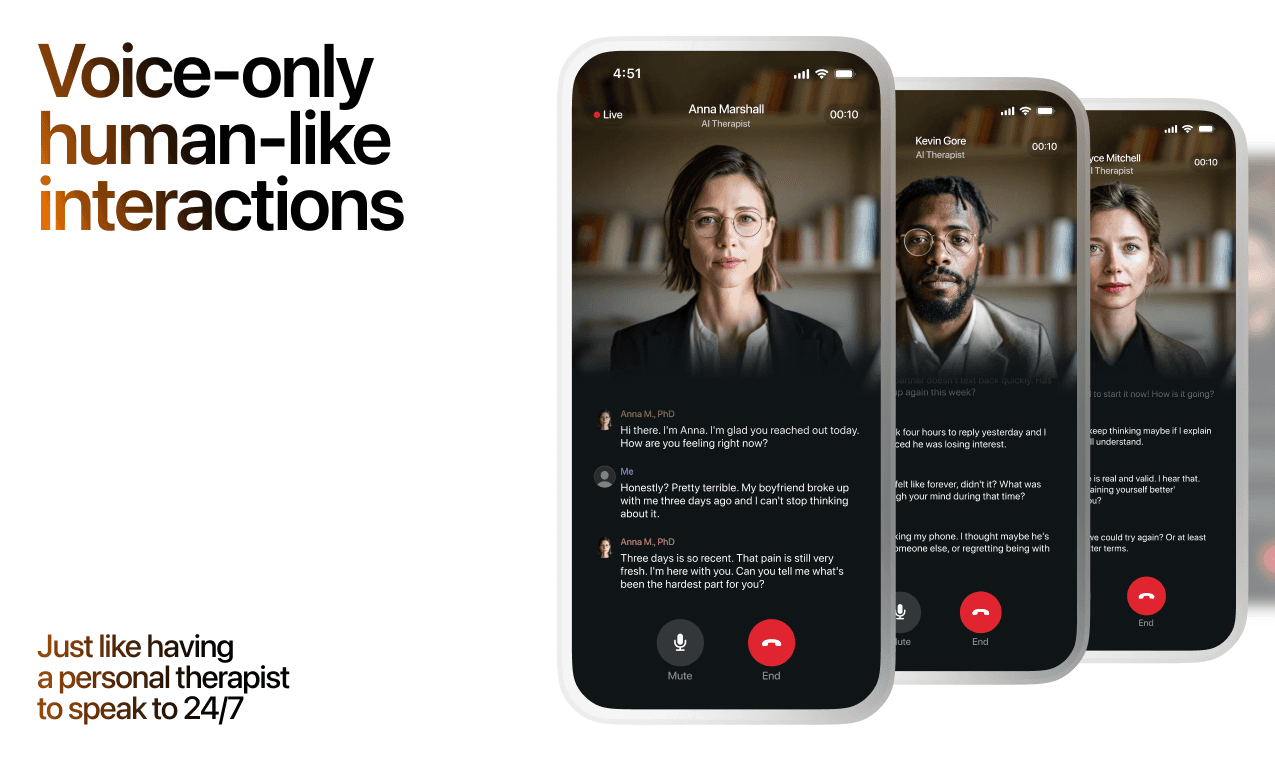
Lovon is AI support, not a replacement for professional care. If things have been hard to get through for weeks, or you are thinking about harming yourself, talk to a doctor or a licensed therapist.
Ready to Start?
Your healing journey can begin right now
A 3-day trial. No judgment. Just a safe space to process what you're going through.
Frequently Asked Questions
What is revenge bedtime procrastination?
Why is it called revenge bedtime procrastination?
Is revenge bedtime procrastination a sign of ADHD?
Is revenge bedtime procrastination a sign of depression?
How do I stop revenge bedtime procrastination?
Is it bad to stay up late for me time?
Why do parents do revenge bedtime procrastination so much?
Sources
About the Author

The Lovon Editorial Team
Mental Health & Wellness Content Team
The Lovon Editorial Team develops mental health and wellness content designed to make psychological concepts accessible and actionable. Our goal is to bridge the gap between clinical research and everyday life - helping you understand why your mind works the way it does and what you can do about it....
Related articles
- How to Fall Asleep Faster: 8 Steps for Tonight
How to fall asleep faster tonight: a wind-down that works, what to do with a racing mind, the 20-minute rule, and when…
- How to Get Out of a Depressive Episode (2026 Guide)
Learn how to get out of a depressive episode on your own with 7 evidence-based steps — from nervous system regulation to…
- Winter Blues: Signs, Causes and What Actually Helps
Winter blues or seasonal depression? The signs, why short days hit mood, what helps (light, routine, movement) and when…
- Can adults develop ADHD later in life?
Can adults develop ADHD later in life? A first diagnosis can come in adulthood, but symptoms begin earlier. Learn what…
See also
Quizzes
- Hyper-Empathy Test: When Feeling for Others Costs You
See where too much empathy is costing you, in 3 minutes.
- Resilience Test: How Fast Do You Bounce Back?
See how you recover from setbacks, in 3 minutes.
Free tools
- How to Stop Overthinking in a Relationship
Not a list of habits. Tell it the specific thing you are going round on, and it separates what actually happened from…
- Vent to an AI
Need to vent and there is nobody to call, or nobody you want to tell? Type it here. You are talking to an AI listener…
From the wiki
- Why do I feel sad when I'm alone?
Being alone does not create the sadness. It removes the noise that was keeping it out of earshot, so whatever queued up…
Disclaimer: This article is for informational purposes only and does not constitute medical advice, diagnosis, or treatment. Always seek the advice of your physician or other qualified health provider with any questions you may have regarding a medical condition. If you are in crisis or think you may have an emergency, call 988 (Suicide & Crisis Lifeline) or go to the nearest emergency room. Outside the US? Find a crisis line in your country.